REVIEW · CHIANG MAI
Chiang Mai: Morning Cooking Class with Market Visit
Book on GetYourGuide →Operated by Galangal Cooking Studio · Bookable on GetYourGuide
A Thai cooking class is fun. A market-to-kitchen class with real ingredients feels practical too. I like that you start by shopping for what you’ll cook, and I also like the chance to learn organic farming basics while you pick herbs and vegetables. One thing to consider: you’ll need to be on time for the morning pickup, because the market stop matters and waiting is limited.
Over about 5 hours, you’ll move from a local market to an organic garden, then into the kitchen to cook up to 6 dishes plus dessert. The menu is flexible, so you can steer your day toward Pad Thai, curry, Tom Yum, or a sweet finish like mango sticky rice.
In This Review
- Key Reasons This Class Works So Well
- From 8:30 Pickup to a Cooking Studio Kitchen: The Real Flow of the Morning
- Chiang Mai Market Shopping: How to Pick Ingredients Like a Cook
- Organic Garden Time: Herbs, Vegetables, and Thailand’s Growing Logic
- Inside Galangal Cooking Studio: Skills You Can Repeat
- Your Main Work: Cooking Up to 6 Dishes Plus Curry Paste
- Starters: Pick One and Learn Thai Salad and Snack Logic
- Main Courses: Noodles and Stir-Fries With Real Thai Staples
- Soups: Hot and Sour, Coconut Cream, and Vegan Options
- Curries: Choose Your Color and Learn the Paste Mindset
- Dessert That Actually Teaches Something: Sweet Thai Classics
- The PDF Recipe Book: Why This Part Matters for Value
- Dietary Options: Vegan, Vegetarian, Halal, and Gluten-Free-Friendly Choices
- Price and Logistics: What $41 Buys You (and What to Double-Check)
- Who This Class Is Best For (And Who Might Feel It Isn’t)
- Should You Book This Morning Cooking Class?
- FAQ
- What dishes will I be able to cook?
- How long is the experience?
- Is hotel pickup included?
- Do I need to pay anything besides the $41 price?
- Is instruction available in English?
- Can I come directly to the cooking studio instead of using pickup?
- What should I bring and what should I avoid?
- Is it suitable for dietary restrictions like vegan or gluten-free?
Key Reasons This Class Works So Well
- Hotel pickup + drop-off keeps the morning stress low
- English instruction helps you actually follow the steps, not just watch
- Market shopping first so flavors make sense when you cook
- Organic garden and herb picking gives you ingredient confidence
- Choose your dishes (starter, main, soup, curry, dessert) for picky eaters and first-timers
- A PDF recipe book helps you reproduce your results at home
From 8:30 Pickup to a Cooking Studio Kitchen: The Real Flow of the Morning
This is a morning class, built around a tight, logical rhythm. You’re picked up from many hotels around Chiang Mai’s old city, Santitham, and parts of nearby roads (Kad Suan Keaw to Maya Shopping Mall), plus some additional areas farther out. The pickup window is typically 8:30–9:00 AM, and the driver waits no longer than 5 minutes after your scheduled time.
That timing detail matters more than you’d think. The first big payoff is the market visit, where fresh ingredients and Thai staples set the stage for everything you cook. If you miss the start, you may end up skipping the best “why this tastes like Thailand” part.
Plan to come with an empty stomach. Not because the class is torture, but because the schedule is designed to keep you learning and cooking without getting dragged down by hunger. You’ll also have water, tea, and coffee available during the activity.
You can also read our reviews of more shopping tours in Chiang Mai

Chiang Mai Market Shopping: How to Pick Ingredients Like a Cook
The morning begins at a local market, where you shop for the ingredients you’ll use later. This is not about wandering for souvenirs. It’s about using your senses: you’ll notice the differences in aroma between herbs, spices, and produce that look similar but don’t taste the same.
What I like about this part is that you learn ingredient logic, not just ingredient lists. When you’re later chopping, grinding, and seasoning, you understand what you should be looking for.
A few practical notes for you:
- Go in ready to walk and stand. Markets are active, and you’ll be moving through stalls.
- Bring a curious mindset. Even if you’re not a “food person,” tasting and comparing is the fastest way to learn Thai flavor building blocks.
- The market tour is listed as “depending on interest.” That means you should ask questions in real time and make sure you’re getting enough time to see what’s important.
In the kitchen later, those market choices turn into recognizable dishes—so your shopping effort doesn’t feel abstract.
Organic Garden Time: Herbs, Vegetables, and Thailand’s Growing Logic
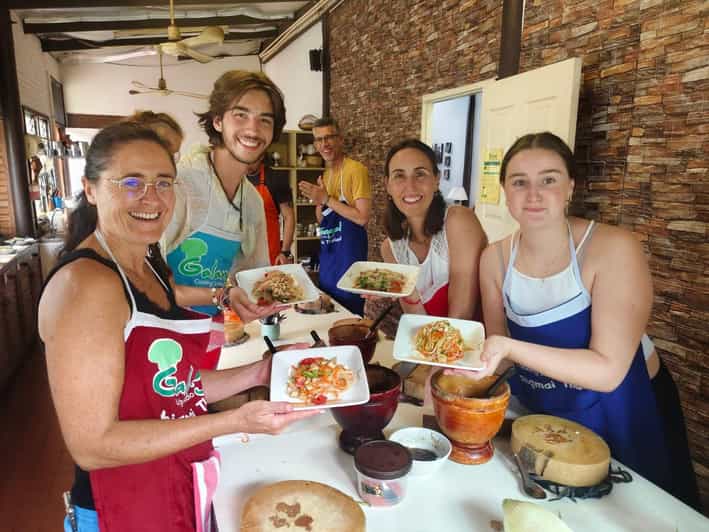
After the market, you head to an organic garden and farm. This is the part that makes the class feel more grounded. You’re not only learning recipes; you’re learning where ingredients come from and how herbs and vegetables grow in Thailand.
You’ll explore the garden, and you can pick your own herbs and vegetables. That sounds like a fun extra, but it changes how you cook. When you’ve chosen the herb leaves yourself, you pay attention to texture and aroma. When you’ve seen what grows where, you’re more likely to use the right ingredient for the right dish.
Here’s what this teaches you, in plain terms:
- Thai cuisine relies on fresh herbs for brightness and balance.
- The strength of flavors often comes from using the right leaves and keeping them fresh.
- Organic growing methods are part of how ingredients maintain quality (and why the aromatics can feel more intense).
If you like food that tastes fresh and not heavy, this farm stop is a huge reason the class is worth doing.
Inside Galangal Cooking Studio: Skills You Can Repeat
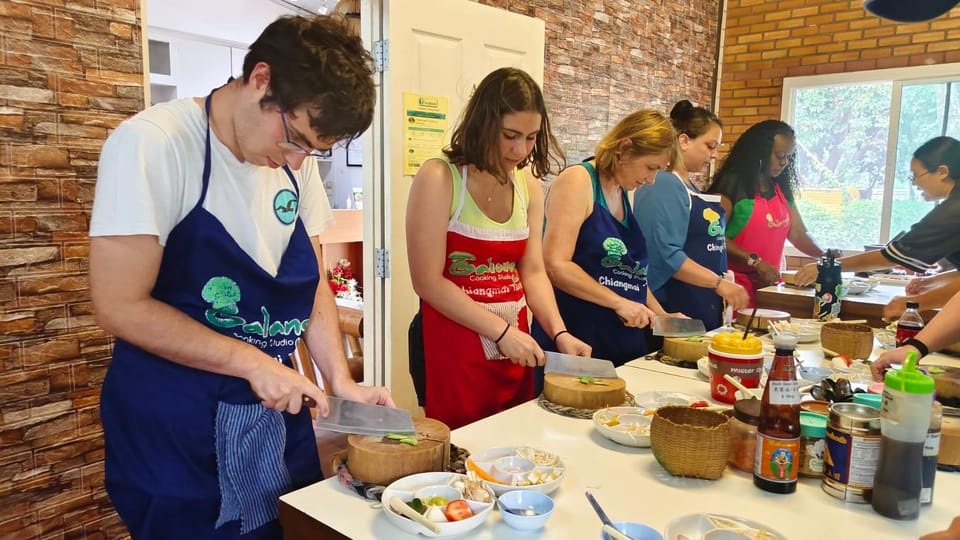
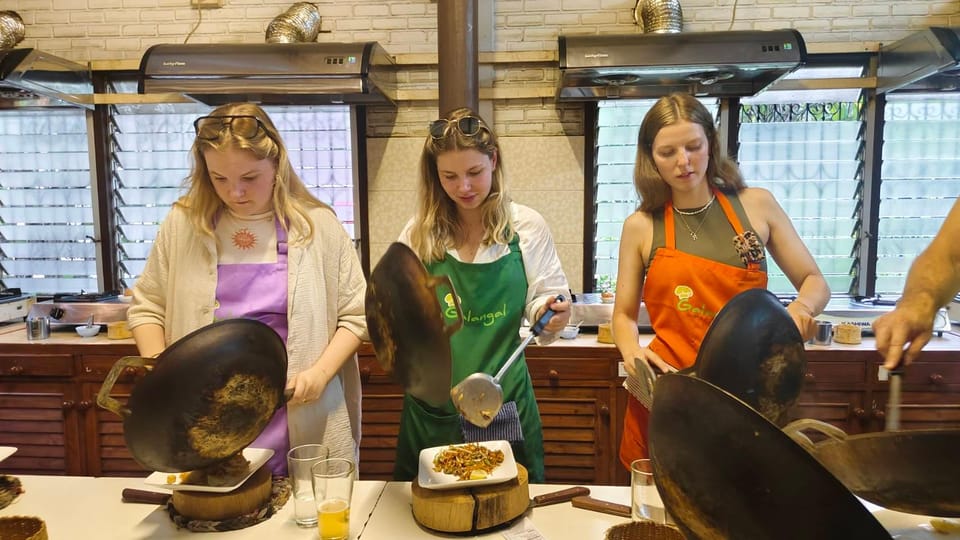
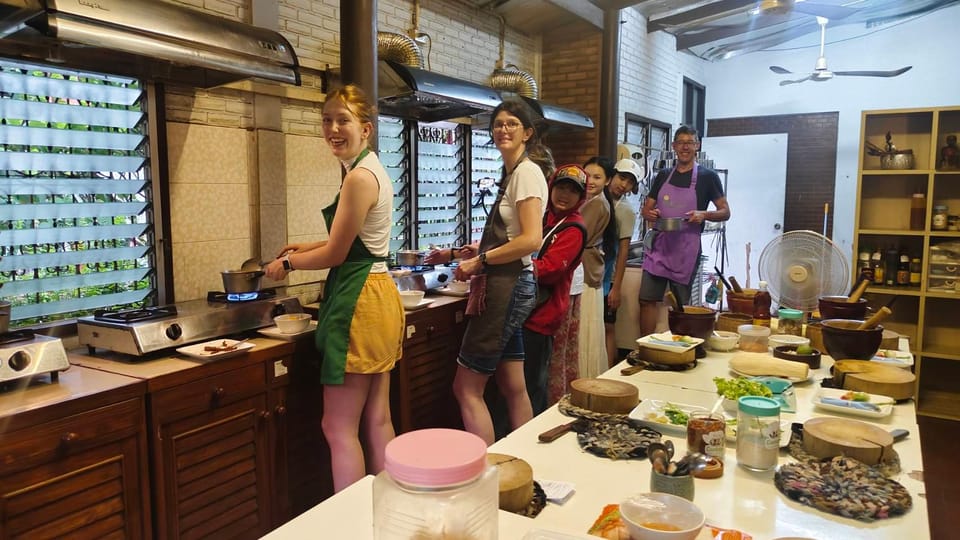
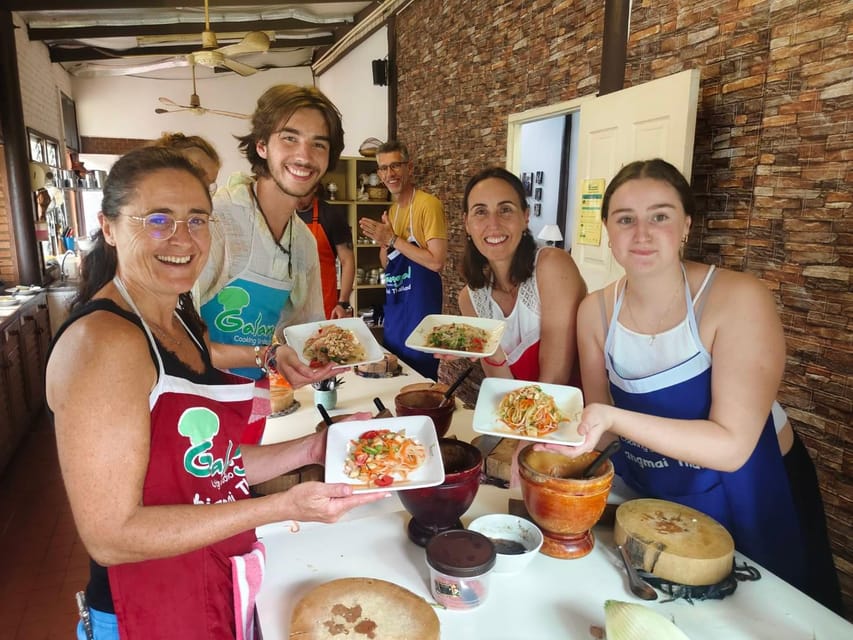
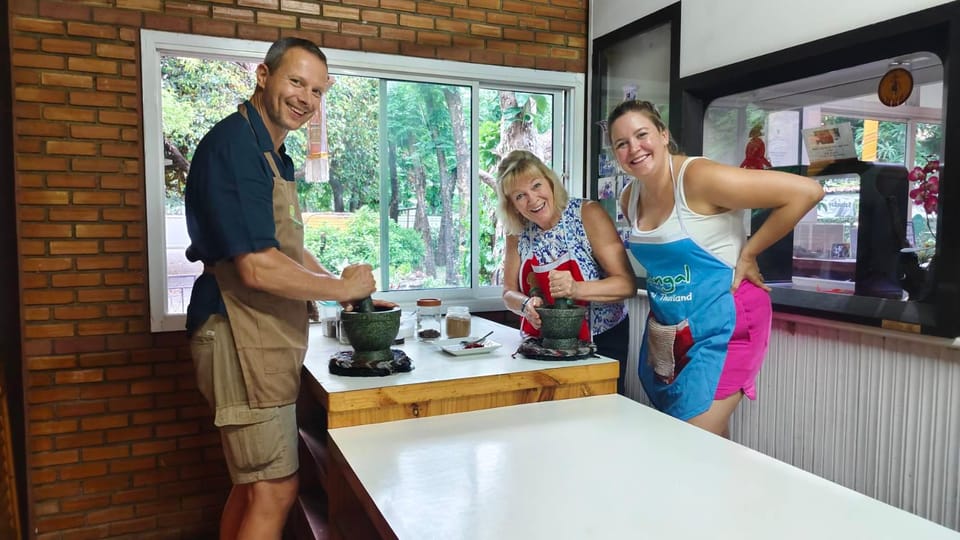
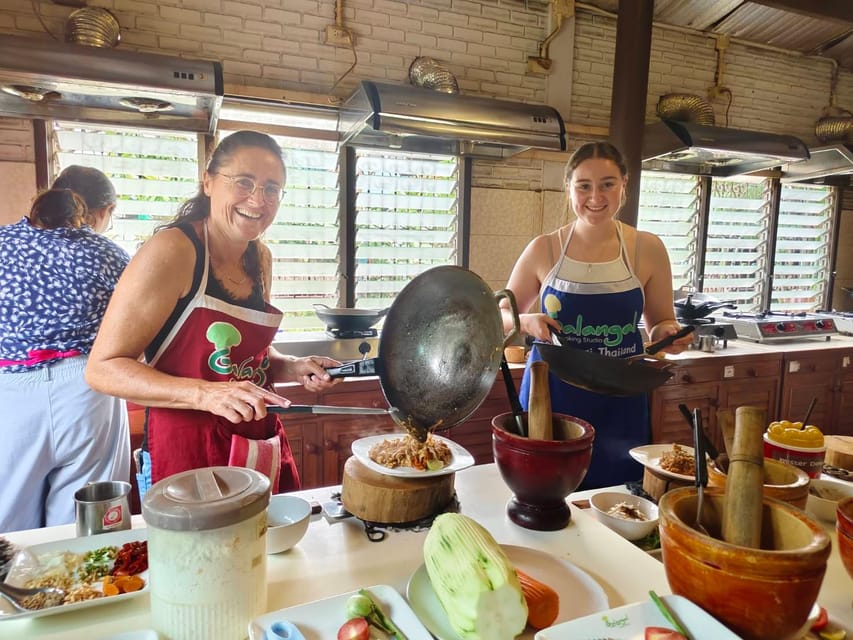
Once you’re back in the cooking studio, you start the hands-on portion. The kitchen setup includes the equipment and ingredients you need, so you’re not scrambling for specialty items. Instruction is in English, and the teaching style is step-by-step—helpful if you’re new, and still satisfying if you’ve cooked a lot.
This studio experience is also designed for learning technique. You’ll practice Thai cooking skills used to build flavor and texture, not only assemble dishes. For many people, the biggest surprise is how much of Thai cooking is timing and seasoning balance rather than complicated tricks.
If you want a smoother experience, watch how your instructor explains:
- when aromatics go in,
- how sauces are treated differently across dishes,
- what “fresh” means in texture (especially for herbs and noodles).
Your Main Work: Cooking Up to 6 Dishes Plus Curry Paste
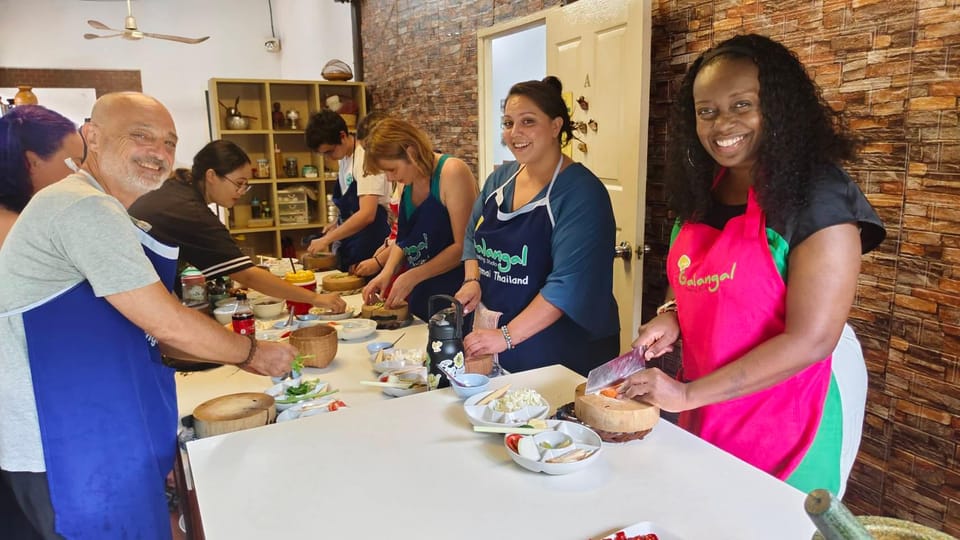
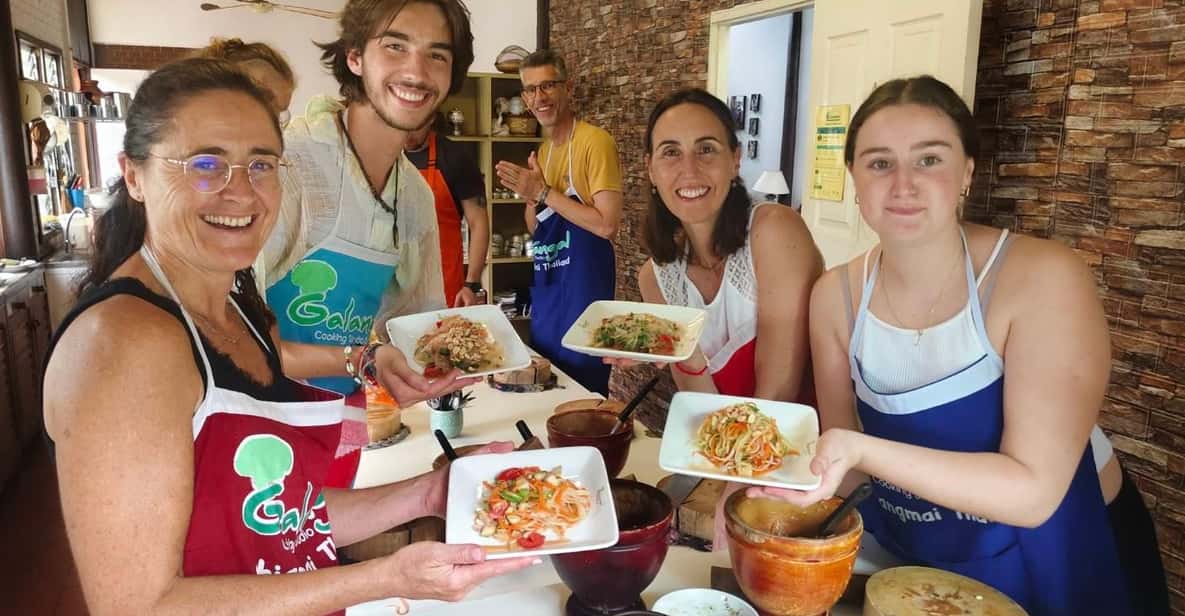
You’ll cook a total of 6 dishes. The exact mix is based on choices, but the structure is consistent: starter, main course, soup, curry, plus dessert.
A few more Chiang Mai tours and experiences worth a look


Starters: Pick One and Learn Thai Salad and Snack Logic
You can choose one starter from:
- Som Tam (papaya salad)
- Por Pia Thod (spring rolls)
- Larb Kai (chicken salad)
- Yam Woon Sen (glass noodle salad)
Som Tam is often the most educational because it shows how Thai cuisine balances sweet, sour, salty, and heat. Larb Kai teaches seasoning and herb use in a salad format. Spring rolls help you focus on texture and filling balance. Glass noodle salad is where you learn how noodles carry flavor.
Main Courses: Noodles and Stir-Fries With Real Thai Staples
For the main dish, you choose one option:
- Pad Thai
- Pad See Ew (stir-fried chicken with fresh noodles)
- Kai Pad Med Mamuang Him Ma Pan (chicken with cashew nuts)
- Pad Kaphao Kai (minced chicken with holy basil)
Pad Thai is the obvious crowd-pleaser, but Pad See Ew is a strong alternative if you want a more savory noodle experience. Pad Kaphao Kai is for basil lovers and anyone who likes heat and aroma in the same bite.
Also, the way mains are chosen matters. A noodle dish teaches you how sauces cling and how heat changes texture. A basil stir-fry teaches you the “aroma-first” approach: herbs aren’t decoration here—they’re flavor.
Soups: Hot and Sour, Coconut Cream, and Vegan Options
You choose one soup:
- Tom Yum Kung (hot and sour prawn soup)
- Tom Kha Kai (chicken soup with coconut milk)
- Tom Kha Je (vegan soup with coconut milk)
- Tom Zap Kai (hot and sour with chicken)
Tom Yum is famous for a reason: hot, sour, and fragrant at the same time. If you prefer creamy depth over sharp tang, Tom Kha options are your path. Having a vegan coconut-milk version listed (Tom Kha Je) is a big win if you’re cooking with dietary limits.
Curries: Choose Your Color and Learn the Paste Mindset
For curry, you select from:
- green
- red
- yellow
- massaman
- Panang
You’re also making curry paste as part of the process. That’s one of the most valuable parts of Thai cooking, because it changes how you shop and cook later. Store-bought paste can work, but paste-making teaches you how flavors come together—why the curry tastes round instead of one-note.
Dessert That Actually Teaches Something: Sweet Thai Classics
After the savory portion, dessert is included and flexible. You can make:
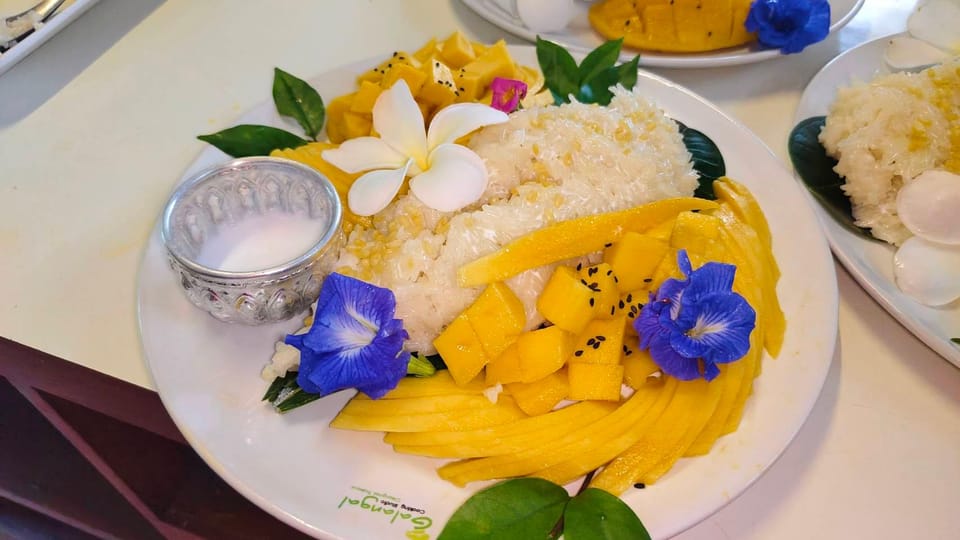
- mango sticky rice with ice cream, or
- Kuay Tod (fried banana)
This is a smart final step. Sweet dishes in Thailand often balance texture—sticky rice versus creamy elements, or crisp versus soft in fried banana. You’ll finish by eating what you made, which is the best way to lock in what worked.
If you’re the type who says you only eat dessert if it’s worth it, mango sticky rice is an easy sell. If you want something more playful and crunchy, fried banana is a fun contrast to all the noodle and curry flavors from earlier.
The PDF Recipe Book: Why This Part Matters for Value
At the end, you receive a PDF recipe book with the dishes from your class. This is the difference between a one-time fun day and a skill you can use again.
Look at what’s included: market ingredients, equipment, and instruction during the day, then recipes you can follow later. That combination helps you rebuild the dishes without guessing from memory.
If you’ve ever cooked after a tour and thought, I could taste it but I don’t know what I did, this is where the class earns its keep. The PDF gives you a real reference point for ingredients and steps.
Dietary Options: Vegan, Vegetarian, Halal, and Gluten-Free-Friendly Choices
This experience is listed as available for:
- vegan
- vegetarian
- Halal
- gluten-free
- and people with allergies
That matters because Thai food can involve sauces, pastes, and ingredients that aren’t always obvious if you’re new to the cuisine. Having the class explicitly offer these options means you can participate without turning your day into a scramble.
When you book, tell them clearly what you need. And during cooking, ask where substitutions happen. Even with tailored options, you’ll get the best result when you understand what each ingredient is doing in the dish.
Price and Logistics: What $41 Buys You (and What to Double-Check)
At $41 per person for a 5-hour morning class, the value comes from the full package. You’re not just paying for cooking instruction. You’re paying for:
- hotel pickup and drop-off
- the market visit
- all ingredients and equipment
- water, tea, and coffee
- English instruction
- and the PDF recipe book
So your money is supporting a whole “learn-by-doing” day, not only a cooking demonstration.
One additional item to pay attention to: there’s a listed visitor fee—500 baht per adult and 350 baht per child (6–12 years). The data doesn’t describe what this fee covers, so treat it like a charge you’ll want to confirm when you book, especially if you’re tracking totals in USD.
Logistically, you can also go directly to the studio if you don’t want hotel transfer. That’s useful if your hotel is outside the pickup coverage or if you prefer self-guided timing.
Who This Class Is Best For (And Who Might Feel It Isn’t)
This class fits best if you want Thai cooking skills you can repeat, and you like learning through real ingredients.
You’ll likely enjoy it if:
- you’re a beginner who wants step-by-step instruction in English
- you’re food-curious and want to understand herb and paste flavors, not just follow recipes
- you’re traveling as a couple or small group and want a guided, low-effort morning
It can also work well for families. One account mentioned a child being welcomed and cooking alongside the group, which suggests they try to make the experience comfortable for younger guests.
And if accessibility matters for you: the experience is listed as wheelchair-accessible and stroller accessible, and infant seats are available. The studio location is also described as near public transportation.
Should You Book This Morning Cooking Class?
I’d book it if your goal is to leave Chiang Mai with more than photos. The combo of market shopping, organic herb picking, and making curries and soups (including curry paste) is the kind of learning that sticks.
It’s also a strong pick for anyone who wants value: the price includes pickup, ingredients, instruction, and a PDF recipe book—so you don’t feel like you’re paying only for a meal.
The only real caution is timing. Be ready for pickup between 8:30 and 9:00, and plan to show up on time so you don’t miss the market portion.
If you’re excited by fresh herbs, noodle dishes, and curry-making, this class gives you exactly that—plus the recipes to cook it again later.
FAQ
What dishes will I be able to cook?
You’ll cook a total of 6 dishes, plus dessert. You choose a starter (Som Tam, Por Pia Thod, Larb Kai, or Yam Woon Sen), a main (Pad Thai, Pad See Ew, Kai Pad Med Mamuang Him Ma Pan, or Pad Kaphao Kai), a soup (Tom Yum Kung, Tom Kha Kai, Tom Kha Je, or Tom Zap Kai), and a curry type (green, red, yellow, massaman, or Panang). Dessert choices include mango sticky rice with ice cream or fried banana (Kuay Tod).
How long is the experience?
The class lasts about 5 hours.
Is hotel pickup included?
Yes. Hotel pickup and drop-off are included, with pickup generally between 8:30–9:00 AM from many areas in and around Chiang Mai’s old city. The driver waits no longer than 5 minutes after the scheduled pickup time.
Do I need to pay anything besides the $41 price?
There’s a listed visitor fee of 500 baht per adult and 350 baht per child (ages 6–12). The $41 price also doesn’t replace that listed visitor fee, so plan for it.
Is instruction available in English?
Yes. The instructor speaks English.
Can I come directly to the cooking studio instead of using pickup?
Yes. You can come directly to the cooking studio if you don’t want a hotel transfer.
What should I bring and what should I avoid?
Bring personal medication. Alcohol and drugs are not allowed. You should also come with an empty stomach.
Is it suitable for dietary restrictions like vegan or gluten-free?
The class is listed as available for vegan, vegetarian, Halal, and gluten-free needs, and it also notes availability for guests with allergies.
If you want, tell me your preferred dishes (for example Pad Thai vs. Pad See Ew, and Tom Yum vs. Tom Kha) and I’ll suggest the best combination to choose for your day.