REVIEW · CHIANG MAI
Chiang Mai: Doi Inthanon National Park Eco-Friendly Tour
Book on GetYourGuide →Operated by TripGuru Thailand · Bookable on GetYourGuide
A cooler day in Chiang Mai’s mountains. This 9-hour tour stacks Thailand’s highest point with pagodas, a calm nature boardwalk, and the big sight of Wachirathan Waterfall. I like the balance: temples and viewpoints in the morning, then culture and nature later. I also like that the hill-tribe village stop is built into the day, with a coffee-brewing experience and time to wander. One possible drawback: it’s a full-day drive with mostly easy walking, so if you want heavy trekking, this won’t feel like that.
The tour is set up for a smooth rhythm, using an air-conditioned van and a guided schedule. It’s also offered as a GSTC-certified eco-friendly option, with glass-bottle drinking water and carbon-emissions offset credits included. Just plan for weather: mountain areas can be sunny, cloudy, or rainy, and the waterfall views depend on conditions.
In This Review
- Key Things I’d Put On Your Must-Do List
- Why Doi Inthanon Is the Right Day Trip From Chiang Mai
- Price and Logistics: What You Really Get for $46
- Hitting the Road: Pickup Options and How the Timing Feels
- Doi Inthanon National Park: The Highest Point Photo and Forest Time
- Ang Ka Nature Trail: Short Boardwalk, Real Value
- Twin Pagodas: Nabhapolbhumisiri Views Without the Fuss
- Mae Klang Luang Hill-Tribe Village and Coffee Brewing
- Wachirathan Waterfall: The 80m Drop (And When a Rainbow Shows Up)
- Comfort and Pace: Van Time, Small Group, and What to Expect Walkwise
- Eco-Friendly Details That Actually Matter
- Guides and the Difference Between a Tour and a Day
- What to Pack So the Day Feels Easy
- Who Should Book This Tour (and Who Should Skip It)
- Should You Book the Chiang Mai: Doi Inthanon Eco-Friendly Tour?
- FAQ
- FAQ
- How long is the Chiang Mai Doi Inthanon tour?
- Where do I meet the guide if I choose the meeting point option?
- Is hotel pickup included?
- Does the tour include park and pagoda entrance fees?
- What’s included in the price?
- Is lunch or other food included?
- How much walking is there?
- What languages are available for the live guide?
- What should I bring?
- Can I book last minute?
Key Things I’d Put On Your Must-Do List

- Thailand’s highest point stop plus a summit photo moment with the sign
- Twin pagodas (Nabhapolbhumisiri / Nabhapolbhumisiri) with wide views over the national park
- Ang Ka Nature Trail: an easy 360-meter boardwalk with nature info along the way
- Hill-tribe village time focused on customs and traditional coffee brewing
- Wachirathan Waterfall: an 80-meter drop that can show a rainbow in the right light
- Small-group feel with a live guide in English, French, Spanish, or Japanese
Why Doi Inthanon Is the Right Day Trip From Chiang Mai
If Chiang Mai is your base, Doi Inthanon is the kind of outing that makes the city feel less “standard.” This national park sits up in cooler highlands, so the air and scenery shift fast once you start climbing. The payoff is obvious: you get to see the highest point in Thailand, then move through viewpoints, waterfalls, and hill-forest paths without needing to plan everything yourself.
I especially like that the day isn’t just one long hike or one museum stop. It’s a sequence of small moments that add up: a nature trail with placards, pagodas that frame the skyline, then a waterfall where you can actually feel the scale. And because it’s guided, you get the meaning behind what you’re seeing, not just a checklist of locations.
You can also read our reviews of more tours and experiences in Chiang Mai.


Price and Logistics: What You Really Get for $46
At $46 per person for a 9-hour day, you’re paying for three big things: transport, a guide, and the protected-site experience. The transport is air-conditioned, which matters when you’re spending the day riding and waiting between stops. The guide is what turns random driving into an actual storyline—telling you why the Twin Pagodas matter, what to watch for around the waterfall, and how the village culture fits into the region.
Also, pay attention to the entry-fee detail. If you select the option that includes park fees, you’re covered. If not, the stated fees are 300 Thai Baht for the Doi Inthanon National Park entrance and 100 Thai Baht for the Twin Pagodas. That’s the one budget thing to double-check before you go, because it changes what “$46” actually totals on your day.
Food is the other clear point: food and extra drinks are not included. Lunch happens during the day, but you should plan to buy it yourself.
Hitting the Road: Pickup Options and How the Timing Feels
You’ve got two practical ways to start. If you choose pickup, it’s only from hotels or registered accommodations—no roadside or shopping-mall pickups for safety and traffic-law reasons. If you don’t want pickup, the meeting point is at McDonald’s at Thapae Gate in Chiang Mai Old City. Your team emails you the night before to confirm your pickup time and exact meeting point, and your guide will be holding a TripGuru sign.
Plan your mindset for the timing: the drive to the park is about 1.5 hours, and the return includes about 2 hours of van time. That means the day is action-packed, but not constant walking. It’s more like: ride, see, short stroll, eat, see, waterfall, ride. If you hate being stuck in a car, this could feel long. If you accept it as part of reaching the highlands, it works.
Doi Inthanon National Park: The Highest Point Photo and Forest Time

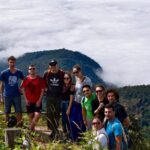
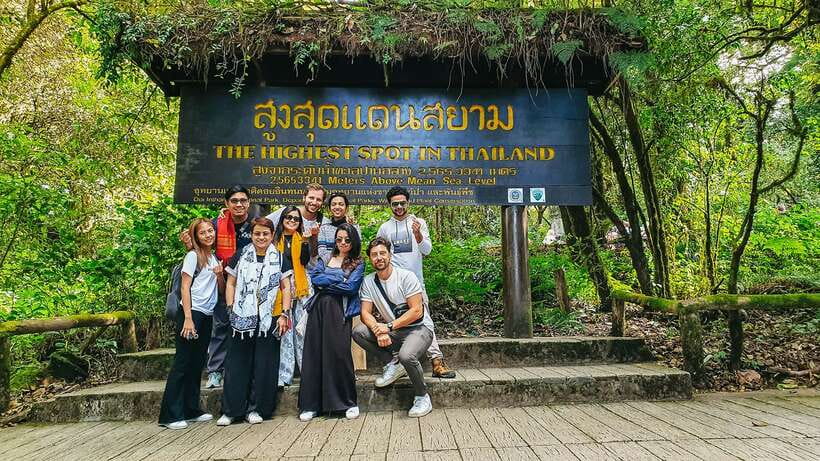
The main attraction is the national park itself, with a guided portion inside. This is where the day earns its reputation. You’re going for Thailand’s highest peak, and you’ll get a photo moment at the summit sign—simple, quick, and very “only-in-Thailand.”
What I like about having a guide here is that it helps you notice what you’d otherwise walk past. In a park like this, small details matter: how the vegetation changes, what vantage points are worth pausing for, and how the day’s other stops connect. This isn’t just scenery for scenery’s sake. It’s the backbone that makes the pagodas and waterfall make sense.
Possible drawback: the park visit is guided, but the day still doesn’t promise a full-on summit trek. You’re seeing the highlights in a structured way, not doing a strenuous backcountry route.
Ang Ka Nature Trail: Short Boardwalk, Real Value
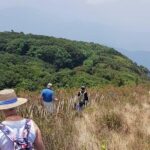
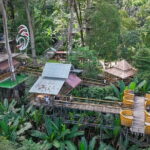
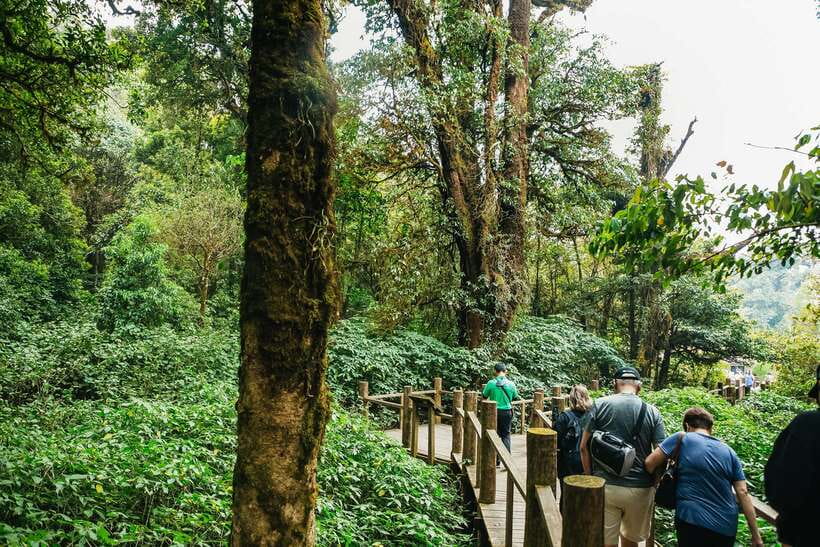
Next comes a much gentler stretch: the Ang Ka Nature Trail. It’s only about 360 meters and it’s a boardwalk, so you’re not signing up for a major hike. The value is what’s next to your feet: informative placards that point out local fauna and explain what you’re seeing.
This is one of those stops that’s easy to dismiss as minor—until you slow down. If you’ve been in the heat of Chiang Mai all week, this short trail feels like a reset. It’s also a nice option if your group has mixed fitness levels. You can keep it easy and still leave with a better sense of the ecosystem.
Bring sunglasses and sunscreen anyway. Even on short trails, mountain sun can surprise you.

Twin Pagodas: Nabhapolbhumisiri Views Without the Fuss
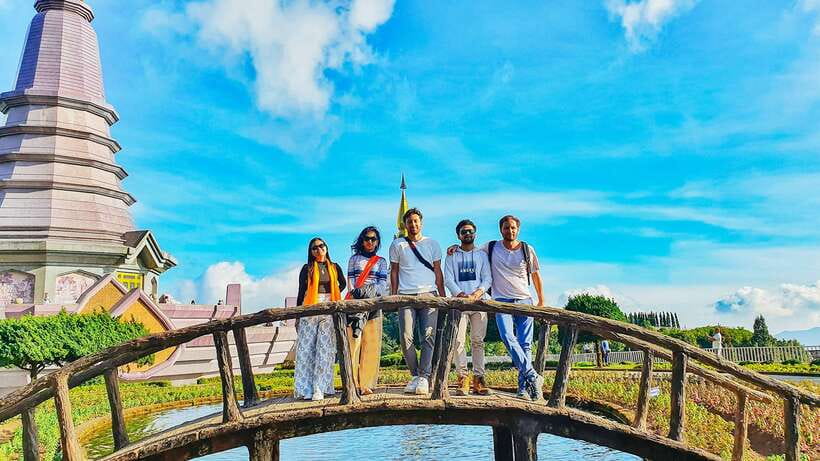
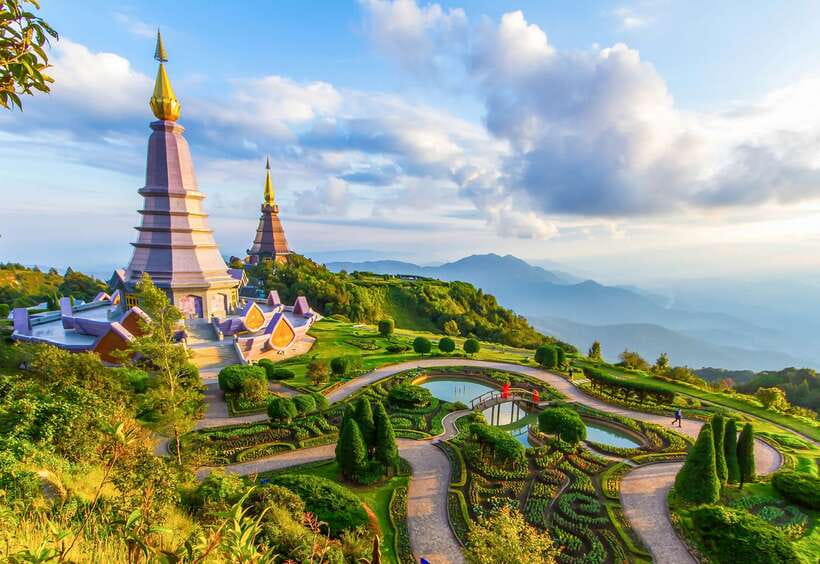
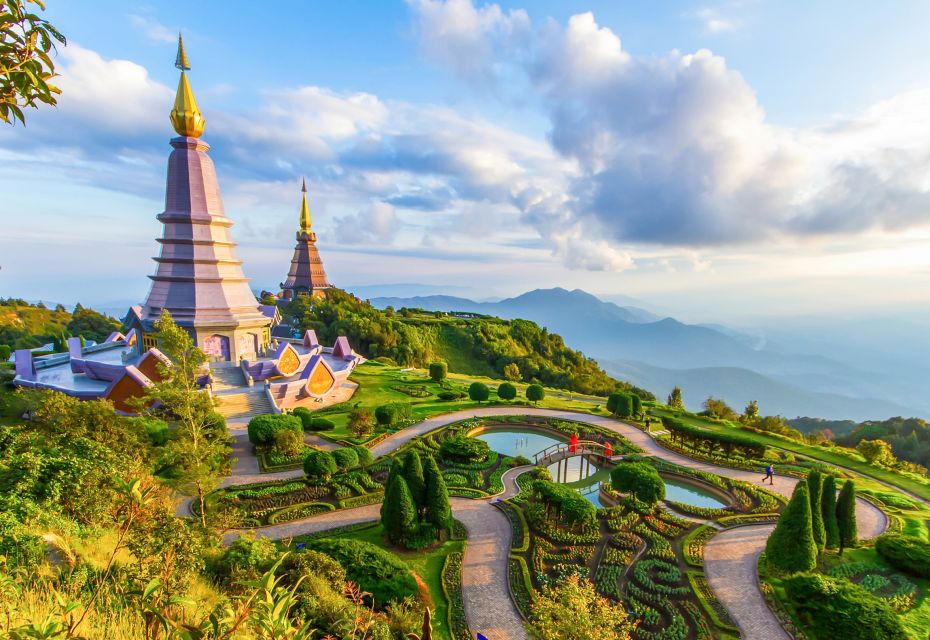
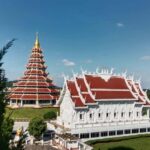
The Twin Pagodas stop is built for big-photo energy. These pagodas are dedicated to the late King and Queen of Thailand, and they’re positioned for sweeping views over the national park. It’s not a long stop, but it’s a powerful one because it gives you a sense of scale—this area isn’t just one waterfall or one summit. It’s a whole mountain system.
I like that the views come from a place that’s meaningful culturally, not only scenic. If you care about Thai royal history, this adds context. If you just want photos, you’ll still get them—lots of angles, and the chance to see the park from above.
Mae Klang Luang Hill-Tribe Village and Coffee Brewing
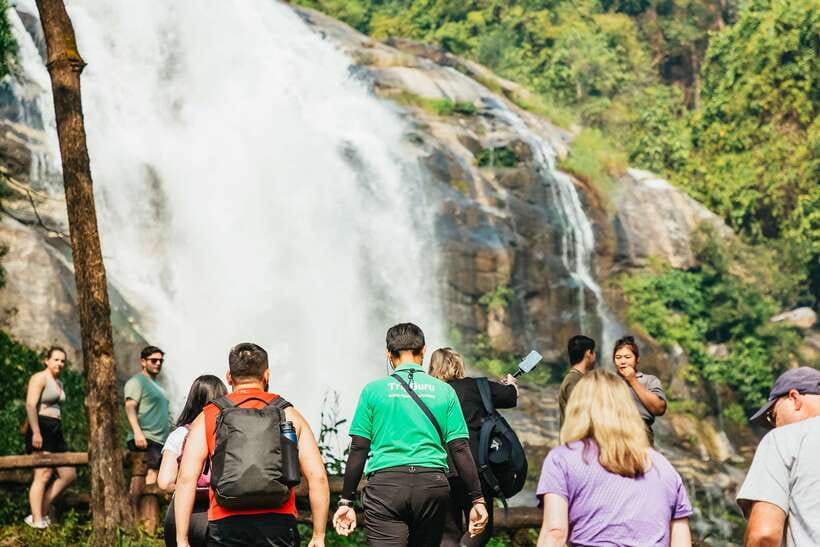
After lunch time, the tour turns toward people and culture. The plan is a guided visit to the village area in the Mae Klang Luang region, where you can learn about customs and experience traditional coffee brewing.
This is a big part of why the day feels more than “natural sights.” Coffee here isn’t just a drink stop. It’s a chance to see daily rhythms—how community life connects to local agriculture and how visitors fit into the story. It also breaks up the physical intensity of the day, since you’re moving at a slower pace, talking, listening, and wandering with purpose.
One practical note: if you’re buying or sampling coffee, bring some cash. The tour asks guests to bring cash, which usually means purchases are part of the village experience.
Wachirathan Waterfall: The 80m Drop (And When a Rainbow Shows Up)
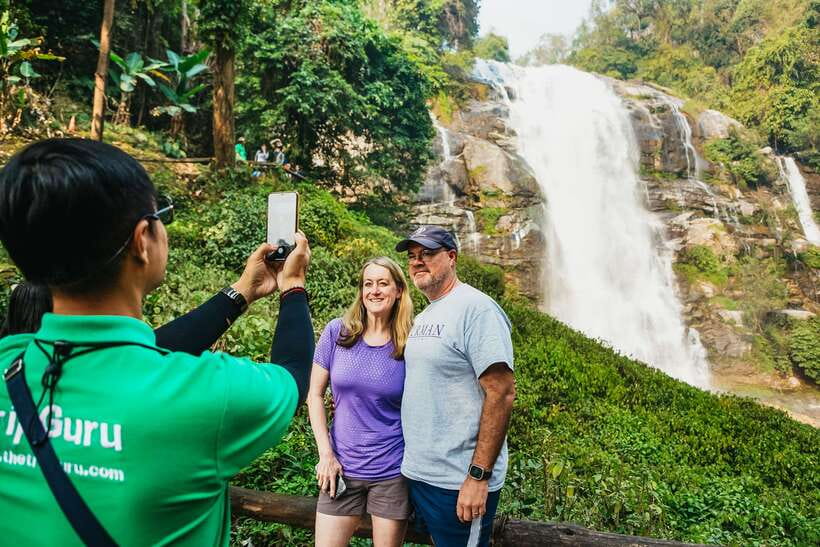
Then you get the wow moment. Wachirathan Waterfall is an 80-meter waterfall, and it’s often accompanied by a spectacular rainbow. That “often” matters: you can’t guarantee the rainbow, but you can increase your chances by being flexible with timing and paying attention to light direction.
This is also where you’ll feel the humid mountain air. Bring an umbrella if you’re worried about mist, and wear shoes with decent grip. You don’t need hiking boots, but you do want stable footing—waterfalls make surfaces slick.
The guide’s job here is simple: help you time your viewpoints and keep you away from the least comfortable spots. If you’ve got a small group, you can usually move together without feeling like you’re waiting forever for a single photo angle.
Comfort and Pace: Van Time, Small Group, and What to Expect Walkwise
The tour uses an air-conditioned vehicle, and that’s a major quality-of-life factor. Yes, you spend time riding. But you’re not doing it in cramped conditions. The small-group option also helps with flow; it keeps the stops from feeling like a cattle line.
Walking is light overall:
- Ang Ka Nature Trail is a short 360-meter boardwalk.
- Village wandering is paced and cultural, not strenuous.
- The rest of the day is mostly viewing and guided stops.
That doesn’t mean it’s “lazy.” It’s structured. You’ll be up and moving at each location, taking photos, and listening during transitions. If you like being shown where to stand, when to look, and how to understand what you’re seeing, it fits.
If you want a rugged day in the mountains, consider pairing this with a more active excursion in Chiang Mai. This one is best as a highlight sampler done well.
Eco-Friendly Details That Actually Matter
I pay attention to the sustainability claims that turn into real practices. Here, the tour is described as low-impact and GSTC-certified, with two concrete touches included:
- Water is provided in glass bottles.
- Carbon emissions offset credits are included for every tour.
Those offset credits are the type of thing you can’t see physically. But I like that the tour at least attempts to reduce waste in the simple ways—glass-bottle water rather than a pile of single-use plastic.
Also, using a single guided vehicle for one coordinated circuit can reduce the chaos of multiple independent rides. You’re not solving the entire carbon problem of tourism in one day, but this is the direction you want to see.
Guides and the Difference Between a Tour and a Day
What makes this day trip work is how the guide runs the rhythm. This is where the experience gets personal even in a group setting. Across different departures, you’ll see guides and drivers referenced by name—people like Nom, Sunny, Lila, Gin, Jin, Nuttaya, and Peter pop up in the tour’s history. The recurring pattern is that guides keep the information clear and the mood friendly.
If you land with a strong guide, you’ll get more than “this is a waterfall.” You’ll get pointers like what to watch for at the pagodas and how to think about the village coffee brewing within local customs.
What to Pack So the Day Feels Easy
The tour is in the mountains, so pack like you’re going from warm city to cooler highland weather, then dealing with sun and mist.
Bring:
- Comfortable shoes
- Sunglasses
- Hat
- Umbrella
- Camera
- Sunscreen
- Insect repellent
- Cash
- Jacket
If you hate carrying too much, at least bring a jacket-light layer and a rain option. Mountain weather changes fast.
Who Should Book This Tour (and Who Should Skip It)
This tour is a great match if you:
- Want a single day that covers highland highlights—highest point, pagodas, waterfall, and a village visit.
- Like guided context (you’re not just checking boxes).
- Prefer easy walking and a steady pace.
You might skip it if you:
- Want serious trekking or a long wilderness hike.
- Don’t want any “car time” in a full-day schedule.
- Are looking for a more food-focused experience (lunch is part of the day, but meals aren’t included).
Should You Book the Chiang Mai: Doi Inthanon Eco-Friendly Tour?
Yes, if you want a well-structured day trip that hits the main sights without making you manage the details. The value is strongest when you see how much is included: transport, a live guide, insurance, and entrance fees when you choose that option—plus the small eco touches like glass-bottle water and carbon offset credits.
My simple decision rule: book it if you’re the type who likes highlights done thoughtfully. Skip or supplement if you’re chasing a more adventurous nature day.
If you do book, double-check whether you selected the option with entry fees included. And set expectations: it’s a highlight tour with a few easy walks, not a hard-core trek.
FAQ
FAQ
How long is the Chiang Mai Doi Inthanon tour?
The tour duration is 9 hours.
Where do I meet the guide if I choose the meeting point option?
Meet at McDonald’s at Thapae Gate in Chiang Mai Old City (shown in the provided map link). The guide will be holding a TripGuru sign.
Is hotel pickup included?
Pickup is optional. It’s offered only from hotels or registered accommodations. If you don’t select pickup, you’ll use the meeting point.
Does the tour include park and pagoda entrance fees?
It depends on your selected option. If you don’t choose entry fees included, Doi Inthanon National Park entrance is 300 Thai Baht and Twin Pagoda entry is 100 Thai Baht.
What’s included in the price?
Included items are hotel pickup and drop-off (if selected), entrance fees (if selected), air-conditioned transportation, a tour guide, a glass bottle of drinking water, insurance, and carbon emissions offset credits.
Is lunch or other food included?
No. Food and extra drinks are not included, even though lunch is scheduled during the day.
How much walking is there?
One of the main walking parts is the Ang Ka Nature Trail, which is a short 360-meter boardwalk. Other parts are guided viewing and village time.
What languages are available for the live guide?
English, French, Spanish, and Japanese.
What should I bring?
Bring comfortable shoes, sunglasses, a hat, an umbrella, a camera, sunscreen, insect repellent, cash, and a jacket.
Can I book last minute?
Same-day booking is available for the meeting point option, subject to availability.