REVIEW · CHIANG MAI
Chiang Mai: Chiang Rai Temples, Karen Tribe and Hot Springs
Book on GetYourGuide →Operated by MONKEY TRAVEL ASIA by Ask Discovery · Bookable on GetYourGuide
Chiang Rai in one day is a lot of bus time. This trip keeps it worthwhile with Mae Kachan Hot Springs to reset your legs and the art-packed White Temple (Wat Rong Khun) for jaw-dropping detail. The big tradeoff is simple: it’s a long, tiring day, and you’ll want to dress for heat and walking.
Two things I really like are the mix of classic Buddhist sites with modern temple art, and the fact that you don’t just get dropped at temples—you get guided context (and a QR audio option with 41 languages). One consideration: lunch and the long-neck village entrance fee (300 THB) are extra, so plan for that before you arrive.
In This Review
- Quick hits: what makes this day trip tick
- First stop: Mae Kachan Hot Springs, warm water and a real reset
- Karen long-neck village: culture you’ll remember, with questions worth asking
- Wat Rong Khun (White Temple): purity symbolism meets modern trickery
- Wat Rong Suea Ten (Blue Temple): calm light, gold accents, and dragon guards
- Huay Pla Kang (Hauyplakang) Temple: Guan Yin, nine tiers, and climb-up rewards
- The road time: why this day trip feels long, and how to plan for it
- Tour setup that actually affects your experience
- Price and value: what $35 covers and what costs extra
- Who this Chiang Rai day trip suits best
- Should you book this Chiang Rai temples day trip from Chiang Mai?
Quick hits: what makes this day trip tick
- Mae Kachan Hot Springs foot-soak vibes to start slow, with no swimming allowed
- Karen long-neck village cultural learning plus handmade craft shopping time
- Wat Rong Khun’s white-and-glass symbolism tied to Buddhist ideas, not just looks
- Wat Rong Suea Ten’s blue interiors and gold details with dragon statues guarding the entry
- Huay Pla Kang’s nine-tier pagoda and big Guan Yin statue plus climb-up views
- English-only live guide, QR audio in 41 languages, but you must bring earphones
First stop: Mae Kachan Hot Springs, warm water and a real reset
You start with a breather at Mae Kachan Hot Springs, which is a smart way to begin a day that will later feel like a temple sprint. The water is warm and mineral-feel enough that you can relax your shoulders and refocus. Do note the rules: swimming isn’t allowed. It’s more for photos, atmosphere, and getting your feet in (if permitted by staff on the day).
This first stop also helps you manage energy. Reviews and on-the-ground experience go together here: people tend to feel better after a short hot-cold rhythm—warm water, shade, then back to the road. If you tend to get car-sick, this also gives you an easy moment before the bus time stacks up.
Practical tip: wear sandals or shoes you can slip off quickly. Bring something to protect your feet from slick surfaces, and keep water handy because the day often runs hot.
A few more Chiang Mai tours and experiences worth a look
Karen long-neck village: culture you’ll remember, with questions worth asking
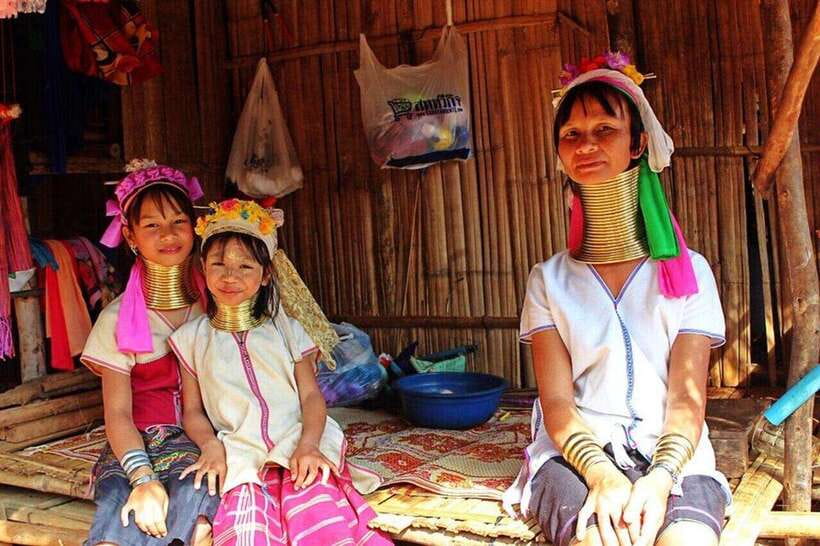
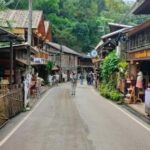
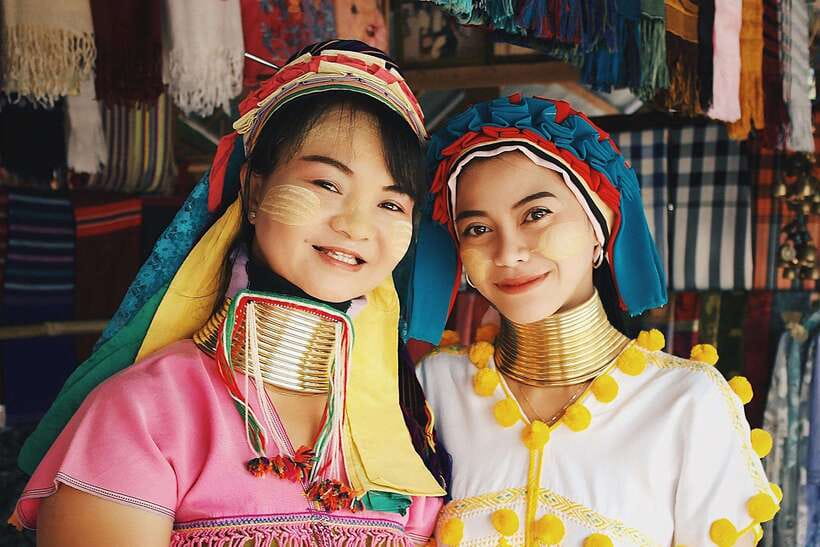
Next you head to Mae Kachan village, associated with the Karen long-neck tradition. You’ll see women wearing brass neck rings, which the tour frames as a practice passed down through generations. You’ll also get time to look around and browse handmade crafts.
This is one of those stops where you should slow down and treat it like learning, not like a photo safari. The value is in asking simple questions: what daily life looks like here, how crafts are made, and what the community hopes visitors understand. The tour environment gives you room to do that, but you still have to decide what feels right for you.
A balanced way to approach it:
- Look, ask, and buy only if it feels fair to you
- Don’t reduce people to a single tradition
- Keep expectations respectful—this is living culture, not a museum exhibit
Also watch for the extra cost: the long-neck village entrance fee is 300 THB and isn’t included. If you’re budgeting tightly, set money aside before you get on the bus.
Wat Rong Khun (White Temple): purity symbolism meets modern trickery
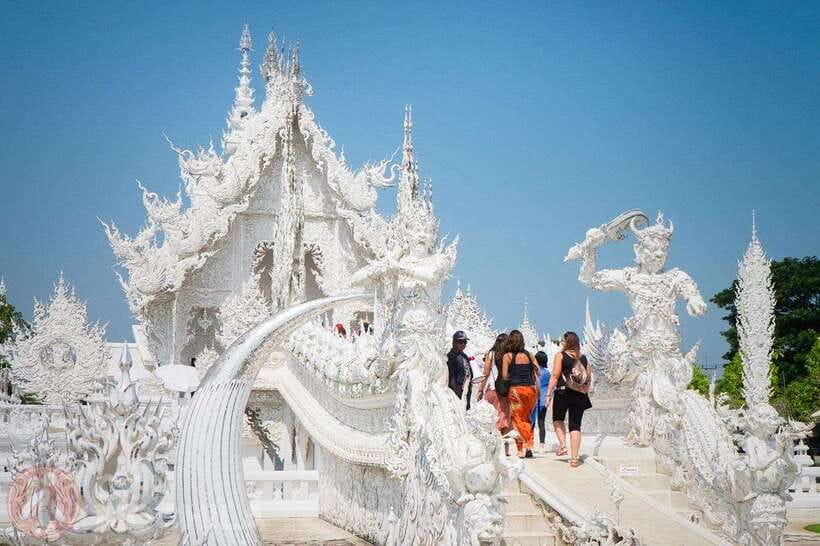
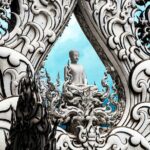
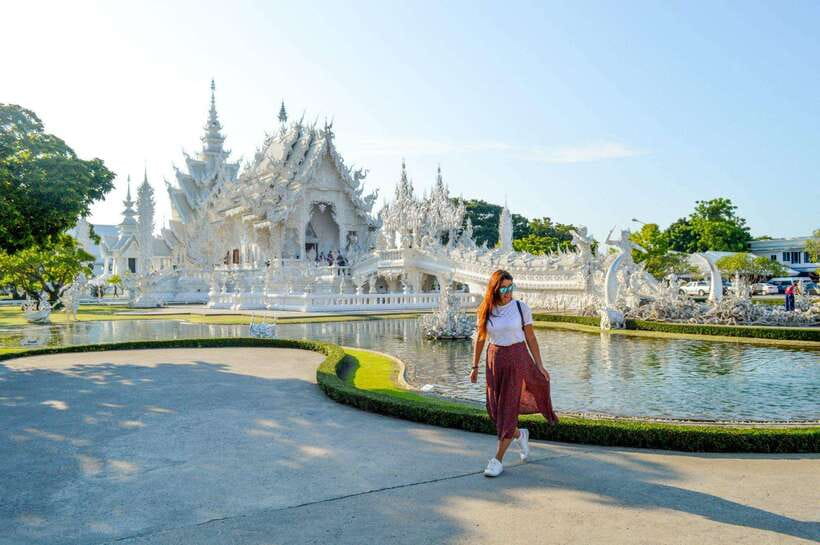
Then comes the headline attraction: Wat Rong Khun, the White Temple, created by Chalermchai Kositpipat. The look is famous for a reason. Everything is white, and the tour explains the intent as well: white represents purity, while the intricate glass details are tied to Buddhist wisdom.
What makes this stop stand out in real life is that it isn’t only traditional in spirit. You’ll also encounter surprising modern imagery mixed into religious structure. That blend is why people keep returning to the photos—they look staged, but the meaning isn’t. The temple rewards time spent reading details, walking slowly, and checking what’s in front of you instead of only taking wide shots.
If you only have one temple to savor, make it this one. It tends to feel like the most talked-about site because it’s visually complex and symbol-heavy.
Practical temple tips:
- Plan to climb stairs and walk on uneven ground
- Dress modestly (shoulders and knees covered)
- Bring a hat and sunscreen; white surfaces can reflect the sun hard
Wat Rong Suea Ten (Blue Temple): calm light, gold accents, and dragon guards
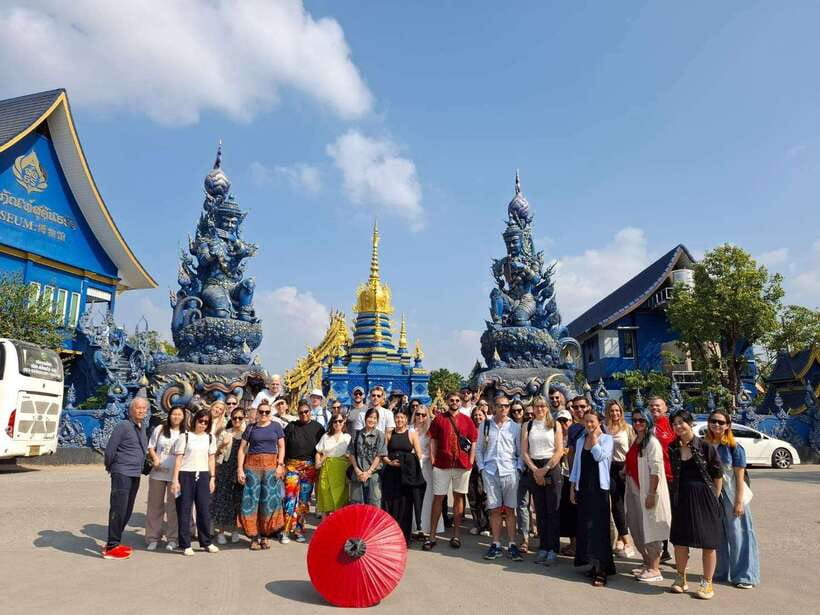
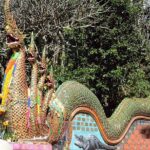
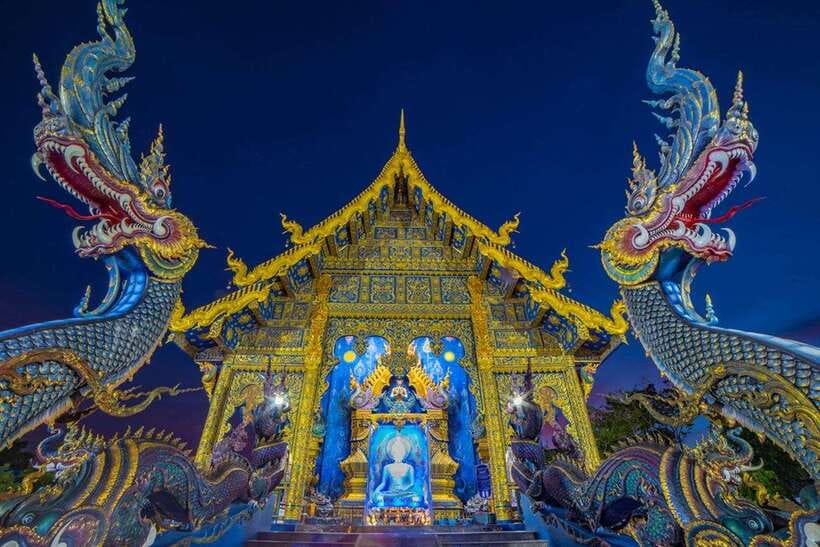
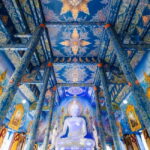
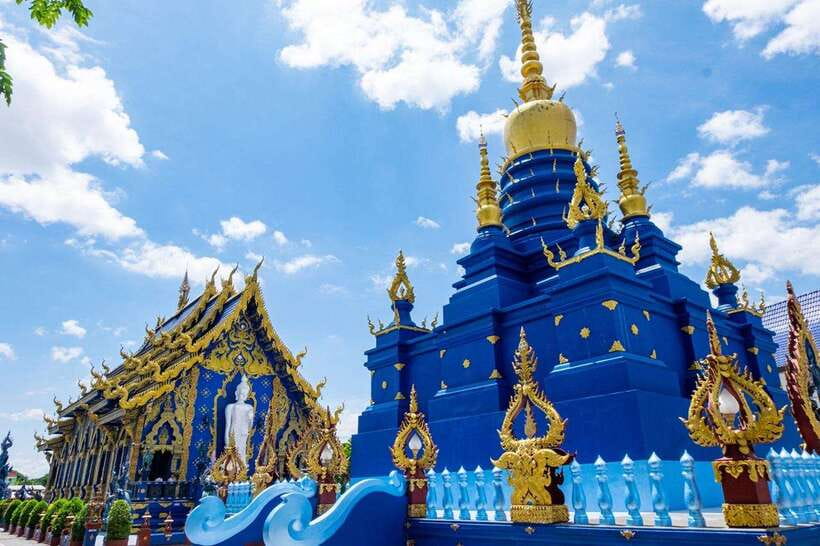
After the White Temple, you’ll visit Wat Rong Suea Ten, the Blue Temple. This one flips the mood: deep blue interiors, gold details, and dragon statues posted around the entrance area. You step inside and find a calm center with a Buddha statue.
The visual contrast matters. At Wat Rong Khun, you’re often scanning for meaning across sharp detail. At Wat Rong Suea Ten, the color scheme and layout lead you into a more still, reflective visit. If you like temples that feel like a room you could actually breathe in, this one is your pause button.
You’ll also see how modern artistic style can still feel devotional rather than flashy. The gold accents and dragon guardians are part of that, adding drama at the threshold, then quiet once you’re inside.
If you’re short on patience during temple hours, give yourself a simple goal: sit still for a few minutes in the main area. It’s an easy way to make the stop feel worthwhile beyond photos.
Huay Pla Kang (Hauyplakang) Temple: Guan Yin, nine tiers, and climb-up rewards
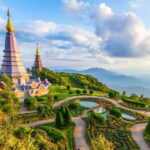
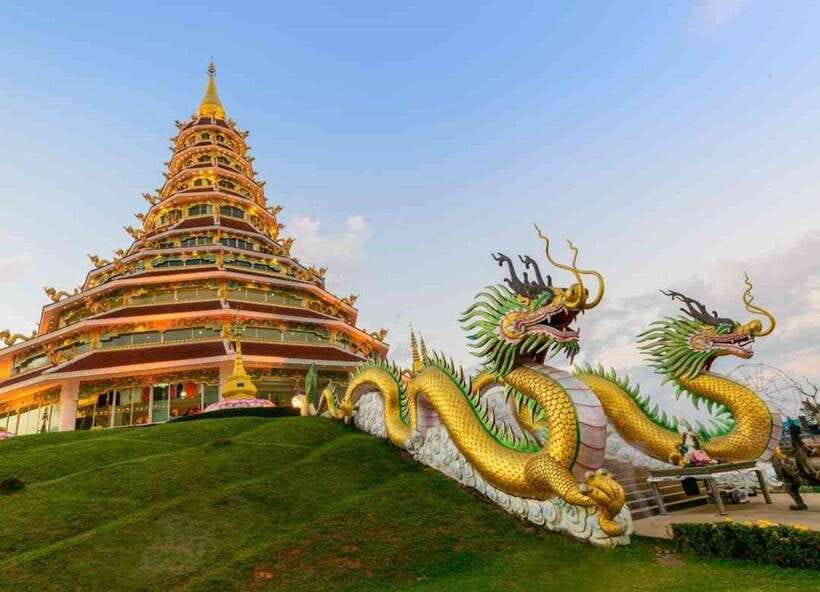
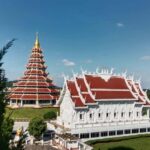
The final major temple stop is Huay Pla Kang Temple, known for a large statue of Guan Yin, the Goddess of Mercy, and a dramatic nine-level pagoda. You’ll get photo time and guided context, but the real payoff is the structure and the climb.
This temple works well as a closer. After two highly designed art temples, Huay Pla Kang feels more grounded in scale and devotion—especially with the carvings and decorations you can spot around the grounds. As you go upward, the nine-tier design becomes more impressive, and the views help you connect the temple to the hillside setting around it.
One thing to keep in mind: there are stairs. Your legs will be tired by this point, so wear supportive shoes and pace yourself. If you’re traveling with older people in your group, this is the stop where handholds and slower movement make a big difference.

The road time: why this day trip feels long, and how to plan for it
This is an all-day outing from Chiang Mai to Chiang Rai Province. Expect substantial driving—several long legs—plus time on-site. The bus ride isn’t just travel; it’s also your buffer for meals and restroom breaks. Still, plan for fatigue.
What helps:
- Comfortable shoes matter more than you think. Temple floors, stairs, and heat add up.
- Bring sunscreen, sunglasses, and a sun hat. The day can feel bright and relentless.
- If you’re prone to motion sickness, consider what usually works for you ahead of time. The roads can be bumpy.
Also, meeting points and timing matter. The day begins at Burger King Thapae in Hotel M Chiangmai, and the guide asks you to show up 15 minutes early. The tour starts with people present; late arrivals can miss the departure with no refund or reschedule. If Chiang Mai traffic is unpredictable for your route, build in extra cushion before you leave your hotel.
Tour setup that actually affects your experience
This tour is built around an English-only live guide plus an optional audio guide via QR code in 41 languages. The guide gives the narrative on the temples and sites, but you might still want the audio option for extra detail while you’re walking. Just remember: you must bring your own earphones. If you forget them, you’ll be stuck with just the live guide.
Group travel is part of the package. You’re on an air-conditioned vehicle, and you’ll get guided stops rather than independent wandering. That’s good if you want structure and explanations, especially at Wat Rong Khun and Wat Rong Suea Ten where symbolism can otherwise feel like decoration only.
Also note what’s not included:
- Lunch (you’ll have a lunch break in Chiang Rai)
- Long-neck village entrance fee: 300 THB
- Earphones
You’ll also want to plan around temple conditions. Dress modestly, expect stairs, and keep bags minimal—no luggage or large bags.
Price and value: what $35 covers and what costs extra
At around $35 per person, the value comes from the combination of transportation, guiding, and multiple temple entrance fees. Entrance tickets for Wat Rong Khun (White Temple), Wat Rong Suea Ten (Blue Temple), and Huay Pla Kang are included. That matters because temple entry fees can stack quickly in Thailand, especially when you’re visiting three big sites in one day.
What you pay separately is mostly predictable:
- Lunch is on you.
- The Karen long-neck village entrance fee is 300 THB.
- Earphones are required if you want the audio guide.
When you add it up, the tour usually makes financial sense if you want guided access to several landmark temples without doing separate ticketing and driving logistics. It’s less ideal if you already have a car (or you prefer to skip the long-neck village and just temple-hop on your own).
Who this Chiang Rai day trip suits best
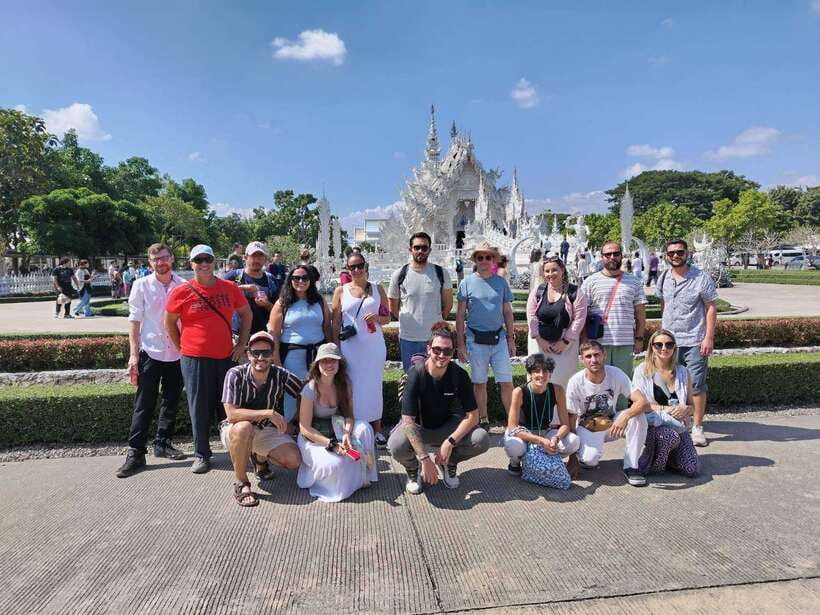
This tour fits best if you:
- Want major Chiang Rai sights from Chiang Mai without planning routes yourself
- Like guided storytelling while you walk, not just standing at gates
- Are comfortable with a long day and stairs inside temple complexes
It’s not a good fit if you have mobility limitations, mainly because temple steps and walking are built into the experience.
If you’re traveling with kids, it can still work—but you’ll need good breaks and shade planning, especially after the midday heat and on the climb at Huay Pla Kang.
Should you book this Chiang Rai temples day trip from Chiang Mai?
If you want the highlights—White Temple, Blue Temple, Huay Pla Kang, plus Mae Kachan Hot Springs—this is a strong way to do it in one shot. You’re paying for structure and included temple entry fees, and the QR audio option helps you get more out of each stop if you like reading while you look.
I’d skip (or at least reconsider) if you hate long travel days, dislike group pacing, or you’re not comfortable with cultural visits like the Karen long-neck village. Also, if you’re easily wiped out by heat and stairs, pack for comfort and build your mindset: this is a marathon day, not a gentle afternoon.
If you can handle that, book it. You’ll come home with photos, context, and a sense of why Chiang Rai’s temple style feels so different from the better-known Thai temple stops.