REVIEW · CHIANG MAI
Chiang Mai: Evening Cooking Class and Local Market Visit
Book on GetYourGuide →Operated by Galangal Cooking Studio · Bookable on GetYourGuide
Some of the best Thailand lessons start with shopping. This evening class pairs a local market visit with hands-on Thai cooking, then you eat what you made.
Two things I really like: you choose your dishes from multiple Thai favorites, and you leave with a recipe book you can actually use at home. One consideration is simple: you need to come hungry, because 5 hours can pack in a lot of food.
Pickup is smooth, but the exact time window matters. Plan to be ready in the lobby 5–10 minutes before your scheduled pickup, since the driver waits only up to 5 minutes after.
In This Review
- Key highlights you’ll feel right away
- Hotel pickup, 5 hours, and a dinner-time rhythm you’ll like
- The market stop: how to shop like Thai cooks
- Organic garden walk: naming herbs you usually skip in stores
- Choosing your menu: 4 dishes that feel doable
- Stir-fry options you might pick
- Soup choices
- Appetizer picks
- Curry and curry paste category
- In the kitchen: hands-on cooking without feeling overwhelmed
- What you’ll actually eat (and why it’s more than calories)
- Price and value: why $28 can make sense here
- Timing and group size: when the evening ends
- Who should book this class (and who should skip it)
- Should you book Chiang Mai: Evening Cooking Class and Local Market Visit?
- FAQ
- What time does hotel pickup happen?
- How many dishes will I cook during the class?
- Can I choose vegetarian, vegan, Halal, or gluten-free dishes?
- What’s included in the $28 price?
- Do I need to bring anything?
- Are observers allowed, and do they pay?
Key highlights you’ll feel right away
- Hotel pickup and drop-off in central Chiang Mai so you’re not wrestling with evening transport
- Market shopping plus an organic garden walk to put names to flavors before you cook
- Choose one dish from each category and you end up making 4 dishes total
- Air-conditioned indoor kitchen that keeps the class comfortable while you cook
- English instructors who stay on track (with friendly, attentive teaching like New and Aoy mentioned in class)
- Dietary options including vegetarian, vegan, Halal, and gluten-free with substitutions
Hotel pickup, 5 hours, and a dinner-time rhythm you’ll like
This is an evening format built around when Chiang Mai really eats. You’ll be picked up from many central hotels (old city, Santitham, Huay Keaw Road up toward Maya Shopping Mall, plus some farther areas), then you’ll head to Galangal Cooking Studio for a 5-hour class that lines up with dinner crowds.
Pickup generally starts in the mid-to-late afternoon (around 3:15–3:45 PM). Evening traffic can stretch the schedule, so your driver may pull up a little earlier because of that, and they’ll wait no longer than 5 minutes after the scheduled time.
What you’ll appreciate most is that this class removes the big hassle: getting there. Once you’re on their schedule, you can focus on food, not logistics.
You can also read our reviews of more shopping tours in Chiang Mai

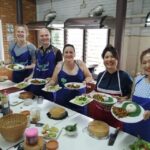
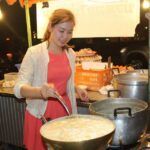
The market stop: how to shop like Thai cooks
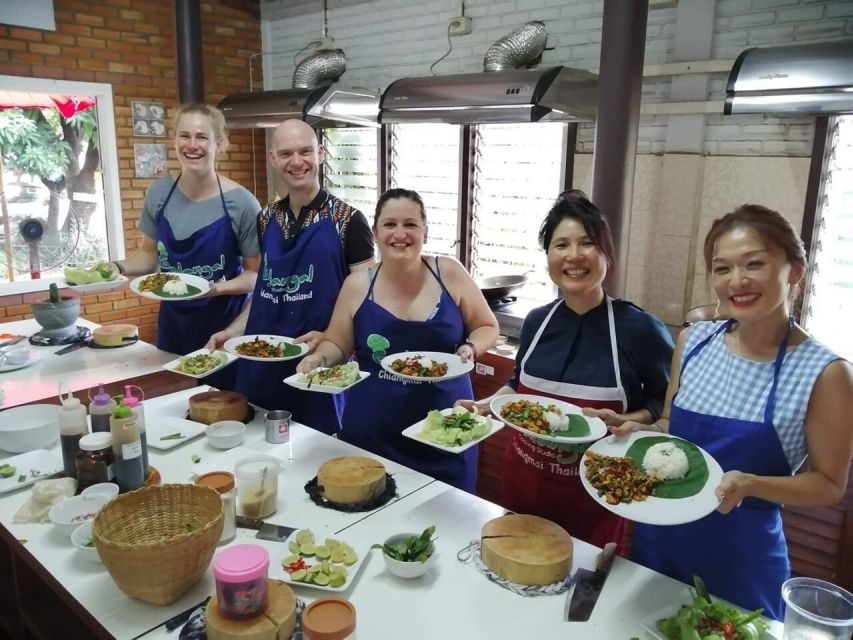
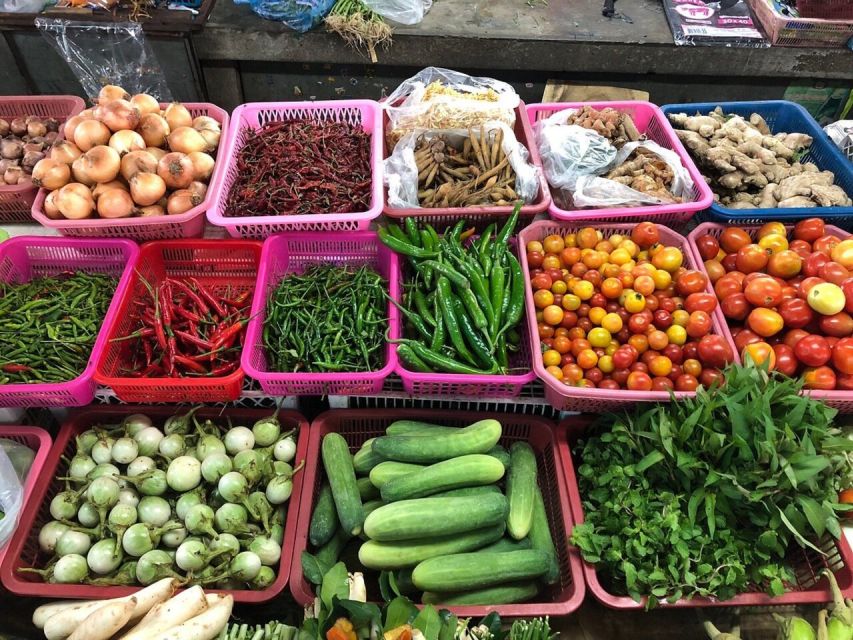
Your evening begins with a market visit where you see the ingredients that make Thai cooking taste like Thai cooking. This part is more than a casual walk. The guide shows you what to look for—vegetables, herbs, aromatics, and key pantry items—so you understand what you’re buying and why.
Then you get time to wander. That’s useful, because it helps you connect each stall to something you’ll cook later. Even if your Thai cooking skills are zero, you start the class with a head start.
A practical note: if you’re picky about flavors (too spicy, seafood-heavy, specific allergies), say it early. The class has support for different dietary needs, and the earlier you speak up, the easier it is to plan your menu.
Organic garden walk: naming herbs you usually skip in stores
After the market, you’ll visit an organic garden to see herbs and vegetables growing. It’s an easy stroll, not a hike, and it gives you something most cooking classes miss: you learn the raw material behind the dish.
Thai flavors often come from fresh herbs and aromatics, not only from sauces. Seeing how herbs grow helps you remember what they look like and what they taste like when chopped into a curry, a salad, or a stir-fry.
This section is also a confidence boost. When you later crush, stir, or garnish, you’re not guessing. You have a picture in your head already.
Choosing your menu: 4 dishes that feel doable
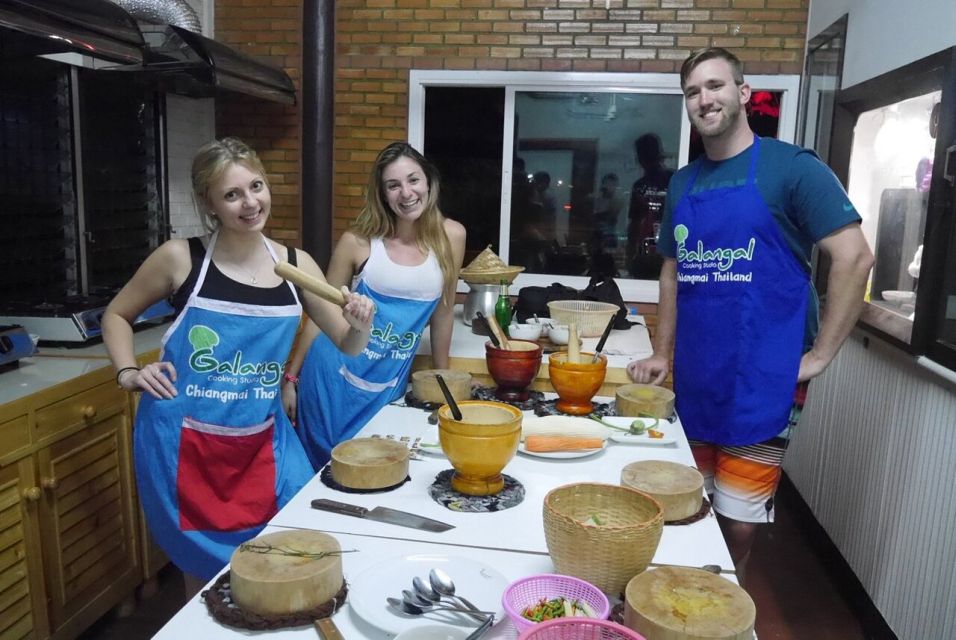
Here’s the structure that makes this class good value. You select one dish from each category, and that turns into 4 dishes total (stir-fry, soup, appetizer, curry or curry paste).
That choice system matters for three reasons:
1) You cook food you genuinely want, not just whatever the class decides.
2) You learn multiple techniques instead of repeating one style.
3) You get variety without the complexity of cooking a huge tasting menu.
Stir-fry options you might pick
From the stir-fry list, choices can include:
- Pad Thai (fried noodles, Thai-style)
- Pad See Ew (stir-fried chicken with fresh noodles)
- Kai Pad Med Mamuang Him Ma Pan (chicken with cashew nuts)
- Pad Kaphao Kai (minced chicken with holy basil)
A few more Chiang Mai tours and experiences worth a look

Soup choices
Soup options can include:
- Tom Yum Kung (hot and sour prawn)
- Tom Kha Kai (chicken in coconut milk)
- Tom Kha Je (vegetarian/vegan in coconut milk)
- Tom Zap Kai (hot and sour with chicken)
Appetizer picks
For starters, you might choose:
- Som Tam (papaya salad)
- Por Pia Thod (spring roll)
- Larb Kai (chicken salad)
- Yam Woon Sen (glass noodle salad)
Curry and curry paste category
For your final course, options can include:
- Kaeng Massaman (Massaman curry)
- Kaeng Kieaw Wan Kai (green curry)
- Kaeng Panaeng Kai (Panang curry)
- Khao Soi (Chiangmai noodle with chicken)
- Kaeng Ped (red curry)
- Kaeng Karee (yellow curry)
- Pad Prik Kaeng (dry red curry)
One technique note that you’ll care about: the curriculum includes curry/curry paste making. That’s where Thai cooking separates itself from bland stir-fry approaches. Getting comfortable with paste-building (and the flavor logic inside it) is the skill that sticks after you leave.
In the kitchen: hands-on cooking without feeling overwhelmed
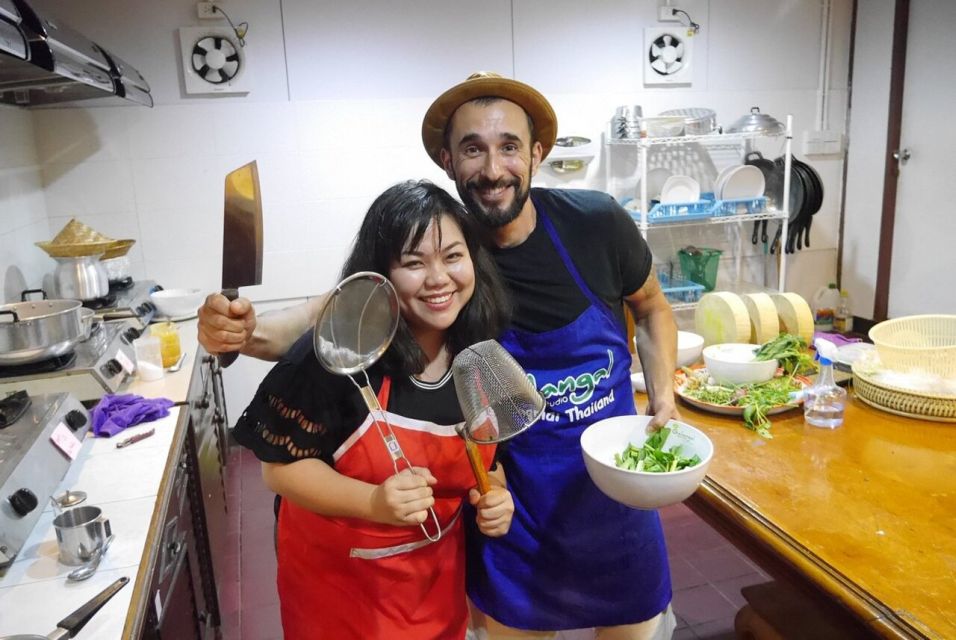
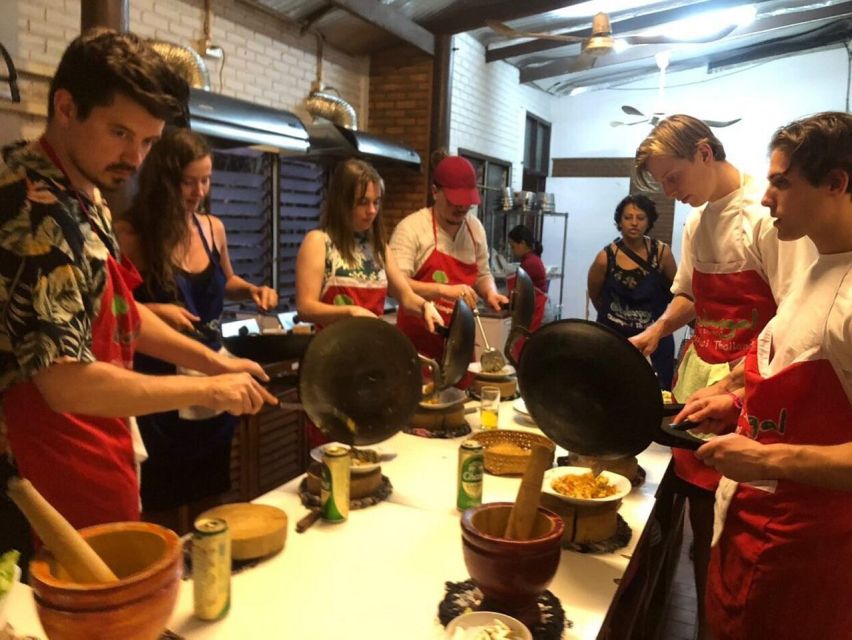
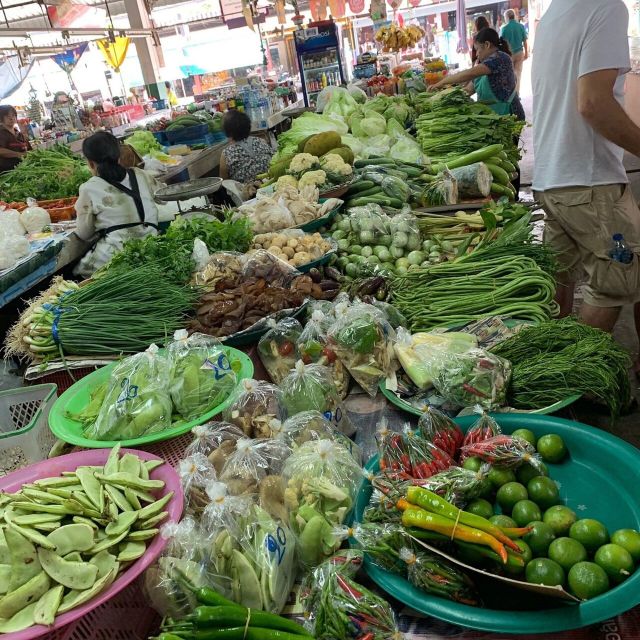
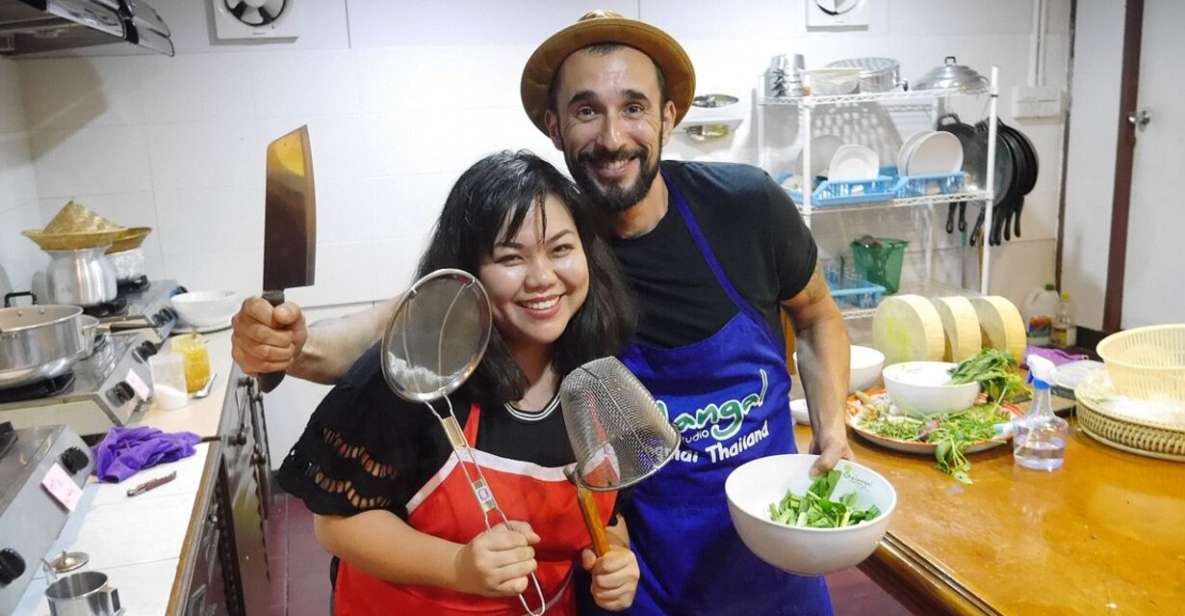
The cooking happens in an indoor air-conditioned dining room/kitchen setup, which is a big deal in Chiang Mai evenings. You’ll get instructions and all the equipment and ingredients you need, so you’re not chasing tools or special items.
The class pace is structured. Instructors keep people on track, and the teaching style is patient and practical. Names like New and Aoy show up repeatedly in how people describe the class, including remembering students and staying attentive.
For first-time cooks, this is one of the better formats because your recipes are guided step-by-step, but you still do the real work: stirring, chopping, tasting, and putting dishes together.
What you’ll actually eat (and why it’s more than calories)
At the end, you eat the dishes you made together. Since you chose 4 dishes, the meal feels like a mini feast rather than a token sampling. That’s why the class warns you to come with an empty stomach—Thai dinner starts around 4 or 5 PM, and the schedule is built around that timing.
Also, this class tends to do a good job with customization. Dietary requests are supported, including vegan/vegetarian, Halal, and gluten-free needs, plus substitutions for allergies. In practice, that means you can get a dish that still fits Thai flavor logic without forcing you to skip the class entirely.
If you’re sensitive to seafood or specific ingredients, you can usually swap. Just bring your requirements clearly (even a quick list is enough).
And yes, you may leave feeling stuffed. People often mention there’s plenty of food, and leftovers may be packed so you can take some with you.
Price and value: why $28 can make sense here
At $28 per person for about 5 hours, the value comes from what’s bundled, not just the cooking itself.
You’re getting:
- Hotel pickup and drop-off (this is often what quietly doubles the cost on other cooking experiences)
- Market + organic garden time before the cooking
- English instruction plus cooking instructions
- Water, tea, and coffee
- Ingredients and equipment for the dishes you choose
- A PDF recipe book to recreate the dishes later
So the real question isn’t whether the class is cheap. It’s whether it’s efficient. Here, your transportation is handled, your ingredients are provided, and your menu is tailored. That’s why it tends to feel like a full evening activity, not a rushed add-on.
The one place to consider carefully is the observer option. If you want to watch rather than cook, there are extra fees for observers (listed in THB). If you’re the one paying, plan to be the cook.
Timing and group size: when the evening ends
The class window you’ll see is often set for a bigger group. There’s a schedule stretch to around 8:30 PM for groups of 10–12 people. If your group is smaller, the class can finish earlier.
For you, the takeaway is practical: don’t plan a tight dinner afterward. Build in some buffer time back near your hotel, especially if your hotel is on the edge of the pickup coverage zone.
Who should book this class (and who should skip it)
This is a strong fit if you want:
- A hands-on Thai cooking night with real ingredient context
- Multiple techniques (stir-fry, soup, appetizer, curry/paste) in one session
- A class that works even if your diet is vegan/vegetarian or gluten-free
You might skip it if:
- You’re dealing with altitude sickness concerns (the activity is noted as not suitable for people with altitude sickness)
- You hate kitchens and prefer pure restaurant food (this is an active cooking class)
It also works well for couples and small groups because everyone can choose dishes from the menu, and the class format still feels organized.
Should you book Chiang Mai: Evening Cooking Class and Local Market Visit?
I think you should book if you want a practical, food-first experience that teaches you how Thai flavors get built, not just what they taste like. The combination of market shopping + organic garden herbs + curry paste skills is the kind of “how it works” learning you can carry home.
Skip it only if you’re expecting a quick taste-and-go cooking demo. This is a full, seated meal plus serious kitchen time. Come with an empty stomach, tell your instructor your dietary limits clearly, and choose dishes you’ll want to repeat.
If you do that, you’ll come away with both a full belly and a menu you can cook again later.
FAQ
What time does hotel pickup happen?
Pickup is offered for many central Chiang Mai hotels, with pickup typically between 3:15 and 3:45 PM. The driver may arrive a bit earlier due to traffic, and they wait no longer than 5 minutes after your scheduled pickup time.
How many dishes will I cook during the class?
You’ll choose one dish from each category—stir-fry, soup, appetizer, and curry/curry paste—so you cook 4 dishes total.
Can I choose vegetarian, vegan, Halal, or gluten-free dishes?
Yes. The class is available for vegan, vegetarian, Halal, and gluten-free needs, and they can accommodate allergies and preferences with suitable alternatives.
What’s included in the $28 price?
The price includes hotel pickup and drop-off, cooking instructions, water, tea, and coffee, and all ingredients and equipment for the class. A market tour and/or interest-based market time is included.
Do I need to bring anything?
Bring personal medication if needed. Also, come with an empty stomach since the class follows Thai dinner timing and you’ll be eating what you cook.
Are observers allowed, and do they pay?
Visitors who come to observe are welcome, but they must pay an observer fee (500 THB for an adult and 350 THB for a child age 6–12).