REVIEW · CHIANG MAI
Chiangmai : Doi Inthanon unseen spot , Rice terrace & temple
Book on GetYourGuide →Operated by Journey D Travel · Bookable on GetYourGuide
Waterfalls, coffee, and rice terraces in one day. This Chiang Mai Doi Inthanon circuit pairs Wachiratarn waterfall power with a rice terraces panorama, plus a Karen hill-tribe stop for coffee and woven textiles. I love how nature and village life are linked in one smooth arc, and I love the guided way it reaches lesser-seen spots; one catch is walking on uneven, sometimes slick paths.
Guide Eddie keeps things calm even when weather turns. On rainy days he can swap in an alternate route so you still see the best waterfalls and mountain viewpoints.
You start around 8:00 AM and come back near 5:00 PM, so pack a light lunch budget and wear real shoes.
In This Review
- Key things I’d plan around
- Morning pickup and the “full-day rhythm” to Doi Inthanon
- Wachiratarn Waterfall: where the mist can paint a rainbow
- Wat Pgageyo Ram: a quieter temple stop in the mountains
- Ban Mae Klang Laung Karen village: coffee tasting and textile time
- Huay Sai Laung waterfall trek: the payoff comes after the walk
- Rice terraces panorama: colors from July to October
- Guide power, photos, and small-group flexibility with Eddie
- Price and what $70 buys you in real terms
- Who should book this tour, and who should skip it
- FAQ
- What’s the duration of this trip?
- Where are the pickup locations?
- How much does it cost?
- What’s included in the price?
- What’s not included?
- Does the tour include lunch?
- What are the main sights included?
- Is there trekking involved?
- What languages does the guide speak?
- Is there a chance to see a rainbow at the waterfalls?
- Should you book this Chiang Mai Doi Inthanon unseen spots day trip?
Key things I’d plan around

- Wachiratarn waterfall with a real chance of a rainbow in misty conditions
- Wat Pgageyo Ram, a quieter mountain temple stop
- Karen culture at Ban Mae Klang Laung, including homemade coffee and woven textiles
- Huay Sai Laung waterfall trek, higher up and more “walk, then reward”
- Rain-season rice terraces (July–October) shifting from lush green toward golden harvest tones
- Eddie’s flexibility and photo time, including professional-quality photos and drone-style videos
Morning pickup and the “full-day rhythm” to Doi Inthanon
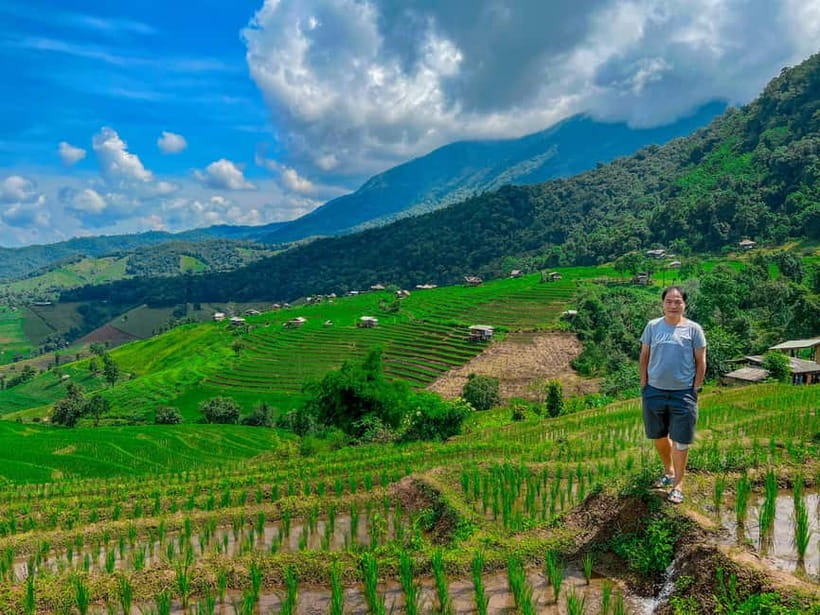
This tour is built as a true one-day circuit. You get a pickup around 8:00 AM from one of three convenient spots in the Chiang Mai area: central Chiang Mai, Central Chiang Mai Airport, or the Three Kings Monument area. It’s included transportation, so you don’t have to piece together multiple rides just to reach the park.
Once you’re moving, the pace stays active. There’s sightseeing plus short walks at multiple stops, and the day is paced so you’re not stuck in the car for long stretches without breaks. The ride matters because Doi Inthanon is far enough from the city that a guided day trip is the practical move.
Practical tip: bring a rain layer even if the morning looks clear. Mist is part of the waterfall experience here, and rain can also make paths slippery.
You can also read our reviews of more tours and experiences in Chiang Mai.



Wachiratarn Waterfall: where the mist can paint a rainbow
Wachiratarn Waterfall is described as the park’s crown jewel, and for good reason. In wetter conditions, the spray can create the possibility of a rainbow right in the air above the falls. Even when the rainbow doesn’t show up, the waterfall itself is a major moment on the route.
What I like about starting here: it sets the tone for the whole day. You’re not warming up with a quick viewpoint. You arrive, feel the scale, then move on while your energy is still fresh.
Photo advice that actually helps: go when the guide suggests your best angles, then give it a few minutes. Waterfalls can change fast with cloud and mist shifts. If you’re bringing a camera, a light wipe cloth is useful.
If it’s raining hard, expect the guide to adjust. One traveler experience credited the guide for switching plans instead of forcing an unsafe or disappointing route, which is exactly what you want on a day like this.
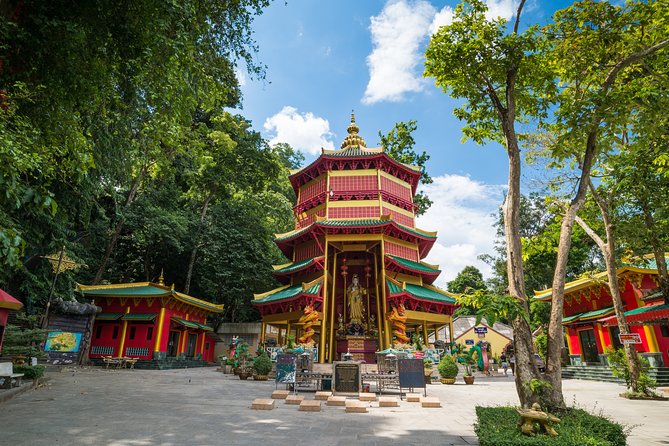
Wat Pgageyo Ram: a quieter temple stop in the mountains
After the waterfall, you shift from roar-and-spray to something calmer: Wat Pgageyo Ram. This is described as a hidden temple tucked within the mountain area, and that difference matters. You’re not spending the day bouncing between only the most famous photo stops. You get a break where the setting feels more tucked-in and still.
This temple stop also gives you context for why people live around these natural spaces. Thailand’s mountain regions are not just “scenery.” They’re living places with spiritual landmarks woven into the daily landscape.
Practical tip: dress respectfully for a temple visit. Even if you’re only there briefly, it’s the kind of stop where being mindful helps you fit in and avoids getting awkward when you’re already wet from waterfalls.
Ban Mae Klang Laung Karen village: coffee tasting and textile time
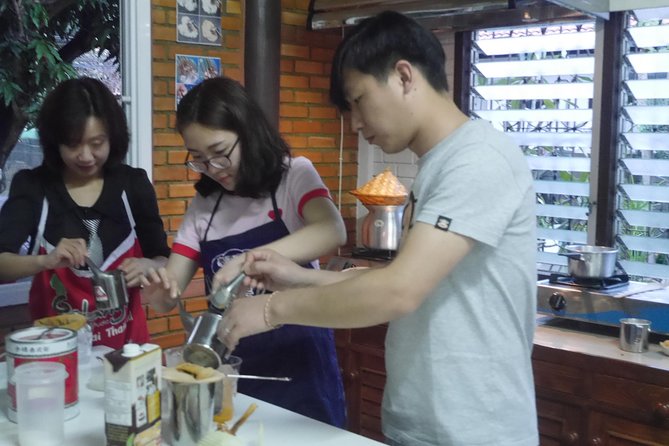
One of the strongest parts of this day is the human side, at Ban Mae Klang Laung with the Karen hill tribe. You don’t just pass by. You’re there to experience daily life, and you get a chance to try their homemade coffee.
I really like this stop because it’s not only a performance. It’s an interaction with craft and culture. You can also admire the woven textiles that come directly from their traditions. For me, textiles are a good signal of authenticity because you can see the work up close and understand why it matters to the community.
A note to set expectations: this kind of village visit can be more meaningful when you’re relaxed and curious. If you go in thinking you’ll “tick a checkbox,” it can feel rushed. Go in wanting to observe and ask gentle questions, and you’ll get more out of the time.
Language tip: the guide can speak Chinese, English, and Thai. Still, on-the-ground communication can vary depending on who’s assigned and how the group is set up. If English is important, it’s worth confirming in advance when you book.
Huay Sai Laung waterfall trek: the payoff comes after the walk
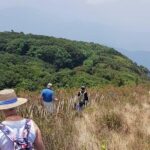
After lunch on your own, you head into the next big nature moment: a trek toward Huay Sai Laung Waterfall, near the mountain summit area. This isn’t framed as a hardcore climb, but it is a trek. The tour is not marketed as “sit and look.” Your legs get a workout.
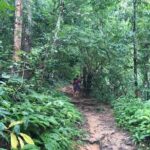
This is where those sturdy shoes matter. Paths around waterfalls can be uneven, and after rain they get slick. Bring shoes you don’t mind getting muddy, and avoid anything with thin soles.
Why this stop is worth it: a second waterfall keeps the day from feeling repetitive. You also get a change in tempo. The morning waterfall is mostly about spectacle and mist. The trek waterfall is about effort, viewpoints along the way, and then that moment when you finally reach the sound and spray.
If weather is questionable, your guide may adjust the plan. Flexibility here is more than convenience; it’s how you protect your day from getting stuck in “we waited but didn’t go.”


Rice terraces panorama: colors from July to October
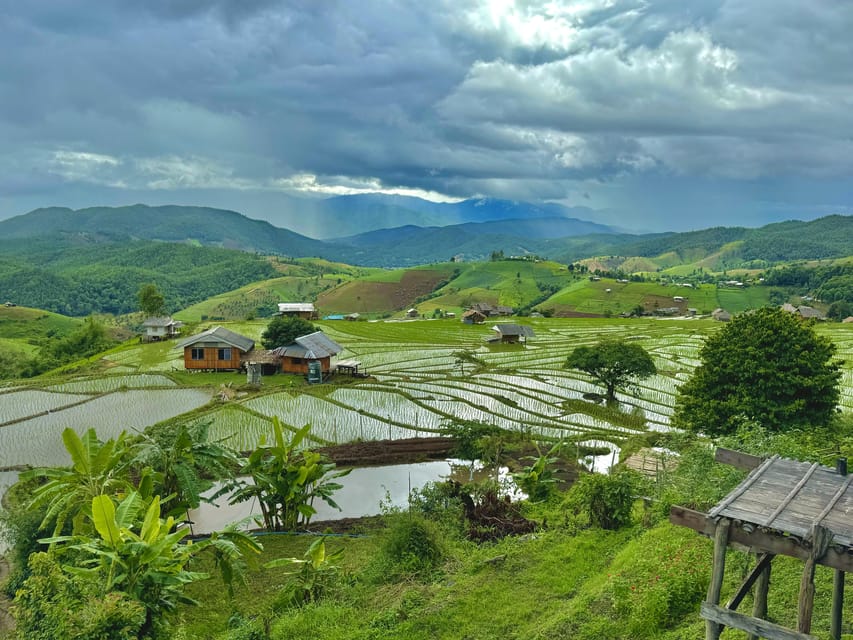
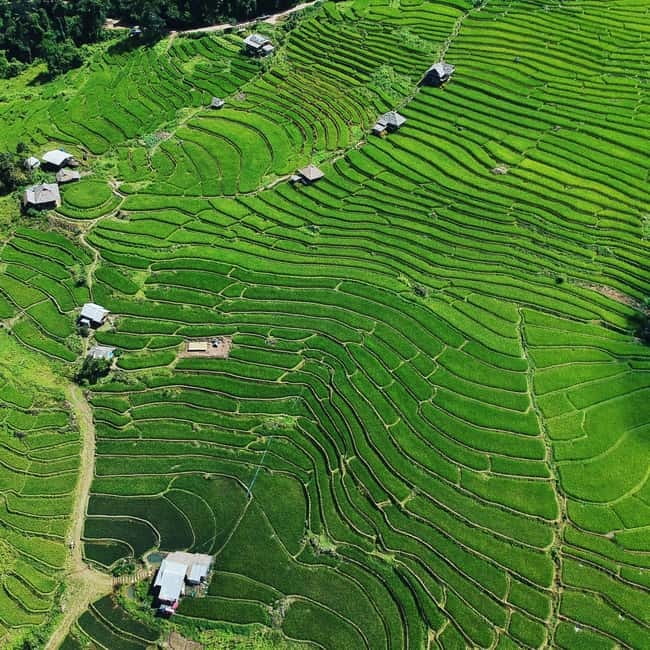
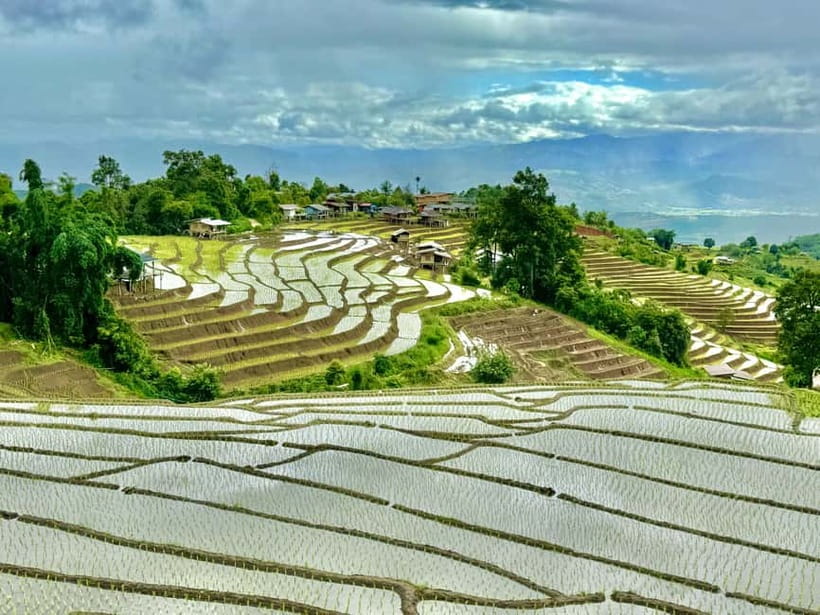
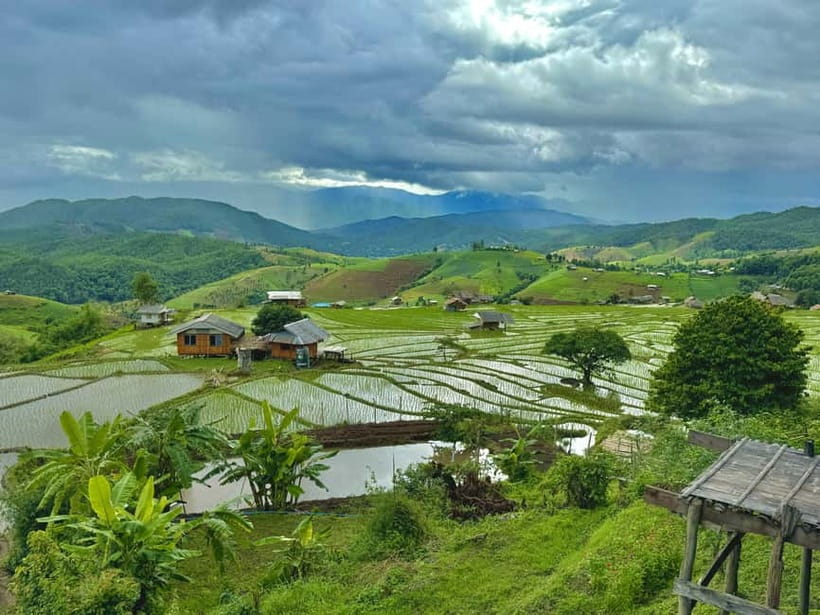
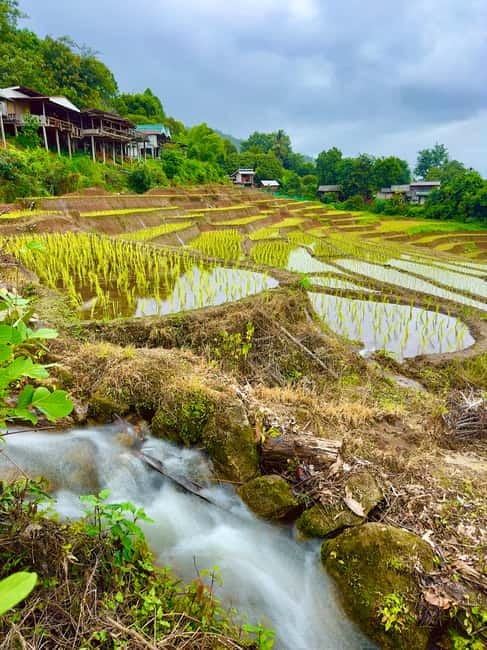
The final highlight is a stroll through rice terraces with panorama views that can shift in tone during the rainy season, especially July–October. That seasonal detail matters because rice terraces look good any time, but rain-season timing changes the mood. The colors can move from lush green toward golden harvest tones as the season develops.
This ending choice is smart. After waterfalls and walking, you finish with something slower and easier to enjoy. It’s not just a photo stop. It’s a chance to see agriculture shaped by weather cycles, and to understand that the area’s beauty isn’t only from monuments and forests.
What you should do at this stage: slow down. Let your eyes adjust to the scale. Terrace views are wide. Trying to rush them often means you miss the best angles where the ridges and lines create depth.
If you’re traveling outside July–October, you may not get the same “green to gold” shift, but terraces can still be beautiful. The main difference is the color story.
Guide power, photos, and small-group flexibility with Eddie
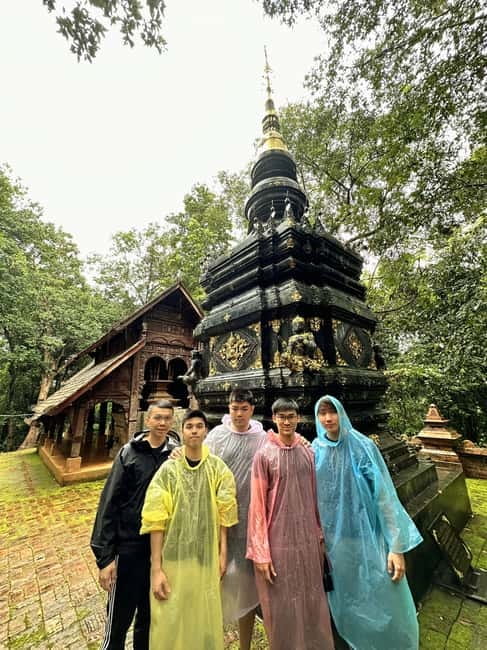
This tour is led by a live guide, and the day often shines because the guide understands how to manage a full schedule across weather changes. One key theme from the experience with Eddie is that he doesn’t treat the itinerary like a robot script. If weather is bad, the route can change to protect the quality of the day.
That flexibility matters most on mountain days. A waterfall can become a slippery slog, visibility can drop, and plans can fall apart quickly. A guide who can pivot helps you keep the day meaningful rather than frustrating.
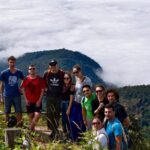
Photography is another big deal here. In family and group experiences, Eddie reportedly spent ample time capturing moments with high-quality photos, and even drone-style videos. Not every tour guide will do this, so if you care about getting more than quick snapshots, this is a strong fit.
Group size also plays a role. The activity offers private or small groups, which usually means fewer people to compete with at viewpoints and more chance for the guide to check your preferences.
Language note again: the guide is offered in Chinese, English, and Thai, but actual English comfort can vary. If you want a very detailed explanation in English, plan to ask questions during natural pauses when you’re at the stops.
Price and what $70 buys you in real terms
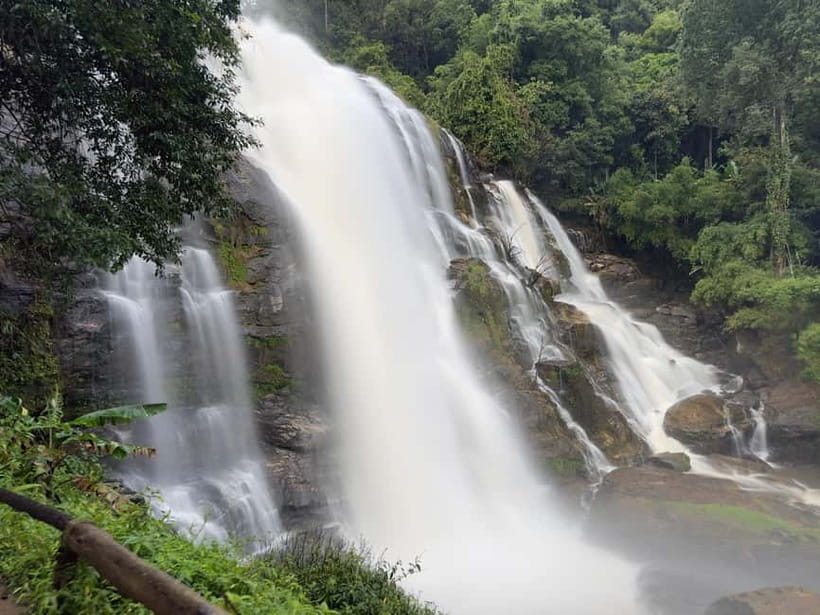
At $70 per person for a 1-day trip, the value is mostly about logistics and access. Transportation and a guide are included, and you get multiple major stops across Doi Inthanon National Park plus a Karen village cultural visit. Without a guided route, you’d likely spend more time (and potentially more money) coordinating rides to reach the same mix of waterfalls, temple, village, and terraces.
What’s not included is just as important. You’ll pay your own food and drinks, and entrance tickets are optional for additional places on the way. That means the final “all-in” cost depends on how much extra you add, especially for lunch.
My budgeting advice: treat lunch as an extra line item and bring some cash for drinks or small snacks if needed. Also remember you might be wet and hungry by the time you reach lunch, so don’t plan to skip food to save time.
In short: you’re paying for one organized, guided mountain day with transport, and the add-ons are mostly your choice.
Who should book this tour, and who should skip it
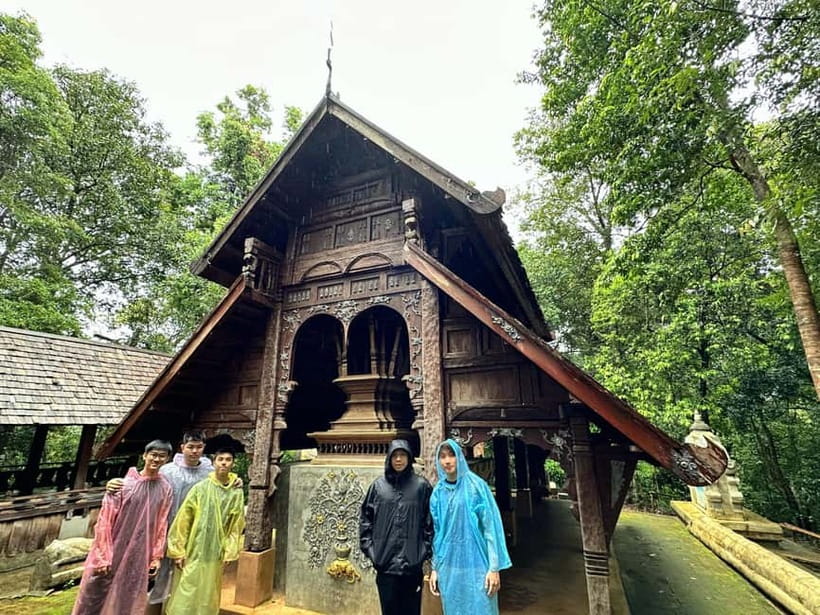
This is a strong match if you want a one-day mix of waterfalls, temple time, Karen village culture, and rice-terrace views. It’s also a good fit if you like being active enough to feel you traveled, but not so intense that you need training for a multi-day hike.
It’s not suitable for:
- Wheelchair users
- People with altitude sickness
- Babies under 1 year
If any of those apply, skip this one and look for a more suitable option around Chiang Mai that matches your mobility and health needs.
One more practical fit check: be honest about your walking comfort. Even if you’re not doing a marathon, the trek to Huay Sai Laung Waterfall is part of the experience. If you’re prone to slipping on uneven ground, pack traction-friendly shoes and go slow.
FAQ
What’s the duration of this trip?
It runs for 1 day, starting with a pickup around 8:00 AM and returning to your hotel around 5:00 PM.
Where are the pickup locations?
You can be picked up in Chiang Mai, from Central Chiang Mai Airport, or near Three Kings Monument.
How much does it cost?
The price is $70 per person.
What’s included in the price?
The tour includes transportation and a guide.
What’s not included?
Food and drinks are not included. Entrance tickets are also not included and may be optional for additional places on the way.
Does the tour include lunch?
Lunch is part of the day but it’s own expense (you pay for it yourself).
What are the main sights included?
The tour includes Doi Inthanon National Park sightseeing, Wachiratarn Waterfall, Wat Pgageyo Ram, Karen culture at Ban Mae Klang Laung, Huay Sai Laung Waterfall, and a rice terrace panorama.
Is there trekking involved?
Yes. There is an exhilarating trek to Huay Sai Laung Waterfall near the mountain summit.
What languages does the guide speak?
The guide can speak Chinese, English, and Thai.
Is there a chance to see a rainbow at the waterfalls?
The day mentions the possibility of seeing a rainbow amidst the cascading waters at Wachiratarn.
Should you book this Chiang Mai Doi Inthanon unseen spots day trip?
Book it if you want one efficient day that covers two waterfalls, a mountain temple, a Karen village coffee and textile experience, and then ends with rain-season rice terraces. It’s also a good choice if you like the idea of a guide who can adjust the route when weather gets rough, including guide Eddie’s reputation for making the day work.
Skip it if you can’t handle uneven walking or if altitude issues affect you. And if you’re hoping for a totally low-effort day, this isn’t that style. Bring good shoes, plan for your own lunch, and you’ll be set for a memorable full-day mountain circuit.