REVIEW · CHIANG MAI
Chiang Mai: Authentic Cooking Class with Market & Farm Visit
Book on GetYourGuide →Operated by Grandma's Home Cooking School · Bookable on GetYourGuide
If you love food, this day clicks fast. You’ll start with a market walk for real Thai ingredients, then cook at your own station as English-speaking instructors guide you, often with chefs like Kiki or Jimmie. It’s the kind of experience that makes Thai flavors feel practical instead of mysterious.
What I like most is the farm-to-kitchen mix: you feed chickens, collect fresh eggs, and (yes) even get a gentle chicken hug if you want it. The second big win is how seriously the class treats Chiang Mai specialties, especially when Khao Soi shows up alongside classics like Pad Thai and curries.
One consideration: pickup is included only for hotels within 5 km of the city center. If you’re farther out, plan on a meeting point or an extra charge.
In This Review
- Key highlights I’d build my Chiang Mai trip around
- Entering Chiang Mai’s cooking classroom: pickup, pacing, and your station
- Market walk: learning Thai ingredients, not just souvenirs
- Grandma’s organic farm: chickens, eggs, mushrooms, and real herb time
- Your open-air kitchen station: step-by-step Thai cooking that sticks
- Curry pastes, curries, and noodle soup: what you’ll be learning as you cook
- Desserts and the full-day coconut milk ritual
- Allergies, dietary preferences, and getting your meal to match your needs
- Transport, drinks, and what to bring so the day feels easy
- Price and value: why $34 feels like more than a cooking class
- Who should book this cooking class in Chiang Mai
- Should you book Grandma’s Home Cooking School in Chiang Mai?
- FAQ
- How long is the Chiang Mai cooking class?
- Is hotel pickup included?
- What dishes will I cook?
- Is coconut milk included?
- Can you handle vegetarian, Halal, or gluten-free diets?
- What should I bring to the farm and class?
Key highlights I’d build my Chiang Mai trip around
- Market tour that teaches what to buy and why
- Organic farm activities: chickens, fresh eggs, herb smells, and mushroom picking
- Cook at your own station with step-by-step guidance in small groups
- Curry paste from scratch using a mortar and pestle
- Khao Soi included as a Chiang Mai signature focus
- Full-day bonus coconut milk made the traditional way with a wooden grater
Entering Chiang Mai’s cooking classroom: pickup, pacing, and your station
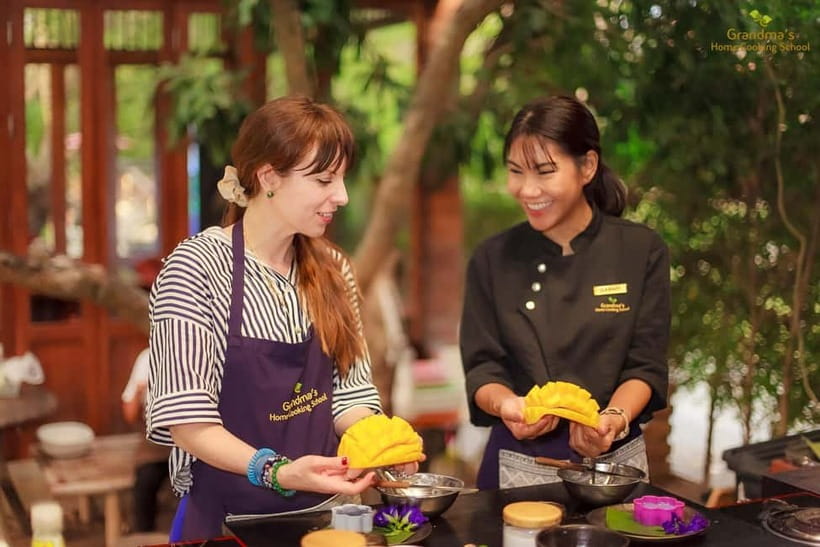
This is a hands-on Thai cooking class set at Grandma’s Home Cooking School in Chiang Mai Province, with hotel pickup and drop-off in an air-conditioned van (within 5 km of the city center). The day runs from about 210 minutes up to a full 7 hours, depending on the session you choose.
What makes the setup work is the “own cooking station” design. You’re not crammed around one pot while someone else does the work. Instead, you cook step-by-step, which matters if you want to actually repeat the dishes later.
Group size isn’t spelled out in the details, but the kitchen setup is clearly organized for multiple stations operating at once. One guest described a setup that could handle around 10 people per cooking area, which explains why the pace stays comfortable and not chaotic.
Also, don’t underestimate how much you drink and snack during the process. You get unlimited drinking water, plus a welcome drink (Thai milk tea, Thai lemon tea, or butterfly pea flower tea) and an herbal drink during the class.
You can also read our reviews of more shopping tours in Chiang Mai
Market walk: learning Thai ingredients, not just souvenirs
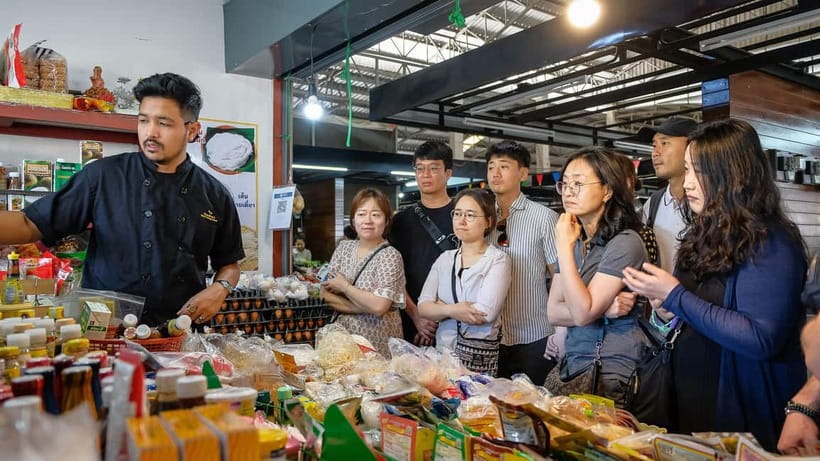
Most sessions begin with a lively market tour with your instructors. Morning, afternoon, and full-day options include this part, so you can choose based on when you want to be out and about.
Here’s what you’re really gaining from the market: a feel for Thai ingredients and how they pair. You’ll see the herbs and vegetables used in the dishes you’ll cook later, and you’ll learn how to recognize key flavor makers like aromatics, citrusy notes, and the sauces that build depth.
Why this matters for you: after a market-based lesson, ordering Thai food becomes easier. You start noticing differences in spice intensity, herb brightness, and how curry flavors develop beyond “it’s spicy.”
This also helps if you want to shop later. When you know what you’re looking for, your grocery run turns into a mini scavenger hunt instead of guesswork.
Grandma’s organic farm: chickens, eggs, mushrooms, and real herb time
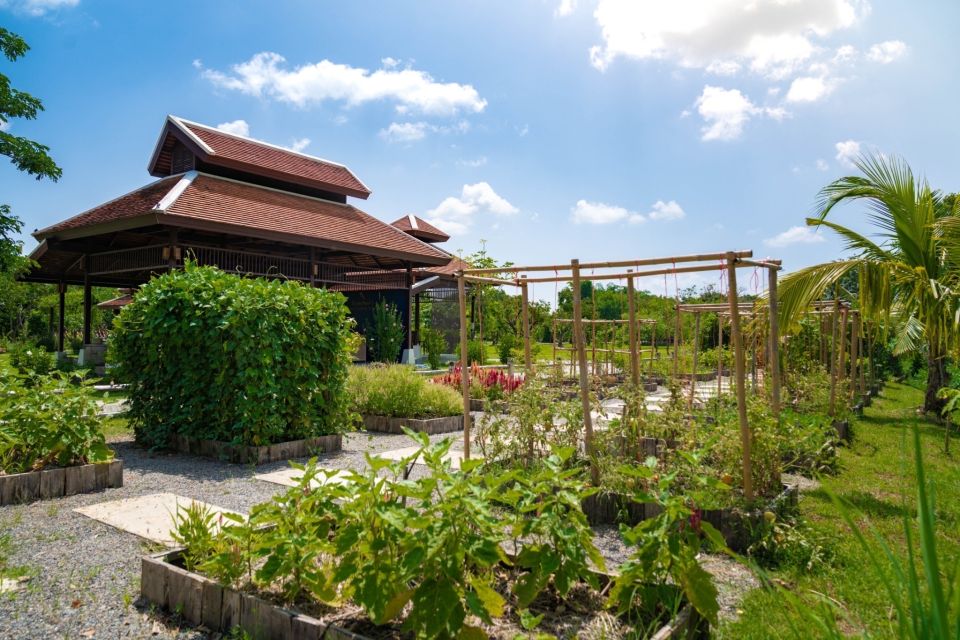
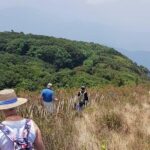
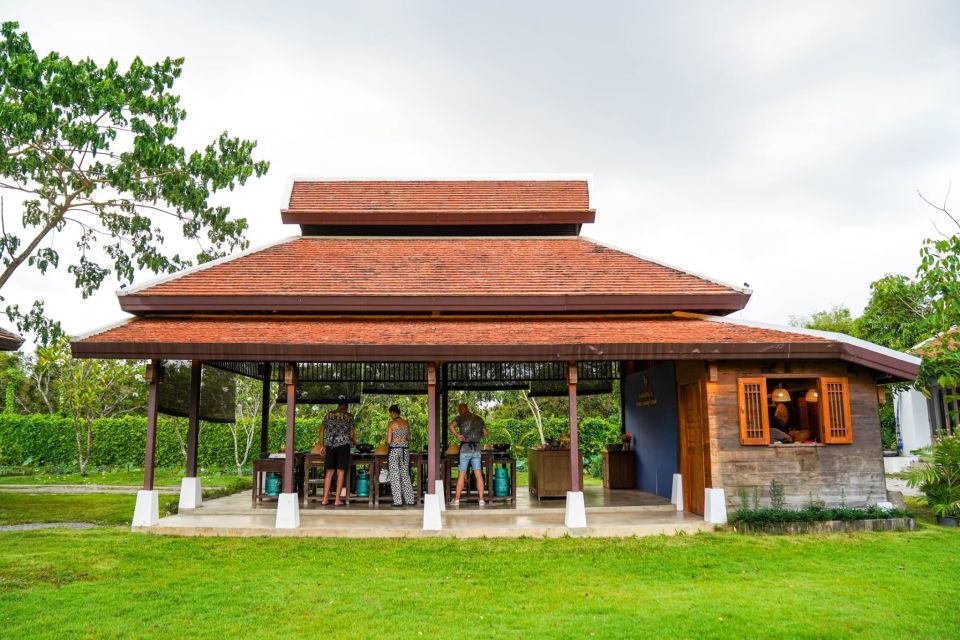
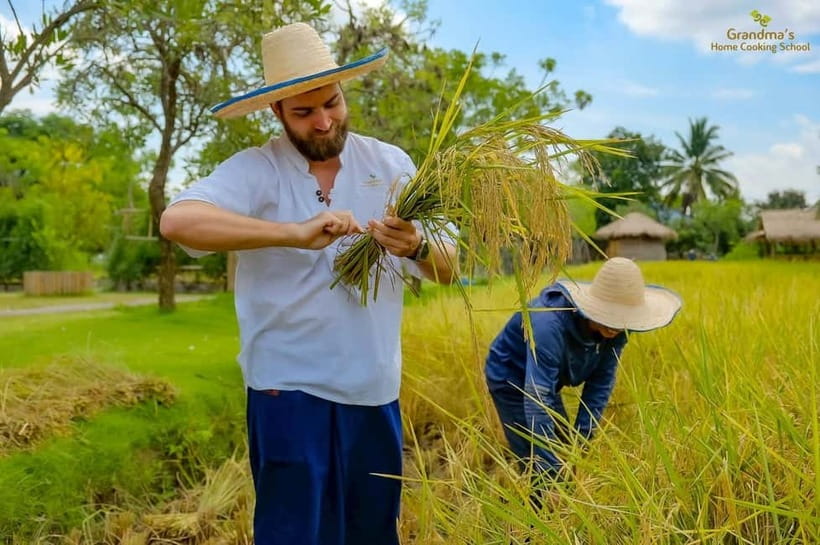
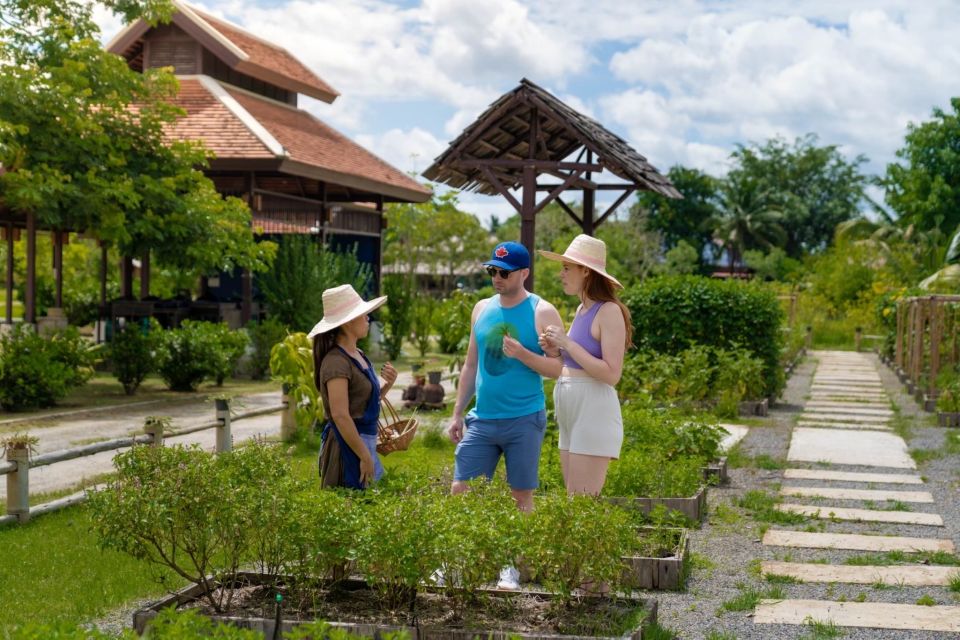
Depending on your session, you’ll spend time at Grandma’s organic farm. The setting is countryside-style, with rice fields nearby and open-air areas where the day feels calmer than the city.
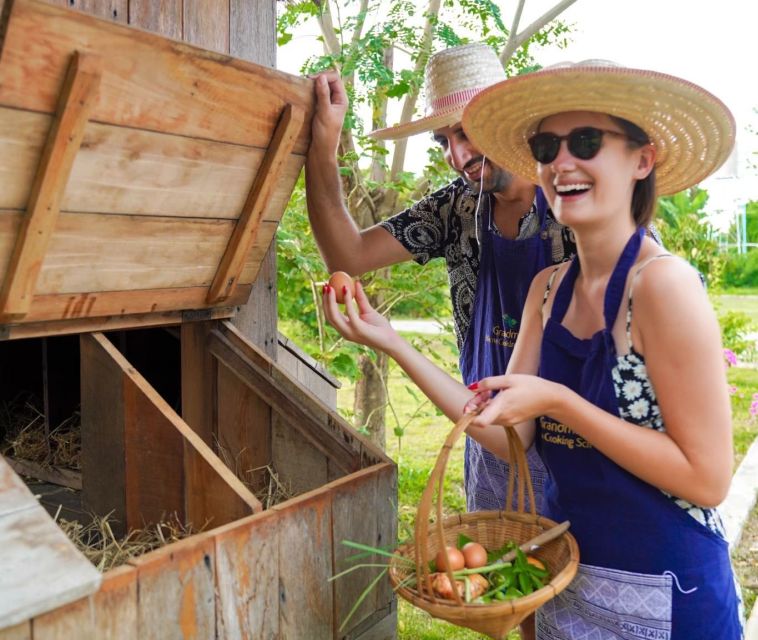
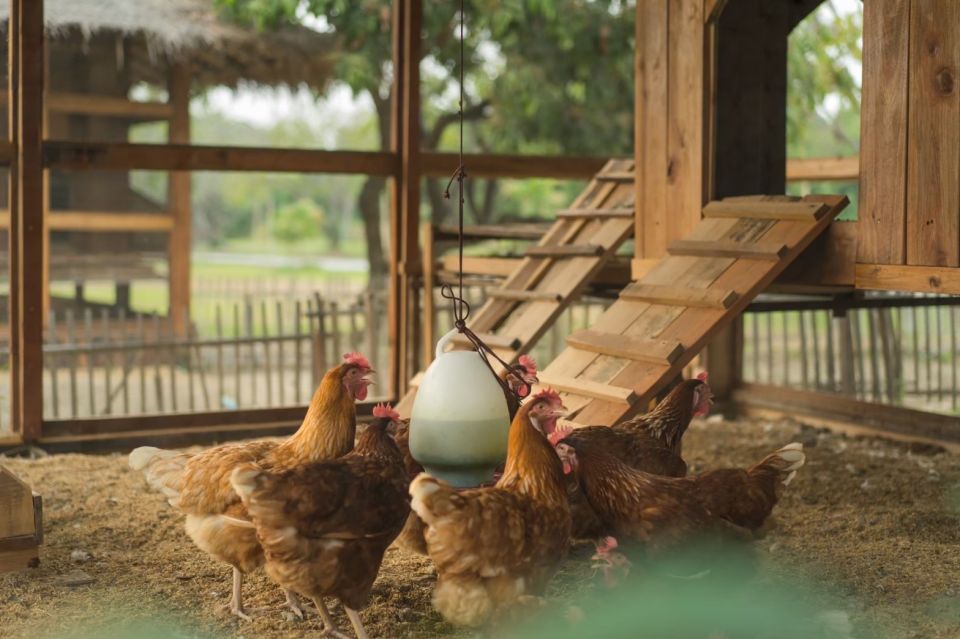
The farm activities are a standout because they’re hands-on, not just photo stops. You can feed the chickens, collect fresh eggs, and if you’re in the mood, give them a gentle hug. It’s a simple moment, but it changes the whole tone of the day from “class” to “family kitchen day.”
You’ll also meet the plant world behind Thai flavor. Expect herb-and-fruit smelling time, plus mushroom picking. The farm includes a mushroom hut described as one-of-a-kind, which makes this part feel more specific than a generic farm visit.
A practical note: wear comfortable shoes. The farm walk is part of the experience, and you’ll move around enough that you’ll be grateful you didn’t choose flip-flops or slippery sandals. A sun hat also helps if you go during brighter hours.
Your open-air kitchen station: step-by-step Thai cooking that sticks
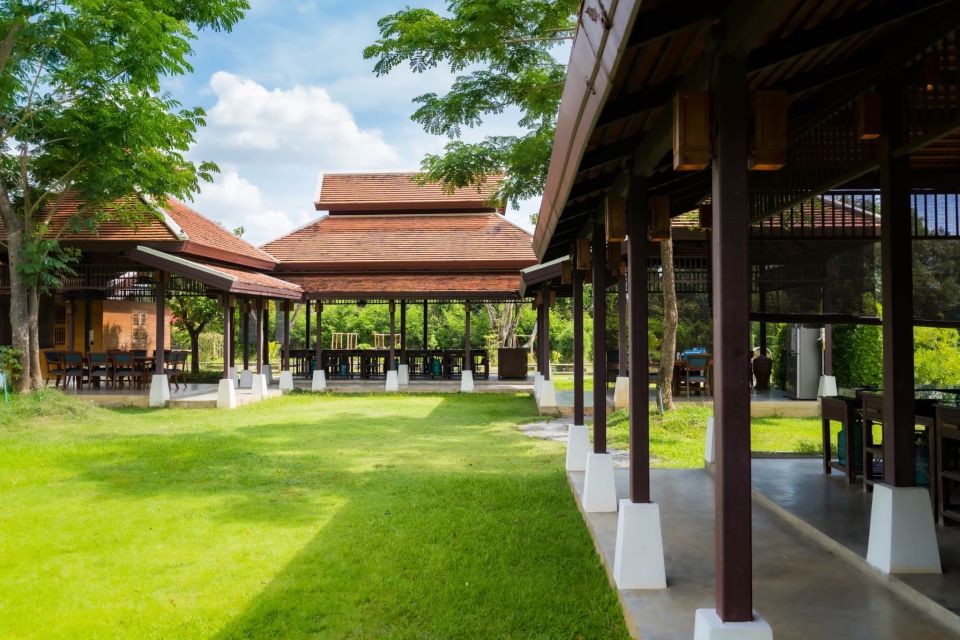
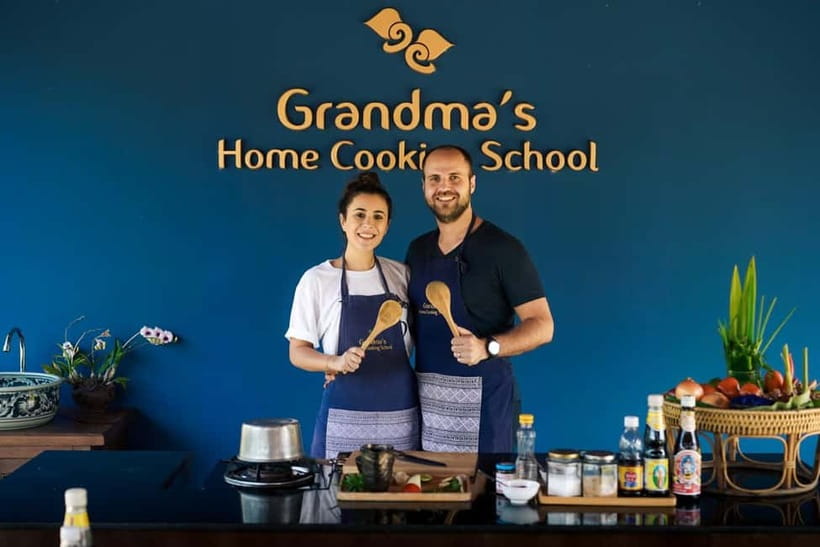
The cooking portion happens in an open-air kitchen where you cook at your own station. This is where the school earns its reputation. The instructors guide you step-by-step, and you’re given enough structure to follow even if you’re not experienced.
The class menu options focus on Thai favorites, including Pad Thai, Pad Kra Prao, Green Curry, Red Curry, Panang, Tom Yum, Tom Kha, Som Tam, and spring rolls. You choose your menu at the start of class before cooking begins, so you can steer the day toward what you actually want to eat.
One skill you should expect to take home is curry paste making. You’ll make curry paste from scratch using a mortar and pestle. That’s a big deal because it teaches the logic of curry flavor: you’re not just using a jar, you’re building the base yourself.
And then there’s Khao Soi, the Chiang Mai signature curry noodle soup. Several dishes in the school’s program feel like Thai cooking “greatest hits,” but Khao Soi gives you local specificity. If you’re only going to learn a couple things well, make it this.
Timing-wise, the number of dishes you cook depends on the session length. In the shorter evening-style lessons, people commonly report cooking about three dishes. Longer sessions tend to produce more, with full-day guests describing a bigger output and lots of eating after cooking.
Either way, you leave with a stronger sense of sequence: when to fry aromatics, when to add pastes, how liquids change texture, and how sauces tie everything together.
Curry pastes, curries, and noodle soup: what you’ll be learning as you cook
This class does more than tell you what ingredients go into a dish. It teaches the mechanics of Thai cooking: balancing salty, sour, sweet, and heat, plus understanding how different herbs signal different flavor directions.
When you make curry paste, you’re learning texture and aroma cues. When you cook a curry, you learn that coconut-based richness and chili intensity can be adjusted, which is why the same dish can taste different from restaurant to restaurant.
For noodles and stir-fries like Pad Thai, you learn the order of operations and how sauce adjustments matter. For soups like Tom Yum or Tom Kha, you’ll see how broth flavor develops quickly, and why tasting during cooking matters more than memorizing measurements.
Som Tam (green papaya salad) is also a good example of why ingredient selection matters. You don’t just toss. You build, you pound, and you tune the flavor so it stays bright instead of flat.
The overall effect: after this class, Thai menu descriptions in restaurants stop sounding like vague labels. You start mentally mapping what’s in each dish.
A few more Chiang Mai tours and experiences worth a look

Desserts and the full-day coconut milk ritual
If you choose a Morning or Afternoon session, you’ll get mango sticky rice as a dessert. Full-day and Evening guests also learn mango sticky rice as part of the cooking, so you’re not just eating it—you’re participating.
The other major bonus depends on the Full Day option: traditional coconut milk preparation. This means you make it the traditional way with a wooden grater. It’s a hands-on step that explains why coconut milk changes texture and flavor depth in curries and soups.
Why you should care about coconut milk prep: Thai curries often rise or fall based on the base. When you learn how coconut milk is created, you better understand the difference between creamy richness and watery coconut flavor.
If you’re choosing between sessions, this is your cleanest decision point: want the extra traditional craft and more time at the farm and kitchen? Pick Full Day. Want a shorter, evening-friendly plan with key Thai dishes? Morning, Afternoon, or Evening can fit better.
Allergies, dietary preferences, and getting your meal to match your needs
This is an area where the school seems to work hard. Vegetarian and Halal options are available—tell them before the class starts. Dietary restrictions like gluten-free or allergies are also supported, with ingredient adjustments made during the class.
You’ll see examples in guest experiences of gluten intolerance being handled with gluten-free soy sauce and oyster sauce, plus gluten-free spring roll options. That kind of attention is more useful than a generic “we can try.”
Menu choice happens at the beginning, which also helps. You can steer away from ingredients you can’t eat and build your day around what you can safely cook.
If you have allergies, send the details ahead of time. Don’t assume substitutions. The smoother your communication, the more likely your station will match your needs.
Transport, drinks, and what to bring so the day feels easy
This experience is built around easy logistics. Pickup and drop-off are included in an air-conditioned van for hotels within 5 km of Chiang Mai’s city center. Transport performance is also a strong point, with 92% of reviewers giving it a perfect score.
The “what to bring” list is short, which I like. Wear comfortable shoes, and bring a sun hat. For the farm walk, comfortable footwear is the difference between enjoying the path and feeling irritated.
You’ll also have plenty of hydration during the day. Unlimited water is included, plus the welcome and herbal drinks. And while you can buy alcoholic beverages, they’re not included in the price.
Price and value: why $34 feels like more than a cooking class
At $34 per person, this is priced like an activity, but it behaves like a full meal experience with skills attached. You’re paying for three things at once: market context, farm ingredients, and hands-on cooking with step-by-step support.
Add the included station time and the fact that you can cook multiple Thai dishes (including curry paste from scratch and Khao Soi) and the value sharpens. This isn’t just watching someone cook while you snack.
The school also includes a digital recipe e-book, which matters because it turns your memories into repeatable meals. You’ll be able to recreate what you cooked without trying to remember every tiny process.
If you’re visiting Chiang Mai with a single open afternoon or evening and want one experience that gives you both learning and a satisfying dinner, this is a strong candidate.
Who should book this cooking class in Chiang Mai
I’d book this if you want Thai cooking you can recreate at home. The market and farm components give you ingredient literacy, so your future ordering makes more sense.
It’s also a good pick if you like structured learning without feeling trapped by rules. You choose your menu at the start, you cook at your own station, and you get guidance that keeps the day smooth.
Families can also work well here. Children under 10 are considered visitors and won’t have their own station, but they can join cooking with parents. If you want a child to cook with their own station, you’d book as an adult price.
If you dislike farm visits or hands-on activities, you might find the chicken-egg-mushroom portion less appealing. But if you’re open-minded, that part is often what makes the day memorable.
Should you book Grandma’s Home Cooking School in Chiang Mai?
Yes, you should book it if your goal is Thai food with context, not just a recipe. The combination of market learning, farm ingredient experience, and cooking at your own station makes the whole day feel cohesive.
Choose the session that matches your energy:
- Pick Full Day if you want coconut milk made traditionally plus extra time at the farm.
- Pick Evening if you want a Thai dinner experience that still teaches real technique.
- Pick Morning/Afternoon if you want the market plus a lighter time commitment.
If you’re within the free pickup radius and you’re ready to wear comfy shoes and eat what you cook, this is one of the best value ways to understand Thai flavors in Chiang Mai.
FAQ
How long is the Chiang Mai cooking class?
The experience runs from about 210 minutes to up to 7 hours, depending on whether you book Morning, Afternoon, Evening, or Full Day.
Is hotel pickup included?
Yes, pickup and drop-off are included in an air-conditioned van for hotels within 5 km of Chiang Mai’s city center. If you’re outside that area, a nearby meeting point or a small extra charge may apply.
What dishes will I cook?
Your menu is chosen at the start of class, and the options include Pad Thai, Pad Kra Prao, Green Curry, Red Curry, Panang, Tom Yum, Tom Kha, Som Tam, and spring rolls. You can also expect curry paste from scratch, plus Khao Soi as a highlight.
Is coconut milk included?
Coconut milk preparation is included only with the Full Day option, where you make it traditionally using a wooden grater.
Can you handle vegetarian, Halal, or gluten-free diets?
Vegetarian and Halal options are available. Dietary restrictions like gluten-free or allergies can be accommodated if you tell the school before the class starts.
What should I bring to the farm and class?
Bring comfortable shoes and a sun hat. The farm walk involves enough walking that your footwear matters.