REVIEW · CHIANG MAI
Walk With Monks Collecting Alms(meeting point maybe change)
Book on GetYourGuide →Operated by Journey D Travel · Bookable on GetYourGuide
One early-morning ritual in Chiang Mai sticks with you. The walk with monks shows how Buddhist practice looks in real life, not a classroom, and the chance to talk with a former monk like Son (or Katoon) makes it personal fast. I love how straightforward the teaching is, and I love the market sights as devotees wait to offer food.
There is one big catch to plan around: this experience accepts only men. Also, you’ll be up early and moving through the market area, so come ready for a simple morning routine rather than a leisurely stroll.
In This Review
- Key Things That Make This Alms-Walk Worth Your Morning
- Why the 5:45 AM Alms Walk Feels Different in Chiang Mai
- Meeting at Wat Chai Sri Phum and Setting Expectations
- Morning Route: Market Encounters and Helping With Alms
- Talking With Son or Katoon: Buddhism, Monk Life, and Dhamma Questions
- Temple Time After the Walk: Where the Experience Lands
- Price and Time: What You Get for $20 and 147 Minutes
- What to Bring (and What Gets You Turned Away)
- Who This Is For (and the One Big Dealbreaker)
- Should You Book This Monks and Dhamma Morning?
- FAQ
- What time does the tour start?
- Where do we meet in Chiang Mai?
- How long is the experience?
- Is food included?
- Do I need to pay a donation?
- What languages are available for the guide?
- Is this tour suitable for everyone?
Key Things That Make This Alms-Walk Worth Your Morning
- Small group (max 6 people) means you’re not lost in the crowd.
- Ex monk guide background (like Son or Katoon) makes the explanations feel grounded.
- Mueang Mai Market stop gives you close-up views of local morning life.
- Hands-on alms collecting shows you the role of laypeople without turning it into a show.
- Temple dialogue time lets you ask questions about Buddhism and monk etiquette.
Why the 5:45 AM Alms Walk Feels Different in Chiang Mai
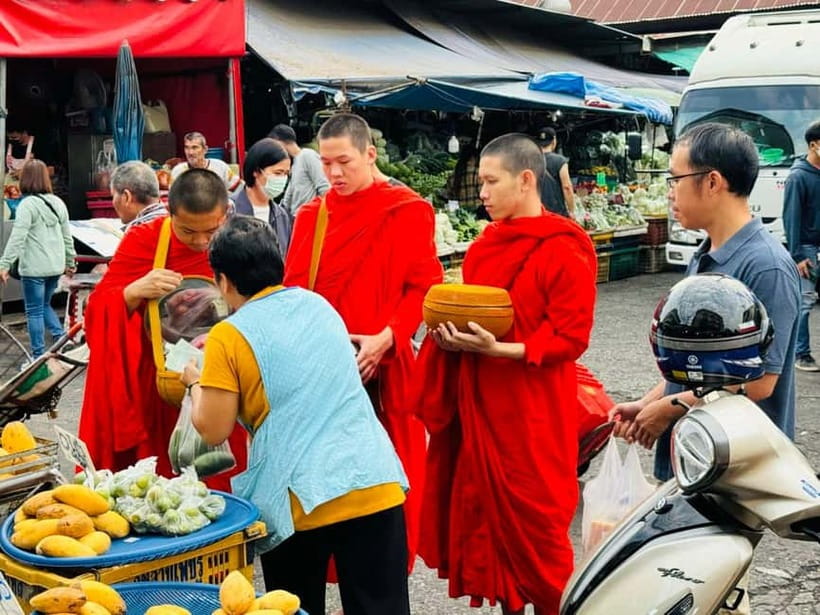
Chiang Mai mornings can be loud in the best way, but this one is quieter in spirit. Starting around 5:45 AM means you catch the ritual while the city is still waking up, and that timing changes everything. You’re not just seeing a temple culture from the outside—you’re walking alongside people who follow a daily practice.
What I like most is the mix of movement + conversation. You’re walking with monks as they collect food, then you slow down for talk and questions. It’s a good format if you want more than photos. And because it’s guided by an ex monk, the tone tends to stay respectful and clear.
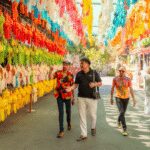
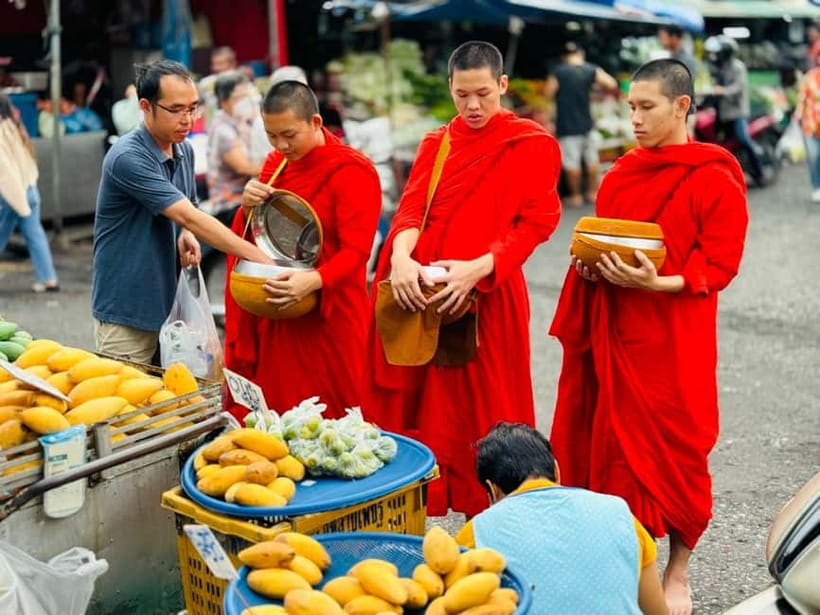
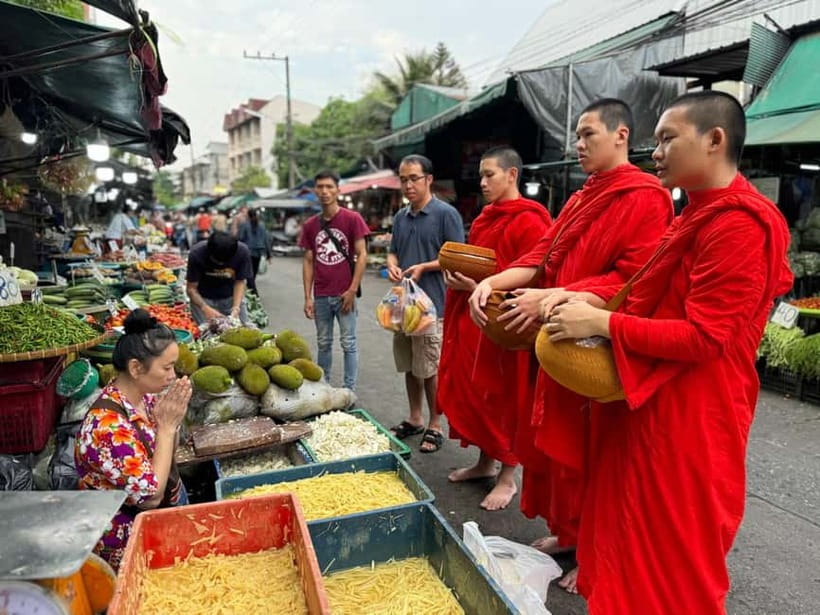
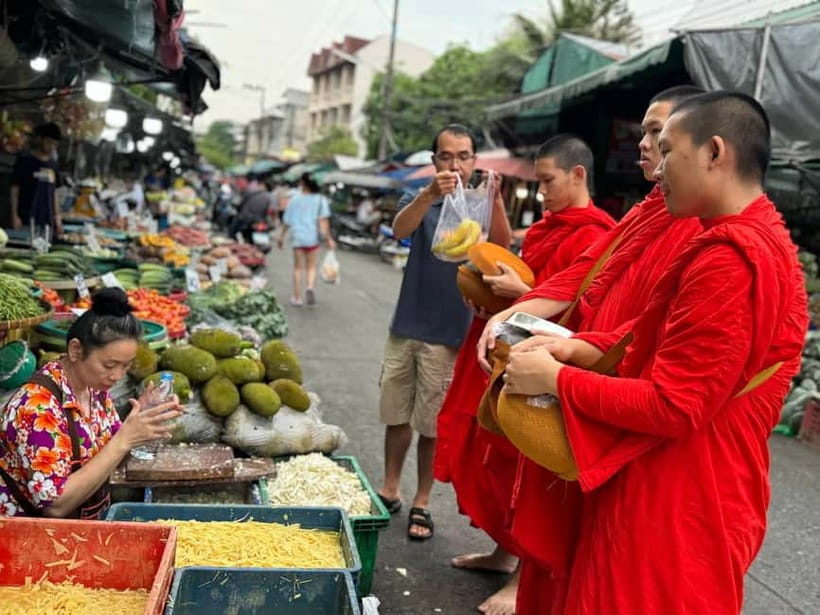
You also get the market angle. The route passes through the market where Buddhist devotees wait to offer the monks’ needs. That’s where you start seeing the connections between temple life, community life, and daily food culture.
You can also read our reviews of more walking tours in Chiang Mai
Meeting at Wat Chai Sri Phum and Setting Expectations
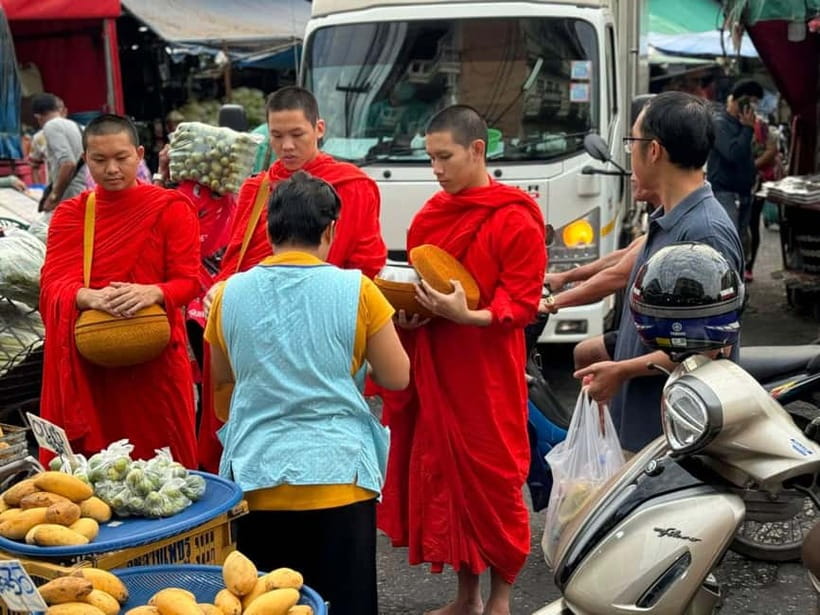
The tour meets at Wat Chai Sri Phum, specifically at the front of the chanting hall where your tourist guide is waiting. The exact meeting spot can change, so you’ll want to double-check right before you go.
This is not the kind of tour where you roll up in flip-flops, hit record, and drift. You’ll be expected to follow basic temple manners—quiet, calm behavior, and attention to what the guide explains. It also helps to think of this as a cultural morning, not a theme-park attraction.
Language support is practical: your guide speaks Chinese and English, and with a small group, you get time to ask questions rather than waiting your turn forever.
Morning Route: Market Encounters and Helping With Alms
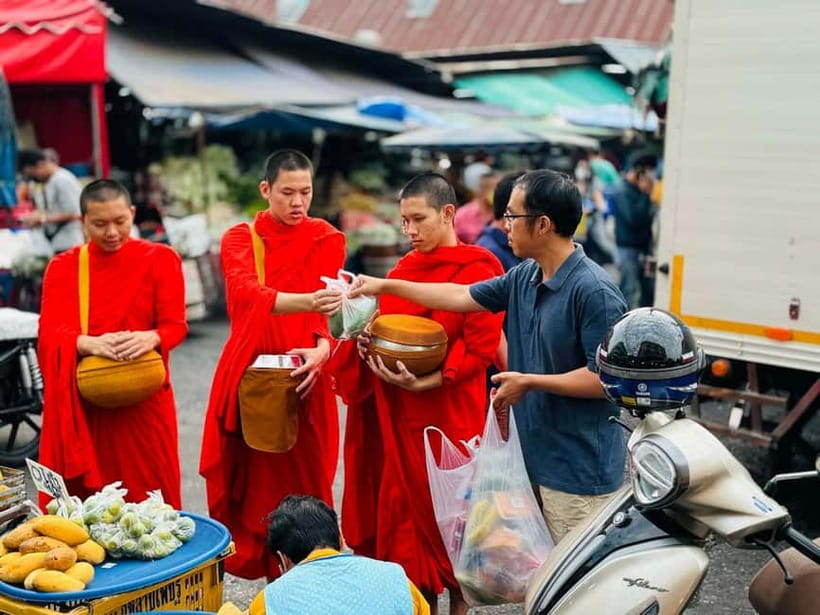
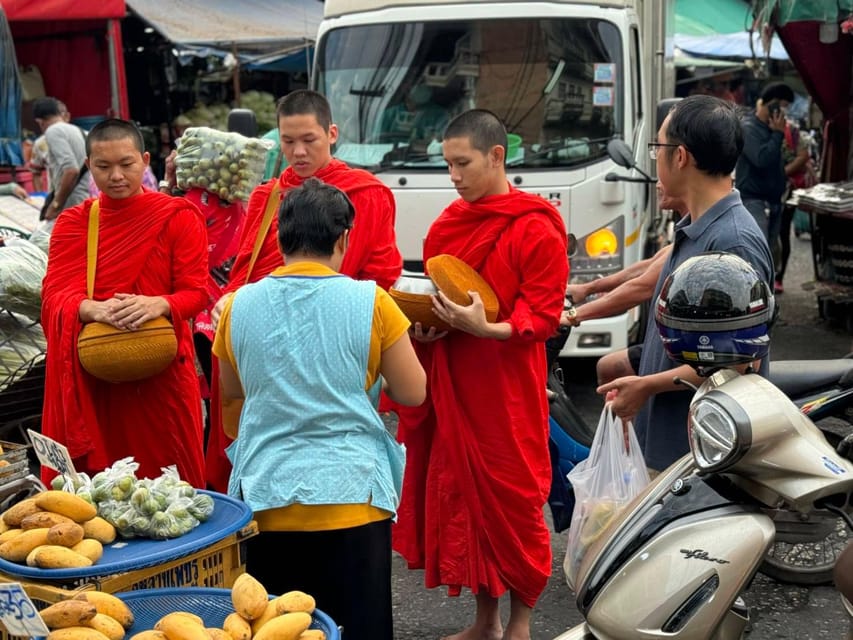
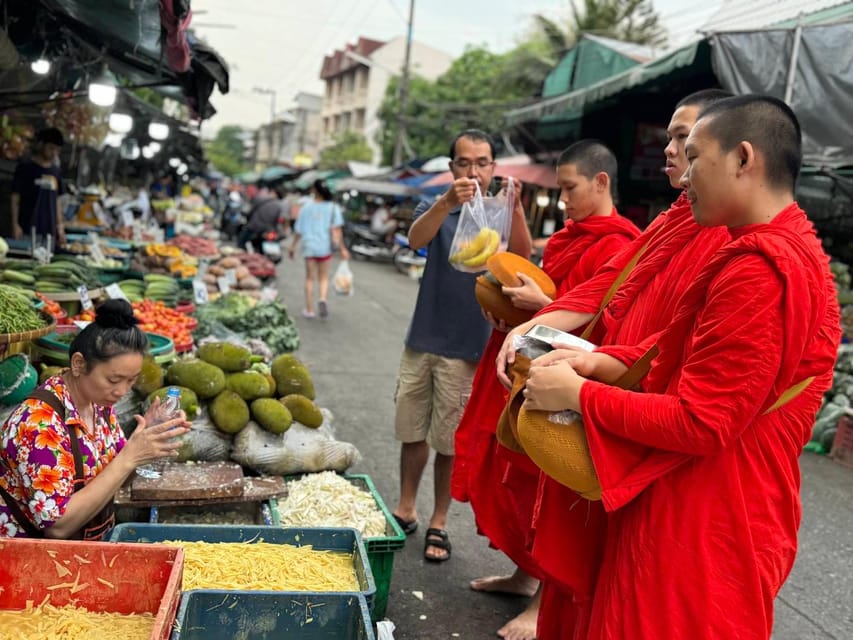
The walk starts when the monks begin collecting food. As you follow along, you pass through the market area where devotees are ready with offerings. This part is often the most memorable because you see the everyday texture of Chiang Mai—fresh produce, local routines, and the calm rhythm of people doing something meaningful before the day heats up.
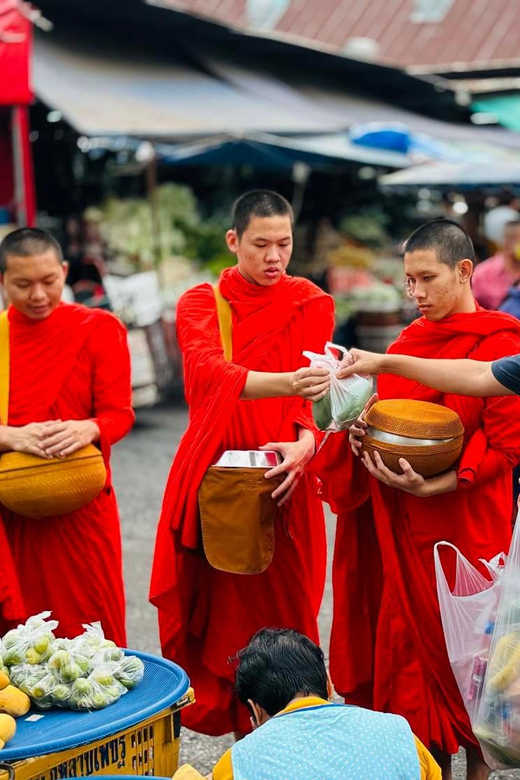
You also do something active: the highlights include helping monks with the collecting food. That matters. Watching from the sidelines is one thing; participating appropriately gives you a better feel for how laypeople fit into Buddhist daily life.
A quick practical note: because the tour passes through a public market environment, you should expect to keep your movements steady and follow your guide’s pace. You’ll likely have photo opportunities, especially with the market food stalls and the morning crowd. Just keep it respectful—don’t treat it like a street photoshoot.
Talking With Son or Katoon: Buddhism, Monk Life, and Dhamma Questions
After the walk returns to the temple (around 7:30 AM), the experience shifts into conversation. You’ll get a meeting and dialogue with the monks, which is where this tour really earns its keep.
The guide experience is a big selling point. In real participant stories, the ex monk guide—often Son—takes time to explain monk life and Buddhism in a way that makes sense for everyday questions. Another guide name that comes up is Katoon, also described as an excellent former monk who clarifies doubts and answers questions directly.
This is especially valuable if you’ve visited temples in Chiang Mai but felt like you were only seeing the buildings. Here, you’re learning about the practice behind them: the role of monks, the idea of Dhamma discussions, and how etiquette works in a living setting.
If you like learning through Q&A, this tour is built for it. The format gives you time to talk rather than rushing you through a script.
Temple Time After the Walk: Where the Experience Lands
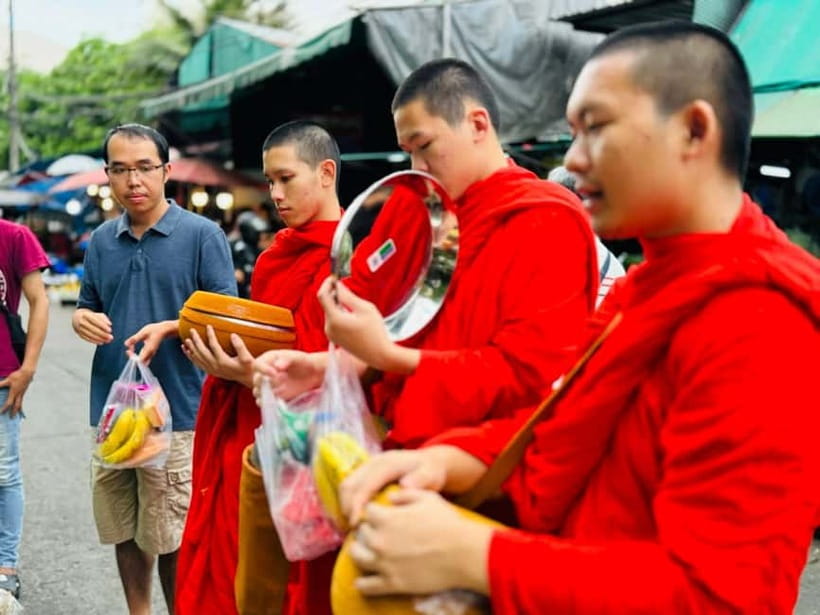
Back at the temple, the morning isn’t over with just a drop-off. You return for that dialogue time with monks, and there’s also an opportunity related to alms donation.
Donation to the temple is not included in the price, and food and drinks are also not included. But the structure still leaves space for respectful giving if you choose to. Treat the donation as part of the ritual, not as an extra “fee” you must pay to finish the tour.
This temple portion is also where you get a clearer sense of etiquette. Even if you’ve toured Thailand before, temple rules can vary by site and by time of day. A good guide helps you avoid the usual awkward moments, like standing where you shouldn’t or asking questions at the wrong time.


Price and Time: What You Get for $20 and 147 Minutes
At $20 per person for 147 minutes, this is a short, focused experience. The math is simple: you’re paying for an early-guided, small-group schedule plus the unique part—being with monks and learning from an ex monk guide.
The time is long enough to feel like you actually did something (walk, market route, and then the dialogue), but short enough that it doesn’t eat your whole day. That matters in Chiang Mai, where it’s easy to stack tours and then feel like you’re just hopping between places.
The small group size (limited to 6 participants) is part of the value. In practice, it means you can hear explanations and interact without shouting over other people. If you hate crowded tours, this one is designed to feel more human.
What to Bring (and What Gets You Turned Away)
You need to pack for a calm morning, not an all-day excursion. Here’s what the tour explicitly asks for:
What to bring:
- Change of clothes
What’s not allowed:
- Weapons or sharp objects
- Baby strollers and baby carriages
- Headphones
- Drinks, alcohol and drugs
- Fishing, explosive substances
- Wearing a costume
- Electric wheelchairs
If you’re thinking, I’ll just keep my phone in my pocket and listen with headphones—don’t. The no-headphones rule is part of keeping the morning respectful and focused.
Also, you should plan around the dress expectations that typically go with temple culture. The tour doesn’t spell out a strict dress code in your details, but bringing a comfortable outfit you can move in—and that you’re happy to wear near monks—is a safe strategy.
Who This Is For (and the One Big Dealbreaker)
This experience is clearly aimed at adults who want a real cultural morning with Buddhist context. It’s guided, it’s small, and it includes hands-on participation during the walk.
Here’s the big dealbreaker: the tour accepts only men. If you don’t fit that requirement, you’ll need to look for a different activity.
This is also not suitable for:
- children under certain ages (under 2, under 3, under 4, under 5)
- anyone over 95 years
- wheelchair users
- babies under 1 year
- anyone under 3 ft (90 cm)
If you’re an adult and you can handle early morning walking and market surroundings, you’ll likely enjoy the format. If you want a relaxed sightseeing day, you might find the strictness and early start a bit intense.
Should You Book This Monks and Dhamma Morning?
Book it if you want:
- a guided cultural experience that explains monk life, not just temple architecture
- a morning schedule that gives you a real sense of community and daily practice
- an ex monk guide background (Son or Katoon show up in the stories)
- a short, well-timed outing (about 2.5 hours total)
Skip it if:
- the men-only policy excludes you
- you prefer tours with lots of comfort stops and flexible pacing
- you’re not comfortable following temple rules around behavior and equipment (like no headphones)
FAQ
What time does the tour start?
You assemble at 5:45 AM and then start walking with the monks at 6:00 AM.
Where do we meet in Chiang Mai?
You meet at Wat Chai Sri Phum, at the front of the chanting hall, where the tourist guide is waiting. The exact location may change.
How long is the experience?
The duration is listed as 147 minutes (about 2.5 hours).
Is food included?
No. Food is not included, and drinks are also not included.
Do I need to pay a donation?
A temple donation is not included, so if you want to give, you’ll need to arrange that on your own.
What languages are available for the guide?
The live guide speaks Chinese and English.
Is this tour suitable for everyone?
No. This trip accepts only men and is not suitable for certain age groups, wheelchair users, and people under specified height/age limits.