REVIEW · BANGKOK
Light Festival at Na Satta Park: Magical Once-a-Year Moment
Book on GetYourGuide →Operated by Hari Tour · Bookable on GetYourGuide
The day starts with a dragon you can’t miss. I love the photo payoff at Wat Samphran, with its huge dragon spiraling up a pink pagoda, and I also love the evening finale at the Na Satta Park Light Festival, where the whole place turns into a glowing picture set. The trade-off: you’re on a tight schedule, so if you’re hoping to linger at the floating market, you might feel the time crunch.
What makes this one work is the pacing. You leave Bangkok late enough to skip the super-early misery, and you travel in a small group capped at 10. In past groups, the guide has been a big part of the fun, and I’ve heard strong things about Yut for being funny, informative, and willing to help with photos and video.
One more thing to consider: the floating market is a popular stop with higher-priced items, and the conditions on the canal (noise and smell near the boats) can make it less relaxing than the rail market. If you want the most enjoyable shopping, plan to buy smart and save your appetite for the train-side stalls.
In This Review
- Key highlights worth planning around
- A 10-hour Ratchaburi rhythm from Central World
- Wat Samphran: the dragon and the pink pagoda setup
- Damnoen Saduak Floating Market by paddle boat (and what to watch for)
- Mae Klong Railway Market: the moment to plan around
- The Buffalo Amphawa free-hour: use it well
- Na Satta Park Light Festival: the glowing finale you planned all day for
- Secret Cafe and street food: the built-in break that matters
- Price value: what $123 buys you in real terms
- Getting the most out of the day: practical tips
- Best for who (and who should skip it)
- Should you book Hari Tour for the Na Satta Park Light Festival?
- FAQ
- How long is the Light Festival at Na Satta Park tour?
- Where do I meet the tour, and where does it end?
- What’s included in the price?
- What isn’t included?
- Is the tour guided in English?
- Who might not be suitable for this tour?
Key highlights worth planning around
- Wat Samphran’s dragon-pink pagoda view: it’s the classic stop, and it’s best when you take your time for angle hunting.
- Damnoen Saduak by paddle boat: you get canal views without doing the whole thing on foot.
- Mae Klong Railway Market’s train moment: the show is built into the layout, so you’ll want to be there before the crowd mills in.
- Secret Cafe and street food time: you get a snack-and-sip break rather than rushing straight from one photo stop to the next.
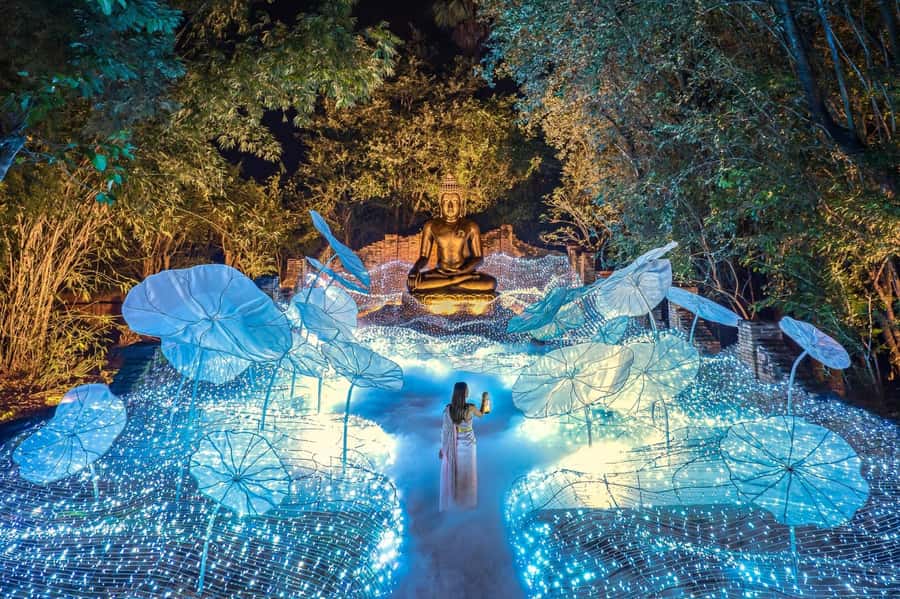
- Na Satta Park Light Festival timing: the evening shift is the point, with 1.5 hours to enjoy the lights and night photos.
- Small group with English guidance: up to 10 people keeps questions easy and the day from feeling like a cattle line.
A 10-hour Ratchaburi rhythm from Central World
This is a full day out of Bangkok—about 10 hours total. You start at Hug Thai @ CentralWorld, on the ground floor at the Hug Thai Gate near the Centara Grand Hotel entrance, and you return to the same spot at the end.
You’ll spend a lot of the day on the road in an air-conditioned van (there’s a long transfer segment at the beginning and again on the way back). That matters because it changes what this tour is best at: it’s ideal when you want a lot of “must-see” sights in one trip, and it’s not the best fit if you hate fixed timing or want a slow, independent day.
The good news is the departure is late-morning, so you’re not waking up at the crack of dawn just to get to a market. For most people, that means more energy for photos at Wat Samphran and better patience for the markets.
You can also read our reviews of more tours and experiences in Bangkok.
Wat Samphran: the dragon and the pink pagoda setup
Your first major stop is Wat Samphran (Wat Sam Phran), with about an hour on site. This is the part of the day that looks fake in photos—until you’re standing there and seeing the scale up close.
The core scene is the huge dragon wrapping upward around a pink pagoda. I like this stop because it’s not just a temple visit; it’s a built-in photo composition. If you’re the type who cares about angles, you’ll want to take a few minutes to position yourself before everyone else crowds in.
Practical tip: bring your camera and plan for lots of bright surfaces. A hat and sunscreen help too, because Thailand sun can cut through fast even when you’re not out in the middle of a field.
Damnoen Saduak Floating Market by paddle boat (and what to watch for)
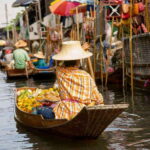
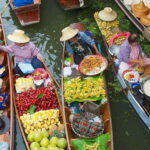
Next comes Damnoen Saduak Floating Market. You get about an hour, including time on the water via paddle boat. This is a classic canal experience, with shops and activity lining the waterways.
Here’s the deal: the floating market can be fun to see, but it’s not designed for quiet browsing. The canal area can get noisy, and the proximity to boats can make the air less pleasant than you’d expect. Also, you’ll notice pricing can be on the high side compared with other stops, so treat this market like a place to look, snack, and maybe buy one or two things—not your entire shopping plan.
Timing also affects your experience. If you arrive closer to the later portion of the market window, there may be fewer vendors still actively selling. That’s why I recommend focusing on photos and atmosphere here, then saving your appetite and purchases for places where the layout stays active longer.
Mae Klong Railway Market: the moment to plan around
Then you’ll reach Maeklong Railway Market, with about an hour for this stop. This market is famous for one reason: a train passes right through the stalls, and the vendors and shoppers react in real time.
I love this stop because it feels alive even when the pace is crowded. It’s one of those rare places where the spectacle isn’t staged for tourists—it’s part of the daily rhythm, and you’re watching it happen at close range.
A useful strategy: don’t wait until the last minute to get a good view. Move into your spot, watch how the area changes, and be ready for quick photo moments. If you want to eat, this is also a better bet than overspending at the floating market. In particular, pineapple fried rice gets called out as a good choice when you’re trying to keep your meal simple and tasty.
This stop can feel a bit overhyped if you expect the entire experience to be nonstop drama. But the train interruption is genuinely memorable, and the market itself is its own kind of chaos you can photograph.
The Buffalo Amphawa free-hour: use it well
Between the markets and the light show, you get a free hour at The Buffalo Amphawa. This is your decompression window.
Because the tour doesn’t promise a structured activity here, I suggest using the hour for one of these practical things:
- bathroom break
- water refills and a slow walk for photos
- quick snack or casual browsing if you spot something appealing
Your schedule is built around the evening lights at Na Satta Park. So think of this free hour as maintenance time, not as the “main event.” If you treat it that way, you’ll enjoy the night much more.

Na Satta Park Light Festival: the glowing finale you planned all day for
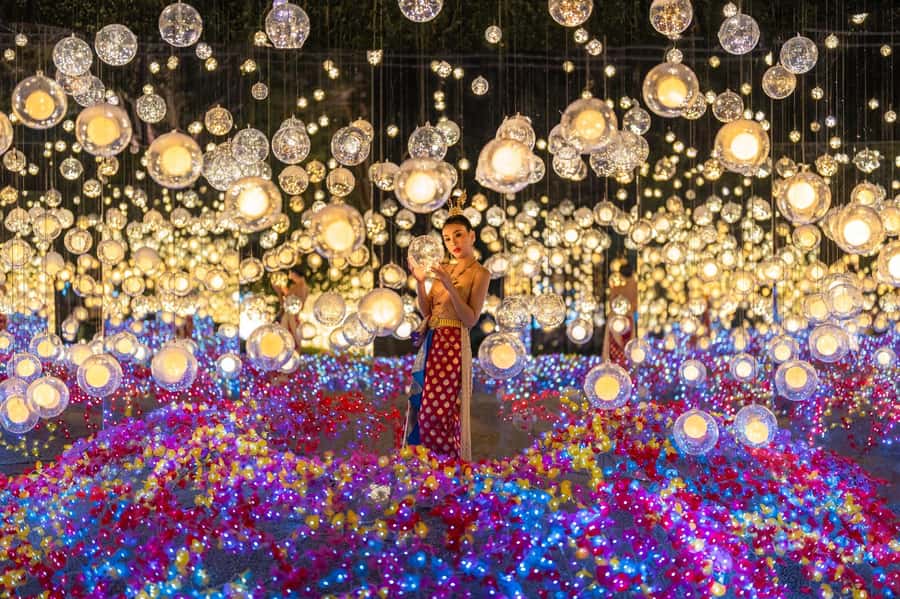
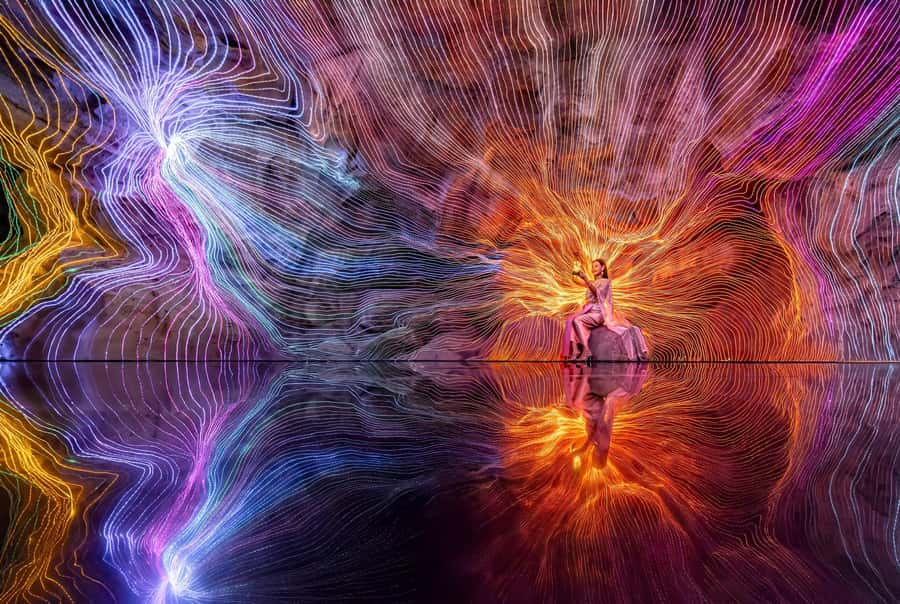
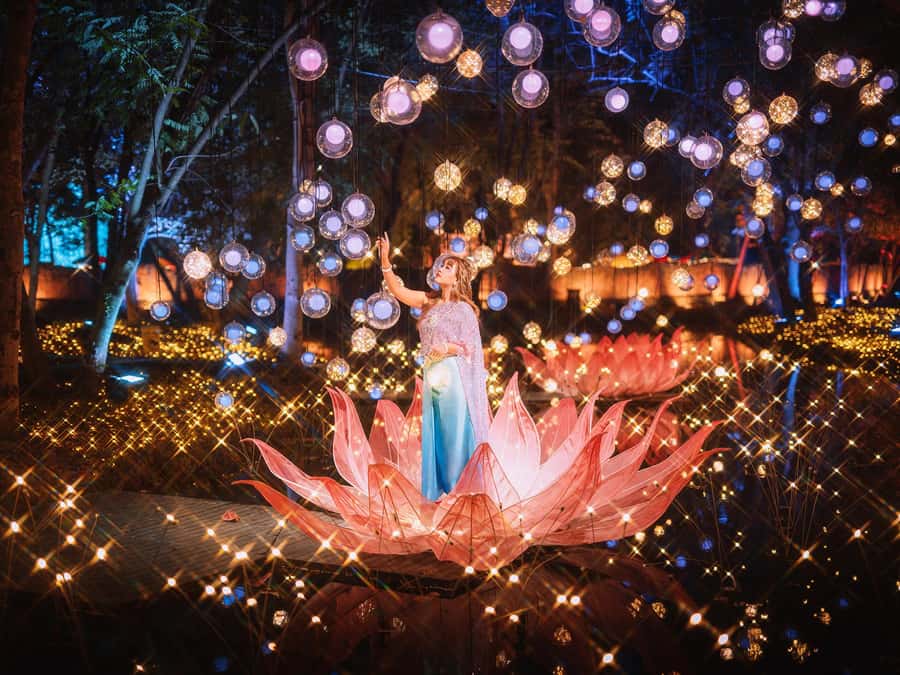
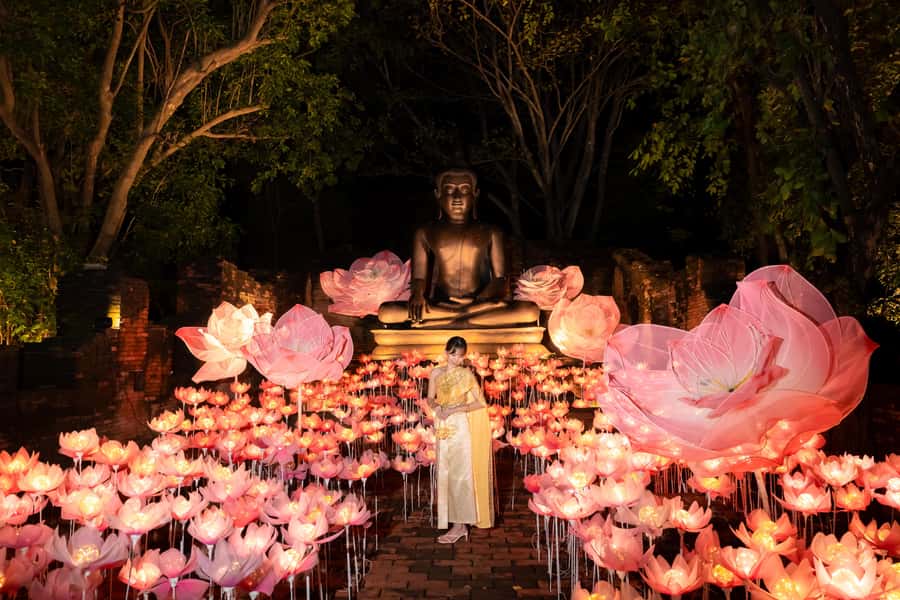
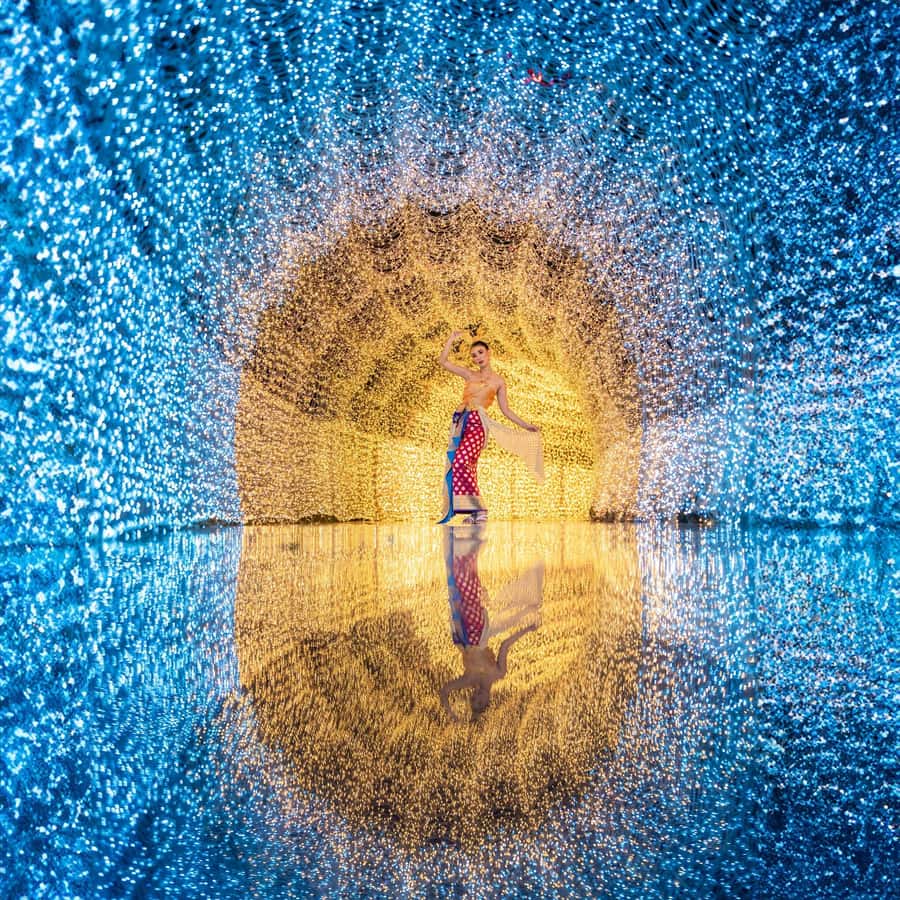
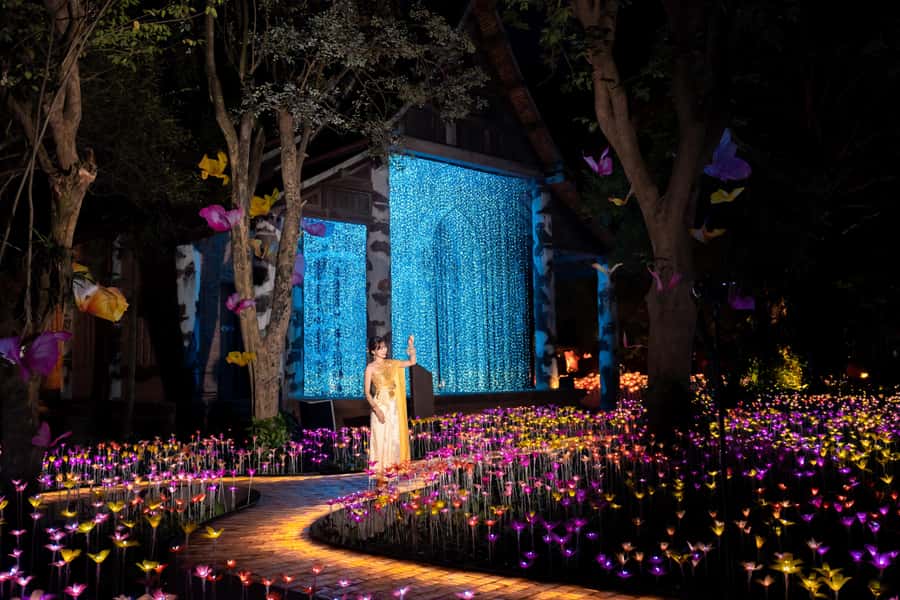
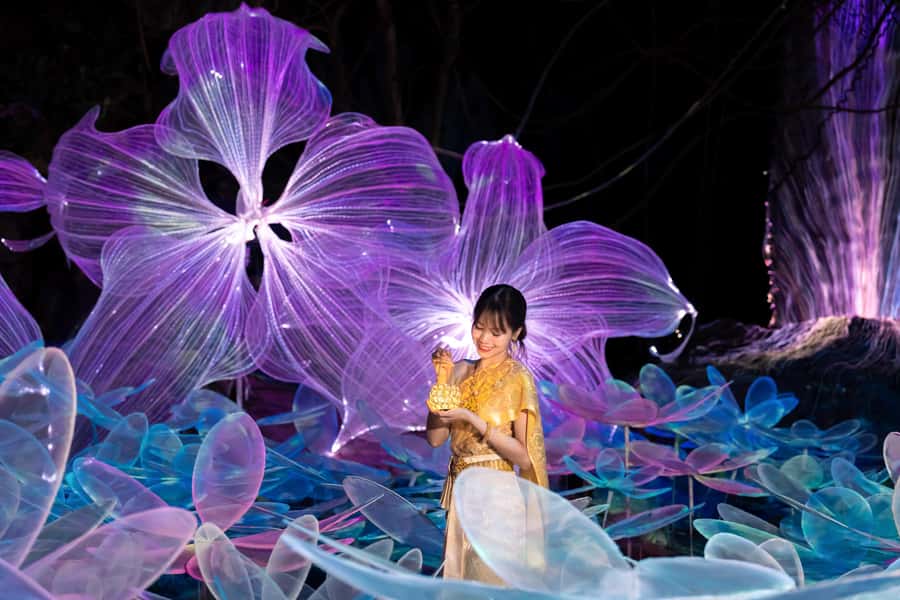
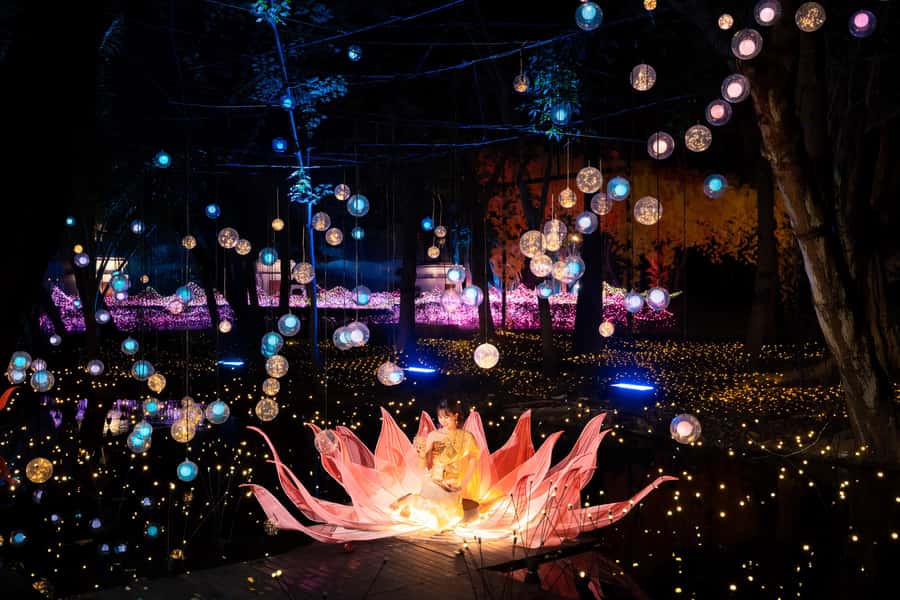
The day finishes at Na Satta Park for the Light Festival, with about 1.5 hours inside. This is the reason many people take the trip: the grounds transform into a full light setup, with a strong focus on visual spectacle for night photography.
The most talked-about feature is the pink pagoda wrapped with a large dragon reaching upward. It’s part sculpture, part light show, and part photo moment. Even if you’ve seen pictures already, the real thing has more depth, and the lighting makes the colors look different as you move around.
I like ending the day here because your eyes get a break from sun and markets. You’re focused on night scenes, and your photos suddenly feel more creative instead of just documenting the day.
Photo tip: arrive ready to shoot, not ready to settle in. You don’t get endless time, so plan for a few minutes to scout angles, then shoot through the best light effects. Sunglasses and sunscreen still matter earlier in the day, but at this stop you’ll be happy you packed your camera.
Also, keep in mind that the vendors fold away their stalls when the event involves the passing train energy nearby. That adds motion and drama to the scene, and it’s part of why this finale feels different from other light festivals.
Secret Cafe and street food: the built-in break that matters
This tour includes time at Secret Cafe, plus a street food market segment. You’re also provided water, which is genuinely helpful on a long day.
I like that this isn’t just one market after another. You get a chance to reset, sit for a minute, and have something to sip. If you’re chasing golden-hour vibes earlier, it helps your energy for the night lights.
For food, keep expectations practical. Street food here is part of the experience, but don’t assume you’ll find the best deals everywhere. The floating market in particular can run expensive, so if you’re cost-conscious, treat the included snacks as your main plan and fill in with purchases only when you find a standout.
Price value: what $123 buys you in real terms
At $123 per person, this isn’t a budget day trip. But it can still feel like good value if you want one organized route that hits multiple “Thailand highlights” in a single day.
Here’s what you’re paying for in plain language:
- air-conditioned transportation from Bangkok and back
- an English-speaking local guide
- admission for the Na Satta Cultural Park evening lighting festival
- guided time at Wat Samphran, plus stops tied to the markets
- water and included cafe/food components
- insurance
If you tried to do this on your own, you’d spend money on transport and still need to solve logistics across multiple locations and timing for the light festival. The small group size (up to 10) also matters. With a larger tour, you can lose time and personal attention; with a small group, it’s easier to ask questions and get help lining up photos.
So, value depends on your travel style. If you love planning and don’t mind DIY timing, you might do it cheaper. If you’d rather spend your energy on photos and the show, this price looks more reasonable.
Getting the most out of the day: practical tips
These details are small, but they change your comfort level a lot.
- Bring sunglasses, a sun hat, and sunscreen. You’ll be outside during daylight stretches before the lights.
- Bring a camera with extra battery space. Night festival lighting means more shots and less efficient power use.
- Expect crowds at the markets. You’ll still get great photos, but go with a “flow with it” mindset.
- Buy strategically. Use Damnoen Saduak more for scenes than shopping. If you want a meal or a better value purchase, consider where the stalls stay active and where food is recommended.
- Use your guide’s help for photos. In past groups, the guide has taken pictures and video for people, which saves you from missing the train moment while you’re busy switching cameras.
If you’re sensitive to smells or noise, the floating market canal segment might be a bit harder to enjoy. I’d still go for the photos, but I’d adjust your expectations: it’s a sight stop, not a spa.
Best for who (and who should skip it)
This tour fits best if you want:
- a one-day hit list of major Ratchaburi and Bangkok-adjacent icons
- an evening light festival with enough time to photograph
- a small group and an English-speaking guide so you can ask questions
It’s also a good fit for photographers who want a range: day temple dragon, canal market scenes, train-stall drama, then night lights.
You might want to reconsider if:
- you hate fixed schedules and want lots of free roaming time
- you’re very price-sensitive at markets and don’t want any tourist-premium shopping areas
- you need a calm, quiet day with minimal crowds
Should you book Hari Tour for the Na Satta Park Light Festival?
Yes—if you’re traveling for the full package: Wat Samphran’s dragon-pagoda photos, the train-market spectacle, and the Light Festival finale at Na Satta Park. The small group size, English guidance, and inclusion of the festival ticket and key stops make it feel like a tidy, practical plan rather than a pile of separate taxis.
I’d book especially if you’re the type who wants maximum “wow moments” with minimal logistics. Just go in with realistic expectations for the floating market timing and pricing, and treat the markets as part photo hunt, part cultural look—not a relaxed, low-pressure shopping outing.
FAQ
How long is the Light Festival at Na Satta Park tour?
The tour lasts about 10 hours total, with a mix of sightseeing stops and travel time.
Where do I meet the tour, and where does it end?
You meet at Hug Thai @ CentralWorld on the ground floor at the Hug Thai Gate near the Centara Grand Hotel entrance, and the tour ends back at the same meeting point.
What’s included in the price?
Included are air-conditioned transportation from Bangkok, an English local guide, entry fees for the Na Satta Cultural Park evening lighting festival, sightseeing at Wat Samphran, Secret Cafe and a street food market, water, and insurance.
What isn’t included?
Lunch and dinner, personal expenses, hotel transfer, and alcohol drinks aren’t included.
Is the tour guided in English?
Yes, the tour includes a live guide in English.
Who might not be suitable for this tour?
It isn’t suitable for children under 4 years, babies under 1 year, or people over 95 years.
If you want, tell me your travel month and whether you care more about photos or food, and I’ll help you decide which stop to prioritize.