REVIEW · CHIANG MAI
Guided Chiang Mai City Night Tour by EV Tram
Book on Viator →Operated by Touring Center · Bookable on Viator
Chiang Mai changes fast after dark. This EV tram night tour is a calm, responsible way to get your bearings, with a local guide explaining how temples and beliefs shape everyday life. I like that it’s not a sprint between famous spots, and you get to move through neighborhoods at an easy pace with an electric tram and English-speaking guidance.
Two things I especially enjoyed: the tour’s focus on orientation (history and local context, not just photos) and the mix of temple visits with real food-and-market energy for dinner planning. You also get practical value because admission fees are handled for the included stops, plus bottled water and light snacks during the foodie part.
One consideration: it’s a start-on-your-own tour. There’s no built-in pickup/drop-off, so you’ll want to plan your arrival to Three Kings Monument (smart casual works best), and expect a bit of walking between tram sections.
In This Review
- Key highlights to know before you go
- Why an EV Tram Night Tour Feels Different in Chiang Mai
- Price and what you get for about $27.43
- Smart pacing: the route starts at Three Kings Monument (6:00 pm)
- Stop 1: Three Kings Monument and the city pillar story
- Stop 2: Wat Chiang Man and Lanna-style details
- Stop 3: Wat Lok Molee and the wooden-temple vibe
- The tram-to-market transition: Chang Puek Gate and street-food dinner planning
- Stop 4: Wat Pa Pao and Tai Yai/Ngiaw connections
- Wat Nong Kham: Burmese-Shan style religious architecture
- Warorot Market: where you see everyday Chiang Mai supply
- Tha Phae Gate: city activity and festivals in the same spot
- Chiang Mai Gate Night Market: street food with a local foodie lens
- Wat Chedi Luang: the biggest stupa and the Tripiṭaka connection
- Wat Phra Singh: northern-style chapel beauty
- What kind of traveler should book this?
- Practical tips to make the most of the 2-hour flow
- Should you book the Guided Chiang Mai City Night Tour by EV Tram?
- FAQ
- What time does the EV Tram Chiang Mai city night tour start?
- How long is the tour?
- Where do I meet the guide?
- Does the tour end back at the meeting point?
- What’s included in the ticket price?
- Are any admission fees required during the tour?
- Is pickup and drop-off included?
- How big is the group?
- What should I wear?
- What is the cancellation policy?
- Is there a child rate?
Key highlights to know before you go
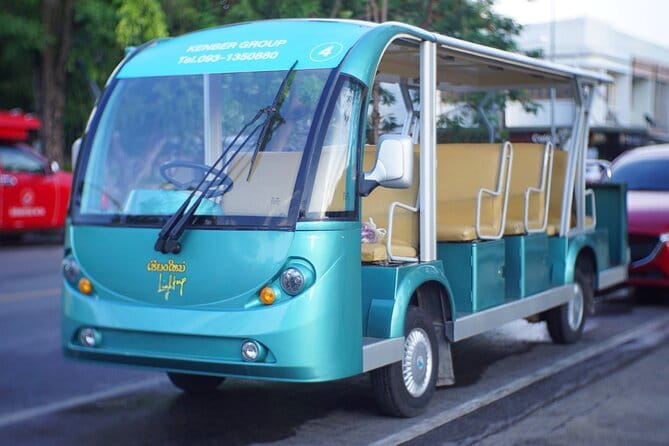
- EV tram at night keeps the ride quieter and lower-impact while you connect with the city
- Temples plus markets, so you learn Chiang Mai culture and also where to eat
- Small group (max 12) makes it easier to ask questions and keep the pace comfortable
- Orientation-heavy storytelling about how beliefs and history show up in daily life
- Some admissions included and most temple entries are free, so you spend less time on tickets
Why an EV Tram Night Tour Feels Different in Chiang Mai
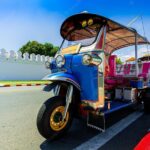
Night tours in Chiang Mai often feel like a series of quick photo stops. This one is built more like a guided walk-and-ride through the parts of town that make Chiang Mai work—historically and today. The big switch is the EV tram, which helps keep the movement smooth without the constant noise you get from buses or tuk-tuks.
You’ll notice the pace right away. The plan is unhurried, so you can actually listen to your guide instead of trying to catch up. And since the itinerary pairs temples with neighborhood gates and markets, you’re not only seeing sights—you’re building context. That matters if this is your first night in town and you want to plan the rest of your visit without guessing.
The group size is capped at 12 travelers, which is a sweet spot for a city tour. In a smaller group, the guide can slow down for questions and you’re less likely to get lost behind the crowd.
You can also read our reviews of more guided tours in Chiang Mai
Price and what you get for about $27.43
At $27.43 per person for about 2 hours, this tour is priced like a solid “first night in Chiang Mai” option. The best value isn’t just the sticker price—it’s what’s bundled:
- EV tram during the trip
- Professional English-speaking guide
- All admission fees mentioned in the route
- Bottled water
- Some snack and drinks during the foodie market portion
- Travel accident insurance
- You also get free entries for several temple stops
That combination matters because night markets and temples can add up fast once you start paying separately. Here, the structure reduces decision fatigue: you show up, meet the guide, and the route carries you through the main cultural beats plus the dinner spots.
One tradeoff: extra food and drinks beyond what’s included are on you. If you’re the type who wants a full-on dinner crawl, you’ll likely spend more, but that’s true for any food-focused route. The good part is you’ll leave with a clear sense of where to return tomorrow.
Smart pacing: the route starts at Three Kings Monument (6:00 pm)
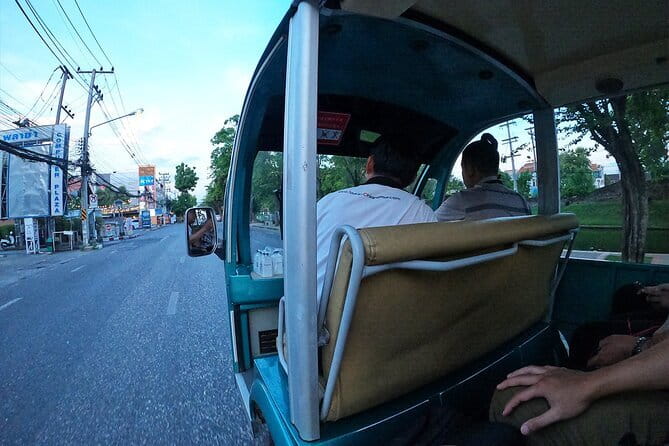
You start at Three Kings Monument around 6:00 pm. The meeting point is also a strong orientation choice because it quickly pulls you into Chiang Mai’s story. The tour begins with a short history in this area, then you hop onto the tram.
From a practical standpoint, starting in the early evening is helpful. You get a soft change from daylight heat to temple-night atmosphere, and the markets still have energy without being too late. Also, the timeline is tight enough that you still feel like you’ll have time afterward, but long enough to absorb the key stops.
Dress code is smart casual. I’d pack shoes you can walk in, because even with tram segments, you’ll move between places.
Stop 1: Three Kings Monument and the city pillar story
The first stop is all about grounding you. You’ll get a brief history of Chiang Mai in the area around the Three Kings Monument. From there, there’s a bit of walking to Wat Inthakin Sadeu Muang, tied to the city’s founding legend.
This is where you’ll hear about the city pillar called Inthakin, said to have been erected in 1296 by King Mangrai. Even if you don’t become a history nerd overnight, it’s an important thread. Chiang Mai’s temples and sacred sites often connect back to this kind of origin story—beliefs that people still follow, not just something frozen in the past.
After that short introduction, you hop on the tram to transition smoothly into the temple circuit. The short walking piece is manageable, but if you dislike stepping around in the dark, wear shoes with good grip.
Stop 2: Wat Chiang Man and Lanna-style details
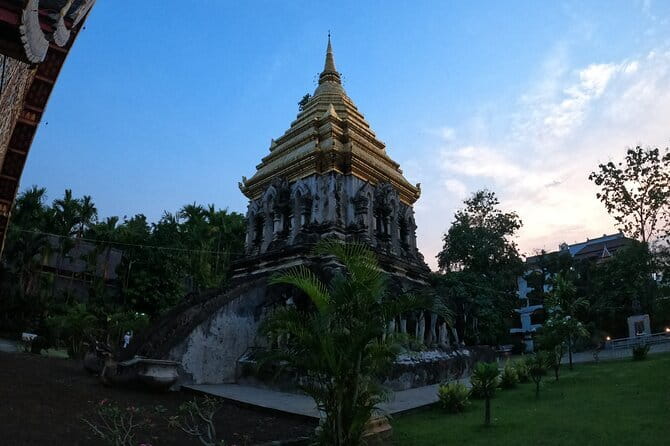
Next up is Wat Chiang Man, often described as the oldest temple in the Lanna-style chedi tradition on this route. What I like about this stop is the specific architectural detail: the chedi is supported by rows of elephant-shaped buttresses.
That kind of detail is perfect for a night tour because lighting makes textures pop, and you’ll actually remember what you saw instead of just passing another temple. You’ll spend about 5 minutes here, so it’s not overwhelming, but it gives you a visual anchor.
Because entry is free for this stop, you don’t lose time on logistics. You’re just there to look, learn a couple key points, and move on with the group.
You can also read our reviews of more city tours in Chiang Mai
Stop 3: Wat Lok Molee and the wooden-temple vibe
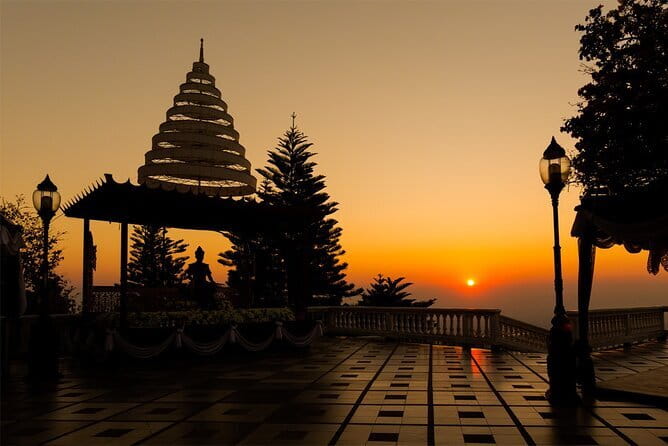
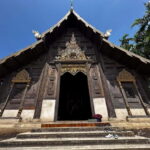
Then you go to Wat Lok Molee, described as a handsome wooden complex dotted with terracotta sculptures. The guide’s context helps here: this temple is considered one of the more attractive wats outside the old city walls.
You’ll also hear that it’s thought to date to the 14th century, with connections to monks from Burma. That matters in Chiang Mai because the region’s religious culture has always been shaped by movement of people, not just local tradition.
Time on this stop is around 20 minutes, which feels about right. You get enough time to walk around and notice the wooden structure and sculpture points without feeling rushed.
The tram-to-market transition: Chang Puek Gate and street-food dinner planning
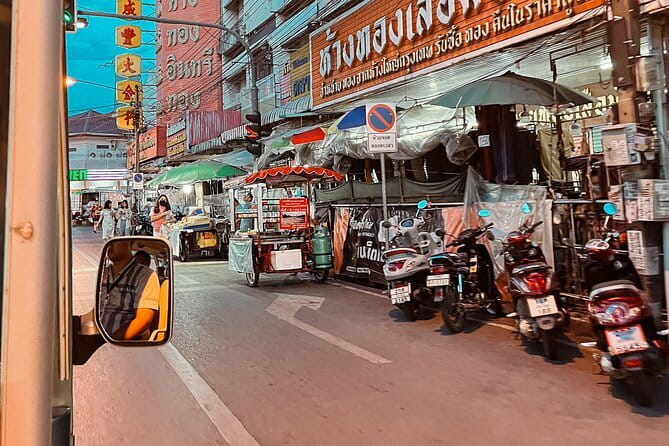
After the temple rhythm, the tour moves toward Chang Puek Gate, the northern gate of the old city with ruins of the city wall. This is also where the night market portion starts to feel real: you’ll be at a lively street-food area that’s a popular choice for dinner.
This is a smart way to structure a tour. You don’t throw you straight into chaos at the start. You learn sacred spaces first, then your guide brings you to where people actually eat and meet. It’s where Chiang Mai’s night life meets day-to-day living.
Keep expectations simple here: this segment is less about “another monument” and more about helping you understand where to find good food and how to navigate the market lanes.
Stop 4: Wat Pa Pao and Tai Yai/Ngiaw connections
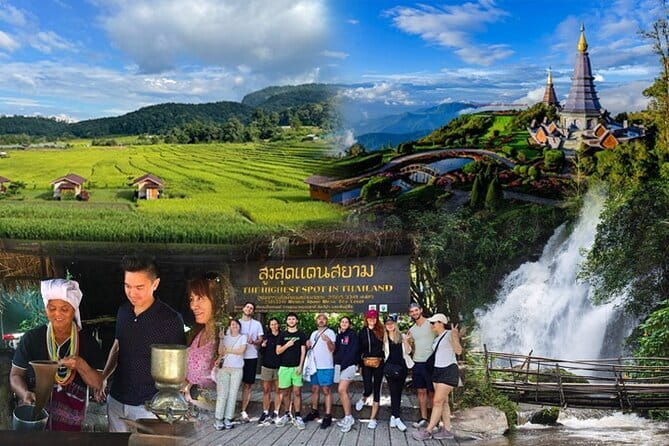
Next you visit Wat Pa Pao, the first temple of the Ngiaw or Tai Yai in Chiang Mai. This stop expands your sense of Chiang Mai’s cultural layers. Chiang Mai isn’t one single identity story—it’s a blend of groups, traditions, and migration histories that show up in religious sites.
The stop lasts about 15 minutes, so you get a guided overview and time to observe. Entry is listed as free, which is great because it keeps the tour moving efficiently.
Wat Nong Kham: Burmese-Shan style religious architecture
From there, you go to Wat Nong Kham, highlighted for its special style: Burmese-Shan temples. If you’re starting to recognize that the north’s temples have strong regional flavors, this is where that pattern becomes obvious.
This stop is an architectural and cultural reminder. Even if you don’t memorize every label, you’ll come away knowing that Chiang Mai’s Buddhist sites reflect more than just one local style.
The itinerary doesn’t give a fixed time for this exact stop segment, but it’s treated as a purposeful waypoint before the markets.
Warorot Market: where you see everyday Chiang Mai supply
Then you hit Warorot Market, described as the biggest local fresh market in Chiang Mai. This is not a tourist-only market stop. The whole point is to let you see what people buy for daily life and explore the products sold to local people.
This is one of the most valuable parts of the night tour, because it shifts your understanding from “what to photograph” to “how the city runs.” You learn the patterns: food availability, market goods, and the kind of bustling energy that’s grounded in routine.
Since the tour includes a foodie section later, Warorot works as context. It helps you connect the ingredients and daily sourcing to what you’ll likely eat next.
Tha Phae Gate: city activity and festivals in the same spot
You also stop at Tha Phae Gate, called the main center of Chiang Mai’s public city activities and festivals. Even if you’re not there during a big festival date, this gives you a mental map of where “big moments” happen.
That’s a huge benefit for first-time visitors. If you come back later and find crowds or events, you’ll already know the general geography and why the area matters.
Chiang Mai Gate Night Market: street food with a local foodie lens
The tour’s included foodie climax is the Chiang Mai Gate Night Market. You’ll spend about 25 minutes, and admission is included for this part.
This is where the tour turns from sightseeing to dinner assistance. You’ll experience the street-food scene with a local foodie focus, and you’ll get some snack and drinks here. Even better: the guided structure means you don’t have to guess where the good stalls are.
A practical note: because extra food and drinks aren’t included, decide ahead of time what you want. If you’re trying a few bites, you might be fine. If you’re expecting a full meal plus snacks, budget a bit more.
Also, this stop is a reminder of what night tours should do well: help you eat well without turning dinner into an endless gamble.
Wat Chedi Luang: the biggest stupa and the Tripiṭaka connection
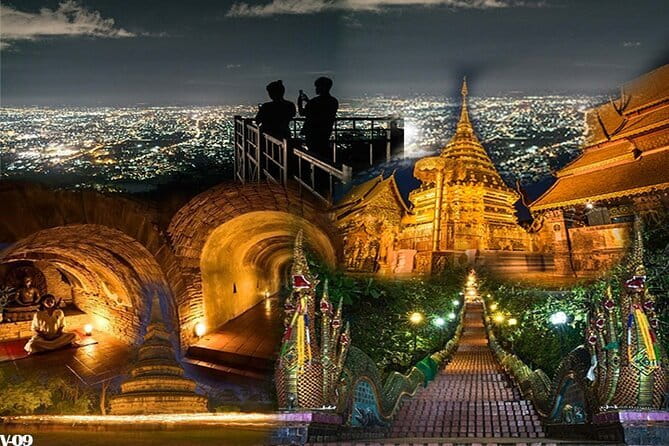
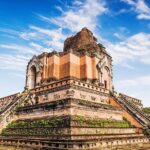
After the market, you head to Wat Chedi Luang Varavihara, known as the temple of the biggest stupa on this route. Here’s the detail that makes it special: it also housed the city pillar together with the Tripiṭaka, the Buddhist scriptures.
This is the kind of connection that makes your temple viewing click. Instead of seeing buildings as isolated landmarks, you see them as places that held sacred objects and meaning over time.
Time here is about 10 minutes, and admission is included for this stop. It’s long enough to take in the architecture basics, especially with night lighting helping define shapes and edges.
Wat Phra Singh: northern-style chapel beauty
The route finishes with Wat Phra Singh, described as the most beautiful architecture in the northern style reflected from the chapel.
Even if you feel temple-weary by this point, this stop works as a final artistic payoff. It’s not listed with an explicit duration, but it’s treated as a meaningful closing note. If you like visual rhythm, the contrast between market noise and chapel calm will likely be memorable.
Then you end back at the meeting point, which keeps the flow simple.
What kind of traveler should book this?
This tour is a great fit if you:
- want your bearings quickly in Chiang Mai without chasing every landmark
- prefer an organized night plan that mixes culture with dinner options
- like learning context—how history and beliefs show up in daily life
- enjoy markets, but want guidance so you’re not wandering hungry and unsure
It’s also a good option for couples or solo travelers who like a small group. With a max group size of 12, you’re more likely to feel included rather than stuck in a long chain of tourists.
If you’re the type who only cares about one or two big-ticket sights, you might find this route feels broad. But if your goal is understanding the city and eating well your first night, it’s a strong choice.
Practical tips to make the most of the 2-hour flow
- Arrive a bit early at Three Kings Monument so you’re not rushed when it’s time to board.
- Wear smart casual and comfortable shoes. Even with tram segments, you’ll walk between sites.
- Bring a little flexibility for food. Snacks and drinks are included during the foodie portion, but extra meals are not.
- If you’re taking photos, night lighting often helps temple details show up better—so don’t keep your phone hidden.
Should you book the Guided Chiang Mai City Night Tour by EV Tram?
I’d book it if you want a first-night plan that’s calm, organized, and genuinely helpful. The EV tram plus a guided route through temples and market areas makes it easier to understand Chiang Mai rather than just tick off places.
Skip it only if you’re hunting for a high-speed, landmark-only tour. This one is about orientation and local context. If that sounds like your style, it’s great value at around $27.43 and it ends back where it starts, keeping your evening stress low.
FAQ
What time does the EV Tram Chiang Mai city night tour start?
The tour starts at 6:00 pm.
How long is the tour?
It lasts about 2 hours (approx.).
Where do I meet the guide?
You meet at Three Kings Monument (QXRP+3WX) on Prapokklao Road.
Does the tour end back at the meeting point?
Yes. The activity ends back at the meeting point.
What’s included in the ticket price?
Included are the EV tram during the trip, a professional English-speaking guide, the admission fees stated in the itinerary, bottled water, and some snack and drinks during the foodie portion. Travel accident insurance is also included.
Are any admission fees required during the tour?
The itinerary lists several temple admissions as free, and it also specifies that admissions are included for the Chiang Mai Gate Night Market and Wat Chedi Luang.
Is pickup and drop-off included?
No. Pickup and drop-off service is optional, priced at THB 500 for a location within 5 km from the city center.
How big is the group?
The tour has a maximum of 12 travelers.
What should I wear?
The dress code is smart casual.
What is the cancellation policy?
Free cancellation is available up to 24 hours before the experience start time for a full refund.
Is there a child rate?
A child rate applies only when sharing with 2 paying adults.