REVIEW · CHIANG MAI
Old Town History and Culture Walking Tour at Chiang Mai
Book on Viator →Operated by Discova Thailand · Bookable on Viator
Old temples, explained on a short walk. This Chiang Mai Old Town history tour connects the roots of the Lanna kingdom to three standout stops, and it does it at a smart price point. I like that the group is kept small, max 8 travelers, so the guide can actually look at you and talk clearly. I also like that entrance fees are included, so you don’t have to do the pay-at-each-gate math while you’re trying to enjoy the day.
One consideration: guide style can make or break the experience. I saw feedback that one guide spent too long on early explanations and repeated points, which dragged for the group. On the flip side, other guides have been praised for strong English and friendly, thoughtful teaching, plus the tour includes moments like monk talks and the chance to opt into a blessing if you want it.
In This Review
- Key highlights you should know before you go
- Three Kings Monument: where King Mangrai history starts
- Wat Phra Singh: Lanna architecture and the Year of the Dragon pagoda
- Wat Chedi Luang Varavihara: UNESCO restoration and centuries of temple ruins
- The guide matters: English clarity, pacing, and how to get the most out of it
- Price and value: why $15 can actually work here
- Walking logistics in Chiang Mai Old Town (and who it suits)
- Should you book this Chiang Mai Old Town History and Culture Walking Tour?
- FAQ
- What is the duration of the Old Town History and Culture Walking Tour in Chiang Mai?
- Where does the tour start and where does it end?
- What temples are included on the walking route?
- What’s included in the tour price?
- Is hotel pickup or drop-off included?
- Do I need a paper ticket?
- How large is the group?
- Is the tour designed for most travelers?
Key highlights you should know before you go
- King Mangrai context fast: You start at the Three Kings Monument and get the story of the founder of Chiang Mai’s Lanna kingdom right away.
- Wat Phra Singh focus: Time is set aside for Lai Kam, plus Lanna-style architecture and murals that many people miss if they visit on their own.
- Wat Chedi Luang’s scale: Expect a big, 14th-century temple complex with 600-year-old ruins and UNESCO restoration history.
- Small-group pacing: Maximum 8 travelers helps keep the walk moving without feeling like a stampede.
- Value baked in: Entrance fees, bottled water, English guide, and travel insurance are included in the $15 price.
- Optional cultural moment: You may be asked whether you want a monk blessing for luck, with respectful choice for people who prefer not to participate.
Three Kings Monument: where King Mangrai history starts
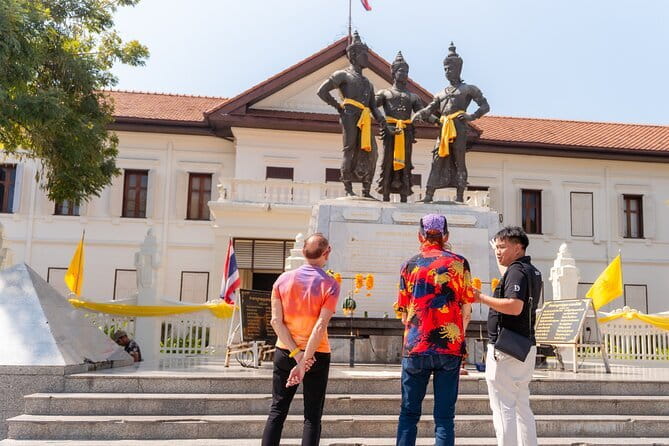
The tour meeting point is the Three Kings Monument on Prapokklao Road. It’s a strong start because it gives you the big picture before you step into temple courtyards. Your guide begins with a short safety briefing, then sets up the story of King Mangrai, the first king of the Lanna Kingdom and the founder of Chiang Mai in the 13th century.
This matters more than it sounds. Chiang Mai’s temples can feel like separate sightseeing stops if you don’t know who built what, and why. Starting at this monument helps you read the city like a timeline instead of a checklist.
Also, this stop is basically your “gear-up moment.” You can ask quick questions, get your bearings fast, and settle into the pace. Even though the tour is only about 2 hours 30 minutes, that early orientation makes the rest of the walking feel more intentional.
You can also read our reviews of more walking tours in Chiang Mai
Wat Phra Singh: Lanna architecture and the Year of the Dragon pagoda
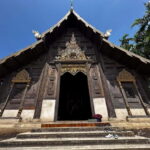
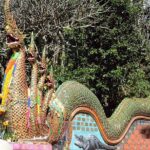
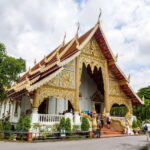
Next you head to Wat Phra Singh, the second most revered temple in Chiang Mai. The visit centers on the temple’s Lanna architecture and its most important buildings, including the Lai Kam assembly hall and a pagoda that’s tied to the Year of the Dragon.
That dragon detail is one of those “only in Thailand” elements that turns a temple visit from visual sightseeing into something with personal meaning. If you were born in the Year of the Dragon, this stop is the kind of place that can feel unusually relevant, because you’re not just looking at old stone—you’re seeing a tradition that people use for beliefs and luck.
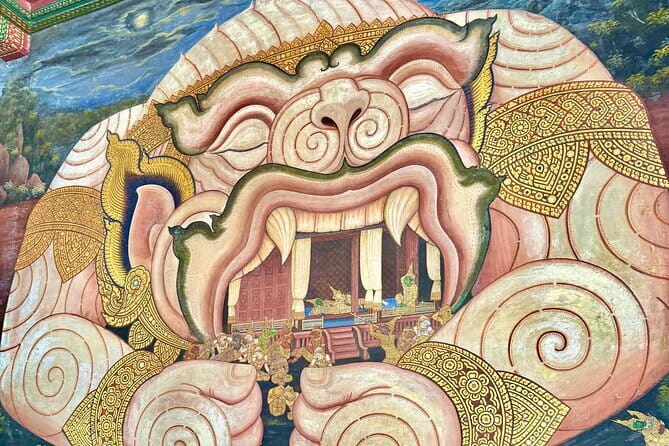
Wat Phra Singh dates back to 1346, and the guide’s job is to help you spot what makes the style distinct. If you’re visiting temples in Southeast Asia, you’ll notice a lot of them share similar layouts, but the Lanna touches often show up in the rooflines, ornamentation, and overall design choices. You’ll also have time to appreciate murals in the assembly hall area, which are often more than background decoration—think of them as part of the temple’s teaching atmosphere.
Practical tip: this is a temple stop where it helps to slow down for a few minutes. Let your eyes adjust, and don’t worry if you can’t read every detail. The guide’s explanations are what tie the visuals together so you walk away feeling like you understood something, not just took photos.
Wat Chedi Luang Varavihara: UNESCO restoration and centuries of temple ruins
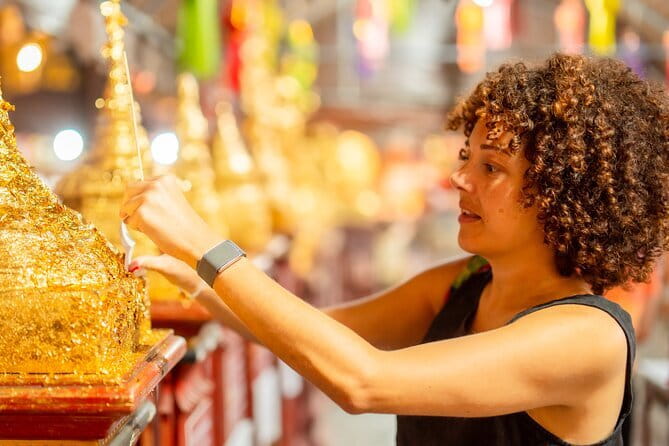
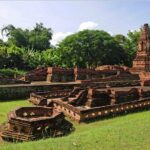
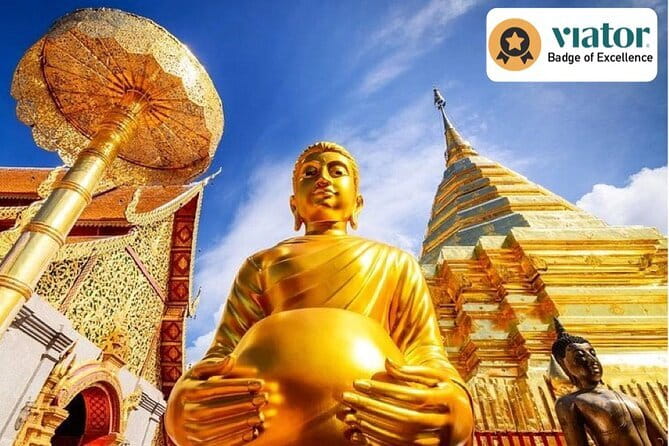
After a short stroll, you arrive at Wat Chedi Luang Varavihara, a 14th-century temple famous for its ruins and long history. This is the tour’s big “wow” stop, not just because it’s beautiful, but because it’s famous for what remains—restored and preserved, yet still clearly marked by age.
The temple was restored with help from UNESCO in the 1990s, and the site’s current form reflects both its past importance and the work done to protect it. It’s the kind of place where you can feel the scale even if you’re not a temple-architecture specialist. You’ll see the grounds, explore the premises, and spend enough time to understand why locals care about this place, not only tourists.
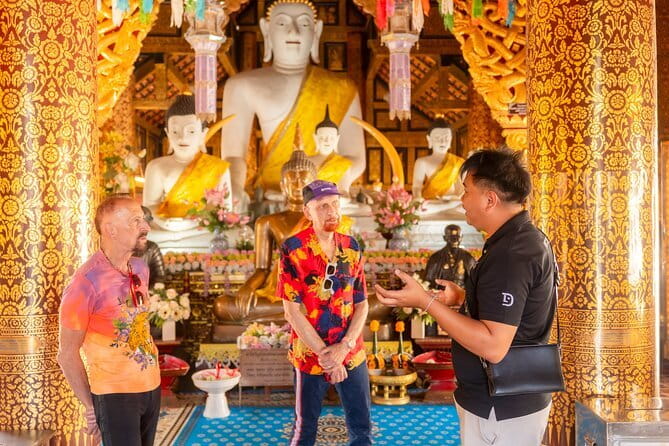
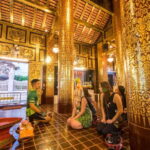
One highlight is the chance to hear talks by monks. That’s a big deal for two reasons. First, it’s a break from the usual “guide talks the whole time” style. Second, it gives you a more direct window into how Buddhist culture works in real life, not just in travel brochure terms.
A small note based on past experience with different guides: some tours here also include a respectful chance to receive a monk blessing for luck, with your choice respected if you’d rather not participate. If that’s your style, this is one of the more meaningful moments of the route.
The guide matters: English clarity, pacing, and how to get the most out of it
This walking tour runs only 2 hours 30 minutes, so the guide’s organization directly affects your experience. When things go well, the pacing feels smooth and you don’t end up waiting around or feeling rushed. When things don’t go well, you can lose time in the first part of the tour, which is exactly what one guest flagged: too much early explanation, some repetition, and difficulty for the group to follow.
On the other hand, other guides have been praised for excellent English and friendly, thoughtful teaching. Names that came up in strong feedback include Khun Bim, noted for clear communication and for sharing personal, faith-aware context in a way that still felt welcoming. Another guide, Kitty, was mentioned as both a communication challenge for one group and a well-regarded guide in other feedback, which tells me the biggest variable isn’t the tour structure—it’s the specific guide on your day.
Here’s how you can protect your experience:
- Be ready to ask a question early if something feels confusing.
- Don’t hesitate to request a slower explanation on your first temple stop if you need it.
- Keep an eye on the “flow” of the day: if the guide stalls at the start, tell yourself you can still regain momentum once you’re walking temple-to-temple.
With a maximum group size of 8, you’re not stuck in a chaotic crowd. If your guide is good, you’ll feel it quickly.
Price and value: why $15 can actually work here
At $15 per person, this tour is priced like something you’d book on a whim—yet it includes the stuff that normally adds up in Thailand. You get an English-speaking guide, bottled water, travel insurance, and all entrance fees/donations included. That’s a rare combo at this price level.
The value logic is simple: temple visits can mean multiple paid entries, plus the time cost of stopping to figure out what’s required. Here, entrance fees are handled within the tour structure, which lets you focus on the experience instead of bookkeeping.
There’s also a time-value element. In about 2.5 hours, you hit multiple key sites in Old Town—Three Kings Monument, Wat Phra Singh, and Wat Chedi Luang—so you’re not stitching together separate tickets, routes, and random detours.
The main “cost consideration” isn’t the $15. It’s that the tour doesn’t include hotel pickup and drop-off. So you’ll want to plan how you’ll reach the start point at Three Kings Monument and how you’ll get back after it ends at Wat Chedi Luang. If you’re already in Old Town, that’s usually easy.
You can also read our reviews of more historical tours in Chiang Mai

Walking logistics in Chiang Mai Old Town (and who it suits)
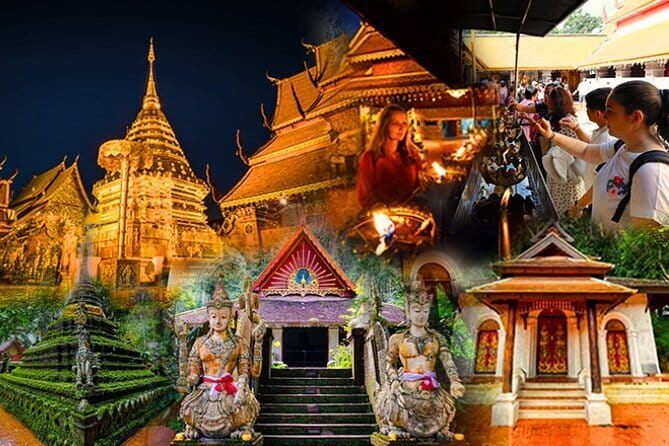
This is a walking tour, about 2 hours 30 minutes, and it’s built around a compact Old Town route. The tour is listed as near public transportation, which helps if you’re staying farther out or you prefer to avoid taxis for short hops. The meeting point and route through the temple area are set up for foot travel, so shoes matter.
Most travelers can participate, which suggests the pace is designed for a broad range of visitors. That said, it’s still multiple temple areas in one go, so it’s best for people who like a structured plan rather than wandering slowly on their own.
Who this suits best:
- First-timers who want a clear, guided path through Chiang Mai’s most important Old Town temples
- History-and-culture visitors who appreciate context about King Mangrai and the Lanna Kingdom
- Travelers who like small groups and an English guide who explains what you’re seeing
Who might be less thrilled:
- People who dislike any group pacing
- People who strongly prefer to choose their own time inside each temple without guide direction
Should you book this Chiang Mai Old Town History and Culture Walking Tour?
Book it if you want an efficient, well-paced Old Town temple route with the money hassle removed. With entrance fees included, bottled water, and an English-speaking guide, it’s an especially good pick for your first day in Chiang Mai or anytime you want a guided overview that still feels personal thanks to the small group size.
Skip it (or at least think twice) if you know you get impatient with long explanations at the start of tours. The tour experience depends on how smoothly the guide communicates early on, and there’s at least one instance where a guest found that portion too repetitive.
If you’re flexible and ready to treat it like a guided walk-through of Chiang Mai’s roots, this tour is one of the simpler value buys in Old Town temple sightseeing.
FAQ
What is the duration of the Old Town History and Culture Walking Tour in Chiang Mai?
The tour runs about 2 hours 30 minutes.
Where does the tour start and where does it end?
It starts at Three Kings Monument and finishes at Wat Chedi Luang Varaviharn.
What temples are included on the walking route?
You visit Three Kings Monument, Wat Phra Singh, and Wat Chedi Luang Varaviharn.
What’s included in the tour price?
All entrance fees are included, along with an English-speaking guide, bottled water, and travel insurance.
Is hotel pickup or drop-off included?
No, hotel pickup and drop-off are not included.
Do I need a paper ticket?
No. You’ll use a mobile ticket.
How large is the group?
The tour has a maximum of 8 travelers.
Is the tour designed for most travelers?
Yes, it’s listed as suitable for most travelers.