REVIEW · CHIANG MAI
Lanna Heritage Walking Tour: A Journey Through History
Book on GetYourGuide →Operated by Chiang Mai Private Guided Tour by Richard · Bookable on GetYourGuide
Chiang Mai history walks beside you. I like how Richard connects the Lanna Kingdom timeline to what you see at each stop, and I like the Sompet-style market moment for everyday smells and snacks. The one drawback to plan for is the walking pace, so bring sports shoes and expect a bit of toe-and-knee work.
For $45, you’re not paying just for sightseeing. You get a tight 4-hour route with hotel round-trip transfer, entry fees, water, local snacks, and a café coffee stop. If you want stories that make temples and city layout feel personal, this tour is a strong pick.
In This Review
- Key highlights you’ll feel fast
- Starting at Tha Pae Gate: the Lanna Kingdom story in 15 minutes
- Wat Chiang Man: oldest-temple carvings and what they’re trying to say
- Walking the city moat to Sompet Local Market
- Three Kings Monument, Rama VI’s school, and a timeline you can walk
- The renovation site: women’s-prison history meets older royal palace traces
- Wat Phra Singh: royal-temple importance across changing eras
- Café break after the temples: coffee and pacing the last stretch
- Wat Pan Tao: traditional Lanna architecture tied to palace life
- Wat Chedi Luang finale: the landmark that ties it together
- Price and value: what $45 includes for a 4-hour walk
- Who this tour suits best in Chiang Mai
- Practical tips: shoes, temple dress, and comfort
- Should you book this Lanna Heritage Walking Tour?
- FAQ
- How long is the Lanna Heritage Walking Tour?
- How much does the tour cost?
- Where do I meet for the tour?
- What’s included in the price?
- Are meals included?
- What should I wear and bring?
- Is the tour private, and is the guide in English?
- Who is this tour not suitable for?
Key highlights you’ll feel fast
- Richard’s story style ties politics, architecture, and daily life into one clear thread
- Wat Chiang Man’s stone carvings give you a visual anchor for early Lanna
- City-moat walking plus a local market stop makes the day feel more like real Chiang Mai than a checklist
- Three Kings Monument and Rama VI’s school place the city’s leadership and education in context
- A renovation site with women’s-prison history and traces of an older palace shows why Chiang Mai keeps rewriting itself
Starting at Tha Pae Gate: the Lanna Kingdom story in 15 minutes
Most walking tours start in a spot. This one starts at an actual milestone: Tha Pae Gate. From here, your guide sets the frame for everything you’ll see later.
You’ll hear how the Lanna Kingdom formed, when it prospered, and what happened when the power balance shifted under Burmese control. The story also covers the long stretch when the city was abandoned for about 20 years, followed by the struggle to regain independence. Then you get the later revival, about 250 years ago, and how Lanna ultimately became part of Siam.
One reason I like this opening is that it doesn’t treat history like a textbook. It gives you cause-and-effect for why the city’s temples, monuments, and even city planning matter. You also learn how Chiang Mai avoided being carved up by major colonial powers, and you get the tea-and-teak-era angle through the teak industry boom. By the time you leave the gate, World War II-era Chiang Mai and today’s street life already have a place in the same picture.
Practical tip: this first segment moves quickly. If you’re the type who likes to take it slow, tell your guide early so you can pace your questions and photos.
You can also read our reviews of more walking tours in Chiang Mai
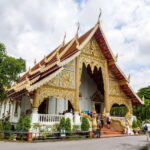
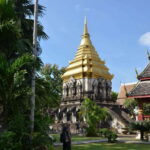
Wat Chiang Man: oldest-temple carvings and what they’re trying to say
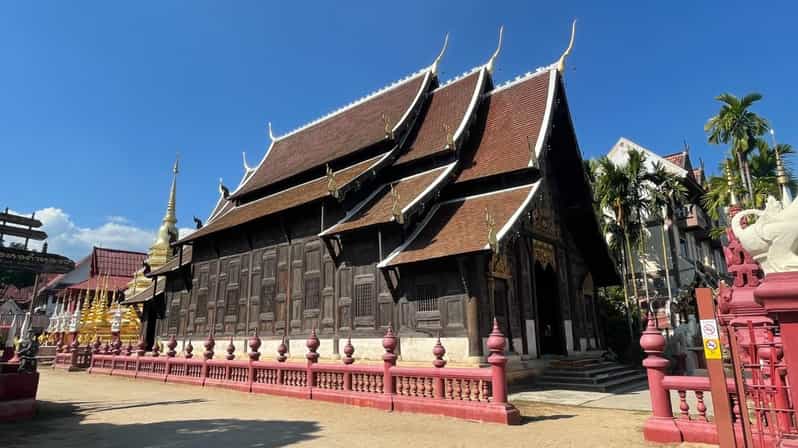
Next comes Wat Chiang Man, described as Chiang Mai’s oldest temple. More than the name, what you’ll remember here is the ancient stone carvings that depict early Lanna days.
These carvings matter because they’re not generic decoration. They’re visual storytelling from the time when the city’s identity was being shaped. If you’re interested in how Lanna architecture differs from other Thai regions, this stop is where your brain starts spotting patterns instead of just “seeing temples.”
The itinerary also builds in time around the area for street food and a food market visit. That’s a smart touch. Temples can feel like a still-life. A nearby snack stop brings the day back to the real rhythm of the city.
If you’re sensitive to spicy flavors, keep it simple at first. Taste one small thing, then decide if you want more.
Walking the city moat to Sompet Local Market
Between temple stops, you’ll walk along the historic city moat, and your guide explains what it was for and why it shaped life in Chiang Mai. Moats aren’t just “pretty.” They were part of defense and city order, and once you understand that, you’ll notice the city layout makes more sense.
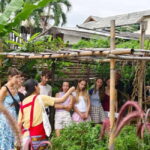
Then the tour shifts to Sompet Local Market. This is the sensory part of the day: you’ll be able to sample fresh fruit and get a feel for daily local life. It’s not just shopping. It’s an excuse to slow down for a minute and learn what people actually buy and snack on.
For me, the value here is balance. You spend time in formal religious spaces, then you step into the informal, human scale of the market.
Three Kings Monument, Rama VI’s school, and a timeline you can walk
After Wat Chiang Man, the route moves toward landmarks tied to leadership and learning.
You’ll admire the Three Kings Monument, which honors Chiang Mai’s revered monarchs. Then, you’ll reach Chiang Mai’s first government school, established in 1900 during King Rama VI’s reign. That school detail is the kind of historical thread that makes the tour feel grounded in more than temple legends. It shows how the city organized education, not only religion.
You’ll also pass by a museum that has an identity shift of its own: it was once a royal palace, later became an administrative center, and now holds exhibits. Even if you don’t go in for long, it’s a helpful reminder that buildings change jobs over time. Power changes. Purpose changes. The walls remain.
This section also connects back to the earlier story at Tha Pae Gate. You can see how Lanna’s past isn’t locked in stone. It’s continued through civic leadership and institutions.
The renovation site: women’s-prison history meets older royal palace traces
One of the most interesting moments on this tour is the stop for ongoing renovations at a site that was used as a women’s prison. Here, you’re not just viewing a building. You’re seeing evidence of something older—traces of an early Lanna royal palace—that the project plans to develop into a historical park.
This matters because it changes how you think about history on the ground. In many places, you see fully finished monuments and call it done. Here, you watch history being uncovered and reinterpreted.
If you like archaeology-adjacent storytelling, this is the segment that keeps your attention the most.
You can also read our reviews of more historical tours in Chiang Mai



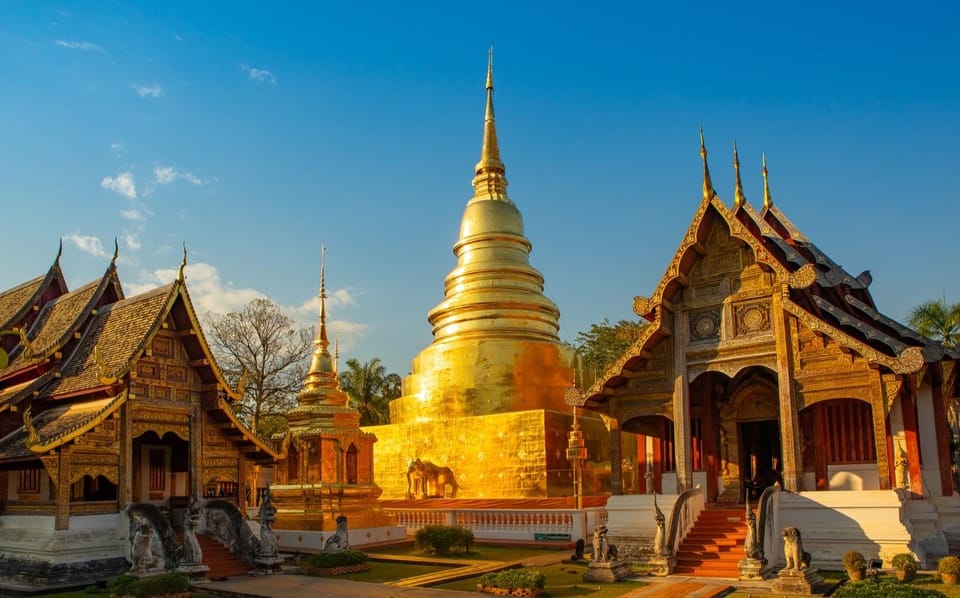
Wat Phra Singh: royal-temple importance across changing eras
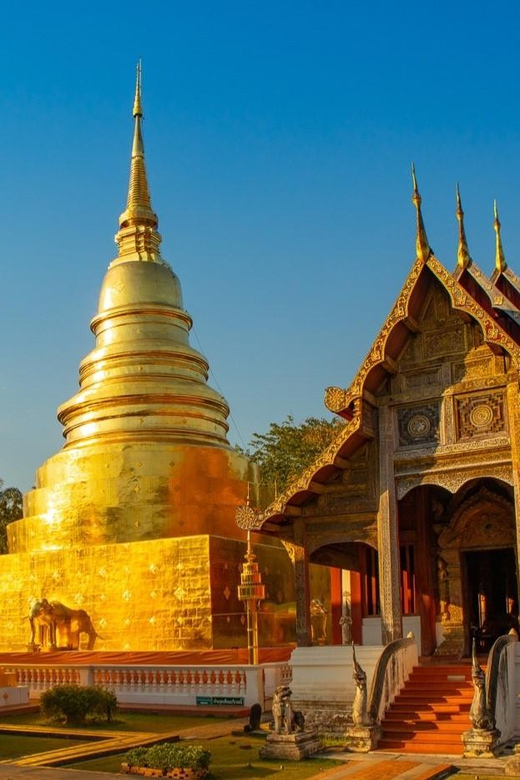
Next comes Wat Phra Singh. Your guide explains why it matters, and the key point is that its role spans different historical periods. You’re not just learning a date. You’re learning how the significance of a temple can change as the city’s political and cultural priorities shift.
This is also a good stop for architecture lovers. The details you picked up earlier at Wat Chiang Man help you understand what you’re looking at. You’ll notice the way Lanna identity shows up in stonework and temple layout.
The tour schedule gives you a natural break after this section, which helps if your feet get tired.
Café break after the temples: coffee and pacing the last stretch
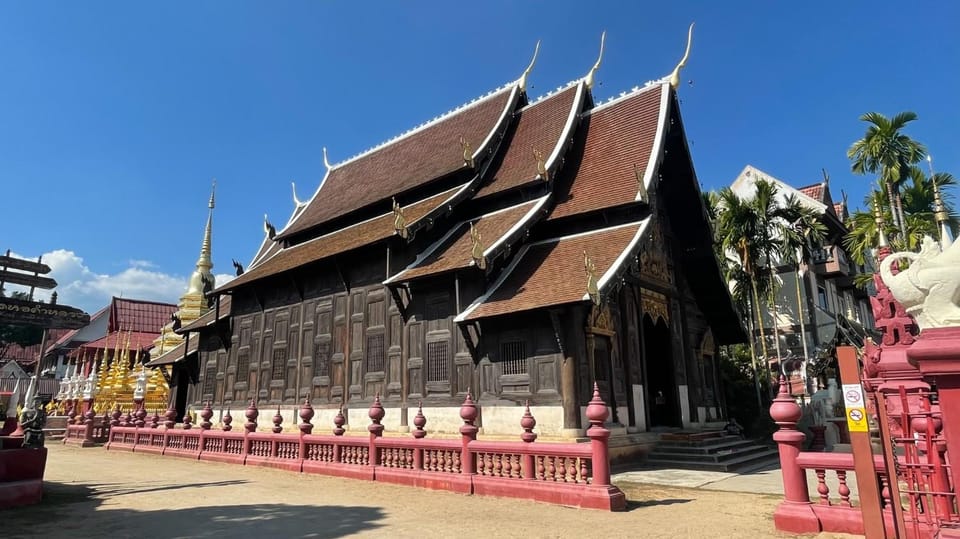
There’s a local café break built in, with time to enjoy Chiang Mai’s signature coffee and refreshments in a relaxed setting.
This is more than a perk. It’s part of the pacing plan for a four-hour walk. Temples can mean stairs, heat, and time spent looking upward. The café stop gives you a reset so you can stay alert for the final monuments.
Practical note: meals like lunch aren’t included. If you’ll be hungry afterward, consider planning something nearby for after the tour.
Wat Pan Tao: traditional Lanna architecture tied to palace life
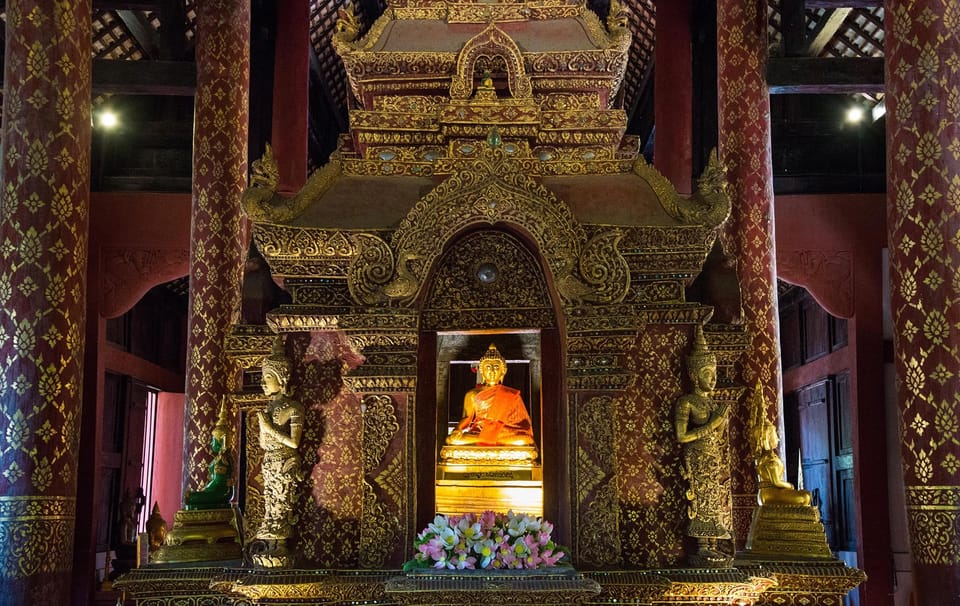
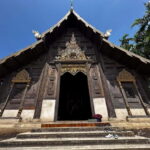
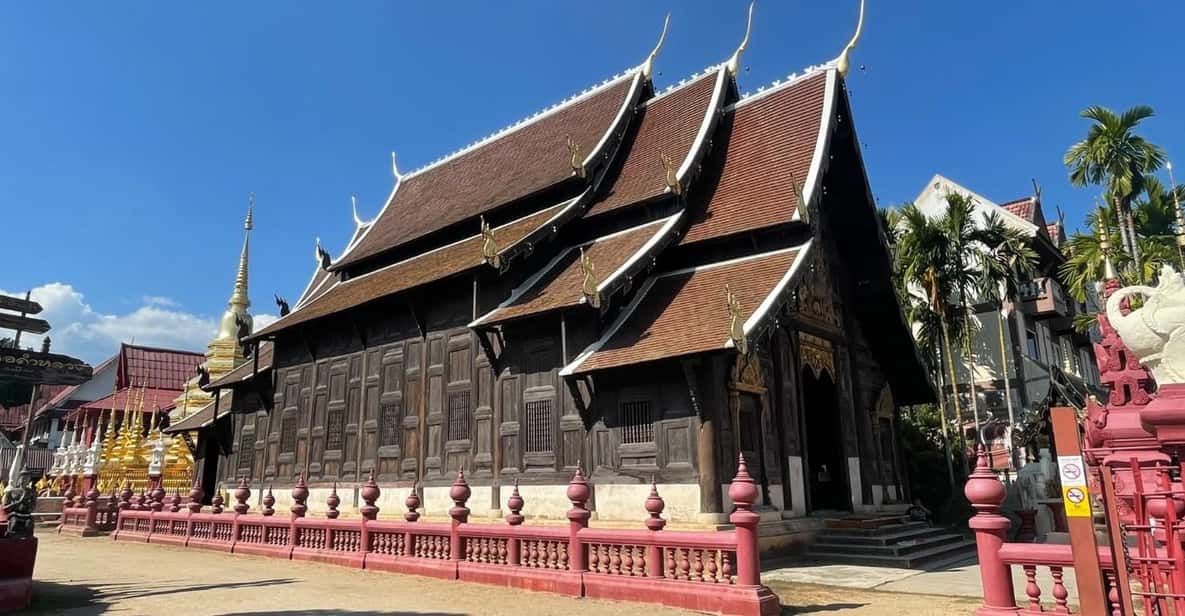
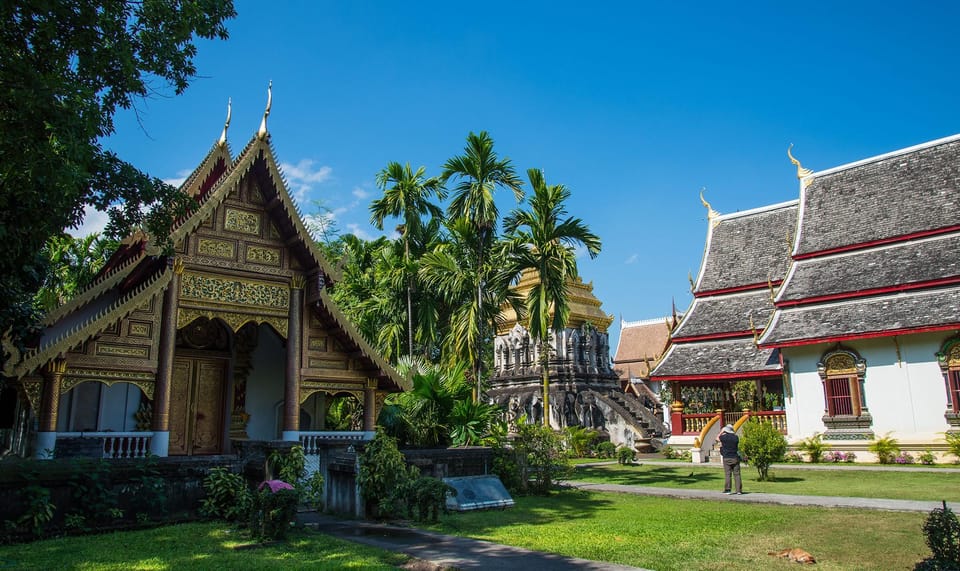
The next stop is Wat Pan Tao, highlighted as an example of traditional Lanna architecture. It’s also connected to royal history because it was originally part of the old royal palace.
This is a great place to focus on function. A lot of temple architecture is about ceremony, status, and tradition. When a site was once part of a palace complex, it carries a different weight. You start to feel how the city’s ruling class shaped what got built—and what stayed important.
If you’re comparing styles across Thailand, this stop helps you see the “Lanna look” in a concrete way, not just as a label.
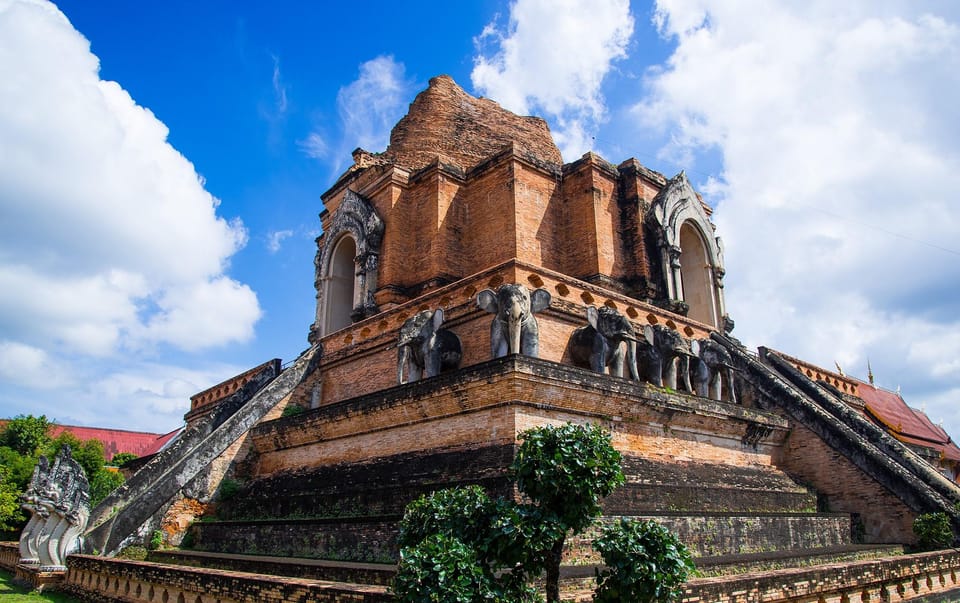
Wat Chedi Luang finale: the landmark that ties it together
To close, the tour reaches Wat Chedi Luang—a major symbol of Chiang Mai’s heritage. Your guide shares historical events tied to the temple and why it’s significant for the city.
This ending works because it loops back to your first lesson at Tha Pae Gate: power rises, declines, reforms, and leaves physical traces. Wat Chedi Luang is where those stories feel most grounded. It’s not just a pretty temple. It’s a point where the city’s timeline stops being abstract.
If you want to remember one photo, this is it.
Price and value: what $45 includes for a 4-hour walk
At $45 per person for 4 hours, this tour is priced like a “do the key stops with a guide” experience. The value is stronger than it first sounds because several costs are covered:
- Entry fees to the visited historical and cultural sites
- A bottle of drinking water
- Local snacks along the way
- A complimentary beverage at the café
- Two-way hotel transfer, so you don’t spend your day negotiating rides
If you were to book a guide plus tickets plus transport separately, the totals usually climb fast. Here, you buy one package and get a full route: gate, oldest temple, market, civic landmarks, palace-linked temples, and a final landmark.
This isn’t the cheapest thing in town. But it is a straightforward value when you want structure, explanations, and a real slice of local life.
Who this tour suits best in Chiang Mai
This tour fits best if you:
- like history with visible proof (temples, carvings, monuments, palace-related sites)
- care about Lanna architecture and how it differs from other Thai areas
- want a guide who answers questions in real time
- enjoy market moments as part of culture, not just “see one street”
It’s also especially good for a private group setup. That means you can ask more questions without feeling rushed, and if you’re booking as a smaller party, you may get extra back-and-forth with Richard, who’s mentioned as kind, open, and genuinely interested in what you want to know.
Practical tips: shoes, temple dress, and comfort
The tour asks you to bring sports shoes, which is a good sign. Expect walking segments between stops and time on temple grounds where the surfaces can change from street to stone.
Dress matters. The guidance is simple: dress appropriately to respect Buddhist temples and the people you meet, and no short skirts. If you’re unsure, choose something comfortable that covers enough to feel respectful.
Also note the “day safety” rules:
- No alcohol and drugs
- You should avoid distractions that slow the group or disrupt sacred spaces
Heat is a factor in Chiang Mai. You’ll get water, but it still helps to pace your photos and use the café break.
Should you book this Lanna Heritage Walking Tour?
Book it if you want Chiang Mai history in a format that actually connects. You’ll get temple architecture, city layout, civic landmarks, and a market stop in one smooth 4-hour run. The guide’s approach matters here, and this tour is known for thoughtful explanations and lots of room for questions, especially with Richard.
Skip it if you’re looking for a mostly indoor or slow museum-style day. This is a walking tour with multiple temple visits and a few stretches between them. Also, it’s not suitable for children under 8 or people over 80, based on the tour’s own suitability limits.
If your goal is to leave Chiang Mai with a clearer sense of how Lanna shaped the city’s identity, this tour is a strong match. And if you want the added comfort of hotel pickup plus entry fees handled for you, that’s a practical win.
FAQ
How long is the Lanna Heritage Walking Tour?
The tour lasts 4 hours.
How much does the tour cost?
It costs $45 per person.
Where do I meet for the tour?
You can be picked up from your hotel, or you can meet at Tha Pae Gate.
What’s included in the price?
Included are a local English-speaking guide, entry fees, a bottle of drinking water, a complimentary beverage at a local café, local snacks, and two-way hotel transfer.
Are meals included?
Lunch and other meals are not included. You can eat on your own outside the tour, and there are snack and beverage stops during the walk.
What should I wear and bring?
Bring sports shoes. Dress appropriately for Buddhist temples, and short skirts are not allowed.
Is the tour private, and is the guide in English?
Yes, it’s a private group tour, and the live guide speaks English.
Who is this tour not suitable for?
It is not suitable for children under 8 or for people over 80.