REVIEW · CHIANG MAI
Colors of Chiang Mai Guided Bicycle Tour
Book on GetYourGuide →Operated by Recreational Bangkok Biking · Bookable on GetYourGuide
Ride through Chiang Mai’s quiet backroads. This half-day Colors of Chiang Mai bicycle tour takes you out of the main tourist lanes to see real village life, old ruins, and everyday Buddhist culture. You cover about 20–25 km (270 minutes total) with an English-speaking guide, plus helmet and food.
I especially love how the route stays green and calm, using quiet land roads where you can actually look at what’s around you. I also like the mix of places: a temple stop, time near the Ping River, and the chance to visit the historic Wiang Kum Kam area with its very old chedi.
One thing to consider: the scenery can vary with the season, since rice fields and fruit orchards aren’t in bloom year-round, and the operator may adjust the plan when schools or shops are closed.
In This Review
- Key points before you pedal
- A half-day bike tour that reaches beyond Chiang Mai’s main sights
- Meeting up, bikes, and how the day actually flows
- Quiet green roads and the village product stop
- Temple stop: Buddhism explained in a way you can use
- Rice fields, orchards, and a market snack that feels local
- Riding the Ping River: slower views, better photos
- Wiang Kum Kam ruins and the 700-year-old chedi visit
- Food and breaks: Khao Soi Kai plus snack time
- Safety on the road: what to expect if you’re not a strong cyclist
- Price and value: why $38 makes sense here
- Who should book Colors of Chiang Mai
- Should you book this Chiang Mai bicycle tour?
- FAQ
- How long is the Colors of Chiang Mai guided bicycle tour?
- How far do you ride?
- What’s included in the price?
- Is the tour good for beginners or non-confident cyclists?
- What food do you get during the tour?
- Does it run for solo travelers?
Key points before you pedal
- 20–25 km, easy half-day pace that still feels like you left Chiang Mai’s center
- Quiet green roads plus a stretch riding along the Ping River
- Temple visit where your guide can explain Buddhism in plain, practical terms
- Wiang Kum Kam (founded in 1286 by King Mengrai) and an old 700-year-old Chedi
- Thai meal/snack included, including Khao Soi Kai at a local restaurant
- Guides you might meet include Wee, Wit, Dong, and Koi, with some sharing firsthand temple experiences
A half-day bike tour that reaches beyond Chiang Mai’s main sights
This is a true half-day Chiang Mai bicycle tour: enough time to cover distance, but not so long you feel wrecked. You’re riding roughly 20–25 km, and the tour lasts about 270 minutes total. That timing matters because it shapes the whole experience. You get stops for photos, short breaks, and explanations, without rushing.
What makes this tour feel different is the “outside the center” focus. You’ll pass through local communities, see rice fields and fruit orchards when they’re in season, ride along the Ping River, and then head to Wiang Kum Kam, an ancient settlement tied to the Lanna kingdom.
You’ll also touch the cultural side directly, not just from a distance. The highlights include meeting women from a local village making Thai traditional products, plus a temple stop, plus time at historic ruins that date back hundreds of years.
You can also read our reviews of more guided tours in Chiang Mai
Meeting up, bikes, and how the day actually flows
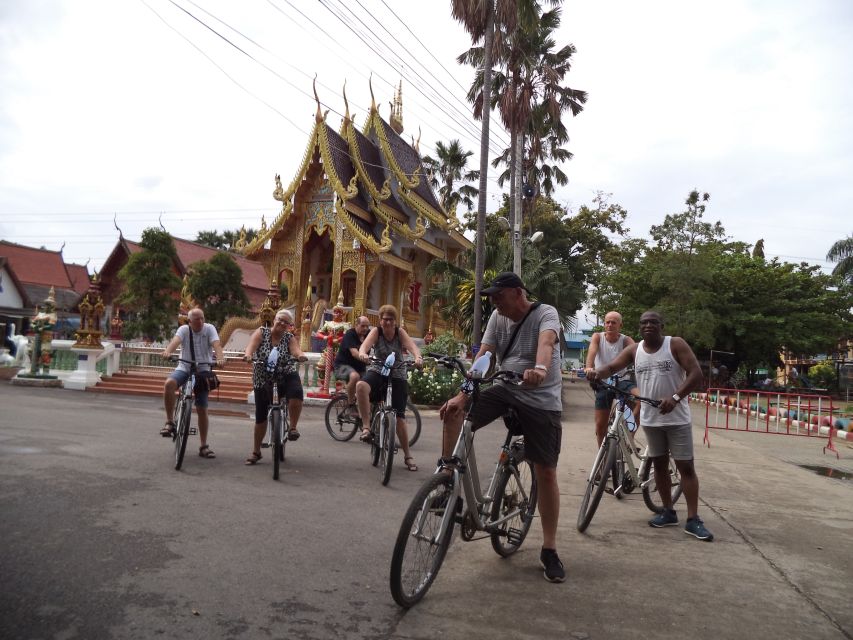
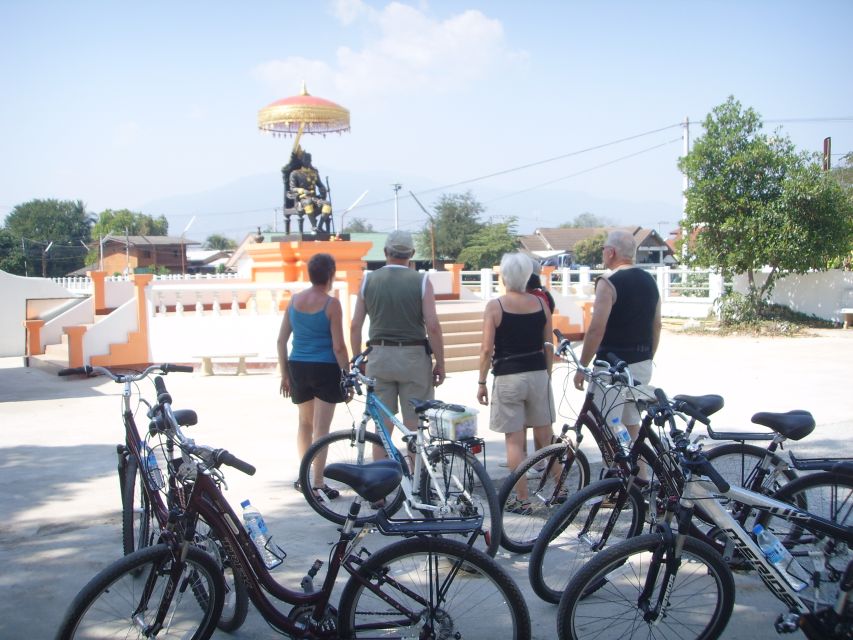
Plan to arrive about 5–10 minutes before the start time. Bikes and helmets are included, and you’ll have an English-speaking guide (the tour language is listed as English and Thai). That’s useful because the route and the stops are doing the heavy lifting. You’re not just cycling for exercise—you’re cycling for context.
Drinks are also part of the experience. Water or soft drinks are provided during the ride, and there’s time built in for a snack or fresh fruit at a local market. One small but practical bonus: free WiFi is available at the office where you meet, which helps if you want to plot the route on your phone before you go.
Timing-wise, expect a relaxed rhythm. People biking along this route often describe it as easy cycling and around 3–4 hours of riding time, with breaks and stops during that window.
Quiet green roads and the village product stop
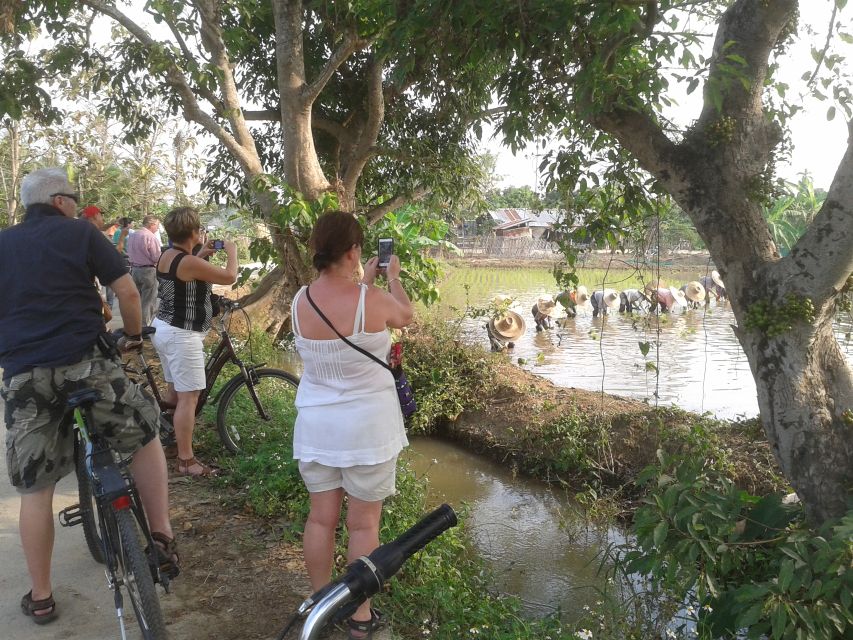
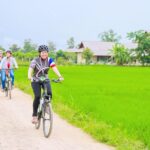
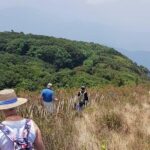
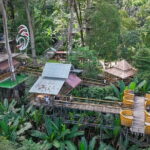
A big reason you’ll enjoy this tour is the “road choice.” The ride is designed around quiet and green land roads, not constant traffic dodging. That means you can focus on real details: homes tucked behind trees, small roadside activities, and the way communities set up daily life.
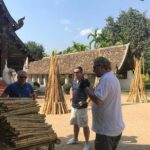
One of the tour’s stand-out moments is the stop connected to women from a local village making Thai traditional products. You don’t just see a product behind glass. You learn that these crafts come from routine work and local knowledge passed through communities. Even if you’re not buying anything, watching how items are made gives you a better sense of what daily labor looks like here.
If you like photos, this segment is usually a good one: not because it’s staged, but because people are doing normal work in a normal setting.
Temple stop: Buddhism explained in a way you can use
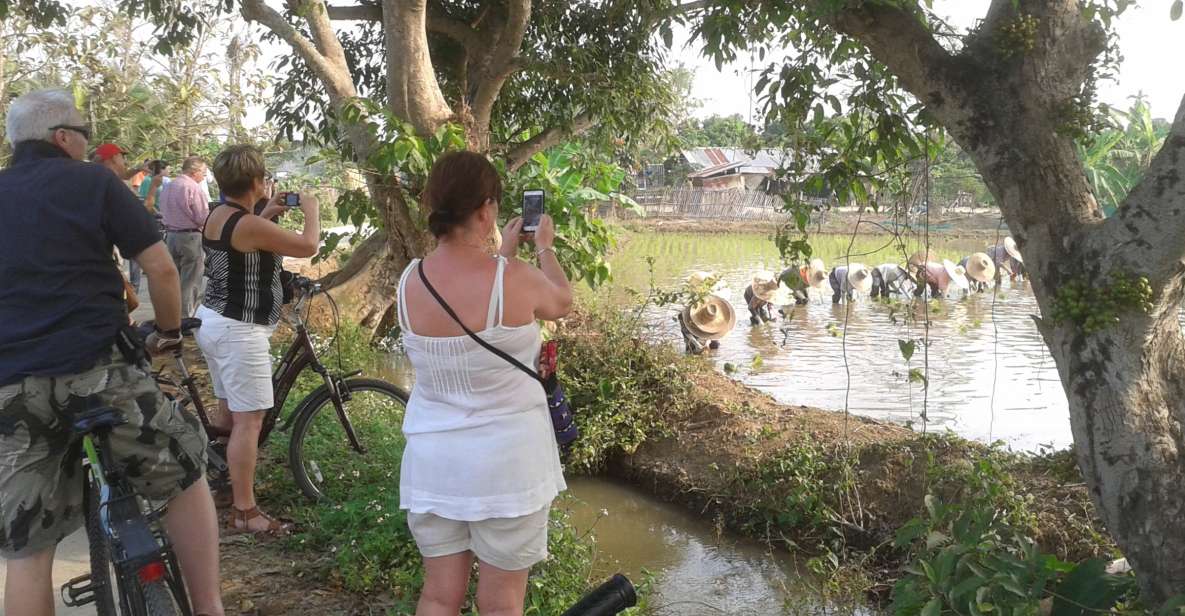
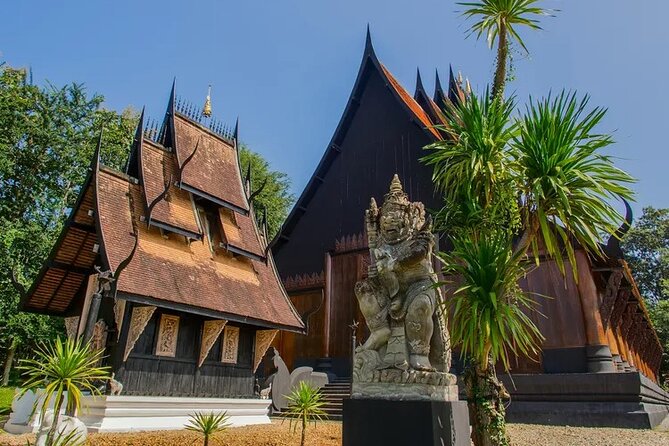
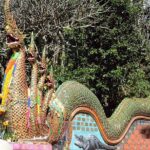
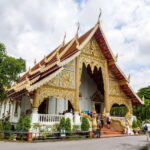
You’ll stop at a local temple during the ride. This is where the guide’s personality really matters. The tour is set up so your guide can tell you about the temple and Buddhist practices in a way that clicks, even if you’re not familiar with the religion.
Some guides on this tour bring added depth. In reviews, I’ve seen mention of a guide who used to be a monk and shared personal experiences during temple visits. That kind of firsthand perspective can turn a temple stop from tourist sightseeing into something more grounded—like learning the “why” behind visible routines.
Practical tip: at a temple, ask questions during the explanation parts, not during quiet moments when people are worshiping. You’ll get more useful answers, and you’ll be respectful of the space.
Rice fields, orchards, and a market snack that feels local
Between temple and river, you’ll ride through areas described as rice fields and fruit orchards. The key word here is described, because the tour notes that these scenes won’t look the same year-round. If you’re traveling in a season when crops aren’t in peak form, you might see greener growth without the full display.
Still, even when the fields are different, it’s valuable. Cycling past working farmland shows you how Chiang Mai feeds itself—and it changes the feel of the city. Instead of only temples and markets inside town, you’re seeing what’s behind the scenes.
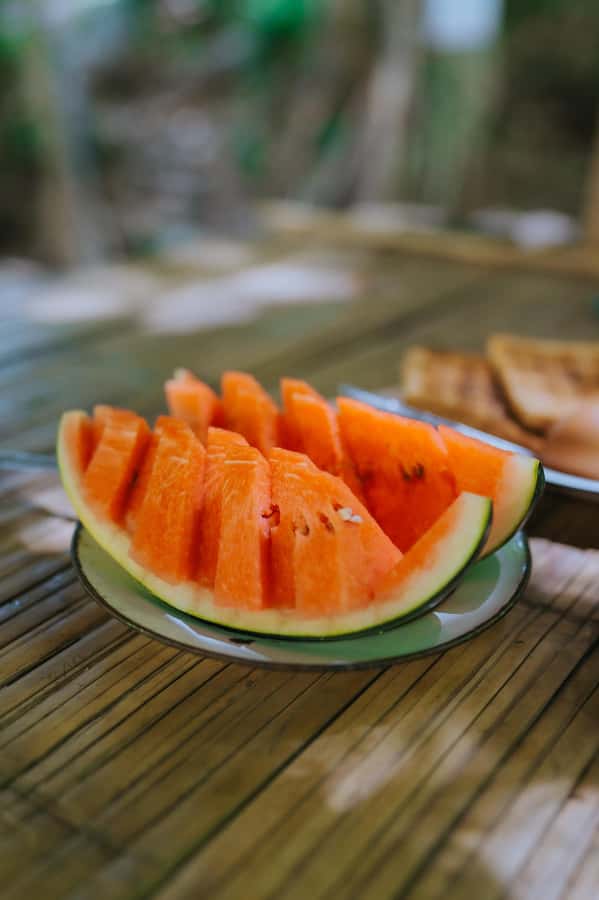
You’ll also stop at a local market for a snack or fresh fruit. That’s a good break because it interrupts the ride at a natural point and gives your guide a chance to point out what’s commonly eaten, cooked, or sold nearby. In reviews, I’ve read about market timing affecting whether certain stalls are running, so if you’re hoping for the most active market atmosphere, your day of the week can matter.
On some departures, reviews also mention extra small stops like watching pottery making or learning how coffee beans are roasted. These kinds of stops tend to be brief, but they add variety beyond the main landmarks.

Riding the Ping River: slower views, better photos
As the tour continues, you’ll cycle along the Ping River. Even if you’ve seen river scenes before, this stretch tends to feel calmer than the city core because you’re moving at a bike’s pace. You can look up, not just forward. You can notice boats, trees, and the way neighborhoods tuck right up to water.
Why this matters: river rides can make a tour feel like more than a checklist. They add breathing room. It’s also where your guide’s local rhythm helps—crossings and traffic are handled with care, and you’re kept moving at a pace that doesn’t turn stops into a hassle.
If you’re a photo person, bring a phone or camera you can hold comfortably. You’ll want to capture the mix of water, greenery, and the human scale of daily life.
Wiang Kum Kam ruins and the 700-year-old chedi visit
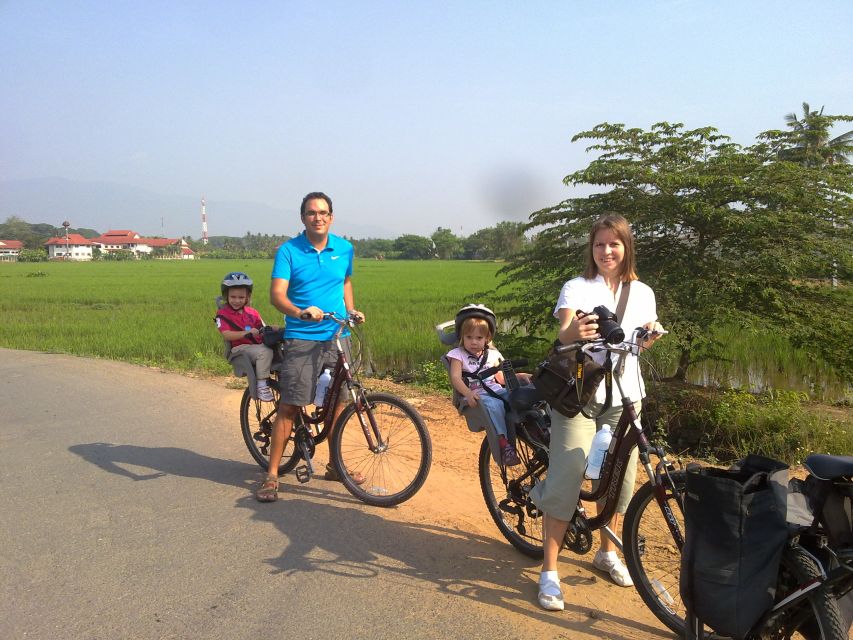
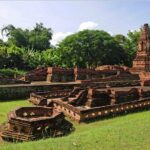
This is one of the most meaningful parts of the day. You’ll cycle through Wiang Kum Kam, a historic settlement founded in 1286 by King Mengrai. It served as the capital of the Lanna empire for about 10 years.
That time period is short in an empire history sense, but the physical place is old. You’ll see temples and ruins dating back hundreds of years. The tour highlights also call out a 700-year-old chedi, and the stop is built for you to photograph and absorb what remains.
What I like about including Wiang Kum Kam on a bike tour is that it makes ancient history easier to feel. You’re not just arriving and leaving by car. You’re approaching the area with the rest of the day’s context—temples earlier, farmland before that—so the ruins don’t feel random. They feel like the result of a long lived-in region.
If you enjoy walking through archaeological areas, plan to spend a few extra minutes where your guide points things out. Ruin details can be subtle, and the guide’s explanation helps you see what you might miss.
Food and breaks: Khao Soi Kai plus snack time
The tour includes food, and that matters because it makes the day feel complete instead of “just cycling.” You’ll have a Thai meal/snack, with Khao Soi Kai specifically included as a local restaurant stop.
Khao Soi Kai is a comforting, creamy-style curry noodle dish, and it fits the day well: it’s warm, filling, and not the kind of street-food snack that disappears too fast. The meal break also gives you a chance to rest your body and reset your focus before the final cycling segment.
Beyond the main meal, the day also includes snack or fresh fruit at a local market. Reviews mention additional treats like coffee and even ice cream, which suggests the guide likes to keep breaks practical and enjoyable rather than overly formal.
Safety on the road: what to expect if you’re not a strong cyclist
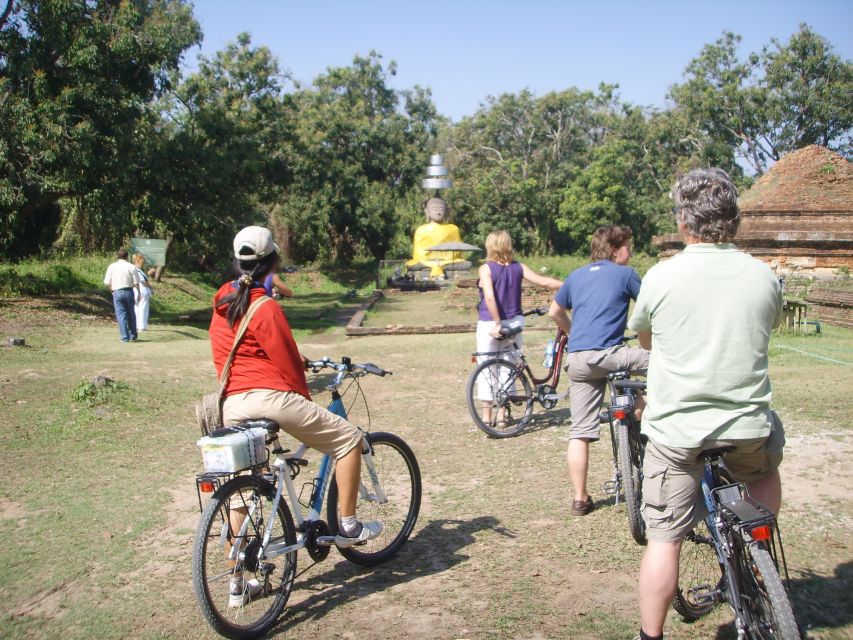
This tour isn’t marketed as a high-performance biking challenge. It’s built around easy cycling at a pace where you can still enjoy the stops. Many reviews highlight that the ride is mostly on quiet roads, with only occasional busier crossings managed by the guide.
Look for these safety cues:
- You’ll have a helmet included.
- The guide uses clear hand signals and watches crossings closely.
- The route is planned to reduce stressful traffic exposure.
If you’re not confident on busy roads, this tour can still work, as long as you communicate your comfort level early. I’d treat it like a guided confidence-building day: you’re there to learn the ride rhythm and enjoy the sights, not win a speed contest.
Price and value: why $38 makes sense here
At $38 per person, the value comes from what’s included, not just the sticker price. You’re getting:
- Bicycle and helmet
- English-speaking guide
- Water or soft drinks
- Thai meal/snack (including Khao Soi Kai)
- Insurance
- Free WiFi at the office
If you compare that to the cost of just renting a bike plus paying a guide for cultural stops plus paying for food, the math starts to look better. This is especially true in Chiang Mai, where a lot of experiences become pricey once you add transportation and separate tickets.
Also, this price points to a tour that aims for small-group or private options rather than a massive bus-style day. Some reviews mention getting transport back to the city as a practical support, which is the kind of extra that helps when your biking stamina isn’t perfect.
Who should book Colors of Chiang Mai
I think this tour is a great fit if you want:
- A first-time biking experience that still feels like real Chiang Mai culture
- Couples and solo travelers who like history plus daily life
- People who enjoy temples but also want farmland and river scenery
- Travelers who want a day that mixes “see it” with “understand it”
One note for solo travelers: the tour welcomes them, but it only operates with a minimum of 2 participants. If that minimum isn’t reached, the operator may switch time slots/days or cancel your reservation.
It may be less ideal if you’re chasing long-distance cycling fitness, or if you require specific crops/markets to look exactly a certain way. Since rice and orchards depend on season, your visuals may vary.
Should you book this Chiang Mai bicycle tour?
Yes, if you want a half-day that feels like Chiang Mai outside Chiang Mai. The combination of quiet cycling, temple storytelling, Ping River riding, and Wiang Kum Kam ruins with the 700-year-old chedi visit makes it more than a scenic ride.
I’d especially book if you care about guides who explain what you’re seeing. Reviews repeatedly mention guides like Wee, Wit, Dong, and Koi for clear communication, patience, and thoughtful pacing—and in at least one case, personal temple experience that adds real meaning to the stops.
You should think twice if you’re traveling at a time when you strongly want a particular kind of orchard or market energy, because the operator can adjust routes when conditions change. Still, even with those variations, the day’s structure is strong: culture first, countryside second, ruins last.
FAQ
How long is the Colors of Chiang Mai guided bicycle tour?
The tour duration is listed as 270 minutes (about 4.5 hours total), with cycling and multiple stops during that time.
How far do you ride?
The route is described as 20–25 km.
What’s included in the price?
Included are the bicycle and bicycle helmet, an English-speaking guide, a Thai meal or snack, water or soft drinks during the excursion, insurance, and free WiFi at the office.
Is the tour good for beginners or non-confident cyclists?
The ride is described as easy cycling with a pace designed for comfort. The guide provides safe handling at crossings and keeps most of the route on quiet roads, which helps if you’re not confident on busier streets.
What food do you get during the tour?
The tour includes a snack or fresh fruit at a local market, plus a Thai meal. Khao Soi Kai is specifically included at a local restaurant.
Does it run for solo travelers?
Solo travelers are welcome, but the tour only operates with a minimum of 2 participants. If the minimum isn’t reached, the operator may offer a different time slot or cancel the reservation.