REVIEW · CHIANG MAI
Half-Day Thai Cuisine Cooking Experience in Chiang Mai
Book on Viator →Operated by Oh-Hoo · Bookable on Viator
Hands-on Thai cooking beats tour-chef demos. I like the hands-on setup with your own cooking station, and I love that the menu lets you choose 4 or 6 dishes before you cook. One thing to plan for: the class depends on good weather, since part of the kitchen is open-air.
You’ll start near Tha Phae Gate, and pickup and drop-off from your hotel helps you spend your time cooking, not figuring out routes. The school is in a Lanna-style wooden place, close to the Saturday walking street area, and that setting makes the whole lesson feel like you’re stepping into local rhythm.
In This Review
- Key things to know before you cook
- Chang Cooking near Tha Phae Gate: a class with real Thai structure
- Price and value: what $31.30 buys you (and why it can be worth it)
- The day’s flow: from pickup to your first wok
- Choosing 4 or 6 dishes: how to build a meal that actually teaches you
- The ingredient lesson: herbs, spices, tamarind, and palm sugar
- Cooking like you mean it: your tools, your station, your help
- What each dish category teaches you (and why it matters)
- Deep fry dishes: texture and heat control
- Salads: balancing acid, sweet, and freshness
- Soups: aromatic foundations
- Curries: paste, timing, and thickness
- Stir-fry and noodles: wok speed and sauce integration
- Dessert: Thai sweetness and texture
- The final feast: eating what you made (and making sense of it)
- Group size, pacing, and how to get the most help
- Weather and the open-air kitchen: one drawback you should plan around
- Who this class is best for (and who might skip it)
- Should you book this Thai cuisine cooking experience?
- FAQ
- Where does the cooking experience start and end?
- How long is the cooking class?
- Is pickup from my hotel included?
- Can I choose what dishes I cook?
- What types of dishes are available?
- What languages are the classes offered in?
- Do I need to bring cooking tools or ingredients?
- How many people are in the group?
- What happens if the weather is bad?
- What is the cancellation policy?
Key things to know before you cook
- Pick your dishes (4 or 6) so you control the mix of curry, stir-fry, soup, salad, and dessert
- Small group size (max 8 travelers) keeps the class from feeling like a factory line
- Open-air + indoor kitchen styles mean the experience can feel different depending on the day’s weather
- English, Chinese, Japanese, or Thai instruction so you can follow without mystery steps
- You get your own station, knives, and woks so you can actually cook instead of watching
Chang Cooking near Tha Phae Gate: a class with real Thai structure
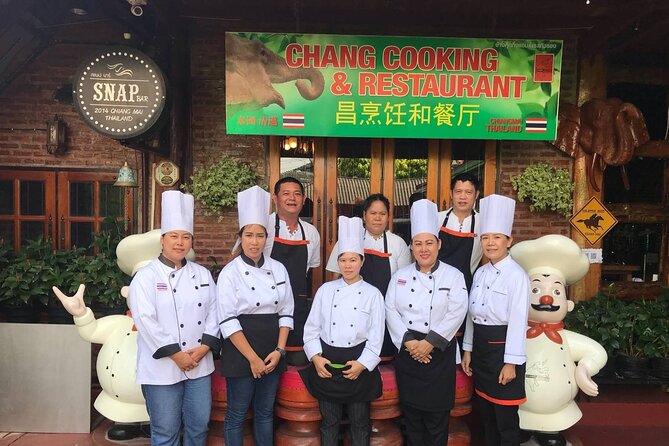
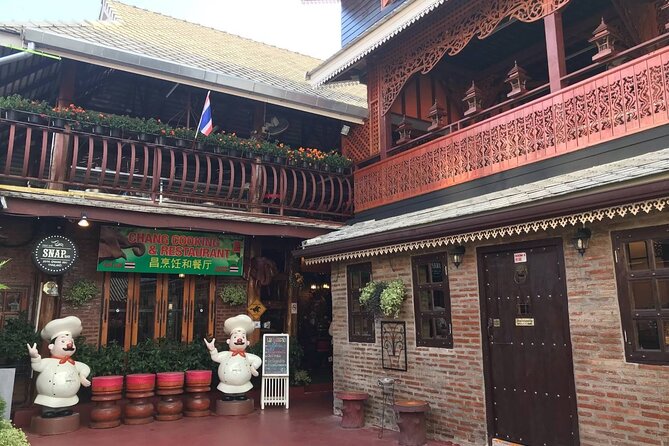
This cooking experience is based in Chiang Mai at a Thai cookery school called Chang Cooking (organized through Oh-Hoo). It’s not in a far-flung area. The meeting point is at Tha Phae Gate, and the school is close to the popular Chiang Mai Gate area and the Saturday walking street zone. That matters because Chiang Mai days are easiest when you don’t burn half your afternoon commuting.
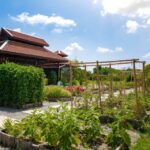
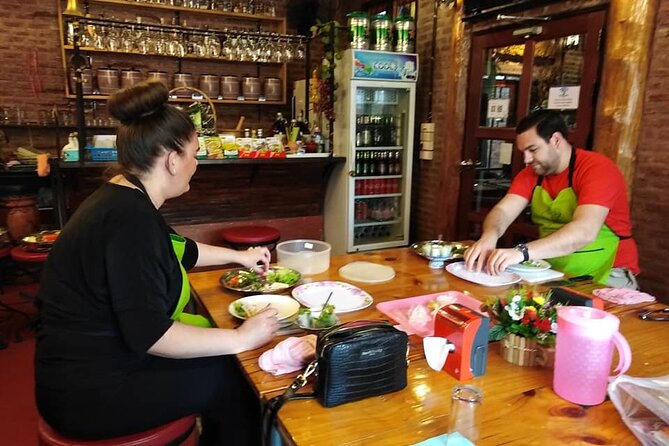
The setting also has a practical charm. You’re in a Lanna-style wooden premise, and the school uses two kitchen areas: a more restaurant-style indoor kitchen and an open-air first-floor space. That gives you a sense of how Thai cooking happens in real life, where conditions (heat, humidity, airflow) are part of the process. It’s also why weather matters—if it’s not cooperating, you’ll feel it.
You can also read our reviews of more cooking classes in Chiang Mai
Price and value: what $31.30 buys you (and why it can be worth it)
At $31.30 per person for about 6 hours, this is priced like a serious cooking class rather than a quick tasting session. You’re paying for several things that add up fast if you tried to recreate them on your own:
- A structured menu where you choose what you’ll cook
- An instructor-led walkthrough of Thai herbs, vegetables, and spices
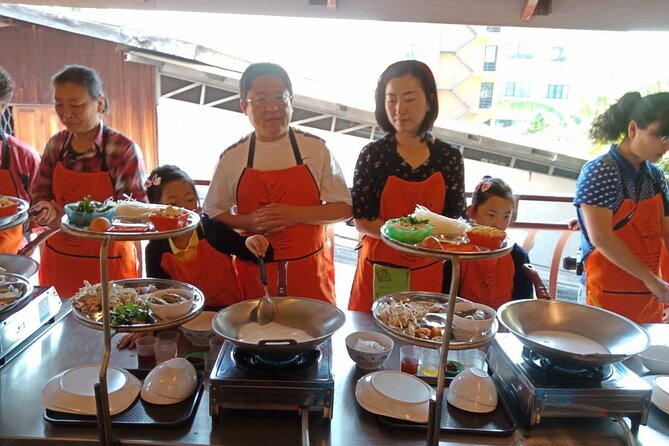
- Hands-on work at your own station with tools provided (chef’s knives, woks, and clean utensils)
- A final meal that you make and then eat
And there’s another value angle: this is a small group experience, max 8 travelers. In a class that size, it’s easier to get help when your pad Thai sauce needs adjusting or your curry paste timing is off. If you’ve ever taken a larger group class, you know the difference between being taught and being shepherded.
It’s also worth noting that this class is usually booked ahead. On average, it’s reserved about 17 days in advance, so if you’re traveling during a busy period, you’ll want to plan earlier rather than later.
The day’s flow: from pickup to your first wok
The experience runs for around 6 hours and finishes back at the same meeting point near Tha Phae Gate. Pickup is offered from your Chiang Mai hotel, which is a big deal in practical terms. When you’re learning to cook, you don’t want to start the class flustered from traffic, parking, or navigating side streets.
There’s also a mobile ticket, and you get confirmation at booking time. The venue is near public transportation, so even if you’re not using the pickup, you’re not stuck in a “last kilometer” problem.
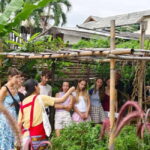
After you arrive, expect a setup phase and then straight into cooking. This is a hands-on class, not a sit-down demo with occasional stirring. The school assigns you a cooking station, and you handle the tools.
Choosing 4 or 6 dishes: how to build a meal that actually teaches you
One of the smartest parts of this class is the menu choice. You can pick 4 or 6 dishes, and they come from categories like deep fry, salad, soup, curry, stir-fry, and dessert.
Here’s what’s on the menu, so you can see the range:
Deep fry
- Spring roll
- Golden noodle
- Fried banana
- Fish cake
Salad
- Glass noodle salad
- Fruit salad
- Papaya salad
- Raw spring rolls
Soup
- Tom kha kai
- Yellow chicken soup
- Clear tofu soup
- Tom yam gung
Curry
- Panang curry with chicken
- Khao soi (Chiang Mai noodle)
- Massaman curry with chicken
- Green curry with chicken
Stir fry
- Fried rice
- Pineapple rice
- Pad Thai
- Chicken cashew nut
Dessert
- Mango sticky rice
- Herbal drink
- Khanom Krok (coconut cakes)
- Thai jelly
How to choose? Here’s the practical approach I’d use if I were doing it again.
If you pick 4 dishes, aim for variety so you learn different Thai flavors and techniques. For example: one curry (Panang or Green), one stir-fry (Pad Thai or pineapple rice), one soup (Tom kha kai or Tom yam gung), and one dessert (mango sticky rice or Khanom Krok). That gives you sweet, sour, spicy, creamy, and crunchy in one session.
If you pick 6 dishes, you’re basically building a full Thai meal. That’s great if you like experimenting, or if you’re feeding a group later and want leftovers. Just be realistic about pacing: 6 dishes is more work, and it will demand focus.
Either way, the menu selection lets you control your learning. You’re not forced into dishes you don’t want. You’re also not stuck doing only one cooking style like stir-fry all day.
The ingredient lesson: herbs, spices, tamarind, and palm sugar
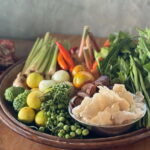
Thai cooking can look complicated, but the class breaks it into understandable pieces. They quickly teach you what you need to know about Thai herbs, vegetables, and spices—so you understand more than just the recipe.
You’ll also get hands-on exposure to some key flavors, including tamarind and palm sugar. That’s important because these ingredients aren’t just “special Thai things.” They’re the backbone of sweet-sour balance in a lot of Thai dishes.
If you’re the kind of cook who wants to replicate food at home, this ingredient knowledge is what helps. Otherwise, you might remember a dish’s name, but not the logic that makes it taste right.
A few more Chiang Mai tours and experiences worth a look




Cooking like you mean it: your tools, your station, your help
This is structured so you do the work. You don’t have to bring anything except enthusiasm. The school provides:
- Chef’s knives
- Woks
- Clean utensils
- Your own cooking station
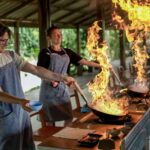
That’s a big difference from classes where you crowd around a shared pot. When you’re working at your own station, you control timing. And timing is where Thai cooking gets real.
Also, the class can run in different languages—English, Chinese, Japanese, or Thai—depending on what the class setup supports. That helps a lot if you’ve ever struggled to follow culinary steps through gestures and guesswork.
The experience also has a supportive vibe. The feedback people shared emphasized how helpful the chef and assistant were, and how organized everything felt. That checks out with the way the class is described: small groups, your own station, and an instructor-led flow.
What each dish category teaches you (and why it matters)
Even though you’re cooking in the same venue, each dish type trains a different skill set. Here’s what to look for, so you can get more out of the day.
Deep fry dishes: texture and heat control
Spring rolls, fish cake, golden noodle, and fried banana are about crispness and oil temperature. The goal is outside crunch without inside chaos. If you like snack-style Thai food, this is where you’ll feel the technique click. You’ll also likely learn how batter or coating behaves once it hits hot oil.
Salads: balancing acid, sweet, and freshness
Papaya salad and glass noodle salad lean hard on balancing flavors—spicy, sour, sweet, and salty, plus fresh ingredients. Even fruit salad teaches a Thai twist, usually through how sweet and acidic elements are treated. This category is great if you want Thai cooking to feel bright and not just heavy.
Soups: aromatic foundations
Tom kha kai, yellow chicken soup, clear tofu soup, and tom yam gung are about building aroma fast. With soups, you learn how Thai flavor starts before the main ingredients go in. If you’re a home cook, soups are also an easier way to reproduce taste without needing special restaurant equipment.
Curries: paste, timing, and thickness
Panang, massaman, green curry, and khao soi each highlight different curry logic. Curries teach you how Thai sauce texture changes as it cooks. Khao soi adds an extra Chiang Mai angle—this is one of the regional touches that makes the experience feel tied to the city, not just generic Thai cooking.
Stir-fry and noodles: wok speed and sauce integration
Fried rice, pineapple rice, pad Thai, and chicken cashew nut are about quick changes. Thai stir-fry rewards you for keeping ingredients moving and adding sauce at the right moment so it clings instead of pools. This is where you’ll feel most like a working cook, not just a recipe follower.
Dessert: Thai sweetness and texture
Mango sticky rice, Khanom Krok, herbal drink, and Thai jelly cover sweet textures. Mango sticky rice is all about that comforting balance of coconut sweetness and sticky grain. Khanom Krok (coconut cakes) teaches heat and consistency in a way that’s more hands-on than it sounds.
The final feast: eating what you made (and making sense of it)
Once your dishes are done, you eat. This is the point where the day stops feeling like a classroom and becomes a meal. You’ll taste what you cooked, and you can compare your flavor balance across categories—sour from salads, creamy spice from curries, and sweet punch from desserts.
That tasting moment also helps you remember what worked. If something turned out too salty or not sour enough, you’re more likely to understand why after the meal rather than during the stress of the cooking stage.
And yes, it’s one of the best parts. One highlight from the experience’s feedback was that the meal ended up being among the best they ate in Chiang Mai.
Group size, pacing, and how to get the most help
With a maximum of 8 travelers, you’re never swallowed by a crowd. The trade-off is that everyone is cooking at the same time, so you’ll want to pay attention to the instructor cues. This isn’t a slow, step-by-step class where you can drift and catch up later.
If you’re going solo, that can work in your favor. The feedback noted an instance where an English-speaking participant ended up with a more individualized teaching setup because they were the only one in that language group. If you find yourself in a similar situation, don’t be shy about asking follow-up questions. A class this small makes questions productive fast.
Weather and the open-air kitchen: one drawback you should plan around
This experience requires good weather. Since the school uses an open-air kitchen style, rain or rough conditions can affect how comfortable the cooking space is—and possibly whether the schedule changes. The good news is that the experience is designed around this reality, and you’ll be offered a different date or a full refund if cancellation happens due to weather.
So my advice is simple: check the forecast for your travel day and don’t stack the class with another big outdoor plan right afterward. You want the rest of your afternoon to be flexible.
Who this class is best for (and who might skip it)
I think this is a strong fit if you:
- Want a hands-on Thai cooking lesson in Chiang Mai without complicated logistics
- Prefer small group instruction
- Like learning with ingredients you can find later (tamarind, palm sugar, herb-and-spice basics)
- Enjoy building a full meal, not just one dish
You might consider skipping or choosing a different option if:
- You hate weather-dependent plans (because open-air is part of the setup)
- You want a very short class; this is about 6 hours
- Your must-cook list is bigger than what the class allows (you choose from the posted menu, and the class is built around that selection)
Should you book this Thai cuisine cooking experience?
For most people visiting Chiang Mai, I’d say yes—especially if you want skills, not just a photo-friendly meal. The pricing is reasonable for a small-group, hands-on class that supplies tools and includes your own final feast. The 4 or 6 dish choice is also a real advantage, because you can tailor the day to your taste and comfort level.
If you’re flexible with weather and you’re excited to actually cook at a wok, this is one of the most practical ways to bring Chiang Mai flavors home. Book it a bit ahead since it’s often reserved around 17 days in advance, and you’ll set yourself up for a smoother day.
FAQ
Where does the cooking experience start and end?
The experience starts at Tha Phae Gate on Tha Phae Road in Chiang Mai. It ends back at the meeting point.
How long is the cooking class?
It runs for approximately 6 hours.
Is pickup from my hotel included?
Pickup and drop-off from your Chiang Mai hotel is offered.
Can I choose what dishes I cook?
Yes. You can choose either 4 or 6 dishes from the menu.
What types of dishes are available?
The menu includes deep fry options, salads, soups, curries, stir-fries, and desserts, with specific items listed for each category.
What languages are the classes offered in?
Classes are offered in English, Chinese, Japanese, and Thai.
Do I need to bring cooking tools or ingredients?
No. You don’t need to bring anything except your enthusiasm to learn. Knives, woks, and clean utensils are provided, and you’ll have your own cooking station.
How many people are in the group?
The experience has a maximum of 8 travelers.
What happens if the weather is bad?
The experience requires good weather. If it’s canceled due to poor weather, you’ll be offered a different date or a full refund.
What is the cancellation policy?
You can cancel up to 24 hours in advance for a full refund. If you cancel less than 24 hours before the start time, the amount paid is not refunded.