REVIEW · CHIANG MAI
Full-Day Chiang Rai Temples Tour from Chiang Mai with Hot Spring
Book on Viator →Operated by Chiang Mai Footsteps Travel · Bookable on Viator
Chiang Rai in one long day is a lot to love. You’ll start with a quick look at Mae Khachan Hot Spring steam, then roll straight into some of Thailand’s most eye-catching temple art. If you like culture that you can actually see and not just read about, this route is built for you.
What I like most is the temple lineup: Wat Rong Khun (White Temple), Wat Rong Seur Ten (Blue Temple), and the Big Buddha at Wat Huay Pla Kang. The second big win is the convenience: hotel pickup and drop-off in Chiang Mai, plus admission tickets handled for each main stop.
One thing to keep in mind: it’s an 11-hour day, so timing matters. In at least one case, a schedule mismatch meant less time at the temples than expected, likely from extra stops along the way.
In This Review
- Key highlights before you go
- A full-day Chiang Rai hit: the flow from 7:00am
- Stop 1: Mae Khachan Hot Spring steam check (15 minutes)
- Wat Rong Khun (White Temple): mirrored detail that photographs can’t replicate
- Wat Rong Seur Ten (Blue Temple): art, myths, and a hint of history
- Wat Huay Pla Kang and the Big Buddha: Guan Yin with wide views
- How the 11-hour schedule really works (and where it can slip)
- Guide quality: where the experience can rise or fall fast
- Price and value: what $52.63 gets you in practice
- Practical tips to get the most from White, Blue, and Big Buddha
- Who should book this tour, and who should skip it
- Should you book? My honest take
- FAQ
- What time does the tour start?
- How long is the full-day tour?
- Does the tour include admission tickets?
- Is the Mae Khachan Hot Spring stop for swimming?
- How long do you spend at each main stop?
- How big is the group?
Key highlights before you go
- Mae Khachan Hot Spring is a short photo-and-views stop, not a swimming break
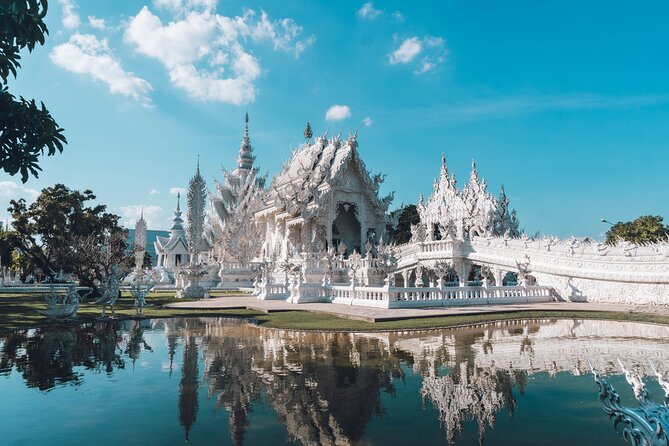
- Wat Rong Khun’s mirrors and white plaster create reflections that look different than photos
- Wat Rong Seur Ten (Blue Temple) includes a tiger legend from an older temple site
- Wat Huay Pla Kang’s Big Buddha gives you wide countryside views around Guan Yin
- Small group size (up to 12 people) keeps the day from feeling chaotic
A full-day Chiang Rai hit: the flow from 7:00am
This tour starts at 7:00am and runs about 11 hours. That early start is the tradeoff: you get to see multiple Chiang Rai icons in one go, instead of spending extra days (or switching tours) to cover the same sites.
The day is structured like a rhythm: brief stop, then temple time, then another temple, then the big viewpoint temple. Because the main temples each get about 1 hour, you can plan your expectations: you won’t do one place at a slow museum pace. You will get enough time to walk around, take photos, and understand the big visual ideas.
And since the group size is capped at about 12, you should have an easier time hearing your guide and moving through crowds without getting lost.
A few more Chiang Mai tours and experiences worth a look

Stop 1: Mae Khachan Hot Spring steam check (15 minutes)
Your first real moment in Chiang Rai is Mae Khachan Hot Spring. The stop is short (about 15 minutes), and it’s designed for observation, not swimming. You’ll see mineral-rich water and the steam rising, which gives the area a simple, sensory intro before you jump into the more theatrical temple art.
For many people, this is the perfect warm-up. It breaks up the morning drive, gives you a chance to stretch, and sets a different mood from the temples that come next.
Practical tip: because it’s a quick stop, don’t count on buying snacks or getting a long wander. Treat it like a “pause and look” break, then get back ready for temple walking.
Wat Rong Khun (White Temple): mirrored detail that photographs can’t replicate
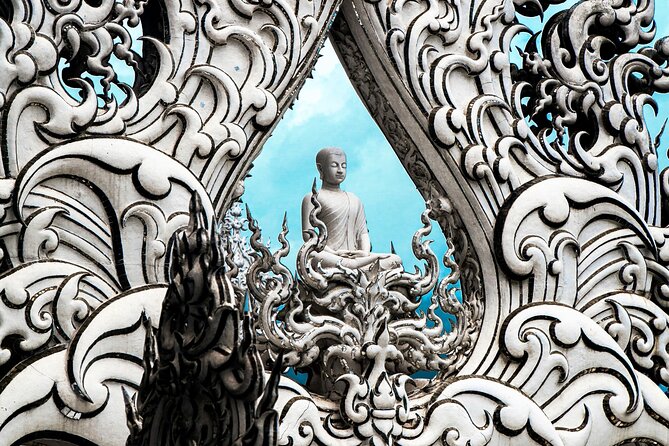
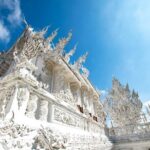
Wat Rong Khun, also called the White Temple, is the star attraction for good reason. It’s famous for its white plaster and mirrored glass surfaces, and the reflection in the pond is part of the whole visual story.
Here’s the thing about a place like this: photos can show the idea, but they don’t capture the texture. In person, you’ll notice how the surfaces catch light and how the geometry feels sharper and more intentional than it looks in a screen-sized image. The result is that you’ll spend more time looking at surfaces than you planned to.
You’ll get about 1 hour at the White Temple, plus admission is included. That’s enough to:
- do a full walk-around at a comfortable pace
- stop for reflection photos in the pond area
- read your guide’s explanations without feeling rushed every five minutes
Where it can feel tight: if you’re the type who likes to linger on every corner, an hour may pass fast. But most people finish with the feeling that they saw the core of it.
Wat Rong Seur Ten (Blue Temple): art, myths, and a hint of history
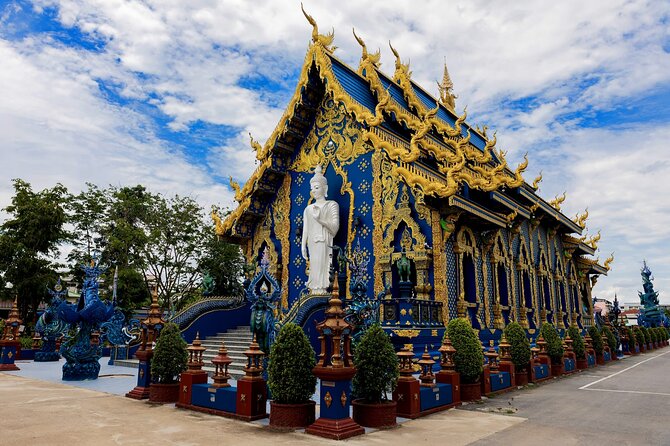
Next up is the Blue Temple, Wat Rong Seur Ten, famous for its blue color scheme and detailed design work. This isn’t just a color change from the White Temple. The blue palette gives the whole scene a different emotional tone, more cool and focused.
Your time here is about 1 hour, with admission included. The guide should help you connect the visuals to the story behind the place—especially the fact that the temple was built on the site of an older temple. There’s a legend tied to that older site: it was believed to be home to roaming tigers.
That’s a fun detail because it adds layers. You’re not only looking at a pretty building; you’re seeing a site that holds memory, myth, and cultural meaning.
A practical caution: if you’re already temple-saturated by then, the Blue Temple can still hit, but you’ll want to slow down for the small patterns and edges. Give yourself a moment to look beyond the main blue color and you’ll get more out of it.
Wat Huay Pla Kang and the Big Buddha: Guan Yin with wide views
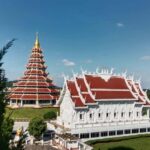
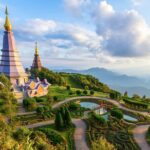
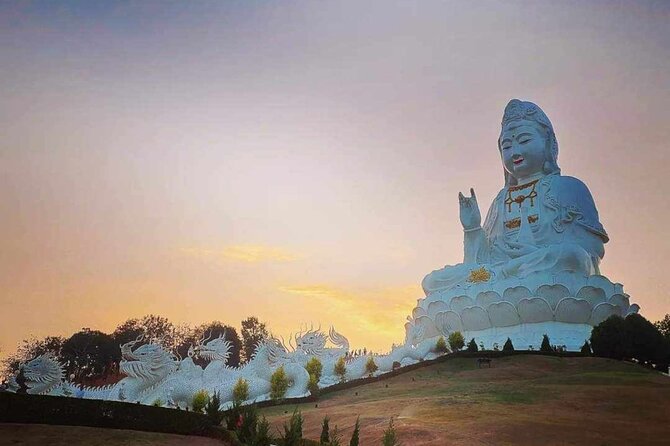
The final temple focus is Wat Huay Pla Kang, often called the Big Buddha temple. The headline here is a towering statue of Guan Yin, known as the Goddess of Mercy, and a temple area that typically provides bigger-sky views over the surrounding countryside.
Again, you’ll get about 1 hour, with admission included. This is a different kind of stop compared to the White and Blue Temples. Instead of walking through highly patterned art environments, you’re aiming your attention upward and outward—toward scale, posture, and the feeling of space around the statue.
Why this stop matters: it helps you balance the day. After two temples that many people treat like photo missions, this one gives you a breather to look for atmosphere and viewpoint rather than only detail.
If you want the best experience here, go in with a “watch the view” mindset. Don’t just photograph the statue—take a few minutes to look over what’s around it, because the temple’s location is part of the effect.
A few more Chiang Mai tours and experiences worth a look


How the 11-hour schedule really works (and where it can slip)
This is an all-day loop: pickup in Chiang Mai, multiple stops in Chiang Rai, then you return. The schedule is built to fit four main parts: the hot spring, the White Temple, the Blue Temple, and Wat Huay Pla Kang.
Where the day can feel long is simple: each stop is time-boxed, and you still have the travel between Chiang Mai and Chiang Rai, plus short transitions. If you go in thinking you’ll spend three hours at one temple, you’ll feel shorted.
There is also a real-world consideration. At least one participant reported that the time listed for temple visits didn’t match what they actually got, partly because an additional stop in a village showed up. That doesn’t mean it’s always the case, but it’s a good reminder to keep flexibility in your day.
My advice: plan your expectations around the main structure. If you care most about the White Temple, prioritize your energy there. For the other temples, decide ahead of time what you’ll focus on (blue details, tiger legend context, and Guan Yin viewpoint).
Guide quality: where the experience can rise or fall fast
A huge part of whether this day feels meaningful is your guide. One review highlighted a guide named Goi, praising both temple explanations and broader clarity about Buddhism. That kind of guiding changes the whole feel of the day.
Even if you’ve read a little, temple architecture in Thailand has symbolism you don’t always catch on your own. A good guide helps you connect what you’re seeing with why it’s arranged the way it is. On a schedule like this, that context can be the difference between a check-the-box photo spree and a day that actually sticks.
So when you choose this tour, don’t only judge it by the temple names. The real value shows up in the narration and pacing—especially when you have only about 1 hour at each major temple.
Price and value: what $52.63 gets you in practice
The price is $52.63 per person, and that’s only compelling if you feel the inclusions match the cost.
Here’s what the tour data supports as included:
- Hotel pickup and drop-off in Chiang Mai
- Admission tickets included for the hot spring and each temple stop
- Mobile ticket for easy access
- Hotel pickup conveniences plus an experienced guide
- A small group cap of around 12 people
That matters because admissions at temples and organized tour transport can add up quickly when you DIY it. The tour also saves you from the headache of planning a multi-stop route across Chiang Rai, coordinating timing, and figuring out ticket lines while you’re on a tight day.
Is $52.63 cheap? Not the absolute lowest option. But for a full-day package with included entry fees and pickup, it’s solid value, especially if you’d rather spend your energy looking at temples than managing logistics.
Practical tips to get the most from White, Blue, and Big Buddha
A day like this rewards simple preparation. Nothing complicated, just a few smart moves.
- Dress for temples: plan for respectful coverage and bring something comfortable for warm weather. Temples often require attention to shoulders and legs.
- Wear comfortable shoes: you’ll be walking through temple compounds at three separate sites plus the hot spring stop.
- Bring a charged phone/camera: the White Temple’s mirrored surfaces can look stunning when you catch the right light.
- Have patience for the pace: you’ll get good time at each stop, but it’s not slow travel. If you want slow, you’d split this across multiple days instead.
Also, because the tour is listed as requiring good weather, check conditions before you leave. If weather turns bad, you’ll be offered a different date or a full refund.
Who should book this tour, and who should skip it
This tour makes sense if you:
- want the major Chiang Rai temples in one day
- like having a plan and don’t want to coordinate tickets and transport yourself
- enjoy guided context, especially if you want to understand Buddhist symbolism while you look
- are okay with an 11-hour day and time-boxed temple visits
It may not be the best fit if you:
- hate rushed schedules and prefer long, quiet temple time
- need super flexible timing because you plan your day around photo sessions or specific viewing hours
If you’re traveling with friends or just want an organized day with a small group, this setup should feel comfortable.
Should you book? My honest take
I’d book this tour if your priority is seeing Wat Rong Khun, Wat Rong Seur Ten, and Wat Huay Pla Kang without spending days planning. The combination of included admissions, hotel pickup, and a guide who can explain what you’re looking at is where the value shows up.
I’d hesitate only if you know you’re the type who gets upset when schedules run tight. This is a full-day plan, and even with good organization, you can end up with less temple time than the ideal scenario if the day shifts.
If you want an efficient, high-impact Chiang Rai day from Chiang Mai, this one is a strong candidate.
FAQ
What time does the tour start?
The tour starts at 7:00am.
How long is the full-day tour?
It runs for about 11 hours (approximately).
Does the tour include admission tickets?
Yes. Admission tickets are included for the hot spring and each temple stop.
Is the Mae Khachan Hot Spring stop for swimming?
No. It’s described as not a place for swimming, but you can observe steam rising from mineral-rich water.
How long do you spend at each main stop?
You’ll spend about 15 minutes at Mae Khachan Hot Spring, and about 1 hour at Wat Rong Khun, Wat Rong Seur Ten, and Wat Huay Pla Kang.
How big is the group?
The tour has a maximum group size of 12 travelers.