REVIEW · CHIANG MAI
Historic Temples and City Guided Walking Tour in Chiang Mai
Book on Viator →Operated by Beyond Experience · Bookable on Viator
Chiang Mai’s best stories are easiest to catch by walking. This 3-hour guided temple loop strings together the old town’s most important landmarks, from Wat Chiang Man’s elephant chedi to the ruined chedi at Wat Chedi Luang, with clear guidance and lots of Q&A along the way. I especially like the small-group pace (up to 10 people) and the way the route mixes landmark sights with local legends and architecture. The main drawback to plan around is that two temple entrances are not included, so you’ll want a bit of extra cash for Wat Phra Singh and Wat Chedi Luang.
If you’re new to Chiang Mai, this type of orientation helps you get your bearings fast. The reviews also highlight how guides like TwoTwo and Jen handle questions well, with some light humor and good energy that makes the walk feel less like a lecture and more like a smart chat. If you prefer a totally flexible, self-paced day, you may find a guided schedule a little limiting, especially in hotter weather.
In This Review
- Key points before you go
- How the route works (and why 3 hours is the sweet spot)
- Wat Chiang Man: elephants, the oldest start, and an easy first win
- Three Kings Monument and the walled-city center: meaning behind the landmark
- Wat Phra Singh: classic Lanna architecture you can actually notice
- Wat Phan Tao: teak wood details and a royal past in one stop
- Wat Chedi Luang Varavihara: the ruined chedi finale and the standing Buddha
- Guides make it (and you’ll get good ones)
- Timing tips: plan for heat, and maybe a Sunday cultural moment
- Price and value: what $16 buys you in Chiang Mai
- Who this tour suits best
- Simple etiquette and practical prep (so the temples feel good)
- Should you book this walking temple tour?
- FAQ
- What is the duration of the Historic Temples and City Guided Walking Tour in Chiang Mai?
- How much does the tour cost?
- Where does the tour start and end?
- What attractions are included in the walking route?
- What is included in the tour price?
- Are temple entrance fees included?
- How big is the group?
- Is the tour near public transportation?
- What happens if the weather is bad?
- What cancellation options do I have?
Key points before you go
- Wat Chiang Man sets the tone with the elephant-surrounded chedi at Chiang Mai’s oldest temple
- You get expert context fast as the guide connects monuments to local meaning
- Lanna and teak craftsmanship are the stars at Wat Phra Singh and Wat Phan Tao
- Wat Chedi Luang closes strong with a ruined chedi and a standing Buddha inside
- Small group, big attention (maximum 10 travelers) keeps the walk interactive
- Two paid entrances mean you should budget extra for Wat Phra Singh and Wat Chedi Luang
How the route works (and why 3 hours is the sweet spot)
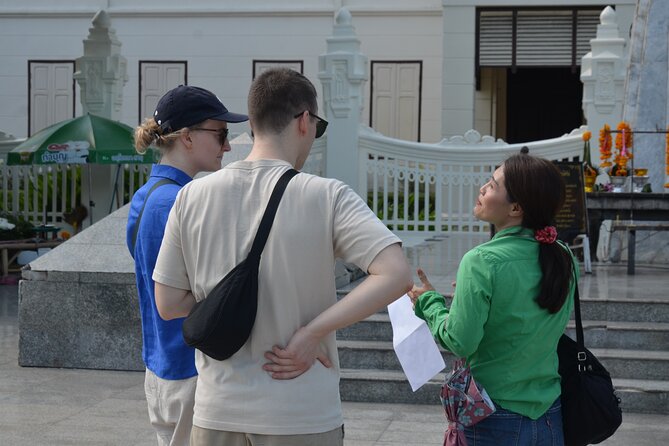
This is a focused old-city walk, designed to hit major temple highlights without swallowing your whole day. The total time is about 3 hours, which means you’ll see enough to feel oriented, but you still keep room for lunch, a quick market stop, or a night bazaar wander.
The route starts at Wat Chiang Man and moves west through the walled old city area, then finishes at Wat Chedi Luang. That matters because you avoid backtracking, and you’ll learn the city’s story in a logical order instead of hopping around on your own.
The tour uses a mobile ticket, so you don’t have to worry about finding paper tickets in a busy morning. Bottled water is included, which I really appreciate in Chiang Mai because walking + heat can sneak up on you.
You can also read our reviews of more walking tours in Chiang Mai
Wat Chiang Man: elephants, the oldest start, and an easy first win
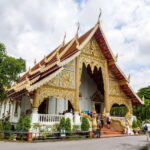
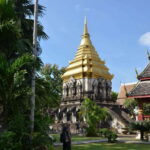
The tour begins at Wat Chiang Man, widely recognized as Chiang Mai’s oldest temple. The first impression is visual and immediate: the chedi area is surrounded by 15 stone elephants, posed as if they’re carrying the structure. Even if you don’t read a single sign, you’ll feel like you’ve stepped into something ancient and carefully designed.
This first stop is also a smart warm-up. You get time to settle in, get used to what your guide is focusing on, and ask basic questions before the route intensifies. The stop is around 30 minutes, which is a good pace for early-day photos and a quick look around without turning it into a long wait.
Practical note: you’ll want to be respectful with clothing (temple areas expect covered shoulders and knees), and if you visit in the hottest part of the day, treat the elephant-cheddi area as a “look, breathe, and move” moment.
Three Kings Monument and the walled-city center: meaning behind the landmark
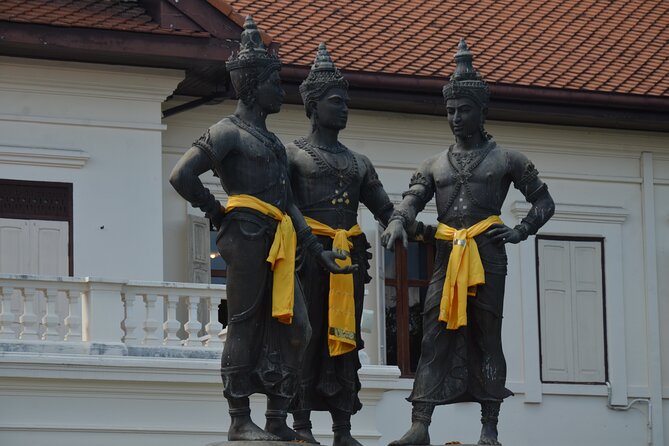
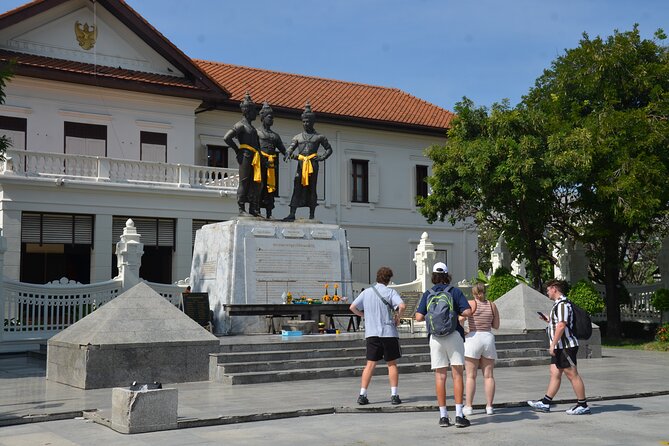
After Wat Chiang Man, the route heads toward the Three Kings Monument, stopping in a central open square in the heart of the old city. This is where your guide’s role really pays off: instead of just pointing at a statue, they explain the history behind it and why it matters culturally.
The monument is the kind of place you can easily walk past without realizing what you’re seeing. With a guide, it becomes a checkpoint—like a story pivot—showing you how Chiang Mai remembers its founders and power centers.
This stop is short, about 15 minutes, so think of it as a quick orientation moment. If you like to linger and you’re a slower walker, don’t worry—the later temple stops are where you’ll spend more time.
Wat Phra Singh: classic Lanna architecture you can actually notice
Next comes Wat Phra Singh, one of the best-known Lanna temples in Northern Thailand. The big draw here is architectural: this is classic Lanna style at a high level, and the differences show even if you’re not an architecture nerd. You’ll see details that feel more “regional” than generic temple design, which makes this stop more than just another pretty building.
The tour gives about 50 minutes here, which is a generous chunk of time compared to the other stops. I like that you get time to slow down, look up, and notice how spaces and design choices create a feeling of hierarchy and ceremony. You also get a chance to ask questions about what you’re seeing, and the guide can connect the temple’s look to the broader Chiang Mai story.
Cost note: the entrance fee for Wat Phra Singh is not included, so plan for that. Still, for many people, this is the temple where the style clicks and makes the whole trip feel worth it.
Wat Phan Tao: teak wood details and a royal past in one stop
Wat Phan Tao is the kind of place that rewards being present. This temple is known for its heavy wood craftsmanship, including a large main hall connected to a teak throne used by Chiang Mai’s rulers. It’s also notable because the temple was built in the 14th century and originally used as a palace before becoming a monastery.
One thing I really like about this stop is the contrast it offers. If Wat Phra Singh makes you focus on Lanna design as a visual language, Wat Phan Tao makes you focus on material and function—how a royal setting can be repurposed for religious life. Your guide can help you understand why that matters, not just what the building looks like.
This stop is brief—around 15 minutes—so it’s not built for a long sit-down. Instead, treat it like a “see the key things” visit: teak textures, the structure’s history, and the idea that you’re standing inside spaces with a royal backstory.
Entrance fee here is free, which is a nice break in the middle of the day.
You can also read our reviews of more guided tours in Chiang Mai


Wat Chedi Luang Varavihara: the ruined chedi finale and the standing Buddha
The tour ends at Wat Chedi Luang Varavihara, and it’s a strong finish. The chedi here is ruined, which can sound sad on paper, but in person it often feels powerful—like history caught mid-story. The scale is hard to ignore, and your guide will help translate what that ruin means in the temple’s timeline.
You’ll also have time to see the majestic standing Buddha in the main prayer hall. This is one of those details that tends to anchor the emotional memory of the visit. Even if you’ve seen many Buddhas, this one lands because the pairing of a ruined exterior and a central sacred focus creates a striking contrast.
This is the longest stop at the end—about 50 minutes. I’d use that time for a careful look around rather than rushing to photos. If you only do quick pictures, you miss the point: the guide is likely connecting the physical state of the chedi to how Chiang Mai’s power and religious life evolved.
Cost note: the entrance fee for Wat Chedi Luang is not included.
Guides make it (and you’ll get good ones)
The reviews strongly agree on one thing: the quality of the guide changes the whole experience. People mention guides like TwoTwo, Jen, Pang, and Tin as being well-prepared, able to answer lots of questions, and keeping the mood friendly. That’s not trivial on a temple walk. When you’re standing in sacred spaces, you want someone to explain what you’re seeing without turning it into a dry script.
Two specific strengths show up in the feedback:
- Guides help you understand, not just facts dump. One review notes the guide checked that everything made sense.
- The best guides keep it engaging, including some humor, so the walk stays light even when the topics are historical.
If you’re traveling with kids or you’re simply the type who asks “wait, what is that?” every 10 minutes, this tour format fits you well.
Timing tips: plan for heat, and maybe a Sunday cultural moment

This walk depends a lot on weather. You’ll need decent conditions, and if conditions are poor, the experience may be canceled and rescheduled or fully refunded.
For timing: the route is almost entirely outdoors between temples, so start early if you can. Chiang Mai can feel mild until it doesn’t, and 3 hours of walking in temple areas adds up fast.
One fun detail from the feedback: if you go on a Sunday, you might catch traditional dance by women at the main temple area. It’s not guaranteed from the tour info, but it’s the kind of bonus that makes a guided day feel more alive than a checklist.
Price and value: what $16 buys you in Chiang Mai
At $16 for about 3 hours, this tour is a strong value—especially because the guide work is what you’re paying for. You also get bottled water included, which is a small cost saver that matters in real life.
The main thing to budget is entrances. Wat Phra Singh and Wat Chedi Luang have entrance fees that are not included. Even with that, you’re still generally coming out ahead versus paying for a private guide, and you’re getting an efficient route with thoughtful stop timing.
If you like structured walking tours, this is one of the cheaper ways to get a guided overview of Chiang Mai’s old-town temple scene without committing to a full-day trek.
Who this tour suits best
This experience fits well if you:
- want a fast, guided orientation to Chiang Mai’s most important old-city temples
- enjoy learning the meaning behind monuments, not just snapping photos
- like small groups where you can ask questions and get real answers
- prefer a low-effort plan that still feels personal and informed
It may feel less ideal if you:
- want a totally free day with no schedule at all
- hate paying separate temple entrances mid-tour
- are unable to do steady walking over a 3-hour period
Simple etiquette and practical prep (so the temples feel good)
Temple visits are easiest when you treat them like sacred spaces first and photo spots second. Wear clothing that covers shoulders and knees, and keep your body language respectful. If you’re unsure, your guide can help set the tone early at Wat Chiang Man.
Also, since this is a walking tour through multiple sites, bring a light layer in case you need shade or you’re out longer than expected. Comfortable shoes matter more than you think, because your focus will be on details—thrones, chedis, woodwork—where you’ll naturally stop and look up.
Should you book this walking temple tour?
I’d book it if you want a high-value, short introduction to Chiang Mai’s temple culture with a guide who can explain both art and meaning. The route is efficient, the group size stays small, and the final payoff at Wat Chedi Luang is exactly the kind of memorable ending that sticks with you.
If you’re on a tight budget, this is one of the smartest ways to spend it because the core experience is guided, not ticket-heavy. Just budget for the two extra entrance fees at Wat Phra Singh and Wat Chedi Luang, and keep weather in mind.
FAQ
What is the duration of the Historic Temples and City Guided Walking Tour in Chiang Mai?
It runs for about 3 hours (approx.).
How much does the tour cost?
The price is $16.
Where does the tour start and end?
It starts at Wat Chiang Man (171 Ratchapakhinai Rd, Tambon Si Phum) and finishes at Wat Chedi Luang Varaviharn (103 Prapokklao Road, Tambon Si Phum).
What attractions are included in the walking route?
You visit Wat Chiang Man, the Three Kings Monument, Wat Phra Singh, Wat Phan Tao, and Wat Chedi Luang Varavihara.
What is included in the tour price?
The tour includes bottled water. You also get a mobile ticket.
Are temple entrance fees included?
Not fully. Wat Phra Singh and Wat Chedi Luang entrance fees are not included.
How big is the group?
The tour has a maximum of 10 travelers.
Is the tour near public transportation?
Yes, it is described as near public transportation.
What happens if the weather is bad?
The experience requires good weather. If it’s canceled due to poor weather, you’ll be offered a different date or a full refund.
What cancellation options do I have?
You can cancel for a full refund up to 24 hours in advance. If you cancel less than 24 hours before the start time, the amount paid is not refunded.