REVIEW · CHIANG MAI
Chiang Mai: Half Day Cooking Class at Organic Farm
Book on GetYourGuide →Operated by LocalCNXTours · Bookable on GetYourGuide
A Thai cooking class in Chiang Mai is fun; this one adds real ingredient hunting first. I love the market-to-kitchen flow and the calm, well-run setup that keeps the focus on cooking (not chaos), often with instructors like Wave and Ania driving the fun. You also get genuine customization, including spice levels from mild to fiery, plus vegetarian and vegan choices across the menu. One thing to consider: the farm option outside the city can be harder to secure if you book late, so choose your garden setting carefully.
In about 5 hours, you’ll learn key Thai techniques, shop for ingredients at a local market, tour the organic garden (in-city or outside town, depending on your option), and then cook multiple dishes at your own station. The upside is a small group (up to 10), so you actually get hands-on help and you leave with recipes you can follow at home. The only drawback I’d flag is that the market time is relatively tight because the main goal is cooking, so go in hungry and ready to focus.
In This Review
- Key things that make this class work
- Entering The Day: Market First, Then the Organic Garden
- How the 5-Hour Class Builds Flavor: Curry Paste to Final Dishes
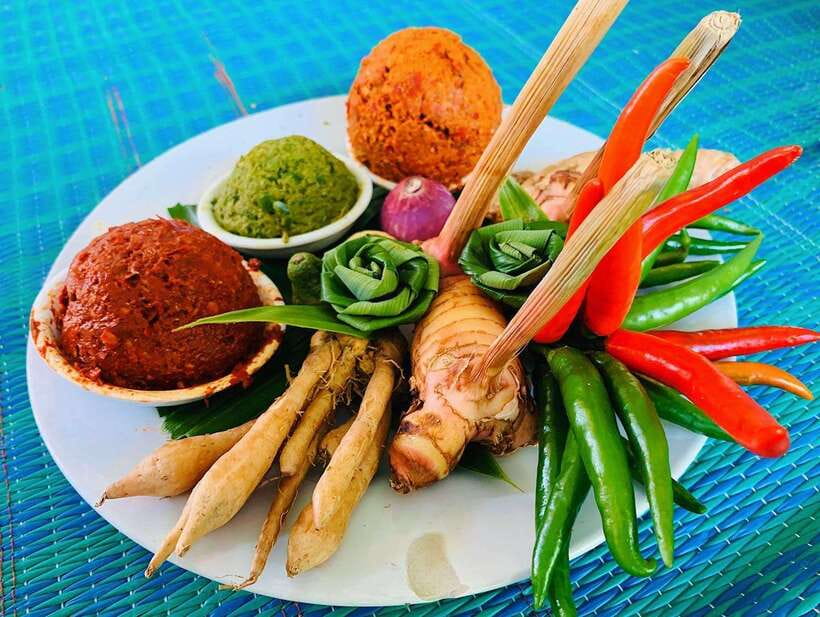
- Curry paste and curry choices
- Stir-fry and soup, not filler food
- Dessert may show up, and it’s worth it
- Your Kitchen Setup: Individual Stations and an English Instructor
- What You Eat and Why It Feels More Thai Than Tourist-Style
- Price and Value: Why $31 Often Feels Fair for 5 Hours
- Morning vs Evening: Pick Your Pace and Comfort Level
- Who This Class Suits Best (and Who Might Need a Different Plan)
- Practical Tips to Get Great Results
- Should You Book This Chiang Mai Organic Farm Cooking Class?
- FAQ
- How long is the Chiang Mai half-day cooking class?
- How much does it cost?
- Where do I meet if I’m not using hotel pickup?
- Is hotel pickup and drop-off included?
- Do I get to visit a market?
- What is the difference between the garden options?
- What dishes will I cook?
- Can I cook vegetarian or vegan dishes?
- Can I choose how spicy the food is?
- What do I receive to take home?
Key things that make this class work
- Market visit that explains what you buy before you start cooking
- Three garden options (city organic garden, city yard garden, or outside-farm garden)
- Hands-on cooking at an individual station with an English-speaking instructor
- Customizable spice and vegetarian/vegan menus so everyone can eat comfortably
- You eat what you cook in a traditional Thai style setup, often in/near the garden
Entering The Day: Market First, Then the Organic Garden
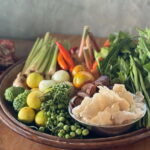
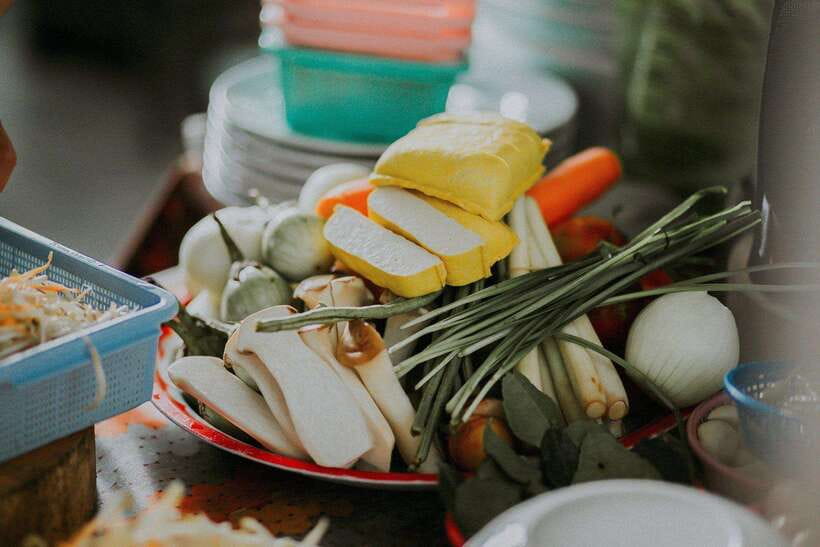
This is a Chiang Mai cooking class that starts in the right place: with the ingredients. Instead of dumping you straight into a kitchen and hoping you’ll learn Thai flavors on the fly, you visit the local market to see and discuss what goes into the dishes. You’ll learn what key ingredients look like, how they’re used, and why they matter for flavor balance. If you’ve ever tried to cook Thai food at home and wondered why it tastes flat, this market step helps you spot the missing pieces early.
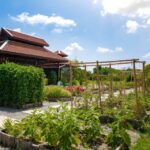
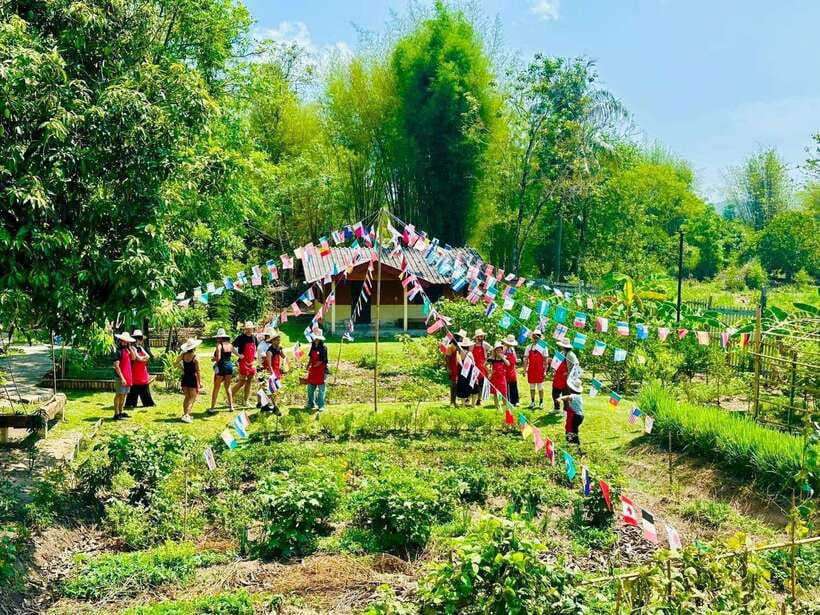
From there, you move to the organic setting. You pick one of three garden styles ahead of time:
- In the city with organic garden
- In the city with yard garden
- In the farm garden outside the city
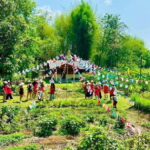
That choice changes the feel of the day more than you might expect. The in-city options tend to feel smoother for a half-day schedule. The outside-farm option can feel more like a true “farm-to-table” break from town, but it may be limited by availability—one traveler shared that the outside-farm option got booked up last minute, and the team switched them to a city option instead. So if the farm setting is a big priority for you, don’t wait until the last moment.
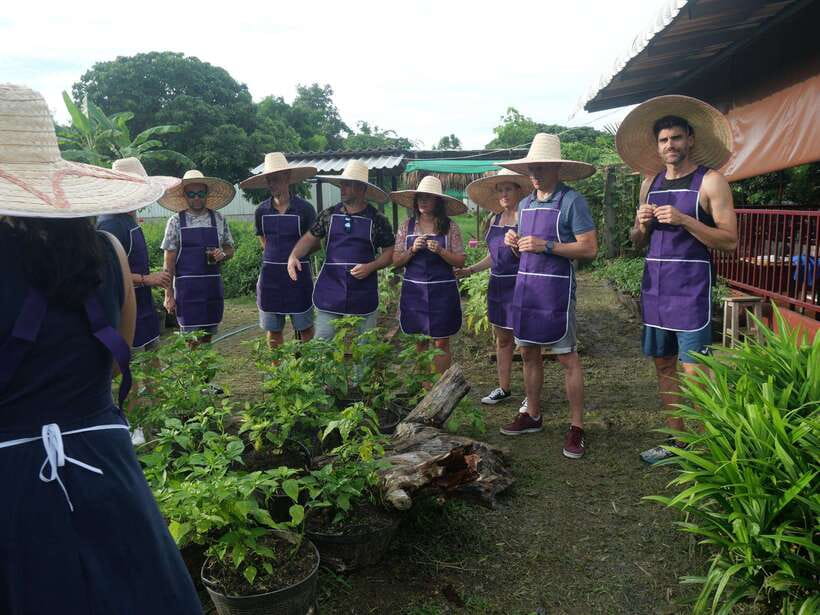
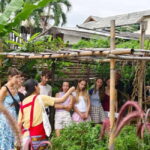
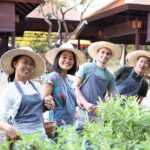
Before the cooking starts, you’ll also taste herbs from the property garden. That small step is surprisingly helpful: it teaches you to recognize fresh Thai flavors and not just rely on jarred sauces or packaged pastes later.
You can also read our reviews of more cooking classes in Chiang Mai
How the 5-Hour Class Builds Flavor: Curry Paste to Final Dishes
The core of the experience is a hands-on Thai cooking class where you learn around 5–6 dish categories. Typical categories include:
- curry paste
- curry
- stir-fried dishes
- soup
- spring rolls
You can adjust heat so the dishes suit your taste, from mild to spicy. This is one of the best parts for comfort and success: Thai food uses chili for flavor depth, not just punishment, so dialing the spice early makes the cooking teachable instead of stressful. Plus, all dishes are available as vegetarian or vegan, which matters in a country where Thai restaurants often assume everyone wants fish sauce flavors.
Curry paste and curry choices
You don’t just follow instructions blindly. You get to choose the direction of your curry paste and related curry. Common curry paste options include red, green, Phanaeng, Massaman, and Khao Soi. That means you can tailor your learning. If you want to understand Thai curry logic, you can choose a curry style and follow how the paste becomes a complete dish. If you already know you love one style (like Massaman), you’ll cook in a way that connects the steps directly to your favorite flavors.
Stir-fry and soup, not filler food
The “class dishes” aren’t random. For main-style cooking, you may make classics such as Pad Thai or chicken fried rice, and you might also cook options like Pad Kra Pao or spring rolls, depending on your choices. The soup component is useful too because Thai soups often feel lighter than curries, but they rely on strong aromatics and seasoning technique. Learning that difference is a big win if you plan to cook at home.
Dessert may show up, and it’s worth it
Some groups also include a dessert component, and mango sticky rice is specifically mentioned in the experience details from participant notes. Even if dessert isn’t your main goal, plan to taste your way through the whole session because the meals tend to add up fast.
A few more Chiang Mai tours and experiences worth a look


Your Kitchen Setup: Individual Stations and an English Instructor
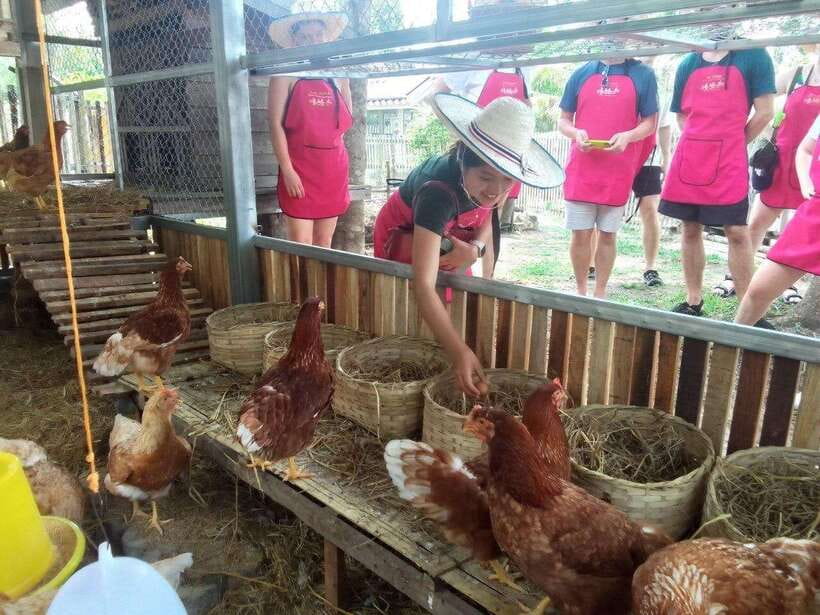
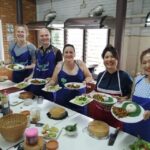
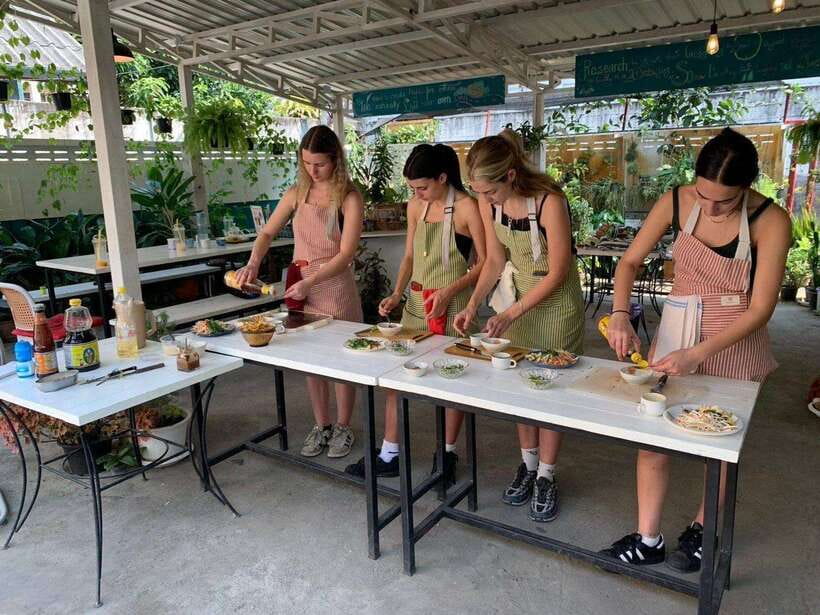
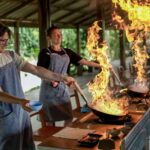
A lot of cooking classes fail on one basic point: everyone ends up crowding one pot while the instructor talks at the front. Here, the setup is more “learn and cook,” with individual cooking stations. That matters because Thai cooking is hands-on. You’re chopping, stirring, tasting, and adjusting. If you’re standing behind someone else’s shoulder, you miss the rhythm.
You’ll have an English-speaking cooking instructor guiding you. The experience has a track record of strong personalities—Wave, Ania, Toy, Balloon, Aryun, and others show up in different sessions. Regardless of the instructor name, the consistent theme is clear teaching plus the kind of supportive energy that keeps you from feeling lost when you hit a tricky step. One detail I appreciate: the recipe support includes an e-book PDF with step-by-step instructions, so you can recover later what your brain forgets during a busy cooking moment.
The small group size (limited to 10 participants) is also practical. It doesn’t just make it feel friendly. It improves your odds of getting help when something goes off—spice too high, sauce too thick, or a curry paste that needs more stirring time.
What You Eat and Why It Feels More Thai Than Tourist-Style
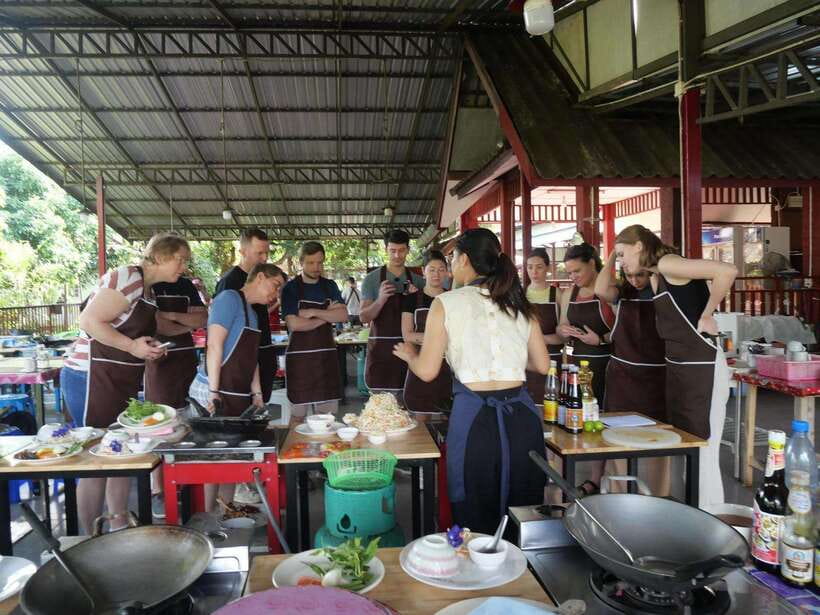
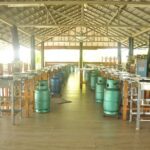
After cooking, you eat the dishes you made, in traditional Thai style. This is where the experience earns its keep. A Thai cooking class shouldn’t just be about cooking for cooking’s sake. You should actually enjoy the food while it’s fresh, hot, and adjusted to your own spice preference.
Because the ingredients come from the garden and local sources tied to the program, the meal tends to feel grounded rather than generic. You’ll also likely notice more herb-forward flavor than what many home cooks expect—fresh herbs can change everything, especially in stir-fries and certain soups.
Some participants noted they made multiple dishes and had plenty to eat, so don’t schedule anything tight right after. With a half-day timeline, you’re still likely to be full by the end. If you’re doing the evening class, one participant mentioned beer being available at the venue area, but the program itself keeps things oriented around cooking rather than alcohol.
If you want food to travel home, the experience can include food you may take away after the meal, depending on how the session wraps up.
Price and Value: Why $31 Often Feels Fair for 5 Hours
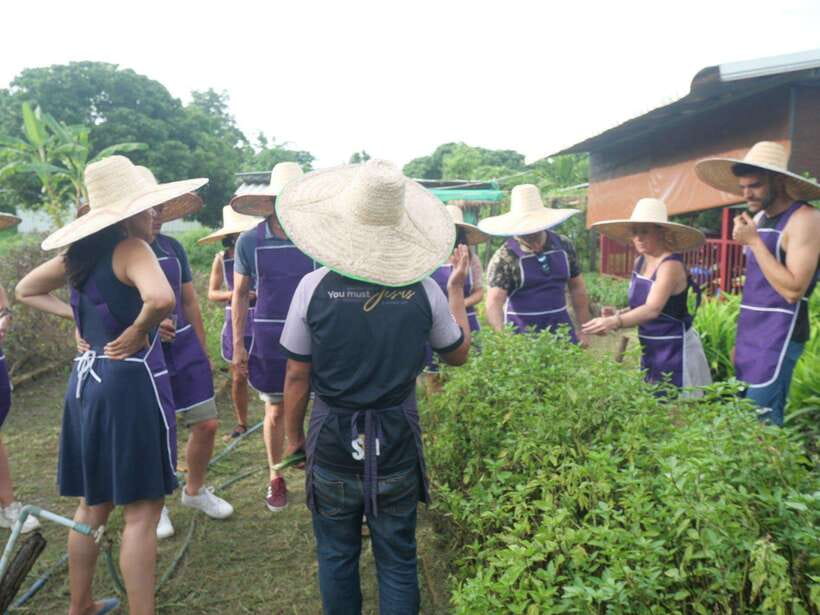
At $31 per person for a 5-hour half-day, the value hinges on what’s included. Here, the list matters:
- hotel pickup/drop-off (within a short radius of the old city area)
- market visit
- guided organic garden tour (in the city or outside town depending on your option)
- herb tasting from the garden
- all ingredients for class cooking
- individual cooking station setup
- English-speaking instructor
- welcome snack, drinking water, and seasonal fruit
- PDF recipe book
- option to take your food away
- photo album shared online via Facebook page
When you price cooking classes in Thailand, you usually pay for one of two things: a kitchen and a teacher, or a full “experience package.” This one includes both. The market visit alone can be a meaningful half-day add-on, because it gives you context and vocabulary for ingredients you’ll keep using later.
Also, the small group cap to 10 helps justify the price. You’re not buying cheap entertainment. You’re paying for time with a teacher and structured steps you can repeat at home using the PDF recipes.
Morning vs Evening: Pick Your Pace and Comfort Level
You can take the class in the morning or evening, with a half-day schedule. Choosing between them is mostly about your energy level and your other Chiang Mai plans.
If you want the day to stay active and clear, do the morning class. You’ll be cooking and eating early, then you’ll have the rest of the day free for a temple visit, a walking stroll in the old city, or a night market. If you prefer to rest a bit first and eat later, the evening class fits well and can feel more social because you’ll meet fellow travelers in a calmer, end-of-day frame.
One practical note from the experience setup: there’s a meeting point at Burger King, and you should stand by about 10 minutes before start if you’re not doing hotel transfer. If you’re prone to being late after a day of moving around town, schedule extra buffer time.
Who This Class Suits Best (and Who Might Need a Different Plan)
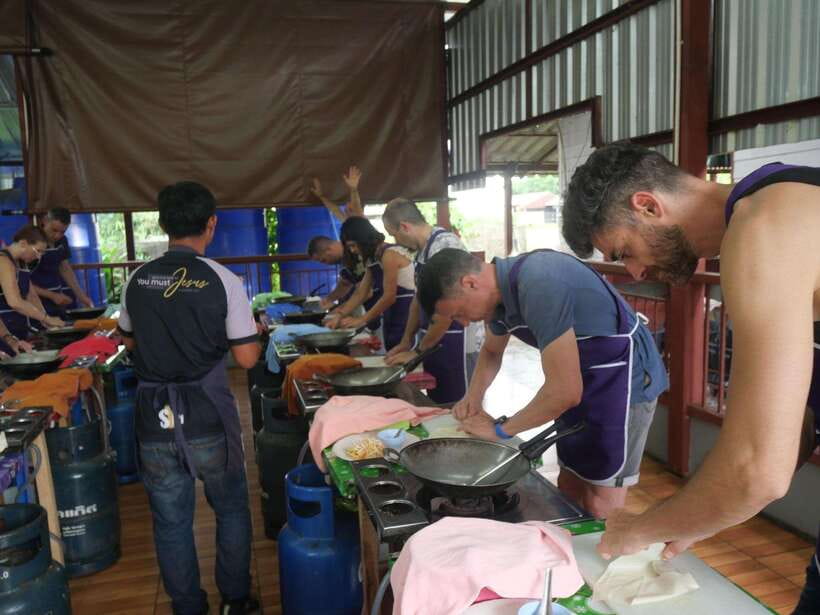
This is best for people who want to learn real Thai cooking technique without needing to already know every ingredient name. It also fits families, since the structure is hands-on and the learning pace is supported by a recipe book.
It’s also a strong choice if you’re:
- vegetarian or vegan (options are available)
- spice-flexible and want to dial heat to your comfort
- curious about Thai ingredients beyond what you see in a supermarket
- short on time but still want a meaningful cooking experience
Not everything fits everyone. It’s not suitable for wheelchair users, and there’s a maximum age guideline of over 95 years listed as not suitable. If you’re traveling with anyone who needs accessibility support, check whether the garden option involves steps or uneven ground since the program uses garden settings.
Practical Tips to Get Great Results
Here’s how to make this class actually help you after you go home:
- Tell the instructor your spice preference early. The class is designed so you can cook mild or spicy, but you need to choose deliberately.
- Come ready to cook. You’ll make several dishes, and you’ll be at your station doing the work.
- If garden setting matters to you, pick your option carefully. The outside-farm garden can be harder to secure at the last minute.
- Save the PDF recipes on your phone. The step-by-step format is what lets you rebuild dishes later without second-guessing.
- Eat slowly at the end. The meal is part of the learning, and it’s usually substantial.
Should You Book This Chiang Mai Organic Farm Cooking Class?
Book it if you want a small-group, hands-on Chiang Mai cooking class that starts with ingredients, includes an organic garden tour (choose the version you like), and lets you leave with recipes you can use. At $31, it’s the kind of experience that feels fair because you’re not only tasting—you’re building cooking confidence step by step.
Skip it (or choose a different format) if you’re hoping for a long, relaxed market stroll with lots of free time, or if you specifically need the outside-farm option and might be booking very late. In that case, your best move is to secure the garden option you want early and plan the day around cooking time rather than extra sightseeing.
If you like the idea of cooking Thai dishes with real ingredient context and walking away knowing how to repeat the flavors at home, this one is worth your half-day.
FAQ
How long is the Chiang Mai half-day cooking class?
The class runs for about 5 hours.
How much does it cost?
The price is listed as $31 per person.
Where do I meet if I’m not using hotel pickup?
If you’re not taking hotel transfer, you should stand by at Burger King about 10 minutes before the activity starts.
Is hotel pickup and drop-off included?
Hotel pickup and drop-off are included, and pickup is described as available within a 3 km radius of Chiang Mai old city.
Do I get to visit a market?
Yes. The experience includes a visit to a local market in Chiang Mai so you can learn about the ingredients.
What is the difference between the garden options?
You select one of three options: an in-city organic garden, an in-city yard garden, or a farm garden outside the city. The program includes a guided tour for the option you choose.
What dishes will I cook?
You’ll learn how to cook around 5–6 dish categories such as curry paste, curry, stir-fried dishes, soup, and spring rolls, plus classic dishes may include items like Pad Thai or chicken fried rice, depending on your selections.
Can I cook vegetarian or vegan dishes?
Yes. All dishes are available as vegetarian or vegan.
Can I choose how spicy the food is?
Yes. You can decide whether to cook your food spicy or mild.
What do I receive to take home?
You get a PDF recipe book (step-by-step) and you may take away the food you cook. An online photo album is also available on the Facebook page.