REVIEW · BANGKOK
Mini Group: Uncle and Aunty Cooking House Afternoon Class
Book on GetYourGuide →Operated by Plan Vacation Asia Co.,Ltd · Bookable on GetYourGuide
Bangkok can be loud. This class keeps you close to real life. You’ll start at a local MRT meeting point, visit a respected Ganesha Shrine, then shop and cook with a Thai host instead of just watching from the sidelines.
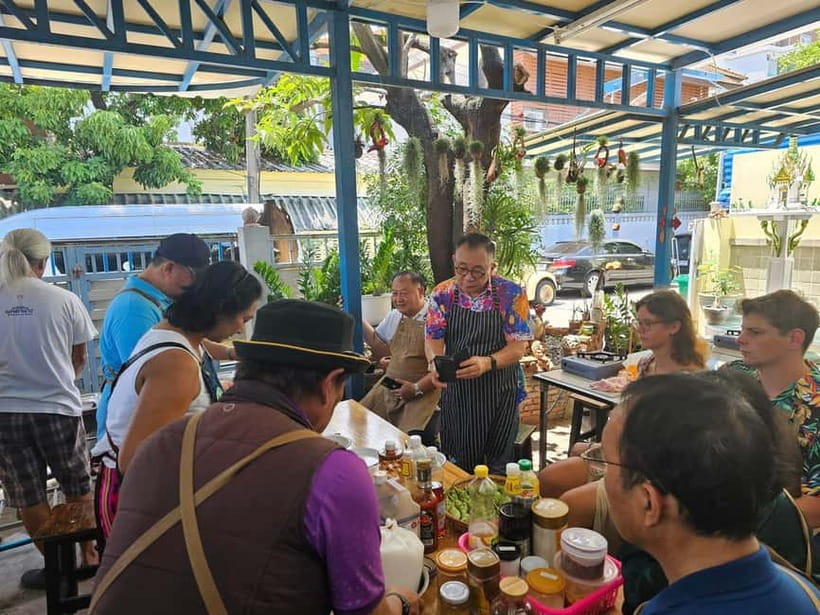
Two things I really like: the market shopping feels practical (you learn what to buy and why), and the cooking is hands-on, especially the parts where you make curry paste and coconut milk from scratch. It’s a proper afternoon meal you can eat right away, not a demo that ends with regret.
One possible drawback to consider: it’s an active, multi-stop afternoon. If you hate heat, walking to the shrine and market browsing may feel like a lot before you even start cooking.
In This Review
- Key highlights that make this class worth your afternoon
- MRT Huai Khwang Exit 4 to the Ganesha Shrine: start with local faith
- Huai Khwang Market: learning Thai ingredients the useful way
- The kitchen prep that changes everything: coconut milk and curry paste
- Four cooking sessions, one shared goal: cook, taste, adjust
- 16:00 — Session 1: soup and stir-fry basics
- 16:30 — Session 2: salad and bold flavors
- 17:00 — Session 3: curry time
- 17:30 — Session 4: dessert and a final plate
- What you’ll cook: a day-by-day Thai menu (and where you’ll feel it)
- Vegetarian and vegan options: plan ahead so you cook comfortably
- Who’s teaching you: friendly hosts and real instruction style
- Small-group logistics: the parts that can make or break your afternoon
- Price and value: why $68 can make sense in central Bangkok
- Who should book this cooking class (and who might skip it)
- Should you book? My direct take
- FAQ
- Where do I meet for the class?
- What time does the experience end?
- Do I go to a market?
- Is dinner included?
- Can I do vegetarian or vegan?
- What dishes will I cook?
- Are transfers included?
- Is the class taught in English?
Key highlights that make this class worth your afternoon
- Ganesha Shrine first: you get context for how locals connect food, community, and daily faith.
- Huai Khwang Market ingredient hunt: you shop like a cook, not like a tourist.
- Coconut milk and curry paste from scratch: these are the flavor engines of Thai food.
- Small-group pace: you’re more likely to get direct help from the host (names like Ann and Sunee show up in the program).
- Day-specific menu + dessert: your dishes follow the calendar, so each day feels slightly different.
- You eat what you cook: dinner is included, so there’s no awkward guessing at portions.
MRT Huai Khwang Exit 4 to the Ganesha Shrine: start with local faith
The afternoon begins at 14:00 at MRT Huai Khwang, Exit 4. From there, you meet your guide and get pulled into local rhythm fast, before the cooking tools even come out.
First stop is the Ganesha Shrine, a sacred community landmark locals take seriously. The point isn’t to turn it into a performance. It’s to give you a window into how spiritual respect runs alongside everyday life in Bangkok, including food culture.
If you prefer a class that starts with a market (and skips the shrine), you might feel this first stop takes extra time. For me, it makes the whole cooking section feel more grounded.
You can also read our reviews of more cooking classes in Bangkok
Huai Khwang Market: learning Thai ingredients the useful way
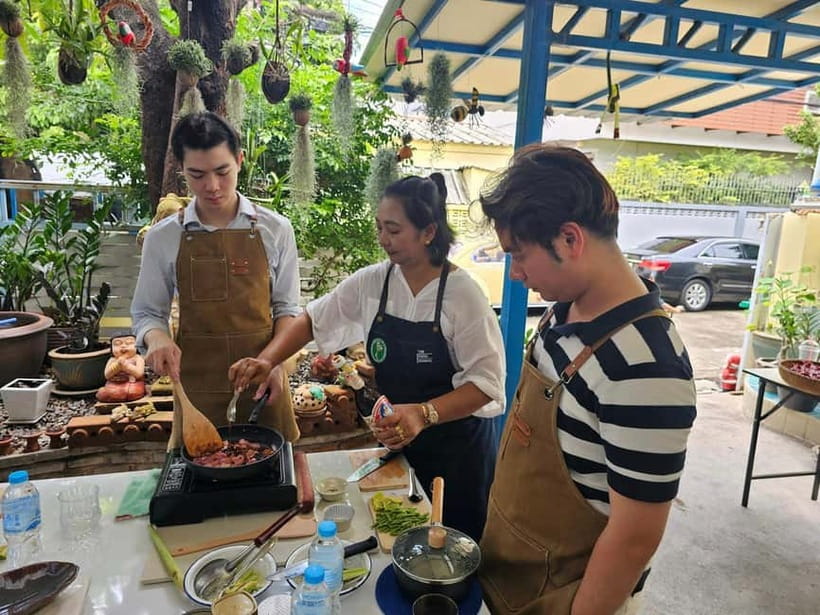
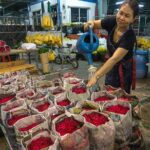
Next you head to Huai Khwang Market, a real local market with the sights and smells of daily shopping. This is where you build your flavor map: herbs, aromatics, and pantry staples that show up in Thai food again and again.
You’ll shop for key ingredients that will show up in your class dishes. That small detail matters. When you buy ingredients during the market portion, you understand what fresh looks like and what substitutions won’t behave the same way.
Then you’ll move on by local transport to the cooking studio area. In some runs, groups use a tuk-tuk to get there, which keeps the afternoon feeling like a neighborhood outing instead of a bus tour.
Practical note: markets are a lot for the senses. Bring water (included) and wear shoes you’re happy to walk in.
The kitchen prep that changes everything: coconut milk and curry paste
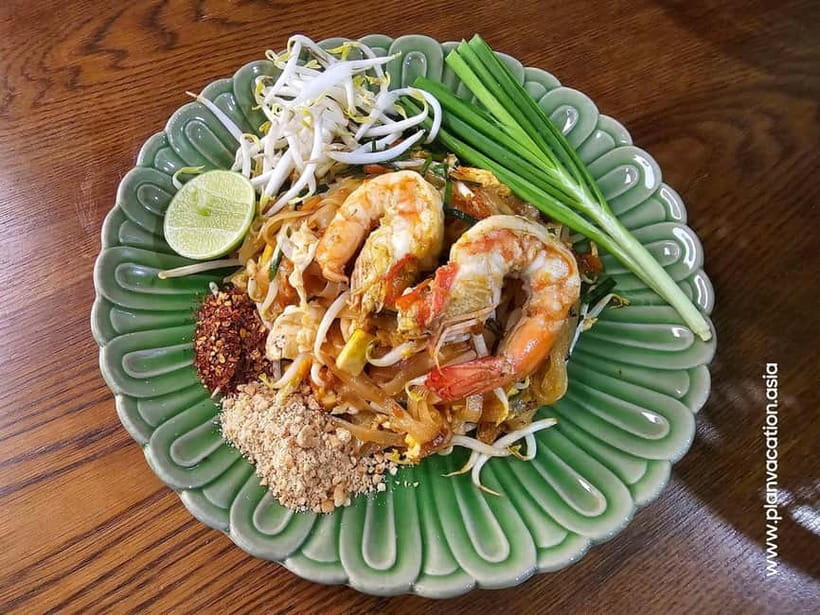
At about 15:00, the cooking starts in earnest. You’ll get an introduction to vegetables, rice, and herbs, then move into the core Thai techniques that most cooking classes gloss over.
You’ll learn how to make curry paste from scratch. That usually means grinding or pounding ingredients so the flavors meld into something smoother than bottled paste. You also make coconut milk (and sticky rice is part of this prep phase).
Why this matters for you: Thai curry tastes the way it does because of the paste and the balance with coconut. If you can reproduce those steps, you’re not just copying a recipe—you’re learning the logic of Thai cooking. That’s the difference between eating Thai food and actually cooking it well at home.
Four cooking sessions, one shared goal: cook, taste, adjust
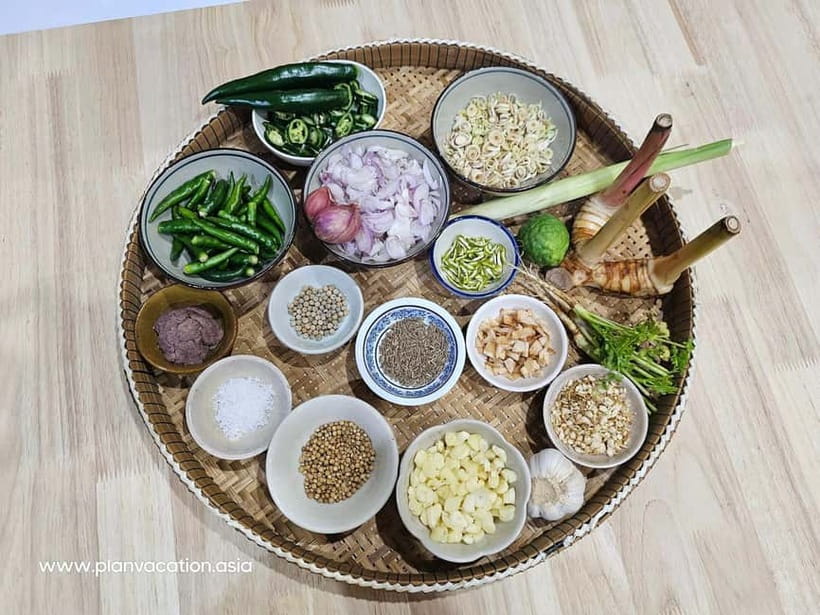
The heart of the class runs until around 18:00, split into timed cooking sessions. You’ll prepare multiple dishes, then enjoy them hot and fresh. The schedule is designed so each dish has its moment, not a chaotic free-for-all.
Here’s how the timing typically plays out:
16:00 — Session 1: soup and stir-fry basics
The first cooking wave includes items like soup and stir-fried dishes. The menu changes by the day, but the building blocks stay similar: aromatics go in early, then heat and timing do the rest.
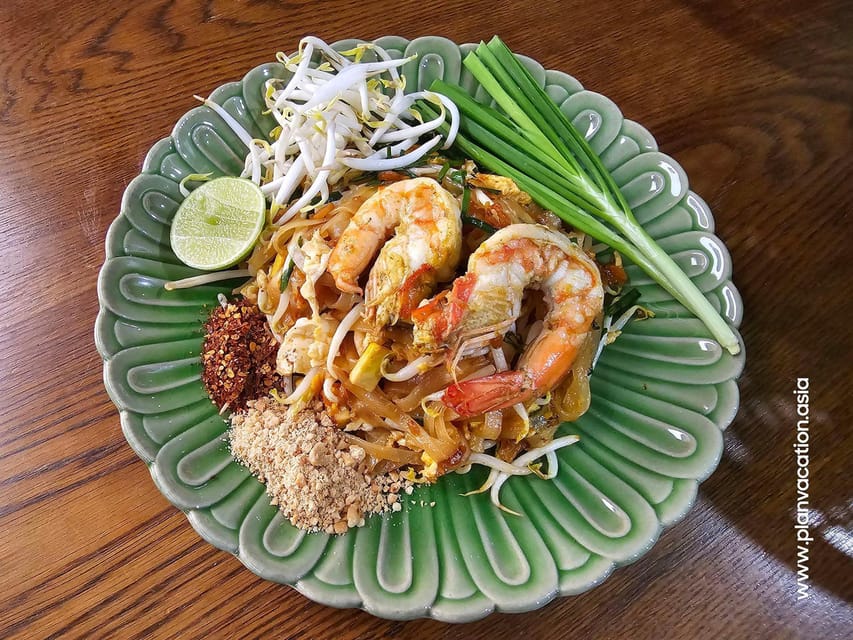
Common examples from the day-by-day menu include dishes like Tom Kha Gai (Thai chicken coconut soup) and stir-fried plates such as morning glory with chili heat, or stir-fried pork variations.
A few more Bangkok tours and experiences worth a look
16:30 — Session 2: salad and bold flavors
Next comes the session focused on salads and strong Thai balancing acts—tang, heat, sweetness, and crunch working together.
On the menu calendar, this can look like Som Tum (papaya salad) or spicy minced pork salad, depending on your day. This is where you’ll learn why Thai salads aren’t side dishes. They’re flavor systems.
17:00 — Session 3: curry time
By the curry session, you’ll already have the paste and coconut milk foundation. That means the curry step isn’t just cooking—it’s applying what you made earlier.
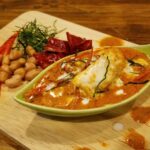
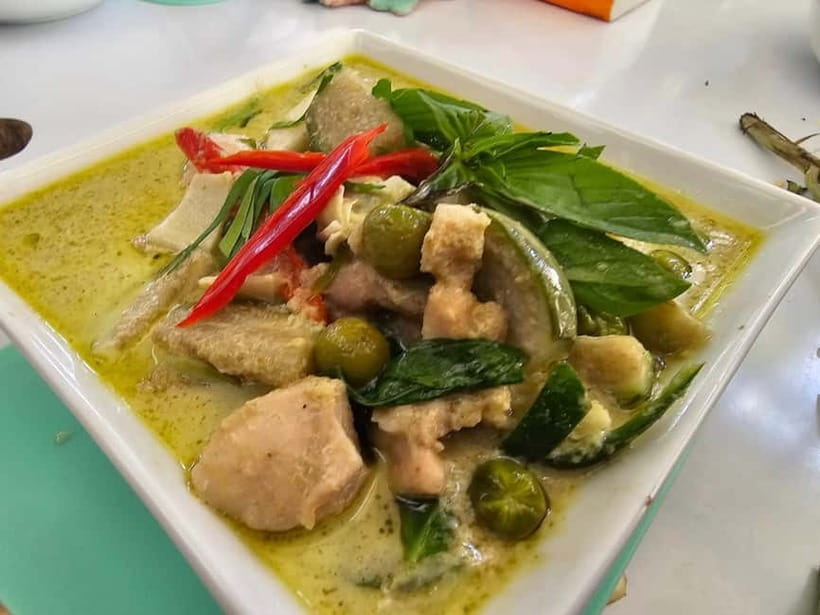
Examples from the menu include Chicken Green Curry and Pork Panang Curry. You’ll also see variants like yellow curry paste pork or red curry paste basil-style mixes across different days.
17:30 — Session 4: dessert and a final plate
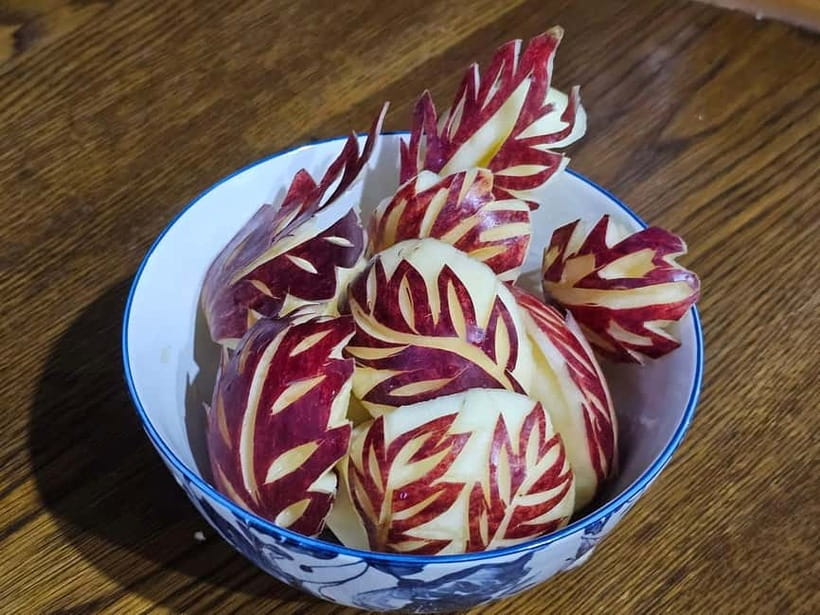
The last session wraps with dessert. Options in the menu list include pandan layer cake, steamed coconut milk (Kanom Tuay), banana cake, or banana in coconut milk.
Then you eat everything you cooked. The class ends at the cooking location around 18:00, and you’ll return to the meeting area by 19:00.
What you’ll cook: a day-by-day Thai menu (and where you’ll feel it)
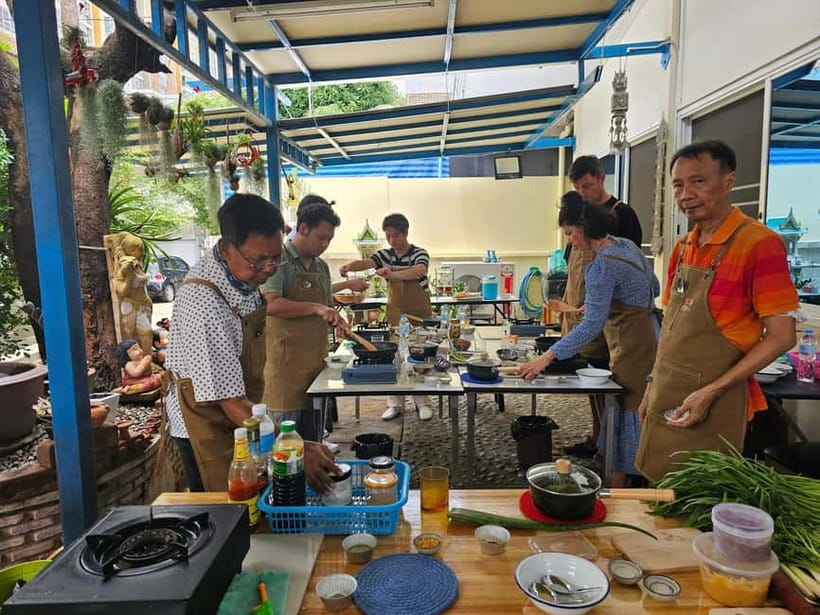
The cooking program is structured around classic Thai dishes, and the exact menu depends on the day. Instead of one fixed itinerary, you get a set of options that rotate through soups, stir-fries, curries, salads, and dessert.
Here are a few menu examples pulled from the program calendar:
- Monday: Pork Panang Curry; morning glory stir-fry with chili heat; poached eggs; stir-fried pork with yellow curry paste.
- Tuesday: Tom Kha Gai (Thai chicken coconut soup); fried and stir-fried pork and tofu with sprouts; plus a dessert option like Kanom Tuay on select days.
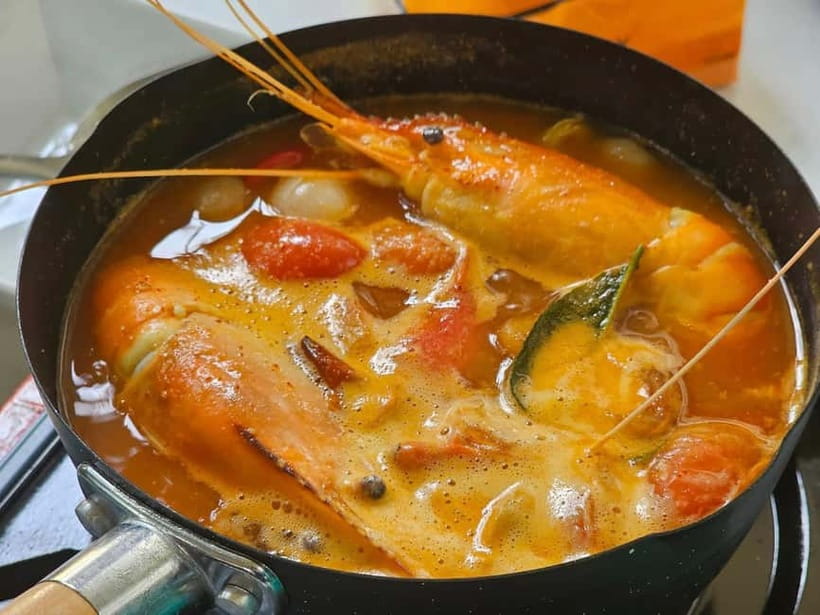
- Wednesday: Hot and sour shrimp soup; holy basil-style stir-fry; Thai omelet; fried noodles.
- Thursday: Stir-fried minced pork with bamboo shoot; tofu clear soup; herb-forward fried pork belly; Chinese-style fried noodles.
- Friday: Chicken green curry; crispy pork with kale; garlic pepper minced pork; soy-sauce rice noodles.
- Saturday: Som Tum papaya salad; spicy minced pork salad; spicy soup with pork ribs; Thai herb fried chicken; banana in coconut milk.
- Sunday: Tom Yum Gai (spicy chicken soup); stir-fried pork with red curry paste and basil; stir-fried rice noodles with chicken; plus pumpkin in coconut milk on that day’s menu options.
Here’s how I’d think about this as a value for you: even if you’ve eaten Thai food before, you won’t just repeat the same handful of dishes. You’ll learn a spread of techniques—soups, stir-fries, curry-making, and Thai desserts—so you can cook more than one category at home.
Vegetarian and vegan options: plan ahead so you cook comfortably
The class can cater to vegetarian and vegan diets with prior notice. That’s important because Thai cuisine relies heavily on meat in some traditional versions, so you need swaps planned early to keep the flavors right.
If you’re vegetarian or vegan, message your preferences when you reserve. That’s the difference between a simple substitution and a dish that still tastes like the real thing.
Also, notice the word included here: prior notice. Don’t leave it to the last minute and hope it works out.
Who’s teaching you: friendly hosts and real instruction style
This program works like a home-style class. Two guide names stand out from the program’s past experiences: Ann and Sunee.
Both are described as warm, and both teach with lots of tips, not just recipe steps. In one experience, communication included German as well as cooking guidance, which suggests the hosts can adapt to the group’s needs when they can.
For you, the practical takeaway is simple: you want a host who can answer follow-up questions. This class is set up for that kind of interaction, especially if the group stays small.
Small-group logistics: the parts that can make or break your afternoon
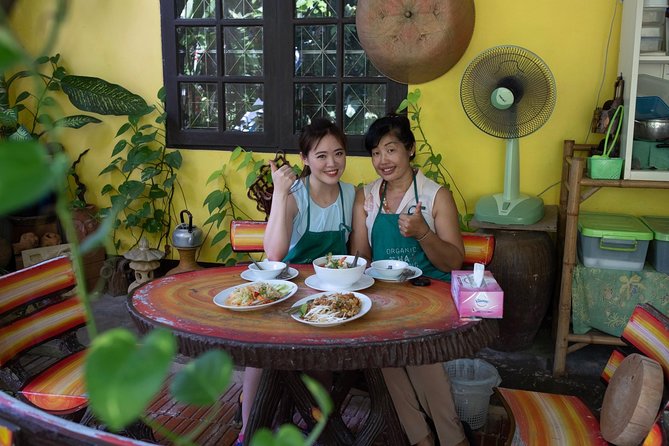
Because the class is listed as a mini group, you should expect a smaller feel than typical large-group cooking tours. Past sessions show cases where only two people joined, which tends to make the kitchen time feel more personal.
Also, a couple of practical details really matter:
- The organizers have been accommodating about storing luggage for groups with multiple trips.
- The cooking area can be set up outdoors (for at least one run it was an outdoor terrace kitchen), so expect natural light and open-air sounds.
What you should bring:
- Comfortable shoes
- A light layer if you’re sensitive to evening air
- Your appetite (you’ll eat the dishes you cook)
- Any dietary notes clearly sent ahead
Price and value: why $68 can make sense in central Bangkok
At $68 per person, this class isn’t the cheapest thing you can do in Bangkok. But the value is built into what you get.
You’re not only paying for cooking. You’re paying for:
- a market visit where you shop for ingredients,
- the guided technique lessons (curry paste and coconut milk are included),
- transport between the meeting point and the cooking area,
- your dinner (what you cook),
- drinking water,
- and travel insurance.
If you were to reproduce this experience on your own—market shopping, ingredient sourcing for curry paste, plus teaching help and transport—it would be a lot harder to match for the same cost. The class also saves you time. In Bangkok, time is money, and this uses an efficient block of your afternoon.
Who should book this cooking class (and who might skip it)
This is a strong pick if you want:
- a Bangkok cooking class that teaches technique, not just recipes,
- hands-on time with curry paste and coconut milk,
- a market stop that helps you understand ingredients,
- a small-group feel where you can ask questions.
You might want a different style class if:
- you prefer very polished, fast, air-conditioned experiences only,
- you dislike walking around markets and shrines,
- or you want a strict fixed menu with no day-to-day variety.
Should you book? My direct take
I’d book this afternoon class if you care about learning Thai cooking in a way you can actually repeat. The combination of market shopping plus making the flavor base from scratch is the part that turns this from a fun activity into real skill-building.
I’d also book it if you want a culturally grounded outing. Starting at the Ganesha Shrine and then heading into Huai Khwang Market keeps it connected to local life, not just food.
Skip it only if you know you’ll be uncomfortable with an active afternoon that includes walking, heat, and multiple cooking sessions. Otherwise, this is a solid, practical value in central Bangkok.
FAQ
Where do I meet for the class?
Meet at MRT Huai Khwang, Exit 4 at 14:00. Your guide will be waiting there.
What time does the experience end?
The class wraps at the cooking location around 18:00, and you’ll be transferred back to the meeting area by about 19:00.
Do I go to a market?
Yes. You visit Huai Khwang Market after the shrine stop to shop for ingredients used in your cooking class.
Is dinner included?
Yes. The program includes the food you cook, so you eat your dinner as part of the experience.
Can I do vegetarian or vegan?
Vegetarian and vegan options are available with prior notice. Tell the organizers ahead of time so your menu can be adjusted.
What dishes will I cook?
You cook classic Thai dishes that vary by day, including items like curry, soups, stir-fries, Thai salads, and Thai desserts. The menu list includes options such as Panang curry, Tom Kha Gai, Som Tum, Tom Yum Gai, and desserts like pandan layer cake or Kanom Tuay.
Are transfers included?
Yes. Transfers are included from and to MRT Huai Khwang (Exit 4 for the start). You’ll return by transfer to the meeting area.
Is the class taught in English?
The listed language is English.