REVIEW · BANGKOK
Bangkok: Hands-on Thai Cooking Class and Market Tour
Book on GetYourGuide →Operated by House of Taste Thai Cooking School · Bookable on GetYourGuide
Bangkok can be chaos. This cooking class adds clarity. You’ll shop for ingredients (on the morning session) or carve mango (on the later ones), then cook four classic Thai dishes hands-on, with recipes sent to you afterward.
I like that it’s small and guided—you’re not stuck watching from the sidelines. I also like the “from scratch” focus, including making curry paste and learning how coconut milk comes together, not just tossing in pre-made sauces.
One possible drawback: the market visit only happens on the morning class, and a few people felt it was more limited than they expected.
In This Review
- Key things I’d prioritize before you book
- BTS Asoke to Sukhumvit 4: getting there without stress
- Morning market tour: picking flavors you can actually see
- At the House of Taste: what the 210 minutes feel like
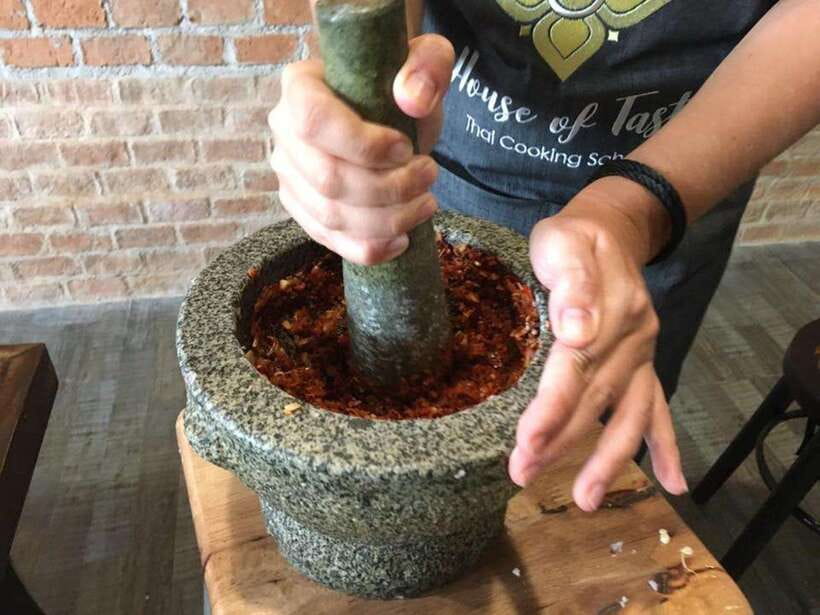
- Curry paste from scratch: the skill part people remember
- Your four-course lineup: what you’ll cook all week
- Mango carving: the fun, hands-on finale for afternoon and evening
- No MSG, and how that affects your meal
- Price and value: $45 isn’t just about eating
- Who this Bangkok class is best for
- Practical tips so your class goes smoothly
- Should you book this Bangkok hands-on cooking class?
- FAQ
- What’s included in the cooking class?
- Where do I meet for the morning class?
- Where do I meet for the afternoon or evening class?
- What’s the difference between morning and afternoon/evening?
- Which dishes will I cook?
- Can you accommodate dietary restrictions or allergies?
- Is alcohol included?
Key things I’d prioritize before you book
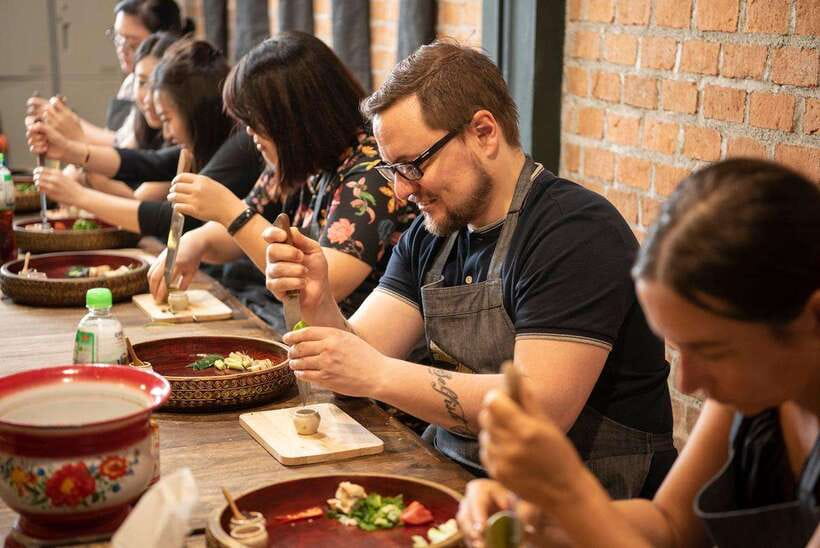
- Hands-on cooking: you make four dishes yourself and eat while they’re still hot
- Curry paste from scratch: you get practice with Thai flavor-building, not shortcut ingredients
- Two schedules: morning includes a market tour; afternoon and evening swap that for mango carving
- A small-class setup: you get English support and attention as you cook
- Diet-friendly options: vegetarian, halal, kosher, and allergies can be handled with advance notice
- Value add: recipes emailed to you afterward, plus all ingredients and equipment provided
BTS Asoke to Sukhumvit 4: getting there without stress
For the morning class, you meet at the street floor of BTS Asoke Exit 3 and MRT Sukhumvit Exit 3. The idea is simple: you start near transit, then you move together to the nearby market area and the school kitchen setup. If you like a clear pin, the meeting point can be set to Hey! Coffee MRT Sukhumvit.
For the afternoon and evening class, the meeting point shifts to the school in Sukhumvit 4. That matters because it changes how much “morning exploration” you get. If you prefer easy, quiet logistics, the later sessions are straightforward: show up at the school and start with the ingredient intro there.
Either way, wear comfortable shoes. You’ll walk, stand at workstations, and move between steps while you cook.
You can also read our reviews of more shopping tours in Bangkok


Morning market tour: picking flavors you can actually see
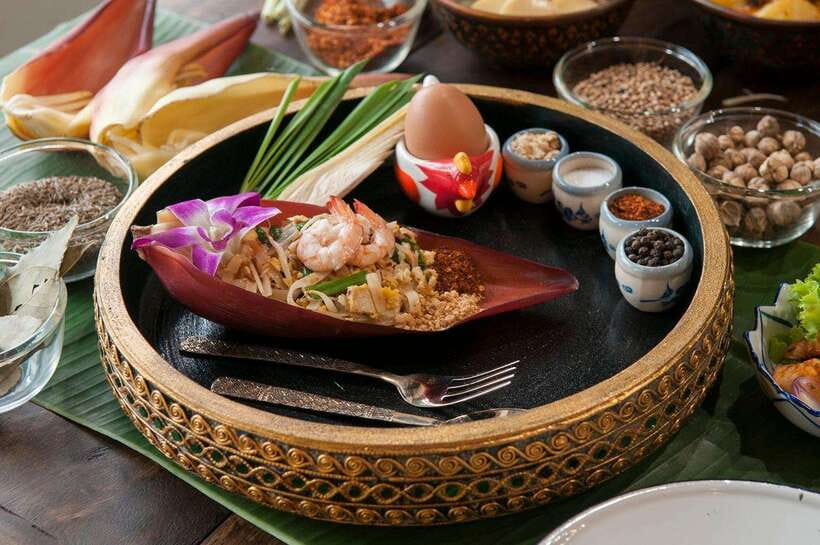
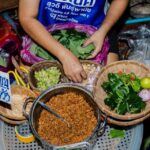
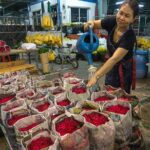
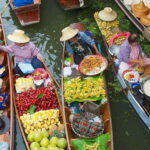
Only the 8:30AM morning class includes the market visit. That’s the session where you’ll browse ingredients with a guide, geared toward making the food you’re about to cook.
What I like about this part is that it turns cooking into real choices. You’re not just learning recipes in a classroom. You’re seeing Thai staples up close—things like vegetables, rice, herbs, and spices—and connecting them to the dishes you’ll make later.
Do keep your expectations realistic. Some guests have said the market portion felt smaller or less varied than they imagined. If you’re dreaming of a full-on wet market adventure with huge wandering time, you might be slightly disappointed. Still, it’s useful for learning what ingredients look like when they’re fresh.
At the House of Taste: what the 210 minutes feel like
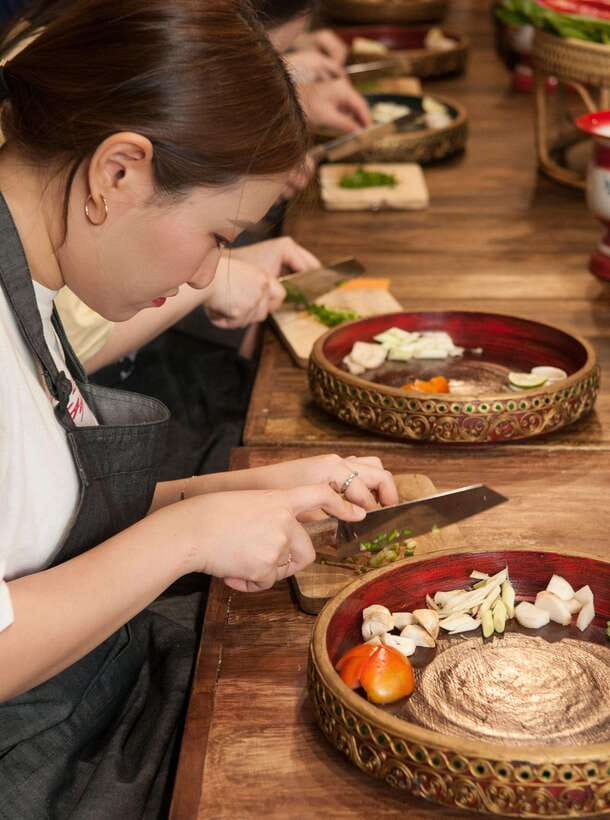
The total duration is about 210 minutes. Think of it as a compact morning/afternoon plan that blends shopping or carving with a hands-on cooking workshop.
Inside, you’re learning and cooking with a professional team. The class is set up to help you along step-by-step, which is a big deal if you’re a first-timer. Multiple guests have specifically called out clear explanations and pacing that works even when you’re not confident at a stove.
The cooking itself focuses on the building blocks of Thai flavor:
- getting familiar with ingredients like rice, herbs, spices, and vegetables
- learning preparation basics for coconut milk and curry paste from scratch
- assembling, cooking, and finishing your dishes so you can taste them right away
You’ll also get a personal locker and drinking water, plus all ingredients and equipment. That’s one of those “small” conveniences that keeps the day from feeling like work.
Curry paste from scratch: the skill part people remember
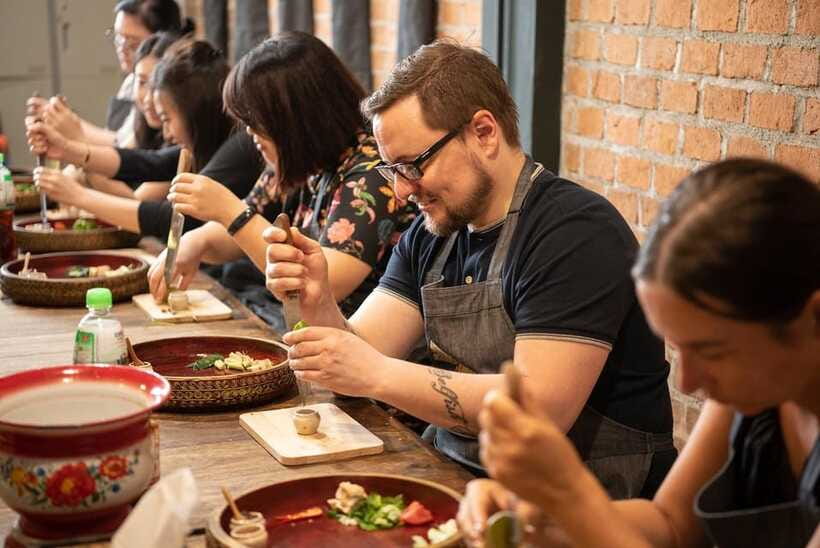
This class has a clear advantage over the typical “stir and plate” cooking demo: you’re not only cooking the final dishes. You’re making key components, including curry paste and preparing coconut milk.
Why that matters for you: curry paste is where a lot of Thai cooking identity lives. Even if you never become a hardcore cook, getting a feel for the process helps you understand why one curry tastes different from another. When you go home, the recipe email won’t just be instructions—it’ll be tied to the memory of how the paste smelled and looked as it came together.
And yes, it’s practical. Your hands are involved, not just your eyes. You’ll also learn enough to follow the recipes later, which is why guests repeatedly mention they’d do this again or cook at home with the notes they receive.
Your four-course lineup: what you’ll cook all week
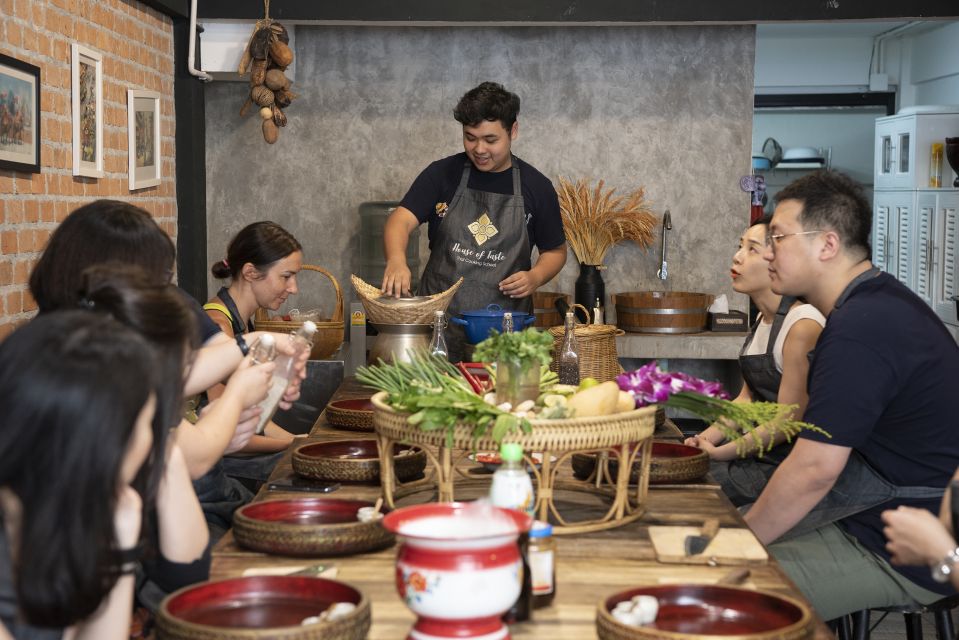
The dishes rotate by day, and Mango Sticky Rice shows up every session as your sweet finish. Across the week, you’ll cook combinations like:
Monday
- Thai Papaya Salad (Som Tum)
- Stir-Fried Noodles with Shrimp (Pad Thai)
- Green Curry with Chicken
- Mango Sticky Rice
Tuesday
- Spicy Coconut Soup with Chicken (Tom Kha Gai)
- Stir-Fried Thai Basil Chicken (Pad Krapow Gai)
- Red Curry with Chicken
- Mango Sticky Rice
Wednesday
- Hot and Sour Soup with Shrimp (Tom Yum Goong)
- Stir-Fried Flat Rice Noodles with Chicken (Pad See Ew)
- Green Curry with Chicken
- Mango Sticky Rice
Thursday
- Spicy Minced Chicken Salad (Larb Gai)
- Stir-Fried Noodles with Shrimp (Pad-Thai)
- Panang Curry with Chicken
- Mango Sticky Rice
Friday
- Thai Papaya Salad (Som Tum)
- Stir-Fried Thai Basil Chicken (Pad Krapow Gai)
- Red Curry with Chicken
- Mango Sticky Rice
Saturday
- Spicy Coconut Soup with Chicken (Tom Kha Gai)
- Stir-Fried Noodles with Shrimp (Pad-Thai)
- Green Curry with Chicken
- Mango Sticky Rice
Sunday
- Hot and Sour Soup with Shrimp (Tom Yum Goong)
- Stir-Fried Flat Rice Noodles with Chicken (Pad See Ew)
- Panang Curry with Chicken
- Mango Sticky Rice
A practical way to choose: pick the day that matches your Thai “greatest hits.” If you’re craving a balance of sour, spicy, and fragrant, sessions with Tom Yum Goong and curry days can feel especially satisfying. If you mainly want stir-fry and coconut comfort, look for Pad Krapow Gai and Tom Kha Gai days.
Also, the menu can shift for food needs. The school can substitute ingredients for vegetarian, halal, kosher, and allergy requests when you notify them in advance.
A few more Bangkok tours and experiences worth a look




Mango carving: the fun, hands-on finale for afternoon and evening
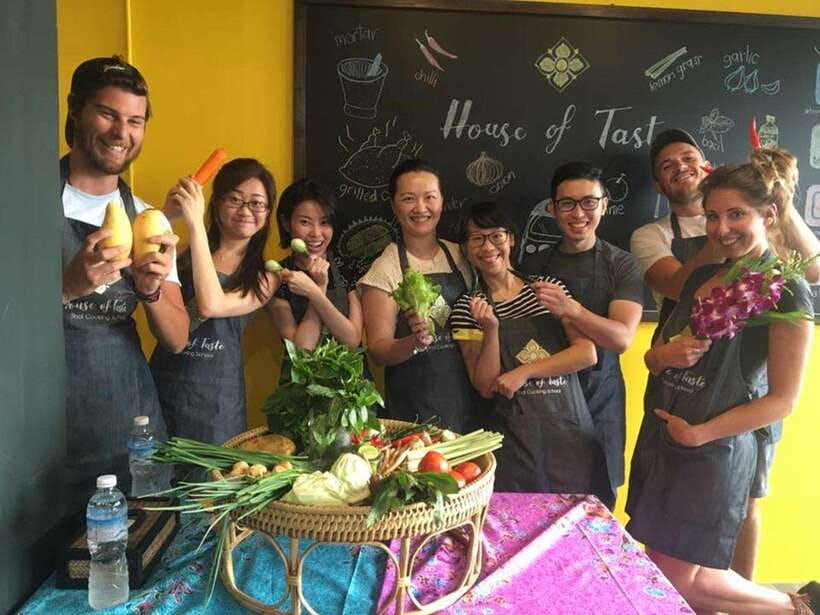
If you pick the afternoon or evening session, you won’t do the market tour. Instead, you’ll get mango carving as the last activity.
This is one of those add-ons that changes the tone of the evening. Cooking can be all about flavors; carving gives you a different kind of Thai skill—something visual, light, and memorable. People have said the mango carving part was cool, especially as a final touch after cooking and eating.
So when should you choose it?
- Choose afternoon/evening if you want a later start, don’t care about the market, and enjoy an extra hands-on craft.
- Choose morning if you want ingredient shopping and the market portion is your “main character.”
No MSG, and how that affects your meal
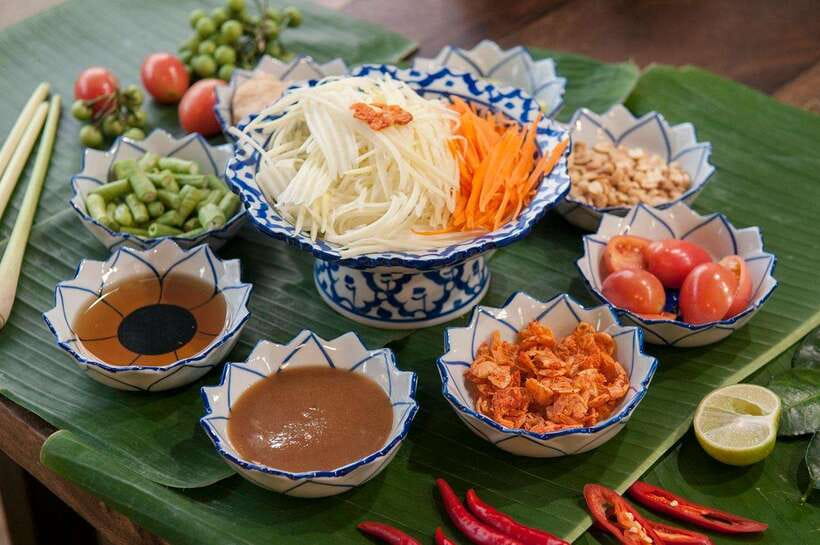
The class states that no MSG is used. That doesn’t automatically mean the food will taste different for everyone, but it’s a clear policy that some people actively look for.
What you’ll still get is the real Thai flavor experience: you’re making curry paste and dishes from fresh ingredients, and you’ll eat the food hot and freshly cooked. That part tends to matter more than any seasoning detail.
Price and value: $45 isn’t just about eating
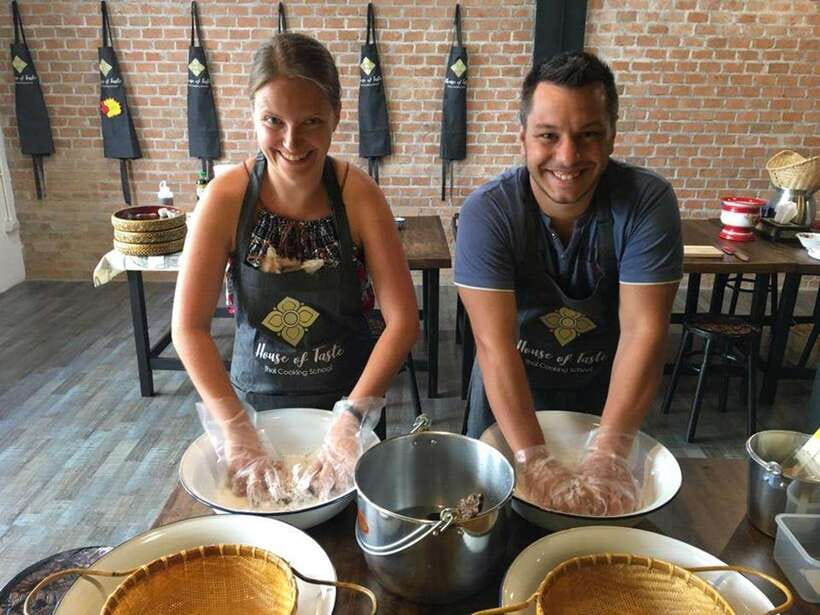
At $45 per person for roughly 210 minutes, you’re paying for more than a plate. You’re paying for:
- four-course meal (you cook it, then eat it)
- hands-on instruction with support
- all ingredients and equipment
- a personal locker and water
- recipes via email
- either a morning market tour or an afternoon/evening mango carving session
Also, alcoholic drinks aren’t included (they’re available for purchase). If you like to drink, budget extra. If you don’t, that actually keeps your cost predictable.
Is it worth it? In my book, the value comes from leaving with recipes you can use later. Cooking classes that just feed you can feel like a nice lunch and nothing more. This one pushes toward the skill side: curry paste from scratch, plus ingredient learning tied to dishes you’re making.
Who this Bangkok class is best for
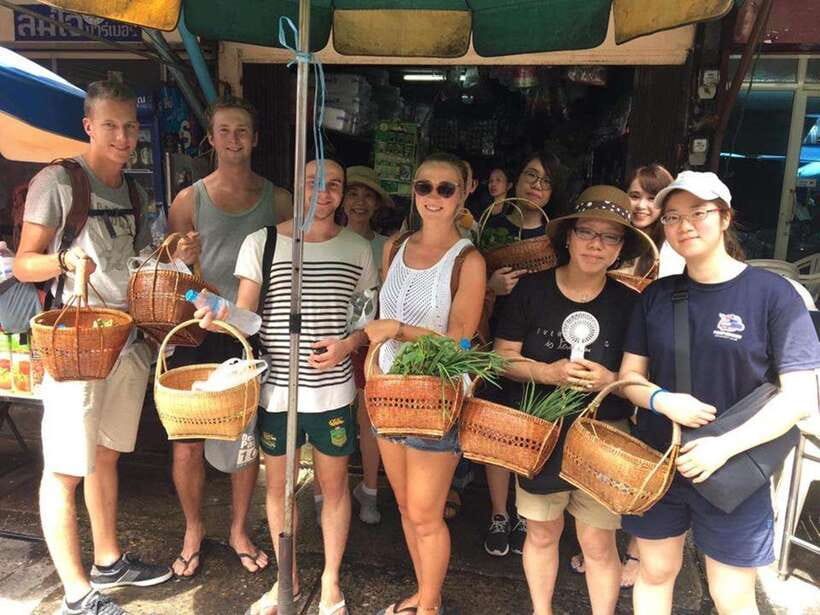
I think this fits best if you want Thai food with training wheels, not a mystery box.
You’ll probably enjoy it if you:
- are a first-time cook and want clear guidance
- like eating what you cook, while it’s hot
- want a structured way to learn Thai ingredients like herbs, spices, rice, and vegetables
- care about dietary options (vegetarian, halal, kosher, and allergies can be accommodated with advance notice)
It also works well for couples and solo travelers. Reviews often point out the staff’s patience and the fact that instructors can spend time with each person when questions pop up.
If you’re someone who hates long standing sessions, plan for comfy shoes and a relaxed pace. You’ll be active, not sitting the whole time.
Practical tips so your class goes smoothly
A few small things can make a big difference:
- Go in with an empty stomach. There’s plenty of food, and you’ll appreciate it more when you’re actually hungry.
- Wear comfortable shoes. Even if you’re not rushing, you’ll be on your feet.
- Tell them about dietary needs ahead of time. The school can handle substitutions with advance notice.
- Pick the time based on your priorities: morning = market, afternoon/evening = mango carving.
And if you care about learning from the instructor’s personality, you’ll likely be in good hands. People have highlighted hosts such as Jay, Pitch, April, and others for friendly teaching and clear step-by-step explanations.
Should you book this Bangkok hands-on cooking class?
Book it if you want a day with clear outcomes: cook four Thai dishes, learn curry paste prep, and leave with recipes you can actually use. The price feels fair because it includes instruction, ingredients, equipment, and a full meal—not just a tasting.
Pick the morning session if you’re excited by ingredient shopping and want the market tour with it. Pick the afternoon/evening sessions if you’re more interested in finishing with a fun skill like mango carving and you’d rather start at the school.
One final check before you commit: if you’re expecting a huge, sprawling market adventure, the market portion may feel modest. If that doesn’t matter to you, the class still shines for the hands-on cooking and the practical recipes.
FAQ
What’s included in the cooking class?
You get the cooking class, an instructor, a four-course meal, drinking water, all ingredients and equipment, a personal locker, and recipes sent via email.
Where do I meet for the morning class?
Meet at the street floor of BTS Asoke Exit 3 and MRT Sukhumvit Exit 3. You can also pin the meeting point to Hey! Coffee MRT Sukhumvit.
Where do I meet for the afternoon or evening class?
Meet at the school in Sukhumvit 4.
What’s the difference between morning and afternoon/evening?
The morning class includes a market tour. The afternoon and evening classes replace the market tour with a mango carving session, and the ingredient introduction happens at the school in Sukhumvit 4.
Which dishes will I cook?
The four dishes rotate by day, and Mango Sticky Rice is included. Examples across the week include Som Tum, Pad Thai, Green/Red/Panang curry, Tom Kha Gai, Tom Yum Goong, Pad Krapow Gai, Pad See Ew, and Larb Gai.
Can you accommodate dietary restrictions or allergies?
Yes. Vegetarian, halal, kosher, and allergy needs can be accommodated with advanced notification, and substitute ingredients are provided.
Is alcohol included?
Alcoholic drinks are not included, but they’re available for purchase.