REVIEW · BANGKOK
Bangkok: White Lotus Thai Cooking Class with Market Tour
Book on GetYourGuide →Operated by White Lotus Thai Cooking School · Bookable on GetYourGuide
Cook Thailand’s classics after a real market walk. This White Lotus Thai Cooking Class in Bangkok pairs a walk through Paak Klong Talad’s wholesale food scene and flower market with a hands-on kitchen session that actually teaches how Thai flavors are built. I love the market-first approach, where you see, smell, and even taste ingredients like you would if you were shopping locally, and I love the fresh coconut milk step, because making it from scratch is the skill that makes mango sticky rice and sticky rice taste right.
One thing to plan for: transport isn’t included, and the meeting point is above the market area, so you’ll want to arrive a little early and let yourself find the stairs calmly.
In This Review
- Key things I’d highlight before you go
- Where You Start: Paak Klong Talad and the White Lotus Thai School
- Market Walk at Paak Klong Talad: Produce, Vendors, and Big Flower Energy
- Fresh Coconut Milk for Sticky Rice: The Skill That Makes It Taste Right
- Cooking 4 Thai Classics: Tom Yam Goong, Pad Thai, Som Tam, Mango Sticky Rice
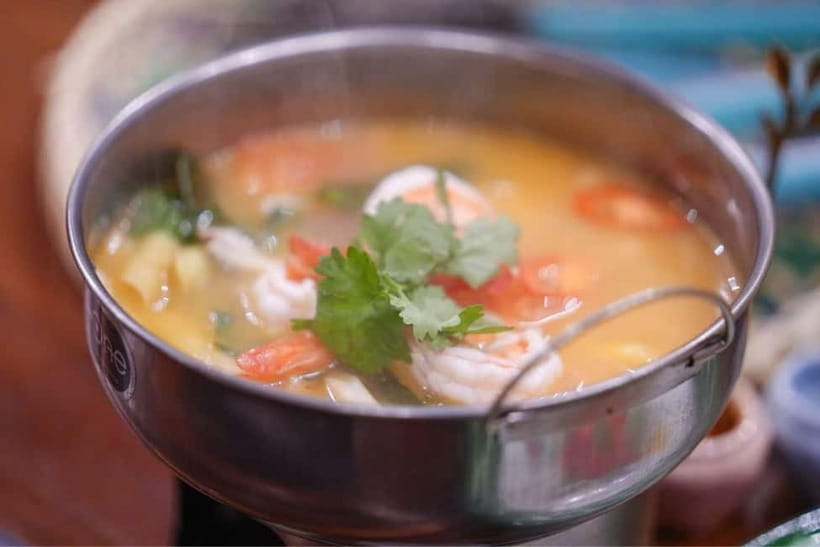
- Tom Yam Goong: Bright, Sour, and Shrimp-Focused
- Pad Thai: The Sauce Logic Behind the Flavor
- Som Tam: Green Papaya Salad with Real Crunch and Balance
- Mango Sticky Rice: Dessert Done the Thai Way
- Eating Together and the Closing Ritual: Lucky Draw, White Lotus Folding, Certificate
- Price and Value in Bangkok: What You’re Paying For (and Why It Feels Fair)
- Who This Class Fits Best (and Who Might Want Something Different)
- Practical Tips to Make the Most of Your 3.5 Hours
- Should You Book the White Lotus Thai Cooking Class in Bangkok?
- FAQ
- How long is the Bangkok White Lotus Thai Cooking Class?
- What dishes will I cook during the class?
- Will I learn to make coconut milk?
- Is the market tour included?
- What languages are used in the class?
- Is the class suitable for beginners?
- Is transportation provided?
- Where is the meeting point?
- Is there an age restriction?
- Can I cancel for a refund?
- What do I receive at the end?
Key things I’d highlight before you go
- Paak Klong Talad start: You meet at the White Lotus Thai Cooking School on the 2nd floor of The Market Organization.
- Flower market + wholesale produce: You get context for Thai cooking by learning what’s available and why it matters.
- Fresh coconut milk from scratch: This is a standout practical skill, not just a recipe step.
- Four full dishes, hands-on: Tom Yam Goong, Pad Thai, Som Tam, and Mango Sticky Rice are cooked with guidance.
- Eat what you make: You sit down to enjoy your meal together after each dish is finished.
- White lotus folding + certificate: A fun closing touch, plus a take-home souvenir of the day’s learning.
Where You Start: Paak Klong Talad and the White Lotus Thai School
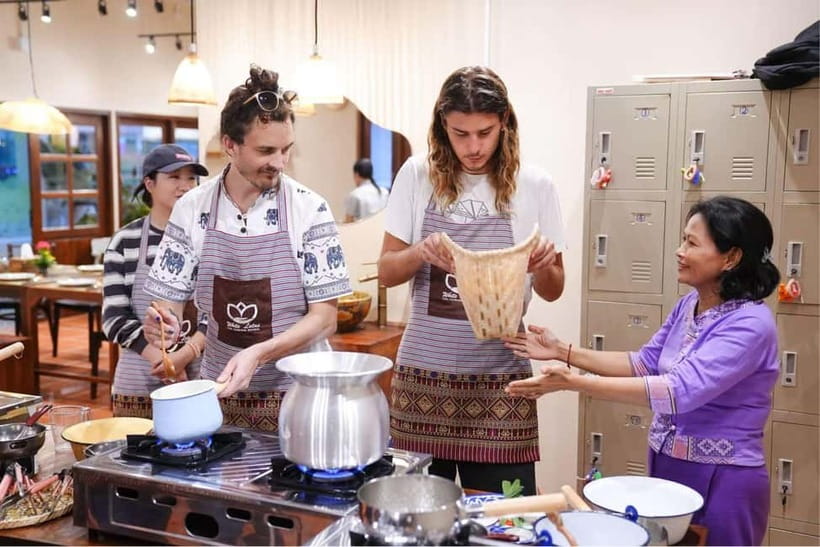
Your day begins at White Lotus Thai Cooking School, on the 2nd floor of The Market Organization (Paak Klong Talad). It’s not a hotel lobby meet-up. It’s a real market area, which is exactly why the experience feels grounded.
If you like easy navigation, you’re in luck: it’s about 150 meters from Sanamchai MRT station, and roughly 60 meters from a 7/11. That matters because you can focus on getting to class without stress. Also, the school is wheelchair accessible, so the space is designed to work for a wider range of visitors.
You can also read our reviews of more shopping tours in Bangkok
Market Walk at Paak Klong Talad: Produce, Vendors, and Big Flower Energy
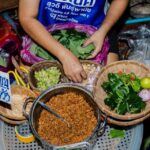
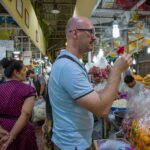
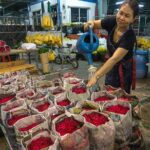
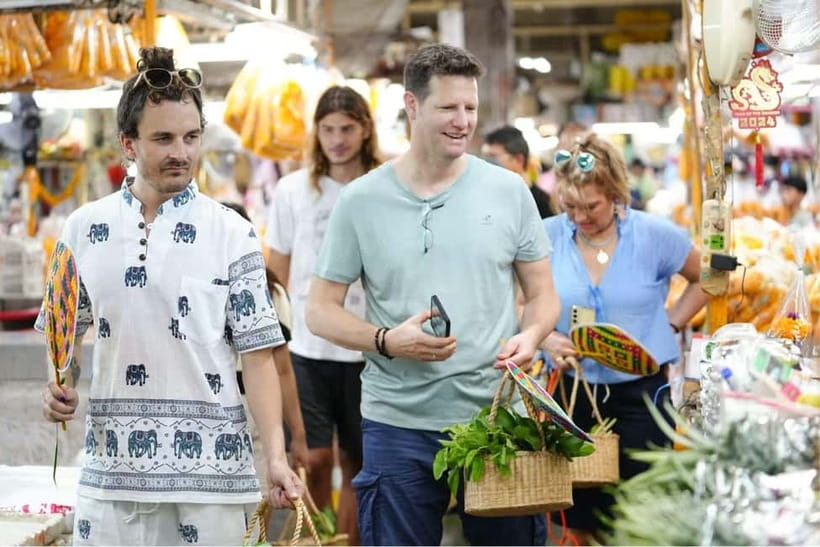
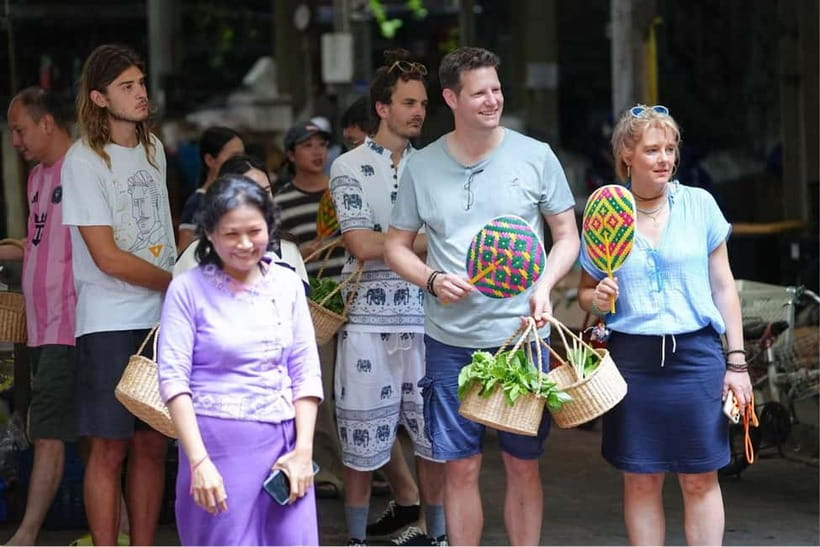
The first part is a guided walk through local wholesale vegetable and fruit markets, plus the biggest flower market in Bangkok. This isn’t about window shopping. You’re meant to use your senses. You’ll feel ingredients, smell them, and learn how people choose products that will show up later in your cooking.
Why I like this setup: it turns Thai food from a list of dishes into a set of real building blocks. When you later make Tom Yam Goong or Som Tam, you’re not just following steps. You know which aromatics and produce are doing the heavy lifting.
Flower markets also matter more than many people expect. Flowers are part of Thai daily life and presentation, and the class connects that culture to what you’ll see around Thai cooking and ingredients. Even if you only care about food, you’ll still get the point: Thai cuisine is tied to what’s fresh, available, and handled well.
Fresh Coconut Milk for Sticky Rice: The Skill That Makes It Taste Right
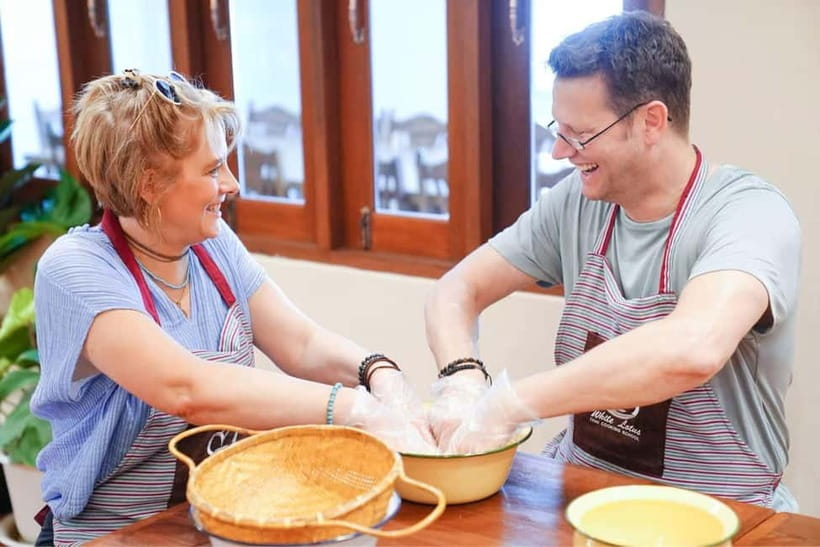
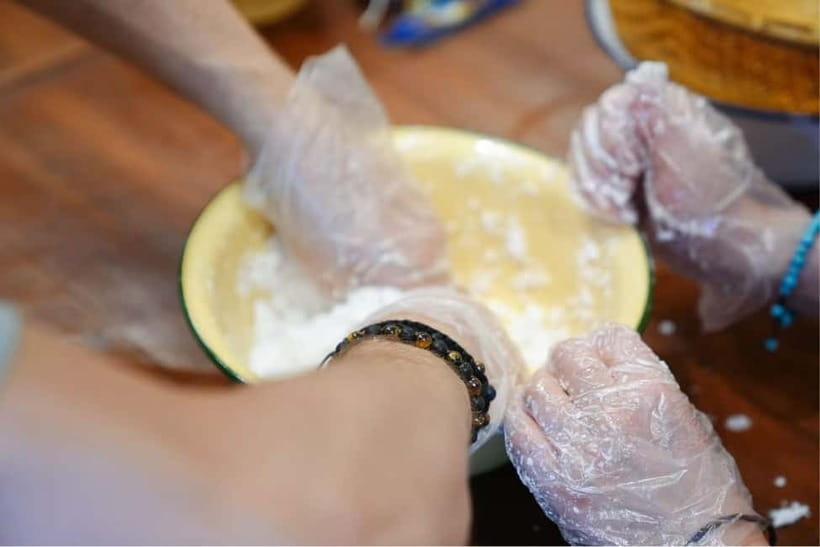
Back at the school, the class pivots from shopping to technique. A highlight here is learning how to prepare fresh coconut milk for sweet sticky rice from scratch.
This is a big deal because coconut milk isn’t just one uniform ingredient in Thai cooking. Texture and richness change how sticky rice and desserts taste. When you make it fresh, you get that smoother, more balanced flavor that packaged coconut products often miss.
I also think this step is excellent for beginners. It’s hands-on, but it’s structured. You’re not thrown into chaos. You’re learning a foundational technique you can repeat later at home.
And yes, you’ll eat what you make. The promise of mango sticky rice becomes real because you’ve built it, not merely watched it happen.
Cooking 4 Thai Classics: Tom Yam Goong, Pad Thai, Som Tam, Mango Sticky Rice
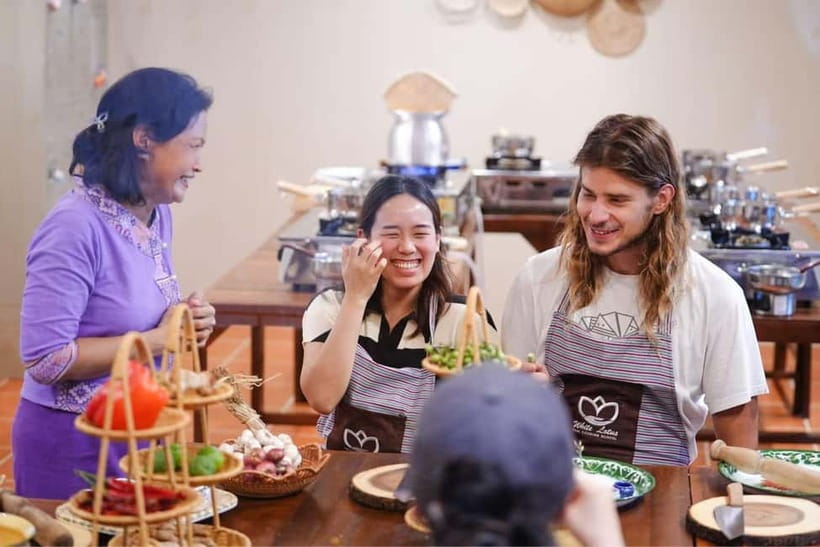
The heart of the class is cooking four dishes. You’ll make them hands-on in a cozy, home-like kitchen atmosphere, with instruction led by English- and Thai-speaking instructors.
Tom Yam Goong: Bright, Sour, and Shrimp-Focused
Tom Yam Goong is Thailand’s famous shrimp soup, built on contrast: sour, spicy, aromatic, and savory. The class includes this dish because it’s a strong example of Thai flavor structure, not just heat.
What you’ll take away is how the soup gets depth fast, and how the aromatics and seasoning feel different when you’re working with them in context (fresh ingredients you saw earlier).
A few more Bangkok tours and experiences worth a look




Pad Thai: The Sauce Logic Behind the Flavor
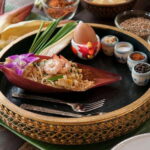
Pad Thai gets talked about constantly, but the real value here is learning how the dish is assembled and seasoned. You’ll cook it as part of the four-dish set, so you’re not stuck with one “filler” recipe.
Also, you should expect that you can adjust your spice level. Multiple class experiences mention choosing spice intensity to match your preference, which is helpful in a group setting. If you’re sensitive, this is a good way to keep the food enjoyable instead of just punishing.
Som Tam: Green Papaya Salad with Real Crunch and Balance
Som Tam (green papaya salad) isn’t just about eating something crunchy. It’s about balancing sweet, sour, salty, and spicy elements so they taste like one unified dish.
This is the kind of recipe that becomes easier after you’ve seen ingredients at the market. When you know what you’re looking for, you can better understand what changes the final flavor when something is fresher or handled differently.
Mango Sticky Rice: Dessert Done the Thai Way
Mango Sticky Rice is the dish people think is simple, but it’s not. The texture of sticky rice and the richness of coconut milk are everything. Since the class teaches coconut milk from scratch, dessert stops being a vague “sweet course” and becomes a technique-driven finale.
You’ll cook Mango Sticky Rice as one of the four dishes, so you’re not waiting until the end to see how your earlier steps pay off.
Eating Together and the Closing Ritual: Lucky Draw, White Lotus Folding, Certificate
After each dish is cooked, you eat your creations together. That part is more than a meal. It’s built into the class rhythm so you get feedback instantly: does it taste right, does it need more balance, and what does Thai flavor feel like in your mouth?
The atmosphere is consistently described as friendly and home-like. You’re seated with new people, and the class encourages a relaxed pace rather than a rushed “cook fast, leave fast” vibe.
At the end, you’ll join a lucky draw, learn how to fold a white lotus, and receive a certificate to take home. That white lotus element is a fun detail because it connects Thai culture to the day without turning it into a lecture.
Price and Value in Bangkok: What You’re Paying For (and Why It Feels Fair)
At $35 per person for about 210 minutes, this class is priced like a solid half-day experience, not a quick entertainment stop. The value comes from the full package:
- Market visits that give context for what you’ll cook
- A hands-on kitchen session
- Cooking four authentic dishes
- Fresh coconut milk preparation
- Eating the meal you made
- A certificate at the end
Many “cooking classes” in big cities are mostly watching, or they give you only one dish. Here, you cook four dishes and also focus on a foundational skill (fresh coconut milk). That’s why it often feels worth it even for people who already eat a lot of Thai food.
And the group setting helps. You get attention from the instructor and assistants while still sharing the experience with others, which often keeps costs lower than private classes.
Who This Class Fits Best (and Who Might Want Something Different)
This is great if:
- You want Thai food that’s hands-on, not just tastings.
- You’re curious about how ingredients connect to finished dishes.
- You’re a beginner. The class is built so different skill levels can follow along.
- You like learning cultural context along with recipes.
It may be less ideal if:
- You hate cooking or don’t want to get your hands involved.
- You expect transportation to be included.
- You’re traveling with children under 6, since the class isn’t suitable for that age group.
You can also tell it works well for couples and small groups because many experiences mention good group energy and clear instruction pacing. Families with older kids may find it manageable, but still check the age guidance before booking.
Practical Tips to Make the Most of Your 3.5 Hours
First tip: go hungry. People directly advise coming with an empty stomach because you cook and then eat a lot. This isn’t a two-bite demo.
Second: think about your spice tolerance before the cooking starts. Since you can often adjust spice intensity, telling your instructor your preference early helps you enjoy every course, especially the dishes that naturally run hotter like Tom Yam Goong and Som Tam.
Third: treat the market walk like part of the lesson, not the warm-up. If you pay attention during the market stops—what looks fresh, what smells strong, what vendors say—your cooking session makes more sense.
Finally: wear practical clothes and be ready for a hands-on kitchen environment. The best Thai dishes come from doing, not hovering.
Should You Book the White Lotus Thai Cooking Class in Bangkok?
If you want one experience in Bangkok that’s both memorable and genuinely useful at home, this is a strong pick. The market-first start gives you ingredient context, the fresh coconut milk lesson gives you a transferable skill, and cooking four dishes means you leave with more than photos. You leave with the ability to recreate Thai flavor on your own schedule.
I’d book it if you’re excited by real Thai ingredient shopping and you want a relaxed, friendly kitchen day rather than a performance. I’d skip it only if you need a super low-effort activity or you’re not comfortable with hands-on cooking.
If you’re nearby and can make it to Paak Klong Talad on time, this is one of the cleanest value choices in the “Thai cooking class” category.
FAQ
How long is the Bangkok White Lotus Thai Cooking Class?
The class lasts 210 minutes, about 3.5 hours.
What dishes will I cook during the class?
You’ll cook four dishes: Tom Yam Goong, Pad Thai, Som Tam, and Mango Sticky Rice.
Will I learn to make coconut milk?
Yes. You’ll learn how to prepare fresh coconut milk for sweet sticky rice from scratch.
Is the market tour included?
Yes. The experience includes a visit to a local wholesale vegetable and fruit market, and also the biggest flower market in Bangkok.
What languages are used in the class?
The instructor speaks English and Thai.
Is the class suitable for beginners?
Yes. The class is suitable for all skill levels.
Is transportation provided?
No. Transportation to and from the cooking school is not included.
Where is the meeting point?
Meet at White Lotus Thai Cooking School on the 2nd floor of The Market Organization (Paak Klong Talad). It’s about 150 meters from Sanamchai MRT station and about 60 meters from a 7/11.
Is there an age restriction?
Yes. The class is not suitable for children under 6 years old.
Can I cancel for a refund?
Yes. You can cancel up to 24 hours in advance for a full refund.
What do I receive at the end?
You’ll take part in a lucky draw, learn how to fold a white lotus, and receive a certificate to take home.