REVIEW · BANGKOK
Hands on Thai Cooking Class and Market Tour
Book on Viator →Operated by House of Taste Thai Cooking School · Bookable on Viator
The smells of Thai cooking hit fast. This hands-on class in Bangkok pairs a chef-led lesson with real ingredient shopping at Asok market (morning) or a mango carving workshop (afternoon/evening), then you eat what you make. I especially like that the instruction is hands-on and friendly for all abilities, and that you leave with a standard recipe pack to recreate the dishes later. One thing to plan for: there’s a small amount of walking, and you’ll want comfortable shoes.
What makes this experience feel worth the money is the focus on getting you from basics to actual plates in about 3.5 hours. The menu is set each day, with classic options like Pad Thai and multiple curry choices, plus Mango Sticky Rice for dessert, in an air-conditioned cooking space. My only caution is timing: if you want the market visit, you need the morning class, because afternoon and evening swap that for mango carving.
In This Review
- Key Highlights You’ll Care About
- House of Taste in Bangkok: What This Class Feels Like in Real Time
- Price and Value: Why $45.66 Often Makes Sense for Bangkok
- Meet-Up and Getting There: Simple, With Minimal Headaches
- Morning Only: Asok Market Shopping by Tuk-Tuk
- Afternoon and Evening: Mango Carving as a Bangkok Detour
- The Cooking Setup: Air-Conditioned, Hands-On, Structured
- Curry Paste From Scratch: The Skill That Changes How You Cook
- Four Thai Dishes: The Set Menu You’ll Cook and Eat
- Appetizers and Soups
- Main Course
- Curry Options (served with rice)
- Dessert
- Instructors Like Jay, April, and May: What Good Teaching Looks Like Here
- Meals Included: Lunch or Dinner That Actually Feeds You
- Group Size and Pace: Enough People for Fun, Not Chaos
- Who Should Book This Class (and Who Might Think Twice)
- Should You Book House of Taste Thai Cooking School in Bangkok?
- FAQ
- What does the tour cost?
- How long is the cooking class?
- Is there a mobile ticket?
- Is the market visit included?
- Is there mango carving?
- What dishes will I learn to make?
- Are vegetarian or religious-diet options available?
- What’s included in the price?
- Does it include hotel pickup and drop-off?
- How does cancellation work?
Key Highlights You’ll Care About
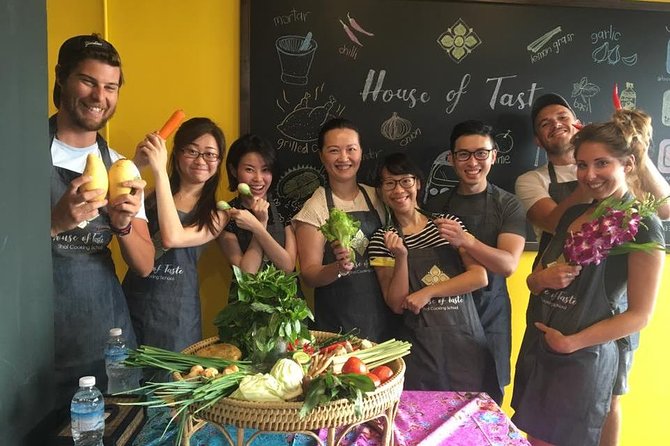
- Asok market ingredients (morning only): guided shopping for flavors you’ll cook right after
- Mango carving workshop (afternoon/evening): a fun Bangkok craft alongside the meal planning
- Curry paste from scratch: you learn the foundation, not just the final dish
- Four Thai dishes, built step-by-step: classic favorites chosen from a fixed daily menu
- Small group size (max 18): enough attention from the chef to keep things moving
- Diet swaps available: vegetarian option and ingredient substitutes for halal, kosher, and allergies
House of Taste in Bangkok: What This Class Feels Like in Real Time
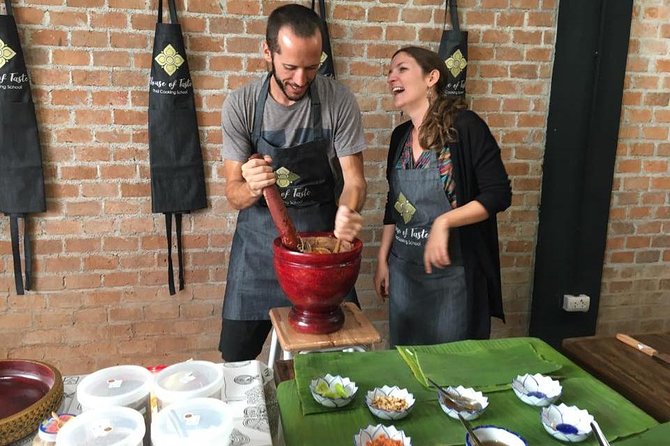
This is the kind of Thai cooking class that doesn’t rely on you watching from the back. At House of Taste Thai Cooking School, you get hands-on time at an air-conditioned setup, learn what ingredients do (not just what to add), and then sit down for a homemade lunch or dinner.
The class is designed for mixed skill levels. If you’re a total beginner, you’ll still have a path through each dish. If you’ve cooked before, you’ll likely appreciate the practical notes that explain why Thai flavors work the way they do. The vibe tends to be upbeat and guided, with instructors called out in past classes such as Jay, April, and May for being energetic and clear while still keeping the group feeling like a class, not a lecture.
It also matters that the facility is described as clean and organized, with space for prep and eating areas. That translates into less time waiting around and more time cooking, chopping, tasting, and asking questions.
You can also read our reviews of more shopping tours in Bangkok


Price and Value: Why $45.66 Often Makes Sense for Bangkok
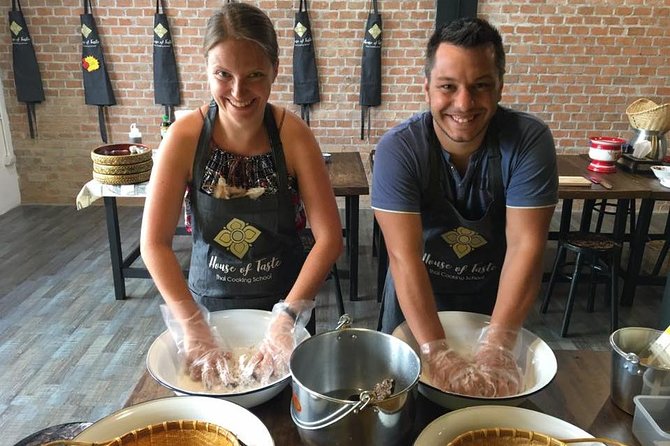
At about $45.66 per person and 3 hours 30 minutes of structured food time, the value here is mostly about two things: instruction and meals.
You’re not just getting a “demo.” You’re learning to make curry paste from scratch and you’ll cook four Thai dishes (from a fixed daily menu). Then you eat the fruits of your labor for lunch or dinner. Add in the drink water provided, the personal locker, and the free standard recipe, and you’re getting something that’s closer to a full activity plus a food experience than a quick snack lesson.
Could you find cheaper? Sure. But the payoff you’ll feel is this: Thai cooking is technique-driven. When you learn the foundation ingredients (spices, herbs, and curry paste basics) and practice the steps with a chef’s guidance, you’re far more likely to reproduce results at home without guessing.
Meet-Up and Getting There: Simple, With Minimal Headaches
You meet at 147/4 Soi Sukhumvit 4, in the Khlong Toei area of Bangkok (10110). The tour ends back at the meeting point.
There’s no hotel pickup or drop-off, but it’s listed as being near public transportation. Since there’s a small amount of walking involved, wear comfortable shoes. That might sound basic, but in Bangkok heat, comfortable footwear can make the whole experience feel smoother.
If you’re doing the morning class, your market time is part of the schedule. If you’re doing afternoon or evening, you’re still starting from the same meeting point, but the market component changes to mango carving.
Morning Only: Asok Market Shopping by Tuk-Tuk
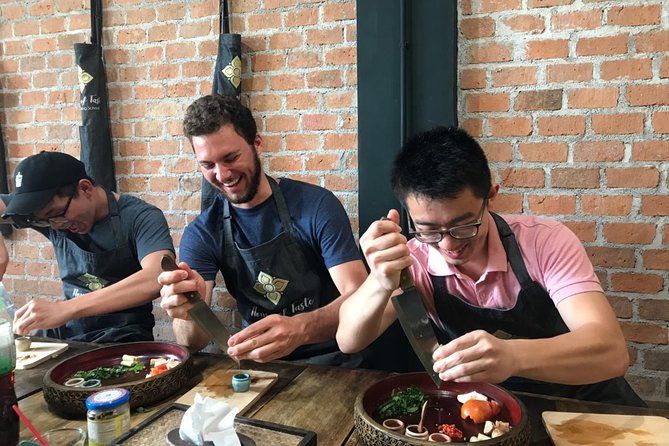
If you want the ingredient hunt, pick the morning class. That’s when you get a guided visit to Asok market and shop for items you’ll use later in class.
This is valuable because Thai cooking depends on ingredients that are hard to substitute blindly. The market tour is your chance to see herbs, vegetables, and spices up close and understand how they show up in real Thai kitchens. You’re also more likely to remember what you bought (and how to use it) when you see it first, then cook it soon after.
From a logistics standpoint, the experience includes tuk-tuk transport from the market. That keeps you from having to negotiate Bangkok traffic while still getting that classic, playful “this is how Bangkok moves” feel.
A small consideration: market time means you’ll be around lots of smells, people, and food stalls. If you’re sensitive to strong scents or prefer a calmer pace, know that this is part of the deal for the morning departure.
Afternoon and Evening: Mango Carving as a Bangkok Detour
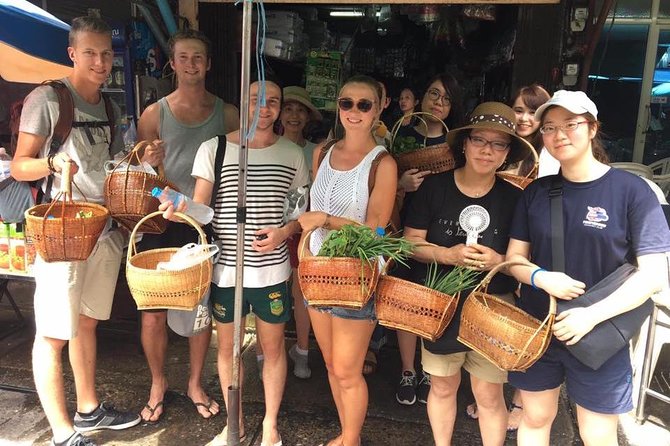
For the afternoon and evening classes, the market visit is replaced with a mango carving workshop.
This is one of those add-ons that makes the experience more memorable than a standard cooking class. Mango carving isn’t just decoration. It’s about hands, patience, and a way Thai meals get presented with flair. It also helps break up the lesson schedule so you’re not stuck doing only prep and cooking for the entire 3.5 hours.
If you’re torn between market shopping and mango carving, choose based on what you’ll enjoy most. The market option helps you understand ingredients. Mango carving gives you a fun skill you can show off at home when you plate desserts.
A few more Bangkok tours and experiences worth a look





The Cooking Setup: Air-Conditioned, Hands-On, Structured
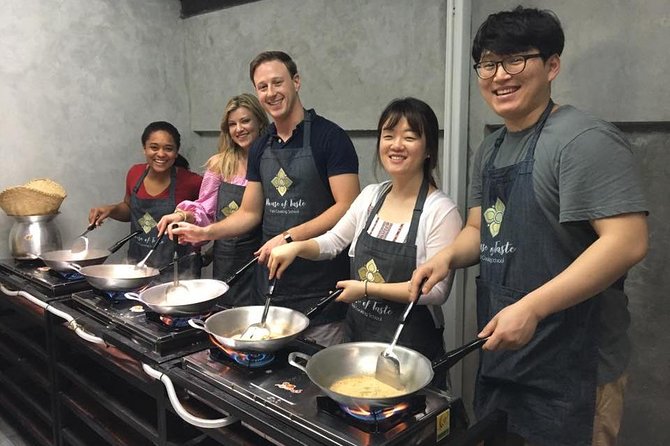
The cooking class takes place in an air-conditioned environment. That’s not a small detail in Bangkok. When you’re learning knife work, paste making, and timing for stir-fry and curry, comfort makes it easier to focus.
You’ll be introduced to Thai exotic ingredients, including vegetables, spices, and herbs. That introduction matters because Thai flavors are built in layers. Knowing what each ingredient contributes makes it easier to adjust later if you can’t find the exact item back home.
You’ll also have access to a personal locker and hot and cold drinking water, which helps you stay comfortable while cooking and moving between stations.
Curry Paste From Scratch: The Skill That Changes How You Cook
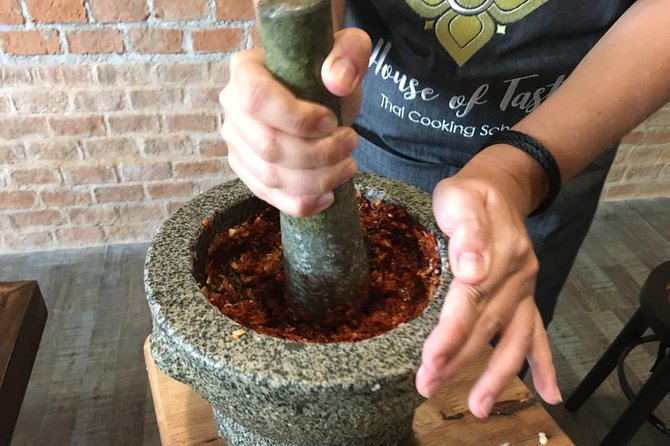
The headline ingredient skill is making curry paste from scratch. This is the part that gives the class its “real cooking” credibility.
If you’ve ever tried making curry with paste from a jar, you’ve probably noticed it can taste fine but not quite match Thai curry depth. Making paste from scratch forces you to pay attention to aroma, texture, and how spices and herbs combine into a base that drives the final flavor.
Even if you don’t remember every step perfectly, you’ll leave with a framework for what to look for: the paste’s smell, how it clumps, and how the flavors behave once it’s cooked into curry. That’s where “learning” turns into something you can actually use later.
Four Thai Dishes: The Set Menu You’ll Cook and Eat
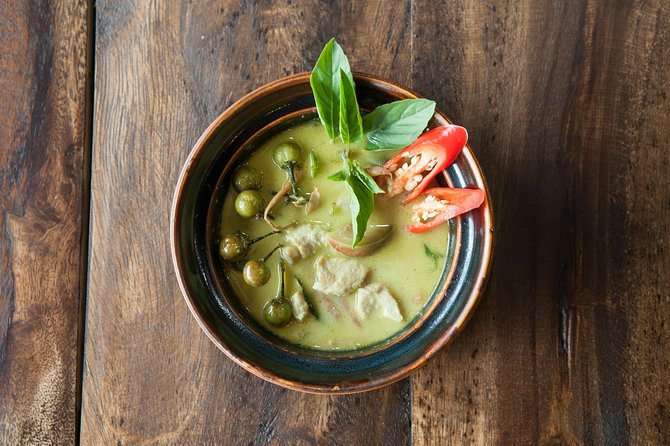
The school runs a daily fixed menu. From that menu, you’ll cook four favorite Thai dishes as part of the class flow, then feast on what you made.
Here’s what’s included on the menu list, so you know the direction the class goes:
Appetizers and Soups
You may work with items such as:
- Spicy Lemongrass Salad
- Spicy Shrimp Salad
- Green Papaya Salad
- Deep Fried Spring Rolls
- Tom Yum Goong (spicy and sour shrimp soup)
- Tom Kha Gai (spicy coconut chicken soup)
Main Course
- Pad Thai Goong (stir-fried rice noodle with shrimp)
Curry Options (served with rice)
You may make one of these classic curries with chicken:
- Red Curry
- Green Curry
- Massaman Curry
- Panang Curry
Dessert
- Mango Sticky Rice
One practical tip if you want to get the most out of the class: plan your day so you’re hungry. Several past participants specifically warned not to eat too much beforehand, since you end up with multiple dishes plus dessert.
Also, if you have dietary needs, you’re not locked out. The class states that substitute ingredients can be provided for vegetarian, halal, kosher, and allergy requirements. You should advise your needs at booking so the school can plan substitutions correctly.
Instructors Like Jay, April, and May: What Good Teaching Looks Like Here
The most consistent praise across the experience centers on the chef’s teaching style.
People highlight that instructors are:
- Friendly and informative
- Fun without letting the class feel chaotic
- Step-by-step and supportive for beginners
- Able to explain ingredients and techniques clearly
Names like Jay, April, and May show up in accounts of great instruction. If you’re booking because you want to ask questions and understand what you’re doing, this is the right kind of class. Cooking feels easier when the chef can explain not just what to do, but why Thai flavors come together the way they do.
Meals Included: Lunch or Dinner That Actually Feeds You
After cooking, you sit down to a delicious homemade lunch or dinner. That’s included in the experience, along with meals as per the itinerary (breakfast is not listed; meals are the main point here).
You also get water, and you can purchase alcoholic drinks if you want them, but alcohol isn’t included.
This matters for value. Many cooking classes teach you skills but then give you a small tasting portion. Here, you’re set up to enjoy a real meal, which turns the session into a full afternoon or evening plan, not just a lesson.
Group Size and Pace: Enough People for Fun, Not Chaos
The maximum group size is 18 travelers. That’s a sweet spot. Big enough to feel social, small enough that the chef can keep an eye on multiple stations.
Also, the class includes equipment support like a runner setting tables in at least one account, which helps the flow between cooking and eating feel smooth. You’re spending your time cooking, not hunting for plates or waiting on the group.
Who Should Book This Class (and Who Might Think Twice)
This is a great fit if you:
- Want a hands-on cooking lesson with a professional chef
- Prefer learning via doing rather than watching
- Like classic Thai dishes and curry flavors
- Want a recipe you can take home
- Travel as a couple or with teens and want a structured activity
It might be less ideal if you:
- Only want the market experience, since market visits are morning only
- Strongly dislike walking or standing for a short period (it’s minor, but it’s there)
- Are looking for a class that focuses on a single niche dish rather than making several classics
Should You Book House of Taste Thai Cooking School in Bangkok?
I think you should book this if you want a practical Bangkok food experience that turns into real at-home cooking. The mix of hands-on curry paste making, a set menu of Thai favorites, and a meal you actually get to eat makes it feel like more than a tour stop.
Choose your departure based on the part you care about most:
- Pick morning for Asok market shopping and ingredient browsing.
- Pick afternoon/evening for the mango carving workshop if you’d rather do a Bangkok craft than market shopping.
If you’re unsure, here’s the quick rule I’d use: if curry paste is the goal, either time works. If the market is the goal, go morning.
FAQ
What does the tour cost?
The price is listed as $45.66 per person.
How long is the cooking class?
It runs for about 3 hours 30 minutes.
Is there a mobile ticket?
Yes. The tour includes a mobile ticket.
Is the market visit included?
Yes, but only for the morning class. The market tour is available in the morning, featuring a guided visit to Asok market.
Is there mango carving?
Yes. Mango carving is part of the afternoon and evening classes, and it replaces the market visit during those times.
What dishes will I learn to make?
The school uses a fixed daily menu that includes options such as Pad Thai Goong, classic curries like red/green/massaman/panang (with chicken), and Mango Sticky Rice for dessert, plus appetizer and soup choices from the menu list. You’ll cook four favorite Thai dishes from that menu.
Are vegetarian or religious-diet options available?
Vegetarian options are available, and the school can provide substitute ingredients for vegetarian, halal, kosher, and allergy requirements. You should advise your needs at booking.
What’s included in the price?
Included are taxes and fees, the meals (lunch or dinner depending on schedule), hot and cold drinking water, a personal locker, and a free standard recipe.
Does it include hotel pickup and drop-off?
No. Hotel pickup and drop-off are not included.
How does cancellation work?
This experience is listed as non-refundable and cannot be changed for any reason. It also requires good weather and a minimum number of travelers; if canceled due to poor weather or not meeting the minimum, you’ll be offered a different date or a full refund.