REVIEW · BANGKOK
Bangkok: Train Market & Floating Market with Boat Ride
Book on GetYourGuide →Operated by MONKEY TRAVEL ASIA by Ask Discovery · Bookable on GetYourGuide
Train tracks and canals in one long day. This tour strings together Maeklong Railway Market and a long-tail boat ride at Damnoen Saduak, so you see Thai commerce from two angles in one organized route. I love how the best guides (like Jenny, Sam, Jeed, and Tammy) help you understand what you are actually looking at and how to avoid the most common money-wasters. I also love the structure: hotel-area pickup options, time to walk and shop, plus help timing the big moments. The main drawback is the long day and the fact that floating-market shopping can feel more targeted to visitors than to locals.
Bangkok traffic can be a beast, so you’ll want to treat this as a full-day outing, not a quick add-on. One more thing to keep in mind: this is not a low-walk day, and it’s not suitable for mobility impairments, so plan your pace accordingly.
In This Review
- Key highlights you will actually feel
- Why Damnoen Saduak and Maeklong Belong in the Same Day
- Bangkok Pickup, Coach Time, and the Realistic Pace of a 7–8 Hour Day
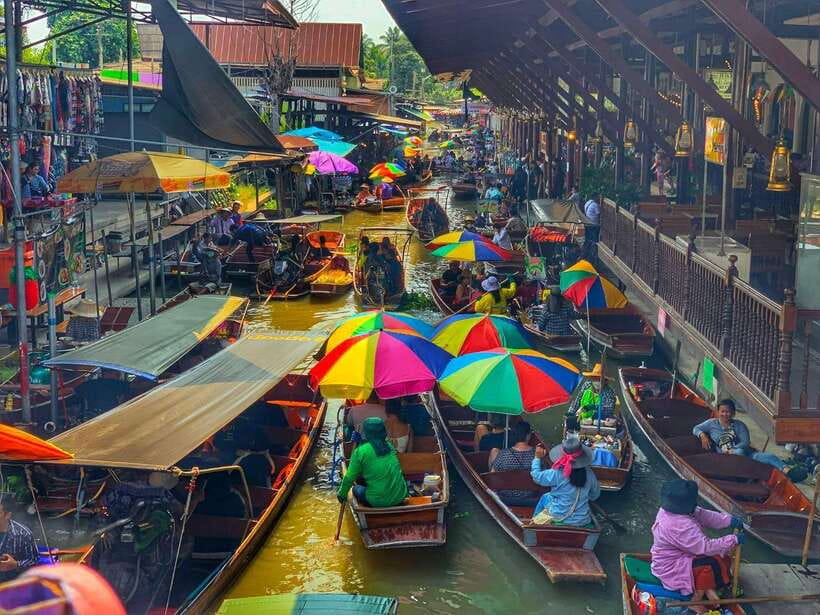
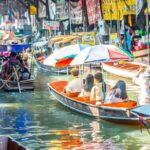
- Damnoen Saduak Floating Market: Canals, Boat Sellers, and What You’ll See on the Water
- Long-Tail Boat Ride in the Canals: Short Duration, Big Views
- Maeklong Railway Market: The Timing Moment That Makes This Tour Worth It
- Shopping and Food: Fun Finds With a Tourist-Price Reality Check
- The Guide Factor: Why People Mention Specific Names
- What to Bring (and What You’ll Be Glad You Packed)
- Who This Tour Fits Best (and Who Should Think Twice)
- Should You Book This Bangkok Markets Tour?
- FAQ
- How long is the tour?
- What does the price include?
- Is food included?
- Do I get a boat ride on the canals?
- What language is the live guide, and how does audio work?
- Are earphones provided?
- What time should I arrive for pickup or departure?
- Is this tour suitable for mobility impairments?
Key highlights you will actually feel
- Train-track spectacle at Maeklong: watch vendors shift awnings fast as a commuter train arrives inches away
- 20-minute canal boat ride at Damnoen Saduak: short, sweet, and timed for good views
- Two iconic markets in one: you avoid the hassle of figuring out separate transport days
- Guide tips that save money and stress: advice on best spots and how not to overpay
- Photo-friendly, logistics-rich pacing: guide-led stopping points plus built-in free time
Why Damnoen Saduak and Maeklong Belong in the Same Day
This is a tour built for people who like moments that make you say, wait, is that real. Damnoen Saduak shows the canal-side version of daily life—boats gliding through narrow waterways, vendors selling from the same place people buy from. Maeklong Railway Market flips the script by putting the market directly on working train tracks.
What I like about pairing them is the contrast. You’re not just repeating one style of sightseeing twice. You get the slow-and-lively canal rhythm, then you get the high-speed, stop-and-go train moment. If you’re short on days in Bangkok, it’s also a practical way to tick off two famous stops without spending time arranging transport between them.
The other quiet benefit: the guide helps you move with purpose. These markets are easy to get distracted by—music, movement, boats, and signage everywhere. A good guide pushes you toward the right photo spots and the right time windows for the train.
You can also read our reviews of more boat tours in Bangkok
Bangkok Pickup, Coach Time, and the Realistic Pace of a 7–8 Hour Day
This runs about 7–8 hours, and most of that time is transport. You’ll travel out of Bangkok by coach (there’s a stretch of about 2 hours on the road before you reach the floating market area). Then the pace moves from market-to-market with short coach links (about 30 minutes between the floating market stop and the Railway Market, and roughly 1.5 hours back afterward).
Here’s the thing: Bangkok traffic is unpredictable, and the tour departs on time. That means you should plan to be early to pickup and early to the actual departure point. The tour also asks you to wait in the hotel lobby around 10 minutes before the scheduled pickup time (when pickup is available).
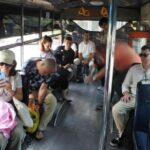
On the bus side, you’re not stuck in uncomfortable chaos. Reviews mention air-conditioned comfort and bathroom breaks at clean gas stations, which matters when you’re going to be walking in heat and sun later.
My practical advice: treat the coach ride as part of the experience. Bring sunscreen, water if you prefer (food and beverages aren’t included), and a plan for where you can store your essentials so you are not fumbling at the market entrances.
Damnoen Saduak Floating Market: Canals, Boat Sellers, and What You’ll See on the Water
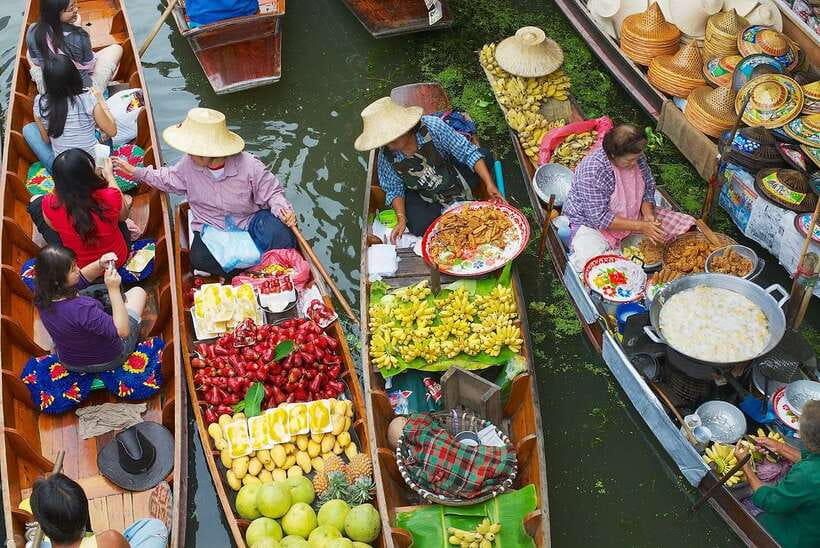
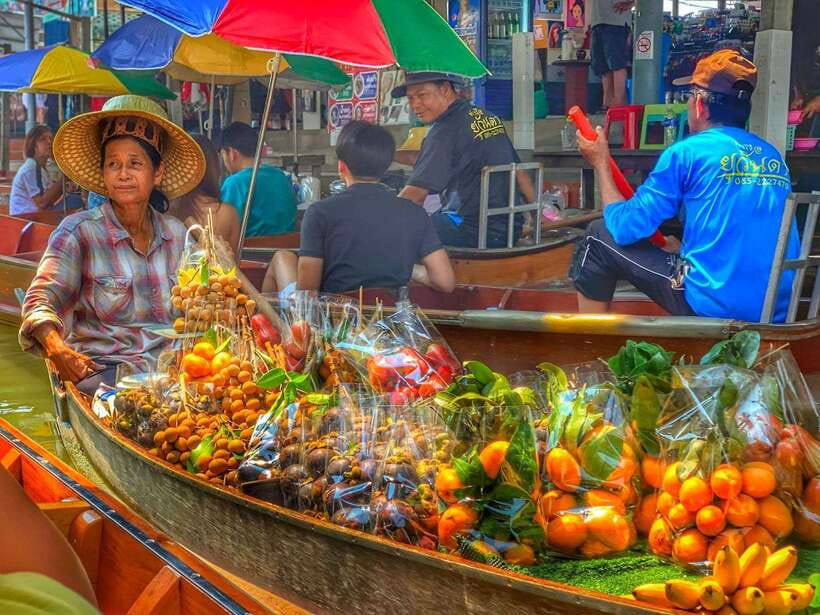
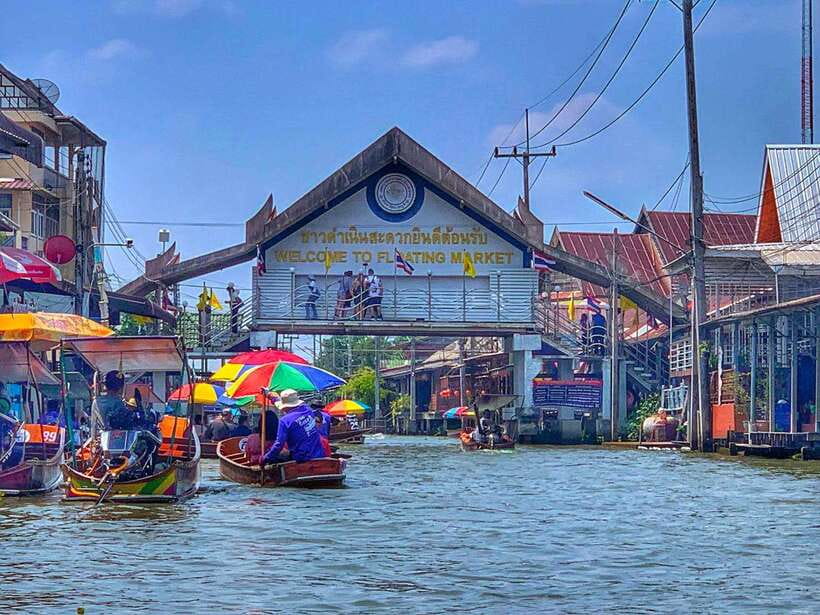
Damnoen Saduak is one of Thailand’s best-known floating markets, and the reason it stays on the radar is simple: it’s visually different. Instead of shopping from shopfronts, you’re shopping alongside moving water. You’ll get a photo stop, time to walk and browse, and time to shop and sightsee in the surrounding market area.
What makes Damnoen Saduak fun isn’t only the boats. It’s the whole motion of the place—small exchanges, quick conversations, and vendors ready to hand over bags or guide you toward something specific. You’ll see fresh goods, snacks, and a mix of practical items and souvenirs.
A quick reality check: the floating market is famous, and it has a tourist layer. You should expect pricing to be a bit more performative than you’d find at a neighborhood market. This is where the guide’s role becomes valuable. Many guides (including the ones named in real experiences, like Jenny and Sam) give advice on how to avoid paying too much and how to choose what’s worth it.
What to watch for as you stroll: the floating-market lanes can get crowded fast. If you want cleaner photos or a calmer vibe, take your time with early movement and be ready to step aside quickly when boats pass.
Long-Tail Boat Ride in the Canals: Short Duration, Big Views
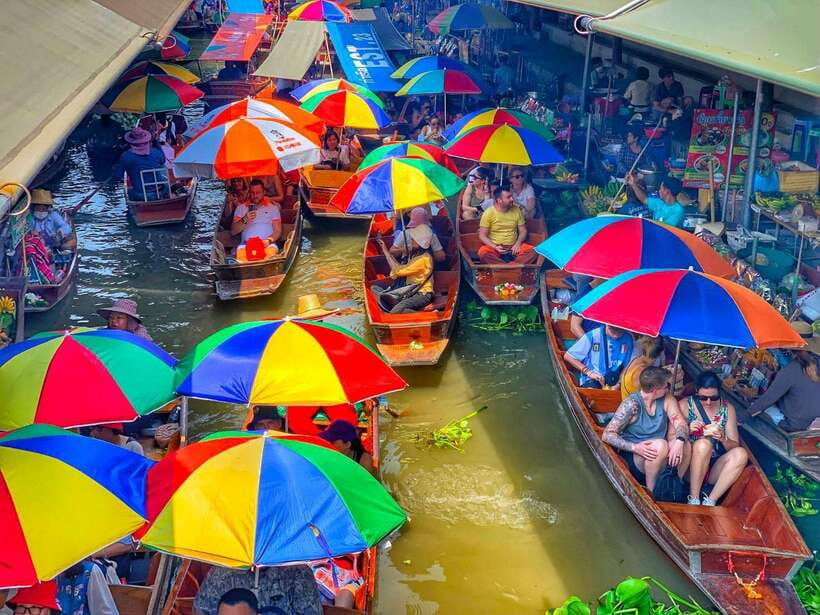
After your floating-market time on foot, you’ll board a traditional long-tail boat for about 20 minutes on the canals.
Twenty minutes sounds brief because it is brief. But it’s also long enough to give you the key experience: seeing how the market looks when you’re not standing on land. You get a more direct look at vendors trading goods from boat to boat and the way the canal lines funnel everything into narrow channels.
This part of the day is also where you want to be realistic about physical comfort. The activity info notes the boat ride is not suitable for guests over 100 kg or taller than 185 cm. If you need a separate boat due to size or comfort, there’s an extra fee (listed as 250 baht). If either limit might apply, confirm before you go so you aren’t dealing with last-minute changes.
My practical tip: wear comfortable shoes even though you’re going on a boat—because you’ll still walk for boarding, moving around the market area, and stepping off. Bring sunglasses and use sun protection. The canals can feel cooler than the street for a moment, then the sun comes right back when you’re in open stretches.
Maeklong Railway Market: The Timing Moment That Makes This Tour Worth It
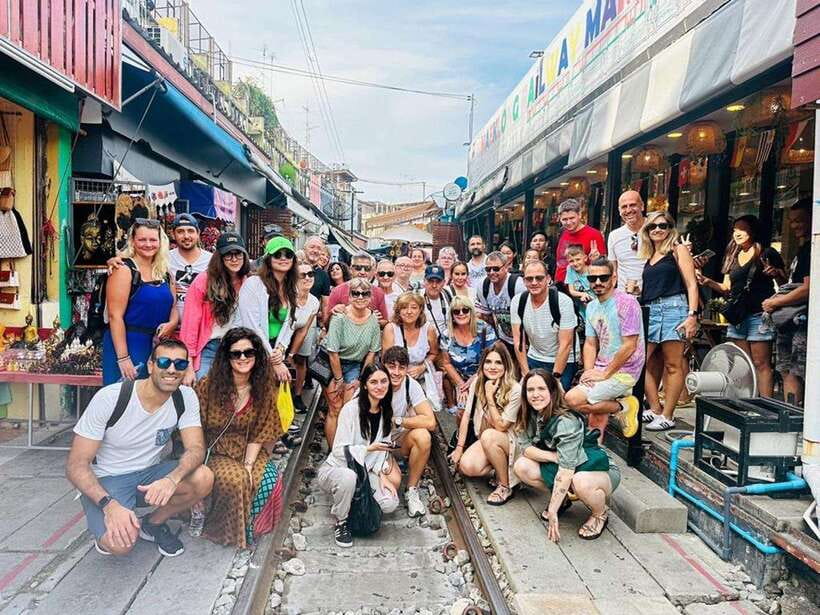
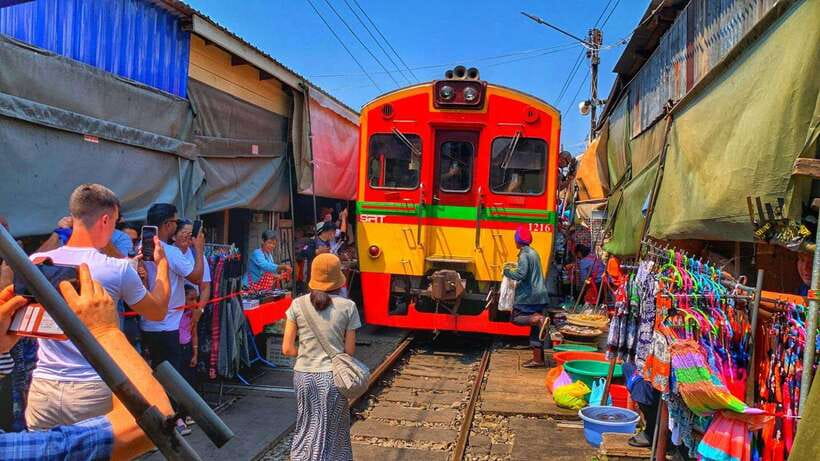
Then you head to Maeklong, the market built right next to active train lines. You’ll get another photo stop plus time to visit, walk, and shop.
This is the main event. The stalls are aligned close to the track, and when a train is approaching, vendors move fast—pulling awnings and shifting goods so the train can pass just inches away. It’s dramatic in real time. And yes, it’s exactly the kind of moment you’ll remember because it feels impossible until you see it. (the reviews there covers Phuket.)
The biggest factor for enjoying Maeklong is timing. The guide helps you position yourself for the train moment. In real experiences shared from this tour, guides like Jenny and Sam give specific advice on the best spots to watch the train come through. You’ll also likely get tips on when to look and how to avoid blocking other people’s views.
What to watch for: the market moves in waves. When you first arrive, walk the stalls, get your bearings, and don’t glue yourself to one spot too early. When you hear or see signs the train is coming, that’s when you want to lock in your position.
A small drawback: this market is famous, so it can get crowded. If you’re sensitive to crowds or you hate pushing for space, consider keeping your expectations focused on the train moment rather than on shopping depth.
You can also read our reviews of more shopping tours in Bangkok
Shopping and Food: Fun Finds With a Tourist-Price Reality Check
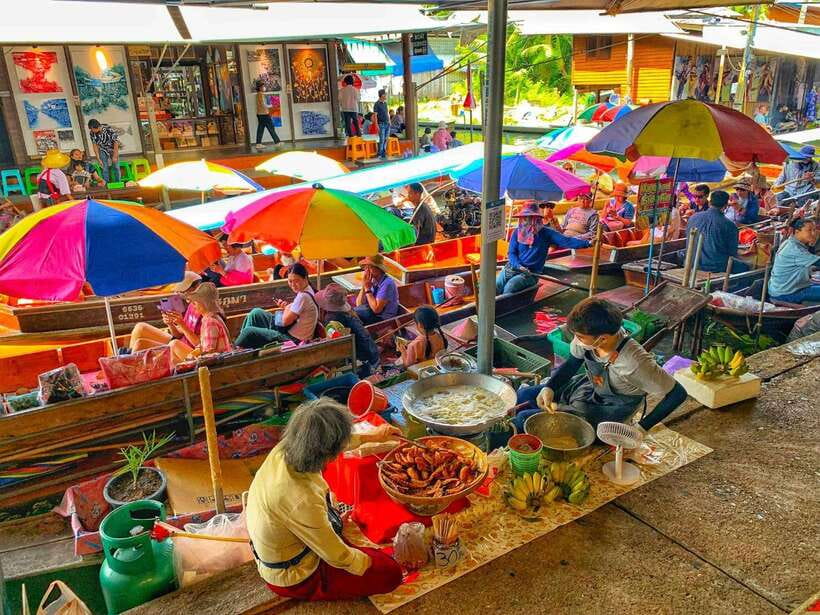
Both markets offer shopping, but the type of buying changes.
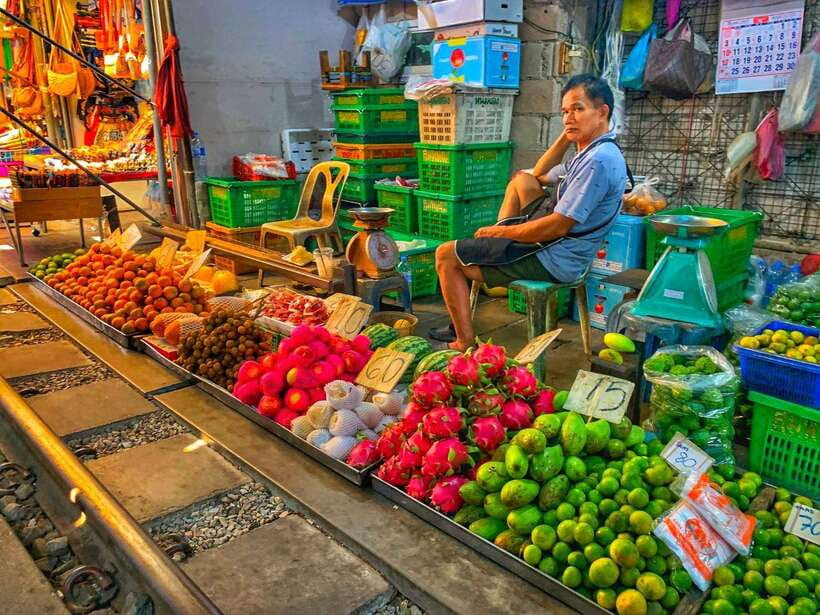
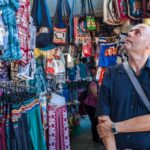
At the floating market, you’ll see lots of food-style items—snacks and goods that look ready to eat right away—plus souvenirs. The downside is that tourist markets can have tourist prices. The upside is that you’re not helpless; many guides share direct advice on bargaining and choosing what looks fair.
In Maeklong, shopping is more about market stalls: fruit, seafood, and Thai specialty items are common in this setting. You can still snack, but your best use of shopping time is to treat it like browsing: sample one or two things, then buy only what you genuinely want.
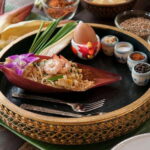
Food and beverages are not included on the tour, so you have to decide for yourself. If you want to try local treats, this is a good day to do it, but go in with the attitude of sampling, not stocking a suitcase.
Money-saving move: bring some cash if you prefer flexibility, because market payments can be inconsistent depending on what the vendor offers. (This isn’t guaranteed for every stall, but cash tends to be useful in markets like these.)
The Guide Factor: Why People Mention Specific Names
This tour is built around a guide. You’ll have a professional local guide, and the live tour guide languages are Spanish and English (as listed). Audio guides can also be used in many languages via QR code, but the tour data is clear: if you use the multi-language audio option, the live guide is still English-speaking, and you need your own earphones. Earphones are not included.
In actual experiences of this tour, people repeatedly praise guides by name—Jenny, Sam, Jeed, Tammy, and Mr “A.” What stands out isn’t just friendliness. It’s the practical help: taking photos for people, answering questions, warning you about common scams, and recommending the best views for the train moment.
That matters because these markets can be chaotic for first-timers. The guide helps you turn chaos into a plan.
One more detail I appreciate: guide-provided timing. You are not guessing when to walk, when to move back, or when to re-group. On a day this packed, that reduces stress a lot.
What to Bring (and What You’ll Be Glad You Packed)
The tour lists a clear packing set, and it’s exactly what you need for sun, walking, and boat movement:
- Comfortable shoes (you’ll be on your feet for market walking and re-positioning)
- Sunglasses and a sun hat
- Sunscreen
- Insect repellent
- Comfortable clothes
- Headphones (if you plan to use QR audio)
You’re also asked to bring an ID card or passport.
There are restrictions too:
- No luggage or large bags
- No alcohol and drugs
If you normally travel with a big backpack, plan to keep it light for this day. Smaller items are easier to manage at boat boarding points and in crowded market alleys.
Who This Tour Fits Best (and Who Should Think Twice)
This is ideal if:
- You want to see two Thailand market icons in one day
- You like photo opportunities that have a real, time-based payoff (the train moment)
- You prefer having transport and schedules handled so you can focus on enjoying the sights
- You would rather pay for organization than wrestle with separate day planning
It may be less ideal if:
- You dislike long coach rides (expect much of your day on the road)
- You hate crowded shopping areas
- You have mobility limits (the activity states it’s not suitable for people with mobility impairments)
- You need accessibility accommodations for the boat ride (there’s a stated weight/height limit, with an option for a separate boat for an extra fee)
Also, the tour notes that you should not book it if you have a departing flight the same day. That’s because of the traffic and timing realities.
Should You Book This Bangkok Markets Tour?
I think you should book this tour if your goal is simple: experience Damnoen Saduak and Maeklong without turning your Bangkok trip into a logistics project. For $25 per person, you’re getting transport from Bangkok, a guide, and the guided boat experience—not just sightseeing time.
If you’re the type who wants markets as purely local, low-markup daily life, keep your expectations grounded. Floating markets are famous for a reason, but they also come with tourist shopping energy. The upside is that you can still have a genuinely fun day by using the guide’s advice, sampling lightly, and focusing on the moments you can’t get elsewhere: the boat canal ride and the train passing through the market.
If you want a day trip that feels like Thailand with clear structure and memorable set-piece timing, this one is a strong bet.
FAQ
How long is the tour?
The duration is listed as 7–8 hours.
What does the price include?
The tour includes transportation from Bangkok, a professional local guide, hotel transfer depending on the option, and a traditional long-tail boat ride at Damnoen Saduak. An audio guide is also available.
Is food included?
No. Food and beverages are not included.
Do I get a boat ride on the canals?
Yes. You’ll take a traditional long-tail boat ride at Damnoen Saduak for about 20 minutes.
What language is the live guide, and how does audio work?
The live guide is Spanish or English. For other languages, you can use an optional audio guide via QR code, but you must bring your own earphones.
Are earphones provided?
No. Earphones are not included.
What time should I arrive for pickup or departure?
You should arrive at least 15 minutes before the scheduled departure. Late arrivals can’t join and can’t be refunded or rescheduled.
Is this tour suitable for mobility impairments?
No. It’s not suitable for people with mobility impairments.