REVIEW · CHIANG MAI
Unique Tour Unknown Chiang Mai
Book on Viator →Operated by Chiang Mai Bicycle · Bookable on Viator
Chiang Mai by bike feels real fast. This 3-hour ride is built to steer you away from the usual tourist loop and toward neighborhood alleys and local places most people never find on their own. You start centrally and move through a mix of temple sights and everyday city corners, with a small-group feel capped at 8.
What I like most is the mix of practical sightseeing and story-carrying stops, especially around Wat Muen San Temple and the canal area of Khlong Mae Kha. The ride pace also sounds genuinely manageable, with multiple guides praised for making the cycling easy, and for sharing useful background along the way.
One thing to watch: organization and timing can vary, including at least one instance of a late start and some confusion about the route. If you have tight plans later in the day, give yourself a little buffer.
In This Review
- Key highlights you should know before you go
- Why this Chiang Mai bike tour feels different from the usual loop
- Meeting point at Chiang Mai Bicycle: start here, then you’re off the main roads
- The 90-minute alley cruise: your quick course in how Chiang Mai moves
- Wat Muen San Temple: the silver temple stop that anchors the culture
- Khlong Mae Kha: the Japanese canal and a harder slice of local story
- Wat Ket Karam Museum: short, free, and surprisingly useful
- Warorot Market (Kad Luang): the big-name market stop you’ll actually enjoy
- How biking pace and comfort work on this ride
- Price and value: why $63 can make sense here
- Guide quality can make or break the day
- Who this tour suits best (and who should pass)
- The practical checklist I’d use before booking
- Should you book Unknown Chiang Mai?
- FAQ
- How long is the tour?
- Where does the tour start and end?
- What does the price include?
- Is the tour group small?
- Is there an electric bike option?
- Is there a mobile ticket?
Key highlights you should know before you go
- Small-group size (max 8 people) means less crowd stress and more room to ask questions.
- A long stretch of alley cruising (90 minutes) gives you real orientation to Chiang Mai beyond the main sights.
- Wat Muen San Temple (silver temple) is short, but it’s the most clearly “special” cultural stop on the route.
- Khlong Mae Kha canal area adds a social history angle through a place often described as having been tied to older, rougher conditions.
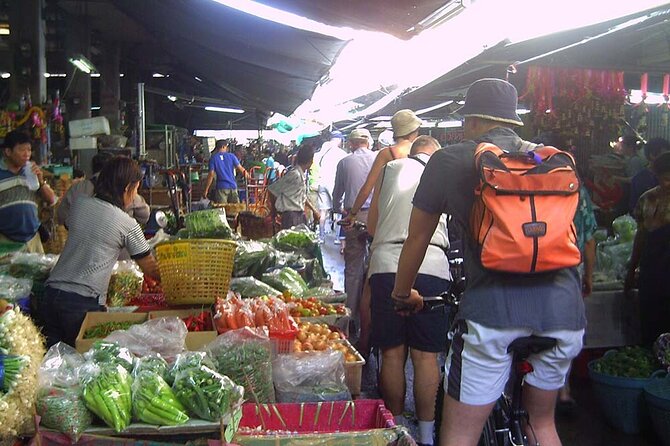
- Warorot Market (Kad Luang) is the big name stop, so you still get a major local shopping vibe before you head back.
- Optional e-bikes are available for a THB 300 surcharge if you want to ease the effort.
Why this Chiang Mai bike tour feels different from the usual loop
A lot of Chiang Mai tours do the same hit list: big temples, big viewpoints, and big crowds. This one is designed with a different goal. Instead of treating Chiang Mai like a museum of famous landmarks, it leans into how the city looks and works at street level.
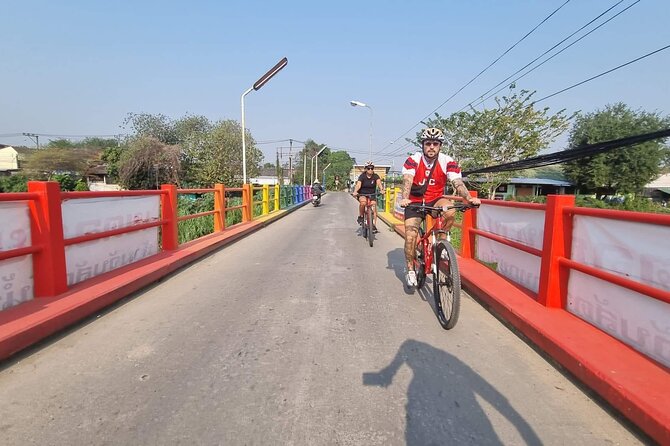
You’ll spend meaningful time moving through narrow lanes and local neighborhoods, not just getting dropped at a photo spot. That matters because Chiang Mai’s personality shows up in the small details: the route your guide chooses, the way streets bend, and how people move through markets and temple areas in daily life.
Another plus is the structure. You get several short stops (temple, museum, canal area, and a major market) rather than one long, slow slog. That usually makes tours like this easier to handle, especially if you’re trying to avoid a full-day commitment.
You can also read our reviews of more tours and experiences in Chiang Mai.



Meeting point at Chiang Mai Bicycle: start here, then you’re off the main roads
The tour starts at Chiang Mai Bicycle at 66, 2 Loi Kroh Rd, Tambon Chang Moi, Amphoe Mueang Chiang Mai, Chang Wat Chiang Mai 50100. It also ends back at the same meeting point.
That end-at-the-start setup is more than convenience. It means you don’t have to think about a long transfer at the end of your morning (or early afternoon). It also keeps the ride logic simple: you start in the central zone, then you branch out and return.
You’ll also get a mobile ticket, which is a small thing but helpful in a city where paper tickets can easily become… paper clutter.
If you’re planning a second activity the same day, schedule it with breathing room. One account described a delayed start, and you’ll feel better if your later plans don’t depend on the clock.
The 90-minute alley cruise: your quick course in how Chiang Mai moves
The first big block is a 1 hour 30 minutes cruise through the small alleys Chiang Mai is known for, with admission listed as free for this part.
This is the heart of the “unknown Chiang Mai” idea. A long alley stretch does two jobs at once:
1) You get oriented to the city layout quickly, so later visits feel more intuitive.
2) You experience everyday movement rather than just arriving at a single attraction.
This also tends to be where the tour starts feeling more like a local ride and less like a checklist. You’re not staring at a bus window schedule—you’re rolling through the neighborhoods at human speed.
What to consider: staying on a bike through lane networks can be mentally tiring even when the ride is easy. If you tend to get stressed in traffic, take a moment before the ride to settle your pace and relax your grip. A calm rhythm makes everything easier.
Wat Muen San Temple: the silver temple stop that anchors the culture
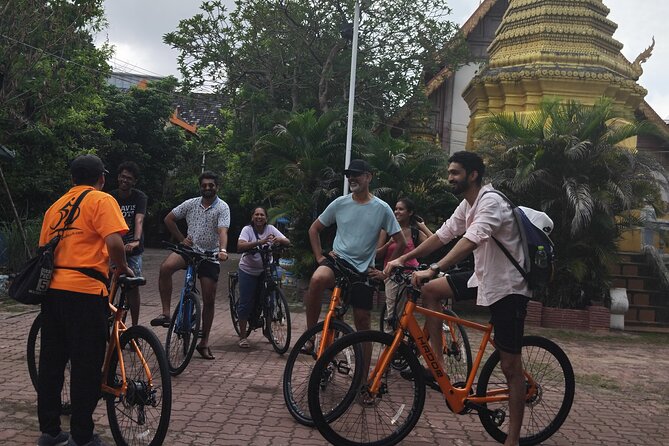
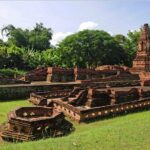
Next up is Wat Muen San Temple, listed for 15 minutes. This is described as an “unknown but very beautiful silver tenple,” and the admission ticket is included here.
At only 15 minutes, this isn’t a slow, contemplative temple visit. Instead, it’s a concentrated cultural stop. That can be a good thing if you’re doing multiple neighborhoods in one outing—short stops keep the day from feeling heavy.
Why I think this works: the tour doesn’t just send you to temples that everyone already knows. This one gives you a different visual and a different temple feel, which is exactly what you want if you’re trying to see Chiang Mai beyond the obvious.
If you’re the type who likes details, bring a bit of patience. Even when time is short, you’ll get enough to notice the temple character and then move on while your legs are still fresh.
Khlong Mae Kha: the Japanese canal and a harder slice of local story
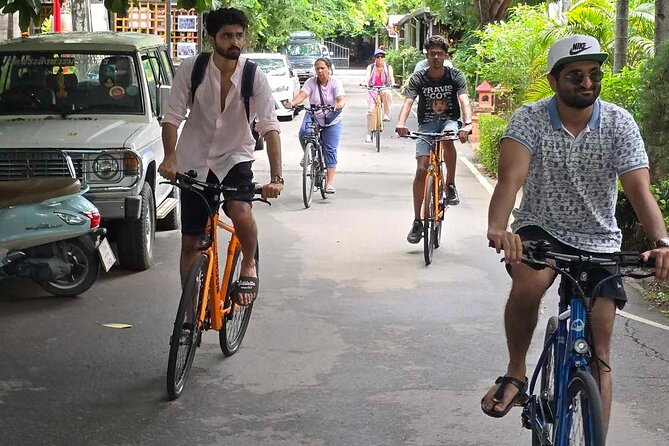
The route then heads to Khlong Mae Kha, also listed for 15 minutes. It’s described as the Japanese canal, formerly a slum of Chiang Mai, and the stop is free.
This isn’t a “stand here for 20 minutes” viewpoint moment. It’s more of a passage with context. The value here is that you’re not only collecting pretty scenes—you’re seeing how parts of a city developed, including areas that used to be rougher.
Even if you don’t know the background ahead of time, this kind of stop can change how you read what you see. It gives you a sense that Chiang Mai’s story includes more than temples and markets—it includes neighborhoods shaped by shifting livelihoods.
Possible drawback: if your ideal tour is only food and pretty photos, a place like this might feel less satisfying. It can still be meaningful, but go in expecting a social-history angle rather than just a scenic one.




Wat Ket Karam Museum: short, free, and surprisingly useful
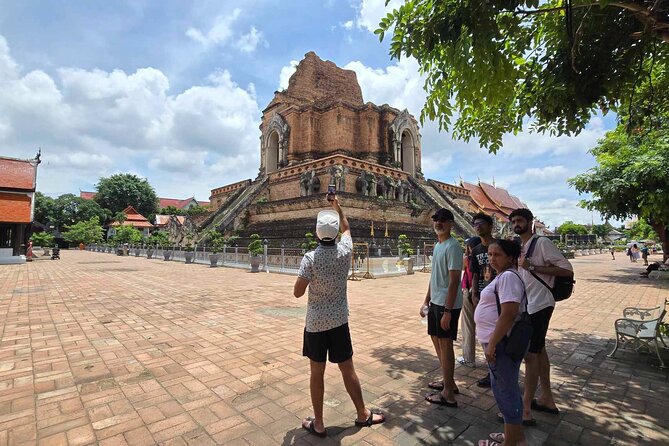
Another 15-minute stop brings you to Wat Ket Karam Museum, also listed as free.
A museum stop on a bike tour sounds like a mismatch—until you realize the pacing. Fifteen minutes is long enough to get a sense of what’s inside, but short enough that you don’t lose the mobility theme of the day.
This is the kind of stop that works for practical learners. If you like understanding what you’re looking at, even a compact museum stop can give you a framework for the rest of the tour, especially when paired with temple and canal context.
What to consider: if you prefer to spend time reading and looking carefully, you may want to follow up with your own extra visit later. The bike tour version is more of an introduction than a deep study.
Warorot Market (Kad Luang): the big-name market stop you’ll actually enjoy
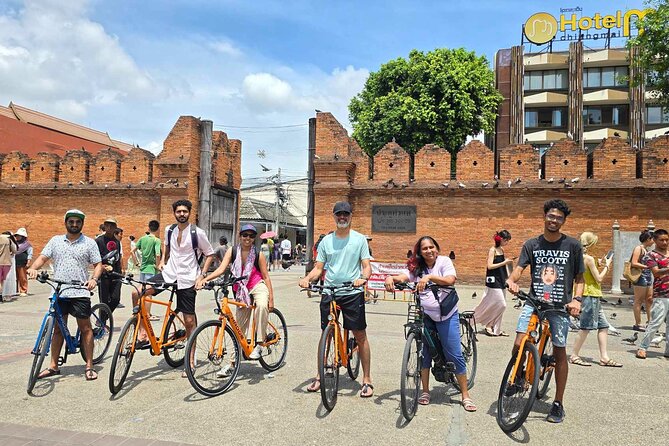
The final listed sightseeing stop is Warorot Market (Kad Luang) for 15 minutes, also free.
Warorot is one of the better-known markets in Chiang Mai, so this is where you get the best of both worlds:
- earlier local-area atmosphere, then
- a major market you can recognize and explore further afterward if you want.
Fifteen minutes is brief. Use it strategically. Look first, then choose. If you’re buying snacks or small items, that short window is enough to get a feel for prices and the range of things sold. If you’re there mainly for photos, focus on the entrances and main stalls where activity is easiest to understand quickly.
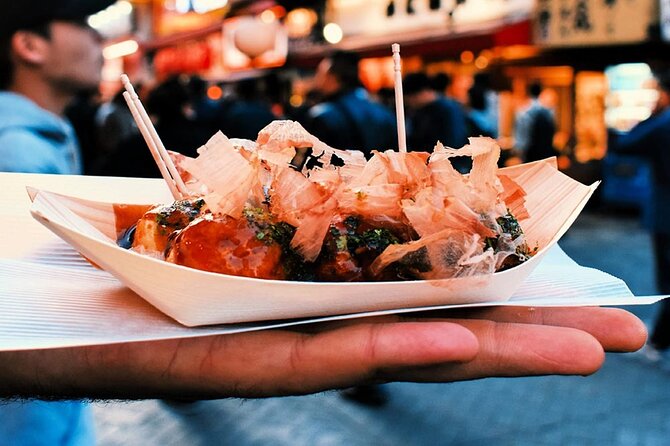
One caution from the experience feedback: a low score mentioned that the food portion felt limited and didn’t match what they expected as an authentic food experience. If eating is your top priority, treat Warorot as a place to browse and maybe grab a snack, not a guaranteed full food tour.
How biking pace and comfort work on this ride
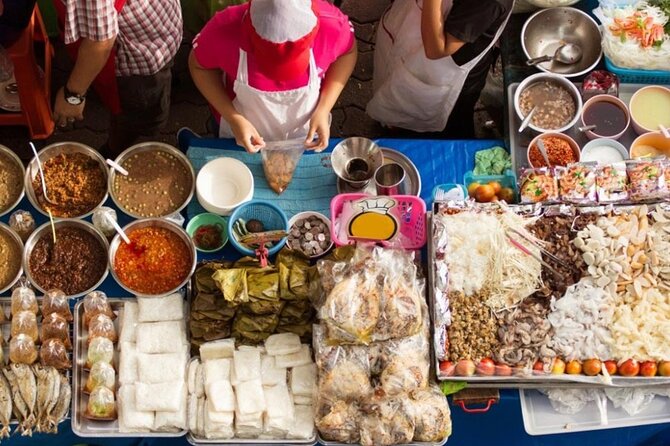
The tour is designed for most participants, and the group size is small. In the feedback, the cycling is repeatedly described as not too difficult and easy, so the expectation is a relaxed city ride rather than a training session.
Still, you should plan realistically. Even an easy bike tour can be tiring if you’re not used to riding. The best way to get value out of a short, multi-stop tour is to avoid turning it into a mental struggle.
If you want to make the ride even easier, there’s an option for electric bicycles. The surcharge is THB 300, and you need to request it by noting it on the booking form under additional notes.
Who would benefit from the e-bike option:
- you’re not confident on a normal bike,
- you want to save energy for walking in markets and temples,
- you’d rather keep the ride comfortable than competitive.
Price and value: why $63 can make sense here
At $63 for about 3 hours, this tour is priced like a practical local-guided experience rather than a premium, all-day excursion.
Here’s why the value may feel good:
- Most stops are listed as free admission (including the alley cruise, canal area, museum, and market).
- Only Wat Muen San Temple is specifically noted as admission included.
- You’re paying for the guide, route planning, and the time-efficient sequencing of multiple local areas.
Small-group pricing also matters. With a maximum of 8 people, you’re less likely to feel like you’re being herded.
My main value check: if you want a ride that focuses on route and local atmosphere, this price is easier to justify. If you only care about famous temples or a long food program, you might feel like you’re paying for a broader cultural sampler rather than a deep single-topic experience.
Guide quality can make or break the day
This tour’s success heavily depends on the guide’s ability to explain what you’re seeing while you move.
A named guide, Win, received strong praise for being wonderful, friendly, and highly knowledgeable in the feedback. Another note highlighted that the guide spoke good English and made the historical and cultural background clearer.
So here’s the practical takeaway: bring questions. If you ask about what you’re looking at—temples, canal history, market life—you’ll likely get more out of the short stop times.
And one balancing note: I also saw a complaint about poor organization and route confusion, including a late start and conflicting plans. That doesn’t mean it happens every time, but it’s enough to justify a simple strategy: don’t schedule a must-do appointment immediately after the tour ends.
Who this tour suits best (and who should pass)
This is a good fit if you:
- want to see parts of Chiang Mai off the usual route,
- like biking at an easy pace through real neighborhoods,
- enjoy short stops with explanations rather than long museum marathons,
- value guides who connect sights to local life and context.
You might want to skip or choose something else if you:
- need a very predictable start time for a tight afternoon plan,
- expect a full-scale food experience with lots of tastings,
- dislike any stop that includes heavier social-history context (like the canal area).
The practical checklist I’d use before booking
You’re on a bike in city lanes, so keep your prep simple and realistic.
- Wear breathable clothes and shoes that handle light walking inside temple and market areas.
- Bring a small water bottle if you’re sensitive to heat or if you plan to continue exploring after.
- If you’re doing the e-bike option, request it clearly during booking so it’s ready for you.
- Plan your afternoon with a buffer, just in case the tour runs later than expected.
Should you book Unknown Chiang Mai?
If your goal is to get a guided sense of Chiang Mai that feels more like the city than like a theme park, I’d say this tour is worth serious consideration. The pricing makes it accessible, the small-group size helps, and the route design puts you in front of places most visitors skip.
Book it if you want:
- an easy bike ride,
- meaningful short temple and cultural stops,
- a mix of local alleys and a major market for context.
Skip it if your priorities are strict timing, guaranteed lots of food tastings, or a slow, deep dive into one subject.
My final take: this is the kind of morning outing that helps you understand Chiang Mai faster, so your later self-guided exploring feels smarter.
FAQ
How long is the tour?
The tour is listed as about 3 hours total.
Where does the tour start and end?
It starts at Chiang Mai Bicycle at 66, 2 Loi Kroh Rd, and it ends back at the same meeting point.
What does the price include?
The tour price is $63, with at least one temple admission (Wat Muen San Temple) specifically marked as included. Other listed stops are marked free.
Is the tour group small?
Yes. The maximum group size is 8 travelers.
Is there an electric bike option?
Yes. Electric bicycles are available for a THB 300 surcharge, and you should request it in the booking notes.
Is there a mobile ticket?
Yes, this experience uses a mobile ticket.