REVIEW · CHIANG MAI
Sunlight or Moonlight: Chiang Mai City Tuk Tuk Tour
Book on Viator →Operated by Sightseeing Chiang Mai · Bookable on Viator
Night tuk-tuks in Chiang Mai feel like cinema.
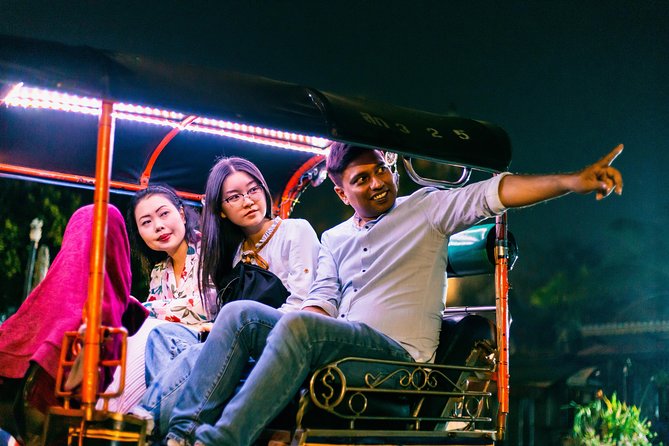
This Chiang Mai city tuk-tuk night tour is built for seeing more after dark without fighting traffic on your own, with a small-group cap that keeps the ride personal. I like the way the illuminated temples and street scenes set you up for great photos, especially when the city shifts from daytime chaos to a cooler, calmer rhythm.
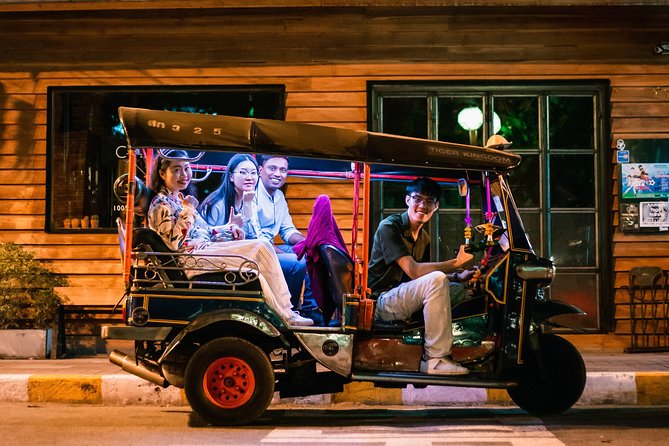
Another thing I really like is the tight pairing of landmarks and local life: you get major temple architecture and then you land at Warorot Market and the Flower Market while the streets are still active. An English-speaking guide helps make sense of what you’re seeing, so the stops don’t feel random.
One consideration: because the itinerary includes temples, you’ll want to plan for modest clothing, and the schedule is efficient, not slow. If you want long, unhurried time inside every site, this is still great, but it won’t feel like that kind of tour.
In This Review
- Key things to know before you hop in
- Why a Chiang Mai City Tuk Tuk Tour works so well after dark
- Tour timing: 3 hours, two departures, and how to choose
- Meeting point and pickup: where you’ll start, where you’ll end
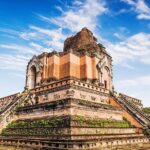
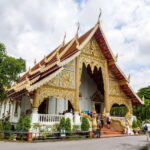
- Stop 1: Wat Chedi Luang Varavihara and the story behind the walls
- Stop 2: Wat Sri Suphan (the Silver Temple) and what to watch for
- Stop 3: Wat Lok Moli for Lanna-style architecture and quieter context
- Stops 4 and 5: Warorot Market and the Flower Market at night
- The guide and driver: what matters most on a 3-hour loop
- Snacks, water, and what you should bring
- Price and value: is $89.51 per person fair?
- Who should book this tuk-tuk night tour (and who might skip it)
- Should you book the Chiang Mai City Tuk Tuk Tour?
- FAQ
- What sights are included in the Chiang Mai City Tuk Tuk Tour?
- How long is the tour, and what’s the group size limit?
- What time does the tour run?
- Is there hotel pickup?
- Are meals included?
- What if the weather is bad or I need to cancel?
Key things to know before you hop in
- Three hours, one compact route covering temples plus two markets
- Small group size with a limit of up to 10 people (and the tour is described as only six others in the group)
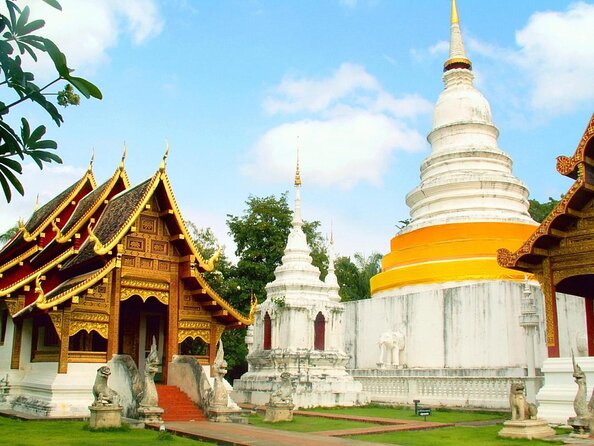
- Wat Chedi Luang + Silver Temple as the core temple pair
- Night lighting and photo opportunities at multiple stops as the city turns on its lights
- Snacks and bottled water included, but no full meal
- Temple dress rules apply, so plan clothes that cover appropriately
Why a Chiang Mai City Tuk Tuk Tour works so well after dark
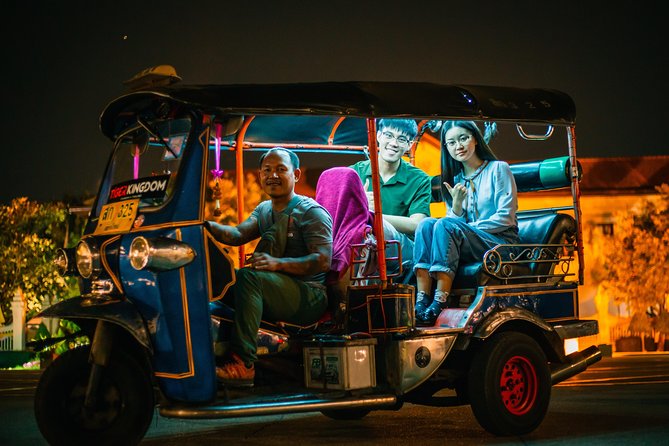
Chiang Mai after sunset has a different tempo. Daytime is for heat, errands, and wide streets; after dark it’s for glowing temples, food smells, and the kind of street energy you can’t really re-create from photos alone.
That’s the basic magic of this tour format. You’re on a tuk-tuk, so you move quickly between key points and you’re not stuck figuring out routes at night. The tour also keeps things time-efficient, so you can hit several “must-see” stops in a single outing instead of picking one thing and calling it a day.
You’ll also benefit from the practical side of tuk-tuks: you get repeated chances to pause, look up, and photograph lit-up architecture without trekking long distances on foot. If you care about getting a handful of good shots rather than one perfect landmark, this kind of night loop is a smart match.
The tone is cultural too, not just sightseeing. The plan centers on temples you can still appreciate at night, then adds two markets where daily Chiang Mai life continues beyond business hours.
You can also read our reviews of more city tours in Chiang Mai
Tour timing: 3 hours, two departures, and how to choose
The tour runs about 3 hours and has two departure times: 8 AM and 3 PM. Since the experience is described as an after-dark way to see the Rose of the North, the 3 PM departure is the one you’ll want if you’re specifically chasing the night-light feeling and evening street atmosphere.
If you’re deciding between morning versus late afternoon, think about what you want most:
- Morning can be easier if you dislike cooler evening temperatures.
- The late-afternoon option is the better fit for the illuminated temple look and market vibe that makes this tour feel special.
Meeting point and pickup: where you’ll start, where you’ll end
This tour uses a clear meet-up point and returns you to it. You start at Duangtawan Hotel Chiang Mai, listed at 132 Loi Kroh Rd, Tambon Chang Khlan, Amphoe Mueang Chiang Mai, Chang Wat Chiang Mai 50100.
There’s also hotel pick-up within a 2 km radius of the Sun Leisure World Office. In real life, that usually means you’ll want to confirm whether your hotel is inside that pickup radius so you don’t end up doing an accidental taxi-hop before the tuk-tuk ride.
Either way, the plan is straightforward: you meet, you roll, and you end back at the same meeting point—so you’re not left hunting for a way home after dark.
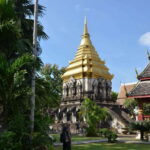
Stop 1: Wat Chedi Luang Varavihara and the story behind the walls
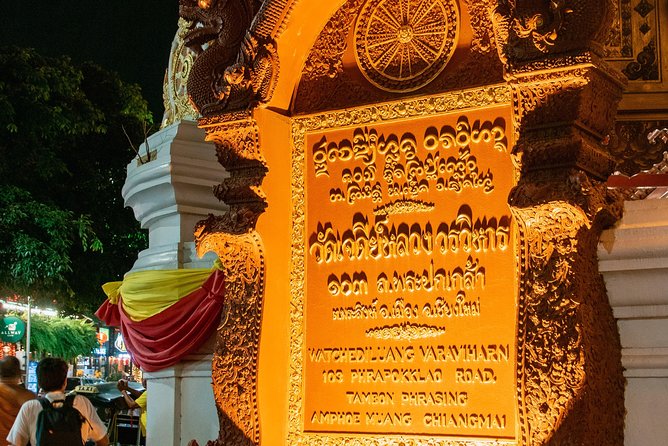
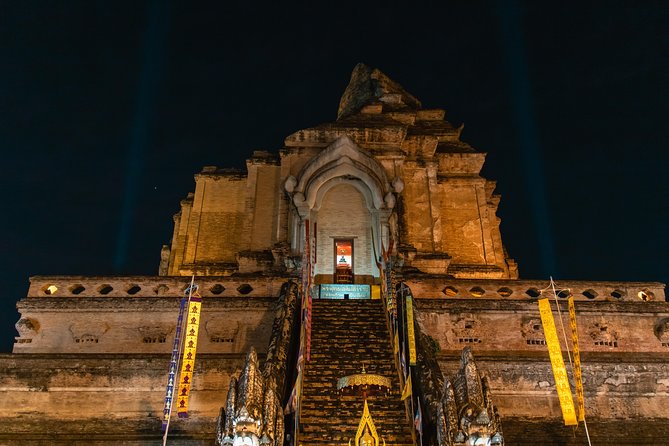
Your first major stop is Wat Chedi Luang Varavihara. This is one of Chiang Mai’s defining temple landmarks, and the itinerary includes the entry fee, so you’re not scrambling at the gate wondering what’s included.
What makes this stop work especially well on a night tour is scale. The pagoda complex is dramatic even in daylight, and once it’s lit, you can often take better “upward angles” and catch stronger contrast in your photos. The temple’s big historical link—once associated with the revered Emerald Buddha—is part of what the guide is there to explain.
Practical notes for you:
- Expect to spend enough time to look, photograph, and walk around the grounds, not just pass by.
- Wear shoes you can move in. Even when you’re on a tuk-tuk, temple areas can involve short walks over uneven surfaces.
If you’re trying to understand Chiang Mai’s identity in a single glance, this is a good anchor stop.
Stop 2: Wat Sri Suphan (the Silver Temple) and what to watch for
Next up is Wat Sri Suphan, often known as the Silver Temple. This part of the itinerary is designed for visual detail: the temple is famous for intricate handcrafted silver work and a calmer atmosphere compared with the market stops later.
On a night tour, those silver tones can look different than you expect. Even if you’re not a “temple details” person, you’ll likely enjoy seeing the craftsmanship because the lighting helps make texture more obvious. The guide’s job here is useful: they can point out what you’re looking at so it doesn’t turn into a quick photo-and-go routine.
Timing-wise, this stop is a key shift. You go from major temple presence at Wat Chedi Luang to a more specific, detail-focused experience at Wat Sri Suphan. That makes the whole route feel like a thoughtful progression rather than a checklist.
Dress and behavior matter here like anywhere in Thai temple space: keep your clothing modest and follow any posted rules from staff.



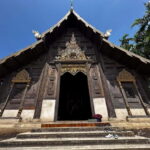
Stop 3: Wat Lok Moli for Lanna-style architecture and quieter context
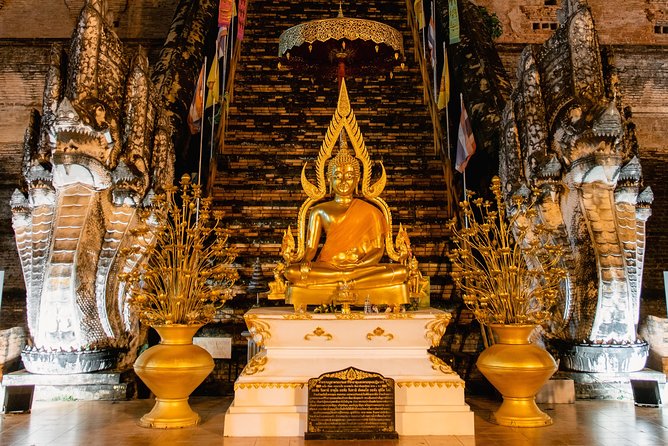
After the Silver Temple, the itinerary continues to Wat Lok Moli. This stop is highlighted for Lanna-style architecture and its cultural roots.
On paper, it looks like the third temple might feel repetitive. In practice, it usually doesn’t—because the tour is spacing out different “types” of temple experience:
- Wat Chedi Luang gives you size and historical weight.
- Wat Sri Suphan gives you craftsmanship and serene temple vibes.
- Wat Lok Moli leans into architecture style and a different visual feel.
That’s a good balance if you want to leave with a sense of the city rather than just a stack of photos. It’s also the kind of stop where a guide helps you slow your brain down for ten minutes, so the architecture registers.
Stops 4 and 5: Warorot Market and the Flower Market at night
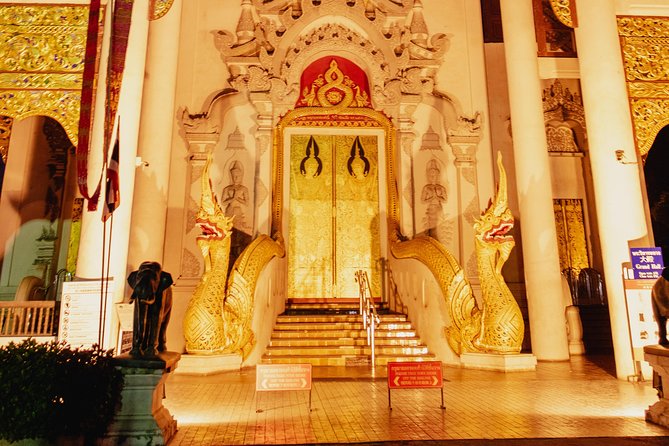
Then the tour shifts from temples to street life. You’ll visit Warorot Market (Kad Luang) and also make time for the Flower Market.
This is where the tour becomes uniquely Chiang Mai. Markets are not just shopping; they’re where you can understand what people buy, eat, and wear—right now, not in a museum.
What I like about including both:
- Warorot Market gives you a broad local hub experience, with lots of stalls and activity.
- The Flower Market adds a different kind of color and atmosphere, which tends to photograph well at night because of artificial lighting and the natural shine of blooms.
Because the tour includes snacks and bottled water, you’re set up to sample small bites without worrying about finding a snack stop first. You can also browse and pick up small souvenirs if you want. This is a good place to buy things that actually fit your trip—like practical gifts or Thai goodies you can bring home without overpacking.
One realistic note: markets can get crowded. The tour’s small group size helps, but you’ll still want to move carefully, keep your phone secure, and be ready for close walking paths.
The guide and driver: what matters most on a 3-hour loop
This experience includes a professional English-speaking guide or driver, plus tuk-tuk transportation for the full tour. That’s more important than it sounds.
In a short 3-hour window, you don’t want long “translation silence” breaks. You want someone to explain what you’re seeing fast enough to keep momentum, but clearly enough to make the sites meaningful. The guide’s role in the temples and markets is to connect each stop with cultural context, so you’re not just collecting locations.
Also, good guiding in a tuk-tuk tour isn’t only talking. It’s managing time, controlling group movement, and keeping you oriented at the right moments—so you get photos when the lighting is best and don’t miss key entrances.
Snacks, water, and what you should bring
This tour includes bottled drinking water and snacks, plus travel insurance. That’s solid value for a 3-hour nighttime format because it reduces the chance you’ll feel stuck buying only overpriced convenience items.
Still, keep your own needs in mind:
- If you’re someone who gets hungry fast, plan on grabbing a proper meal after the tour. Meals are not included in the itinerary.
- Bring a phone camera with enough battery, or a compact camera if you shoot at night.
- Dress modestly for the temples, and wear something comfortable for short walking segments.
If you’re traveling with family, this setup can be a stress-reducer. You still see a lot, but the schedule is organized and you’re not stuck navigating at night.
Price and value: is $89.51 per person fair?
At $89.51 per person for about 3 hours, the price sits in the “not cheap, but not crazy” range—especially in a city where tuk-tuks can be expensive when booked individually.
Here’s what you’re paying for in practical terms:
- A guided loop that connects multiple high-demand stops (temples plus markets).
- Tuk-tuk transport for the entire tour.
- Included entry fee to Chedi Luang.
- Bottled water, snacks, and travel insurance.
If you were to DIY this, you’d still spend money on transport, and you’d likely pay some entry fees along the way. What you may not save is time, because building the route and finding the right entrances after dark takes effort. For many people, that’s exactly the value: fewer logistics headaches and more focused sightseeing.
The main “cost” you’re accepting is that the itinerary is efficient. You get variety, but not slow pacing.
Who should book this tuk-tuk night tour (and who might skip it)
This tour is a great match if:
- You want a photo-friendly night plan without navigating tuk-tuk routes on your own.
- You like mixing temples and markets instead of choosing only one type of sightseeing.
- You prefer a small group format where your guide can actually pay attention.
You might think twice if:
- You hate “time-boxed” schedules and want long temple visits at your own speed.
- You’re uncomfortable with modest-dress expectations at religious sites.
- You’re on a super-tight budget and need the absolute cheapest transport-only option.
Should you book the Chiang Mai City Tuk Tuk Tour?
If your goal is a well-organized night loop that hits major temples and gives you real market time, I think you should book it. The combination of included transport, an English-speaking guide, key temple stops, and market exploration in about 3 hours is the kind of value that makes a trip feel smoother.
Also, the small-group size helps keep the ride from turning into a chaotic bus tour. You’re more likely to get the moment you want—photo, story, or a quick snack break—without feeling lost.
Just go in with the right mindset: it’s an efficient route. If you treat it like a highlight reel with cultural context, it delivers.
FAQ
What sights are included in the Chiang Mai City Tuk Tuk Tour?
The tour includes visits to Wat Chedi Luang, Wat Sri Suphan, Wat Lok Moli, Warorot Market (Kad Luang), and the Flower Market. The Chedi Luang entry fee is included.
How long is the tour, and what’s the group size limit?
The tour runs for about 3 hours. It’s described as a small group limited to only six others, and the maximum group size is listed as up to 10 travelers/people.
What time does the tour run?
The tour operates twice a day, at 8 AM and 3 PM.
Is there hotel pickup?
Pickup is offered within a 2 km radius of the Sun Leisure World Office. The listed start and end meeting point is Duangtawan Hotel Chiang Mai, and the tour ends back at the meeting point.
Are meals included?
Meals are not included. The tour includes bottled water and snacks.
What if the weather is bad or I need to cancel?
The tour requires good weather. If it’s canceled due to poor weather, you’ll be offered a different date or a full refund. Cancellation is free up to 24 hours in advance for a full refund, and within 24 hours the amount isn’t refunded.