REVIEW · BANGKOK
Bangkok: Cooking Class with Market Visit & Tuk Tuk Ride
Book on GetYourGuide →Operated by Sabieng Cooking · Bookable on GetYourGuide
First, you’re going to eat well in 3.5 hours. This Bangkok cooking class pairs a market walk with a tuk-tuk ride, then gets you cooking four classic Thai dishes at a clean, air-conditioned school.
What I really like is the chance to learn from instructors with serious credentials, including a MasterChef Thailand Season 3 finalist, not just a “tour guide with a spatula.” I also love the small group size (about 8–12, capped around 10), because you get more back-and-forth while you’re cooking.
One thing to think about: parts of the prep may already be done for you, so if you’re chasing maximum knife-work or super-basic technique drills, you might feel a bit limited. Still, it’s a very solid way to leave with recipes you can actually repeat at home.
Key details you’ll care about
- Big market tour before you cook, with ingredient explanations tied to what you’ll make.
- Tuk-tuk transport back to the cooking school, adding local flavor to the day.
- Four dishes in one session, including making curry paste from scratch.
- Small-group attention in a professional-grade, air-conditioned kitchen.
- Dietary flexibility: vegetarian, halal, kosher (with request), plus food allergies with 24-hour notice.
- Multilingual support: English main with 中文/ไทย/한국어 translation.
In This Review
- Entering the Day: MRT Meeting Point and a Real-World Schedule
- Bangkok’s Biggest Fresh Market: Where Cooking Starts
- Tuk-Tuk Ride to Sukhumvit 22: Fun Transport, Traffic Reality
- Inside Sabieng Thai Cooking School: Small Groups, A/C, and Real Stations
- The Four Dishes: Curry Paste Skills You Can Recreate
- Spices, Personal Taste, and How the Class Handles It
- Dietary Options: Vegetarian, Halal, and Kosher (With Clear Limits)
- What You Get Besides Cooking: Water, Fruits, Recipes, and a Souvenir
- Price and Value: Is $48 Fair for Four Dishes and a Market?
- Who This Class Suits Best (and Who Might Want Something Different)
- Getting There Without Stress: What to Know Before You Go
- Should You Book This Bangkok Cooking Class?
- FAQ
- How long is the cooking class?
- How many Thai dishes will I cook?
- Does the class handle dietary restrictions like vegetarian, halal, or kosher?
- What languages are used during the class?
- Where do I meet for the tour?
- Is hotel pickup included?
- What happens if I arrive late?
- What does the price include?
Entering the Day: MRT Meeting Point and a Real-World Schedule
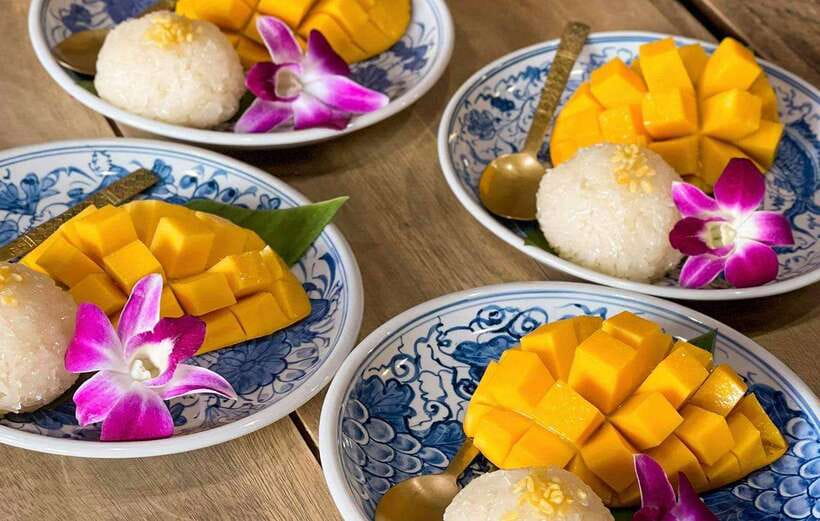
This class runs about 210 minutes, so it’s long enough to feel like a proper activity, not a quick demo. You’ll choose either a morning or afternoon session, and you’ll start at the MRT station called Queen Sirikit National Convention Centre at Exit 1, street level, outside the underground exit. Importantly, you’re not meeting at the big convention center building with the same name—follow the Exit 1 street-level point.
If you arrive late (more than 10 minutes), you’re told to go straight to Sabieng Thai Cooking School, and you will miss the market portion. If you’re an hour late, it’s treated as a no-show, and rescheduling is not offered. That’s strict, but it also protects the flow: the market time is a big part of the value, and the kitchen plan depends on it.
No hotel pickup or drop-off is included, which keeps the price simpler. In practice, that means your planning should start with how you’ll reach Sukhumvit quickly—MRT is usually your best bet here.
Bangkok’s Biggest Fresh Market: Where Cooking Starts
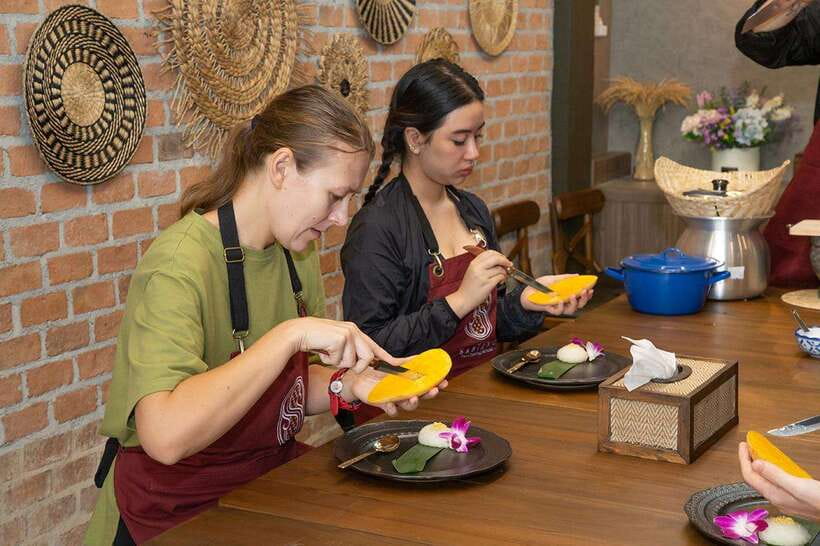
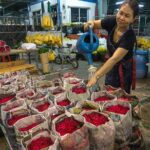
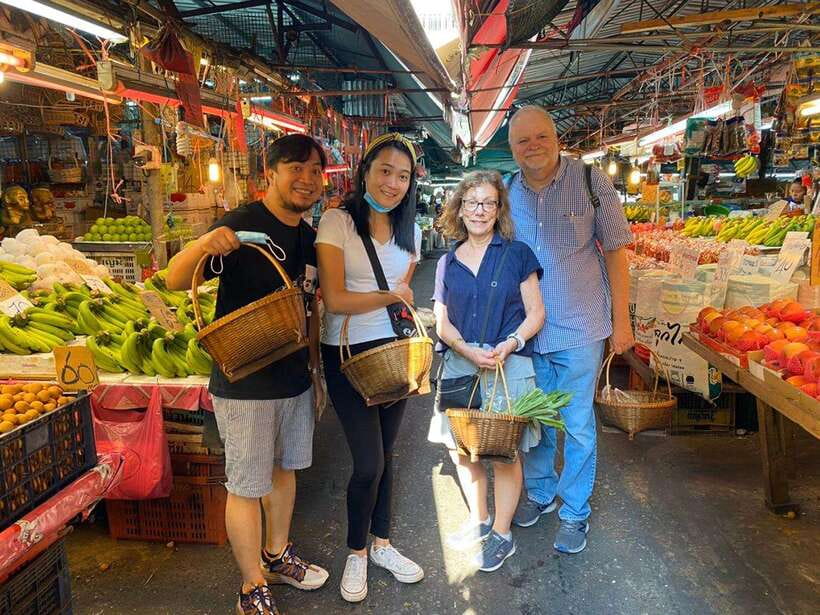
The heart of the experience is the market visit, described as Bangkok’s largest fresh market, and it’s built into both morning and afternoon sessions. You get a guided walk where the focus is ingredients and how Thai cooking really works: why certain aromatics show up again and again, how fresh produce influences flavor, and what you should look for when you shop back home.
This is the difference between watching food being made and learning food systems. Thai cuisine is not just about recipes; it’s about ingredient choices—herbs, chilies, aromatics, and the way textures change when you cook. The market portion is where those ideas become concrete.
Also, this class is designed for comfort and cleanliness, but the market part is still real street life: narrow stalls, lots of movement, and the kind of sensory overload Bangkok does so well. The upside is that you’re seeing where flavors start. The tradeoff is that you’re not shopping like you’re in a private bazaar. Your time is guided, and you’re there to learn, not to browse forever or negotiate.
You can also read our reviews of more shopping tours in Bangkok

Tuk-Tuk Ride to Sukhumvit 22: Fun Transport, Traffic Reality
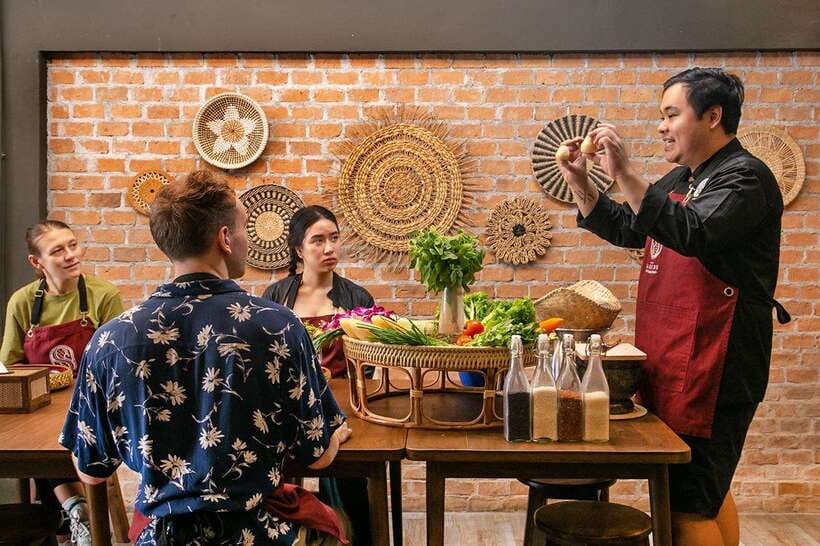
After the market, you take a traditional tuk-tuk back to the modern cooking school in the Sukhumvit 22 area. I like this kind of add-on because it helps you feel the city in small ways: the ride itself, the pace of Bangkok, and that quick shift from market mode to kitchen mode.
Still, the tuk-tuk segment is short enough that you won’t get a full city tour. If traffic slows things down, the ride can feel more like transportation than entertainment. The good news is that the ride is part of the schedule, not the centerpiece—your centerpiece is the cooking.
One practical note: you’re moving from a market environment to an air-conditioned kitchen. If you’re heat-sensitive, bring water and be ready to cool down fast when you arrive.
Inside Sabieng Thai Cooking School: Small Groups, A/C, and Real Stations
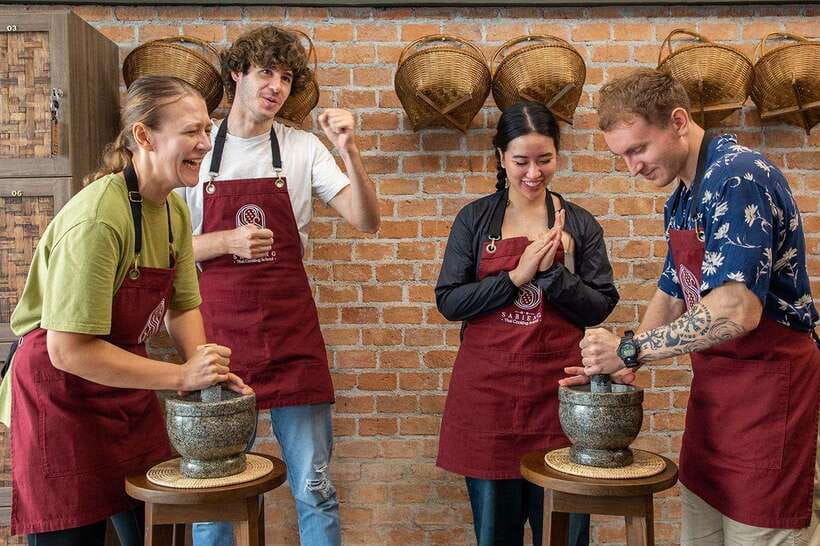
When you reach the school, you step into a modern, air-conditioned space equipped with professional-grade cooking stations. That matters more than it sounds. If you’ve ever done a cooking class in a cramped, chaotic kitchen, you know how hard it is to learn when you can’t move, can’t see, and can’t focus.
Here, the setup supports hands-on work. You’ll be cooking at your own station (not crowding around one counter), and the facility is designed for hygiene and comfort.
You’ll also be in a small group, limited to about 10 participants. That small size is one of the biggest value points of the whole experience. It’s the difference between getting one quick comment from an instructor and getting real feedback when your curry paste is too wet or your pan is too hot.
The class is conducted primarily in English, with translation available into 中文/ไทย/한국어. Even if you don’t speak the additional languages, having translation support means fewer moments of confusion and more time spent cooking instead of guessing.
The Four Dishes: Curry Paste Skills You Can Recreate
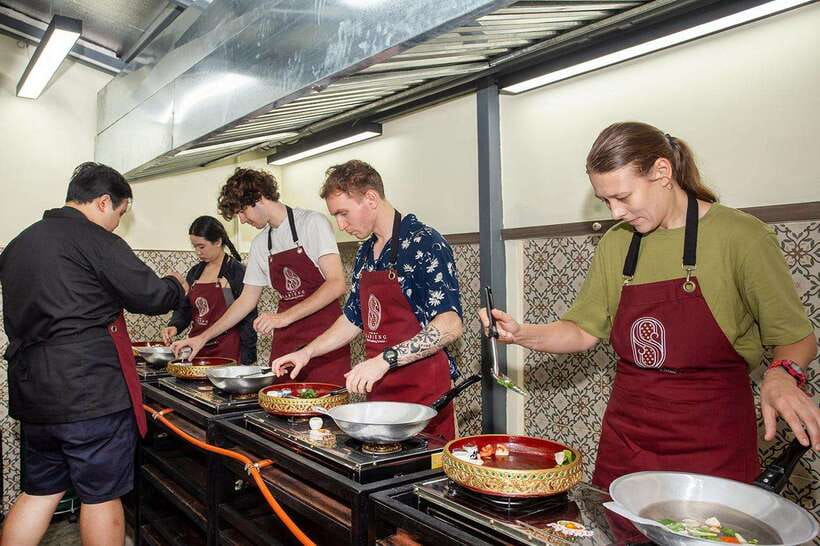
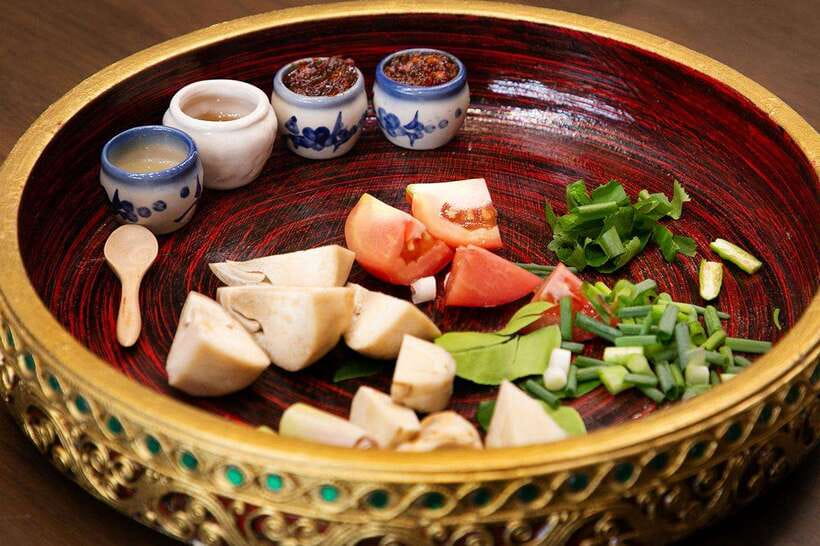
You’ll cook four classic Thai dishes during the session. The curriculum is structured so you’re not just assembling a plate—you’re learning techniques. One highlight called out clearly is making curry paste from scratch. That’s the kind of skill that pays off at home because curry paste is the backbone of so many Thai flavors.
Here’s what that means for you, practically:
- You’re learning how aromatics and spices combine into a paste rather than treating curry as something mysterious.
- You’ll get a better feel for texture and seasoning, which helps when you cook without the instructor next to you.
- You’ll understand the cultural “why” behind ingredients, not just the “what.”
Now, a balanced note. Some cooking classes oversell hands-on prep. This one includes a lot of cooking action, but parts of ingredients may be prepped so the group can finish four dishes within a 3.5-hour window. That can be great if your goal is to learn flavor-building and cooking steps without wasting time on chopping from scratch.
If your priority is pure technique practice—like extensive knife drills or spending time perfecting super-basic fundamentals—you might leave wishing you had more time at the board. Still, you’ll gain enough process to recreate the food confidently.
Food is served as the class moves along. One helpful tip from people who’ve done this before: come hungry. You’re typically eating what you make, including an appetizer, mains, and a dessert, and the portioning is designed for the full group lunch/dining flow.
Spices, Personal Taste, and How the Class Handles It
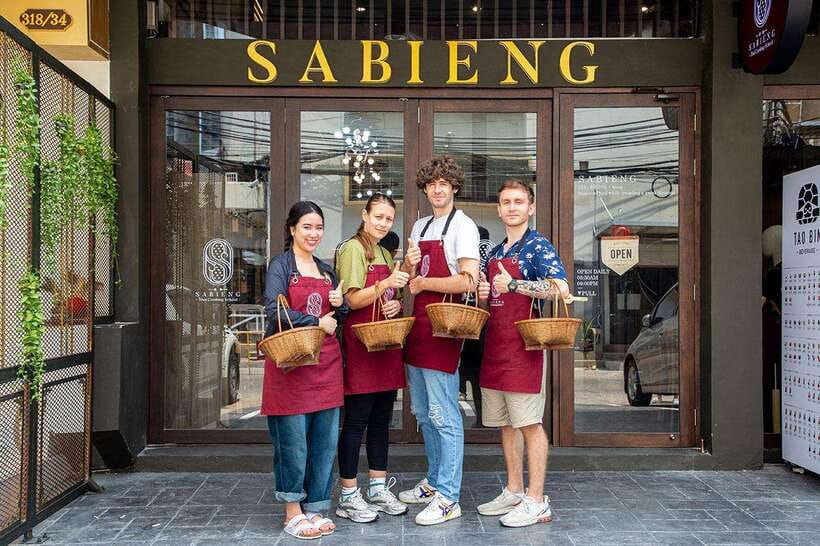
Thai food includes spice, but you don’t have to force the heat. You can choose how spicy you want your dishes, which is a big deal if you’re cooking for friends later or if you’re not chasing mouth-burning chilies.
This choice-based setup also makes the class feel more personal. Instead of one “standard” Thai flavor profile that assumes you like intense heat, you can steer toward your preferred level. In a group setting, that keeps things enjoyable for both spice lovers and spice avoiders.
A few more Bangkok tours and experiences worth a look





Dietary Options: Vegetarian, Halal, and Kosher (With Clear Limits)
This class is unusually flexible for Bangkok. You can request:
- Vegetarian
- Halal
- Kosher (with request, and kosher ingredients may cost extra)
- Food allergy accommodation if you notify them 24 hours in advance
That “notify 24 hours ahead” detail matters. It gives the kitchen time to handle ingredients and avoid cross-contact issues. If you have a serious allergy, don’t try to wing it on the day.
For kosher, the info is also transparent: kosher ingredients may carry an extra cost, and if new kosher equipment is needed, there’s an extra charge and you keep it. That’s not common for every class, and it signals they take dietary handling seriously rather than treating it as an afterthought.
One more thing you’ll likely appreciate: you still cook Thai dishes, not a bland “substitute version.” With the market visit tied to ingredients, you can see what changes and what stays consistent across dietary versions.
What You Get Besides Cooking: Water, Fruits, Recipes, and a Souvenir
This tour isn’t only about the kitchen. You’ll receive:
- Unlimited drinking water
- Welcome seasonal fruits
- Digital recipes
- A special souvenir
Unlimited water is a comfort win in Bangkok. Market time plus cooking time can add up, and hydration helps you focus.
The digital recipes are the practical part. Thai cooking has a lot of “feel” to it—how thick a paste should be, how aromatic a dish smells when it’s ready. A recipe you can reference later helps you get back on track when you’re cooking from memory.
Price and Value: Is $48 Fair for Four Dishes and a Market?

At about $48 per person for roughly 3.5 hours, the value comes from the whole package, not just the cooking. You’re getting:
- Market guidance and ingredient education
- Tuk-tuk transport back to the school
- Four dishes cooked with professional instruction
- All ingredients and equipment
- Water, fruit, and recipes
The market portion alone can feel like a mini food tour. Then you compound that value by cooking and eating what you learned. If you’ve done cooking classes before that were mostly step-by-step demos, this is aimed at making you active at your station.
The only caution is time and expectations: if you want lots of in-depth knife practice or you expect to handle every prep task yourself, the pace may feel fast and some ingredients might be partially prepared. But if your goal is to learn Thai flavor systems and leave with a menu you can reproduce, the price makes sense.
Who This Class Suits Best (and Who Might Want Something Different)
This works especially well if you:
- Want a guided entry point into Thai cuisine
- Prefer small groups and personal instruction
- Have dietary needs and want real accommodation options
- Like the idea of learning why ingredients matter, not only memorizing steps
It may not be your best match if you:
- Want a deep, basic knife-training course
- Expect extensive merchant interactions at the market
- Are hoping the tuk-tuk will be a long sightseeing ride
Even with those caveats, the overall design is practical: you learn, you cook, you eat, and you get the recipes to repeat later.
Getting There Without Stress: What to Know Before You Go
A lot of Bangkok success is about simple timing. Make sure you’re at MRT Queen Sirikit National Convention Centre, Exit 1 (street level) and not at the convention center itself. If you’re running late, you’ll be directed to the cooking school, but doing so means missing the market visit.
Also check what you bring. Oversize luggage isn’t allowed, and items like weapons or sharp objects are not permitted. Strollers and non-folding wheelchairs are also not allowed, so plan for that if you’re traveling with kids or mobility devices.
The kitchen is air-conditioned, but Bangkok heat can still hit on the way. Wear breathable clothes and wear shoes that work for market walking.
Should You Book This Bangkok Cooking Class?
Yes, I’d book it if you want the best “Bangkok food in one afternoon” deal: market ingredients plus hands-on Thai cooking, finished with a meal you made. The small group size and the credentialed instruction—including a MasterChef Thailand Season 3 finalist—are the kind of details that improve your results fast. Add in the dietary flexibility and multilingual translation, and it becomes a class that fits real-life travelers, not just adventurous eaters.
I’d think twice only if your main goal is heavy technical prep work or you want the tuk-tuk ride to function like a sightseeing tour. For most people, though, this is a straightforward way to go home with a working set of Thai cooking skills, not just a full stomach.
FAQ
How long is the cooking class?
The class lasts about 210 minutes, or roughly 3.5 hours, and runs in either a morning or afternoon session.
How many Thai dishes will I cook?
You’ll learn to prepare four classic Thai dishes during the session.
Does the class handle dietary restrictions like vegetarian, halal, or kosher?
Yes. Vegetarian and halal are available, and kosher is available upon request. Food allergies can be accommodated if you notify them at least 24 hours in advance. Kosher ingredients may cost extra, and special kosher equipment may also have an extra charge.
What languages are used during the class?
English is the main language. Translation is available in 中文/ไทย/한국어.
Where do I meet for the tour?
Meet at the MRT underground station named Queen Sirikit National Convention Centre at Exit 1, outside the underground exit at street level. Do not meet at the convention center building with the same name.
Is hotel pickup included?
No. Hotel pickup and drop-off are not included.
What happens if I arrive late?
If you’re more than 10 minutes late, you should go directly to Sabieng Thai Cooking School, and you’ll miss the market visit. If you’re an hour late, it’s marked as a no-show and is not refundable or reschedulable.
What does the price include?
The price includes the four cooking sessions, all ingredients and equipment, the market visit and tuk-tuk ride, unlimited drinking water, welcome seasonal fruits, digital recipes, and a souvenir. Alcohol is not included.