REVIEW · CHIANG MAI
Half day Best of Chiang Mai City by Tuk-Tuk Private tours
Book on Viator →Operated by Chiang Mai Local Tours · Bookable on Viator
A three-hour map of old Chiang Mai. This half-day Tuk-Tuk tour helps you orient fast, with hotel pickup plus a guided loop that hits key temple highlights and ends at Warorot Market for real local shopping. I love how the route mixes big-photo sights with places that feel like part of everyday Chiang Mai. I also like that your guide keeps things moving so you’re not guessing what’s worth your time.
The possible drawback: 3 hours is short, so you’ll be seeing a lot of stops in a tight rhythm, and the comfort of the Tuk-Tuk ride can vary.
You get two departure options (morning or afternoon) and a small group size capped at 10 people, which makes it feel more personal than a long coach tour. Plus, bottled water and seasonal fruit are included, so you’re not hunting for snacks mid-temple.
In This Review
- Key things that make this tour worth your time
- Tuk-Tuk pickup and the old-city canal loop
- Wat Chedi Luang and the earthquake chapter of Chiang Mai
- The Three Kings Monument stop: a quick but meaningful pause
- Wat Srisuphan: the silver temple that ties to real craft
- Warorot Market: shopping that feels like local life
- Price and value: what you get for $55
- Timing, group size, and how to prepare without overthinking it
- Should you book this Best of Chiang Mai half-day Tuk-Tuk tour?
- FAQ
- How long is the Half Day Best of Chiang Mai City by Tuk-Tuk Private tours?
- What are the tour departure times?
- Does the tour include hotel pickup and drop-off?
- Which places are included in the itinerary?
- Is an English-speaking guide included?
- What’s included in the price?
- What is not included?
- What is the cancellation policy?
Key things that make this tour worth your time
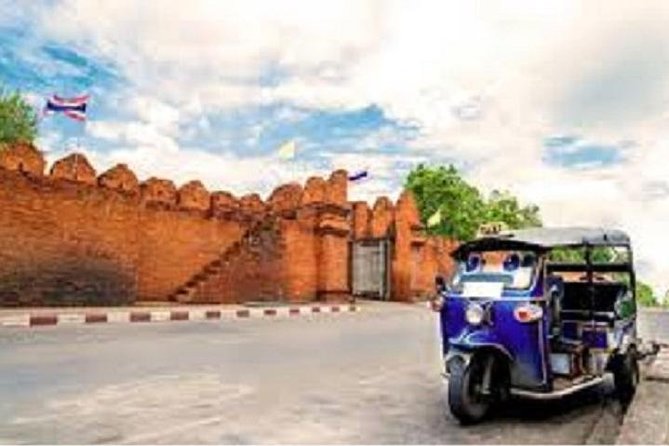
- Hotel-to-hotel Tuk-Tuk pickup so you start sightseeing without logistics stress
- Wat Chedi Luang plus the story of the Emerald Buddha’s move to Bangkok
- Silver temple at Wat Srisuphan tied to Chiang Mai’s silversmith traditions
- Warorot Market for souvenirs, fruit, flowers, and bargain shopping
- Two departure times (morning or afternoon) for better trip planning
Tuk-Tuk pickup and the old-city canal loop
This is the kind of tour that works best on day one (or day two), when your brain needs a shortcut. You get picked up from your hotel or guesthouse by Tuk-Tuk, then you roll out with an English-speaking guide who handles navigation and timing.
The first part of the route focuses on the old city’s layout. You’ll cruise the canal that surrounds the historic center, and you’ll stop for photos at the old walls and gates that once helped defend the city. Two names matter here: Chiang Mai Gate and Tae Pae Gate. Seeing them early helps everything make sense later. When you return on your own, those streets and landmarks won’t feel random.
What I like about this opening section is the pace. The Tuk-Tuk ride is laid back, so you can take in the shape of the area without walking yourself into a sweat before the temples. You’re also getting a head start on how Chiang Mai is organized—useful when your next plans include night markets, other temples, or just wandering.
One more practical note: the tour operates with a minimum of two people per booking, and there’s a maximum of 10. That typically means you won’t feel like you’re getting swept along with a huge crowd.
You can also read our reviews of more city tours in Chiang Mai

Wat Chedi Luang and the earthquake chapter of Chiang Mai
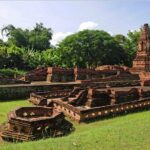
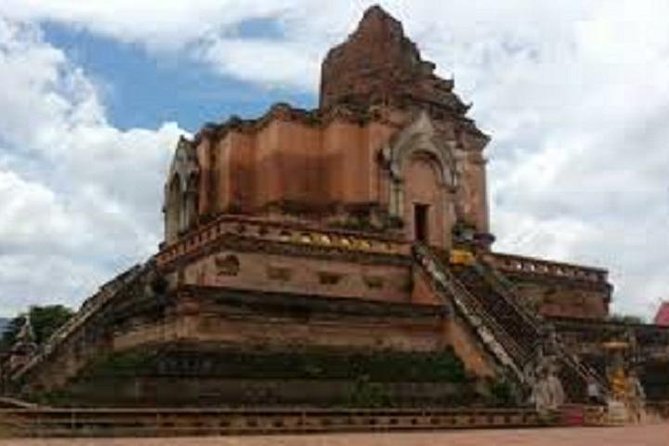
After the gates and canal, you enter the Old City and make your first major temple stop: Wat Chedi Luang. This is one of those places where the details add up, even if you only spend a limited amount of time.
The guide connects the site to a bigger Thailand story. Wat Chedi Luang was built during the 14th and 15th centuries. It also once housed the Emerald Buddha—yet that famous Buddha image can now be found in the Grand Palace in Bangkok. So when you’re standing in front of the ruins and repairs, it’s not just a local temple moment. It’s a link in a chain across the country.
Then comes the earthquake history. In 1545, an earthquake destroyed the top 30 meters of the temple. The structure has been repaired since, but damage you can still see remains around the lower edges. That’s one of the reasons Chedi Luang feels real: you’re looking at a site that carries visible signs of the past, not a perfectly restored fantasy.
Drawback to plan for: temple visits can involve a lot of looking upward, plus uneven areas. If you’re dressed for comfort, you’ll probably end up standing and photographing more than you expect in a 3-hour block. Also, the tour specifies a formal dress code, so you’ll want to respect that when choosing what to wear.
Between the gates and the first temple, you’ve basically been given the city’s timeline in miniature: defensive walls first, then the spiritual center.
The Three Kings Monument stop: a quick but meaningful pause
Right after Wat Chedi Luang, the itinerary includes a stop at the 3 Kings Monument. This is shorter than the temple time, but it matters because it shifts the story from architecture to identity.
Think of it like a reset point. You’ve just absorbed temple history and earthquake-era details. The 3 Kings Monument gives you another landmark to anchor your understanding of Chiang Mai—who founded the region, how the city remembers its roots, and why certain areas feel important even when you’re not fully sure what you’re seeing yet.
In a half-day tour, these smaller stops are useful. You don’t need a long lecture to appreciate the place; you just need the right name and a bit of context. This one does that job.
Wat Srisuphan: the silver temple that ties to real craft
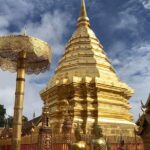
One of the best parts of this half-day tour is the inclusion of the silver temple: Wat Srisuphan, also associated with Wat Srisuphan Aram. Your route doesn’t just point you toward something shiny. It connects it to Chiang Mai’s long-running silversmith tradition.
The temple was first founded in 1501 under King Mengrai. Then the guide brings in a more modern layer: the temple was renovated in 2004. If you like your sightseeing to have both old and newer chapters, this works well.
The signature detail here is the silver-colored building that shimmers in sunlight. You’ll also learn about the material used in the ubosot (main sermon hall). The information provided notes that it uses alloy and zinc-silver, which helps explain the temple’s distinct look.
What makes this stop feel more authentic (and less like a cookie-cutter photo stop) is the craft connection. Visitors are encouraged to see artisans at work, and the temple is described as an important center for handicrafts. There’s also mention of the Ancient Lanna Arts Study Centre, known as Sala Sip Mu Lanna, where techniques are passed down to the next generation of silversmiths.
In practice, this is where the tour can feel different from a checklist of temples. Even if you only spend a short time here, you’re seeing how skill and tradition are maintained, not just preserved behind signs.
Quick reality check: you’ll still be on a time clock. So don’t expect a slow artisan workshop session. But you’ll get enough to decide whether you want to return later on your own for deeper viewing.
Warorot Market: shopping that feels like local life
Your final destination is Warorot Market, and this is where the tour earns its practical value. Temples are great, but Chiang Mai is also a place where you’ll want snacks, small gifts, and everyday items. Warorot is the kind of market where locals do their shopping.
The guide sets the scene by pointing out nearby areas tied to the bigger Chiang Mai markets—this is also where the Sunday Market and the famous Night Bazaar are located. That means the market isn’t isolated. It’s part of the city’s regular rhythm.
Once inside Warorot, the range is broad. You can look for fresh and dried fruit and vegetables, souvenirs, fireworks, clothing, fresh seafood, jewelry, watches, beauty supplies, and even a flower market. It’s also described as having some of the lowest prices in Chiang Mai, which is exactly what you want if you’re comparing options across stalls.
A good strategy here is to treat the first pass as reconnaissance. Get a feel for price levels and what’s actually available. Then decide if you want to buy right away or save your shopping for another market day. Since personal shopping isn’t included, you’ll need to rely on your own choices and bargaining comfort.
One small thing: souvenir photos are not included. If you’re hoping for staged pictures, plan to buy them separately.
By the time the Tuk-Tuk returns you to your hotel—around 11:30am for the morning departure or around 4:30pm for the afternoon one—you’ll have more than photos. You’ll have a sense of where the city shops and what’s worth your attention.
You can also read our reviews of more private tours in Chiang Mai




Price and value: what you get for $55
At about $55 for roughly 3 hours, this tour is priced like an orientation plus a guided temple circuit. The biggest value drivers are the included basics that usually add up when you do it on your own:
- Hotel pickup and drop-off by Tuk-Tuk
- An English-speaking guide
- Drinking water and seasonal fruit
- Accident travel insurance
That pickup alone can make a half day feel smoother, especially when you first arrive and you’re still learning the streets. The guide also saves you time. Instead of spending that time figuring out which gate matters, what Chedi Luang is known for, or what makes the silver temple special, you get the context built in.
The trade-off is that you’re not buying a slow, deep experience. It’s designed to cover highlights efficiently. If you love spending extra time in one temple or you prefer wandering without structure, you might feel like you’re moving quickly.
Still, for $55, you’re not just paying for sights. You’re paying for the city map your brain needs in those first hours.
Timing, group size, and how to prepare without overthinking it
You’ll choose between a morning start at 8:30am and an afternoon start listed around 12:30pm. Either option keeps the tour short enough to keep the rest of your day open for your own plans.
Group size is capped at 10 people, and there’s a minimum of two people per booking. That’s helpful because you avoid the large-bus feel, but it also means you should expect some sharing of time and space. The Tuk-Tuk ride is part of the fun, so you’ll want to stay flexible with photo stops.
Dress code is specified as formal. For temple visits, that typically means covering up appropriately. I’d treat it seriously, not because you’ll be in trouble, but because it helps you feel respectful and comfortable as you move between sites.
Also: you’ll need to be okay with a compact schedule. This is four temples plus a market within a half-day. You won’t have the luxury of lingering at every spot equally.
If you’re coming straight from the airport or you’re tired after travel, this kind of tour can actually be a relief. You’re not building your plan from scratch, and you’re not paying for multiple rides and separate tickets.
Should you book this Best of Chiang Mai half-day Tuk-Tuk tour?
Book it if:
- You want a fast orientation to Chiang Mai’s old city before you set off on your own
- You like temple context tied to specific stories, like the Emerald Buddha’s connection and the earthquake damage at Wat Chedi Luang
- You want market time with a guide so you know where to start at Warorot Market
Skip it (or swap plans) if:
- You know you want slow temple time and lots of wandering without a schedule
- You’re sensitive to comfort differences in short Tuk-Tuk rides and prefer private, full-stay comfort
If you’re trying to make your first half day count, this is a smart, efficient way to do it. You’ll leave with the city’s key landmarks in your head and a market baseline for what’s available and what things cost.
FAQ
How long is the Half Day Best of Chiang Mai City by Tuk-Tuk Private tours?
It’s about 3 hours.
What are the tour departure times?
There are two departure options: 8:30am and 12:30pm.
Does the tour include hotel pickup and drop-off?
Yes. You’ll get pickup and drop-off from your hotel or guesthouse by Tuk-Tuk.
Which places are included in the itinerary?
You’ll visit the canal area and historical gates like Chiang Mai Gate and Tae Pae Gate, then stop at Wat Chedi Luang, the 3 Kings Monument, the silver temple (Wat Srisuphan/Wat Srisuphan Aram), and finish at Warorot Market.
Is an English-speaking guide included?
Yes. The tour includes an English-speaking tour guide.
What’s included in the price?
Included items are hotel pickup and drop-off by Tuk-Tuk, an English-speaking tour guide, drinking water and seasonal fruit, and accident travel insurance.
What is not included?
Souvenir photos and personal shopping are not included.
What is the cancellation policy?
Free cancellation is available. You can cancel up to 24 hours in advance for a full refund.