REVIEW · BANGKOK
Damnoen Saduak Floating Market & Ayutthaya Tour from Bangkok
Book on Viator →Operated by WanderSiam · Bookable on Viator
Mae Klong and Ayutthaya in one day, no stress. This small-group tour strings together Thailand’s famous markets and UNESCO Ayutthaya’s temple sites with an English-speaking guide and enough structure that you won’t be stuck figuring things out on your own. I like that it’s built around practical pacing: you start early, you move in a comfortable air-conditioned vehicle, and you get help with the parts that usually feel intimidating for first-timers.
What I really like is the combination of experiences. First, Mae Klong Railway Market puts you right next to the action when the train comes through, and your guide helps you understand what you’re seeing instead of just pointing. Second, Damnoen Saduak is handled the right way: you don’t just look from a distance, you get a traditional long-tail boat ride through the canals. One possible drawback: the day is long (about 10 to 11 hours) and Bangkok traffic can stretch it, so you’ll want to plan for a sweaty, early start and a late lunch.
If you’re okay with that trade-off, this tour is a smart way to see a lot of Thailand without turning your vacation into a logistics project.
In This Review
- Key highlights you’ll feel right away
- Price and what you actually get for $70.11
- Meeting point, pickup, and the early start that shapes everything
- Stop 1: Mae Klong Railway Market and why the train moment is the point
- Stop 2: Damnoen Saduak floating market by long-tail boat
- Stop 3: Wat Phanan Choeng Worawihan and the meaning behind the big Buddha
- Stop 4: Wat Mahathat and Ayutthaya’s spiritual power center
- Stop 5: Wat Phra Sri Sanphet and the royal chapel atmosphere
- The lunch gap and how to handle it like a pro
- Group size, guides like Joyce, and why it changes the day
- Transportation reality: the long-drive day you should actually expect
- What to pack (so the day feels easier)
- Should you book this Bangkok to Ayutthaya day tour?
- FAQ
- What time does the tour start?
- How long is the Damnoen Saduak & Ayutthaya tour?
- Is hotel pickup included?
- Where does the tour start if I’m not in the pick-up area?
- What’s included in the price?
- Are temple entrance fees included?
- Is lunch included?
- Does the tour include a boat ride?
- What happens if it rains?
Key highlights you’ll feel right away
- A small group (max 10) keeps the day from feeling like a cattle run
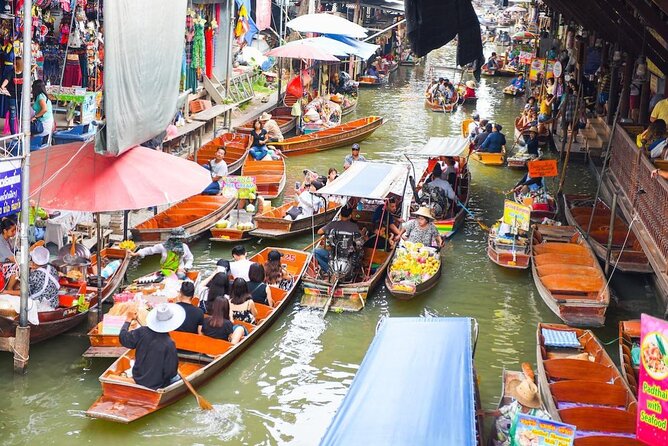
- Long-tail boat ride at Damnoen Saduak turns the floating market from a photo stop into real canal time
- Mae Klong Railway Market lets you watch the train come close, right where the market operates
- Three major Ayutthaya temple stops show different roles of the old kingdom’s religious center
- Bargaining help from your guide makes shopping less awkward
- Clear structure for a long day, with bottled water included
Price and what you actually get for $70.11
This tour costs $70.11 per person, and the value is mostly in the “included logistics.” You get hotel pickup and drop-off (within the operator’s regular service area), air-conditioned transport, an English-speaking guide, a bottle of water, plus the long-tail boat ride at Damnoen Saduak. For Bangkok, that kind of full-day package usually saves you from piecing together multiple rides and timing problems.
What’s not included is equally important for your budget. Temple entrance fees in Ayutthaya are extra: Wat Phra Sri Sanphet (THB80), Wat Mahathat (THB80), and Wat Phanan Choeng Worawihan (THB20). Lunch is also not included, and a few reviews note it can run late. So think of the all-in cost as: the ticket price, plus temple fees, plus whatever you spend for lunch and snacks.
If you’re traveling solo or as a couple, the small-group cap matters. More of your time goes to your guide and your photos, not to waiting around while a big bus unloads.
You can also read our reviews of more shopping tours in Bangkok
Meeting point, pickup, and the early start that shapes everything
The tour begins at 7:00 am. Hotel pickup is offered for accommodations on or near Khao San Road and on Siam Square. If you’re not staying at one of the listed hotels, the designated meeting point is the operator’s office on Chao Khamrop Road in Chinatown.
Pickup timing depends on the day and the number of participants, but it’s typically between 6:30 and 6:50 am, and the exact time is sent in advance. You only get a short grace period—about 10 minutes—before the guide starts without you. Bangkok traffic is intense, so being on time isn’t optional.
Practical tip: set multiple alarms and be ready before the pickup window. If you’ve ever watched a day in Bangkok disappear to traffic, you already know why this matters.
Stop 1: Mae Klong Railway Market and why the train moment is the point
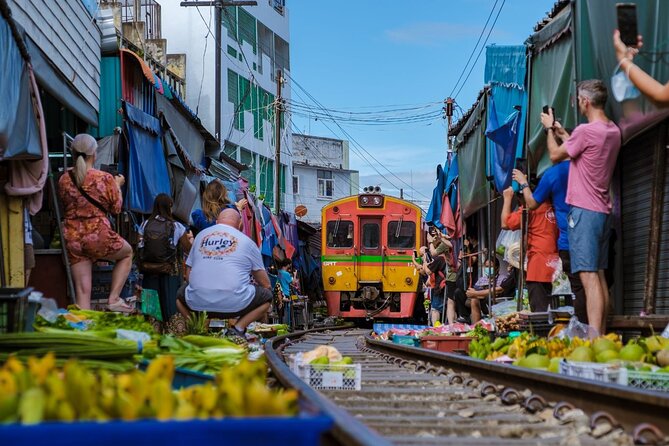
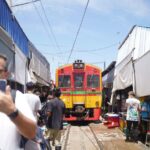
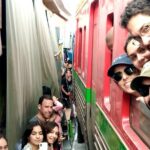
Mae Klong Railway Market (often called Hoop Rom Market) is the first stop, and it’s a specific kind of thrill. The market dates back to 1905, and it grew around fishing and fresh produce. The “wow” factor isn’t just watching people shop—it’s watching how the market works around a working train line.
When the train arrives, you’ll see stalls adjust and the flow changes fast. That split-second choreography is the whole show. A guide makes a big difference here because the significance is easy to miss if you’re only chasing photos. You’ll also get context for what the market means to the local community and why it became a key trading spot.
One consideration: it can feel touristy in the sense that you’ll see lots of cameras. If you love local texture, the surrounding atmosphere still delivers, and your guide’s explanations help you get past the “photo gimmick” feeling. Also, keep an eye on your comfort. You’ll be walking and standing in an active market environment, often in heat.
Stop 2: Damnoen Saduak floating market by long-tail boat
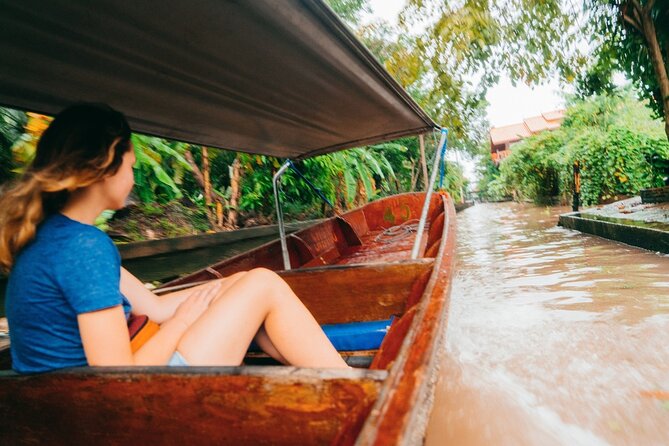
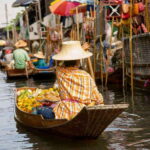
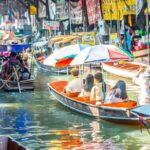
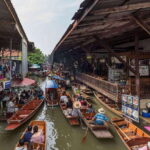
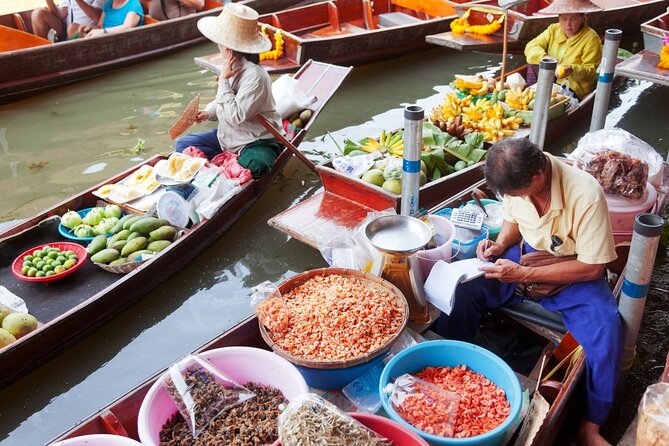
Damnoen Saduak is the famous one, the floating market most people picture when they say floating market in Thailand. This tour does it the right way: you board a traditional long-tail boat and move through the canals, so you’re not only looking at boats from the shore.
The boat ride is your chance to slow down and actually see how waterways shape daily life. You’ll pass boats where sellers set up, and you’ll get a better sense of why the canals became commercial routes. It’s also the moment where the day’s pace changes from “market energy” to “boat time,” which is a welcome reset.
Food and shopping advice that matches what many people enjoy here:
- Try Thai snacks and sweets you can eat right there. Mango sticky rice is a common hit.
- If you see coconut ice cream served in a coconut shell, it’s worth the detour. People remember it because it’s fun and genuinely tasty.
- Shopping is real, but it’s also curated for visitors. Your guide’s help with bartering can save you from overpaying out of confusion.
One practical note: you’ll likely be in the sun and humidity for a while. Water helps (you get a bottle), but bring a little extra patience and plan for sweat.
Stop 3: Wat Phanan Choeng Worawihan and the meaning behind the big Buddha
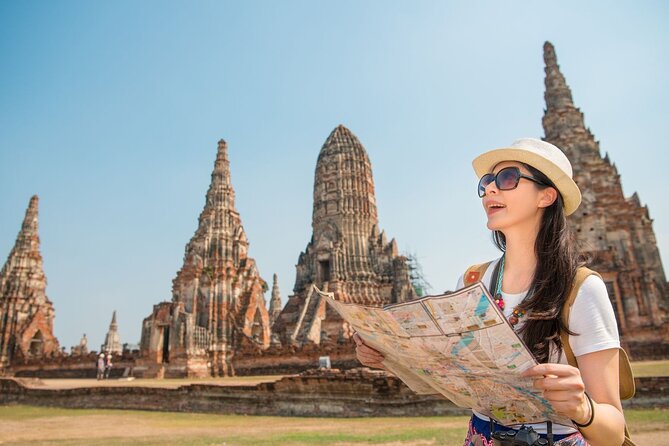
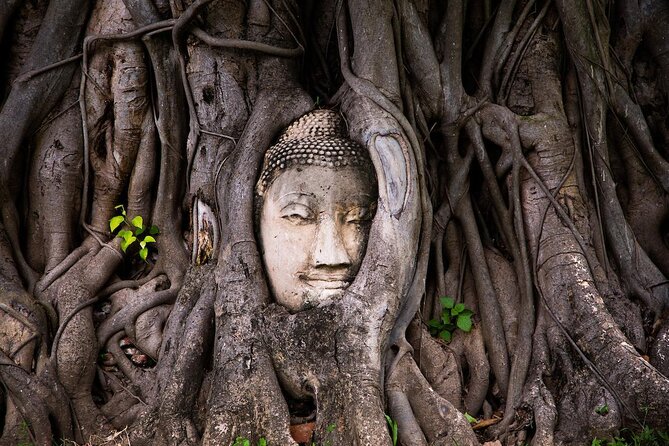
After the markets, you’ll head to Ayutthaya’s temple sites. First up is Wat Phanan Choeng Worawihan, founded in 1324—about 26 years before Ayutthaya was officially established. That time anchor matters. It’s one of those places where you’re not just seeing an old building; you’re seeing a religious site that predates the city’s official rise.
This temple is known for its massive seated Buddha image. Even if you don’t know Thai Buddhism deeply, you’ll feel the scale. And because the guide is there, you’ll get the cultural meaning behind the architecture instead of only the history dates.
Entrance fees apply here, so keep a little cash ready.
A few more Bangkok tours and experiences worth a look

Stop 4: Wat Mahathat and Ayutthaya’s spiritual power center
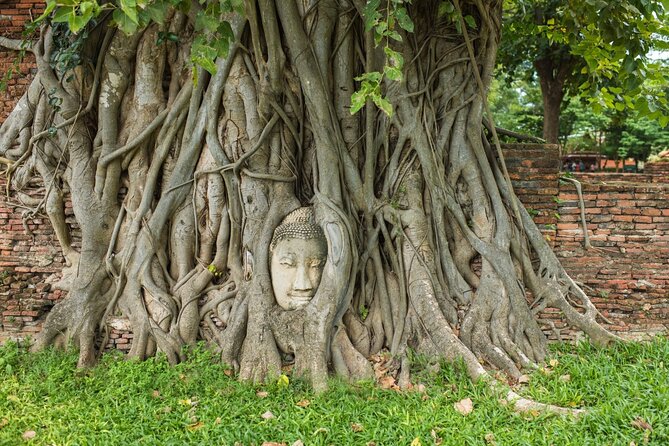
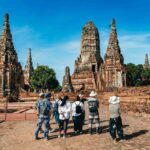
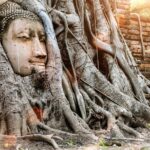
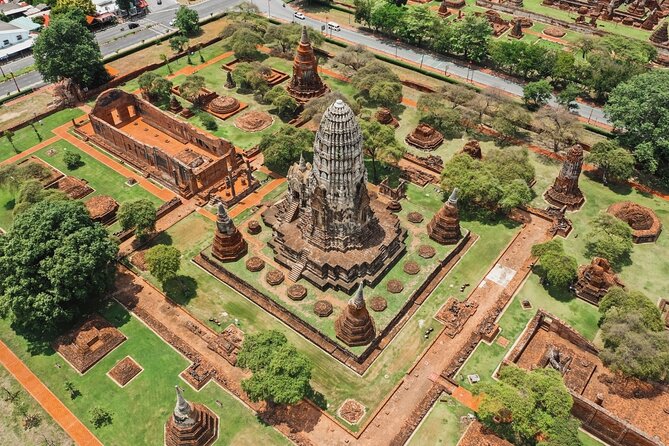
Next is Wat Mahathat, described as one of the most important temples in the Ayutthaya Kingdom. It served as the spiritual and political heart of the capital. This is a big claim, and the place supports it through the way the complex has been preserved and interpreted.
Wat Mahathat also once housed sacred Buddha relics and was connected to the seat of leadership in the kingdom. In practical terms, what you’ll experience is a temple complex where the significance hits at multiple levels: spiritual devotion, state power, and historical memory all in one site.
Again, entrance fees are not included in the base price, so budget for them. Most of what you’ll pay for here goes toward access and site upkeep.
Stop 5: Wat Phra Sri Sanphet and the royal chapel atmosphere
Your final temple stop is Wat Phra Sri Sanphet, the most important and grand temple in the Ayutthaya Kingdom. It sits within the royal palace complex and functioned as the royal chapel, similar to what you’d expect from the ceremonial heart of the monarchy.
This stop feels different from the others because it has that “royal” sense of purpose. The scale and layout emphasize status and ceremony. It’s also a strong wrap-up because you go from sacred devotion (earlier temples) to the formal power-and-religion connection represented here.
Entrance fee applies again, so plan cash.
The lunch gap and how to handle it like a pro
Lunch is not included, and multiple comments flag that it can be late—sometimes around 2 pm or later. That matters because this day is already long, and you don’t want your energy to crash right when you need it most.
My advice:
- Pack a couple of snacks if you can. Think small, easy-to-eat items.
- If your tour includes restroom stops, use them. You’ll likely spend enough time outdoors that you don’t want to gamble.
- Bring water discipline: one bottle is included, but heat and walking can make you thirsty sooner than you expect.
Also, the lunch restaurant options can be hit or miss depending on what your palate likes. Plan to enjoy it for convenience, not as a signature meal you must be wowed by.
Group size, guides like Joyce, and why it changes the day
This is a small-group tour with a maximum of 10 travelers. That alone makes the experience feel more human. You’ll get more time with your guide, easier photo stops, and less time waiting for strangers to regroup.
Guides frequently earn praise by being proactive with questions and photos. Names that show up often include Joyce, Wan, Tum Tun, Surina, and Wan again in different reviews. What those guides tend to do well is explain what you’re seeing in plain language—Buddhism, market culture, temple meaning—then help you navigate the crowd and get good pictures without you needing to ask every time.
One more practical benefit of having an experienced English-speaking guide: bargaining. You’ll still make decisions, but you won’t feel like you’re standing alone trying to guess fair pricing while someone pushes a cart under your nose.
Transportation reality: the long-drive day you should actually expect
This tour runs about 10 to 11 hours. The main reason is distance. Ayutthaya and the markets are far enough out of central Bangkok that even with a fast driver, you’ll spend a lot of time in the car.
Most people accept it because the payoff is a tight itinerary: one train market, one floating market by boat, and three temple stops in Ayutthaya. Still, the time in transit is real. If you hate long vehicle rides, this may feel like a lot.
A simple strategy: treat the vehicle time like part of the tour. Bring a small pillow if you like, download offline maps or music, and plan to get moving quickly once you arrive at each site.
What to pack (so the day feels easier)
You’ll be out in heat, walking in markets, and moving between temple complexes. Wear comfortable shoes. A few reviews specifically mention sweat and even bringing toilet paper, which tells you the facilities aren’t always what you’d expect in a mall.
Bring:
- Comfortable walking shoes
- Sun protection (hat, sunscreen)
- A small supply of cash for temple fees and snacks
- Toilet paper or a small pack, just in case
- A light layer if you get sensitive to strong AC in the van
Should you book this Bangkok to Ayutthaya day tour?
Book it if:
- You want a one-day hit list: Mae Klong Railway Market, Damnoen Saduak by boat, and multiple Ayutthaya temples.
- You prefer a guide-led plan that reduces confusion and helps with bargaining.
- You can handle an early 7:00 am start and a long ride due to Bangkok traffic.
Skip it (or consider splitting it) if:
- You really dislike long days. This one is about 10 to 11 hours and can feel stretched by traffic.
- You’re mostly in it for a quieter, less tourist-facing experience. Mae Klong can feel geared toward visitors, especially around the train moment.
If you’re short on time in Bangkok and you want to see both canals and temples without piecing together transportation, this tour is a strong, practical choice. The small-group size and the included boat ride are the parts that make it feel worth it.
FAQ
What time does the tour start?
The tour starts at 7:00 am.
How long is the Damnoen Saduak & Ayutthaya tour?
It runs about 10 to 11 hours.
Is hotel pickup included?
Yes, hotel pick-up and drop-off are included, but only within the operator’s regular service area (notably around Khao San Road and Siam Square).
Where does the tour start if I’m not in the pick-up area?
The designated meeting point is the tour operator’s office on Chao Khamrop Road in Chinatown.
What’s included in the price?
Hotel pickup/drop-off (in the service area), air-conditioned transport, an English-speaking guide, one bottle of water per person, and a long-tail boat ride at Damnoen Saduak.
Are temple entrance fees included?
No. Entrance fees are not included for Wat Phra Sri Sanphet, Wat Mahathat, and Wat Phanan Choeng Worawihan.
Is lunch included?
No. Lunch is not included.
Does the tour include a boat ride?
Yes. You’ll take a traditional long-tail boat ride at Damnoen Saduak floating market.
What happens if it rains?
The tour operates rain or shine, and weather-related cancellations are not eligible for a refund.
If you tell me where you’re staying in Bangkok (rough area is fine), I can help you figure out whether the pickup zone makes this easy for your schedule.