REVIEW · BANGKOK
Bangkok: River Kwai Day Tour with Jeath War Museum & DeathRailway
Book on Viator →Operated by Bangkok Travel Agency · Bookable on Viator
A long day, with heavy stories and real scenery. This Bangkok-to-Kanchanaburi trip takes you to the River Kwai Bridge built by Allied POWs, then pairs it with the JEATH War Museum and a train ride along the famous Death Railway. It is one of those tours where the history hits first, but the logistics and timing keep you moving.
I especially like how the day mixes key stops: the bridge walk, the war cemetery, and the museum sections on POW life. I also like that the tour includes a buffet lunch at Wang Po station, so you get a practical break right before the railway segment.
One thing to consider: it is a 13-hour day in total, and that means you may feel some pressure to keep the pace. Some visitors also noted the museum could use more maintenance at times, and that English clarity can vary by guide.
In This Review
- Key highlights you will actually feel during the day
- A Long Day to the River Kwai: What the 6:00am Start Buys You
- JEATH War Museum and the POW Camp Replica
- Walking the River Kwai Bridge: Moving From Photos to Place
- Death Railway Museum, Tham Kra Sae Bridge, and the Cemetery Pause
- Wang Po Buffet Lunch: The Most Practical Part of the Day
- Riding the Death Railway: A Train Ride With Real Meaning
- Price and Value: Is $83.68 a Good Deal?
- Who This Tour Fits Best (and Who Might Want Another Option)
- Should You Book This River Kwai and Death Railway Day Trip?
- FAQ
- How long is the tour?
- What does the tour include?
- Is hotel pickup available?
- What time does the tour start?
- What’s the maximum group size?
- Is lunch included, and where is it served?
- What are the main stops during the day?
- Is the guide available in English?
- Can I cancel for free?
- What happens if weather is bad?
Key highlights you will actually feel during the day
- JEATH Museum: two sections that connect the railway construction with reconstructed POW huts
- River Kwai Bridge walk: you get time on the bridge rather than a quick peek
- Death Railway Museum and research center: contextual stops before you ride
- Kanchanaburi War Cemetery: a solemn pause with graves of Allied soldiers
- Train ride near the Burmese border area: the “make it real” moment of the itinerary
- Small groups (max 15) plus air-conditioned transport and an English-speaking guide
A Long Day to the River Kwai: What the 6:00am Start Buys You
This tour runs about 13 hours, starting at 6:00am from Central Bangrak (and/or via hotel pickup from around Bangkok). If you like your sightseeing to feel structured—rather than stressful—you’ll appreciate the early departure. It gives you daylight time for the bridge and the museum stops before you reach the station and train portion.
Price is $83.68 per person, which sounds steep until you look at what you get: guided history stops, round-trip transfers, air-conditioned vehicle use, and lunch. It is not just a ride out to Kanchanaburi; it is a whole day of planned, ticketed segments, plus a guided train experience.
The catch is time. Expect a full schedule, and if Bangkok traffic runs long, some parts can feel rushed. Still, the day is built so you hit the major emotional and historical anchors without you needing to plan anything yourself.
You can also read our reviews of more museum experiences in Bangkok


JEATH War Museum and the POW Camp Replica
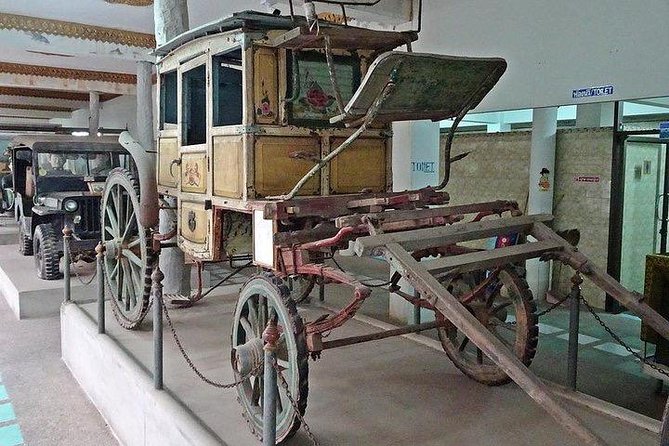
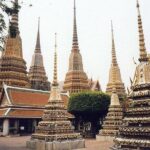
Your first major museum stop is the JEATH War Museum, which is split into two parts. One section focuses on the railway construction, with displays meant to reflect POW quarters. The other side uses reconstructed bamboo huts, which helps you picture daily confinement rather than just the engineering.
This is a useful starting point because it sets context before you walk onto the bridge or read about the railway in more detail. You’ll likely find it easier to connect the dots: why this line mattered, how prisoners were housed, and what life could feel like when freedom is taken away.
A practical note: museum quality can vary by section. One downside mentioned is that the JEATH Museum may need more maintenance, and on some visits the pacing can feel quick. If you prefer slow reading and lots of quiet time, you might want to manage expectations for how deeply you can take in every display.
Walking the River Kwai Bridge: Moving From Photos to Place
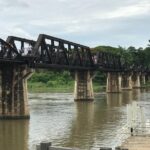
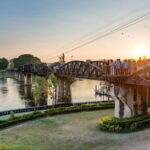
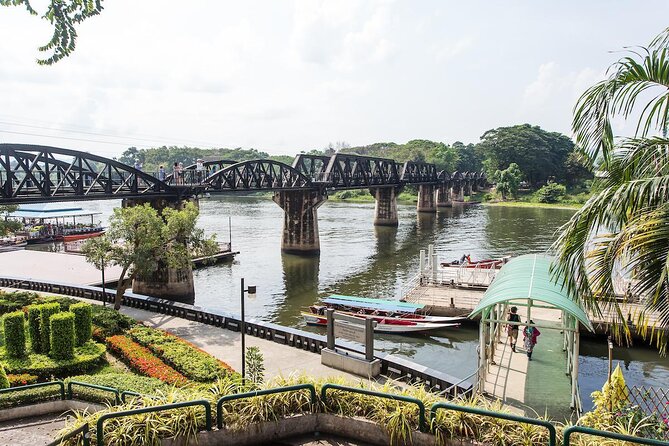
Then comes the heart of the story: a stop at the River Khwae Bridge. You get an actual walk across/along the bridge area for about an hour. That time matters. From the photos people take, the bridge can look like just a landmark. On foot, it becomes a real corridor—one that connects the river setting with wartime labor and forced movement.
Why this stop works on a guided tour: the guide can connect what you see with what you learn. One important element here is how the bridge is framed as a construction linked to Allied POWs during WWII. Whether you know the story already or you’re learning it fresh, having a guide helps turn the site into understanding rather than just an object.
This is also a good moment for your brain to reset into “be present.” If you’re the type who likes to watch your surroundings first and ask questions after, do that here. Let the bridge and river do their job before you move on.
Death Railway Museum, Tham Kra Sae Bridge, and the Cemetery Pause
After the bridge, the day keeps building context with two stops related to the Death Railway.
First, there’s the Death Railway Museum and Research Centre. It focuses on the Burma Railway, which many people associate with the nickname Death Railway. The railway is described as a 415-kilometer line between Ban Pong, Thailand, and Thanbyuzayat. This is the kind of factual grounding that makes the train portion later feel more specific, not just scenic.
Next comes Tham Kra Sae Bridge, also linked to the Death Railway story and built by war prisoners of WWII. You’ll get about an hour here, and the point is to connect the “big idea” of the railway with its constructed structures.
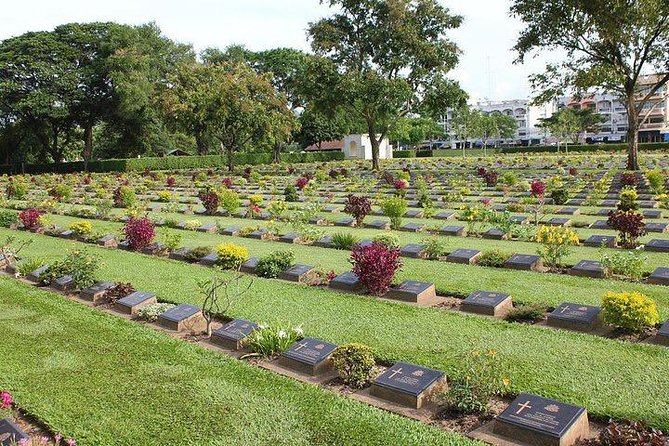
Then you have the solemn stop: Kanchanaburi War Cemetery (Don-Rak War Cemetery). This is where around 9,000 Allied soldiers lost their lives while working on the bridge and the Burma Railway—and where they’re laid to rest. Even if you’re not a “cemetery person,” this stop is the emotional anchor of the tour, because it shifts from history as information to history as loss.
One consideration: you may feel the day turning heavy around this point. That can be a good thing. It helps the rest of the itinerary land with weight instead of feeling like a checklist.
Wang Po Buffet Lunch: The Most Practical Part of the Day
You’ll have a buffet lunch served after arriving at Wang Po station, which is near the Burmese border. This is smart planning. The railway segment is the thrill moment, but your energy matters, and a proper meal helps you enjoy it instead of just surviving it.
Buffet format is also helpful for mixed appetites. Some people want something light; others want carbs and something warm. Since you’re here before the train ride, treat lunch as your fuel stop and don’t overthink it.
If you’re sensitive to crowds or noise, go at a steady pace and don’t wait until the last minute. The schedule is timed, and lunch tends to be one of those moments where the day feels most “on rails.”


Riding the Death Railway: A Train Ride With Real Meaning
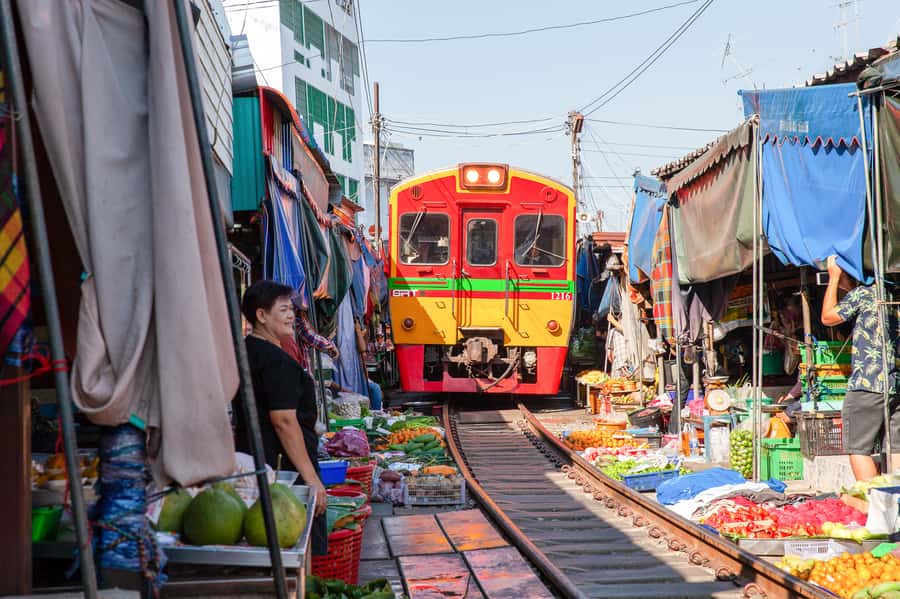
One of the main reasons to book is the train ride along a breathtaking section of the Death Railway. The experience is described as thrilling, but the value isn’t only the excitement. It is the chance to move through the geography that shaped wartime logistics and suffering.
If you’ve ever wondered how a place like this can look peaceful now, while it once carried unimaginable hardship, this is the moment. The scenery puts a human scale on the story. Suddenly, the railway is not just a line on a map; it’s a route through a landscape.
A couple of timing-and-expectation tips:
- The day runs long, but the schedule can compress depending on conditions like traffic. One review noted the trip could feel shorter than the stated duration.
- If you want maximum photo time, be ready to make fast choices. You’re on a guided plan, and the day keeps moving.
Also, if language clarity matters to you, try to catch your guide early. One visitor found English difficult to understand at times, while others praised guides for being entertaining and well presented. If you get a strong communicator—someone like Oom was specifically mentioned—you’ll likely understand more and enjoy it more.
Price and Value: Is $83.68 a Good Deal?
At $83.68 per person, you’re paying for more than transport. You’re paying for an organized full-day package with:
- an English-speaking guide
- round-trip transfers in an air-conditioned vehicle
- ticketed admissions at major stops
- a buffet lunch at Wang Po station
- a guided train experience
For comparison, trying to stitch together the bridge walk, museums, cemetery, lunch timing, and the railway segment on your own would take a lot of coordination. And in this region, coordination is usually where independent plans either work beautifully—or fall apart.
Where the value can dip is if you feel rushed. A heavy itinerary plus a long drive can reduce how slowly you can process museum exhibits. Still, the small group limit (max 15) helps keep things manageable.
Bottom line: if you want guided structure and you’re okay with a long day, the value looks strong.
Who This Tour Fits Best (and Who Might Want Another Option)
This is ideal for you if you:
- want a guided day trip out of Bangkok without juggling multiple tickets and timing
- care about WWII history in East Asia and want it tied to specific places
- like an itinerary that mixes emotional sites (cemetery) with explanatory stops (museum sections) and a “see it for yourself” moment (train)
It may not be ideal if you:
- hate long days and tight schedules
- want lots of free time to linger and read every display slowly
- need very clear English narration every minute (guide communication can vary)
If you’re the kind of traveler who appreciates thoughtful pacing—then recovers your energy with lunch and the train ride—you’ll probably enjoy this.
Should You Book This River Kwai and Death Railway Day Trip?
Book it if you want a well-structured, guided experience that takes you to the bridge, the POW camp replica, the cemetery, and the Death Railway train ride in one day. You’ll get a clearer understanding than you would with just sightseeing alone, and the lunch stop at Wang Po makes the day feel workable.
Skip or consider alternatives if you know you struggle with long schedules, or if you prefer less emotional weight in your itinerary. Also, plan mentally for possible time compression. This tour is built to cover big ground, and that can mean some parts feel quick.
My advice: treat this as a history-focused day with strong emotions, then let the train ride be your reward.
FAQ
How long is the tour?
The tour is listed as about 13 hours.
What does the tour include?
It includes round-trip transfers, an English-speaking guide, lunch, and air-conditioned vehicle transportation, plus admissions/tickets for key stops as listed.
Is hotel pickup available?
Yes. Pickup is offered from various hotels in Bangkok. A start point is also listed at Central Bangrak.
What time does the tour start?
The start time is 6:00am.
What’s the maximum group size?
The tour has a maximum of 15 travelers.
Is lunch included, and where is it served?
Yes. You’ll get a buffet lunch at Wang Po station.
What are the main stops during the day?
You’ll visit the JEATH War Museum, River Khwae Bridge, the Death Railway Museum and Research Centre, Tham Kra Sae Bridge, the Kanchanaburi War Cemetery, and then take the train ride along the Death Railway.
Is the guide available in English?
Yes, the tour includes an English-speaking guide.
Can I cancel for free?
You can cancel for a full refund up to 24 hours before the experience start time.
What happens if weather is bad?
The tour notes it requires good weather. If it’s canceled due to poor weather, you’ll be offered a different date or a full refund.