REVIEW · BANGKOK
Full Day Kanchanburi Tour from Bangkok
Book on Viator →Operated by My Trip Maker · Bookable on Viator
One railway ride and you feel the past. This full-day Kanchanaburi outing links you to the Burma Railway story, from a cemetery for about 9,000 Allied soldiers to a train segment nicknamed the Death Railway.
I love the way the day mixes key sites instead of rushing one quick stop. I especially love the JEATH War Museum, built like a WWII POW camp, and I love that the included train ride lets you experience the route itself, not just photos and facts.
One possible drawback: the heavy WWII theme means the mood is serious, and the museum interpretation may feel label-driven rather than chatty. If you want more color, come ready with questions for your English-speaking guide.
In This Review
- Key Highlights You Should Know Before You Go
- From Bangkok Start Time to Kanchanaburi End Time: Plan Your Day Like a Pro
- Kanchanaburi War Cemetery: A Morning That Sets the Context
- JEATH War Museum: When the Labels Feel Like the Story Itself
- River Kwai Bridge: Landmark Photos, Extra Meaning If You Time It Right
- Riding the Death Railway: The Included Train Segment That Changes the Whole Trip
- Buffet Lunch at Wang Po Station: Rest, Refuel, and Watch the Borderland Setting
- The Long Return Drive: How to Get the Most From the Final Hours
- Price and Value: Is $109.60 Worth a 13-Hour History Day?
- Who This Tour Is Best For (and Who Might Want to Skip It)
- Practical Tips for a Smoother, More Respectful Day
- Should You Book This Full Day Kanchanaburi Tour?
- FAQ
- What time is pickup in Bangkok?
- How long is the tour?
- Where does the tour meet in Bangkok?
- What are the main stops during the day?
- Is lunch included?
- What admissions are included?
- Is the train ride part of the tour?
- How big is the group?
- What is the cancellation policy?
- What happens if weather is bad?
Key Highlights You Should Know Before You Go
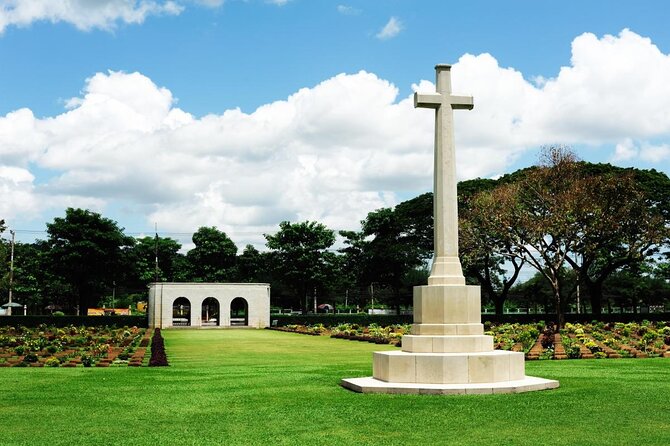
- 9,000 Allied graves tied to the Burma Railway makes the morning emotionally powerful
- JEATH War Museum recreates a POW-camp layout, with paintings, photos, and period tools
- River Kwai Bridge stop adds context in a landmark setting
- Death Railway train ride gives you the physical sense of the corridor’s history
- Buffet lunch at Wang Po station keeps the day moving and takes you near the Burmese border
- Small group (max 10) helps the schedule stay manageable over a 13-hour day
From Bangkok Start Time to Kanchanaburi End Time: Plan Your Day Like a Pro
This tour runs on a full-day clock, roughly 13 hours. Pickup starts between 06:00 and 07:00 from your hotel area, with a direct return to the same meeting point later in the evening (about 17:30 to 18:00). That early start can feel like a wake-up slap, but it also means you’re less likely to fight crowds or lose daylight to Bangkok traffic.
The drive to Kanchanaburi is listed at around 3 hours, and the day fills the rest with short, focused stops plus a major centerpiece: the included Death Railway train journey. The schedule is structured, not free-form, which is great if you like knowing what’s next and hate gambling with timing in a new city.
Group size matters here. This runs with a maximum of 10 travelers, which usually means fewer people at each photo stop and less chaos when you’re lining up for the train portion. Still, you’ll be moving through several sites back-to-back, so keep your expectations realistic: it’s “packed but intentional,” not slow travel.
A few more Bangkok tours and experiences worth a look
Kanchanaburi War Cemetery: A Morning That Sets the Context
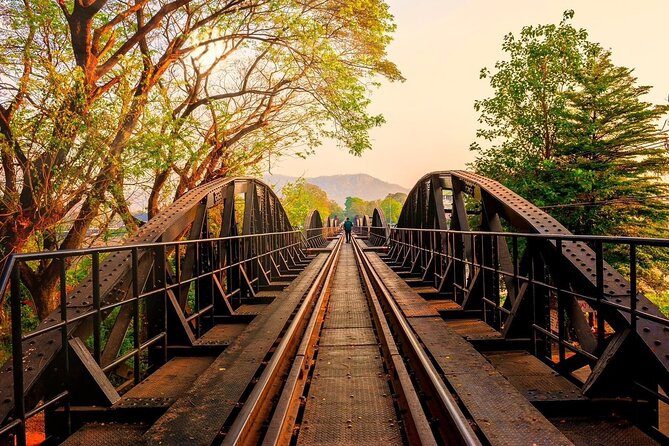
You’ll arrive at the Kanchanaburi War Cemetery around the late-morning start, with about 40 minutes set aside. This is one of the most significant stops on the whole itinerary. The cemetery is described as the main prisoner-of-war cemetery for victims of Japanese imprisonment who died while building what’s often called the Burma Railway. The tour summary puts the estimated number of Allied soldier graves at around 9,000.
This matters because it changes how you’ll read everything later in the day. If you start with the museum or the bridge first, the history can stay abstract. Starting at the cemetery forces the story to have a face, names, and weight. If you’re the type who likes “context first,” this order is a win.
Practical note: cemeteries are usually quiet zones, and this one is likely to be emotionally intense. Give yourself permission to move slowly. You don’t need to rush to cover the whole grounds in one pass. Let the time do its work.
Also, good news for your budget: the cemetery stop is shown as free admission on this tour.
JEATH War Museum: When the Labels Feel Like the Story Itself
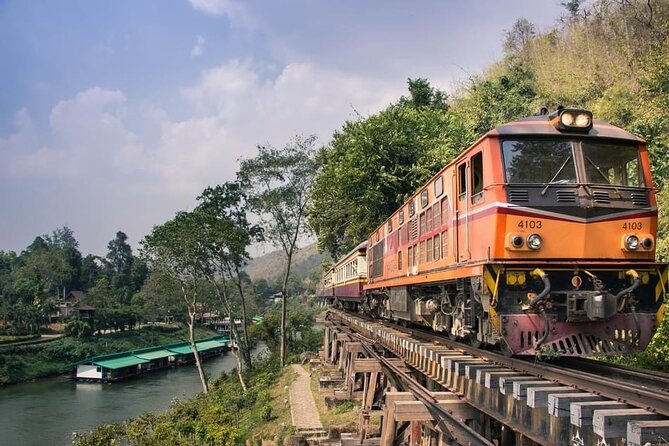
After the cemetery, the schedule jumps to the JEATH War Museum (about 40 minutes). The museum is built in the form of a Japanese POW camp from World War II. That design choice is the core of the experience: you aren’t just looking at a slideshow. You’re walking through a recreated environment tied to the railway period.
Inside, you’ll see a collection of paintings and photographs, plus tools used in those days. That mix gives you two types of information at once:
- Visual material that helps you picture daily life.
- Physical objects that make the period feel real and mechanical, not just historical.
One caveat comes from the overall tone of how this kind of museum is typically experienced. There’s a chance you’ll feel the visit is more straightforward and text-driven than conversational. If you’re hoping for lots of extra interpretation, be proactive: ask your guide what’s most important to notice in the displays, and what people often misunderstand about the Burma Railway era.
Admission to JEATH is listed as included, so you won’t need to juggle tickets mid-day. This also helps the timing stay smooth.
River Kwai Bridge: Landmark Photos, Extra Meaning If You Time It Right
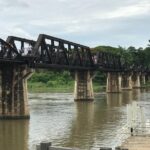
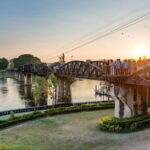
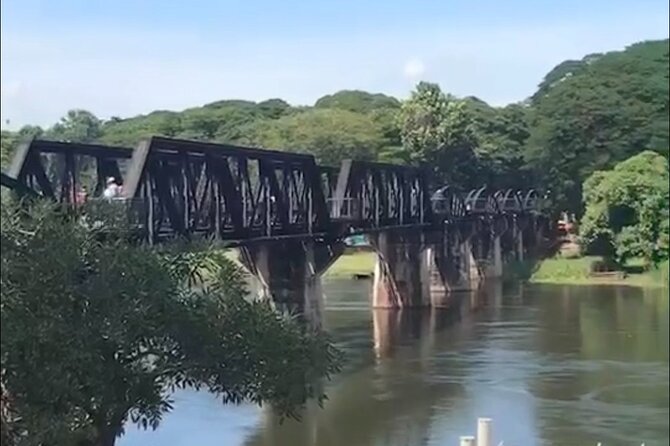
Next up is the River Kwai Bridge area, with about 40 minutes for the stop. The itinerary notes the memorial context around World War II history, and it also flags something useful for planning: a Bridge of the River Kwai Memorial Week is held during late November to early December every year. If your dates fall near that window, you might find additional exhibitions related to the story.
Even if you don’t catch a special memorial event, this stop is valuable because it shifts you from “learned history” into “seen history.” Bridges are physical objects. They also symbolize engineering and control—exactly the kind of machinery that made the railway possible.
The best way to get value here is to use it as a transition point. Look at the setting, then remember what you learned moments earlier in the cemetery and museum. That combination is what turns a photo stop into understanding.
This bridge stop is also listed as included for admission, which helps keep your day simple.
Riding the Death Railway: The Included Train Segment That Changes the Whole Trip
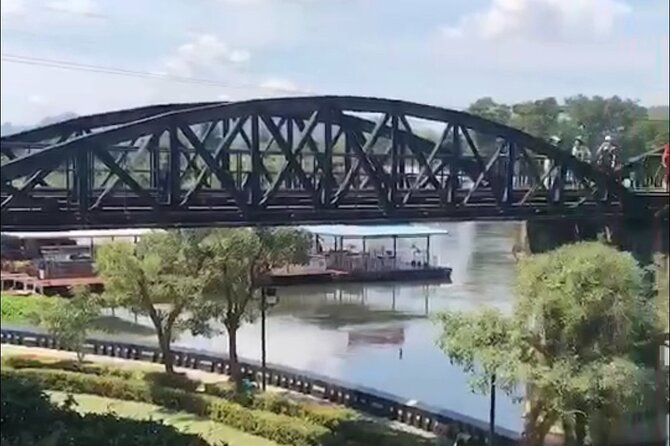
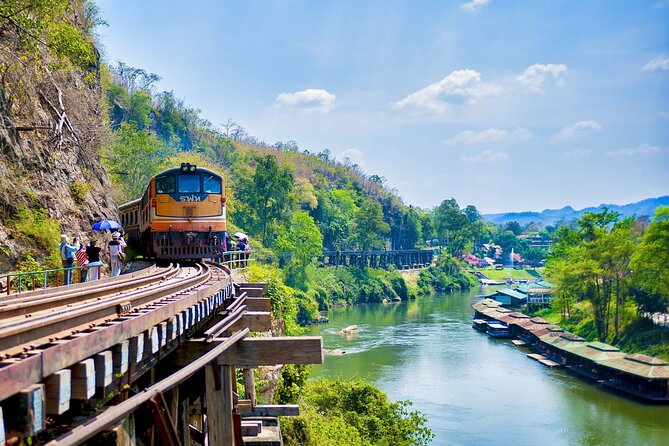
Here’s the centerpiece: a train ride on the Death Railway, tied to the route near Tham Kra Sae Bridge, with about 2 hours and 10 minutes scheduled. This is more than a scenic ride. The tour materials note the nickname Death Railway came from the deaths of over 100,000 laborers during 16 months of construction.
So what do you do with that on a train platform? You slow your mind down. You don’t need to turn it into a grim science project. But you also shouldn’t treat the ride as just a way to get from A to B.
Think of the train as a way to grasp the corridor’s purpose: the route was built for movement, supply, and power, at an enormous human cost. When you feel the rhythm of the journey, it’s harder for the history to stay distant.
This train portion is specifically listed as included, and that’s a big value point. Many day trips sell the sites around the railway, but without the ride. Here, you get both: the story and a key slice of the path.


Buffet Lunch at Wang Po Station: Rest, Refuel, and Watch the Borderland Setting
After the train, you’ll have lunch around 13:40. The overview notes it as a buffet lunch served upon arrival at Wang Po station, described as being close to the Burmese border. The itinerary also frames it as lunch at a restaurant in Kanchanaburi province, which fits the idea of an organized meal break before the return.
This is where the tour gives you a practical rhythm. You’ve spent the morning taking in heavy WWII material. Lunch gives your brain a reset, and your body some time to refuel so you can handle the 4-hour return drive to Bangkok.
What I’d focus on: use lunch as a chance to slow down your pace. Don’t try to squeeze extra sightseeing into this break. Sit, eat, and let the day catch up with you—because the drive back will bring another few hours of motion.
The day is designed so you don’t have to think too hard about food logistics. That’s worth something, especially if you’re not traveling with local language skills.
The Long Return Drive: How to Get the Most From the Final Hours
You depart Kanchanaburi after lunch around 14:40 and head back to Bangkok for roughly 4 hours, arriving around 17:30 to 18:00. By this point, the tour has given you the emotional and historical core. The return drive is the decompression phase.
I like this kind of timing because you’re not dragged into more museums late in the day. Instead, you get a clean finish: you’re already scheduled for the evening wrap-up, back to your starting area.
If you’re the type who wants to process what you saw, use the ride back for that. Skim your notes, remember the order you visited, and try to connect the cemetery, the museum, and the bridge to the train ride. That’s how the day stops being a checklist.
Price and Value: Is $109.60 Worth a 13-Hour History Day?
At $109.60 per person, this is not a budget throwaway. But it’s also not overpriced for what’s included. Here’s the value logic that matters:
- Round trip transfer between Bangkok and Kanchanaburi
- English-speaking guide
- JEATH War Museum admission (included)
- Death Railway train journey (included)
- Additional stops like the War Cemetery and the River Kwai Bridge are shown with free/covered admission in the itinerary info
Also, the tour limits the group to 10 travelers. For a day trip, that can make the experience feel more coordinated and less like public transportation.
One more value point: the schedule gives you a full arc. You don’t just go to one site; you go to the cemetery first, then the museum, then the bridge context, then the train route. That flow is what you’re paying for.
If you want action-only travel, this isn’t that. If you want a meaningful day that teaches you how the Burma Railway worked—and what it cost—this price starts to make sense.
Who This Tour Is Best For (and Who Might Want to Skip It)
This fits best if you:
- Like structured learning with a guide
- Want the Death Railway story connected to real places, not just pictures
- Can handle heavy WWII topics respectfully
- Prefer a small-group plan with pickup and an included train ride
You might think twice if you:
- Want a light, casual day with upbeat pacing
- Prefer lots of free time to explore on your own
- Get bored when museum interpretation is more label-based than chatty
Still, the overall design is smart. It gives you the major sites and the train segment in one day, without forcing you to coordinate multiple ticket systems.
Practical Tips for a Smoother, More Respectful Day
A few no-nonsense things to help you enjoy the full experience:
- Dress for warm weather and consider a layer. You’ll likely be outdoors at bridges and cemeteries at different times.
- Bring water and plan small snacks if you’re sensitive to long gaps. The day includes lunch, but it’s a long time from the morning pickup to meal time.
- Think about mindset: this is a day tied to imprisonment and death connected to railway construction. Keep your pace calm and respectful.
- If you care about getting more from the museum displays, write down two or three questions for your guide before you enter JEATH. It’s an efficient way to turn a label-driven visit into a deeper one.
One operational note: the experience states it requires good weather. If it’s canceled due to poor weather, you should be offered a different date or a full refund. That means it’s worth booking when you have a little flexibility.
Should You Book This Full Day Kanchanaburi Tour?
I’d recommend this tour if you want a guided, place-based understanding of the Burma Railway story that includes the included Death Railway train journey. The order of stops helps you build context: cemetery first, museum next, bridge context, then the train. That flow makes the day more meaningful than a “drive-by” sightseeing route.
If you’re the type who needs constant storytelling from the guide, just be aware that museum interpretation may feel straightforward. You can fix that by asking questions and taking a slower approach inside JEATH.
If you’re on the fence, the best deciding factor is simple: are you ready for a serious WWII-themed day that teaches you through sites and a train ride? If yes, this is strong value for a small-group, full-day plan.
FAQ
What time is pickup in Bangkok?
Pickup starts between 06:00 and 07:00 from the Century Park Hotel Pratunam area at the listed meeting point.
How long is the tour?
The tour runs for about 13 hours (approx.).
Where does the tour meet in Bangkok?
The meeting point is Century Park HotelPratunam – Victory Monument 9 Ratchaprarop Rd, Khwaeng Makkasan, Khet Ratchathewi, Krung Thep Maha Nakhon 10400, Thailand.
What are the main stops during the day?
You’ll visit the Kanchanaburi War Cemetery, the JEATH War Museum, the River Kwai Bridge area, and take a train ride on the Death Railway, plus lunch in Kanchanaburi.
Is lunch included?
Lunch is part of the plan, served as a buffet at or near Wang Po station.
What admissions are included?
Entry admission to the JEATH War Museum is included, and the train journey on the Death Railway segment is included.
Is the train ride part of the tour?
Yes. The itinerary includes a train ride on the Death Railway for about 2 hours and 10 minutes.
How big is the group?
This tour/activity has a maximum of 10 travelers.
What is the cancellation policy?
Free cancellation is available up to 24 hours in advance for a full refund.
What happens if weather is bad?
The experience requires good weather. If it’s canceled due to poor weather, you’ll be offered a different date or a full refund.
![Top 3 Bangkok Temples Private Tour [with Wat Pho-UNESCO] - Wat Traimit: The World’s Largest Solid Gold Buddha Moment](https://6.thethailandtraveler.com/wp-content/uploads/top-3-bangkok-temples-private-tour-with-wat-pho-unesco.jpg)