REVIEW · CHIANG MAI
Chiang Mai: Tuk-Tuk Evening Tour with Temples & Street Foods
Book on GetYourGuide →Operated by TripGuru Thailand · Bookable on GetYourGuide
Night tuk-tuks in Chiang Mai feel like a movie. I love the tuk-tuk ride around the Old City walls and moat and the white chedis at Wat Suan Dok that look unreal under night lights. One thing to plan for: it is a packed evening with temple dress rules and a bit of walking, so bring proper cover and comfy shoes.
The food stops are where the tour really pays off. I like that you do not just get dropped at a market; your guide helps you find dishes you’ll actually enjoy at Chang Phuak Gate, then you keep the momentum with Warorot and Ton Lam Yai Flower Market.
This is also the kind of tour that feels smoother because it stays small and structured. The low-impact touch matters, but you still need to be ready for night traffic, uneven surfaces, and the simple reality that street food is not included in the price.
In This Review
- Key Highlights Worth Marking on Your Map
- Tuk-Tuk at Night: How Chiang Mai Feels When the Lights Turn On
- Riding the Old City Walls and Moat Like a Street-Level Historian
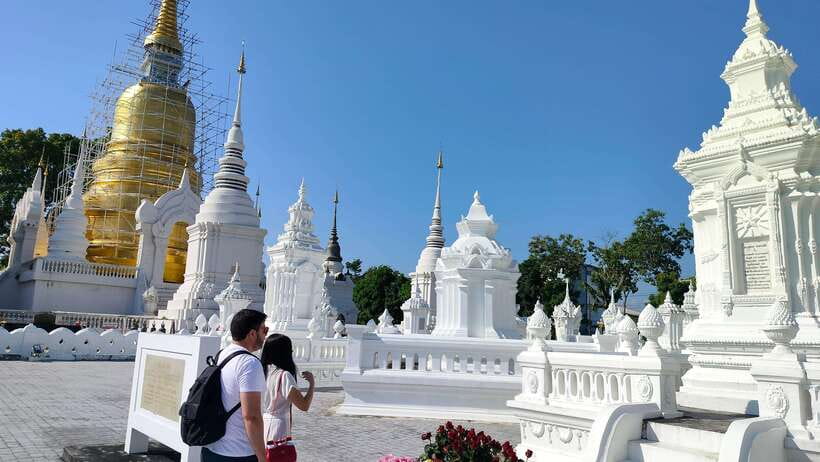
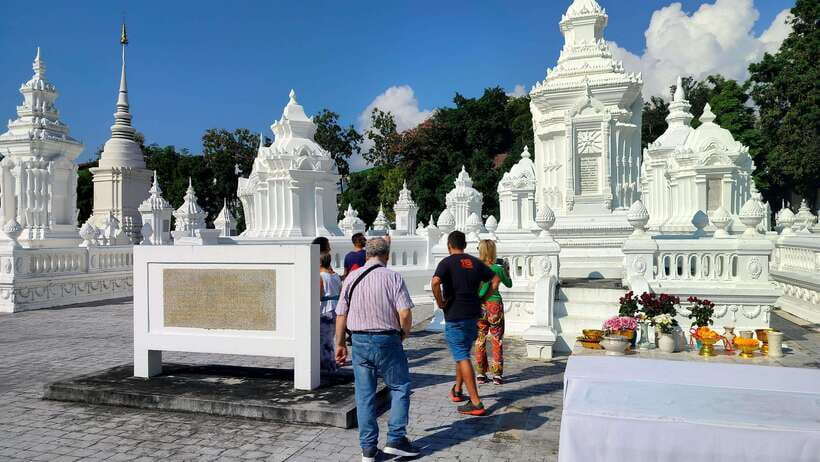
- Wat Suan Dok: Flower Garden Temple and the White Chedi Glow
- Wat Lok Moli: Lanna Monastery Details and the Mengrai Ashes Connection
- Chang Phuak Gate Night Market: Where the Street Food Choices Get Real
- Warorot Market and Ton Lam Yai Flower Market: More Night Life Without the Stress
- The Price: Why $64 Can Feel Fair for This Mix of Temples and Transport
- Guide Power: How Names Like Cookie, Pim, Leo, and Lily Shape the Night
- Getting Ready: Dress Code, Shoes, and Cash You’ll Actually Use
- Pickup and Timing: Where You Meet the Tour in Chiang Mai
- GSTC-Certified and Low-Impact Travel: What It Means in Practice
- Who Should Book This Chiang Mai Tuk-Tuk Evening Tour?
- Should You Book It? My Straight Answer
- FAQ
- How long is the Chiang Mai tuk-tuk evening tour?
- What is included in the price?
- Are entrance fees to the temples included?
- Do I need extra money for street food?
- What language will the guide speak?
- Is there a dress code for the temples?
- Where do I meet the tour if my hotel is outside the free pickup area?
Key Highlights Worth Marking on Your Map
- Private tuk-tuk after dark through the Old City, with a short but memorable ride time
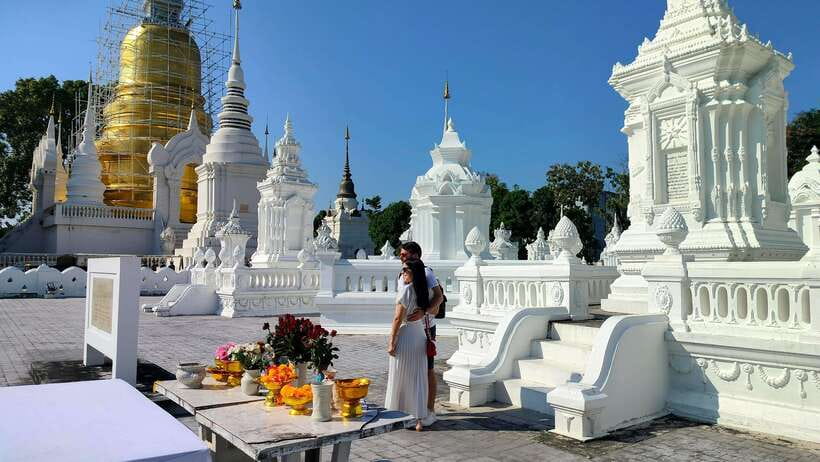
- Wat Suan Dok’s white chedis plus a 48-meter golden pagoda in Sri Lankan style
- Wat Lok Moli’s restored chedi tied to the Mengrai dynasty, with ashes in the complex
- Chang Phuak Gate Night Market food help so you can order with confidence and not just wander
- Multiple market stops that keep the night moving: Chang Phuak Gate, Warorot Market, and Ton Lam Yai Flower Market
- GSTC-certified, low-impact travel with water provided and carbon emissions offset credits
Tuk-Tuk at Night: How Chiang Mai Feels When the Lights Turn On
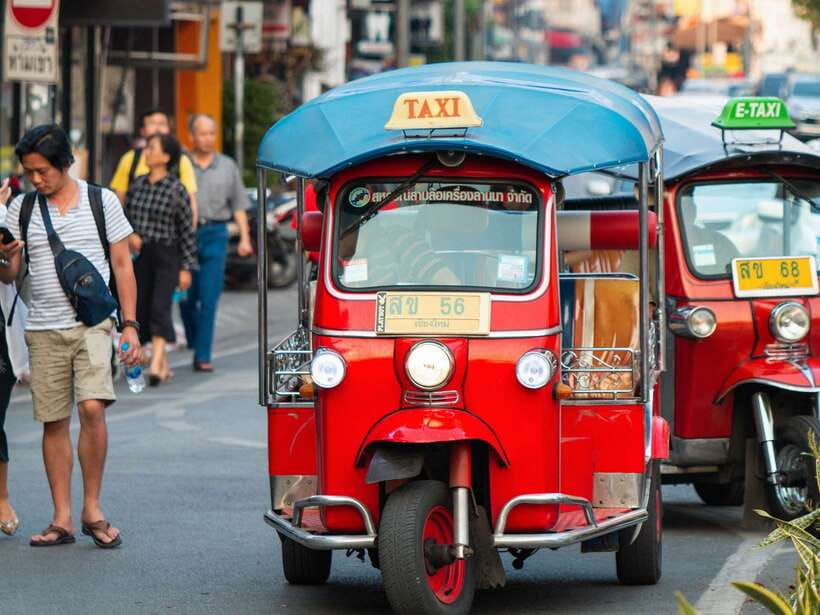
The whole point of this tour is simple: you get to see Chiang Mai at night from a tuk-tuk seat, not from inside a museum or from behind a bus window. In about 4 hours, you’ll get a practical whirlwind view of the city’s shape, from the Old City cultural core out toward busy night areas.
You also get a private tuk-tuk with a guide riding along, so you are not waiting for multiple pickups or getting herded with strangers. With a small group capped at 4 people, it stays calm enough to ask questions without shouting over traffic.
One practical note: the schedule is not long at each place. That is good if you hate slow tours, but it means your temple moments and market moments are quick hits. If you want long, linger-everywhere wandering, you might end up wishing you had more time later on your own.
You can also read our reviews of more evening experiences in Chiang Mai
Riding the Old City Walls and Moat Like a Street-Level Historian
Your evening starts with hotel pickup in select areas, then boarding the tuk-tuk for a city loop. Along the way, you’ll hear the story of Chiang Mai’s rise and shake-ups—how it once served as the capital of the Lanna Kingdom, later falling into Burmese hands, then regaining independence with help from the King of Thonburi.
Even if you already know some Thai history, this kind of narration helps the places make sense. You are not just staring at walls and gates; you’re connecting them to why the city looked the way it did and why certain temples became power anchors in the region.
This section is also the “breathing space” of the tour. You get a little time to reset from daytime plans, put your feet up for a bit, and mentally switch gears into night mode.
Wat Suan Dok: Flower Garden Temple and the White Chedi Glow
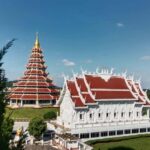
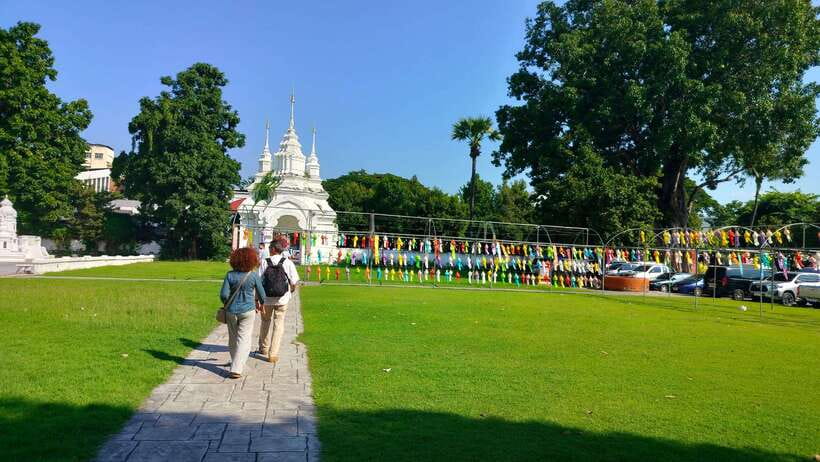
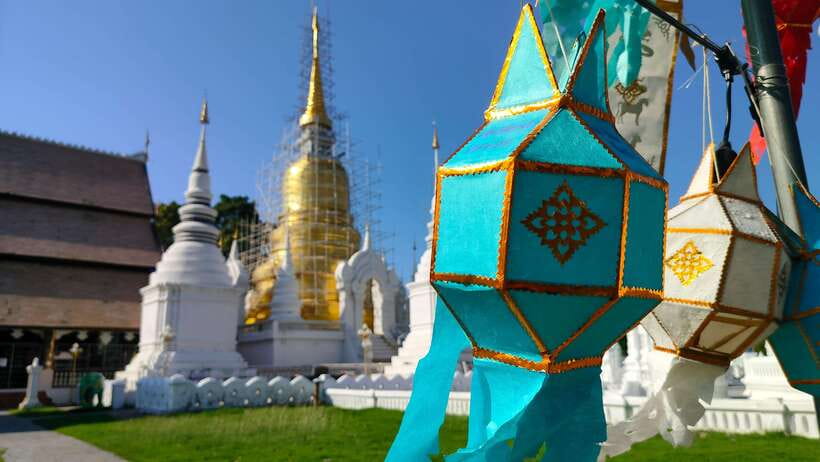
Wat Suan Dok is the temple stop that most people remember, and for good reason. The name literally points to a flower garden temple, referencing the location where it was built—once used as a royal flower garden by a past ruler of Chiang Mai.
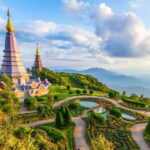
At night, the standout is the cluster of white chedis. They can look dramatic even in daylight, but under evening light they feel more sculptural, like a set you walk through. You’ll also have time to take in the 48-meter golden pagoda, built in Sri Lankan style, which gives the site a sense of scale you can’t really guess from photos.
Then there’s the sacred relic story tied to the complex. The tour shares the belief that a Buddha relic—believed to be the shoulder bone of Buddha—rests here. That context matters because it turns the visit from sightseeing into a reasoned pause.
What to watch for: since this is a temple stop, you’ll want to dress for it. The tour flags strict dress code expectations: you should cover shoulders, underarms, back, and knees. If your outfit is borderline, bring a scarf or a cover-up so you do not get stuck at the gate.
Wat Lok Moli: Lanna Monastery Details and the Mengrai Ashes Connection
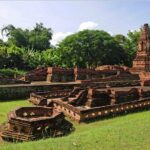
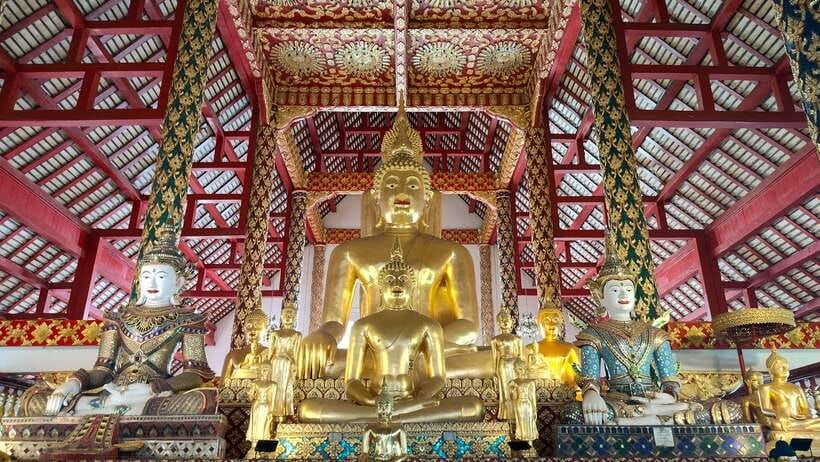
After Wat Suan Dok, you head to Wat Lok Moli, a 14th-century temple that’s one of the older ones in the city. This stop gives you a different temple mood: instead of the bright focus on white chedis, you get more of the deeper-rooted, older-temple feel.
A major highlight is a massive restored chedi featuring a Buddha image. This chedi also contains the ashes of several kings from the Mengrai dynasty. That is a specific, grounding detail that makes the place feel tied to real people and real rulership—not just old stones.
You’ll also spend time at the teak wood pavilion and explore the Lanna-style Buddhist monastery area. Even without getting stuck in a lecture mode, these architectural touches help you see how Lanna identity shows up in everyday temple design.
Time here is shorter than Wat Suan Dok, so treat it like a focused walk: look first, then ask your guide anything you’re wondering about. With a small group, you should have a decent chance to get questions answered without feeling rushed.
Chang Phuak Gate Night Market: Where the Street Food Choices Get Real
Once you’re done with temples, the tour pivots to the fun chaos of the night markets. Chang Phuak Gate Night Market is your main food time, and the value here is not just snacks—it’s guidance.
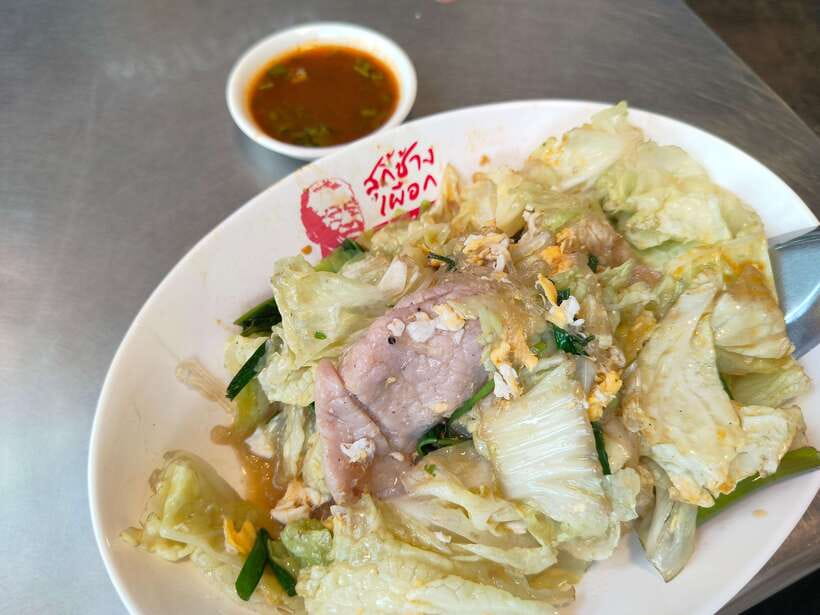
Your guide helps you locate favorite local dishes, so you’re not stuck doing the usual tourist math of what looks safe, what looks good, and what looks like it might be spicy. That matters because Chiang Mai street food is all about ordering with confidence, not ordering with fear.
You’ll spend about 30 minutes at Chang Phuak Gate, which is enough to walk, smell, and actually pick a couple items. Since street food and additional drinks are not included, plan to budget extra. I’d treat this stop like a tasting menu where you pay for what you want to try—not a fixed set of free dishes.
Practical tip: bring cash. You do not want to end up at a stall you like and then realize you’re stuck with cards you can’t use.

Warorot Market and Ton Lam Yai Flower Market: More Night Life Without the Stress
After Chang Phuak Gate, you keep going with additional market time, including Warorot Market and Ton Lam Yai Flower Market. The tour frames these as opportunities to soak up local night life—less about one single “must-do” item and more about seeing how the city eats, sells, and moves after dark.
Warorot Market adds another layer to your food picture, and Ton Lam Yai Flower Market brings a different vibe since it’s tied to flowers by name and identity. Even if you don’t buy much, these extra stops help you understand Chiang Mai’s night rhythms beyond one gate area.
Because the tour is structured, you also avoid the common problem of walking in circles while hungry. You get a route that makes sense, and you can decide on the spot whether you want to keep snack-hopping or just enjoy the atmosphere.
The Price: Why $64 Can Feel Fair for This Mix of Temples and Transport
At $64 per person for a 4-hour evening, this tour can be good value because you’re paying for the pieces that are annoying to DIY at night:
- Private tuk-tuk transportation
- Hotel pickup and drop-off in select areas
- A live guide in English and Thai
- Temple entrance fees for Wat Suan Dok and Wat Lok Moli
- Water, plus carbon emissions offset credits
The two items not included are also clear: street food and additional drinks. That means you should plan to spend extra on snacks if you want to eat like you’re on a food mission.
Also, the small-group format changes the math. Paying for a private tuk-tuk with only a few people is often cheaper than it sounds, especially once you factor in entrance fees that add up quickly when you go temple-hopping on your own.
If you are the type who likes structure—night sights plus food stops—this price is easier to justify. If you already know you’ll only want one temple and one market snack, you might consider building your own route. But if you want a guided evening that hits the big targets without wasting time, $64 makes sense.
Guide Power: How Names Like Cookie, Pim, Leo, and Lily Shape the Night
A great guide can turn a tour from a checklist into a lived-in evening. Names that show up strongly for this experience include Cookie, Pim, Leo, Lily, and James—each tied to a consistent theme: explaining what you’re looking at and helping you eat well.
Cookie, for example, is singled out for explaining things during the rides and describing the sights clearly. Pim and Leo come up for big-picture knowledge and practical food guidance—especially choosing where to eat. Lily is mentioned for being friendly, helpful, and quick to answer questions, with one memorable extra touch of Thai singing.
Even if your guide is different, the lesson is the same: ask questions. If you do, your time at the temples and markets tends to feel much fuller. When the guide is hands-on with food choices and temple context, you walk away with a clearer idea of what you actually saw and why it matters.
Getting Ready: Dress Code, Shoes, and Cash You’ll Actually Use
This tour runs at night, but it still includes two active temple visits. Dress code is strict at some sites, and the tour gives a clear warning: no revealing shoulders, underarms, back, or knees. Plan on long pants, and keep a scarf or cover-up handy.
Here’s what I’d pack based on what you’ll need during the actual evening:
- Comfortable shoes for temple floors and market sidewalks
- Insect repellent
- Long pants
- Cash for street food and extra drinks
- A scarf for quick cover if your outfit is borderline
- Camera if you love night lighting and chedis
The tour also recommends a moderate fitness level. You don’t need to be an athlete, but you should be comfortable with short walks and quick transitions between stops.
And if any of the health notes apply—pregnancy, mobility impairments, heart problems, or respiratory issues—you may want to choose a different style of sightseeing. The tuk-tuk and market walking are part of the experience, not optional extras.
Pickup and Timing: Where You Meet the Tour in Chiang Mai
Pickup is part of the convenience, but it’s not unlimited everywhere in the city. You’ll get free pickup within select areas, including major parts of Chiang Mai within a 2 km radius of Thapae Gate and areas around the Old City Wall (including places like Chang Klan Road, Thapae Road, Wualai Road, and zones near the Night Bazaar, Ton Lam Yai Market, and Kad Luang).
If your hotel is outside the free pickup area, you’ll meet at Tha Phae Gate in front of McDonald’s. Your guide will hold a TripGuru sign, and they’ll confirm your pickup time and meeting point by email the evening before. Be ready in your lobby about 10 minutes before pickup.
This matters because it keeps your evening from slipping. At night, a late start can feel like losing your whole vibe, so show up on time.
GSTC-Certified and Low-Impact Travel: What It Means in Practice
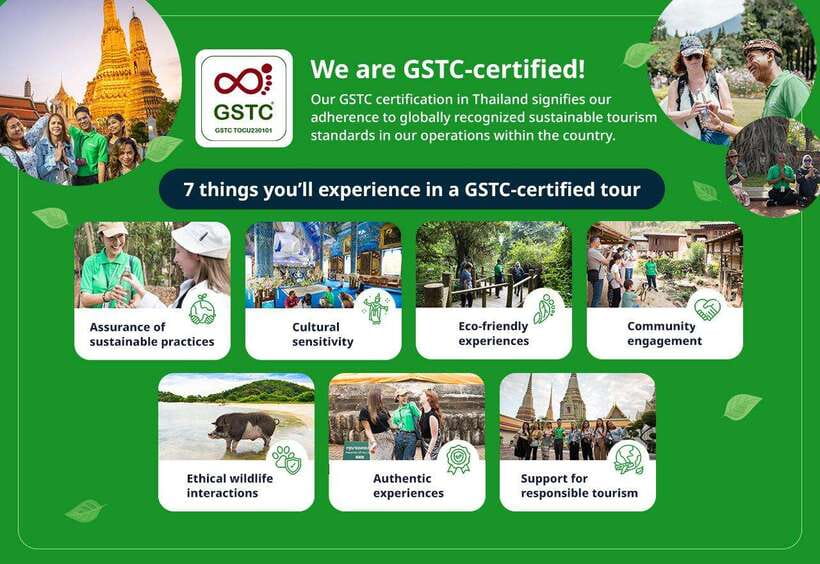
This tour is GSTC-certified, and it includes low-impact touches. You get water and the tour notes providing water in glass bottles, plus carbon emissions offset credits in every tour.
Will those offsets replace your own good decisions? No. But it does help you choose a tour operator that pays attention to the basics rather than treating “responsible travel” like marketing only.
In practical terms, you’re less likely to end up scrambling for water during the evening, and you’re choosing a tour that is designed with environmental responsibility in mind.
Also, small group touring usually means less traffic hassle and fewer interruptions. It’s not just good for the planet; it’s good for your nerves.
Who Should Book This Chiang Mai Tuk-Tuk Evening Tour?
Book it if you want:
- A short, structured night tour (about 4 hours) that covers temples plus markets
- A private tuk-tuk experience without big-group chaos
- Clear temple context and helpful food guidance
- A small group format limited to 4 people
- A route that works even if you’re not confident building night plans on your own
Consider skipping it if:
- You need a slower pace with long time at each stop
- You cannot manage temple dress rules and short walks
- You fall into the tour’s not-suitable categories listed (pregnancy, mobility impairments, heart or respiratory issues)
- You only want food and no temples, since temple visits are core parts of the schedule
Should You Book It? My Straight Answer
If this is your first time in Chiang Mai and you want a night plan that hits the main cultural sights plus real local food areas, I think this tour is a smart buy. The mix is the point: you see Wat Suan Dok and Wat Lok Moli with entrance included, then you get guided market time when it matters most—when you’re hungry and deciding what to eat.
If you’re the type who hates rules, pack-light only, or refuses extra walking, then it may feel too structured. But if you’re willing to dress for temples, bring cash, and enjoy a fast-paced evening, this tour gives you a lot of Chiang Mai per hour.
FAQ
How long is the Chiang Mai tuk-tuk evening tour?
The tour lasts 4 hours.
What is included in the price?
The price includes hotel pickup and drop-off from select locations, a guide, private tuk-tuk transportation, Wat Suan Dok and Wat Lok Moli entry fees, water, and carbon emissions offset credits.
Are entrance fees to the temples included?
Yes. Entry fees for Wat Suan Dok and Wat Lok Moli are included.
Do I need extra money for street food?
Street food is not included, and additional drinks are also not included. Bring cash so you can buy what you want at the markets.
What language will the guide speak?
The live guide speaks English and Thai.
Is there a dress code for the temples?
Yes. Some sites have strict dress codes, and clothes revealing shoulders, underarms, back, and knees are not allowed. The tour suggests dressing appropriately or bringing cover-ups, and it also recommends bringing a scarf.
Where do I meet the tour if my hotel is outside the free pickup area?
If your hotel is outside the free pickup area, the meeting point is Tha Phae Gate in Chiang Mai Old City in front of McDonald’s, where your guide will be holding a TripGuru sign.