REVIEW · CHIANG MAI
Chiang Mai : Hill Tribe Ways & Evening Chanting at Doi Suthep Temple Small Group
Book on Viator →Operated by Touring Center · Bookable on Viator
Hill-tribe life and monks in one half-day. This small-group Chiang Mai outing pairs Khun Chang Khian’s Hmong village with Wat Phra That Doi Suthep’s evening ceremony—the kind of combo that feels both local and special. I like that the pacing leaves time to actually look, not just photo-stop.
Two things I really love: first, the visit to the temple late in the day, when the pagoda light hits and monks chanting becomes the main event. Second, the guides can turn everyday details into something you understand—Poongkie and John (among others) stand out for clear explanations and an easy, friendly vibe.
One possible drawback: you’ll need moderate physical fitness for temple steps, and the dress code is real (covered knees and shoulders). If stairs or heat make you uncomfortable, plan accordingly and take your time.
Key points you’ll care about
- Evening chanting at Wat Phra That Doi Suthep: late-day timing for the ceremony under the pagoda’s gold light.
- A less-commercial Hmong village stop: Khun Chang Khian, identified as a White-Hmong area.
- Small-group cap (max 9): calmer than the big-bus style outings.
- Entrance fees included: you’re not nickel-and-dimed for ticket costs at each stop.
- Tea or coffee included: a simple break built into the village visit.
In This Review
- Why Doi Suthep at night feels different
- Small-group comfort and the real-world logistics
- Khun Chang Khian: the White-Hmong village you can actually look at
- The evening ceremony at Wat Phra That Doi Suthep
- How the transport supports a smoother day
- Coffee, water, and the pacing of a 5-hour half-day
- Price and value: what you really get for $71.28
- What to watch for before you go
- Who this tour suits best
- Should you book this Chiang Mai hill tribe and chanting tour?
- FAQ
- What time does the tour start?
- How long is the tour?
- Are entrance fees included?
- Is pickup and drop-off included?
- What should I wear to the temple?
- Is lunch included?
Why Doi Suthep at night feels different
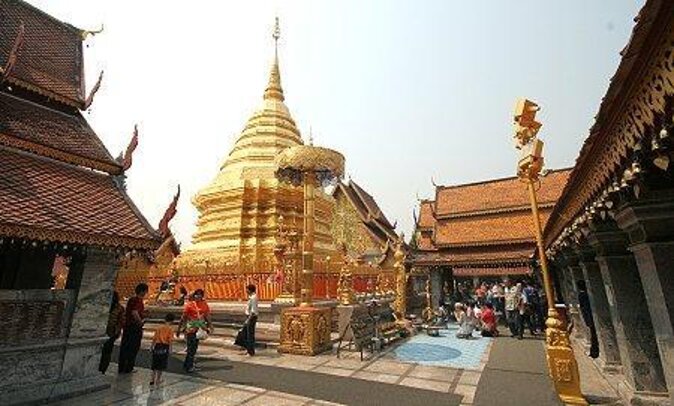
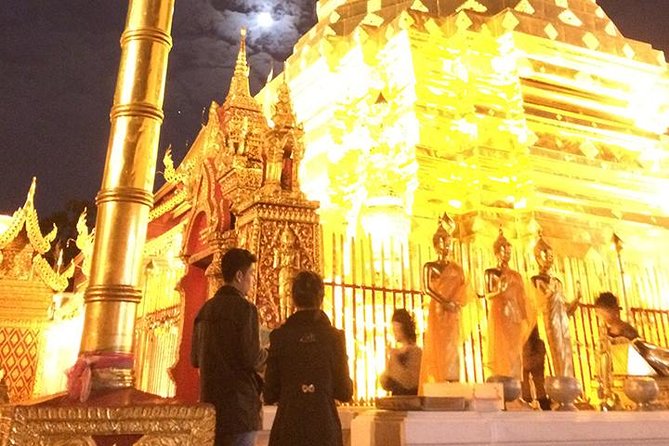
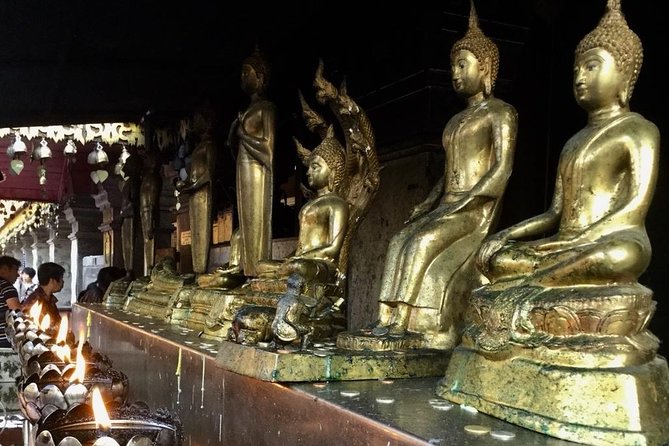
Doi Suthep is famous in Chiang Mai, but the timing is what changes the whole mood. Going in the late evening means the ceremony is the focus, and the gold reflections from the pagoda add a soft glow that you can’t really fake with daylight photos.
This tour doesn’t treat the temple as a quick checkpoint. You’re there long enough to watch how people move through the space, and to understand the ceremony as more than a performance.
Small-group comfort and the real-world logistics

This is a half-day tour (about 5 hours) that starts at 1:30 pm. You’ll ride an air-conditioned minivan from central Chiang Mai to the temple area, roughly an hour drive depending on traffic.
Group size is capped at 9 travelers, which matters more than you’d think. Smaller groups generally mean you can ask questions and hear answers without yelling over a crowd. In guides’ styles you might notice a range—from very chatty and humorous (like John) to calm and informative—yet the overall flow stays manageable.
You’ll also get hotel pickup and drop-off from central hotels. If your hotel is outside the city centre, there’s a surcharge listed based on distance, so it’s worth double-checking where you’re staying.
You can also read our reviews of more evening experiences in Chiang Mai


Khun Chang Khian: the White-Hmong village you can actually look at
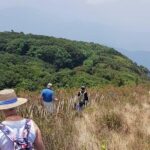
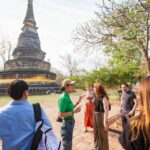
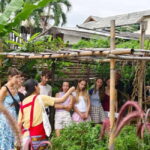
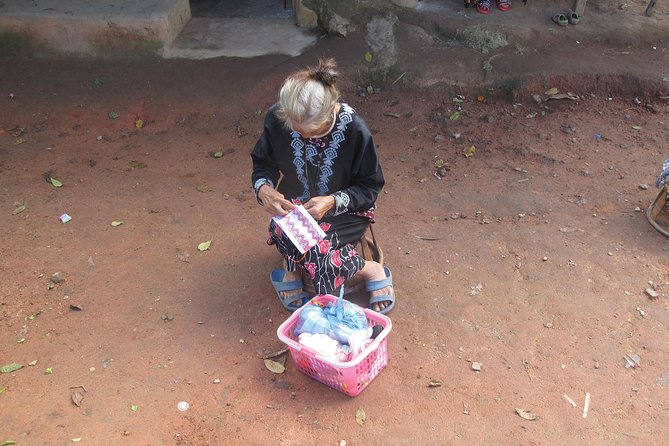
The hill tribe village stop here is Khun Chang Khian, described as a less commercial White-Hmong village in the city area. Instead of turning it into a walk-through shopping stop, the visit is set up to help you learn the basics of daily life and culture.
In practice, this is where you’ll probably slow down. You’re not just rushing to see huts and textiles. You get time to ask questions, listen to explanations, and experience the rhythm of village life in a way that feels more human-scale.
There’s also coffee or tea included with some biscuits during the village time. That’s not just a perk. It gives you a natural pause to talk with your guide and settle your pace after traveling.
Tip for getting more out of the village stop: come with a few simple questions. Examples you can ask (if you’re comfortable): what daily work looks like, how traditions are passed on, or how visitors are usually welcomed. If your guide is Poongkie or Birdie, you may find they’re happy to answer at length and keep it practical.
The evening ceremony at Wat Phra That Doi Suthep
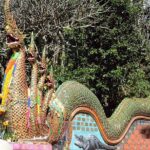
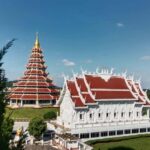
The headline moment is Wat Phra That Doi Suthep’s evening ceremony service. You’ll arrive late enough to feel the change in atmosphere, with the pagoda glowing and the space shifting from daytime tourism energy into something more ceremonial.
This is where the chanting becomes memorable. When monks chant in the evening light, it lands differently than a quick temple visit. You’re not just seeing Buddhist architecture; you’re witnessing a living religious moment.
One practical note: expect temple steps. People often talk about the climb as part of the experience—so you’ll want to wear shoes you can walk in comfortably and take breaks if you need them. The tour asks for a moderate physical fitness level, so don’t ignore that.
Dress code is smart casual, with covered knees and shoulders for entering the temple. This is one of those small details that can ruin your day if you’re unprepared. Bring something light you can pull on for the ceremony area.
How the transport supports a smoother day
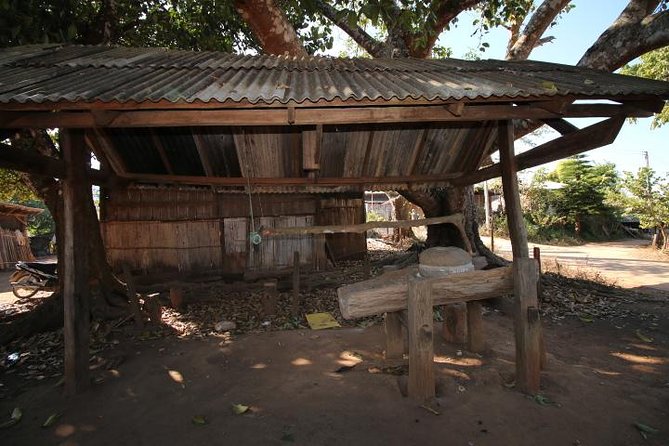
The day uses two different transport modes. You’ll travel by air-conditioned minivan from Chiang Mai to the Doi Suthep area, then use a small truck (open-air) from the temple area to the village stop.
That open-air transfer is likely to be breezy and quick, but you’ll still want to think about basic weather comfort. If it’s warm and humid, plan for sweaty conditions. If it’s cool in the evening, bring a layer for the wait times.
The route is set up to reduce stress: long distances are handled by vehicle, and the stops are sequenced so you’re not constantly crisscrossing the city.
Coffee, water, and the pacing of a 5-hour half-day
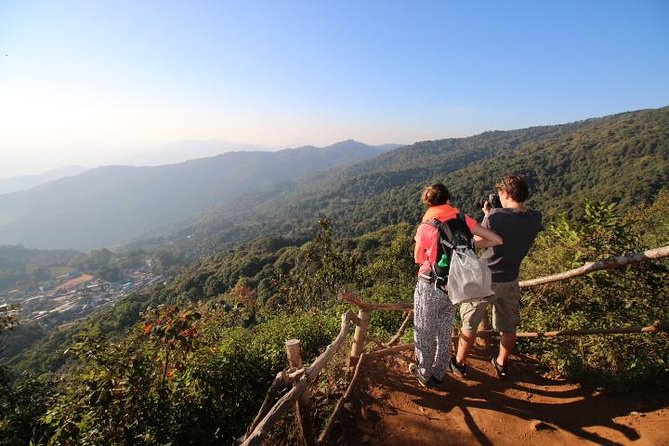
In about 5 hours, you’ll fit in two very different experiences: village culture and a major temple ceremony. The tour includes bottled water and a small snack setup (coffee or tea plus biscuits). That keeps you from starting the evening hungry or dehydrated.
The pace generally feels well-balanced for a half-day tour. You get enough time to see things, but not so much that you feel trapped for hours. The best part is that the guide-led explanations give you context while you’re actually there—so the temple and village don’t feel like two unrelated photo stops.
If you’re the type who asks lots of questions, a small group helps a lot. Several guides on this route (including John and Poongkie) are praised for answering questions and not rushing people.

Price and value: what you really get for $71.28

At $71.28 per person, the value comes from three things that are easy to overlook when you’re comparing prices.
First, entrance fees are included. For temple visits and cultural stops, that can reduce the real cost versus tours that advertise a low rate and then add ticket fees later.
Second, pickup and drop-off are included from central hotels. Transport costs quietly matter in Chiang Mai, especially when you’re trying to avoid complicated taxi logistics.
Third, you get a professional English-speaking guide, plus water, tea/coffee, and traveling accident insurance. If you were doing this on your own, you’d likely spend time coordinating drivers, paying tickets, and figuring out where to be at what time for the evening ceremony.
If you’re traveling solo, this still may feel like a good deal compared with private tours. The max group size (9) also keeps it more personal than a large-group bus day.
What to watch for before you go
This tour is very straightforward, but a few things can make or break your enjoyment.
Stairs and temple walking: The temple visit involves climbing steps. If you don’t like stairs, set expectations and plan to take it slow.
Dress code: Covered knees and shoulders while entering the temple is required. If you forget, you’ll lose time at the worst moment.
Weather matters: The experience is described as requiring good weather. If conditions are poor, you may be offered another date or a full refund, so flexibility helps.
Communication style: Most guides are described as friendly, informative, and enthusiastic. Still, one experience flagged that the guide wasn’t as outspoken as expected. If you want a guide who talks nonstop, pick your moment early—ask questions right away and see how the conversation flows.
Who this tour suits best
This is a great match if you want a balance of culture and religion without spending a full day on the road. It works especially well if you’re in Chiang Mai for only a few days and you want one high-quality evening plan.
You’ll likely enjoy it if:
- you like guided context (not just wandering)
- you want a temple visit that feels timed for the ceremony
- you’re comfortable with light hiking/steps
You might want a different option if:
- you strongly dislike stairs
- your travel style is ultra-flexible and self-directed
- you’re expecting a long village experience with lots of hands-on activities (the time is set for viewing and learning, not extended workshops)
Should you book this Chiang Mai hill tribe and chanting tour?
If you want one evening that feels genuinely Thai and not just a checklist, I’d say yes. The strongest reason to book is the combination: Doi Suthep’s evening chanting plus a Hmong village stop that’s described as less commercial, paired with a guide who makes explanations easy.
I’d book it if you like the idea of a calm small group, a real ceremony moment, and an included meal-type break (tea or coffee). I’d also book it if you value entrance fees included and pickup handled for you.
Skip it only if the temple steps sound like a dealbreaker, or if you hate dress-code rules. Otherwise, this is the kind of tour that gives you a story you’ll remember the next time you’re sitting in a quiet room, listening to someone chant—because you saw how it feels when the light hits the pagoda.
FAQ
What time does the tour start?
The start time is 1:30 pm. Hotel pickup timing is approximate and depends on traffic.
How long is the tour?
The duration is about 5 hours.
Are entrance fees included?
Yes, entrance fees are included.
Is pickup and drop-off included?
Yes, hotel pickup and drop-off are included from central hotels. If your hotel is outside the city centre, there is a listed surcharge based on distance.
What should I wear to the temple?
The dress code is smart casual, with covered knees and shoulders while entering the temple.
Is lunch included?
No. Lunch and dinner are not included, though tea or coffee and water are provided.