REVIEW · CHIANG MAI
Chiang Mai: Chiang Rai Temples and Long-Neck Karen Village
Book on GetYourGuide →Operated by CHIANGMAI FOOTSTEP TOUR&TRAVEL CO.,LTD · Bookable on GetYourGuide
Chiang Rai in one day works best when you want big sights without spending your whole trip on planning. This tour strings together Wat Rong Khun (White Temple), Wat Rong Suea Ten (Blue Temple), and the towering Wat Huay Pla Kang statue, with a Karen village stop at the end.
I like the mix of art-and-faith temple stops plus a cultural community visit, so the day feels more than just photo stops. The potential drawback: the hot springs and the overall pace can feel a bit “touristic,” depending on timing and how your guide handles small delays.
In This Review
- Key highlights worth knowing
- A Temple-Forward Chiang Rai Day That Still Leaves Room for Culture
- Mae Kachan Hot Springs: Warm Water, Boiled Eggs, and Practical Break Time
- Wat Rong Khun White Temple: Sparkling Facade Meets Dark Symbolism
- Lunch Break: Don’t Rush It
- Wat Rong Suea Ten Blue Temple: Deep Blue Tones With Gold Accents
- Wat Huay Pla Kang: The 25-Story Guan Yin and Panoramic Views
- Long-Neck Karen Village: Cultural Respect, Brass Rings, and Handmade Souvenirs
- Price and Logistics: Does $61 Actually Make Sense?
- What to Bring (and What to Wear) for a Comfortable Temple Day
- Who This Tour Fits Best
- Should You Book This Chiang Rai Temples and Karen Village Tour?
- FAQ
- How long is the Chiang Rai temples and Karen village tour?
- How many people are in the group, and what language is the guide?
- What’s included in the $61 price?
- What should I bring and wear?
- Is this tour good for people with mobility issues?
- Can I take photos in the Long-neck Karen village?
- What’s the cancellation policy?
Key highlights worth knowing
- Wat Rong Khun’s sparkling mirrorwork and symbolic interior storytelling
- Wat Rong Suea Ten’s deep blue color and golden accents for striking photos
- Mae Kachan Hot Springs, including warm soak time and the boiled-egg tradition
- Wat Huay Pla Kang’s 25-story Guan Yin and the elevator ride up for wide views
- Long-neck Karen village with a focus on everyday life and handmade souvenirs (with photo etiquette)
A Temple-Forward Chiang Rai Day That Still Leaves Room for Culture
If you’re short on time in northern Thailand, this one-day Chiang Rai plan is built for maximum variety: modern temple art, more traditional religious architecture, and a community visit you should treat with care.
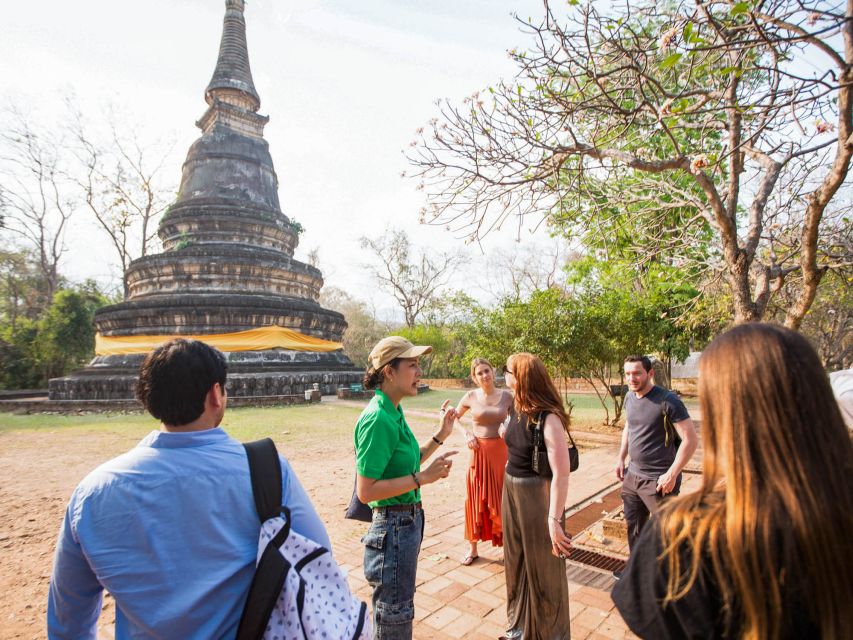
You start with Mae Kachan Hot Springs, then move through three famous temple stops before finishing at the Long-neck Karen village. The small group size (limited to 12) helps the flow, especially on tight roads where Chiang Rai traffic can stretch a schedule.
And you’re not just walking into places—you’re also getting an English-speaking guide, admission fees covered, a proper lunch, and bottled water on the road. For $61 per person, that’s the kind of bundle that can save you money and time compared to piecing it together.
You can also read our reviews of more tours and experiences in Chiang Mai.


Mae Kachan Hot Springs: Warm Water, Boiled Eggs, and Practical Break Time
The day begins with a break that feels different from temple tourism: warm mineral pools at Mae Kachan Hot Springs. You’ll have time to stretch your legs, dip your feet, and enjoy the calm pace before the sights ramp up.
One quirky tradition here is boiling eggs in the bubbling springs. It’s simple, fun, and very “only-in-Thai-northern-temperatures” energy. It also gives you something to do besides just staring at the steam.
What to expect: you’re likely to find the hot springs setup more functional than “wild nature.” One clear caution from prior experiences: some people found it less scenic than they hoped, with the springs area feeling more like a facility than a tucked-away retreat. Still, the warm pools and egg-boiling moment can be a nice reset before the temples.
Practical tip: wear sandals you can slip on and off. Bring the mindset that this is a soak + snack moment, not a long spa session.
Wat Rong Khun White Temple: Sparkling Facade Meets Dark Symbolism
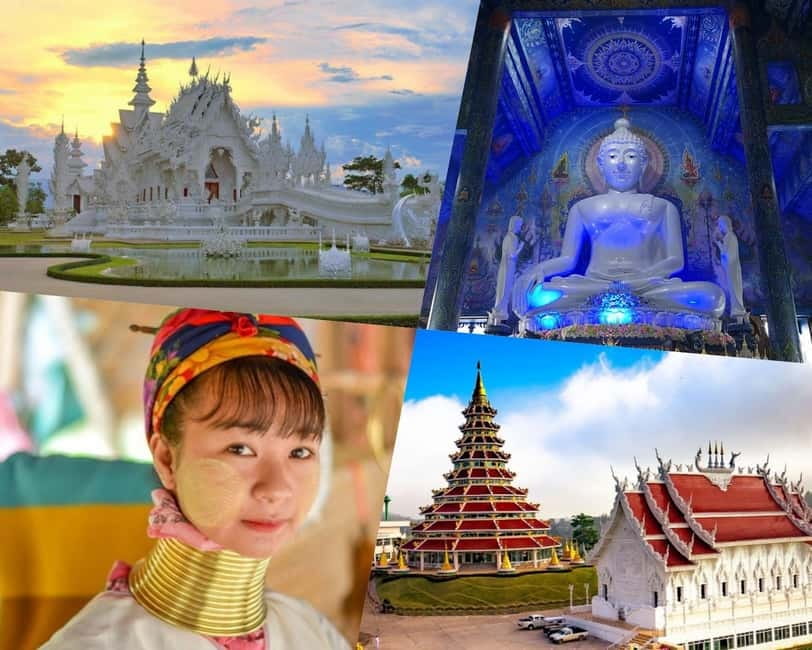
Next comes Wat Rong Khun, the White Temple. It’s famous for a reason. The exterior is bright white with sparkling mirrorwork that catches sunlight, so it can look almost unreal when you’re standing close.
Inside, the tone shifts. You’ll see intricate murals and sculptures meant to communicate serious Buddhist ideas—life, death, and rebirth—wrapped in contemporary artistic flair. For most people, that mix is the point: it’s not just decorative. It’s meant to make you think.
Why you’ll care: this temple is built for first-time visitors who want one iconic stop that’s instantly recognizable and deeply different from standard temple visits. Even if you’re not a temple expert, the mirror-glow exterior and the packed interior details make it easy to stay engaged.
Possible drawback to plan for: White Temple photo spots can attract crowds and attention, so you’ll get the best experience if you move at a relaxed pace and give yourself a few quiet minutes between highlights. If you want wide shots, aim for the moments when light hits the mirrorwork strongest.
Dress tip again: shoulders and knees need coverage here, and that modest clothing requirement applies across the day.
Lunch Break: Don’t Rush It
Lunch is included, and the tour slots it between the temple stops. I like this timing. You’re coming off two high-impact sights (hot springs then a major temple), and a real meal helps you keep your energy steady for the next half.
You’ll eat at a local restaurant, but quality can vary with how the day runs. One caution from prior experiences: some people felt the lunch was only average. If you’re picky, bring a small snack bar for backup, so you’re not stuck waiting for the day to catch up to your stomach.
Wat Rong Suea Ten Blue Temple: Deep Blue Tones With Gold Accents
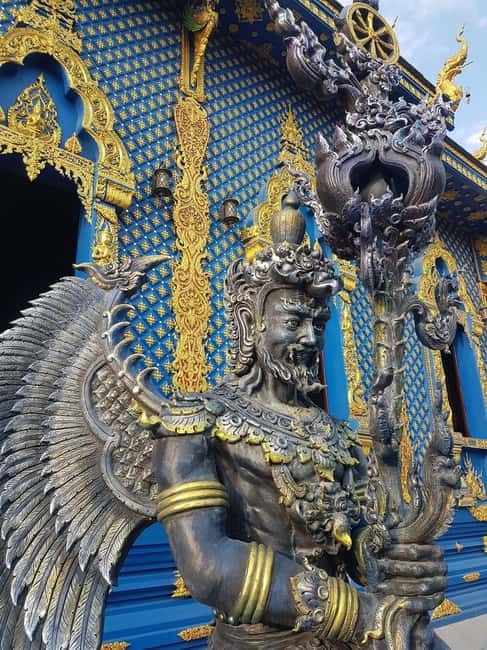
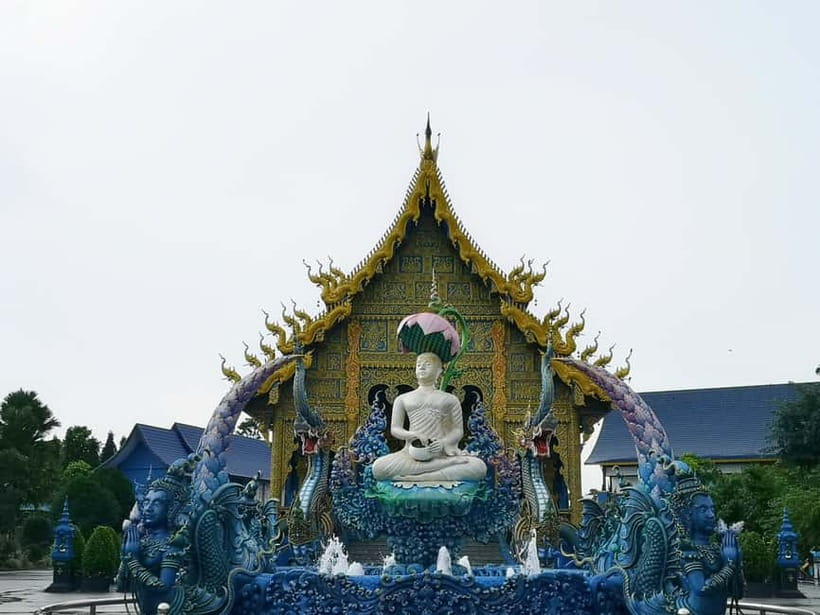
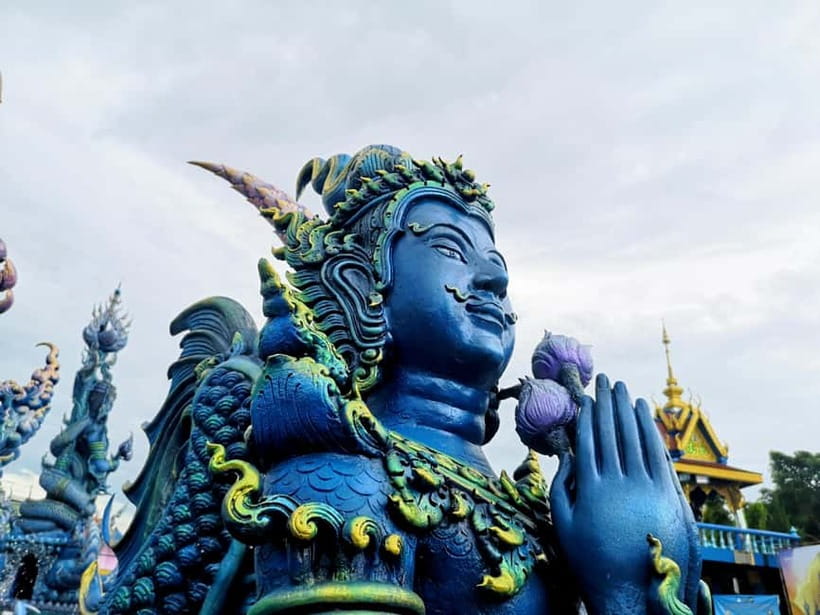
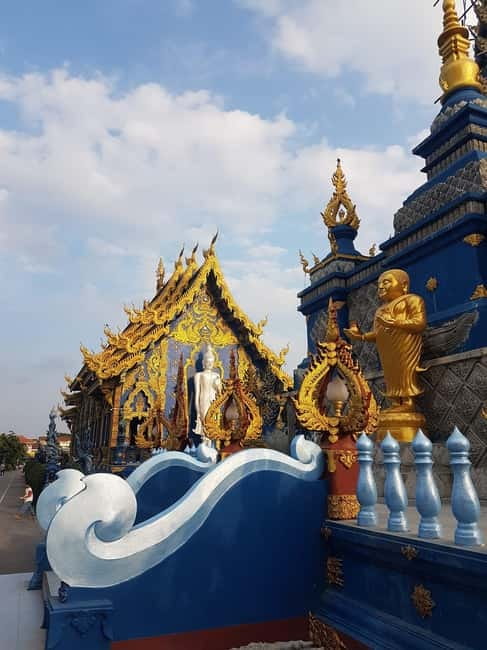
After lunch, you head to Wat Rong Suea Ten, commonly called the Blue Temple. This one feels like a visual switch-flip.
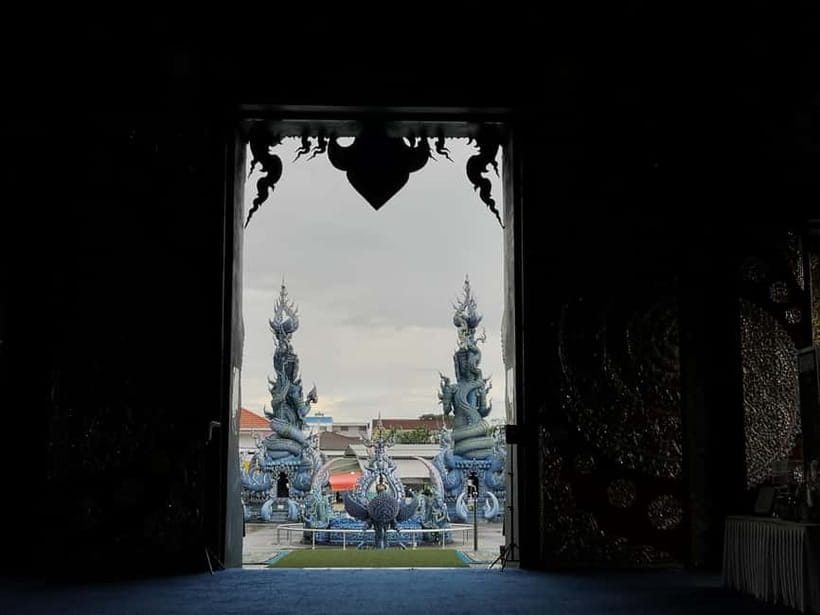
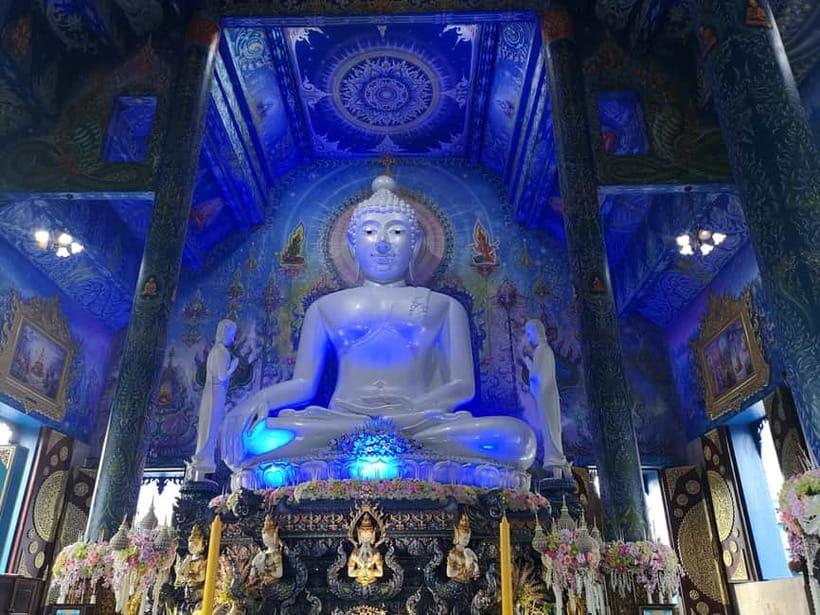
The main draw is color. The halls are rich with deep blue tones, and you’ll see golden accents that frame statues and architectural details. The result is a temple that looks both calm and dramatic at the same time.
What you’ll do here: you’ll walk through serene areas, admire Buddha-related artwork, and take photos that actually look like something—no dull colors, no washed-out “temple gray.”
How to get more out of it: slow down for the statue and the hall angles. The design is meant to guide your eye, so if you rush from entry to exit, you miss the way the space works.
One possible consideration: some people felt their guide didn’t have enough time—or enough ability—to add detailed history while moving quickly through certain areas. That doesn’t mean you won’t enjoy it. It just means you’ll get the best experience if you treat this as a “see it and feel the mood” stop, not a lecture.

Wat Huay Pla Kang: The 25-Story Guan Yin and Panoramic Views
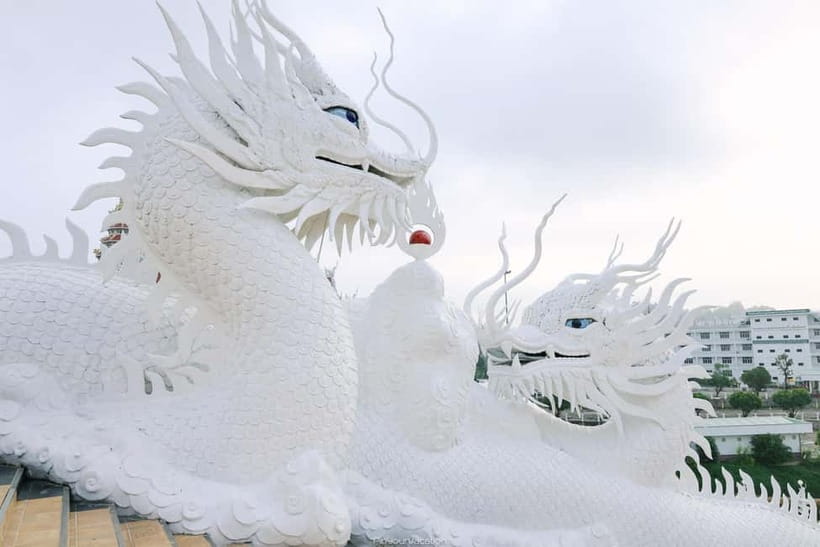
Then the tour climbs into the grand finale zone: Wat Huay Pla Kang. This is where scale gets ridiculous—in a good way.
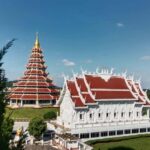
The temple is home to a colossal Guan Yin statue, reported to be 25 stories tall. You can take an elevator to the top, which matters. It turns what could be an exhausting climb into a quick way to reach wider views over the area.
Once you’re up, you can see more of what you came for: the temple’s nine-tiered pagoda structure, gardens, and the chance to pause somewhere quieter than the earlier photo-heavy stops.
Why this stop is valuable: it’s both spiritual and scenic. Even if you’re not into the religious details, the sheer size of the Guan Yin and the panoramic viewpoint do a good job of making the day feel like a “wow” finish rather than a checklist.
What to watch for: this is still a temple visit with some walking and stairs. You’ll want comfortable shoes, and if you’re someone who gets tired easily, plan to take your time at each viewing level. The tour isn’t designed for wheelchair users or people with back problems.
Long-Neck Karen Village: Cultural Respect, Brass Rings, and Handmade Souvenirs
The final stop is the Long-neck Karen village. You’ll meet members of the Karen community, learn about daily life and traditions, and see craftsmanship tied to the famous brass neck rings.
This is also the part of the day where your behavior matters more than your phone. The tour asks for respectful visiting—especially around photography. You should avoid intrusive photos and ask permission before taking pictures of individuals.
What you’ll likely enjoy: the human scale. You’re not staring at statues; you’re learning how people live, work, and preserve identity through tradition. You’ll also have a chance to support the community by purchasing handmade souvenirs.
A thoughtful caution: if you want deep educational context about Karen culture, you may find the amount of explanation varies by guide and pace. Some experiences have included more focus on other details like coffee-making processes, so the best approach is to go in curious and ask questions respectfully.
Price and Logistics: Does $61 Actually Make Sense?
At $61 per person, this tour is priced like a true “day package.” What you get is the part that changes the value equation: air-conditioned van, an English-speaking guide, admission fees for all stops, lunch, bottled water, and insurance.
If you try to DIY this, you’ll likely pay for transportation between sites, entrance tickets, and a guide (or spend extra time figuring things out). You might save a bit if you’re very experienced with local transit and willing to handle your own timing. But if you want a smooth, pre-built plan in one day, $61 is honestly the kind of price that feels fair.
Where your time cost can show up: if the day starts to run behind, temple scheduling can feel compressed. One caution from prior experiences: guides can get stressed when delays pile up, and that can affect how much you hear at each stop. The good news is the itinerary usually stays structured enough that you still hit the main sights.
What to Bring (and What to Wear) for a Comfortable Temple Day
This tour is simple on paper, but your body will notice if you show up unprepared.
Bring:
- Comfortable shoes for walking and climbing stairs
- Hat and sunscreen for bright daytime temple viewing
- Camera if you want to capture the mirror glow and deep-blue tones
- Water (bottled water is included, but extra is helpful)
Wear modest clothing. Shoulders and knees need to be covered for sacred temples. Lightweight, breathable layers work best in northern Thailand heat.
Not suitable for: pregnant women, people with back problems, wheelchair users, and anyone over 220 lbs (100 kg). That’s because the day includes walking, steps, and a temple layout that isn’t built for limited mobility.
Also: no pets, and no smoking.
Who This Tour Fits Best
I think this tour is a strong match if you:
- Want the big-name Chiang Rai temples in one day without planning
- Like architecture and symbolism (White Temple) plus color-driven design (Blue Temple)
- Want a scenic temple finish at Wat Huay Pla Kang
- Are interested in cultural visits and comfortable with respectful interaction
You might not love it if:
- You want long, unhurried time at each site
- You expect deep historical lectures at every stop
- You’re sensitive to how “tour rhythm” can speed up once the schedule tightens
One more practical note from experience patterns: group energy can vary. Some tours stay chatty; others run more quietly with fewer conversations. If you need lots of back-and-forth, you’ll do best by asking your guide questions when you have a moment.
Should You Book This Chiang Rai Temples and Karen Village Tour?
Book it if your priority is a well-paced, all-in-one Chiang Rai temples day with transportation, tickets, and a guide handled for you. The White Temple’s mirrorwork, the Blue Temple’s color, and Wat Huay Pla Kang’s Guan Yin scale are the kind of highlights that justify spending the day here.
Skip or consider an alternative if you need a slower pace, have mobility limitations, or you’re specifically hoping Mae Kachan Hot Springs feels like untouched nature. Also consider bringing your expectations down a notch for lunch quality and the depth of explanations at every stop; those parts can swing based on timing and guide tempo.
If you go in ready to walk, dress appropriately, and treat the Karen village with patience and respect, this tour can be a satisfying one-day snapshot of Chiang Rai’s mix of art, faith, and community life.
FAQ
How long is the Chiang Rai temples and Karen village tour?
The duration is 1 day.
How many people are in the group, and what language is the guide?
It’s a small group limited to 12 participants, with an English-speaking guide.
What’s included in the $61 price?
Transportation by air-conditioned van, an English-speaking guide, admission fees to all attractions, lunch, bottled water, and insurance are included.
What should I bring and wear?
Bring comfortable shoes, a hat, a camera, sunscreen, and water. Wear modest clothing that covers your shoulders and knees for temple visits.
Is this tour good for people with mobility issues?
It is not suitable for wheelchair users, people with back problems, and pregnant women.
Can I take photos in the Long-neck Karen village?
Be respectful and avoid intrusive photographs. Ask for permission before taking pictures of individuals.
What’s the cancellation policy?
You can cancel up to 24 hours in advance for a full refund.