REVIEW · CHIANG RAI
7 Wonders of Chiang Rai: Temples, Tea, and Golden Triangle
Book on GetYourGuide →Operated by R U tour and trek · Bookable on GetYourGuide
Chiang Rai turns temple art into a full-day road trip. On this guided loop, you get to see Wat Rong Khun shine with mirrored detail and murals that mix Buddhist themes with modern pop-culture nods. I also love the look inside Wat Rong Suea Ten, where a calm white Buddha anchors vivid murals under the story of the Dancing Tiger.
The one possible drawback: the day is packed, and some of the most famous sights have optional entrance fees—so budget extra if you want to pay for everything.
Key things to know before you go
- Small group feel (up to 10 people): easier pacing and quicker questions with your English guide.
- Chalermchai Kositpipat’s White Temple murals: bright, detailed, and built for close-up exploring.
- Thawan Duchanee’s Black House: not a typical temple visit; it’s an art complex built around death and life ideas.
- Long Neck Karen village stop: you’ll learn daily life, see weaving, and can buy handcrafted souvenirs.
- Tea farm break with tastings: a breather with views, freshly brewed tea, and tea-based desserts.
- Golden Triangle + House of Opium Museum: one stop shows geography and change; the other fills in the dark backstory.
In This Review
- Seven wonders, one efficient loop through Chiang Rai
- Wat Rong Khun: the White Temple’s mirrored sparkle and surprising murals
- Practical tips for your photos
- The one thing to watch
- Wat Rong Suea Ten: Blue Temple views, the Dancing Tiger legend, and a calm center
- What you’ll likely appreciate
- Baan Dam (Black House): art about the dark side of life
- Who should lean into this stop
- Long Neck Karen village: culture, brass rings, weaving, and fair budgeting
- A respectful way to do this stop
- Entrance fee reality
- Choui Fong Tea Plantation: a breather with tasting and panoramic views
- Why I think this stop is good value
- Golden Triangle: where Thailand, Laos, and Myanmar meet
- What to expect on the ground
- House of Opium Museum: a sobering follow-up you shouldn’t rush
- How to approach it
- Price and value: what you get for $41 and what costs extra
- The optional fees you should plan for
- Small group bonus
- Timing, transport, and the late-day factor
- Who this tour fits best (and who should skip it)
- Should you book 7 Wonders of Chiang Rai?
- FAQ
- What’s included in the $41 price?
- What are the entrance fees that are not included?
- Do I have to pay the attraction entrance fees?
- What time does the tour start and where do I meet?
- How long is the day trip?
- How big is the group?
- Is the guide available in English?
- Where does the tour take lunch?
- What should I bring, and should I bring cash?
- Are there any restrictions on what I can bring?
Seven wonders, one efficient loop through Chiang Rai
This is the kind of tour that makes sense when you want real variety without negotiating taxis all day. You start in Chiang Rai city and spend the day bouncing between standout art temples, a cultural village, a tea plantation break, and the Golden Triangle region—then end back in town.
What I like most is how the tour doesn’t treat these stops like checkboxes. Each place has a distinct mood. The white temple is bright and playful. The blue temple feels gentler and more centered. Then you go darker at the Black House. After that you reset with tea and open views at the Golden Triangle. It’s a tour that keeps changing your mental gears.
Just plan for a long day. You’re picked up between 8:00 and 8:30 AM, and you return around 6:30–7:00 PM. That timing matters if you’re also trying to squeeze Chiang Rai into a tight Thailand itinerary.
Wat Rong Khun: the White Temple’s mirrored sparkle and surprising murals
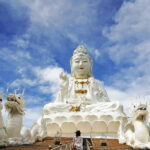
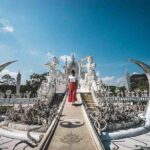
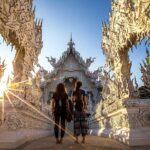
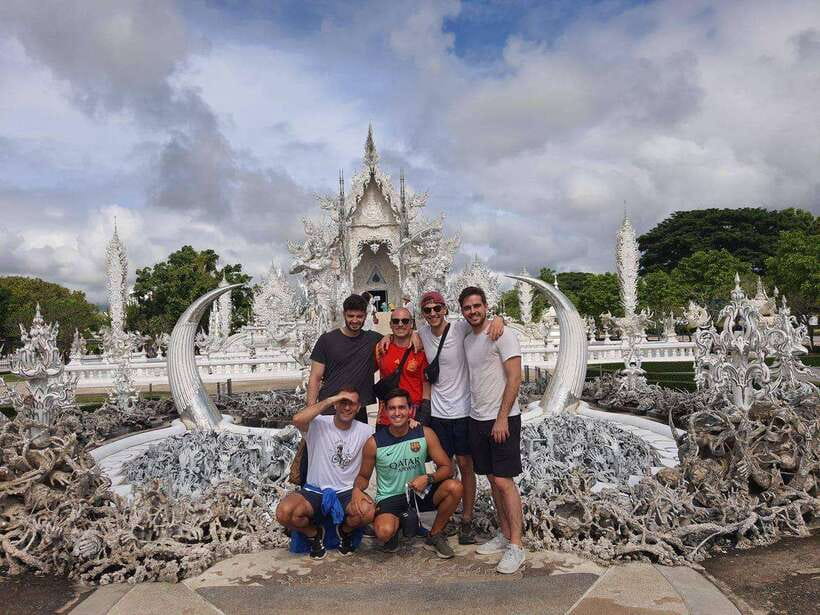
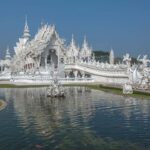
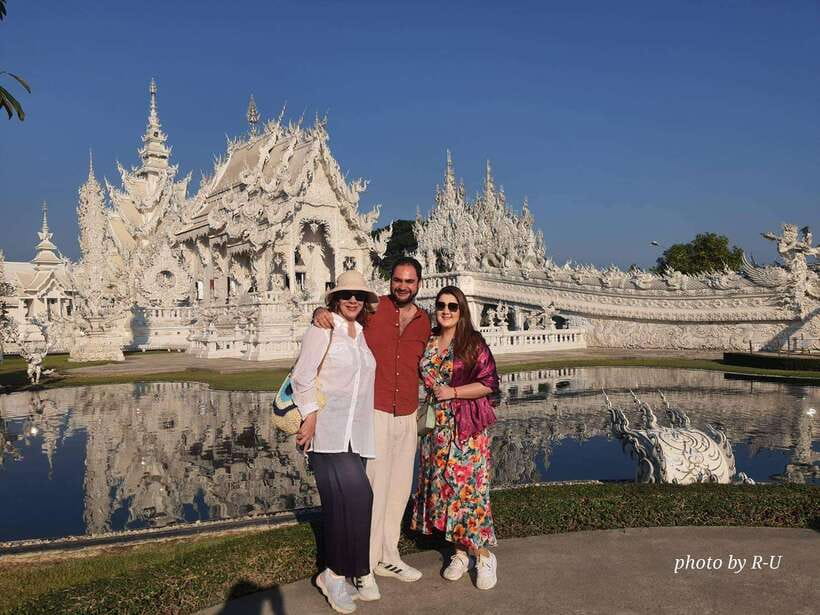
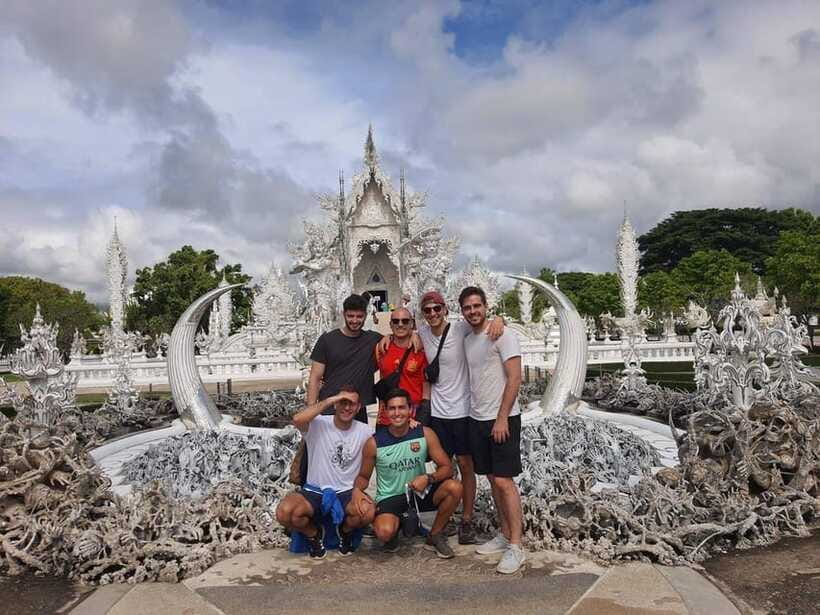
Your first major temple stop is Wat Rong Khun (the White Temple). This place was created by Chalermchai Kositpipat, and the look is unlike the more classic temple style you might expect in Thailand. The temple’s surfaces are mostly white and built with intricate detail, plus mirrored glass that glimmers in daylight.
Here’s what makes the visit genuinely fun: the temple isn’t just pretty from the outside. The murals inside combine traditional Buddhist themes with modern references, including pop-culture style imagery. That mix is the whole point—spiritual storytelling done through contemporary art.
You can also read our reviews of more tours and experiences in Chiang Rai.
Practical tips for your photos
- Wear comfortable shoes because you’ll be walking around for the photo and guided segments.
- A camera matters here. The mirrored glass catches light fast, so you’ll want to try different angles rather than shooting only straight-on.
- Don’t rush the murals. The details reward slowing down.
The one thing to watch
The temple’s entrance fee is not included. If you decide to skip it, you’ll miss the best part of the interior murals. If your goal is art-forward temple visiting, it’s usually the fee worth thinking about.
Wat Rong Suea Ten: Blue Temple views, the Dancing Tiger legend, and a calm center
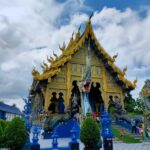
Next up is Wat Rong Suea Ten, also known as the Blue Temple. The blue color isn’t subtle here—think rich blue tones with gold accents. The architecture blends modern interpretations of traditional Lanna designs, so it feels like a conversation between old style and new creativity.
Inside, the vibe shifts to calm. A serene white Buddha statue sits at the center, surrounded by detailed murals. It’s a strong contrast: bright outer color, then a quiet focal point.
The name comes with a local legend. “Suea Ten” means Dancing Tiger, connected to tiger stories from the area. You don’t need to be a folklore expert to enjoy the storytelling; it gives the space extra meaning beyond the visuals.
What you’ll likely appreciate
This stop feels designed for people who like atmosphere, not just architecture. If you enjoy pausing for a few minutes to take in the interior details, this is a good one for that.


Baan Dam (Black House): art about the dark side of life
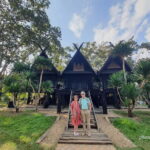
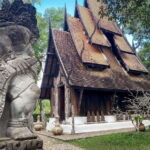
If the White Temple is about light, the Black House (Baan Dam) is about the darker balance—life and death, mortality, and the human way of thinking through both. It’s an art complex created by Thawan Duchanee, and it doesn’t try to feel like a traditional temple.
Expect something intentionally unsettling. The complex includes buildings decorated with animal bones, skins, and horns. That imagery ties into local beliefs about mortality and existence. The goal is not to shock for shock’s sake; it’s to force a different kind of reflection than you’d get from a polished, purely decorative site.
Who should lean into this stop
- If you like art that has an edge, you’ll enjoy it.
- If you prefer purely serene religious spaces, this might feel heavy.
There’s also an entrance fee for the Black House that’s not included, so decide based on your comfort level with the theme.
Long Neck Karen village: culture, brass rings, weaving, and fair budgeting
Then you head to a traditional Long Neck Karen village. Women wear brass rings around their necks, a practice associated with beauty and cultural identity. The rings create the visual effect of an elongated neck, with the tradition passed down through generations.
The tour approach here is practical: you don’t just look from the outside. You’ll have a visit with a guide, plus time to learn about daily life and observe weaving skills. There’s also a chance to support handcrafted souvenirs—so if you want something real to take home, this is one of your better opportunities.
A respectful way to do this stop
This is the kind of visit where your curiosity should stay grounded. I suggest keeping questions thoughtful and giving attention to what people are showing you, rather than treating it like a photo safari.
Entrance fee reality
The village entry fee is not included. If this cultural stop is high on your priority list, plan to pay it—because skipping it usually means skipping the whole point of this segment.
Choui Fong Tea Plantation: a breather with tasting and panoramic views
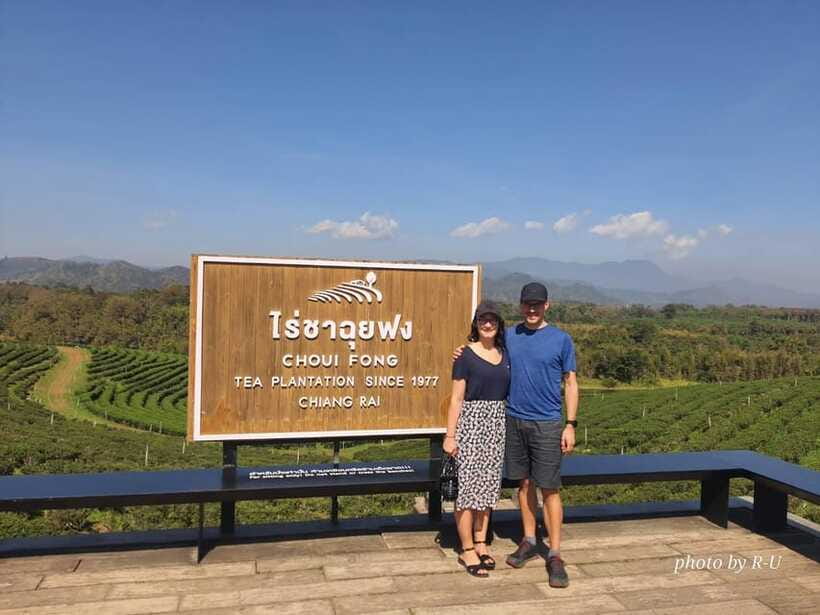
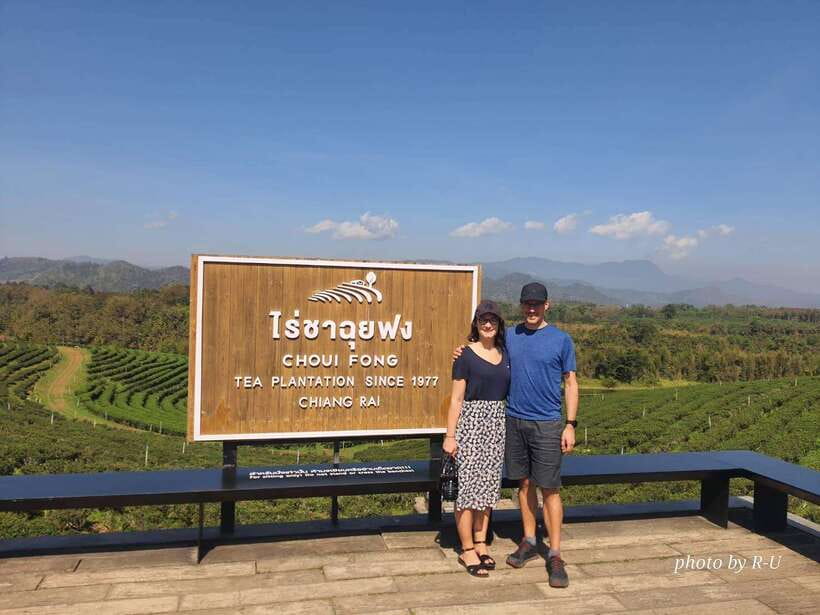
After temples and museums, you get a reset at Choui Fong Tea Plantation in rolling green hills. This is one of the most relaxing parts of the day because it’s not about architecture or history—it’s about plants, routine, and a slow cup of tea.
You’ll walk through neatly trimmed tea fields, learn about cultivation, and then get to enjoy freshly brewed tea. The café also offers tea-based desserts, which is a nice touch if you’ve been avoiding sugary tourist sweets all day.
And yes, there are panoramic views. Even if you don’t consider yourself a “views person,” it helps your brain to look far away for a bit.
Why I think this stop is good value
It’s included as part of the tour program (with guided time and a free portion). It also breaks up the day so you don’t finish exhausted by back-to-back museums.
Golden Triangle: where Thailand, Laos, and Myanmar meet
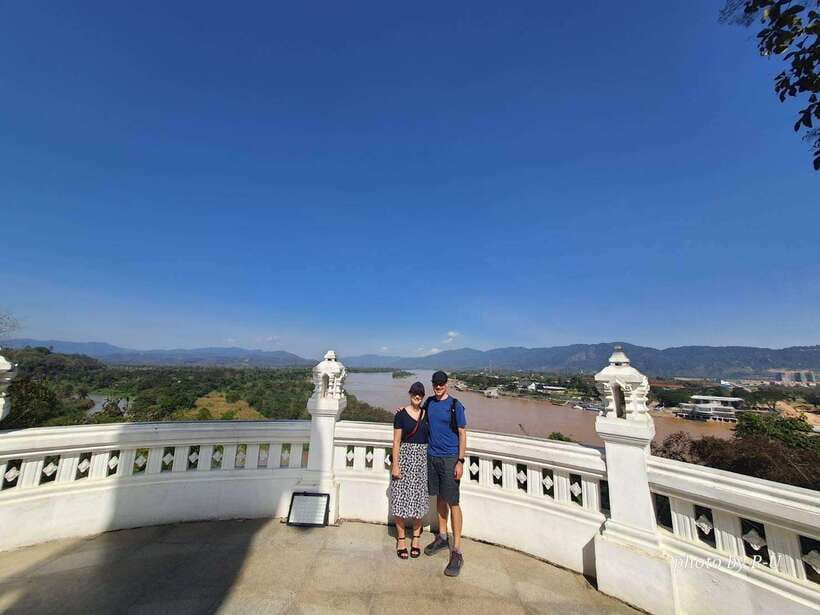
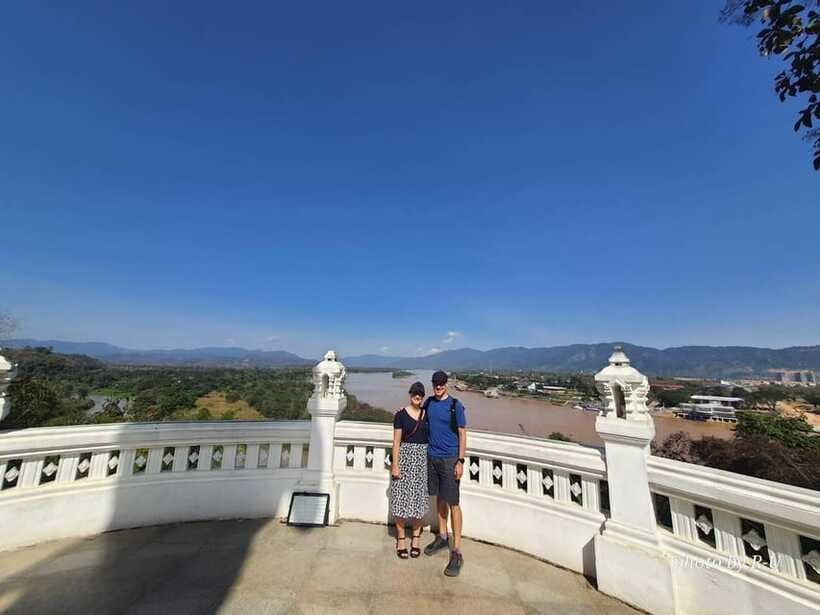
Next comes the Golden Triangle, the meeting point of Thailand, Laos, and Myanmar. This area is tied to the region’s opium trade past, but today it’s framed for visitors around viewpoint walking and understanding what changed.
You’ll stop for photos and sightseeing with guided time. The focus is on the geography and the rivers—Mekong and Ruak—plus a sense of how this region transformed over time.
What to expect on the ground
You’re given free time as well, so you can linger where the views are best. Just remember it’s still part of a schedule—so don’t plan to disappear for an hour unless you’re comfortable catching up later.
House of Opium Museum: a sobering follow-up you shouldn’t rush
Near the Golden Triangle is the House of Opium Museum, which explains the opium trade and its impact on local communities. It’s smaller than some museum experiences, but that can be a good thing because it stays focused.
Inside, you’ll see exhibits like opium pipes and tools, plus detailed displays showing cultivation and smuggling processes. The tone is educational and heavy—this is a dark chapter, and it’s meant to make you think.
There’s also mention of global efforts to combat the trade, which helps the museum feel more than just historical storytelling.
How to approach it
I recommend going in with a little mental readiness. This isn’t a light photo stop. If you rush, you’ll miss the practical details the museum is trying to teach.
There’s an entrance fee here too that isn’t included, so your decision should match how much you want the story explained beyond the viewpoint.
Price and value: what you get for $41 and what costs extra
At around $41 per person, this tour is built around transport, an English-speaking guide, and a full-day structure. Included items make a real difference:
- Pick-up and drop-off in Chiang Rai city
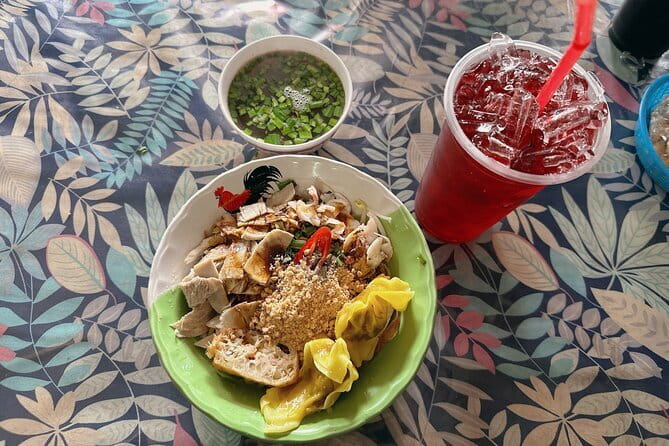
- Thai lunch buffet
- Drinking water
- Travel insurance
On top of that, you’re getting a tight route through multiple major sights rather than paying individually for transport between distant areas.
The optional fees you should plan for
Some entry costs are not included, including:
- Wat Rong Khun: 100 baht
- Black House Museum: 80 baht
- Long Neck Karen Village: 300 baht
- Opium Museum: 50 baht
So if you decide to pay for all major entrances, you’ll add up those amounts on arrival (or at the gates). If you’re trying to keep the trip very budget-tight, you can choose which ones matter most to your interests. The tour is still useful even if you skip one or two—but you’ll feel the impact most if you skip the interior parts at the White Temple or the Opium Museum.
Small group bonus
The group limit is up to 10 participants, which keeps the day from feeling like a cattle line. With only a small number of people, the guide can keep explanations clearer and you’ll generally spend less time waiting.
Timing, transport, and the late-day factor
This is a full-day schedule with van travel between sites. You’ll be picked up between 8:00 and 8:30 AM, and the day runs until roughly 6:30–7:00 PM.
That means two things for your planning:
- Wear shoes you can stand in for hours. You’ll have multiple guided stops plus photo moments.
- Don’t plan on turning around and traveling far afterward. Returning to Chiang Mai the same day isn’t recommended because you may be running late.
Also, bring a bit of cash along with your credit card. Entrance fees are optional but payable on-site if you choose to go in.
Who this tour fits best (and who should skip it)
This tour is especially suited for you if:
- You want a single day that covers major Chiang Rai highlights without planning logistics
- You like art-heavy temples as much as cultural stops
- You enjoy history when it’s anchored in specific places, like the Golden Triangle area and the opium museum
You might consider skipping it if:
- You want a slower, more flexible pace with lots of independent exploration
- You dislike darker themed art or museum exhibits (the Black House and Opium Museum are not light stops)
- You need to travel with equipment not allowed on this tour (no baby strollers, bikes, alcohol, or drugs)
Age and safety notes are also clear: it is not suitable for people over 80, and it also specifies limits for babies under 1 year. If you’re in an age range near those limits, it’s worth checking before booking.
Should you book 7 Wonders of Chiang Rai?
If your ideal Chiang Rai day includes White Temple art, a Blue Temple interior pause, and at least one serious “think” stop like the Black House or the Opium Museum, then yes—this tour is a strong pick. The value comes from having transport lined up, lunch handled, and an English guide moving you efficiently between distant highlights.
If you only want the most peaceful temple sightseeing and hate paying extra entrance fees, then you’ll need to think carefully about which sites you truly want to enter. The schedule is full, and the best parts of several stops depend on those optional tickets.
For most visitors who want variety and an easy plan, this one makes sense—especially with the small group size and the mix of art, culture, tea, and the Golden Triangle.
FAQ
What’s included in the $41 price?
The tour includes pick-up and drop-off in Chiang Rai city, an English-speaking guide, a Thai lunch buffet, drinking water, and travel insurance.
What are the entrance fees that are not included?
Wat Rong Khun is 100 baht per person, the Black House Museum is 80 baht per person, the Long Neck Karen Village is 300 baht per person, and the Opium Museum is 50 baht per person.
Do I have to pay the attraction entrance fees?
No. Visiting attractions and paying admission fees is optional—you decide during the tour.
What time does the tour start and where do I meet?
Pick-up is available from within 3 km of Chiang Rai city center. You’ll wait at your hotel lobby between 8:00 and 8:30 AM.
How long is the day trip?
It’s a full-day tour. It ends back at the meeting point around 6:30pm to 7:00pm.
How big is the group?
The group is limited to 10 participants.
Is the guide available in English?
Yes, the guide speaks English.
Where does the tour take lunch?
Lunch is included as a Thai lunch buffet during the day at a local restaurant stop.
What should I bring, and should I bring cash?
Bring comfortable shoes and a camera. You should also bring credit card and cash, since optional entrance fees may be paid on-site.
Are there any restrictions on what I can bring?
Baby strollers and bikes are not allowed. Alcohol and drugs are also not allowed.