REVIEW · BANGKOK
Bangkok: Wat Pho and Wat Arun Guided Walking Tour
Book on GetYourGuide →Operated by TripGuru Thailand · Bookable on GetYourGuide
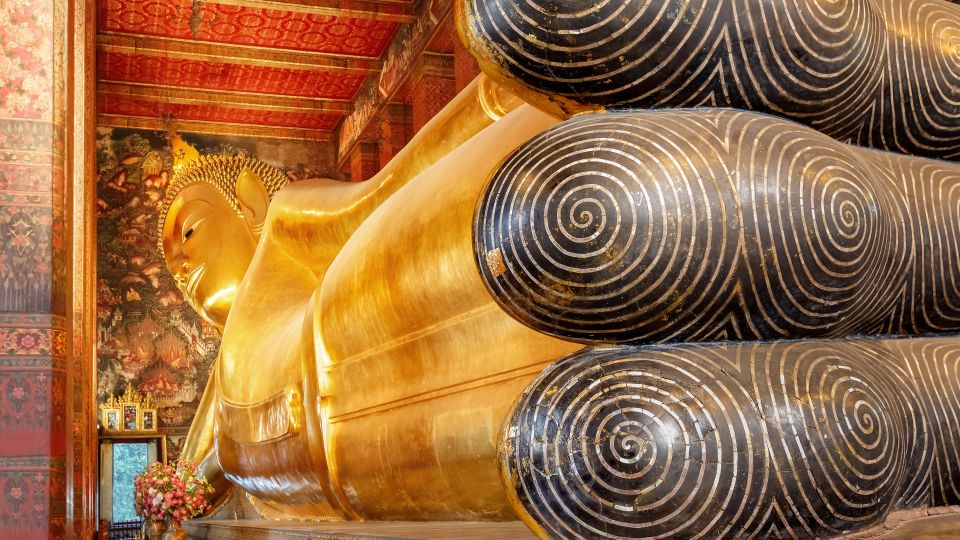
Two temples, one perfect Bangkok afternoon. You’ll get the sheer scale of Wat Pho’s 46-meter reclining Buddha and the wow-factor of Wat Arun’s mosaic chedi, both handled with a human guide who helps you see what’s worth pausing for. The main catch is practical: the walk is short but real, and the dress code is strict, so plan for covered knees and a bit of sun.
I also like that this isn’t just sightseeing on autopilot. It’s GSTC-certified, and the tour focuses on low-impact choices like water in glass bottles and carbon emissions offset credits, plus a coconut-water break in the middle of temple time. If you’re hoping to tune out and wander solo, you may find you need to listen a bit more closely when the street noise kicks up.
In This Review
- Key points before you go
- Wat Pho and Wat Arun in 3 hours: how the pace really works
- Meeting at Tha Tian Pier: start easy, don’t be late
- Wat Pho: the reclining Buddha and the details people miss
- Wat Arun at the river: mosaic chedi views that feel Instagram-native
- Price and value: what you’re really paying for at $17
- What’s included (and what’s not): plan around it
- Low-impact temple time: glass-bottle water and carbon offsets
- Practical tips: what to wear, what to bring, and how to hear your guide
- Who this is best for
- Should you book this Bangkok temple walk?
Key points before you go
- Wat Pho’s reclining Buddha: the 46-meter length is hard to grasp until you see it in person
- Wat Arun’s mosaic chedi: up close, the thousands of colorful pieces look almost unreal
- A guide who keeps it understandable: lots of temple context, without turning it into a lecture
- Low-impact touches: glass-bottle water and carbon offset credits included
- Coconut water break: a small reset that makes the next temple feel easier
Wat Pho and Wat Arun in 3 hours: how the pace really works

This is a tight little temple loop that’s built for momentum. You’re walking around Bangkok’s most famous spiritual sights, but the schedule keeps you from getting stuck in one place too long. Expect a steady flow: short explanations, time to look closely, then moving on before the heat gets too intense.
Each temple gets about 1.5 hours, which is a sweet spot. It’s long enough to walk the grounds at a comfortable pace and notice the small details, but short enough that you’re not totally fried by the end. If you like photos, you’ll also appreciate that your guide tends to point out where the best angles are, then gives you time to try again without rushing.
You can also read our reviews of more walking tours in Bangkok

Meeting at Tha Tian Pier: start easy, don’t be late
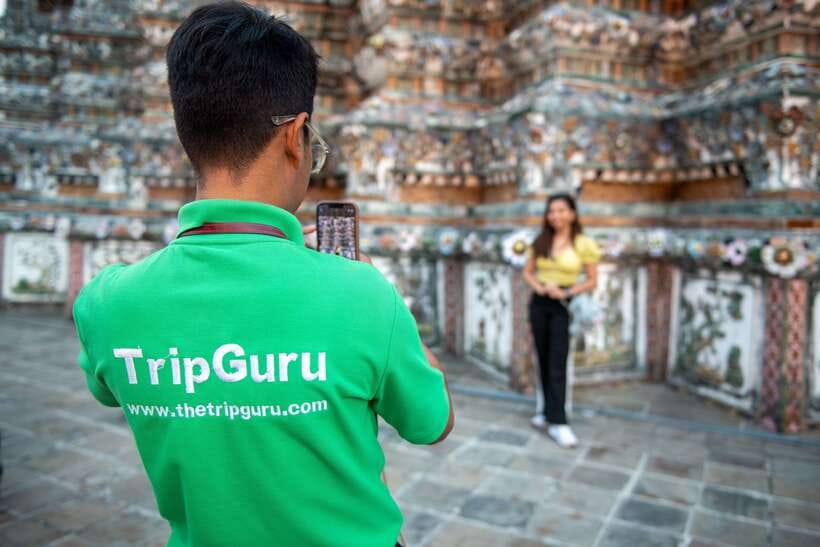
Your tour meets at Tha Tian Pier (ท่าเรือท่าเตียน). The guide will be holding a TripGuru sign, so you can spot them quickly. You’ll get an email the evening before with your confirmed pickup time and meeting point, and the instruction is to be ready about 10 minutes early.
If you’re using public transit, arriving a little early matters here. Bangkok can be unpredictable, and temple tours don’t wait around once the group is in motion. My advice: build in buffer time so you can start calm, not stressed.
Wat Pho: the reclining Buddha and the details people miss
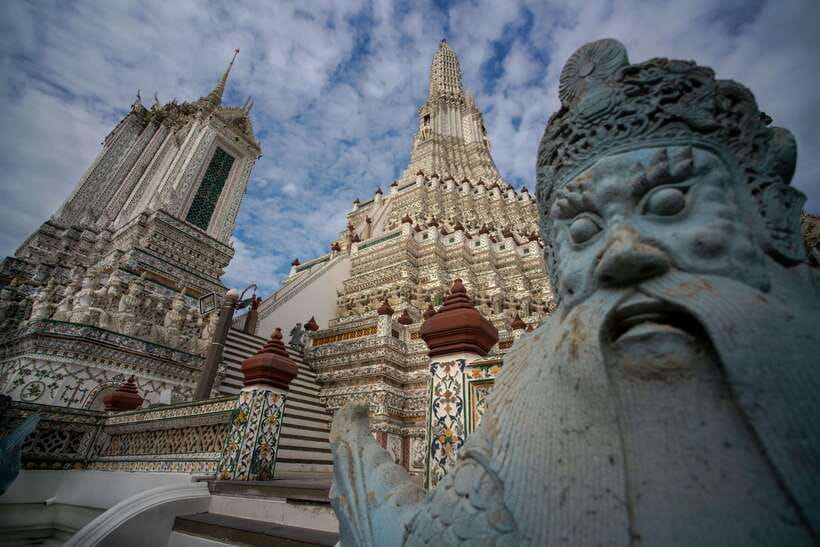
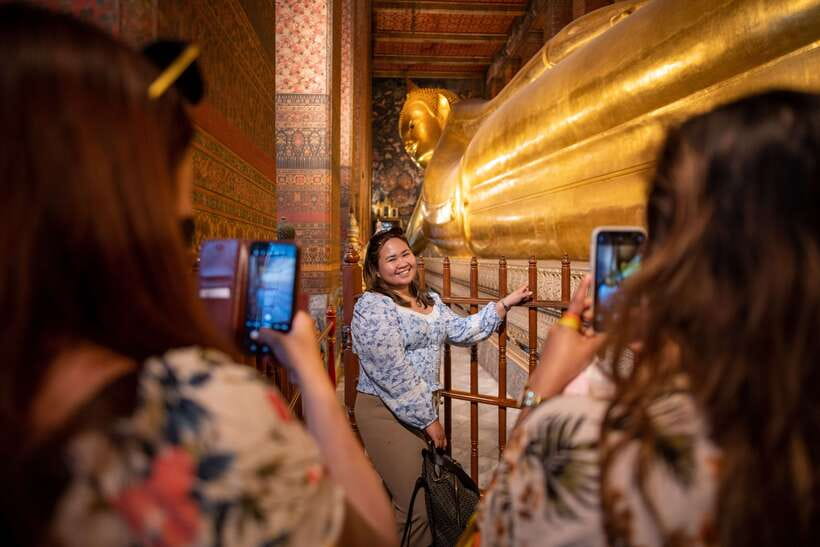
Wat Pho is where you start feeling the scale of Thai Buddhism. The headline is the 46-meter reclining Buddha, and it’s not just big—it’s also visually layered. You’ll see the figure from different angles, then walk around the temple grounds so you’re not stuck staring from one spot.
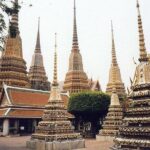
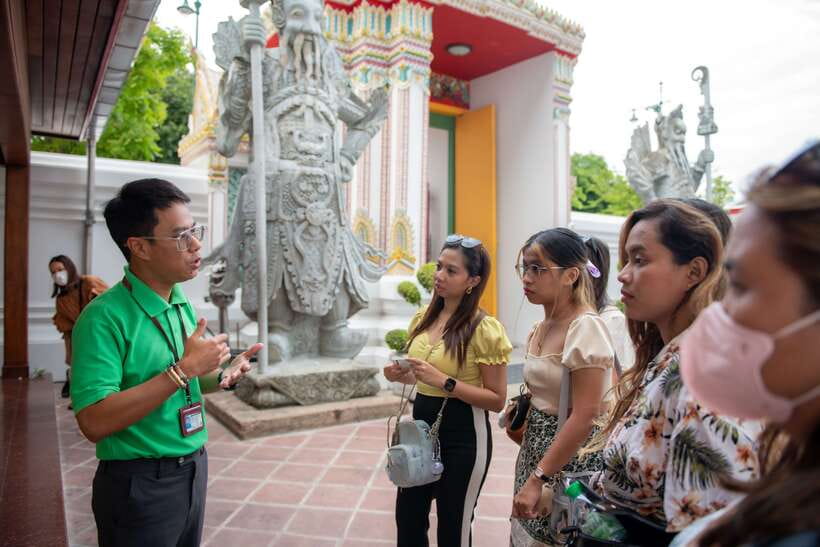
What makes Wat Pho special is how much is built into the surfaces. You’ll also notice the colorful mosaic shrines, which give the temple an energetic texture even though the mood is peaceful. With a guide, those decorations stop being just decoration and start making sense: where your eye should go, why certain elements are grouped together, and how devotees typically move through the space.
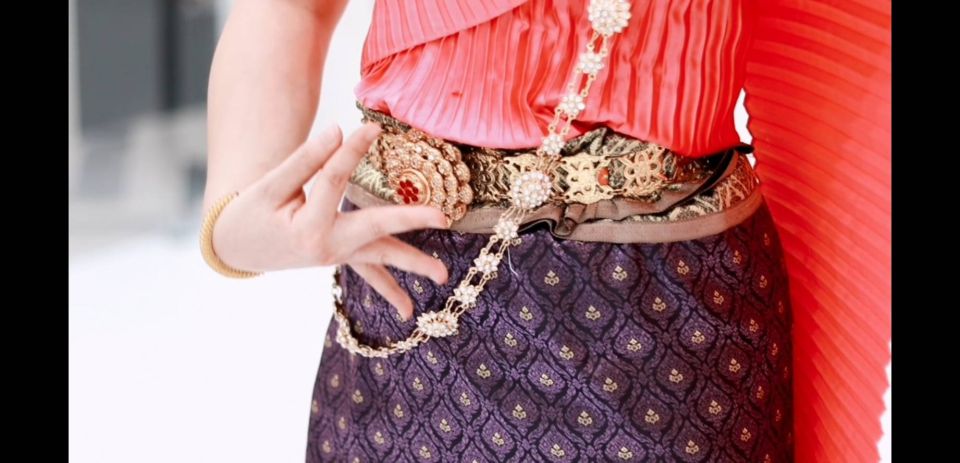
Dress code matters more here than you might expect. This tour follows strict rules about covering shoulders, underarms, back, and knees. Bring a sarong, scarf, or a light sweater so you’re not scrambling at the last minute. (And yes, you’ll want comfortable shoes—Wat Pho is walkable, but it’s not a sit-and-stare museum.)
Wat Arun at the river: mosaic chedi views that feel Instagram-native
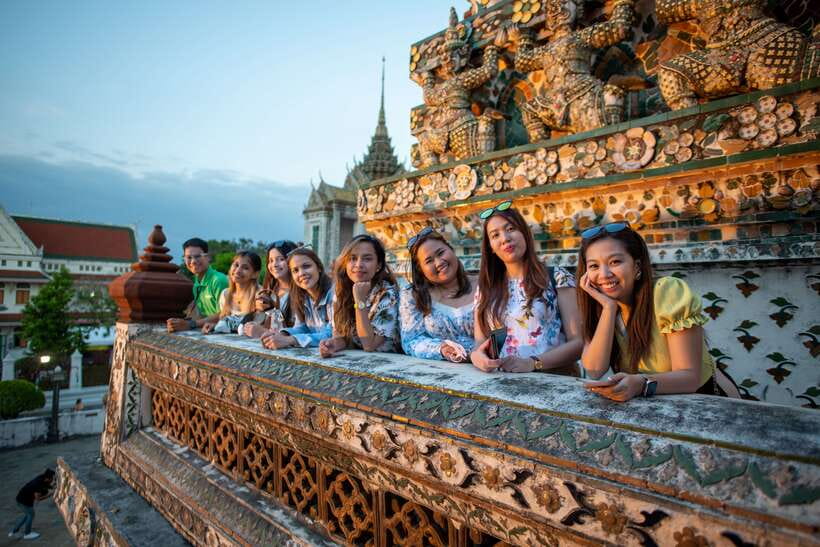
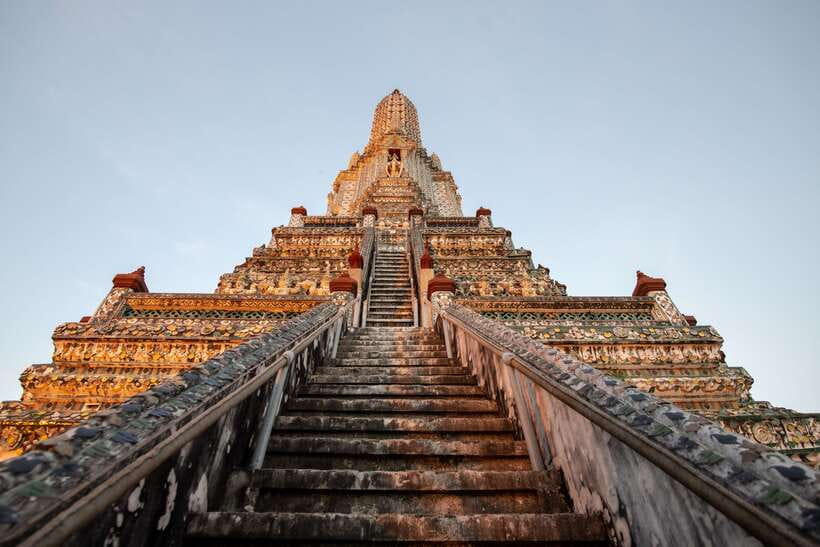
Wat Arun is the temple you picture when someone says Thailand and mosaics in the same sentence. It’s about 300 years old, and the signature feature is the enormous white chedi inlaid with thousands of colorful mosaic pieces. Up close, you start seeing how the patterns catch the light differently depending on where you stand.
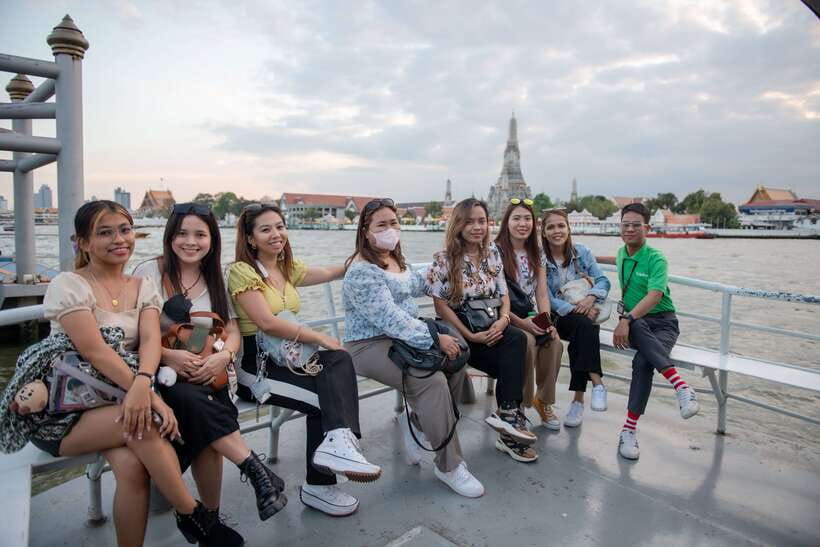
The river setting also changes the experience. You’re not just viewing a temple; you’re viewing a landmark that’s been shaped by the Chao Phraya River’s daily rhythm. That matters for photos because the light shifts and the angles look different in a short window of time.
Your guide will keep you moving through the grounds and point out where to pause. And if you’re the type who gets stuck deciding between photos and actually looking, this is where the guide’s pacing helps. You get a guided route, but you still get breathing room to walk around and find your own best view.
Price and value: what you’re really paying for at $17
$17 for two major temples and a live guide for 3 hours is strong value, especially because the tour includes more than narration. You also get coconut water and carbon emissions offset credits, which signals they’re at least trying to reduce the footprint of a highly popular route.
Entry tickets are separate: Wat Pho costs 300 Thai baht and Wat Arun costs 200 Thai baht. So your total cost ends up being the $17 tour price plus whatever you pay for those two admissions. Still, the structure makes sense: you’re paying for a guided, organized way to see the most important sights without having to figure out timing and temple etiquette on your own.
For me, the best value part isn’t the temples themselves (you can’t beat them). It’s the fact that you’re not wandering blind. Guides named in the experience often get praised for clarity and attentiveness—examples include Nancy, Jack, Surina, Tee, and Angie—so you’re paying for someone to translate the symbolism into something you can understand while you’re standing there.
You can also read our reviews of more guided tours in Bangkok

What’s included (and what’s not): plan around it
Included:
- Guide and walking tour
- Coconut water
- Carbon emissions offset credits
Not included:
- Entry tickets (Wat Pho 300 THB, Wat Arun 200 THB)
- Hotel pickup/drop-off
- Food and drinks beyond the coconut water
That means you should plan to handle your own meals and anything you want to drink later. Also bring cash because temples sometimes run into payment friction depending on the setup. If you prefer a smoother day, keep small bills in your pocket.
Low-impact temple time: glass-bottle water and carbon offsets
This tour is positioned as a responsible way to see Bangkok’s top spiritual stops. You’ll get water in glass bottles, which is a small but meaningful detail when you’re dealing with a city full of single-use plastics. The tour also includes carbon emissions offset credits for the experience.
Is that going to magically erase the footprint of tourism? No. But it does matter that the tour operator is trying to reduce waste and acknowledges emissions as part of the equation. If sustainability is part of your travel mindset, this tour fits better than the typical “just take a photo and go” route.
Practical tips: what to wear, what to bring, and how to hear your guide
Temple visits in Bangkok can feel simple until you hit the dress code. For this tour, don’t show up with bare shoulders or shorts that end above the knee. Shoulders, underarms, back, and knees must be covered. If your outfit doesn’t meet the rule, you’ll need a sarong, scarf, or sweater to cover up.
Bring:
- Comfortable shoes
- Sunglasses and a hat
- Sunscreen
- Insect repellent
- Camera
- Cash
One more practical note: a few people noted that street noise can make it harder to hear the guide if there isn’t clear amplification. If you’re wearing headphones or trying to read your phone, you might miss key context. Stay present, stand close when explanations matter, and ask your guide to repeat anything you didn’t catch.
Who this is best for
This works best if you want:
- A guided, efficient way to see two top temples
- Context so you’re not just photographing surfaces
- A short, manageable time commitment at 3 hours
It’s not suitable for pregnant women, people with mobility impairments, those with heart problems, or those with high blood pressure. If any of those apply, you’ll be happier choosing a less demanding plan.
Should you book this Bangkok temple walk?
Book it if you want a focused introduction to Bangkok’s most iconic temple architecture without spending your day figuring things out. This tour hits two big “must-see” sites—Wat Pho and Wat Arun—with enough time to look closely, and a guide helps turn the details into something you understand, not just something you pass by.
Skip it or choose a different format if you dislike strict dress rules, struggle with walking, or need a totally quiet experience. Temple sites are lively places, and you’ll be outside with plenty of sunlight.
If you’re on the fence, here’s the decision rule I’d use: if you’ll value a guide’s explanations and you can dress appropriately for the temples, this is a great use of a short afternoon in Bangkok.