REVIEW · CHIANG MAI
Private: 3 days 2 night trip: ChaingMai-Chaingrai- The Golden Triangle trip
Book on Viator →Operated by Untouched Thailand · Bookable on Viator
This route feels like a fast-forward button for northern Thailand. You’ll link waterfalls and hill tribe culture with the Golden Triangle and cross-border sights, all on a private 3-day schedule that’s built to save you time.
I particularly like how the trip balances nature and culture: Doi Inthanon’s trek time and viewpoints land before you start chasing border-town energy. I also like that your guide-led plan includes boat time on the Mekong and Maekok River, not just photos from the road, and people in reviews singled out guides like Thom and Sipohn for being warm and genuinely helpful.
One consideration: the pace is packed, and the tour depends on good weather, so you’ll want to stay flexible and accept that some outdoor moments are weather-dependent.
In This Review
- Key highlights at a glance
- A three-day route across borders that actually saves time
- Doi Inthanon waterfalls, pagodas, and hill tribe moments on Day 1
- Walking the rainforest-style wooden trails
- Hill tribe market + a Karen village stop
- Unseen temple, Chiang Dao Cave, and long-tail boats toward Mae Sai on Day 2
- Chiang Dao Cave: what you should expect
- Long-tail boat on the Maekok River
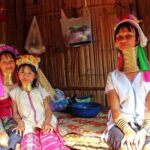
- Karen Long-neck village and Mae Sai arrival
- Mae Sai, Golden Triangle, and crossing into Laos on Day 3
- The Thailand–Myanmar border market feel
- Golden Triangle + opium house history
- Mekong river boat time and a Laos duty market stop
- White Temple and a possible hot springs finish
- Food, stays, and the value of included meals
- Price and logistics: is $350 worth it for this much territory?
- How early starts, trekking, and boats will feel in real life
- Who should book this tour, and who should consider a slower one
- Should you book this Chiang Mai–Chiang Rai–Golden Triangle trip?
- FAQ
- How long is the trip?
- Where does the trip start and what time is pickup?
- Is this a private tour?
- What countries or borders does the itinerary include?
- What meals are included?
- Where are the hotel rooms booked for the nights?
- Does it include tickets or a mobile ticket?
- Are any admission fees mentioned as free?
- What if weather is poor or the minimum isn’t met?
- What is the cancellation window?
Key highlights at a glance
- Doi Inthanon National Park: waterfalls, rooftop-of-Thailand views, and a rainforest-style wooden trail trek
- Hill tribe markets and villages: Hmong market, White Karen village, and time to chat and take photos
- Chiang Dao cave and temple stops: a mix of “quiet” sights plus scenic viewpoints
- Long-tail boat on the Maekok River: a classic local way to move through the countryside
- Golden Triangle + opium history: one day centered on three-country junction culture
- Mekong river crossing to Laos: boat time plus a duty-free-style market stop
A three-day route across borders that actually saves time
If you’re short on days but want more than the standard Chiang Mai loop, this trip is built for efficiency. You start in Chiang Mai, move through northern countryside, and end in Chiang Rai with major regional landmarks, including Mae Sai and the Golden Triangle.
The big value is that you’re not piecing together separate tours. This kind of itinerary is hard to assemble on your own—especially if you want a guided plan that keeps the driving, walking, and boat segments working together without wasting half-days.
It’s also a private tour, so your schedule is less about sharing vans and more about keeping your day’s flow tight. In reviews, people highlighted the relationship with the guides, and that matters here: when you’re crossing borders and hopping between rural stops, a steady guide makes the day feel smoother.
You can also read our reviews of more private tours in Chiang Mai

Doi Inthanon waterfalls, pagodas, and hill tribe moments on Day 1
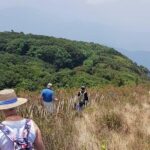
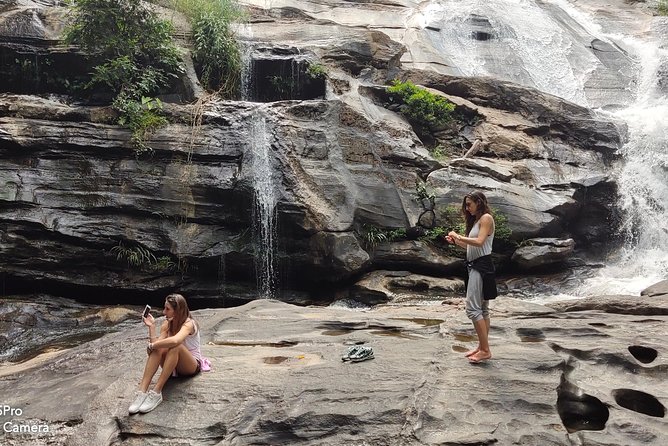
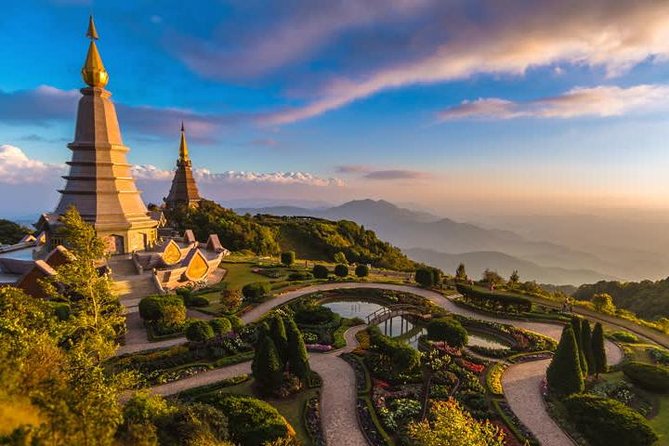
Day 1 starts in Doi Inthanon National Park, a top choice if you want mountains, cooler air, and real trail time rather than only viewpoints. You’ll visit two main waterfalls—Wachirathan and Sirithan—and then head up toward the mountain-top Twin Pagodas for panoramic views.
What I like about this start is that it shifts your mindset quickly. First you get the classic scenery (water and misty forest vibes), then you go higher for the viewpoint payoff. That sequence helps you feel like the day has momentum, not just a checklist.
Walking the rainforest-style wooden trails
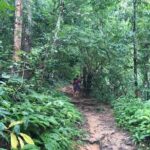
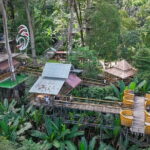
The itinerary includes trekking on wooden trails through a rainforest setting. This isn’t presented as a hard-core hike, but it’s still a walking experience. Wear shoes you trust on uneven ground, and expect it to feel more humid than Chiang Mai city.
If you’re the type who likes “slow moments,” this part can be your calm break. A trail walk inside the park gives you something most border-focused tours skip.
Hill tribe market + a Karen village stop
Later, you’ll stop at the Hmong hill tribe market, and then move into trekking toward hidden waterfalls through rainforest, paddy rice fields, and orchards. The day ends up at a White Karen hill tribe village, with time to walk around and enjoy mountains coffee drinks.
This is one of the most meaningful sections of the trip because it’s not just a roadside photo stop. You get time in the village setting, plus a chance to observe daily life at a human pace.
A practical note: the village portion likely means you’ll be off the main road, so bring cash for small purchases if you want snacks or handmade items. The tour includes an admission ticket free note at the hill tribe market time, but it doesn’t say everything else is free.
Unseen temple, Chiang Dao Cave, and long-tail boats toward Mae Sai on Day 2
Day 2 starts early with pickup at 8:00 a.m., with the offer that you could catch sunrise around 6:20 a.m. If you like light for photos, that early timing helps you start the day without feeling rushed later.
This day is a mix of cultural stops and rural movement. You’ll visit an “unseen local grand temple,” then explore Chiang Dao cave, and then head to Than ton temple and a viewpoint described as a no-man-lands overlook.
You can also read our reviews of more evening experiences in Chiang Mai

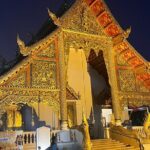
Chiang Dao Cave: what you should expect
The cave portion is included as a scheduled activity, but the details you should mentally prepare for are simple: you’ll be in a cooler, darker environment with uneven surfaces. Wear footwear you can grip, and don’t plan on a “quick glance” only—you’ll want time to look around and see what’s inside.
If you hate confined spaces, this might be the day’s most challenging sensory moment. If you don’t mind, it’s a nice change from waterfalls and open-air viewpoints.
Long-tail boat on the Maekok River
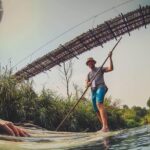
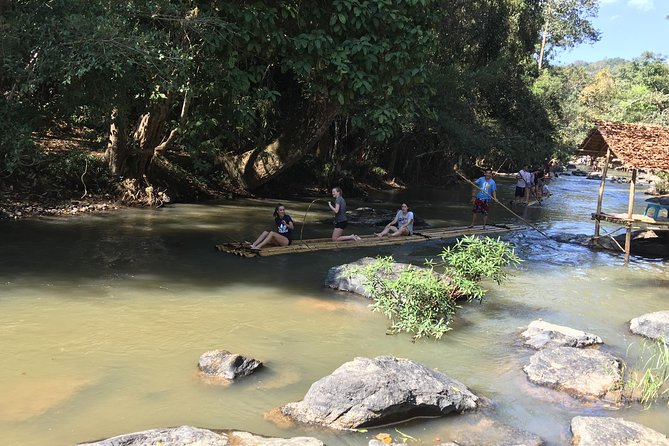
Then comes one of the most “worth it” transport moments: a long-tail boat ride on the Maekok River. Boat time gives you a different angle on the countryside and breaks the drive-heavy feel that can happen in border tours.
It also makes the day feel local. Road travel is fast; a boat ride is slower. That difference is why this stop tends to land well when people compare experiences.
Karen Long-neck village and Mae Sai arrival
You’ll end up at a Karen Long neck hill tribe and big ear ring village area, then continue to Mae Sai, the border town between Thailand and Myanmar.
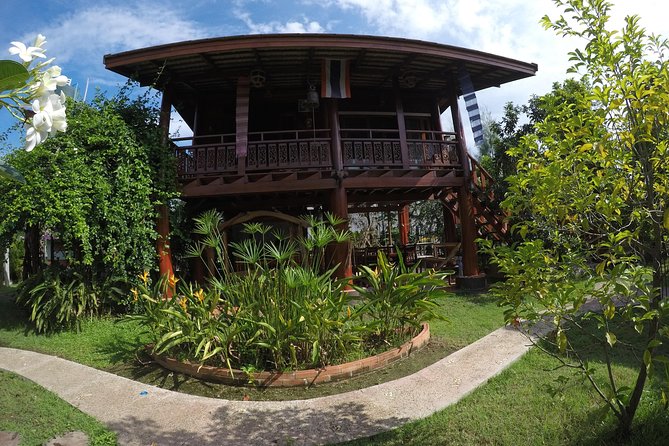
The trip also books your rooms for that night in Mae Sai. That matters: it keeps you from scrambling for accommodation after a long, active day.
Mae Sai, Golden Triangle, and crossing into Laos on Day 3
Day 3 is the big-ticket day for the region’s famous junction energy. You start with pickup at 8:00 a.m., and the day runs until about 6:30 p.m.
You’ll go from Mae Sai to the Golden Triangle in Chiang Rai, including multiple stops that help the day feel like a story instead of separate photo locations.
The Thailand–Myanmar border market feel
Early on, you’ll experience Chan people market energy and a Thailand–Myanmar border atmosphere. Even if you’re not buying much, this kind of market stop does two useful things: it gives context for the border-town economy and helps you understand why the Golden Triangle became so important historically.
If markets crowd you out, go slowly and look for open pockets of time to watch without getting swept along.
Golden Triangle + opium house history
Next is the Golden Triangle, where three countries meet, plus an opium house stop to learn about opium history. The key here isn’t theatrics—it’s context.
You’re seeing a place that’s famous for its geography, but also for its past role in regional trade networks. Understanding that history makes the rest of the day feel less like a postcard and more like a meaningful place with layers.
Mekong river boat time and a Laos duty market stop
The itinerary includes a boat trip on the Mekong River and then crossing the border to Laos for time on a Laos duty fees market (the stop is described as a local duty-fee-style market with shopping for local items).
This is the part of the day that can feel like a shift in rhythm. One moment you’re dealing with border energy; the next you’re on the river, with river air and different surroundings. It’s also where your timing and energy matter most, because you’ll want to stay on schedule to avoid missing the next transfer.
White Temple and a possible hot springs finish
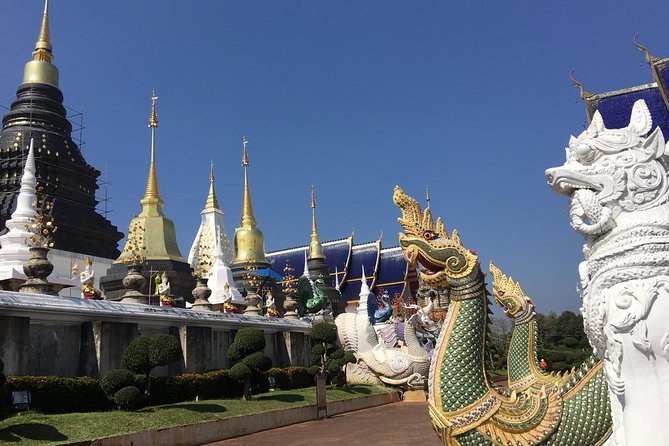
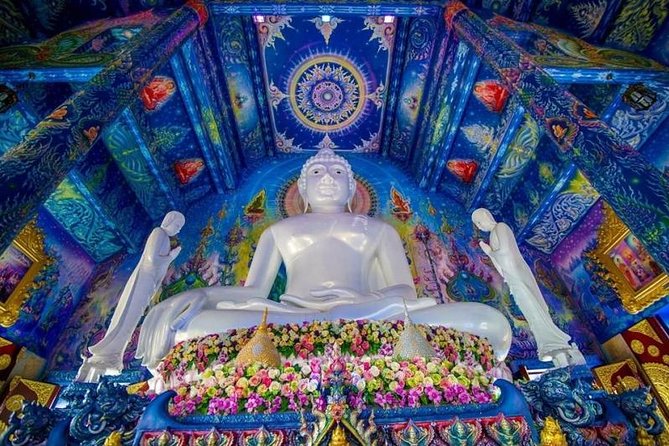
You’ll visit Wat Rong Khun, also known as the White Temple. It’s one of those places where the details reward time—so don’t rush your walk through the grounds.
There’s also a hot spring option if there’s time left, but it’s only described as conditional. If hot springs are your priority, you’ll want to treat this as a possible bonus, not a guaranteed stop.
Finally, your instructions note that you’ll arrange your own room in Chiang Mai city for tonight. After a late-ish day, that’s simply something to plan ahead so you don’t end up searching while tired.
Food, stays, and the value of included meals
The package includes lunches plus rooms with breakfast for 2 nights, and it includes 1 dinner at the homestay. Two dinners are not included.
That mix is common for this kind of route. It keeps cost controlled while still letting you experience at least one local meal setup (the homestay dinner) instead of only restaurant dinners.
The “value” here is practical: breakfasts let you fuel up for early starts, and the included lunch reduces the number of decisions you have to make mid-day when you’re already walking, riding boats, and dealing with transfers. For the dinners that aren’t included, you’ll have freedom to choose what fits your taste and energy level after long days.
On the stay side, the tour books your rooms for the Mae Sai border town night. That’s a helpful service because border towns can be good, but they’re not always where you want to spend time shopping for accommodation during your itinerary.
Price and logistics: is $350 worth it for this much territory?
At $350 per person for a 3-day / 2-night private tour, the price only makes sense if you compare it to what it would cost to stitch together the route yourself. You’re paying for a package that includes:
- guided access to multiple specific sites
- boat time (Mekong and Maekok)
- 2 nights of accommodation with breakfast
- selected meals (lunches and one homestay dinner)
- mobile ticket support
If you tried to do the same route independently—especially the more rural and border-linked pieces—you’d likely spend time (and money) on transport coordination, guide questions, and last-minute gaps.
That said, the trip is structured around a busy set of stops. If you want a slow pace or you’re only interested in one or two landmarks, then $350 could feel steep. But if you want a multi-country taste—Thailand plus border access involving Myanmar and Laos—this price reads as fair for the scope.
How early starts, trekking, and boats will feel in real life
This itinerary is not a “sit in the car all day” tour. It mixes:
- waterfall viewing
- uphill mountain-top viewpoints (Twin Pagodas area)
- wooden-trail trekking
- cave exploration
- village walking and market time
- long-tail and Mekong boat segments
So your comfort depends on two things: footwear and stamina. Bring shoes with grip, a light rain layer if weather shifts, and a small day bag for water and essentials.
The weather requirement is also stated: this experience requires good weather. In practice, that means some outdoor parts (waterfalls and trails) could be affected if conditions change. Build flexibility into your expectations.
And because Day 3 ends around 6:30 p.m., you’ll want your Chiang Mai room plan ready so you can check in without stressing.
Who should book this tour, and who should consider a slower one
This is a strong match if you want:
- more northern Thailand culture in a short window
- hill tribe experiences that include time on the ground, not just a stop-and-go
- major “name place” sights like the Golden Triangle and Wat Rong Khun
- boat time and countryside movement, not only driving
In reviews, people also praised the guide’s kindness and the relationships built during the trip, with named guides like Thom and Sipohn coming up for their effort and local knowledge style. That kind of care can make a packed itinerary feel less exhausting.
It may not be your best choice if you:
- hate walking on uneven trails or inside caves
- want lots of free time to wander independently
- prefer day trips that return to the same city without a final-night accommodation change
Should you book this Chiang Mai–Chiang Rai–Golden Triangle trip?
I’d book it if you have limited time and you want a guided, private route that strings together the best mix of nature, hill tribe culture, and the Golden Triangle—with meaningful boat segments.
I wouldn’t book it if you want a relaxed pace or you’re sensitive to weather and early starts. This tour works when you’re ready to move through the day and keep your energy up.
If you do book, my practical advice is simple: pack for walking and weather changes, and plan your final night in Chiang Mai early. That small step keeps Day 3 from turning into a stress hunt at the end.
FAQ
How long is the trip?
The private tour runs for 3 days (about 3 days) and includes 2 nights.
Where does the trip start and what time is pickup?
Pickup starts in Chiang Mai, and pickup is listed as 8:00 a.m. for Day 1. Day 3 also has pickup at 8:00 a.m., with the full day described as running until about 6:30 p.m.
Is this a private tour?
Yes. It’s described as a private tour/activity, meaning only your group participates.
What countries or borders does the itinerary include?
You visit areas connected to Thailand and you also include border-related visits involving Myanmar and Laos, including time at the Golden Triangle and crossing into Laos for a market stop.
What meals are included?
Lunch is included, and the package includes rooms with breakfast for 2 nights. There is also 1 dinner at the homestay. The other 2 dinners are not included.
Where are the hotel rooms booked for the nights?
The tour says rooms will be booked for you for tonight at the border town of Mae Sai. For the last night, you must book your own room in Chiang Mai city.
Does it include tickets or a mobile ticket?
Yes. The features list includes pickup offered and a mobile ticket.
Are any admission fees mentioned as free?
The Hmong hill tribe market stop is noted with an admission ticket free note for 1 hour.
What if weather is poor or the minimum isn’t met?
The experience requires good weather. If it’s canceled due to poor weather, you’re offered a different date or a full refund. If a minimum number of travelers isn’t met, you’ll be offered a different experience/date or a full refund.
What is the cancellation window?
Free cancellation is available up to 24 hours in advance for a full refund. If you cancel less than 24 hours before the experience starts, the amount paid won’t be refunded.