REVIEW · CHIANG MAI
Mastering Chiang Mai Temples in Halfday – Visit 7 Temples
Book on Viator →Operated by joinusthai · Bookable on Viator
Seven temples, one smart half-day. If you feel stuck on what to see in Chiang Mai, this route helps you skip the planning headache by grouping iconic Lanna temples into one efficient circuit. I love the pickup and no-transport-stress setup, and I also love that a good guide keeps the stops meaningful, not just scenic, so you actually understand what you’re looking at.
The main trade-off is the pace. With short windows at each site, you’ll get highlights more than you’ll get lingering. That can feel rushed at a couple of stops, especially if you want extra time climbing, wandering, or waiting for the light to be perfect.
In This Review
- Key points to know before you go
- Why This Seven-Temple Circuit Works for Short Time
- Price and What You’re Really Paying For ($93.71)
- Getting Dressed, Ready, and Staying Comfortable (Rain and Temple Rules)
- From Wat Phra Singh to Doi Kham: The Route Stop by Stop
- Wat Phra Singh: The sacred Chiang Mai image and Songkran links
- Wat Chedi Luang Varavihara: A massive chedi you can’t ignore
- Wat Phantao: Teakwood ordination hall artistry
- Wat Chiang Man: The elephant-supported chedi
- Wat Lok Molee: Stucco patterns and pagoda beauty
- Wat Suan Dok: White chedis and the old flower garden meaning
- Wat Phrathat Doi Kham: The hilltop Golden Mountain Buddha
- Photography, Timing, and How to Get More Out of Each Short Stop
- Who This Tour Fits Best (and Who Might Want Something Slower)
- Should You Book This Half-Day Temple Tour?
- FAQ
- How long is the Chiang Mai temple tour?
- How many temples are visited?
- Is pickup included?
- What time does the tour start?
- Does the tour run in rainy season?
- What should I wear to enter the temples?
- Is admission included?
- What is the cancellation policy if I change my mind?
Key points to know before you go
- Seven temples in about four hours: a fast hit of the city’s most recognized Lanna sights
- Pickup included: you don’t have to solve transport between scattered neighborhoods
- Temple rules matter: plan for covered shoulders and knees, especially if you’re in shorts
- Most entries are free: you pay less at the gate and spend more time looking
- Rain-ready schedule: the tour runs in rainy weather, so bring protection
Why This Seven-Temple Circuit Works for Short Time
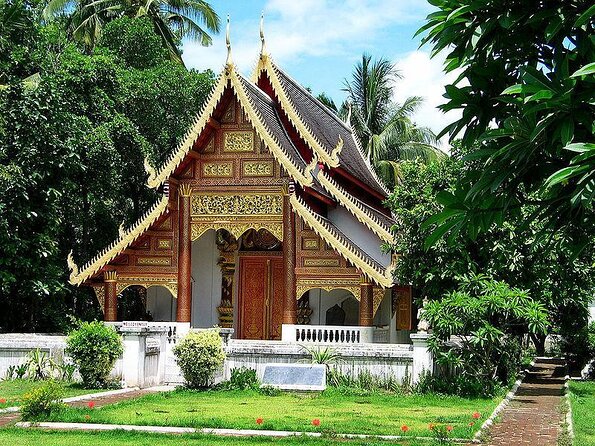
Chiang Mai is temple country. The city and province are home to 300+ Buddhist temples, so it’s easy to freeze when you ask yourself which ones to prioritize. This tour is basically an answer to that exact problem: it packages the most important ones into one manageable half-day.
What makes it work is the structure. You’re not hopping around trying to coordinate taxis or figuring out where you should start. Instead, you’re handed a route, and you’re given time at each place to look closely enough to feel satisfied. It’s the kind of plan that helps you get your bearings fast and then use your remaining time for whatever you personally care about most—night markets, food, or a slower temple afternoon.
The other big plus is how the temples connect thematically. The day isn’t just about random landmarks. It’s about seeing Lanna-style design and sacred objects as part of one bigger picture: chedis, teak wood halls, elephant-shaped stone supports, and hilltop Buddha silhouettes all tell related stories.
You can also read our reviews of more tours and experiences in Chiang Mai.



Price and What You’re Really Paying For ($93.71)
At $93.71 per person, this isn’t the cheapest option in Chiang Mai—but it also isn’t the kind of price that surprises you once you price out the alternative. You’re paying for:
- A private tour setup where only your group participates
- Pickup offered, so you’re not spending your morning chasing transportation
- A guided route that handles the transitions between stops
- A schedule that fits inside one 4-hour block (approx.)
Another value point: most temple admissions are free, and one major site includes admission. That means you’re not constantly stopping to pay entry fees, and your money goes toward experiences instead of paperwork.
If you’re traveling with limited time or you hate the back-and-forth of hiring multiple rides, this kind of package tends to feel like a win. If you love independent exploring and you’re happy to spend extra time moving around, you may not need the structure. But for a tight visit, the math usually works.
Getting Dressed, Ready, and Staying Comfortable (Rain and Temple Rules)
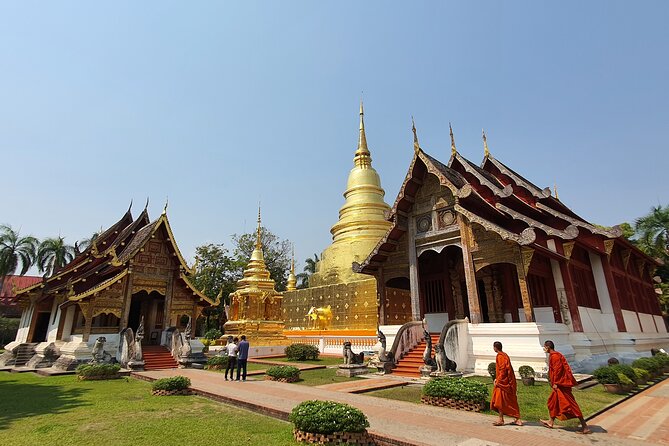
This is one of those tours where you’ll be glad you planned for practical stuff.
First, temple dress code is real: you’ll want shoulders and knees covered when you enter temple grounds. Sandals or flip-flops are allowed, so you don’t have to bring hiking shoes—but do plan what you’ll wear early in the day.
Second, Chiang Mai’s rainy season runs from May to October, and the tour still goes on rainy days. That means pack an umbrella or raincoat. The comfort factor matters here because you’ll be doing multiple stops back-to-back, so you don’t want to start wet and miserable and then have the whole day spiral.
Finally, timings can shift due to weather and other interruptions. The tour runs with an approximate schedule, so don’t build your next plan like it’s a train departure. Build in flexibility.
From Wat Phra Singh to Doi Kham: The Route Stop by Stop
You’ll move through seven temples, each with a distinct flavor of Lanna architecture and Buddhist meaning. The time at each stop is short in places, so I’ll flag what to focus on so you don’t miss the best details.
Wat Phra Singh: The sacred Chiang Mai image and Songkran links
You start at Wat Phra Singh, home to one of Chiang Mai’s most sacred Buddha images in the Chiang Sean style. Even if you’re just visiting once, it helps to know the cultural rhythm around it: during Songkran (April 13–15), the image is carried around town in a parade procession so locals can bathe it with scented water, which is believed to bring good luck.
You’ll have about 30 minutes, and admission is free. The drawback is that this is a high-priority stop, so it can feel busy. If you want space for photos, focus on compositions that don’t require you to stand in the most crowded path.




Wat Chedi Luang Varavihara: A massive chedi you can’t ignore
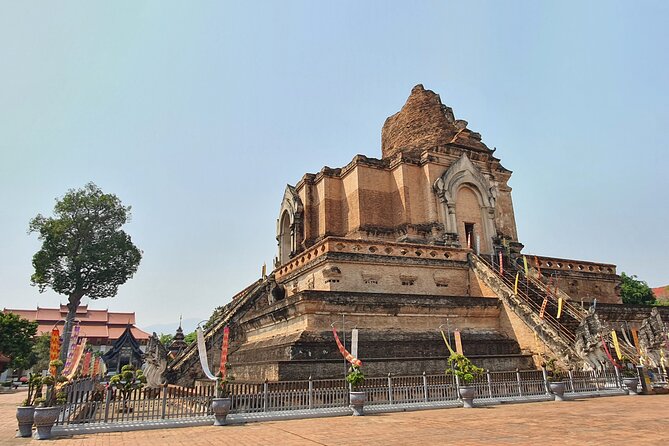
Next is Wat Chedi Luang Varavihara, and the highlight is obvious the moment you arrive: the huge chedi dominates the grounds and is a standout photo subject. The site is all about scale—this is not a small temple detail; it’s a visual anchor.
You’ll get 30 minutes here, and the admission ticket is included. Consider arriving with a simple plan: look first for the overall shape and proportions, then zoom in on textures and surrounding elements. With limited time, that approach keeps your photos varied instead of repeating the same wide shot.
Wat Phantao: Teakwood ordination hall artistry
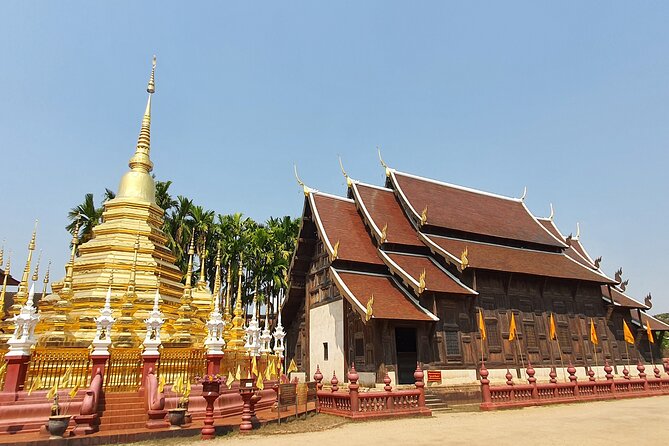
At Wat Phantao, the star is its Lanna-style ordination hall, or Wihan, built entirely from teakwood. It has a history as a throne hall, so the building wasn’t made for casual wandering—it was built for ceremony and authority.
This stop is brief—about 10 minutes—and admission is free. That short timing is the main consideration here. With only a few minutes, don’t spend your whole window reading everything. Instead, take one pass for the architecture, then one for the layout around it.
Wat Chiang Man: The elephant-supported chedi
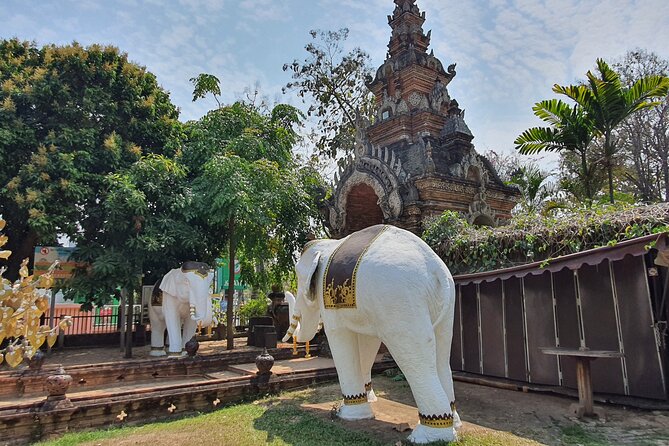
Wat Chiang Man is the oldest temple in Chiang Mai town, and it’s famous for a distinctive Lanna chedi supported by rows of elephant-shaped buttresses. It’s one of those details that feels like a design signature: you notice it instantly, and then you start spotting the repetition that makes it feel intentional rather than decorative.
You’ll have 20 minutes, and admission is free. The drawback is time pressure again—this one rewards slow looking. If you’re the type who loves carved details, use your minutes efficiently: get the elephant buttresses in your frame early, then take a second look for symmetry and placement.
Wat Lok Molee: Stucco patterns and pagoda beauty
At Wat Lok Molee, pay attention to the pagoda and the stucco pattern work. The artistry here is classified as a masterpiece of Lanna art, and it’s the kind of decoration that looks best when you slow down for a second.
Expect about 15 minutes, admission is free. Fifteen minutes is enough for a solid look, but only if you don’t get stuck in one spot. Do a quick circuit view, then return once to focus on the pattern details you want to capture.
Wat Suan Dok: White chedis and the old flower garden meaning
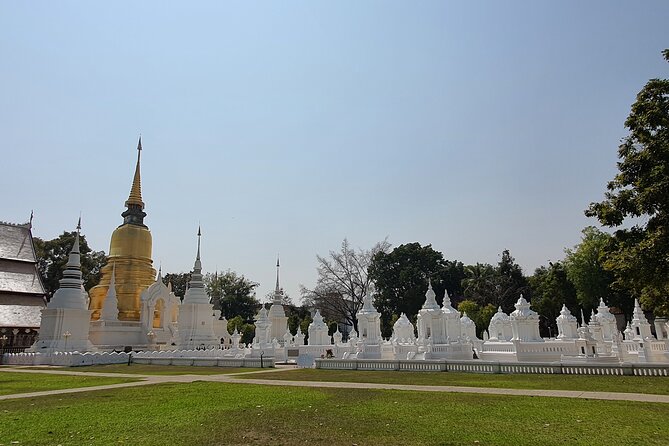
Wat Suan Dok is known for its large number of white chedis or pagodas. The name literally translates to flower garden temple, because the temple area was once used as a Royal flower garden by the ruler of Chiang Mai.
You’ll have about 20 minutes, and admission is free. This is one of the stops that can feel peaceful even when the day is moving fast. The best way to enjoy it is to treat it as a reset: step back, look for the visual rhythm of white chedis, then walk your gaze through the area like you’re reading a page.
Wat Phrathat Doi Kham: The hilltop Golden Mountain Buddha
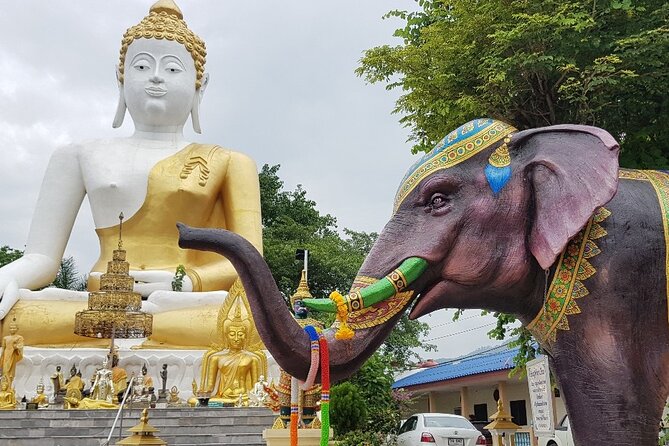
The final stop is Wat Phrathat Doi Kham, or Temple of the Golden Mountain. It sits on Doi Kham hill and is surrounded by mountainous landscape views. The major feature is an enormous sitting Buddha image showing the calling the earth to witness mudra. At 17 meters high, it dominates the area and is visible from miles away.
This stop gets about 40 minutes, and admission is free. Since it’s the biggest and most visually dominant, it also makes sense that you get the most time here. The practical consideration: if weather or haze affects visibility, your best bet is still to take in the full silhouette from key angles and then enjoy the hilltop setting for the atmosphere, not only for distance views.
Photography, Timing, and How to Get More Out of Each Short Stop
A half-day temple plan is all about making your minutes count. Here’s how to do it without turning it into a frantic checklist.
- Use the guide time early. If you’re lucky and your guide is someone like Faan, you may get lots of explanation and even help with photos. When that happens, take it. You’ll understand what you’re photographing, and your shots will look more intentional.
- Do one wide, then two close. At most stops you’ll have time for a broad context photo, then detail shots. This works especially well at places like Wat Chedi Luang and Wat Chiang Man where the structure and specific motifs both matter.
- Plan your outfit for both sun and shade. Temple days can be bright one minute and shaded the next. With sandals allowed, you can keep it simple, but bring something light for your shoulders and knees coverage.
- Don’t chase perfect timing. With short windows, you can’t control crowds or cloud cover. The best strategy is to get a few strong angles at each site and then let the rest of your experience be about learning and atmosphere.
When the schedule is tight, the biggest value is mental. You don’t leave thinking you saw a bunch of buildings. You leave understanding patterns—Lanna style, chedi symbolism, and why certain spaces feel ceremonial.
Who This Tour Fits Best (and Who Might Want Something Slower)
This tour is a great match for you if:
- You have about half a day and want maximum temple coverage
- You feel overwhelmed by the question of which temples are truly worth prioritizing
- You’d rather spend energy appreciating what’s in front of you than handling transport logistics
- You like the idea of a guide explaining what you’re looking at, even if it’s in a fast-paced format
It may not be your best fit if you’re the type who wants to stay for hours at a single temple or you don’t enjoy being on a schedule. The time you get per stop ranges from about 10 minutes to 40 minutes, and that means you won’t have long, unhurried roaming time at every location.
It also fits especially well as part of a broader Chiang Mai trip where you still want time for markets and meals after. You’ll likely appreciate coming out with a clear sense of what you want to revisit later.
Should You Book This Half-Day Temple Tour?
If you’re asking whether this is worth it for your trip style, here’s the practical answer: book it if you want to reduce stress and get a high-impact temple overview with guide support. The combination of pickup, seven major temples, and mostly free admission makes it a strong value for a short visit.
I’d pass if you want slow travel, deep reading time, or you prefer to build your own route without a fixed clock. Also keep in mind that rain won’t cancel the plan, so you’ll want to show up prepared with coverage.
Overall, this is the kind of day trip that works as a first taste of Chiang Mai temples. It helps you get oriented fast, it shows you the variety of Lanna design, and it leaves you enough energy to enjoy the rest of your Chiang Mai time.
FAQ
How long is the Chiang Mai temple tour?
It lasts about 4 hours.
How many temples are visited?
The tour visits 7 temples in one route.
Is pickup included?
Yes, pickup is offered.
What time does the tour start?
The start time is 9:00 am.
Does the tour run in rainy season?
Yes. From May to October, it’s rainy season, but the tour runs even on rainy days. Bring an umbrella or raincoat.
What should I wear to enter the temples?
Dress appropriately: shoulders and knees must be covered. Sandals or flip-flops are allowed.
Is admission included?
Most temple admissions are free, and Wat Chedi Luang Varavihara has admission included.
What is the cancellation policy if I change my mind?
You can cancel for a full refund if you cancel at least 24 hours before the experience’s start time. Confirmation is received at booking time.