Two hours. Big Chiang Mai temple stories. This small-group Old City walk takes you past major landmarks and lesser-visited sacred spots, then finishes at Wat Chedi Luang as the big UNESCO-candidate style finale—without the usual crush. I love how efficiently it packs real context into a short, walkable route.
My favorite part is the guide. On this tour, the local host (Natt, in one standout experience I’m drawing from) brings Buddhism, northern Thai customs, and Lanna history into clear, friendly explanations, so the temples start making sense fast. I especially like how the commentary turns stone and symbols into something you can actually picture.
One thing to consider: there’s no hotel pick-up or drop-off, so you’ll need to get yourself to the start at Massage Land and then plan your next move after it ends at Wat Chedi Luang. If you want door-to-door convenience, this may feel a bit DIY.
In This Review
- Key highlights to look for
- Why this 2-hour Old City route works so well
- Wat Chiang Man: the early-temple anchor and Lanna legend setup
- Three Kings Monument: understanding Chiang Mai’s founder story
- City Pillar Shrine area (Wat Inthakin / Wat Sadeu Muang): faith at the center
- Wat Chedi Luang Varavihara: the grand finale and why it matters
- What makes the guide matter (and why Natt stands out)
- Price and value: what $19 buys you in Chiang Mai
- Meeting at Massage Land and ending at Wat Chedi Luang
- Who should book this temple tour (and who might pass)
- Should you book this Chiang Mai temples tour?
- FAQ
- How long is the Chiang Mai temples and Old City tour?
- How much does the tour cost?
- What’s the group size limit?
- Where does the tour start and end?
- Which temple admission fees are included?
- What’s included in the tour price?
- Is hotel pick-up or drop-off included?
- Will I receive confirmation after booking?
Key highlights to look for
- Small group size (max 10) keeps the pace relaxed and questions easy to ask
- Expert local guide focuses on Buddhism, Lanna beliefs, and the meaning behind what you’re seeing
- Old City route that stays tight: Wat Chiang Man, Three Kings Monument, City Pillar Shrine area, then Wat Chedi Luang
- Wat Chedi Luang entry included (50 THB) so the “final stop” is financially painless
- Free admission at the earlier stops helps you keep costs down during the walk
- Mobile ticket + bottled water + accident insurance add practical comfort for a short tour
Why this 2-hour Old City route works so well
A temple tour can go one of two ways: either you rush through photos, or you get stuck in a slow-moving group that misses the best light and energy. This about 2 hours plan hits the sweet spot. You get multiple stops, but you’re not stuck all day, so it fits neatly into a Chiang Mai schedule that already includes night markets, food, and maybe a cooking class or elephant sanctuary visit.
What I like most is that the route follows a logic. You start with an important early temple, then you move into the city’s founding story, then into the spiritual center of Chiang Mai (the City Pillar Shrine area), and then you end at the showpiece temple. That arc matters because it gives you a mental map of how people built their beliefs into the city layout and royal identity.
It also helps that it’s small group pacing. You’re not fighting for hearing range under temple eaves, and you’re less likely to get swept along without time to look up, read details, or ask why something is arranged a certain way.
You can also read our reviews of more city tours in Chiang Mai
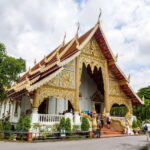
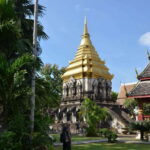

Wat Chiang Man: the early-temple anchor and Lanna legend setup
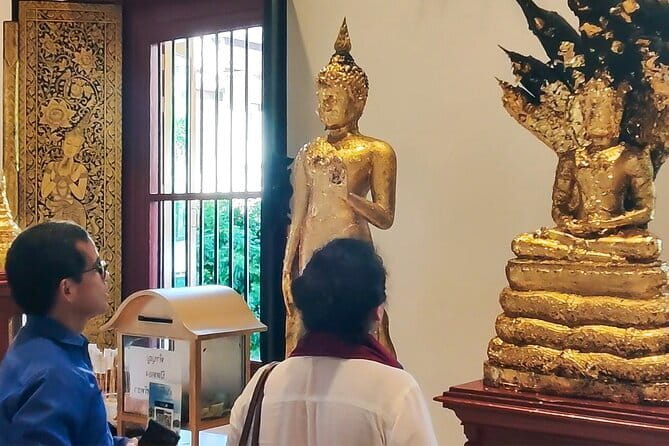
Stop 1 is Wat Chiang Man, where the tour gets you oriented with sacred context and Lanna legends. The listing frames it as Chiang Mai’s earliest temple connection, which is a helpful starting point: when you’re standing inside a complex like this, the guide can explain why people treat these places as more than sightseeing.
The time here is about 40 minutes, so it’s not a quick drive-by. This is where you’ll likely notice how temples in northern Thailand carry layered meaning—religious purpose on the ground level, and community identity through the stories told about royal families and local belief. The goal isn’t to memorize facts. It’s to understand what to look for when you move to the next sites.
Practical tip: wear something comfortable and expect some walking and uneven surfaces. Even if you’re not doing a long trek, you’ll still be standing, turning, and looking around in different spots within the temple complex. And because this is the first stop, it’s a good moment to bring your full attention online—after you get the guide’s explanation here, the later landmarks click faster.
Three Kings Monument: understanding Chiang Mai’s founder story
Next you’ll head to the Three Kings Monument, with about 10 minutes there. This stop is quick by design, but it’s also strategic. Instead of only focusing on religious buildings, the tour shifts to the city’s identity—how Chiang Mai sees itself through the stories of its royal founders.
Here, your guide explains the symbolic heart of Chiang Mai: the three royal founders and how their vision shaped the cultural identity of the Lanna Kingdom. That kind of background is useful because Chiang Mai’s temple art and architecture don’t float in a vacuum. They’re tied to political legitimacy, belief, and the sense that the city was founded with a mission.
This monument stop is also a nice mental reset. If you’ve been looking at temple carvings, then you step into a more open, landmark-style area, you’ll have a breather before the spiritual center of the Old City.
City Pillar Shrine area (Wat Inthakin / Wat Sadeu Muang): faith at the center
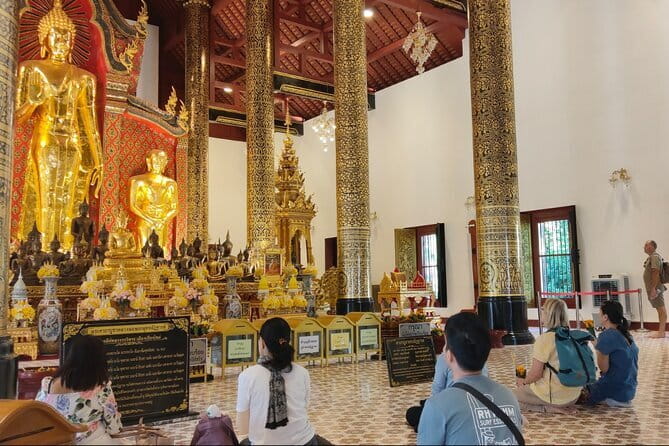
Stop 3 is Wat Inthakin, described as the City Pillar Shrine, reached via the Wat Sadeu Muang reference in the itinerary. The time here is about 20 minutes, which is just right for a meaningful stop without turning into a lecture marathon.
The tour frames this place as the cultural heart of the Old City and ties it back to the founding kings and sacred beliefs. This is the moment where you start seeing why Chiang Mai feels different from other Thai cities. The city isn’t just a backdrop—it’s treated like part of a living spiritual structure.
The best part of this stop is how the guide connects symbols to real-world practice: you’re not only looking at stone and signage, you’re hearing what locals believe is being protected, honored, or reinforced by the shrine’s presence.
A small practical note: shrines often have active worship rhythms. Even if you’re there in daylight for a guided explanation, keep your voice low, watch where people stand, and don’t block sightlines when locals are pausing to pay respect.
Wat Chedi Luang Varavihara: the grand finale and why it matters
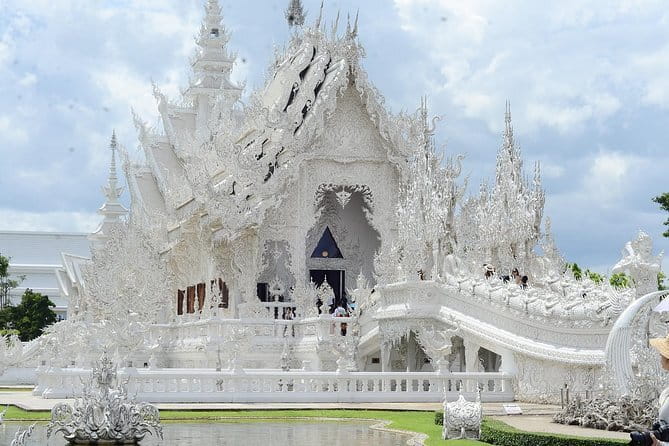
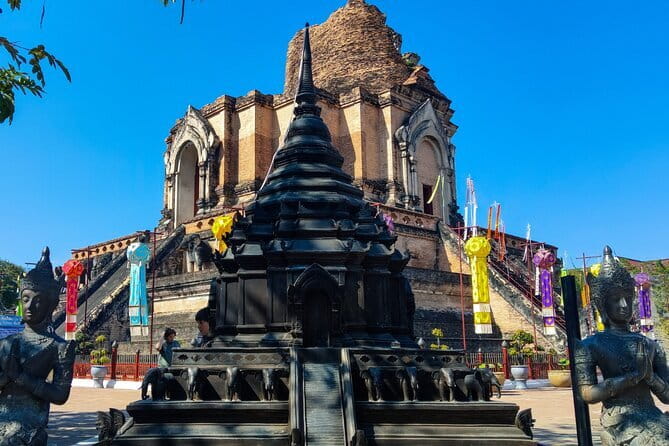
Finally, the tour lands at Wat Chedi Luang Varavihara for about 50 minutes, and this is the reason many people choose this short tour. This temple is presented as one of Chiang Mai’s most grand and exquisite sites, and the guide’s storytelling here is where everything you learned earlier tends to snap into place.
A few big context points you can expect to hear:
- It’s described as once home to the Emerald Buddha.
- It’s tied to an Amazing Thailand campaign featuring LISA, which helps explain its modern visibility.
- The itinerary calls this a UNESCO candidate–style finale, signaling its international importance and cultural weight.
And yes—this stop comes with a concrete, budget-friendly detail. Wat Chedi Luang admission is included, listed at 50 THB per person. So you’re not scrambling for cash while you’re standing in the middle of a major landmark.
What makes this the best stop for many people is the balance of scale and meaning. You can see the temple’s size and craftsmanship quickly, but the guide helps you understand what that scale represents to the community. It stops being a “pretty building” and becomes a place with a storyline.
If you want photos, this is the time to plan for them: give yourself a few minutes to look up, then listen, then look again. The details often change in your eyes once you’ve heard what they represent.





What makes the guide matter (and why Natt stands out)
Even a perfect itinerary can fall flat without a guide who can translate the place. The strongest praise from this experience centers on the host’s ability to explain. In one clearly named example, Natt is described as friendly and approachable, with a deep command of Chiang Mai’s history and northern Thailand’s religious beliefs.
I like that kind of teaching style for temples because it avoids two extremes:
1) turning everything into a checklist of facts, or
2) only pointing out what looks nice for pictures.
Instead, the guide is described as answering questions with ease and turning places like Wat Phra Singh and Wat Chedi Luang into a connected story. Even if your route isn’t every single temple in sight, the comparisons and context help you understand why certain themes show up across different sites.
Look for this when you’re there. When a guide keeps the explanations practical—what a belief means in everyday life, what a symbol signals—you get more out of your time than you would on a “see it, move on” walk.
Price and value: what $19 buys you in Chiang Mai
At $19.00 per person for an about 2-hour small-group tour, the value is unusually clear because several practical costs are handled for you.
Included items:
- Bottled water
- Accident insurance
- Guided tour by a professional guide
- Wat Chedi Luang entry fee (50 THB)
Add to that what’s effectively “free” earlier in the route: the itinerary lists free admission for Wat Chiang Man, Three Kings Monument, and the City Pillar Shrine stop.
So you’re paying mainly for two things: the guide’s explanations and the logistics of grouping, timing, and getting you to the right points without spending your brainpower on directions. For a short Old City tour, that’s a strong trade.
What you’ll still want to budget for:
- personal expenses (snacks, drinks beyond the bottled water, souvenirs)
- tips or gratuities (not included)
- and getting yourself to the meeting point since hotel pick-up is not part of the deal
If you’re the kind of traveler who likes history but doesn’t want to spend the afternoon reading guidebooks, this price-to-time ratio often feels fair.
Meeting at Massage Land and ending at Wat Chedi Luang

The start point is Massage Land, Chiang Mai on Prapokklao Road. The end point is Wat Chedi Luang on the same road area.
This matters because it affects how you plan the rest of your day. You won’t be dropped back at your hotel. Instead, you finish exactly where one of the city’s biggest temple experiences sits, which can be convenient if you want to keep exploring on your own afterward.
You’ll also want to factor in that the tour is described as near public transportation, so it’s easier to reach than a tour with an awkward meeting place. Still, it’s smart to arrive a little early and give yourself time to find the exact corner and confirm you’re at the right spot.
Who should book this temple tour (and who might pass)
This tour is a great fit if:
- you want a short Old City plan that still feels meaningful
- you like learning why temples exist, not only what they look like
- you prefer a group of up to 10 so your questions don’t disappear
- you want a guided story that ends at the big landmark: Wat Chedi Luang
You might consider something else if:
- you need hotel pick-up and drop-off as a must-have
- you want a longer temple marathon (this is designed for roughly 2 hours)
- you’re looking for purely free-choice wandering without a timed route
For most people doing Chiang Mai for the first time, this works as either a strong starter or a calm add-on on a day when you’ve already got other big plans.
Should you book this Chiang Mai temples tour?
Yes, I’d book it if you’re the kind of person who learns best with a guide and wants your time to feel efficient. The standout value is the combination of small-group pacing, free earlier stops, and the included Wat Chedi Luang ticket, plus the guide style that explains Buddhism and northern Thailand customs in a way that makes you look longer at what’s in front of you.
One last practical check: since it starts at Massage Land and ends at Wat Chedi Luang, make sure you’re comfortable handling that half-day logistics yourself. If you can do that, this tour is a solid way to get oriented and leave with a clearer sense of Chiang Mai beyond the postcards.
FAQ
How long is the Chiang Mai temples and Old City tour?
It runs for about 2 hours.
How much does the tour cost?
The price is $19.00 per person.
What’s the group size limit?
The tour has a maximum of 10 travelers.
Where does the tour start and end?
It starts at Massage Land on Prapokklao Road and ends at Wat Chedi Luang on Prapokklao Road.
Which temple admission fees are included?
Wat Chedi Luang entry is included at 50 THB per person. The other listed stops have free admission.
What’s included in the tour price?
You get bottled water, accident insurance, a guided tour with a professional guide, and the Wat Chedi Luang admission fee.
Is hotel pick-up or drop-off included?
No. Hotel pick-up/drop-off is not included.
Will I receive confirmation after booking?
Yes. Confirmation is received at the time of booking.