REVIEW · CHIANG MAI
Chiang Mai Temples & City
Book on Viator →Operated by Bravo Indochina Tours · Bookable on Viator
Six wats, one smooth day in Chiang Mai. This full-day circuit is a great way to see the most meaningful Buddhist wats around town, with the big reward of hilltop views at Wat Phra That Doi Suthep—plus guided context at every stop. I also like that entrance fees and hotel pickup/drop-off are handled for you, so you spend your time looking at temples instead of figuring out logistics. One thing to consider: Doi Suthep is reached by 306 steps, and the whole day runs long (about 10 hours) and depends on decent weather.
The pace is built for a small group (up to 9), and that matters in a temple city where getting delayed can snowball. Your guide is English-speaking, and in the experience’s best notes you’ll see names like Yukki (guide) and Mr Bank (driver) tied to a calm, on-time flow. You also get bottled water along the way, which is a small detail that actually helps when you’re walking from one complex to the next.
In This Review
- Key Highlights You’ll Actually Feel During the Day
- Why This Temple Circuit Works in Chiang Mai
- Morning Start: Wat Phra That Doi Suthep and Its 306 Steps
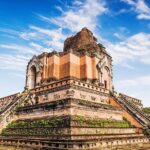
- Wat Chet Yot: A 7-Spire Stupa with Lanna-Style Character
- Wat Suan Dok: The Flower Garden Temple and Its White Chedis
- Wat Phra Singh, Wat Chedi Luang, Wat Chiang Man: Old-City Wats with Big Names
- Wat Phra Singh (about 1 hour)
- Wat Chedi Luang Varavihara (about 1 hour)
- Wat Chiang Man (about 2 hours)
- Price and Logistics: What Your $122.06 Gets You
- Timing, Weather, and How to Make the Stairs Work for You
- Who This Tour Suits Best (and Who Might Prefer Something Else)
- Should You Book This Chiang Mai Temples & City Tour?
- FAQ
- What time does the tour start?
- How long is the Chiang Mai temples tour?
- How many temples are visited on this tour?
- Is hotel pickup and drop-off included?
- Are entrance fees included?
- Is there an English-speaking guide?
- How many people are in the group?
- Does the tour include bottled water?
- What is not included in the price?
- Is the tour affected by weather?
Key Highlights You’ll Actually Feel During the Day
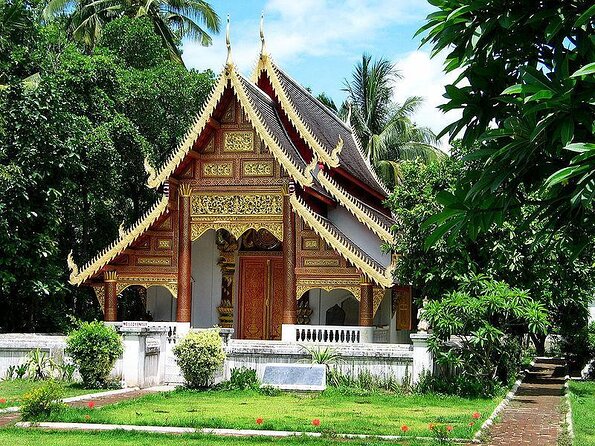
- Wat Phra That Doi Suthep: the famous hilltop temple with far-reaching city views
- Wat Chet Yot’s 7-spire stupa: a standout 15th-century Lanna-style complex
- Wat Suan Dok’s white chedis: lots of pagodas in a very photogenic setting
- Relic-focused stops: Buddha relic references at Wat Suan Dok and enshrinement at Wat Chedi Luang
- Hotel pickup and drop-off: fewer headaches, more time with temples
- Up to 9 people: easier group movement and more comfortable guidance
Why This Temple Circuit Works in Chiang Mai
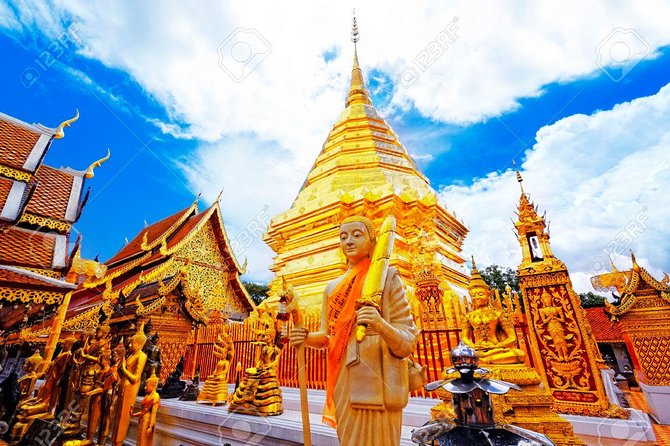
Chiang Mai has more than enough temples to make even a motivated traveler feel overwhelmed. This kind of tour is useful because it gives you a clean “best of” route: six well-known wats, ordered so you don’t bounce back and forth across the city all day.
What I like most is that the tour is structured around different temple “types.” You get the iconic hilltop landmark (Doi Suthep), then a set of Lanna-area temple experiences with distinctive architecture and pagoda styles, and finally three historic wats inside or right by the old-city orbit. It’s not just a sightseeing checklist. The route helps you compare how Chiang Mai’s sacred spaces look and feel, stop after stop.
If you’re the type who wants to understand what you’re seeing, the English-speaking guide makes a difference. You’ll be able to connect details like relic references, stupa shapes, and temple layout to the bigger story of northern Thai Buddhism—without needing to read a guidebook cover to cover.
The main trade-off is time. Each stop gets a time window (from about 1 to 2 hours), so it’s not the slow, wander-all-day kind of experience. If you prefer to linger and get lost in side corridors, you’ll want to do a little extra temple time on your own another day.
You can also read our reviews of more city tours in Chiang Mai

Morning Start: Wat Phra That Doi Suthep and Its 306 Steps
You start around 8:30am with hotel pickup, then head up to Wat Phra That Doi Suthep. This is the most famous temple in northern Thailand, and it sits on top of a hill, so the first payoff is the viewpoint. Even if you’re not chasing “Instagram views,” the elevation changes how the whole city feels. You get scale: Chiang Mai stretches out below, and the temple doesn’t feel like a small stop—it feels like a destination.
Now, let’s talk about the part you’ll feel in your legs: the climb. You reach the temple by 306 steps. That’s a lot in one go, especially if the weather is warm or the stairs feel slick. If stairs are a concern, go at your pace and take short rests. Also, wear shoes you trust on uneven stone.
The temple also centers on a holy relic of Buddha (the tour description specifically calls this out), which gives the visit more meaning than a simple monument stop. Instead of just looking at decorations, you’ll have a clear reason the place draws people.
The timing here is generous enough to enjoy both the approach and the main grounds. You’ll have about 2 hours at the site, including time to look around without feeling rushed every minute.
A practical note: this stop is weather-sensitive because you’ll want the viewpoint to be clear. If clouds or rain roll in, you might not get the same visibility, which is why the overall experience says good weather is required.
Wat Chet Yot: A 7-Spire Stupa with Lanna-Style Character
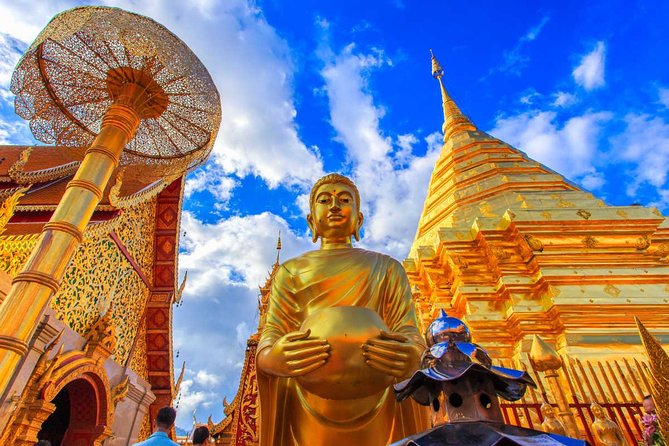
After the morning climb, you shift to Wat Chet Yot (also known as Wat Jed Yod). This stop is in the outskirts area of Chiang Mai, and it’s known for some very distinct architecture. If you’ve only seen one style of “stupa temple” before, you’ll likely notice how different the details feel here.
The headline feature is the 7-spire stupa, and it’s one of those visual elements that makes the temple easier to remember later. Instead of a single dominant form, you get a multi-spire look that stands out when you’re walking around the complex. The tour also frames this as a 15th-century temple, so you’re not just seeing something old—you’re seeing something with a specific place in the region’s temple timeline.
You’ll spend about 1 hour here. That’s a short window, but it’s the right amount for a “see it, understand it, move on” stop. The goal is to appreciate the key architecture without turning it into a half-day detour.
Drawback to keep in mind: because time is limited, you won’t have hours for wandering and photographing everything from every angle. If that’s your priority, treat this hour like a focused visit—choose a couple of viewpoints, look closely at the spire forms, then walk the perimeter so you don’t miss key details.
Wat Suan Dok: The Flower Garden Temple and Its White Chedis
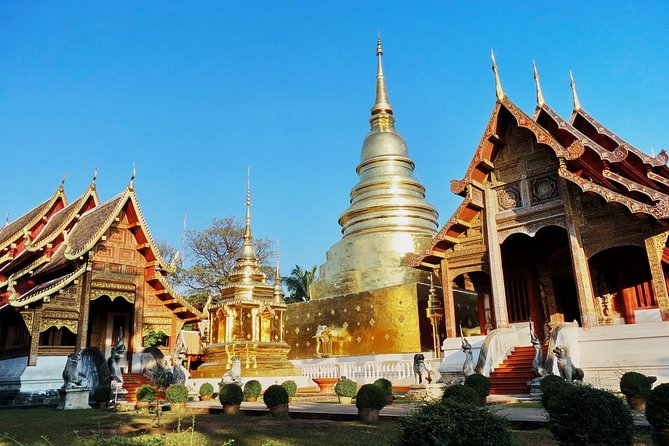
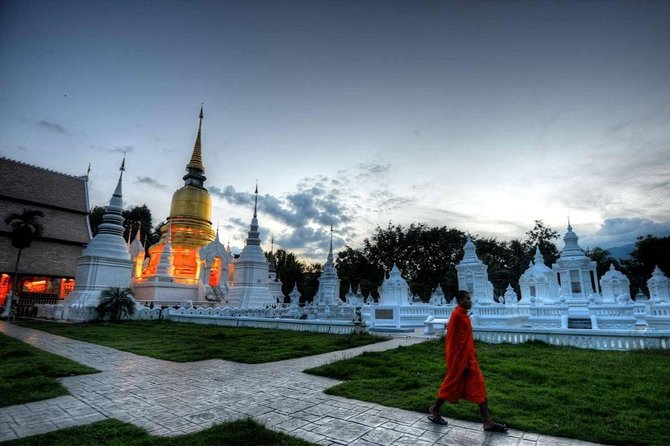
Next comes Wat Suan Dok, located just west of the old walled part of Chiang Mai. This is one of those places where the setting helps you slow down a little. The temple is known for a large number of white chedis (pagodas), which makes the area feel visually ordered—clean lines, repeated shapes, and lots of surface detail.
The name matters too. Wat Suan Dok literally means flower garden temple, and that idea of “garden” fits with how the complex is experienced: it feels like you’re walking through a designed space rather than just stepping between buildings.
The stop is about 2 hours, which is useful because Suan Dok is the kind of temple where you’ll want time to circle, look for patterns among the chedis, and absorb the religious setting. You’re not just passing by; you’re spending time with a temple environment.
The tour description also highlights that Wat Suan Dok is known for a historic Buddha relic. Whether you’re particularly religious or just curious, relic-focused sites tend to have a distinct atmosphere because people often come with intention. That tone can change how you experience the artwork and space.
Practical tip: the white chedis can be bright in daylight. If you’re photographing, consider how the sun hits the walls and spires. Aim to do your “wide shots” early or later in the day when light is less harsh.
Wat Phra Singh, Wat Chedi Luang, Wat Chiang Man: Old-City Wats with Big Names
After lunch hours (you’ll move through the early afternoon around 13:00 to 15:00), the tour enters the classic old-city temple zone with three more stops.





Wat Phra Singh (about 1 hour)
Wat Phra Singh is one of the most attractive wats within the walled old city area. The key idea here is that it’s part of a cluster of magnificent, older temples—so you’re getting a sense of how densely important these sacred spaces are in Chiang Mai’s historic core.
You’ll have about 1 hour, which makes it a strong “anchor stop.” Walk enough to see the main temple features, then use the guide’s context to connect the architectural style and religious purpose to the wider Lanna temple tradition.
Wat Chedi Luang Varavihara (about 1 hour)
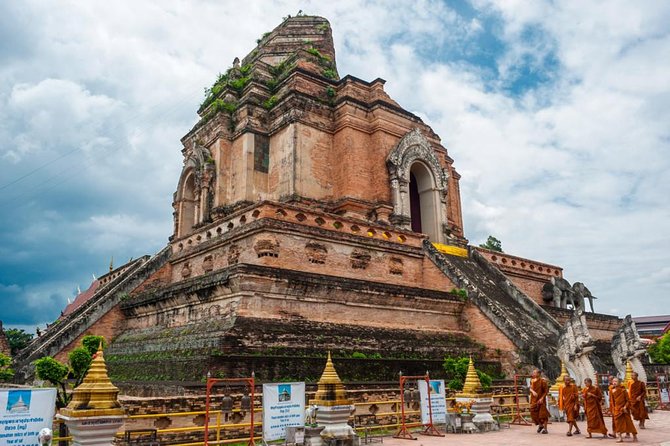
Then you arrive at Wat Chedi Luang, known for a massive and impressive chedi (pagoda) dominating the area. This is the kind of temple where one major structure shapes the entire feel of the complex.
The tour description also credits a king—King Saen Muang Ma—with ordering the chedi to enshrine the ashes (as described) as part of its sacred purpose. Even if you don’t remember the exact details later, that tells you what to focus on while you’re there: the chedi isn’t just a big tower; it’s the core of a relic-based spiritual site.
Like Phra Singh, you’ll have about 1 hour. If you want photos, prioritize angles that show scale: you’ll feel the size most when you can compare the chedi to the people around it and the surrounding buildings.
Wat Chiang Man (about 2 hours)
Finally, you end with Wat Chiang Man, which the tour calls the oldest temple in Chiang Mai. It traces back to the founding of the city in 1296, tied to King Mengrai and the move to make Chiang Mai the Lanna Kingdom’s capital (as the tour description notes).
This stop tends to feel more grounded because it’s positioned as the oldest starting point. You’ll spend about 2 hours, which is a nice change after the earlier 1-hour stops. It gives you room to absorb the atmosphere and not feel like you’re constantly moving just to keep up with the schedule.
If you’re a detail person, this is also a good place to slow down and notice smaller features you might miss if you’re rushing.
Price and Logistics: What Your $122.06 Gets You
At $122.06 per person, this isn’t the cheapest option in Chiang Mai—but it can be good value if you factor in what’s included.
Here’s the practical math: the tour includes hotel pickup and drop-off, entrance fees for the mentioned visits, an English-speaking guide, and bottled water. Those items add up fast when you price them individually, especially if you’d otherwise hire your own transport for a full circuit across hilltop and old-city zones.
The other value lever is time. A full-day temple plan can turn into chaos if you’re coordinating rides, buying tickets, and trying to time openings. This experience gives you a built-in order with set stop times, and that helps you avoid the most common problem in temple days: getting delayed and then having to cut corners.
Transport is listed as private transportation, and the group size is capped at 9 travelers. In plain terms, you’re not jammed into a huge bus crowd. That makes the day feel calmer and helps you get guidance at the right moments.
The main drawback is what you give up for organization: you’re on a schedule. You’ll have time windows at each stop, not unlimited wandering. If you want a temple day that’s fully self-directed, this style won’t be your perfect match.
Also, the tour doesn’t include tips or travel insurance, and it doesn’t include alcoholic beverages. That’s normal, but it’s worth budgeting so the final cost doesn’t surprise you.
Timing, Weather, and How to Make the Stairs Work for You
This experience runs about 10 hours and it’s designed as a steady flow from morning through late afternoon. That makes it great for travelers who want to see the key wats without stretching their entire trip into multiple temple mornings.
Weather matters. The tour requires good weather, and if it gets canceled due to poor weather you’ll be offered another date or a full refund. For your planning, keep an eye on the forecast—especially for Doi Suthep, where the city-view payoff is the whole point.
Packing advice from the reality of this route:
- Wear shoes that handle stone steps and temple grounds
- Bring light layers (temple days can be warm, then cooler later)
- If you like photos, carry a small camera strap so you can move freely on stairs
- Keep your phone charged; you’ll want to document details across multiple temple styles
And don’t underestimate heat management. Even with bottled water provided, you’ll move between sites, walk around complexes, and climb stairs at the first stop. Pace yourself from Wat Phra That Doi Suthep onward, not just at the climb.
Who This Tour Suits Best (and Who Might Prefer Something Else)
This is a strong fit if you want:
- A guided, English-speaking route through six famous Chiang Mai wats
- Entrance fees included
- A manageable group size (up to 9) with pickup/drop-off
- A day that mixes hilltop views with old-city historic temples
It’s especially good for first-time visitors who want the essentials plus enough context to make the temples feel meaningful.
You might choose differently if:
- You want to spend half a day at one temple and really disappear into it
- You have mobility limits and the 306-step climb would be difficult
- You’re traveling on a tight budget and would rather build your own route using local transport
Should You Book This Chiang Mai Temples & City Tour?
I’d book it if you want a one-day solution that hits the most memorable temple experiences in Chiang Mai with minimal hassle. The biggest strengths are practical: pickup/drop-off, entrance fees included, and a route that moves you from the city’s hilltop icon to relic-focused old-city temples in a sensible order.
If you’re comfortable with stairs and you can work around the weather, this is a dependable way to get real value from your day. If stairs are an issue or you want more unstructured time, you may prefer a slower approach—but for a first temple day in Chiang Mai, this plan is hard to beat.
FAQ
What time does the tour start?
The tour start time is 8:30am.
How long is the Chiang Mai temples tour?
It runs for about 10 hours.
How many temples are visited on this tour?
You visit 6 temples: Wat Phra That Doi Suthep, Wat Chet Yot, Wat Suan Dok, Wat Phra Singh, Wat Chedi Luang Varavihara, and Wat Chiang Man.
Is hotel pickup and drop-off included?
Yes, hotel pick up and drop off are included.
Are entrance fees included?
Yes, entrance fees for the mentioned visits are included.
Is there an English-speaking guide?
Yes, an English speaking guide is included (other languages may require a supplement).
How many people are in the group?
The tour has a maximum of 9 travelers.
Does the tour include bottled water?
Yes, bottled water is included.
What is not included in the price?
Tips, travel insurance, and alcoholic beverages are not included.
Is the tour affected by weather?
Yes. The experience requires good weather, and if canceled due to poor weather you’ll be offered a different date or a full refund.