REVIEW · CHIANG MAI
Chiang Mai Best City Tour with Doi Suthep & Iconic Temples
Book on Viator →Operated by Sunleisure World · Bookable on Viator
Four temples, one great Chiang Mai primer. I like that this tour pairs hotel pickup with a small group so you’re not just stuck following a sea of buses. You’ll see major sights plus calmer corners on the mountain road, all in about four hours.
The real win is the guide time. On this route, guides like Ooh, Som, Palit, Timmy (Thaphaphak), and Emmy have a knack for turning temple facts into something you can actually picture, from Buddhist ideas to why these places were built where they are.
One watch-out: the schedule moves fast—each stop is about 30 minutes—so if you want to linger and wander, this may feel a bit like a highlights reel.
In This Review
- Key takeaways before you go
- The smart way to start with Doi Suthep views and old-city history
- How the pickup, vehicle, and small-group size change the experience
- Wat Chedi Luang Varavihara: the earthquake story behind the giant pagoda
- Wat Phra That Doi Suthep: why this complex is worth the climb
- Wat Pha Lat: the quieter mountain temple with a steeper, calmer feel
- Tha Phae Gate: a historic city gate that’s easy to revisit
- Price and value: when $42.18 makes sense (and when it doesn’t)
- What a great guide adds at these stops (and how to tell you have one)
- Timing, heat, and how to handle the stairs
- Who should book this Chiang Mai best-city tour
- Should you book this tour or DIY the temples?
- FAQ
- How long is the Chiang Mai Best City Tour with Doi Suthep & Iconic Temples?
- What are the main stops on the tour?
- Are admission fees included?
- Does the tour include hotel pickup and drop-off?
- Is transportation provided, and is it air-conditioned?
- How many people are in the group?
- Is a mobile ticket used for this experience?
- Is Wat Pha Lat admission free?
- Is Tha Phae Gate admission free?
- What is the cancellation policy?
Key takeaways before you go
- Max 15 travelers: small-group pace with a better chance to ask questions
- Air-conditioned vehicle + pickup/drop-off: less friction, more time at the sights
- Two paid temples included: Wat Chedi Luang and Wat Phra That Doi Suthep have admission covered
- One true mountain stop plus a quieter one: Wat Phra That Doi Suthep and the steeper Wat Pha Lat are different moods
- Tha Phae Gate is your old-city anchor: a historic city gate stop that’s easy to pair with dinner later
- SHA Plus certified: the operator notes Covid-19 health and preventative protocols in place
The smart way to start with Doi Suthep views and old-city history
This is a strong first-tour option for Chiang Mai because it hits the two sides of the city: the old city’s landmarks and the mountain temples that people come for from far away. You’ll start with a classic Chiang Mai temple in the old city area, then climb toward Doi Suthep and finish back down near Tha Phae Gate.
I also like the pacing. Four hours can sound short, but with a guide steering the stops, you spend less time figuring out where to go and more time actually looking at what’s in front of you. It’s the kind of tour that helps you get your bearings fast, which makes your next days easier.
If you’re traveling in heat season or you’re sensitive to midday sun, plan your expectations around the fact that mountain temples involve walking and stairs. One review even flagged that the heat was intense, with a recommendation to do it in a cooler part of the day. That’s good advice.
You can also read our reviews of more city tours in Chiang Mai

How the pickup, vehicle, and small-group size change the experience
The tour includes hotel pickup and drop-off for selected hotels, plus transport in an air-conditioned vehicle. That matters in Chiang Mai, where logistics can eat up time if you’re trying to stitch together tuk-tuks or songthaews on your own.
And the group size is capped at 15 travelers. Smaller groups usually mean fewer interruptions and a better rhythm at each temple—less time waiting for everyone to catch up, more time listening to the guide’s explanation before the crowd moves on.
If your hotel isn’t in the pickup zone, the start point is listed at Chiangmai Tours by Sightseeing Chiang Mai (Duang Tawan Hotel, 132 Loi Kroh Rd). The tour ends back at the meeting point, so you’re not left trying to guess a route when you’re done.
Wat Chedi Luang Varavihara: the earthquake story behind the giant pagoda
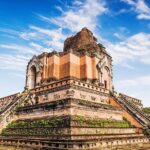
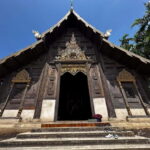
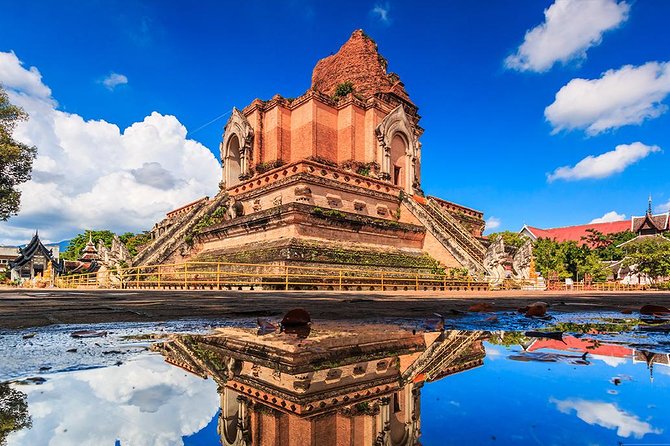
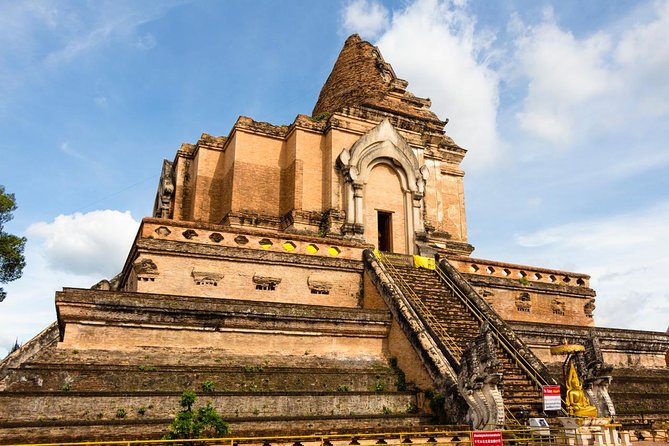
Your first stop is Wat Chedi Luang Varavihara. This temple is known for an enormous pagoda that was originally about 280 feet high. It was partially destroyed by an earthquake in 1545, and you can still feel that “this was once bigger” scale even when you’re standing there today.
This stop is more than just pretty stones. It’s a reminder that Chiang Mai’s temple history wasn’t written in one smooth line—it was shaped by disasters, repairs, and changing eras. A good guide will point out what that means when you’re looking at the site: you’re not only seeing a building, you’re seeing layers of time.
You get about 30 minutes here, with admission included. That’s enough time to see the main structures, absorb the earthquake backstory, and snap a few photos without rushing through the details.
Wat Phra That Doi Suthep: why this complex is worth the climb
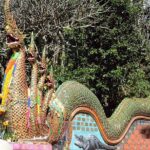
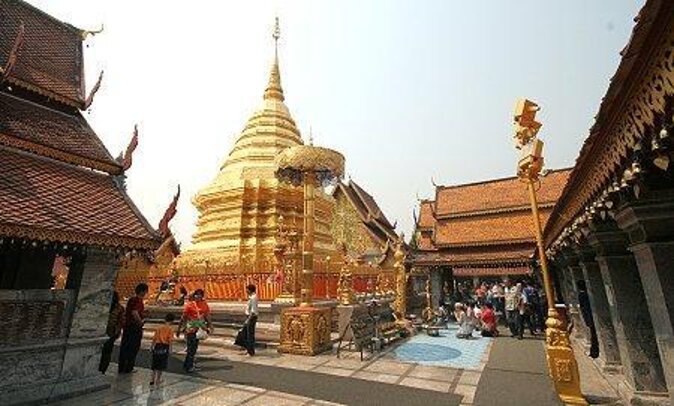
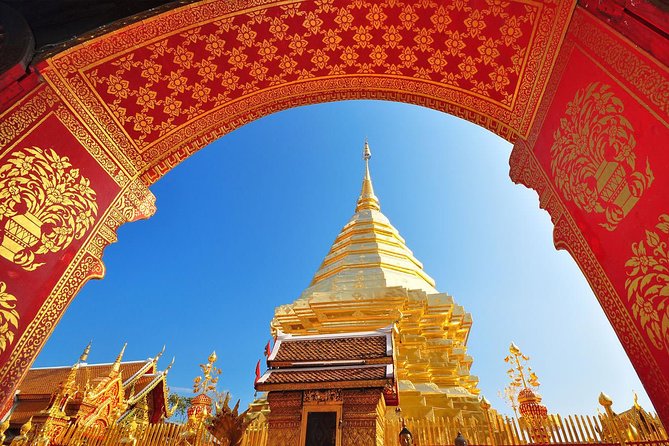
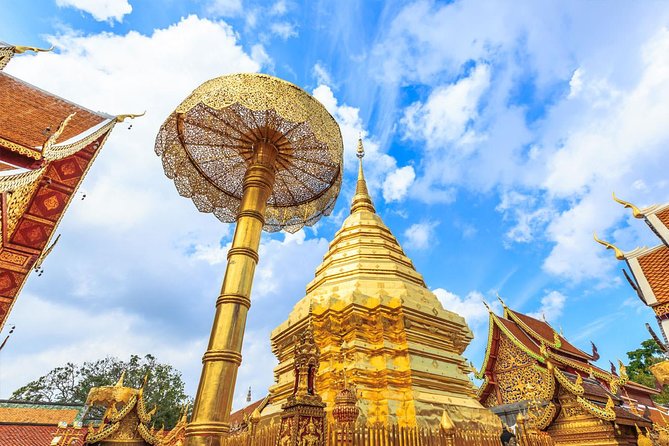
Then comes the star of the show: Wat Phra That Doi Suthep. This temple complex is famous for its sheer visual impact—there’s a sense that wherever you turn, there’s another angle, another structure, another ornate detail trying to catch your eye.
It’s also popular with tour buses. The practical trick is timing within the visit: if your group moves in and out with the schedule, you can enjoy the place without being stuck in the busiest moment for the whole time. When the guide has the confidence to keep the group moving, it often feels less chaotic than it sounds.
You’ll spend about 30 minutes here as well, with admission included. Doi Suthep isn’t a “quick photo and leave” temple if you care about meaning. With a good explanation, you’ll get a clearer picture of why the site is treated as sacred, how it fits into Buddhist practice, and what to notice beyond the most obvious views.
One thing I’d watch: the mountain walk can be tiring, and it’s easy to feel rushed when you’re fighting stairs. If you know you get worn out easily, this tour is still doable, just pace yourself at your own speed and don’t try to match the most energetic group member’s pace.
Wat Pha Lat: the quieter mountain temple with a steeper, calmer feel
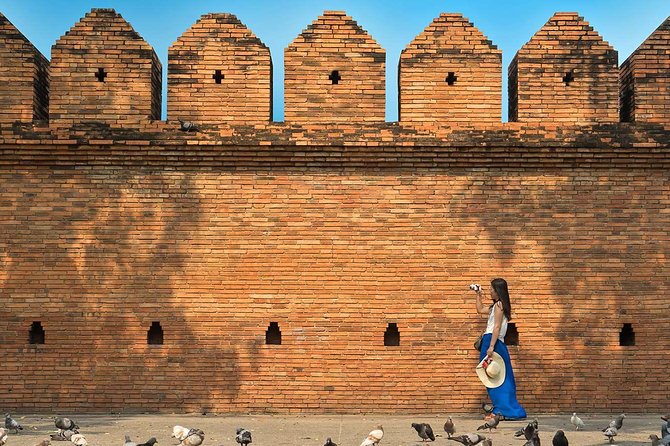
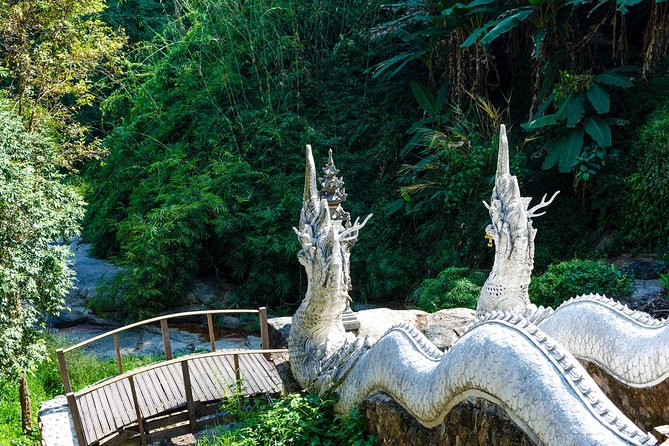
Next is Wat Pha Lat, and this is a great contrast stop. The tour frames it as the ancient precursor (lower on the mountain) to Wat Phra That Doi Suthep. So while it may be less grand than the big-name sibling, it brings a different flavor: steep terrain, reverence, and peace.
This is the temple that helps the tour feel balanced. If all you saw were the headline sites, you might leave with photos but not much sense of how the mountain temples connect. Wat Pha Lat gives you that “in-between” feeling—like you’re seeing the earlier, quieter chapter of the same sacred story.
Admission here is free, and your time is again about 30 minutes. Since the entry isn’t costing you extra, this stop gives more value per minute if you like atmosphere and you enjoy a slower, less crowded mood.
If you’re the type who loves finding a calmer corner to sit and reset your brain, this is the place on the itinerary that can deliver that. It’s also where a guide can really shine, because the best temple explanations help you slow down even when the clock is ticking.





Tha Phae Gate: a historic city gate that’s easy to revisit
You finish with Tha Phae Gate, a historic gate tied to Chiang Mai’s founding by King Mangrai. This stop is free and designed to put you back into the old city’s atmosphere.
Tha Phae Gate is one of those “you can remember it later” landmarks because it’s easy to locate and simple to revisit after your tour. It’s also a good mental marker: this is where the mountain temples backstory meets everyday city life.
You get about 30 minutes here. That’s usually enough time to take in the gate, understand its role in the city’s story, and then plan what you’ll do next—like wandering nearby streets or finding a meal.
If you’re trying to keep your tour day efficient, this is a smart finish. You’re not stuck in a remote spot with no way to re-enter town; you’re dropped into an area that’s already lively and familiar.
Price and value: when $42.18 makes sense (and when it doesn’t)
At $42.18 per person for roughly four hours, the value depends on how you think about paying for temples plus transport plus a guide.
Here’s the practical breakdown: admission fees are included for Wat Chedi Luang and Wat Phra That Doi Suthep, while Wat Pha Lat and Tha Phae Gate are free stops. On top of that, you get an air-conditioned vehicle and pickup/drop-off for selected hotels, plus a professional guide.
That’s why I don’t see this as only “paying for temples.” You’re paying for the smooth route and the explanation that turns the places into something you can understand, not just places you’ve visited.
That said, there’s a real concern to consider: if you personally think of this as one big attraction plus three shorter add-ons, it may feel pricey. One past comment even boiled down to a view like this—mostly transport plus one major highlight. If that’s your mindset, then set your expectations accordingly: this is a structured overview, not a slow, deep study with extra time at each site.
For many people, though, structured and efficient is the point. You’re here for a half day, you want the essentials, and you want help making sense of what you’re seeing. In that case, the price can feel fair.
What a great guide adds at these stops (and how to tell you have one)
The best part of this tour isn’t the car. It’s the guide’s ability to connect the dots between the sites. On this route, guides such as Ooh, Som, Palit, Timmy (Thaphaphak), and Emmy have been praised for explaining Buddhism and temple history in clear, question-friendly ways.
You can feel the difference fast if your guide does three things:
- explains what you’re looking at right now, not just facts about the past
- answers questions without making you feel rushed
- gives context that helps you spot details you’d otherwise miss
When that happens, Doi Suthep stops being just a famous place and starts becoming a place with a story. Wat Chedi Luang’s earthquake history becomes more meaningful. Wat Pha Lat’s “precursor” role makes sense. Even Tha Phae Gate stops feeling like a random city landmark.
If you end up with a guide who keeps the focus on the temples and the meaning, this tour becomes more than the sum of its stops.
Timing, heat, and how to handle the stairs
This tour hits mountain temples, and mountain temples mean walking and stairs. The data you were given doesn’t list walking difficulty, but at least one guide-linked review notes that the heat can be too much at certain times of day.
So my practical advice is simple: aim for a cooler start if your schedule allows. If your tour time is fixed, wear breathable clothes and give yourself a little buffer at Doi Suthep and Wat Pha Lat. Don’t race for photos. The views will still be there five minutes later.
Also, because each stop is about 30 minutes, you should use that time efficiently. Take the wide overview photos first, then come back for the smaller details once you’ve settled your footing and slowed your breathing.
Who should book this Chiang Mai best-city tour
This tour fits best if you:
- want an efficient half-day introduction to Chiang Mai’s most iconic temple cluster
- appreciate guided context, not just sightseeing
- like small groups and don’t want the logistical hassle of building your own route
- are short on time and want old city + mountain temples in one go
It may be less ideal if you’re:
- someone who needs lots of free time at temples to wander slowly
- only interested in one major stop and don’t care about the supporting temples
For your first or second day in Chiang Mai, I think this is a good move. It gives you a map in your head: what’s in the old city, what’s on the mountain, and why it matters.
Should you book this tour or DIY the temples?
If you’re aiming for a guided overview with pickup, air-conditioning, and admission included for two key temples, then yes, I’d book this. You’ll save time, reduce planning stress, and leave with a clearer understanding of how Doi Suthep connects to the rest of the temple landscape.
If you’re the type who loves to linger, you might prefer to DIY with extra time and fewer stops. But given the tight schedule and short time in each place, this tour is best when you want essentials plus a guide’s explanation, not a slow, open-ended day.
In short: this is a solid value if you want structure and meaning. If you want solitude and long temple hours, plan a different day.
FAQ
How long is the Chiang Mai Best City Tour with Doi Suthep & Iconic Temples?
It runs for about 4 hours.
What are the main stops on the tour?
You visit Wat Chedi Luang Varavihara, Wat Phra That Doi Suthep, Wat Pha Lat, and Tha Phae Gate.
Are admission fees included?
Yes. Admission fees are included for the stops listed with admission tickets, including Wat Chedi Luang and Wat Phra That Doi Suthep.
Does the tour include hotel pickup and drop-off?
Yes, hotel pickup and drop-off are included for selected hotels.
Is transportation provided, and is it air-conditioned?
Yes. You travel in an air-conditioned vehicle.
How many people are in the group?
The tour has a maximum of 15 travelers.
Is a mobile ticket used for this experience?
Yes, the tour offers mobile tickets.
Is Wat Pha Lat admission free?
Wat Pha Lat is listed as admission free on the itinerary.
Is Tha Phae Gate admission free?
Yes, Tha Phae Gate is listed as free admission.
What is the cancellation policy?
You can cancel up to 24 hours in advance for a full refund. If you cancel within 24 hours, there is no refund.