REVIEW · CHIANG MAI
Chiang Mai: Ancient City Tour of Wiang Kum Kam
Book on Viator →Operated by I Asia Thailand · Bookable on Viator
Ancient ruins meet a comfy carriage ride. On this Chiang Mai group tour, I like Wiang Kum Kam for its real feel as an older capital site, and I especially enjoyed how guide Mr Boy explained what I was looking at, including how some visible ruins were excavated from the river bottom in the 1980s. The only drawback is the pacing: you’re out for about 3.5 hours, so you won’t linger long at any single spot.
What makes this tour practical is that the main extras are already handled for you: round-trip hotel transfers, a horse-drawn carriage ride, and a guided visit that adds cultural context at the Chiang Mai City Arts and Cultural Centre (right by the Three Kings Monument). Since you’ll likely want snacks, just plan to bring or buy your own food and drinks, because none are included.
In This Review
- Key things to know before you go
- Wiang Kum Kam: Chiang Mai’s older capital area, not just another temple stop
- Hotel pickup and the 3.5-hour group pace that keeps things moving
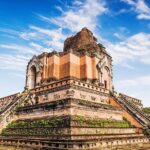
- Stop 1: Wat Kuu Kham (Wat Chedi Liam) Temple in about 30 minutes
- The horse-drawn carriage ride: included old-school transport, not a side show
- Stop 2: Wiang Kum Kam ruins and the King Mangrai story
- Stop 3: Chiang Mai City Arts and Cultural Centre behind the Three Kings Monument
- Price of $47.07: what you’re actually paying for and why it can be worth it
- Who this tour fits best (and who might prefer something else)
- Small practical tips so the ruins feel easy, not stressful
- Should you book the Chiang Mai Ancient City Tour of Wiang Kum Kam?
- FAQ
- What’s the duration of the Chiang Mai Ancient City Tour of Wiang Kum Kam?
- What’s included in the tour price?
- Do I need to pay admission fees during the stops?
- Is food or drinks provided during the tour?
- Are there any age requirements for children?
- Can I cancel for a full refund?
Key things to know before you go
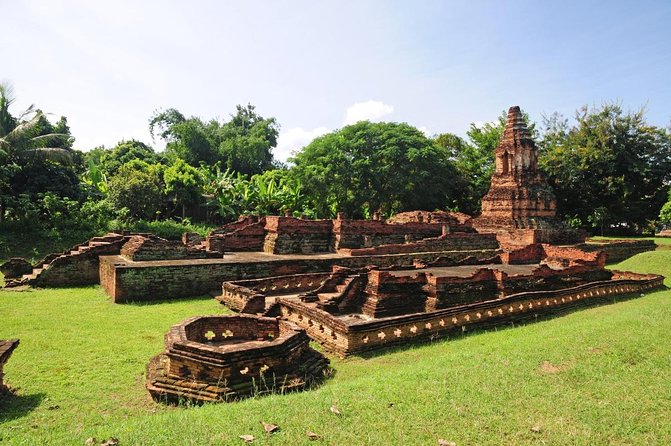
- Wiang Kum Kam is the highlight, built by King Mangrai the Great before he moved the capital to Chiang Mai
- Carriage ride is included, so you won’t face on-the-spot add-on costs
- Small group size (up to 15) keeps it easier to hear the guide and move between stops
- Wat Kuu Kham + Wiang Kum Kam are free entry on this schedule
- The City Arts and Cultural Centre is included, with exhibits and an audio-visual history
- It still runs on Mondays, even though the centre itself is closed that day
Wiang Kum Kam: Chiang Mai’s older capital area, not just another temple stop
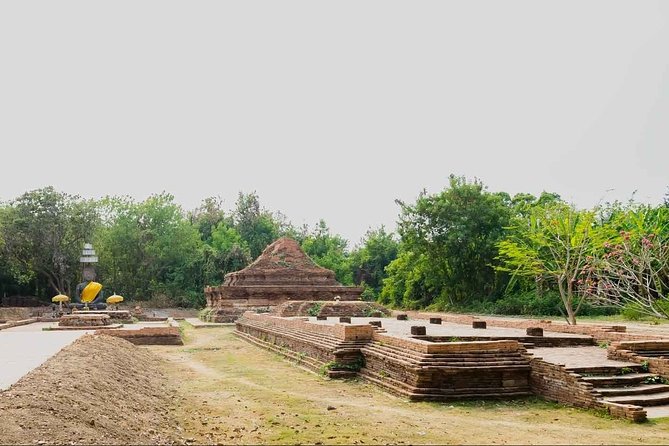
Wiang Kum Kam sits along the Ping River area, and it’s not just a random scatter of ruins. This was an historic settlement and archaeological site associated with King Mangrai the Great, who built it as a capital before he moved that seat of power to Chiang Mai. That single fact changes how the place feels. You’re not only looking at temples. You’re seeing a former center that later got overtaken by time.
On the ground, Wiang Kum Kam can feel a bit like stepping into layers of Chiang Mai’s story. Some parts read as quiet temple remains; other angles make you think about how the river and flooding may have shaped what’s still here. The most helpful part is having a guide. When Mr Boy pointed out what was worth focusing on, I stopped treating it like a postcard stop and started reading the site as a place with a timeline.
If you’re into history but you don’t want an all-day program, this tour hits a good middle lane: enough time to see the core areas, plus context from the cultural centre so the ruins make more sense afterward.
You can also read our reviews of more city tours in Chiang Mai

Hotel pickup and the 3.5-hour group pace that keeps things moving
This experience is built as a compact morning-style outing—about 3 hours 30 minutes—with round-trip transfers from Chiang Mai hotels. That matters if you’re staying in the Old City area where you want to maximize sight time without figuring out transport or parking.
You’ll be in a group of up to 15, which is a sweet spot for this kind of route. It’s small enough to hear your guide, but big enough that you’re not stuck in a private-car bubble. You’ll also get a mobile ticket, and confirmation comes at booking.
A couple practical notes to keep expectations realistic:
- There’s a minimum number of travelers for the tour to run. Even if you book as a solo traveler, it depends on availability.
- The route includes multiple stops, so it’s not slow touring. You’ll get short segments at each place to keep the schedule balanced.
If you’re the type who wants to roam for hours on your own at one site, you might find the pace a little brisk. But if you’re traveling with limited time—and you want a well-mapped highlights route—this format is a win.
Stop 1: Wat Kuu Kham (Wat Chedi Liam) Temple in about 30 minutes
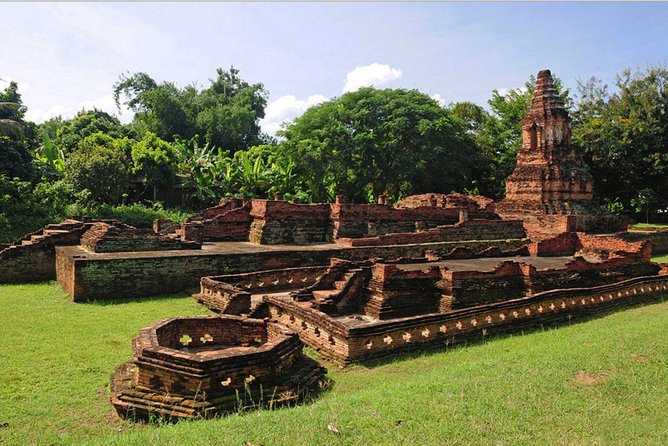
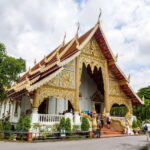
Your first stop is Wat Kuu Kham (also listed as Wat Chedi Liam). The planned visit is about 30 minutes, and admission is free.
This is a good opener. It gets you into the right mindset early: calm temple architecture, then immediate connection to the broader Wiang Kum Kam story. In a short window, you’re not trying to do everything. You’re getting oriented—learning what makes this temple relevant to the ancient city area you’ll be exploring next.
What I recommend you do in this first stop: use the time to ask the guide for a few simple orientation points. Even if you’re not a hardcore architecture fan, knowing what to look for—brickwork, layout cues, and how the ruins fit together—helps the next segment land harder.
Because entry is free and the timing is short, this stop doesn’t feel like a “paid filler” kind of stop. It’s the warm-up that makes the longer Wiang Kum Kam walk feel more purposeful.
The horse-drawn carriage ride: included old-school transport, not a side show
A big part of the appeal here is the horse-drawn carriage ride, and importantly, it’s included. That means you don’t need to pay anything on the spot just to experience it.
This ride works for two reasons. First, it slows your movement down in a way vehicles don’t. Second, it helps connect the dots between locations without turning the tour into a long, sweaty scramble.
A carriage also adds a fun, memorable element—especially if you’re used to modern transport in every other stop in Thailand. The best way to enjoy it is to treat it as transportation plus atmosphere, not as a guaranteed photo set. You’ll still want good footwear and a camera ready, but prioritize comfort so you’re fresh for the ruins.
Small group tours with included carriage rides often feel “less stressful” than cobbling together your own route. You show up, you get in, you go. That’s especially useful when you only have half a day.
Stop 2: Wiang Kum Kam ruins and the King Mangrai story
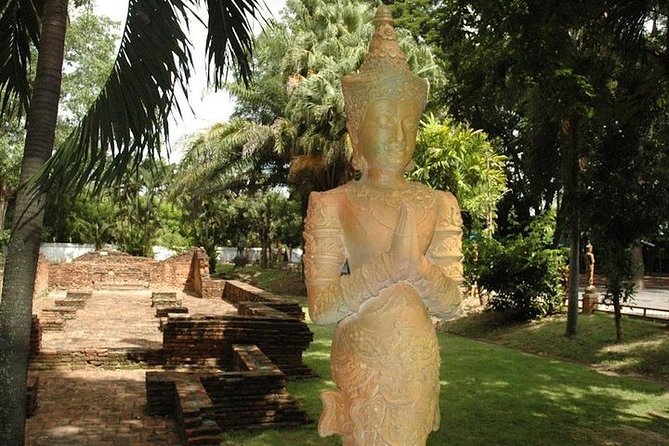
The core of the tour is Wiang Kum Kam itself, scheduled for about 1 hour. Admission is free.
Here’s the key context: Wiang Kum Kam was built by King Mangrai the Great as his capital before he moved the capital to today’s Chiang Mai. That means you’re not only visiting a site with temples—you’re visiting an old political and cultural center’s remains.
What made this stop click for me is the explanation about what you’re seeing. The guide shared that many of the temple ruins visible now were not excavated from the river bottom until the 1980s. That one detail changes your view immediately. Instead of thinking the ruins were always exposed, you start seeing the site as something that became understandable only after modern excavation work.
For how to experience it, I’d suggest you do this:
- Look for patterns in what’s left rather than trying to identify every structure.
- Spend a few minutes just scanning the area from different angles.
- Use your guide’s cues. If they point out a feature, it usually has a reason.
One caution: you’re on a time box. One hour can be satisfying if you focus, but if you want hours of independent exploring among ruins, you’ll probably want to add extra time on your own another day.





Stop 3: Chiang Mai City Arts and Cultural Centre behind the Three Kings Monument
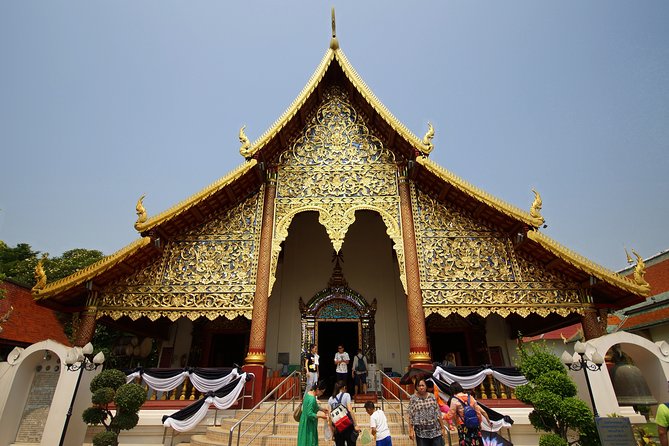
After the ancient ruins, the tour shifts gears to context. You’ll visit the Chiang Mai City Arts and Cultural Centre for about 1 hour, and the admission is included.
The centre sits right in the middle of the Old City, just behind the Three Kings Monument. It’s located inside a restored building that dates back to the 1920s, which already gives it a different mood than a typical museum room. Instead of only being about artifacts, it’s set up to walk you through Chiang Mai’s development.
Inside, the exhibits can include photos, old artefacts, maps, and an impressive audio-visual display that traces Chiang Mai’s story from the first settlers to the modern city. There’s also a small scale replica of a traditional wooden village. Even if you’re not a museum person, it helps you connect what you saw at Wiang Kum Kam to the bigger picture of how this region evolved.
One more practical note: the centre is closed on Mondays, but the tour can still operate. If you’re booking a Monday, I’d expect the guide to adjust the plan around that closure. The ruins portion still matters most here, so you should still get a meaningful outing.
Price of $47.07: what you’re actually paying for and why it can be worth it
At $47.07 per person, this tour may look like a standard group price, but it’s really paying for a bundle of things that add up if you do them separately.
You’re getting:
- Round-trip transfers from your hotel area
- A guided tour that connects Wiang Kum Kam and cultural sites
- A horse-drawn carriage ride that’s included rather than optional
- Admission coverage at least for the City Arts and Cultural Centre (with other stops listed as free entry)
Food isn’t included, so you’ll want to plan a snack before you start or buy something afterward. But the rest of the ticket functions like “time-savers plus local guiding.” For a 3.5-hour outing, the value is strongest if you want someone else to handle the route and interpretation.
Group tours can sometimes feel like you’re being rushed. In this case, the length is short enough that it stays manageable, and the included carriage and transfers remove a lot of friction. That’s often where the true value shows up: less logistics work for you.
Who this tour fits best (and who might prefer something else)
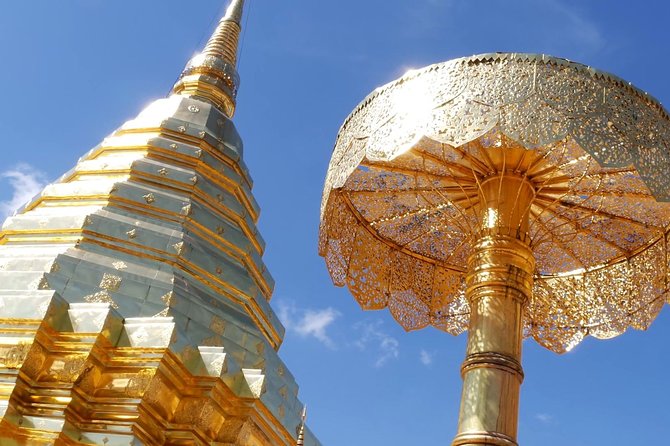
This experience is a strong match if you like:
- History with real place context, not just isolated temples
- A guided route that tells you what matters at each stop
- A half-day option that doesn’t drain your whole schedule
- Families who want a structured tour with an extra fun element (the carriage ride)
It might not be your best choice if:
- You’re based nearby and feel like you’d rather spend that time exploring the Old City area on your own
- You want deep, slow archaeological time at one site rather than quick stops
- You prefer private control over pacing and movement
And since the group is limited to 15 people, it still tends to feel organized. If you want a guided day that doesn’t get chaotic, this style generally works well.
Small practical tips so the ruins feel easy, not stressful
A few things will make your visit smoother:
- Wear comfortable shoes. Even a short ruins walk can be uneven.
- Bring sun protection. Chiang Mai sun can be intense, especially with carriage and outdoor time.
- Bring your own snacks or water since none are included. This is especially useful if you’re someone who gets hungry quickly.
- If you care about language, there’s an upgrade option for Spanish, French, German, or Russian speaking guide via a Private Tour PLUS supplement of Baht 800 for the whole party.
- If you’re traveling with kids: children 11 and younger must be accompanied by a paying adult, while children 1 and younger are complimentary.
Also, because at least two people are required for the tour to take place, keep an eye on confirmation timing if you’re booking last minute. Nothing kills good planning like a last-day surprise.
Should you book the Chiang Mai Ancient City Tour of Wiang Kum Kam?
If you want a compact, well-rounded half-day that mixes real ruins, old-school transport, and an easy way to understand what you’re seeing afterward, I think this is a solid booking. The included horse-drawn carriage and the way the guide explains the site are the heart of the experience. When Mr Boy highlighted details like the 1980s excavations, the ruins stopped feeling random and started feeling meaningful.
You should consider skipping or swapping if you’re craving a long, hands-on ruins day, or if your schedule allows more time in the Old City where you can move at your own pace. This tour gives you a taste, not a week of archaeology.
For most people, though, this is a good use of time in Chiang Mai: structured, guided, and designed to keep you from wasting half a day on logistics.
FAQ
What’s the duration of the Chiang Mai Ancient City Tour of Wiang Kum Kam?
The tour lasts about 3 hours 30 minutes (approx.).
What’s included in the tour price?
Round-trip transportation from your Chiang Mai hotel, a guided tour covering the Wiang Kum Kam ruins and cultural stops, and a horse-drawn carriage ride are included. The City Arts and Cultural Centre admission is included too.
Do I need to pay admission fees during the stops?
Wat Kuu Kham (Wat Chedi Liam) and Wiang Kum Kam are listed as free admission on the itinerary. The Chiang Mai City Arts and Cultural Centre admission is included.
Is food or drinks provided during the tour?
No. Food, drinks, and snacks are not included.
Are there any age requirements for children?
Children 11 and younger must be accompanied by a paying adult. Children 1 and younger are complimentary.
Can I cancel for a full refund?
Yes. You can cancel up to 24 hours in advance for a full refund. If you cancel less than 24 hours before the start time, the amount paid isn’t refunded.