REVIEW · CHIANG MAI
Chiang Mai Active E-bike Countryside Ride
Book on Viator →Operated by Discova Thailand · Bookable on Viator
A train ride plus e-bikes in Thailand works. You start in Chiang Mai, hop the rail to Lamphun, then pedal out into countryside lanes, orchards, and forest trails near Ob Khan National Park. It’s an active day with a guide who keeps the route moving while you get real-life views outside the old city walls.
I especially love the mix of culture and motion: temple stops, village roads, and those rolling backroads where the e-bike does the heavy lifting. I also like that you get a proper Thai lunch during the ride, not just a snack and a shrug. One thing to consider: the day runs on a tight schedule with a sharp 8:30 departure and document checks, so plan to be there early.
In This Review
- Key things I’d plan around before you go
- Train to Lamphun first, before the traffic hits
- Lamphun’s quiet streets and the golden chedi moment
- Leaving the old city behind: canals, orchards, and Ob Khan trails
- Ping River village lunch: where the day slows down
- Baan Tawai wood carving village: craftsmanship you can actually see
- Doi Suthep foothills backroads and a forest shrine stop
- Rajapruek Royal Park gardens and the return by minivan
- Price and value: what $75 really buys
- Who this tour fits best (and who should think twice)
- My practical checklist so the day goes smoothly
- Should you book the Chiang Mai Active E-bike Countryside Ride?
- FAQ
- What time does the tour start?
- How long is the Chiang Mai Active E-bike Countryside Ride?
- Is the train to Lamphun included?
- What’s included in the price?
- Does this tour include hotel pickup or drop-off?
- How big is the group?
- What fitness level do I need?
- What documents do I need to bring?
Key things I’d plan around before you go
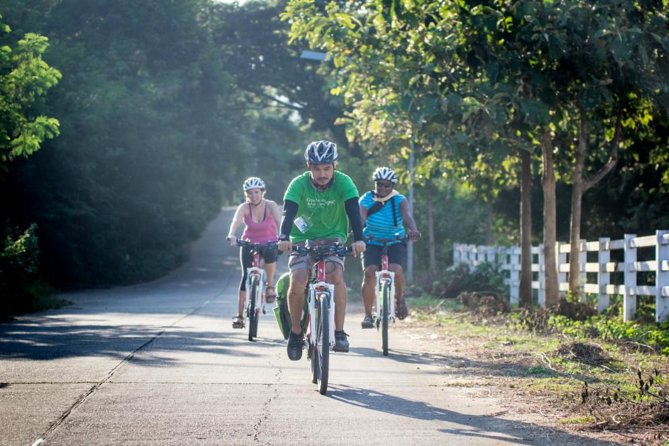
- Small group size (max 10): you move at a human pace instead of feeling herded.
- Train to Lamphun first: it cuts down on city traffic and gives you an early, local rhythm.
- Temple time at Wat Phra That Hariphunchai: you’ll see the sacred site and its imposing golden chedi.
- Countryside riding: canals, fruit orchards, rice paddies: this is the core “real Chiang Mai” feeling.
- Ping River village break with simple Thai food: a calm reset during the ride.
- Rajapruek Royal Park gardens: manicured grounds and a well-timed recovery stop before returning.
Train to Lamphun first, before the traffic hits
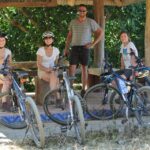
Your day begins at Discova Chiang Mai office, 10, 3 Wiang Kaew Rd, at 8:15 AM for bike fitting and a quick briefing. The actual departure is 8:30 AM sharp, and the reason is simple: you’re catching a train.
Then comes the fun part you can’t get on most “just ride in Chiang Mai” tours: you cycle to the railway station and take a 30-minute train ride south from Chiang Mai to Lamphun. It’s not just transportation. It sets the tone—less stress, more local routine, and a clear start to your countryside loop.
If you’re thinking you can roll in late, don’t. This tour depends on timing for the train and for the pacing between stops. Build in buffer time so you’re relaxed, not negotiating with the clock before you even start riding.
You can also read our reviews of more cycling tours in Chiang Mai
Lamphun’s quiet streets and the golden chedi moment
Once you arrive in Lamphun, you get back on the e-bike and head through quiet streets and lanes past the ancient city wall. This is a different feel than Chiang Mai’s busy core: calmer roads, older walls, and a sense of “daily life” more than “tourist postcards.”
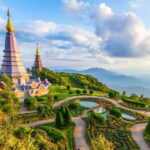
Your ride includes a visit to Wat Phra That Hariphunchai, a sacred temple known for its imposing golden chedi. You’ll have about 30 minutes there, which is enough time to look around, take photos, and still stay on schedule for the rest of the day.
Practical note: temple areas often have uneven spots and shaded corners. Wear shoes that grip on pavement and compact paths, and bring water—your e-bike makes it easier, but you’re still out walking and standing during these breaks.
Leaving the old city behind: canals, orchards, and Ob Khan trails
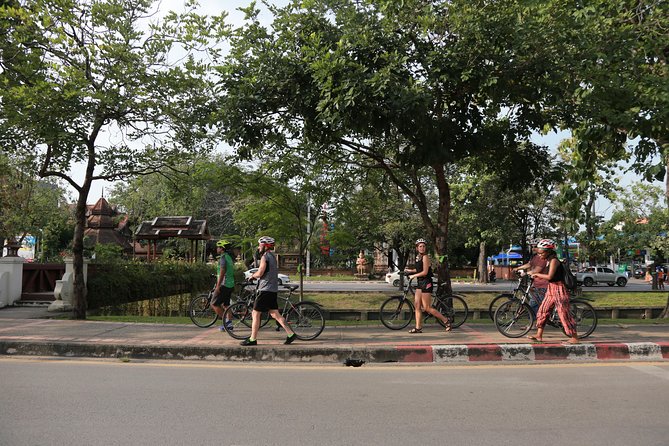
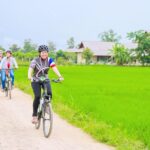
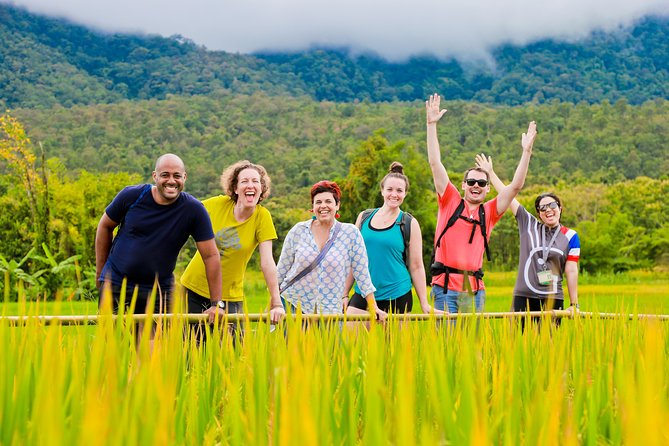
After the early culture stops, the ride opens up. You pedal out of the city and into countryside routes that cut across fruit orchards and along canals. This is where the day becomes a “see how people live nearby” experience rather than a list of sights.
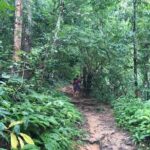
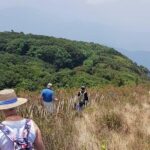
You’ll also be on forested trails near Ob Khan National Park, including time for a spin around the water area. The overview calls out riding through forest and past rice paddies, and that matches the rhythm you’ll feel: stretches of smooth riding, then sudden scenery shifts—water views, open fields, and little village edges.
What makes this part worth your time is the blend. You’re not just coasting through one type of view. You shift between cultivated land (orchards, paddies), everyday waterways (canals), and greener stretches near the park. It gives you a fuller picture of what life looks like beyond the walled city.
One more detail that matters: the route includes undulating sections later, so treat this first countryside portion as your warm-up. The e-bike helps a lot, but you’ll still feel the day in your legs if you’re used to only flat walking.
Ping River village lunch: where the day slows down
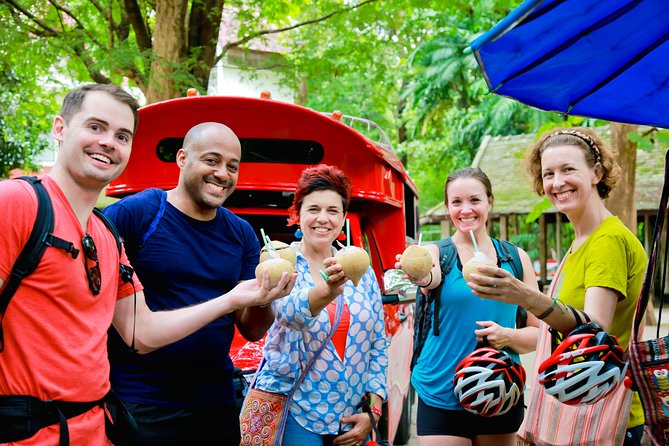
Around mid-day, the tour takes a break in a small village on the banks of the Ping River. This is your lunch window—about 1 hour—and it’s framed as deliciously simple Thai food.
I like lunch breaks like this because they keep you from eating “tourist fast.” Even if you’ve had Thai food in Chiang Mai already, this one feels like part of the ride’s geography. You’re eating near the water, not in a restaurant set up for a quick turn.
If you’re the kind of person who gets stomach regret on long bike days, you’ll likely do fine here because lunch is included and planned. Still, I’d suggest you don’t overdo spicy choices if you’re sensitive. You have more riding after lunch.
Baan Tawai wood carving village: craftsmanship you can actually see
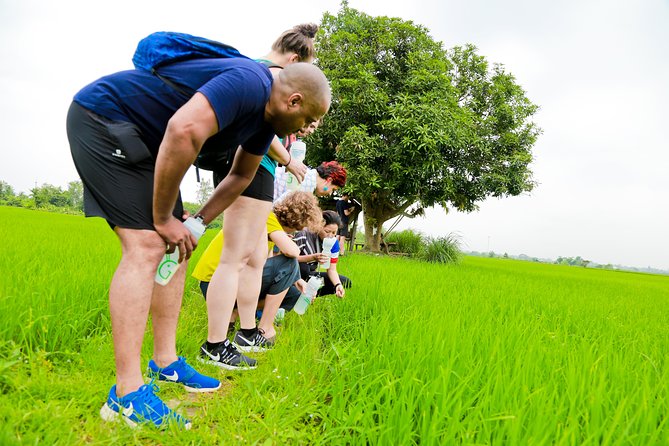
After lunch, you cross the Ping River by bike and continue into rice paddies, arriving at Baan Tawai Village, a well-known wood carving area. You park your bikes and then walk around to admire the craftsmanship—about 1 hour.
This stop works because it’s hands-on in a visual way. Instead of rushing between gift-shop counters, you get to slow down and look at how objects are made and how styles repeat across workshops.
Keep your expectations practical. This is a craft village, so you’ll see pieces at different price points and quality levels. If you like woodworking, you’ll enjoy the variety. If you’re purely chasing scenery, plan to treat this as a “pause with purpose” before heading back toward the hills.
A few more Chiang Mai tours and experiences worth a look
Doi Suthep foothills backroads and a forest shrine stop
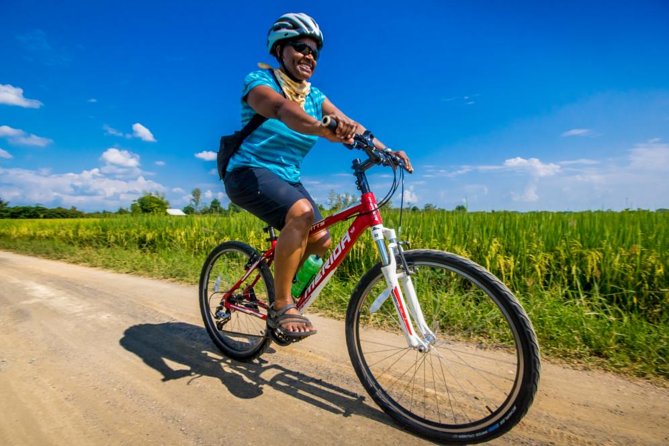
Later in the day, you cycle along backroads and country lanes making your way through small villages and out across the plain toward forested lanes in the foothills of Doi Suthep. The route includes a stop at an ancient forest shrine—about 30 minutes.
This is a quieter kind of stop, and it can be easy to miss the value if you rush it. Take a few minutes to look around and notice how the route threads between village life and green spaces. It’s a reminder that this area isn’t just “temple on a hill” anymore—it’s working farmland, small communities, and forest edges.
Because this is a shrine stop, be mindful with behavior and keep your phone use respectful. It’s not a “speed stop”; it’s more about atmosphere and a brief cultural moment.
Rajapruek Royal Park gardens and the return by minivan
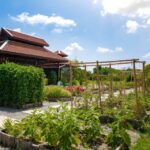
Once you traverse a few undulating hills, you reach Royal Park Rajapruek. This is your break stop, about 30 minutes, and it’s described as a beautifully manicured royal garden area. There’s also a lunch component tied to the park in the overall tour flow, so you’ll likely feel like you’re finishing strong with a calmer pace.
What you’ll appreciate here is the contrast: earlier parts of the day are field-and-road living; Rajapruek is planned gardens and more open space to breathe. If you’ve been pushing along paths and small lanes, this is a good reset before you head back.
At the end, you gather your bikes, load them onto a vehicle, and ride back toward Discova. That return segment is about 1 hour, and it’s how the tour avoids dumping you onto congested roads at peak time. You end back at the meeting point.
This end-by-minivan approach is a smart compromise. You get the active cycling you paid for, and you don’t feel like you’re doing your “full day workout” just to get through traffic.
Price and value: what $75 really buys
At $75 per person for a roughly 7-hour day, the value comes from what’s included rather than the e-bike itself.
You get:
- bike and helmet
- an English-speaking guide
- entrance fees for each attraction point
- beverages and snacks
- lunch
- a one-way transfer back from the end of the bike route to the meeting point
What’s not included is hotel pickup/drop-off, so you need to be ready to make it to Discova on your own.
For me, the best value signal here is the way the tour stacks costs that usually add up separately—admissions, lunch, and guide time—while still giving you a full ride outside the core tourist grid. It’s not the cheapest “bike ride” option in Chiang Mai, but it’s priced like a guided day with real planning behind it.
Also note the small-group cap of 10 travelers. That matters for comfort and for how often the guide can adjust pacing, explain what you’re seeing, and keep the group together on narrower lanes.
Who this tour fits best (and who should think twice)
This is a strong match if you want an active day that still feels guided and safe, especially for people who don’t want to navigate traffic, parking, or route decisions.
It’s also a good fit if you like mixing types of stops:
- sacred temple visit time
- river-and-village breaks
- a craft village walk
- forested scenery in the Doi Suthep and Ob Khan areas
- a garden recovery moment at Rajapruek
Two practical considerations can affect your enjoyment:
- The tour is best for moderate physical fitness. The e-bike helps, but you’ll still be riding and walking.
- For safety and comfort, it’s not recommended if you’re under 170 cm in height.
My practical checklist so the day goes smoothly
This is one of those tours where a little prep saves hassle later.
- Bring your original passport (foreigners) or ID card (Thai citizen) because the train officer needs to see it.
- Plan to arrive early enough for the 8:15 AM meet and 8:30 AM departure.
- Wear comfortable closed-toe shoes that handle uneven ground at temples and around craft areas.
- Hydrate before you start. Drinks are included, but you’ll feel better if you’re not starting drained.
- Expect a full day. Even with e-bikes and structured breaks, it’s still about 7 hours of active time.
Weather matters too. If conditions are poor, the tour can be canceled and you’ll be offered a different date or a refund.
Should you book the Chiang Mai Active E-bike Countryside Ride?
Book it if you want a guided, small-group day that mixes real countryside riding with temples, river lunch, and a craft village—without spending your entire day stuck in traffic. The train-to-Lamphun start is a clever way to break up the day and make the ride feel more local from minute one.
Skip it if you’re looking for a short, purely relaxing half-day, or if strict height limits and a tight schedule would stress you out. If you can meet the timing and you’re up for a moderate active day, this is one of the better ways to see the Chiang Mai area beyond the old city walls without turning it into a logistics project.
FAQ
What time does the tour start?
You meet at 8:15 AM for bike fitting and a briefing, and the group departs at 8:30 AM sharp.
How long is the Chiang Mai Active E-bike Countryside Ride?
The duration is about 7 hours.
Is the train to Lamphun included?
Yes. You take a 30-minute train ride from Chiang Mai to Lamphun, and the bike setup is part of the day’s flow.
What’s included in the price?
The price includes the bicycle and helmet, an English-speaking guide, entrance fees for each attraction stop, beverages, snacks, lunch, and a one-way transfer back to the meeting point from the end of the route.
Does this tour include hotel pickup or drop-off?
No. Hotel pickup and drop-off are not included.
How big is the group?
The tour has a maximum of 10 travelers.
What fitness level do I need?
The tour is recommended for people with a moderate physical fitness level.
What documents do I need to bring?
You’ll need to bring your original passport (for foreigners) or ID card (for Thai citizens) to show the train officer.