Old Bangkok feels like a secret.
This walk-and-boat route is interesting because you get local travel by klong boat first, then you slow down in places most sightseeing crowds skip—Wat Saket’s viewpoints and the Silver Pagoda’s 37 metal spires. I also like how the day ends with a real Thai foot massage after temples, not before, so you’re tired in the right way. One consideration: the schedule packs in a lot of walking, and Bangkok heat and humidity can feel intense even if the pacing stays friendly.
You’ll start at MBK Center and move through old-city lanes, temple walls, and riverside transport. It’s built for people who want more than a checklist—think “understand what you’re seeing” with a guide who can explain why Rama III ordered canals and why old rituals at Sao Chingcha stopped after accidents.
In This Review
- Key things that make this tour work
- Price and what you’re really paying for ($100.15)
- Meeting at MBK Center and setting the tone for the day
- Klong Saen Saeb canal to Pom Pra Satru Pai: how this tour beats traffic
- Golden Mount (Wat Saket): the hilltop viewpoint that also teaches you why
- Wat Ratchanatdaram / Loha Prasat and the Silver Pagoda: 37 spires with a symbolism lesson
- Bamrung Muang fashion street: temple supplies and daily life shopping
- Ban Bat community: handmade alms bowls and a centuries-old craft
- Sao Chingcha (the Giant Swing): spectacle, ritual, and why the ceremony stopped
- Wat Suthat: royal scale without the usual crowd push
- Tuk-tuk to Wat Pho (Wat Phra Chetuphon): the big complex and its medical roots
- The Thai foot massage school finish: good pain, clear payoff
- Getting back via Chao Phraya River and Skytrain
- Pacing, heat, and what to wear
- Who should book this tour, and who might skip it
- Should you book Bangkok’s Hidden Treasures Walking Tour?
- FAQ
- What’s the meeting point for the tour?
- How long is the tour?
- What time does the tour start?
- What’s included in the price?
- Is hotel pickup included?
- Is the foot massage suitable for everyone?
Key things that make this tour work
- Klong Saen Saeb canal boat ride first to beat traffic and get you oriented fast in Old Bangkok
- Golden Mount (Wat Saket) viewpoints with a hilltop pagoda story tied to King Rama III and Rama V
- Wat Ratchanatdaram (Silver Pagoda / Loha Prasat) and its 37 spires symbolizing the 37 virtues
- Bamrung Muang for temple-supply shopping streets (robes, incense, candles, books)
- Wat Pho + massage school finale so you finish with a 30-minute foot massage right after sightseeing
- Small-street navigation with a guide—the stops are spread out, and local guidance helps everything click
Price and what you’re really paying for ($100.15)
At $100.15 per person, this isn’t a “just hop on a bus” bargain. You’re paying for a full half-day that strings together several paid temple stops, multiple transport modes, and a guided route that keeps you from wandering in the wrong direction.
Here’s what adds value:
- Admissions are included for the main temple anchors like Golden Mount, Wat Suthat, and Wat Pho (via its temple complex).
- Transport is included: tuk-tuk, boat, and Skytrain to get you back. That matters in Bangkok because time lost to traffic can turn a good itinerary into a sweaty slog.
- A 30-minute Thai foot massage is included, which is a tangible end-point, not a vague “optional upgrade.”
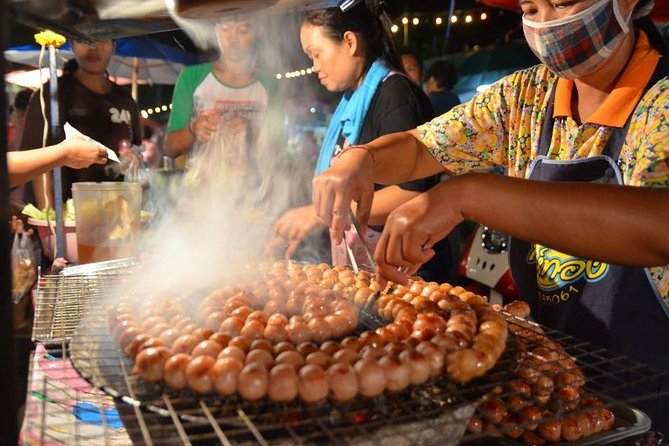
- Snacks are included, which is useful when you’re moving between religious sites and local streets.
If you compare it to DIY, you’d still spend money on transport and likely pay temple fees on your own anyway. The real “value” is that the tour bundles it into a smooth circuit with a local guide and a sensible pace.
You can also read our reviews of more walking tours in Bangkok
Meeting at MBK Center and setting the tone for the day
The meeting point is MBK Center (444 Phaya Thai Rd) with a start time of 8:30 am. That early timing is smart—temples are still active, streets are easier to cross, and the worst humidity hasn’t peaked yet.
Because hotel pickup and drop-off aren’t included, you’ll want to plan your arrival to MBK Center ahead of time. The tour ends back at the meeting point, using a river boat and Skytrain connection, so you’re not left figuring out how to get home after you’re already tired.
This is also listed as a private tour/activity, so your group has the guide and schedule together. In practice, that tends to create a calmer feel. One strong theme from the experience feedback is that it often feels like a friend showing you their favorite corners—just with better organization.
Klong Saen Saeb canal to Pom Pra Satru Pai: how this tour beats traffic
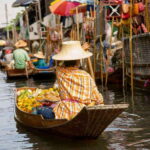
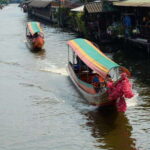
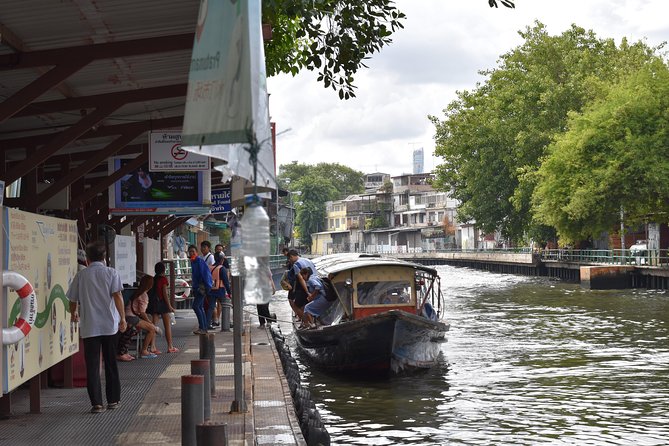
One of the best ways to understand Bangkok is to watch how people move through it. The tour starts by taking you from the meeting area toward Elephant Head Bridge, then onto a boat on the Saen Saeb canal.
This matters because the canal—constructed in 1837 by King Rama III for military transport during the war over Cambodia—still functions as a practical commuter route. Today it’s described as a fast, inexpensive way Bangkokians travel through the city while avoiding traffic jams.
You get two wins in that first segment:
- You see a working part of Bangkok, not just a photo stop.
- You reset your brain before the walking begins. After a boat ride, the city feels less like chaos and more like a grid of waterways and neighborhoods.
If you’re sensitive to walking right away, this opening is a clever way to ease into the day.
Golden Mount (Wat Saket): the hilltop viewpoint that also teaches you why
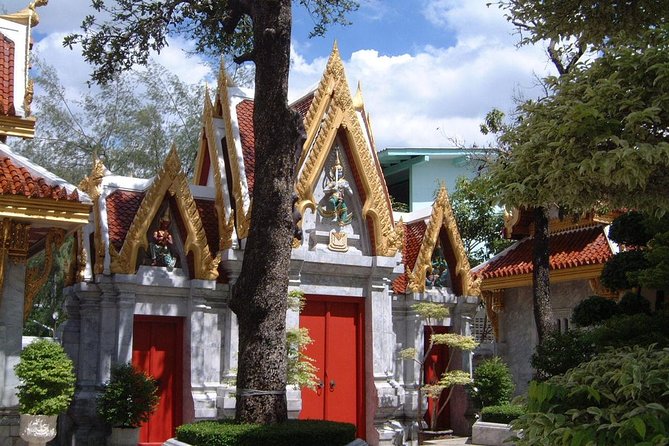
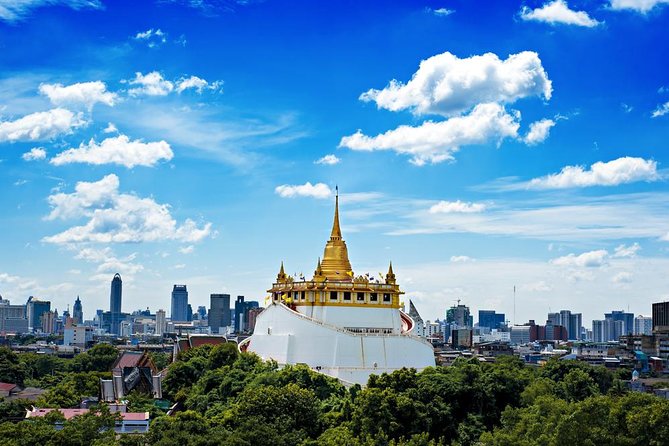
From the canal area, you head to Golden Mount (Wat Saket). This is a pagoda on an artificial hill, built as another Rama III project. The catch: it wasn’t completed until the reign of King Rama V. Land subsidence damaged the original structure, so the final outcome came later.
So when you’re looking at the panoramic views, you’re also looking at a site with a built-in story of engineering problems, restoration, and persistence. That makes the views feel earned rather than just pretty.
You’ll spend about 1 hour, with admission included. This is enough time to climb, pause for sights, and take in the city layout without rushing.
Practical tip: wear shoes you can grip. Temple steps and hill paths can be uneven, and you’ll feel it by hour four if your footwear isn’t solid.
Wat Ratchanatdaram / Loha Prasat and the Silver Pagoda: 37 spires with a symbolism lesson
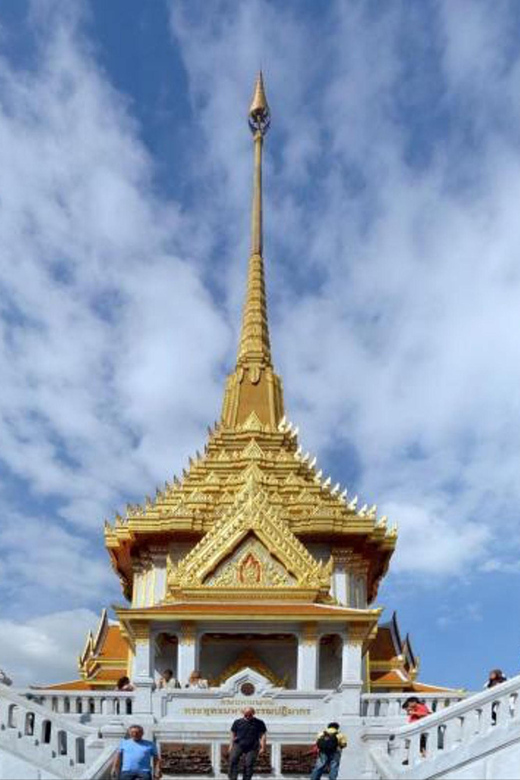
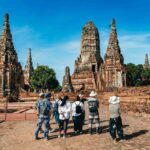
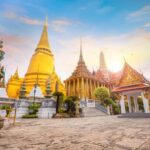
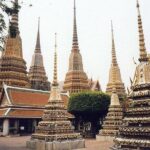
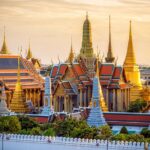
Next is Wat Ratchanatdaram Woravihara (Loha Prasat)—often highlighted as the Silver Pagoda. It was built in 1846 during King Rama III’s reign for a princess granddaughter.
The name might sound like marketing, but the design is actually where the fascination lives: it’s known for 37 metal spires, and those are said to represent the 37 virtues.
There’s also an architectural detail worth knowing. The style can almost seem Burmese at first glance, but the tour explains it as a copy of an older Buddhist design found in Sri Lanka. That kind of cross-cultural clue helps you notice patterns rather than just count objects.
You’ll be here for about 30 minutes, and admission is included. This is a good length if you enjoy temples but don’t want to spend the entire day in stone rooms. It keeps momentum while still letting you get the meaning behind what you’re seeing.


Bamrung Muang fashion street: temple supplies and daily life shopping
After temple-heavy stops, the route shifts toward ordinary Bangkok life. You’ll walk to Bamrung Muang, described as Bangkok’s first shopping street.
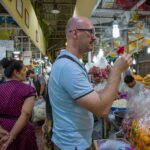
Today it caters to temple supplies. You may see monk robes, candles, incense sticks, books, and golden Buddha statues. The point isn’t just retail therapy—it’s that you’re learning how religious life connects to everyday commerce.
It’s only about 15 minutes here, and entry is free. Think of it as a palate cleanser: you get out of big temple zones and into smaller lanes where Bangkok locals shop for needs that match their faith.
Ban Bat community: handmade alms bowls and a centuries-old craft
A side street leads to Baan Bat, where locals have made their living producing hand-made alms bowls for centuries. These are purchased by the faithful and donated to monks.
Even with limited time—about 10 minutes—this stop hits something important: Bangkok isn’t only monumental temples. It’s also skill, repetition, and community work that keeps religious practices going.
If you like seeing how traditions are maintained through craft, you’ll appreciate this brief detour. If you want only big highlight sights, you might find it shorter than you’d like, but the tour keeps it efficient.
Sao Chingcha (the Giant Swing): spectacle, ritual, and why the ceremony stopped
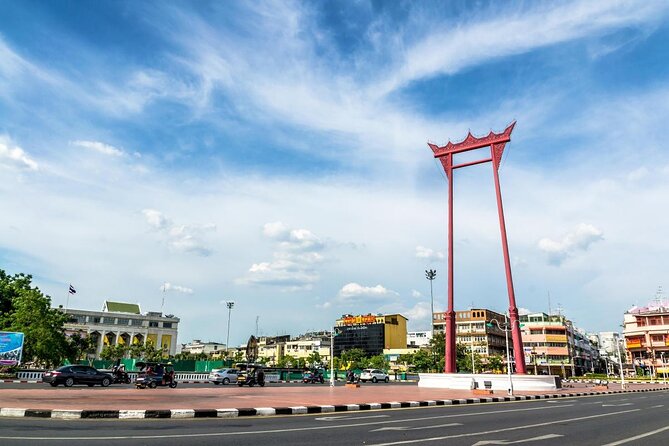
Next up is Sao Chingcha, the Giant Swing, constructed in 1784. This structure was originally used in a ceremony where Brahmins would swing, trying to grab a bag of coins placed on a pillar.
In 1935, that ceremony was discontinued after several fatal accidents. That shift—from ritual spectacle to safety reality—adds emotional weight to a landmark that can otherwise look like just a big photo-worthy tower.
Time here is about 10 minutes, and it’s free to visit. It’s enough for photos and context, but it’s not a long sit-down stop. You’ll be walking again soon, and that’s part of the tour’s rhythm.
Wat Suthat: royal scale without the usual crowd push
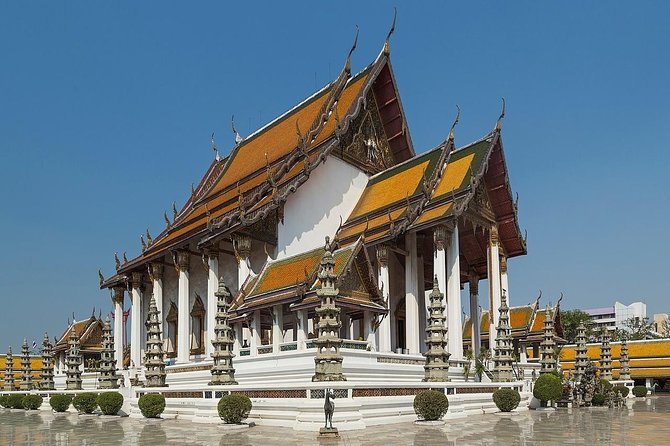
Then you’ll visit Wat Suthat, a royal temple constructed during King Rama I’s reign, though it wasn’t completed until King Rama III.
This is one of those places where “how it was built” matters as much as “what you see.” The tour allows about 1 hour here with admission included. That time feels right if you want to look closely at details without feeling whipped from one room to another.
Also, the entire route has a crowd-avoidance feel. You’re not only chasing famous spots—you’re reaching them through a route that includes side streets and canal transport, which naturally helps you dodge the densest tour groups.
Tuk-tuk to Wat Pho (Wat Phra Chetuphon): the big complex and its medical roots
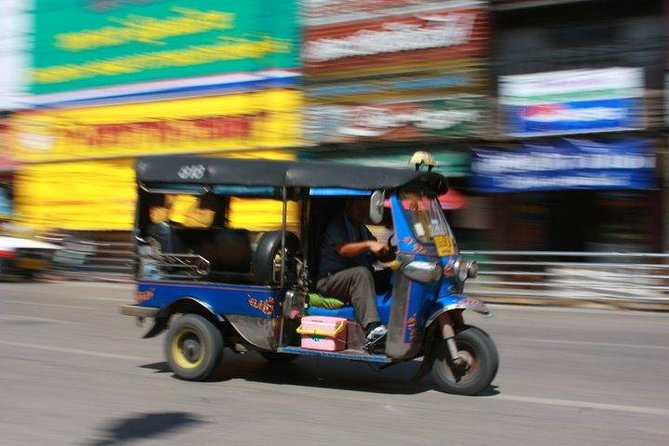
After a walking stretch, the tour gives your feet a break with a tuk-tuk ride through the small streets of old Bangkok to Wat Phra Chetuphon (commonly known as Wat Pho).
Wat Pho is described as:
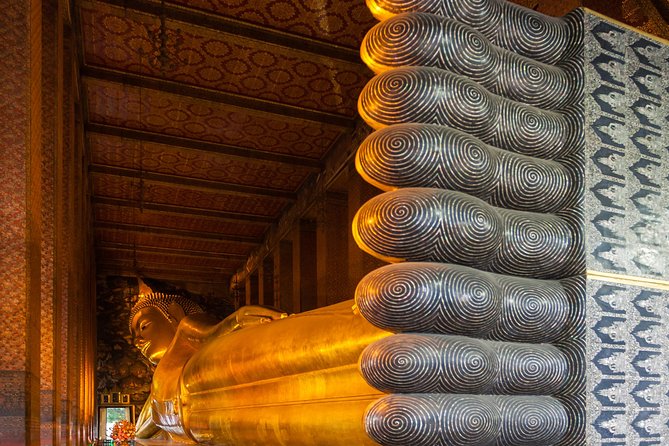
- home to the first school of medicine in Bangkok
- the oldest and largest monastery in Bangkok
- the first university in Bangkok teaching religion, science, and literature through murals and sculptures
This is one of the stops where the tour’s guide makes a real difference. You can wander a huge temple and miss meaning. With a guide, you’re more likely to connect the visuals to what the place was designed to teach.
You’ll spend about 1 hour and admission is included. It’s enough time to reset your energy and still see the key areas.
The Thai foot massage school finish: good pain, clear payoff
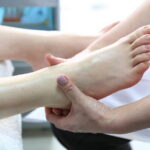
After all those temples, you get a 30-minute traditional Thai foot massage at a nearby Thai massage school. Admission is included.
Important note: Thai foot massage is not recommended for pregnant women. If that applies to you, you’ll want to skip this part.
The logic of the technique is explained in terms of ancient medicine: sensory nerves for internal organs are said to gather around the soles of the feet, so massage can stimulate body functions.
Also, don’t expect gentle. Foot massage on this route has a reputation for being intense—helpful for sore feet, but not for people who hate pressure. The best part is that it acts like a reset button after walking. You leave feeling both relaxed and slightly re-calibrated.
Getting back via Chao Phraya River and Skytrain
Once you’re relaxed, the tour wraps up with a river boat down the Chao Phraya River and then a Skytrain ride back to the meeting point.
This finish is practical and gives you one more view of Bangkok beyond temple walls and narrow lanes. It also keeps the schedule from turning into a long, exhausting return walk.
If you like public transport that actually reflects real city life, this final link is a nice touch. It’s also a relief if you’re tired and want someone to handle the logistics for you.
Pacing, heat, and what to wear
This is about 5 hours 30 minutes total (approx.). That’s a long enough day to matter, but it’s broken with short sightseeing chunks and transport breaks.
Even with the relaxed pace, you should assume:
- You’ll walk between sites, sometimes along smaller streets.
- Bangkok humidity can hit hard, even in the morning.
One reason people rate this experience highly is that the guides keep things friendly and organized. Reports mention heat/humidity and still describe a smooth, well-paced flow—exactly what you want when you’re doing temples plus local streets.
What to wear:
- breathable clothes
- shoes with grip
- a light layer you can live with if you duck into temple shade
And bring a positive mindset: temples ask for focus, but the route also gives you street-level Bangkok context.
Who should book this tour, and who might skip it
This tour fits best if you:
- want a mix of temples + local commerce + river transport
- like knowing the “why” behind what you’re looking at (Rama III projects, symbolism, and historical changes)
- want a guided day so you’re not piecing together neighborhoods on your own
Skip it if you:
- hate walking and want mostly indoor sightseeing
- are pregnant (due to the foot massage note)
- need a slower day with fewer stops
One more thought: the tour style is made for people who enjoy guidance. Some of the most positive feedback names guides like Mr Moo and Kat, and the common thread is that they’re accommodating and good at sharing local context.
Should you book Bangkok’s Hidden Treasures Walking Tour?
I’d book it if you’re the kind of traveler who likes Bangkok when it’s working—canals, neighborhood lanes, temple-linked shops, and the calmer rhythm of a guided route. It’s a good value because admissions and transport are bundled, and the day ends with a foot massage that turns tired sightseeing into a real payoff.
If you’re deciding between this and a more classic “big temples only” day, choose this one for the route variety. The Golden Mount viewpoint, the Silver Pagoda spires, the Giant Swing story, and the Wat Pho medical connection all give you landmarks with meaning, not just scenery.
FAQ
What’s the meeting point for the tour?
The tour meets at MBK Center, 444 Phaya Thai Rd, Khwaeng Wang Mai, Subdistrict, Krung Thep Maha Nakhon 10330, Thailand. The activity ends back at the meeting point.
How long is the tour?
The tour is about 5 hours 30 minutes.
What time does the tour start?
The start time is 8:30 am.
What’s included in the price?
Included are landing and facility fees, snacks, a local guide, the Thai foot massage, and transportation by tuk-tuk, boat, and Skytrain. Admission tickets for several stops are included as well.
Is hotel pickup included?
No. Hotel pickup and drop-off aren’t included.
Is the foot massage suitable for everyone?
Thai foot massage is not recommended for pregnant women. The tour also notes that service animals are allowed and most travelers can participate.