REVIEW · BANGKOK
Top Highlight Bangkok Sights. Walking tour with Fun Local Guide!
Book on Viator →Operated by Bangkok Top Sights · Bookable on Viator
Bangkok rewards smart walking, not map wrestling. This 5-hour tour stacks 30+ major sights into one route, so you can learn as you move and avoid getting turned around. You’ll bounce from gold-temple grandeur to market alleyways, with guide commentary that explains what you’re seeing and why it matters.
Two things I really like: small-group touring (capped at 20) and the fact that key temple admissions are built in. That means you spend your time watching and listening instead of queueing or hunting ticket desks. I also like that guides keep the pace in check, including practical stops along the way, and they’ll often help you with directions at the end.
One possible drawback: you’re walking outdoors for about 5 hours, and the Golden Mount finish includes 320 stairs. If heat, humidity, or stair-heavy climbs slow you down, plan your day around this tour and keep your shoes ready for uneven pavement.
In This Review
- Key things that make this Bangkok walking tour worth it
- Why this 5-hour route is a smart first-time Bangkok move
- Meeting Tang Hua Pug Building, then starting with Wat Traimit
- Talat Noi: street art, side temples, and the feel of an older Bangkok
- Chinatown’s alley markets: old settlement energy, not just a street
- Wat Chakrawatrachawat: crocodiles sleeping under an ancient temple
- Wat Suthat + the Giant Swing: murals and ritual space
- Golden Mount (Wat Saket): the hill, the climb, and the views
- Optional Grand Palace: worth it if you still have energy
- Price and value: what $74.87 gets you in practical terms
- The guides: where the tour really earns its keep
- What to expect from the pace, weather, and your comfort level
- Who this tour fits best (and who might want a different plan)
- Should you book this Bangkok Top Sights walking tour?
- FAQ
- How long is the Bangkok walking tour?
- What is the price per person?
- How many sights will we see?
- What’s included in the tour price?
- Where does the tour start and where does it end?
- Is Grand Palace included?
Key things that make this Bangkok walking tour worth it
- 30+ stops in one loop: temples, markets, and city neighborhoods without backtracking
- Temple tickets included at Wat Traimit, Wat Suthat, and Wat Saket (so you’re not constantly paying extra)
- A guide who adds context: you’ll get explanations of culture and history as you go
- Talat Noi street-art lanes + Chinatown markets for a mix beyond just temples
- Small group size that helps keep things friendly and manageable (and not chaotic)
- Optional Grand Palace add-on if you want to go further into royal Bangkok
Why this 5-hour route is a smart first-time Bangkok move
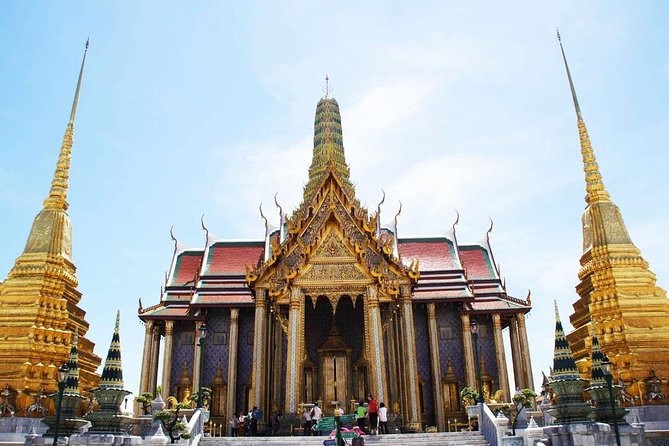
If you’re short on time, Bangkok can feel like a blur of names, boats, and directions. This tour solves that problem with a tight walking route that strings together big-ticket sights in a sensible order. You’re not just checking boxes—you’re getting the story behind each place, which makes the city feel more coherent fast.
The other big win is how the stops balance classic and everyday. You’ll spend time at standout temples, then switch gears into neighborhood energy: Talat Noi’s alley lanes with street art and small temples, and Chinatown’s market crawl where you’ll see how people actually shop and move through the city.
You can also read our reviews of more walking tours in Bangkok
Meeting Tang Hua Pug Building, then starting with Wat Traimit
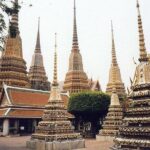
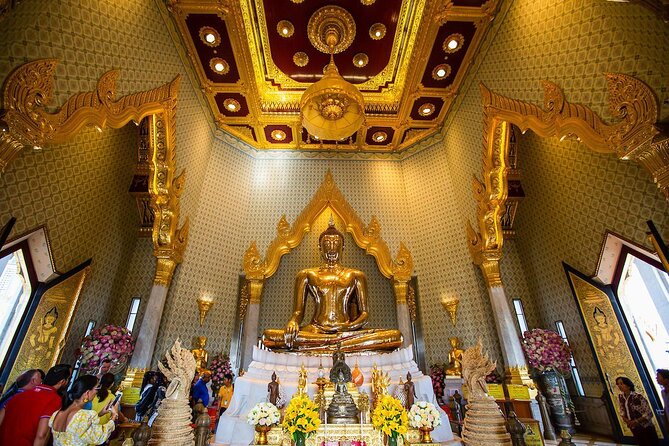
The tour kicks off at Tang Hua Pug Building on Thanon Rama IV. From there, it jumps right into one of Bangkok’s most famous religious sites: Wat Traimit (Temple of the Golden Buddha).
Wat Traimit is a royal temple of the Worawihan class, and it originally had another name tied to a local legend about three Chinese people who worked together to build it. That kind of detail matters because it helps you read the site as more than a postcard photo. When you see how the temple’s identity connects to community stories, it becomes easier to understand why Bangkok has so many layers in one city block.
Admission is included here, so you’ll just follow the group in and get moving.
Talat Noi: street art, side temples, and the feel of an older Bangkok
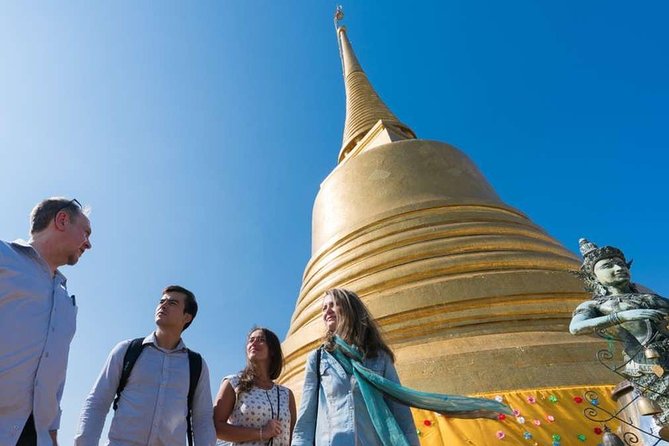
After the gold-temple start, you shift into Talat Noi, one of those Bangkok neighborhoods where the appeal is in the small turns. You’ll spend about 30 minutes here, wandering through old lanes that can feel tucked away from the main tourist flow.
Talat Noi is described as an area with history, hidden corners, and alleyways that mix street art with temples. That combination is what I’d call “real Bangkok texture.” You’re not only looking at landmarks—you’re seeing the city’s everyday face.
Chinatown’s alley markets: old settlement energy, not just a street
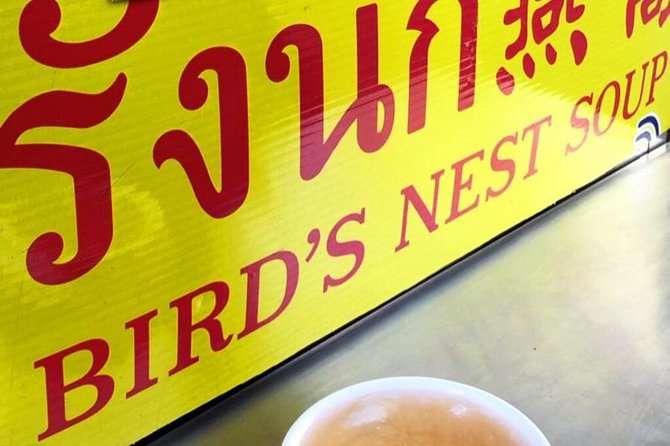
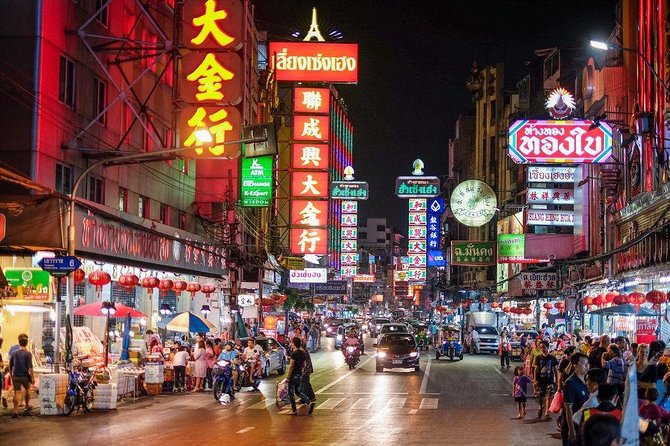
Next comes Chinatown (Bangkok). This portion lasts about an hour and focuses on moving through market alleys rather than only stopping at the main thoroughfares. Chinatown is also described as the area that was among the first settled in Bangkok, and that helps explain why the neighborhood still feels like its own world.
Expect a market experience “in the depths” of the alley network. This is where you can benefit most from having a guide. Without one, it’s easy to bounce between big streets and miss the smaller lanes where the atmosphere is strongest.
If you’re sensitive to crowds or you don’t like tight spaces, Chinatown can be a lot. Still, it’s one of the most efficient ways to understand Bangkok’s Chinese community footprint in a single afternoon.
Wat Chakrawatrachawat: crocodiles sleeping under an ancient temple
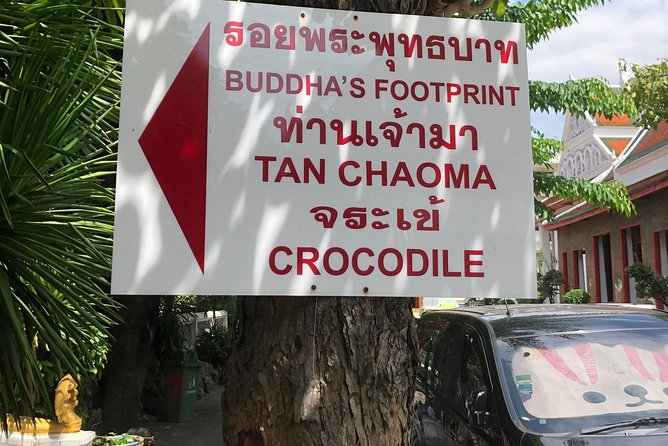
Then the tour switches to something you don’t often see in temple itineraries: Wat Chakrawatrachawat Woramahawihan, known for crocodiles reportedly sleeping underneath the ancient temple.
This is a classic example of why this tour works for variety. You get temple architecture and religious space, but also a quirky, memorable hook that makes the visit stick in your mind. It also pairs nicely after Chinatown: you’re moving from a neighborhood-food-and-market vibe into a temple setting that feels stranger and more distinctive.
Admission is included for this stop, and you’ll have about 30 minutes.
You can also read our reviews of more guided tours in Bangkok

Wat Suthat + the Giant Swing: murals and ritual space
After the crocodiles, you head to Wat Suthat, with a focus on the temple’s 19th-century murals inside the main chapel. Even if you’re not a mural expert, it’s the kind of detail that makes the visit feel specific to Bangkok’s art traditions rather than generic temple sightseeing.
Outside, you’ll find the famous Giant Swing (Sao Chingcha). The tour gives you time for the temple and then a separate short window to view Sao Chingcha itself.
Why this matters: the Giant Swing isn’t just a photo spot. It’s part of how the city stages major ritual events, which is where your guide’s commentary becomes useful. If you listen closely during these minutes, you’ll start connecting the physical structures to how Bangkok communities practice faith in public space.
Golden Mount (Wat Saket): the hill, the climb, and the views
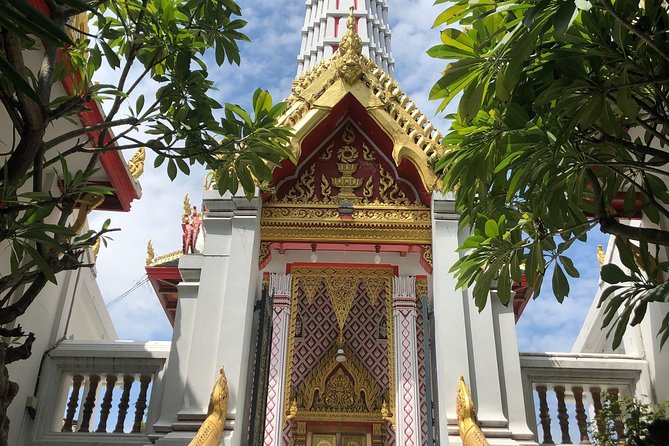
The final major temple stop is The Golden Mount (Wat Saket). This is the tour’s big vertical moment.
Wat Saket sits on Bangkok’s only hill. You’ll climb 320 stairs to reach the top for panoramic views of Rattanakosin Island. Even if you don’t love heights, this is one of those payoffs where the effort feels worth it because you can finally see the city’s layout from a higher perspective.
Admission is included here too, so you’re not juggling extra steps.
Optional Grand Palace: worth it if you still have energy
There’s an optional add-on for Grand Palace. If you’re the type who wants the royal-heart of Bangkok in one concentrated shot, it’s a logical extension after you’ve already walked through other temple highlights.
Keep in mind the Grand Palace option depends on you having the time and energy to stay after the main route. This tour is already about 5 hours, and Bangkok heat can drain stamina faster than you expect.
Price and value: what $74.87 gets you in practical terms
At about $74.87 per person, this tour isn’t the cheapest way to “see temples.” But it does a smart thing for your budget: it bundles the work.
Here’s the value angle that matters:
- You get a guided loop that covers 30+ sights in roughly 5 hours, so you’re paying for time saved and direction help.
- Temple admissions are included for major stops: Wat Traimit, Wat Suthat, and Wat Saket.
- You’re in a small group (max 20), which tends to make pacing and navigation less stressful.
- Mobile ticket support and group discounts are included, which reduces hassle on the day.
What’s not included is also clear: food and drinks, personal expenses, transport during the tour, and some extras like Chinatown Heritage Center tickets. So if you want a smooth day, plan to handle your own snacks and water outside the tour.
If you already planned to pay for multiple temples anyway and you’re also paying for your time (or missing out on directions), the price starts to feel fair.
The guides: where the tour really earns its keep
This type of walking tour rises or falls on the guide, and the strongest reviews point to guides who are friendly, funny, and genuinely connected to the stories.
Names that came up include Aey, Oran, and Elena. Common threads: guides explain what you’re looking at in plain language, keep the group moving without turning it into a sprint, and offer practical help when you need it. One review also highlighted that the group stayed small, which makes the whole experience feel more personal and less like you’re on rails.
If you’re the kind of traveler who likes asking questions, this format suits you. You’ll have many short segments where you can listen, then look, then ask what something means.
What to expect from the pace, weather, and your comfort level
This is a walking tour with multiple temple entries and at least one big climb. It also requires good weather, so if rain is in the forecast, you might need a reschedule based on how conditions hold up.
For comfort, keep these in mind:
- Wear shoes you trust for city sidewalks and steps.
- Bring a light layer. Temples can mean air feels different indoors.
- Plan for time to pause. Some stops are around 30 minutes, others are shorter (like the Giant Swing view window).
The tour’s structure is designed to prevent you from getting lost, but it won’t slow down because you’re taking a phone photo. If you like to linger, you’ll still find moments—just be ready to do it between moments.
Who this tour fits best (and who might want a different plan)
This walking tour is ideal if:
- You want a high-signal introduction to Bangkok in one afternoon
- You prefer guided context over reading about temples alone
- You like variety: temples plus markets plus alley culture
You might want to consider a different approach if:
- Stairs and long outdoor walks are hard for you (that 320-stairs climb is the big flag)
- You’re hoping to turn the day into a relaxed food-only wandering session
- You don’t want your itinerary paced by a group
Should you book this Bangkok Top Sights walking tour?
I’d book it if your main goal is to leave Bangkok feeling oriented—knowing where the key sites are, what they represent, and how the city’s different communities show up in real places. The best part is the combination of 30+ stops, a guide who can explain the scenes, and tickets handled for several major temples.
I’d skip it or adjust expectations if your body struggles with heat or stairs, or if you want a completely flexible day with no structure. But for most time-crunched first-timers, this is a practical way to see a lot without getting lost.
FAQ
How long is the Bangkok walking tour?
It lasts about 5 hours.
What is the price per person?
The price is $74.87 per person.
How many sights will we see?
You’ll see 30+ points of interest.
What’s included in the tour price?
A walking tour with a local guide in a small group, plus temple tickets for Wat Traimit (Temple of the Golden Buddha), Wat Suthat, and The Golden Mount (Wat Saket). It also includes the guide experience and mobile ticket support.
Where does the tour start and where does it end?
It starts at Tang Hua Pug Building on Thanon Rama IV (Bang Rak) and ends at Wat Saket Ratchawora Mahawihan (Golden Mount area).
Is Grand Palace included?
Grand Palace is listed as an optional add-on. The guide can take you there if you choose that option.