REVIEW · BANGKOK
Sukhumvit: Hands-on Thai Cooking Class & Market Tour in BKK
Book on GetYourGuide →Operated by House of Taste Thai Cooking School · Bookable on GetYourGuide
Thai cooking gets real fast. This Bangkok class turns you into the cook, with a morning market ingredient hunt and a hands-on run at curry paste from scratch. The main thing to consider is logistics at the start: the meeting spot is clear on paper, but you’ll want to arrive early and watch for staff since the class room can be easy to miss.
What I like most is that you’re not just tasting or watching. You’re prepping, cooking, and eating what you make, course by course, with the smell of fresh herbs and spices around you the whole time. The class also builds in support for different diets (vegetarian, halal, kosher, and allergies) with advance notice, so you’re not stuck with a default menu.
In This Review
- Key Things You’ll Notice Right Away
- Meeting at BTS Asoke and MRT Sukhumvit: The Morning Starts Local
- Market Tour: How It Helps You Cook Thai Food Later
- The Cooking Flow: Four Dishes Plus Curry Paste Work
- What makes it feel different
- Curry paste from scratch
- Your Weekly Menu: Pick the Day to Match Your Thai Cravings
- Afternoon and Evening Classes: Mango Carving Instead of the Market
- What You’ll Actually Learn in the Kitchen (Beyond Recipes)
- You learn how flavors are built
- You learn timing
- You learn from the teaching style
- No MSG, Clean Workstations, and Eating What You Make
- Price and Value: Why $45 Can Work in Bangkok
- Dietary Needs: Substitutions Are Mentioned, But Plan Ahead
- What to Bring and How to Show Up Ready
- Quick Reality Check: Who This Is Best For
- Should You Book This Thai Cooking Class and Market Tour?
- FAQ
- How long is the cooking class?
- Where do I meet for the morning class?
- Where do I meet for the afternoon and evening classes?
- Is the market tour included?
- What dishes will I cook?
- Is mango sticky rice included every day?
- Are vegetarian, halal, kosher, or allergy needs handled?
- Does the class use MSG?
- What should I bring?
- Are alcoholic drinks included?
- The Bottom Line
Key Things You’ll Notice Right Away
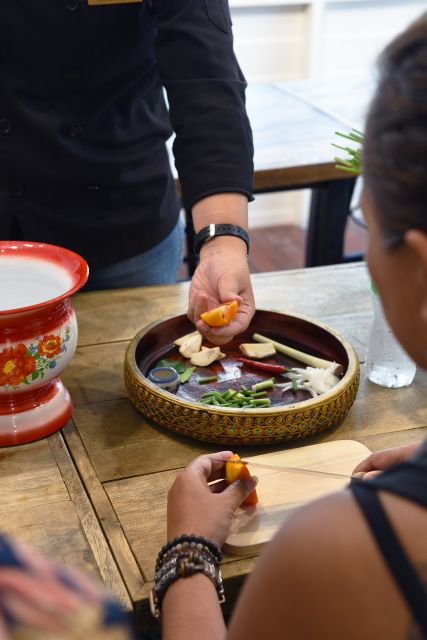
- Fresh-ingredient market visit for morning classes only, focused on vegetables, herbs, rice, and spices
- Curry paste from scratch, taught step by step so you understand the flavors instead of copying a shortcut
- Four dishes you cook and eat while hot, with mango sticky rice as the dependable sweet finish
- Day-by-day menu options, so you can pick a session that matches what you want to learn
- Instructors with strong English guidance often called out for clarity, humor, and organizing the workstations
- Recipes after class by email, so you can recreate the dishes later without guessing
Meeting at BTS Asoke and MRT Sukhumvit: The Morning Starts Local
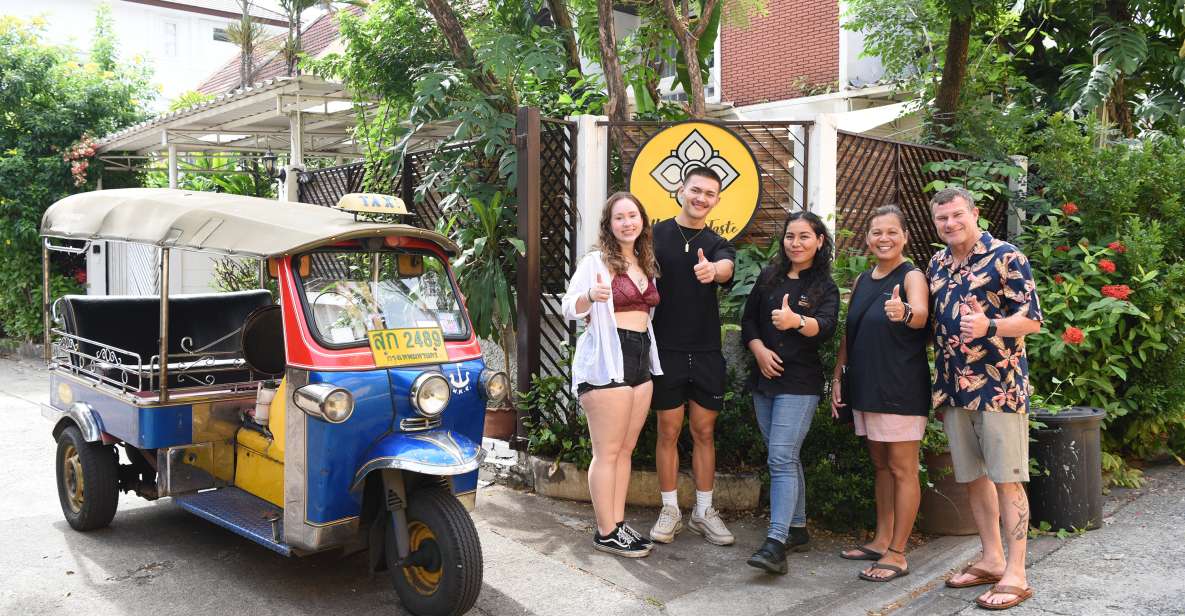
For morning classes, your start is right in the action at transit level: meet at the street floor of BTS Asoke Exit 3 and MRT Sukhumvit Exit 3. From there, you head out to a nearby market with a guided ingredient tour before you cook. This matters more than it sounds. When you learn what to buy and what to look for, you waste less time in kitchens later and you can adjust flavors with confidence.
A practical tip: arrive a bit early and take a slow lap. One common snag is that people have trouble spotting the exact cooking-class space right at the meeting area, especially if there’s no obvious sign right by the door. If you’re on the fence about timing, give yourself extra minutes and you’ll avoid that awkward early scramble.
If you’re coming for convenience rather than the market experience, note that afternoon and evening sessions follow a different pattern. Those start at the school in Sukhumvit 4, where ingredient introductions happen onsite.
You can also read our reviews of more shopping tours in Bangkok


Market Tour: How It Helps You Cook Thai Food Later
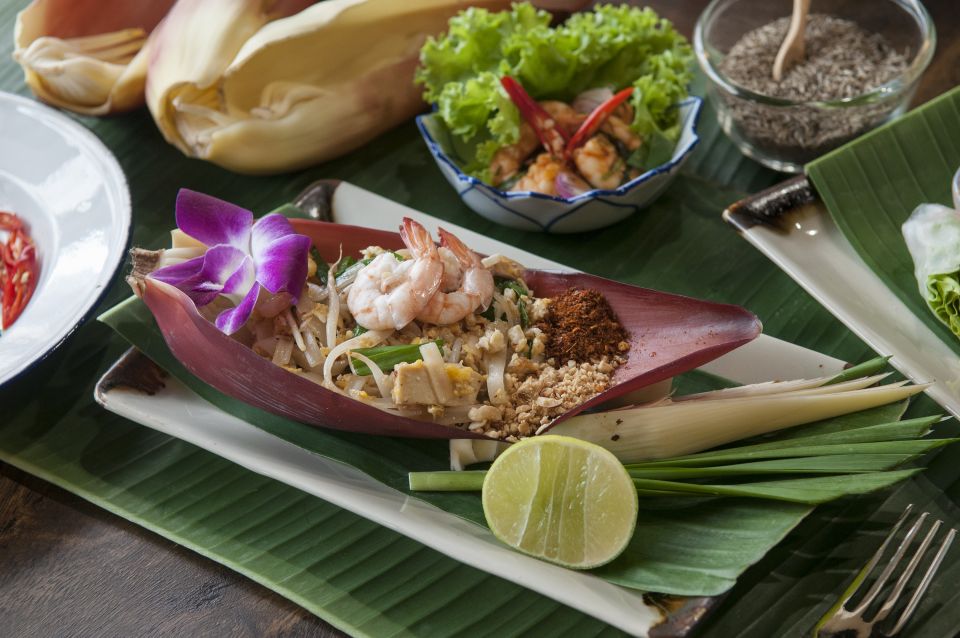
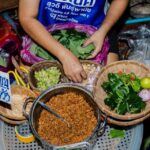
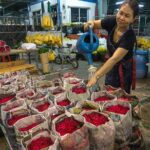
The morning market is not a generic walk-through. You’re learning the ingredients you’ll actually handle in class: vegetables, rice, herbs, and spices, plus how coconut milk and curry paste fit into Thai cooking.
Here’s why I think this is valuable. Thai flavors often come from the combination of fresh ingredients and a few key sauces/pastes. If you know what good basil looks like, how to pick the right aromatics, or what you’re aiming for in curry paste texture, the recipes become replicable—not mysterious.
Also, this market time is your chance to ask basic questions without feeling rushed. You’ll get a guided framework for what each ingredient does, not just what it is.
One more real-life note from the experience: many classes move between points efficiently, and some participants mention a short tuk-tuk ride as part of the day’s flow. Even if your exact route varies, the overall goal stays the same: get you from local shopping to a clean, organized kitchen quickly.
The Cooking Flow: Four Dishes Plus Curry Paste Work
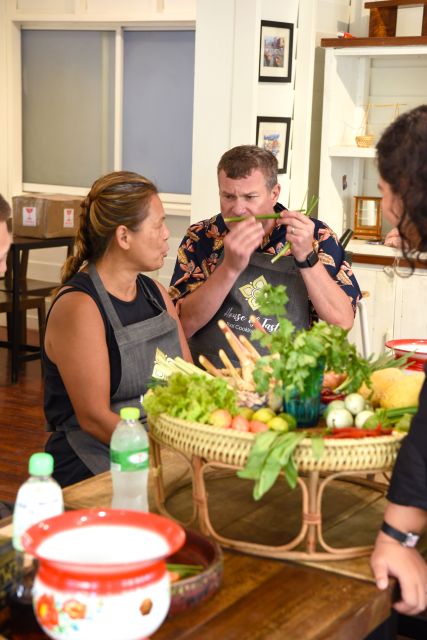
Your main cooking block is about learning by doing. You’ll spend roughly two hours making four traditional dishes that you eat during the class, while they’re hot and fresh.
What makes it feel different
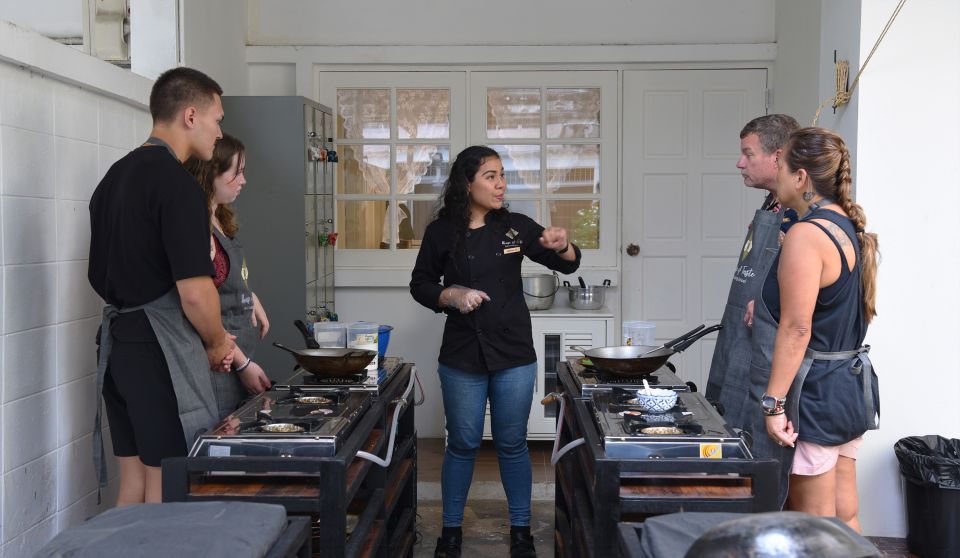
The class is built around active stations and step-by-step instruction. Multiple people highlight that the teaching style is beginner-friendly, with helpers keeping the work organized on trays and making it easier to follow along. That matters in Thai cooking, where the order of operations can change the final taste (and where it’s easy to get lost if you only watch).
Curry paste from scratch
The big skill session is making curry paste from scratch. This is the part that turns the recipes from “tasty dinner” into “I can recreate this at home.” When you grind and assemble the aromatics and spices yourself, you understand what’s doing the heavy lifting in green curry, red curry, or panang curry.
And yes, the experience includes eating the finished dishes you helped create—so you can connect technique to flavor right away.
A few more Bangkok tours and experiences worth a look





Your Weekly Menu: Pick the Day to Match Your Thai Cravings
The menu rotates by day, and each session includes four dishes with mango sticky rice as the sweet finish. Here’s the full day-by-day schedule so you can choose strategically:
Monday
- Thai Papaya Salad (Som Tum)
- Stir-Fried Noodles with Shrimp (Pad Thai)
- Green Curry with Chicken
- Mango Sticky Rice
Tuesday
- Spicy Coconut Soup with Chicken (Tom Kha Gai)
- Stir-Fried Thai Basil Chicken (Pad Krapow Gai)
- Red Curry with Chicken
- Mango Sticky Rice
Wednesday
- Hot and Sour Soup with Shrimp (Tom Yum Goong)
- Stir-Fried Flat Rice Noodles with Chicken (Pad See Ew)
- Green Curry with Chicken
- Mango Sticky Rice
Thursday
- Spicy Minced Chicken Salad (Larb Gai)
- Stir-Fried Noodles with Shrimp (Pad Thai)
- Panang Curry with Chicken
- Mango Sticky Rice
Friday
- Thai Papaya Salad (Som Tum)
- Stir-Fried Thai Basil Chicken (Pad Krapow Gai)
- Red Curry with Chicken
- Mango Sticky Rice
Saturday
- Spicy Coconut Soup with Chicken (Tom Kha Gai)
- Stir-Fried Noodles with Shrimp (Pad Thai)
- Green Curry with Chicken
- Mango Sticky Rice
Sunday
- Hot and Sour Soup with Shrimp (Tom Yum Goong)
- Stir-Fried Flat Rice Noodles with Chicken (Pad See Ew)
- Panang Curry with Chicken
- Mango Sticky Rice
You’ll also see a pattern: the class balances salads, soups, stir-fries, and curry. That mix is smart. It teaches you that Thai cooking isn’t just curry paste—it’s also the sauces, the heat level, and how herbs are used at the right time.
If you’re trying to optimize what you learn, pick a day based on the dish you’ve been craving most. You’ll still learn curry paste skills on days when curries appear, but your palate will lead the rest.
Afternoon and Evening Classes: Mango Carving Instead of the Market
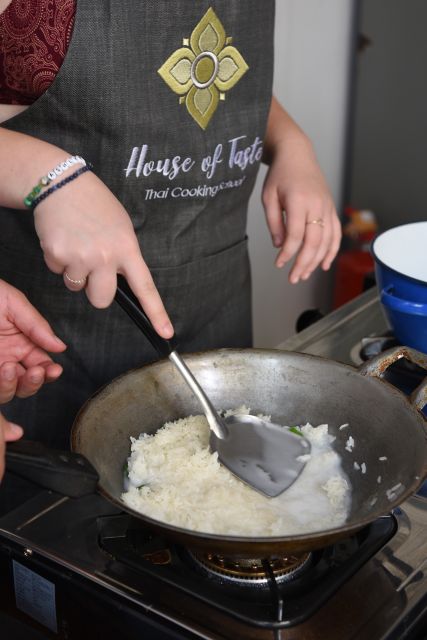
If you don’t want to start your day at the market—or you’re squeezed for time—afternoon and evening options swap out the market visit.
Instead of a market tour, you get mango carving. Ingredient introductions still happen, just at the House of Taste Thai Cooking School in Sukhumvit 4 instead of out in the market.
For some people, mango carving is the perfect trade. It’s hands-on and different, and it adds a Thai presentation craft angle to the day’s food education. For others, the market ingredient lesson is the main draw. If you care about choosing herbs and produce yourself, morning is the better fit.
What You’ll Actually Learn in the Kitchen (Beyond Recipes)
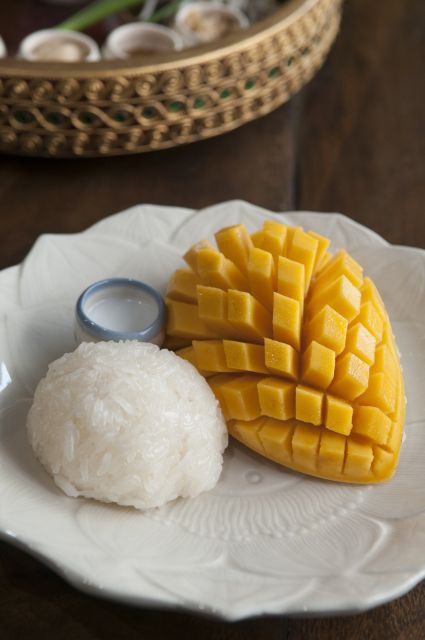
Thai cooking classes can sometimes feel like assembly lines. This one is less so because it’s built around repeating concepts in different dishes.
You learn how flavors are built
- How coconut milk softens and rounds out spicy soups
- How curry paste forms the backbone of curry
- How herbs get used to brighten stir-fries and salads
- How heat levels and balance work across dishes
You learn timing
You’ll be cooking dishes that need different heat, different wok/pan approaches, and different moments to add ingredients. When you eat the results right after each dish, you get fast feedback.
You learn from the teaching style
In multiple experiences, instructors named April, Jay, and Pitch are praised for clear instructions and keeping the tone light and fun. That combination is underrated. Thai cooking requires focus, but it doesn’t need to feel stiff.
No MSG, Clean Workstations, and Eating What You Make
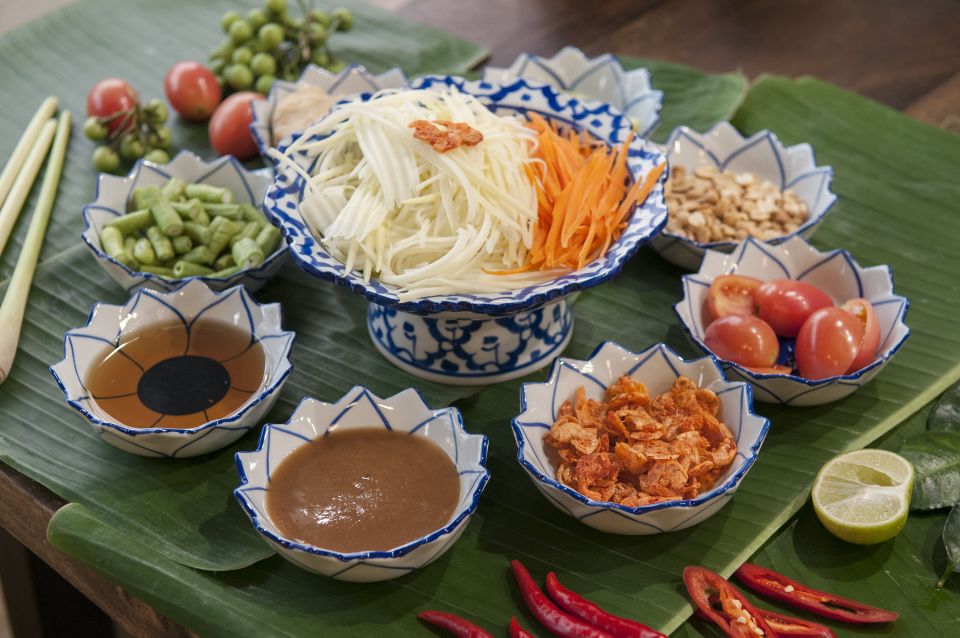
A small detail that matters: no MSG is used. That doesn’t automatically make the food “better,” but it does align with the idea that the flavor should come from aromatics, herbs, and the ingredients you’re learning to handle.
The kitchens are also described as modern, clean, and well organized. That’s practical travel wisdom. You’re going to chop, mix, and cook. A clean workspace keeps the class comfortable, especially when the day involves multiple dishes and shared stations.
And you’ll be eating what you cook. Not a single portion here and there. You’ll savor the four dishes you make—hot and fresh—so you can judge taste and texture in real time.
Price and Value: Why $45 Can Work in Bangkok
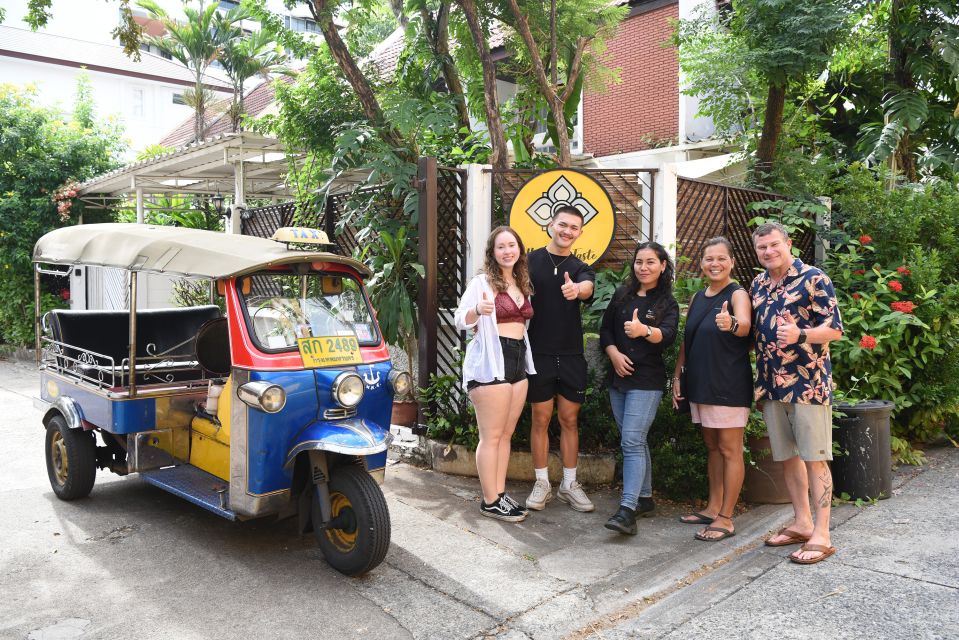
At $45 per person for about 210 minutes, this class is priced in a way that tends to make sense for the Bangkok market. Here’s why it feels like value rather than just a show:
- You get four courses you cook and eat
- All ingredients and equipment are included
- You receive recipes by email afterward, so the value extends beyond the cooking time
- A personal locker is provided, and drinking water is included
- Alcohol isn’t included, but drinks are available for purchase if you want them
It’s also one of the few food experiences that’s both social and skill-building. If you’re the type who wants more than a meal—if you want the ability to recreate flavors at home—this pays off over time.
If you’re purely hunting for the cheapest meal option, this won’t beat street food. But for skill + meal + recipes, it’s a strong deal.
Dietary Needs: Substitutions Are Mentioned, But Plan Ahead
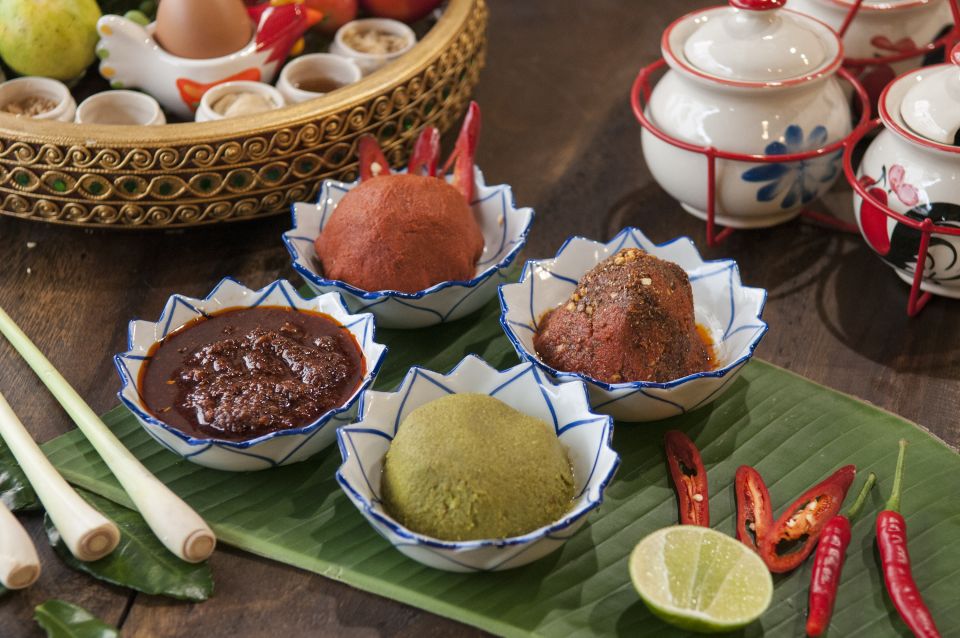
The provider states that dietary requirements can be accommodated with advance notification, including vegetarian, halal, kosher, and allergies. People also mention substitutions like replacing chicken with tofu for non-meat diets.
My advice: don’t wait until the day-of. Send your dietary needs early so the kitchen can adjust ingredients before you arrive. Thai cooking depends heavily on sauces and aromatics, so substitutions need coordination to avoid last-minute surprises.
What to Bring and How to Show Up Ready
This isn’t a hiking tour, but it is hands-on cooking.
Bring:
- Comfortable shoes
- An empty stomach approach. The class includes plenty of food, and you’ll want room for the full meal
Based on participant tips, you might also consider bringing a small container if you want leftovers. You can’t assume it’s encouraged or provided, but having a plan helps.
Quick Reality Check: Who This Is Best For
This class is a great fit if you want:
- A practical Thai cooking experience with real dishes
- A structured way to learn curry paste and Thai flavors
- A food-focused activity that works for couples and friends
It also seems to work well for families, including teens, since the structure is beginner-friendly and guided.
One mixed note to be aware of: it’s listed as wheelchair accessible, but it’s also flagged as not suitable for people with mobility impairments. If mobility is a concern for you, check directly with the provider before booking so you don’t find out the hard way.
Should You Book This Thai Cooking Class and Market Tour?
Book it if you want a hands-on Bangkok food day with a real skill outcome. The best reason to choose it is the pairing: ingredient learning in the morning (for morning sessions) plus cooking that actually teaches technique, especially curry paste.
Skip it if you hate instructions, don’t like cooking, or your schedule can’t handle a roughly three-and-a-half-hour block. Also consider choosing afternoon/evening if you’d rather do mango carving and prefer avoiding the market start.
If you can pick your day, choose based on the dishes you care about most. That’s the easiest way to make the experience feel personal.
FAQ
How long is the cooking class?
The duration is 210 minutes (about 3.5 hours).
Where do I meet for the morning class?
Meet at the street floor of BTS Asoke Exit 3 and MRT Sukhumvit Exit 3 (or pin to Hey! Coffee MRT Sukhumvit as the meeting point).
Where do I meet for the afternoon and evening classes?
Meet at the school in Sukhumvit 4.
Is the market tour included?
The market tour is available only for the morning class. Afternoon and evening classes replace it with mango carving.
What dishes will I cook?
You’ll cook four traditional dishes per session, plus you’ll learn curry paste from scratch. The exact four dishes rotate by day (for example, Som Tum/Pad Thai/Green Curry/Mango Sticky Rice on Monday).
Is mango sticky rice included every day?
Yes. Mango sticky rice appears on the menu schedule for every day listed.
Are vegetarian, halal, kosher, or allergy needs handled?
Yes, substitutes can be provided for vegetarian, halal, kosher, and allergy requirements with advanced notification.
Does the class use MSG?
No MSG is used.
What should I bring?
Wear comfortable shoes and go in with an empty stomach since there is plenty of food.
Are alcoholic drinks included?
Alcoholic drinks are not included, but they are available for purchase.
The Bottom Line
If you want to leave Bangkok knowing how to build Thai flavors at home, this class is a solid value. Pick your day for the dishes you want, show up hungry, and treat curry paste like the main event.