REVIEW · HUA HIN
River Kwai Tour 2 Day from Hua Hin – Join Tour
Book on Viator →Operated by Ken Diamond Co.Ltd Tour & Travel · Bookable on Viator
A river called River Kwai, and then some. This 2-day small-group trip pairs big, emotional World War II sites with fun Thai culture stops—and the overnight at Madatara Raft House is the standout. I love the mix of floating market energy and the train-and-bridge views that make the history feel real, not textbook.
One thing to consider: the schedule is full and it starts early. You’ll also be sleeping in a room with no electricity, which sounds romantic (and it is) but it’s not the kind of place where you’ll be powering up all night.
In This Review
- Key Highlights at a Glance
- River Kwai in Two Days: A Lot of Meaning, Not Just Sightseeing
- Morning Start From Hua Hin: Timing and Group Size
- Stop 1: Damnoen Saduak Floating Market by Boat
- Stop 2: River Kwai Bridge, Jeath War Museum, and the Train Along the River
- Lunch and Death Railway: FV32+JF9 and the Time on the Tracks
- Stop 4 (Day 1): Madatara Raft House Overnight in Sai Yok National Park
- Day 2: Sai Yok National Park Raft Ride, Waterfall, and Open-Air Shower
- Hellfire Pass Interpretive Centre and Memorial Walking Trail
- Kanchanaburi War Cemetery: The Last Stop Before Hua Hin
- Food on the Trip: What’s Included and What to Budget
- Price and Value: Is $194.03 a Fair Deal?
- What This Tour Is Best For (and Who Might Skip It)
- A Quick Packing Checklist (Based on What You’ll Do)
- Should You Book the River Kwai Tour 2 Day from Hua Hin?
- FAQ
- What time does the River Kwai tour start from Hua Hin?
- Is pickup offered for this tour?
- How long is the tour?
- What meals are included?
- Are entrance fees included?
- Where is the overnight stay, and is there electricity in the room?
- Does the itinerary include a train ride?
- What is the cancellation policy?
Key Highlights at a Glance
- Damnoen Saduak Floating Market boat ride for a front-row look at river life
- River Kwai Bridge + Jeath War Museum paired with a train ride along the river
- Death Railway visit built into the day’s travel rhythm, with time for lunch in between
- Overnight at Madatara Raft House (no electricity in-room) for a low-key, peaceful river evening
- Sai Yok waterfall raft ride + open-air shower in the forest (yes, really)
- Hellfire Pass Interpretive Centre + Memorial Walking Trail to understand what happened there
River Kwai in Two Days: A Lot of Meaning, Not Just Sightseeing
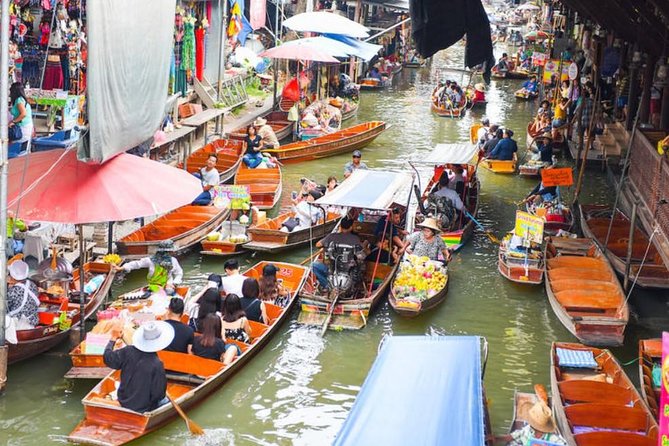
This tour moves you through two different worlds: cheerful Thai river culture by day, and heavy wartime history by late morning into the afternoon. That contrast is exactly why the trip works.
I also like that it is paced like an actual day away, not a rushed checklist. You’ll have built-in meal breaks (breakfast, dinner, and two lunches), plus enough time at each key site to absorb what you’re looking at.
If you’re hoping for a totally relaxing vacation with zero mental load, this isn’t that. You will feel the weight of places like Hellfire Pass and the Kanchanaburi War Cemetery. On the other hand, if you like your travel with context and emotional honesty, this is a strong pick.
A few more Hua Hin tours and experiences worth a look
Morning Start From Hua Hin: Timing and Group Size
The day begins at 6:30 am, with pickup offered. You’ll want to treat this as an early departure, not a late start. Expect a long but well-filled travel loop, because Day 1 stretches far into the evening.
The group is kept small—maximum 9 travelers. That matters more than you’d think. When stops are tight and sites are spread out, a smaller group means fewer delays and more time to hear your guide explain what you’re seeing (even if you’re just soaking it in quietly).
Also, you’ll have a mobile ticket. That’s practical for day-trips where paperwork can turn into a hassle.
Stop 1: Damnoen Saduak Floating Market by Boat
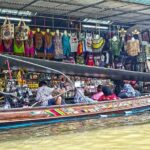
You’ll start with Damnoen Saduak Floating Market, a classic Thai river market where sales happen on the water. The boat ride inside the market is a smart way to do it. It gets you closer to how people sell goods from boats rather than just staring at docks from the edge.
What you’ll likely notice fast: the rhythm of river commerce is different from a land market. There’s a flow to it—approach, bargain, pass, move on. It’s lively, a little chaotic (in a fun way), and easy to watch.
A practical note: keep an eye on your belongings and bag security. River stops can mean splashes, damp air, and constant movement around boats.
Stop 2: River Kwai Bridge, Jeath War Museum, and the Train Along the River
Next comes the big name: the Bridge over the River Kwai. Seeing the bridge in person is one thing; walking around and reading the surrounding material is where it becomes real. Right nearby, you’ll visit the Jeath War Museum, which helps connect the bridge to the people and the situation around it.
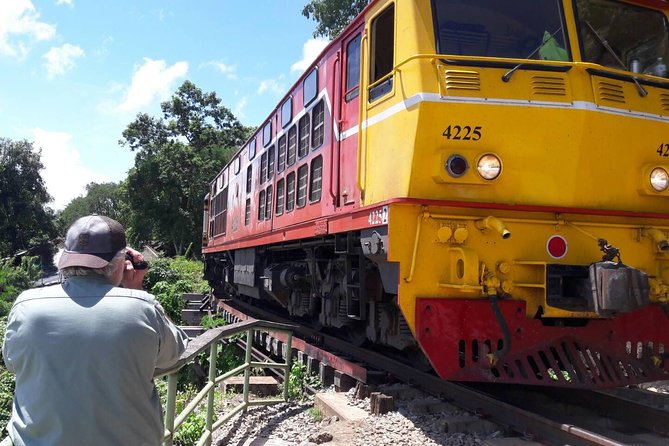
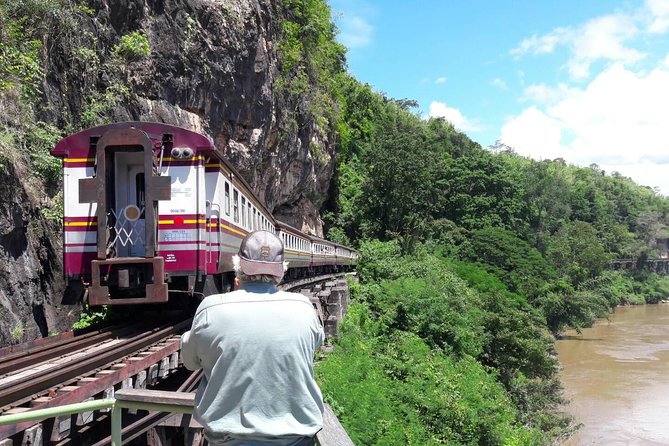
Then comes a highlight that many tours skip: you’ll take the train along the River Kwai for about an hour. Even if you don’t obsess over trains, this section is a cheat code for atmosphere. You’ll watch the river corridor slide by with landscapes and house boats along the water. It’s a slower moment carved out of the history-heavy day.
The drawback? This part can feel like a transition rollercoaster. You go from museum emotion to outdoor scenery to the train experience, and then the day keeps moving. If you’re sensitive to historical sites, you may want a quiet moment at lunch to reset your head.
Lunch and Death Railway: FV32+JF9 and the Time on the Tracks
Midday, you’ll have lunch at a local Thai restaurant, then move on to the Death Railway area. The tour gives you about 2 hours here, and that time window matters. Places tied to forced labor and suffering need room for reflection, not just quick photos.
Why this stop hits: the railway isn’t just a structure. It’s a story of human cost, and the physical idea of rail lines across a difficult region makes the scale easier to understand.
You’ll likely leave with a clearer mental picture of how the railway connected to the broader war effort in the region. And since the tour also hits Hellfire Pass later, the two sites together form a more complete picture than either one alone.




Stop 4 (Day 1): Madatara Raft House Overnight in Sai Yok National Park
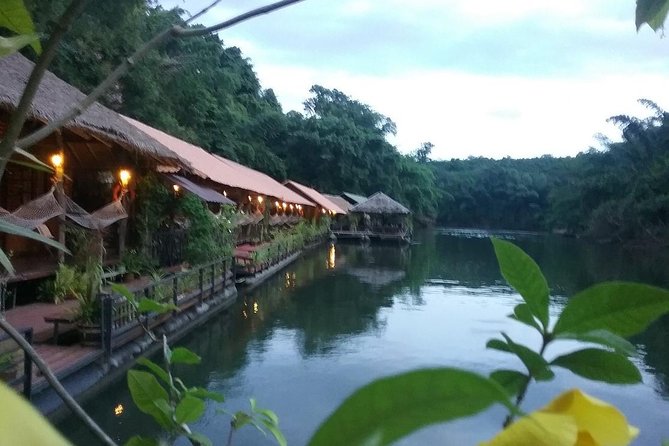
Now we get to the part you’ll remember: sleeping on the Madatara Raft House in Sai Yok National Park. The itinerary calls out that the River House has no electricity in the room. That detail is not small. It changes the whole vibe.
In a practical way, it means you’re living simpler that night. In a fun way, it means there’s less to do than listen to the river and enjoy the quiet. The description highlights sitting together near the river in the evening, with dinner and a peaceful nature setting. That’s exactly what this kind of overnight is good for: slowing down without forcing you to plan every minute.
A possible consideration: no in-room electricity also means no easy late-night charging. If you need to keep your phone topped up for navigation or photos, charge before you arrive and keep your battery expectations realistic.
Also, you’ll spend a long day getting to this point. When you arrive, don’t be surprised if you feel ready to sleep as soon as you finish dinner.
Day 2: Sai Yok National Park Raft Ride, Waterfall, and Open-Air Shower
After breakfast, the day starts in an unusual way. The tour describes the hotel restaurant doubling as a floating raft that takes you downstream to an open-air waterfall. When you’re there, you can shower in the open air right in the lush forest setting. Then the raft is escorted back upstream by motor boat.
This is one of those experiences that sounds wild until you do it. The big value is how different it feels from a typical waterfall stop. You’re not just walking to a viewpoint. You’re part of the river action, moving through the landscape by boat, then cooling off in a way that feels very local and very “Thailand countryside” instead of theme-park tourist.
What to bring (or at least plan for): swimwear or something you’re comfortable getting wet in, and quick-dry clothes for after. The shower is part of the experience, so treat it like one.
After that, you visit the Sai Yok Waterfall itself. That gives you the chance to take in the scenery without only relying on the river ride for the waterfall moment.
Hellfire Pass Interpretive Centre and Memorial Walking Trail
Then the tour shifts again—this time toward a place that doesn’t let you stay neutral. You’ll visit the Hellfire Pass Interpretive Centre and the Memorial Walking Trail.
The itinerary notes it can feel hot there. That detail matters because it’s part of the message. You’re meant to stand where labor happened and understand what conditions were like. Even if you’re not super into history, this is the kind of site that communicates through experience: heat, distance, and the sheer effort of the terrain.
After the memorial trail, you’ll have lunch in a local Thai restaurant. I like that the tour builds in lunch here. It’s an emotional break that lets you process what you saw before the final stop.
Kanchanaburi War Cemetery: The Last Stop Before Hua Hin
At the end, you’ll visit the Kanchanaburi War Cemetery, then head back to Hua Hin. The cemetery is a respectful conclusion. It helps turn what you learned in museums and memorial trails into something tangible: names, lives, and remembrance.
It’s also a good final stop because it’s calmer than the interpretive centre. You can slow down, reflect, and then ride back without your brain stuck in one big emotion.
Food on the Trip: What’s Included and What to Budget
The tour includes breakfast, dinner, and two lunches. That is a real value point for a 2-day tour from Hua Hin—especially when you’re bouncing between locations. You won’t be forced to solve meals on the road or guess where to eat.
That said, drinks at restaurants and at the hotel are not included. Plan for water and basic drinks, particularly on warm days like the one you’ll likely experience at Hellfire Pass.
Also remember: with the raft house overnight and outdoor elements on Day 2, you’ll probably be thirstier than normal. I suggest budgeting for drinks so you’re not stuck doing last-minute price comparisons.
Price and Value: Is $194.03 a Fair Deal?
At $194.03 per person, this isn’t the cheapest day-trip style option. But it’s also not priced like a luxury private charter. The value comes from three things you rarely get together:
- Multiple major World War II related stops (Bridge on the River Kwai area, Death Railway, Hellfire Pass, and the Kanchanaburi War Cemetery) across two days
- A real overnight stay at Madatara Raft House with dinner included
- Transportation elements beyond driving, including the floating market boat ride and the train ride along the river
When you split the price across transport, admissions that are marked as included throughout the itinerary, meals, and the overnight, it starts to make sense. You’re paying for time management plus that overnight river setting. If that river raft-house experience is on your wishlist, you’re likely getting your money’s worth.
What This Tour Is Best For (and Who Might Skip It)
You’ll probably love this trip if you:
- Want one compact way to experience the River Kwai area plus Hellfire Pass without doing it all on your own
- Like a mix of Thai culture (floating market) and history (Death Railway, memorial trail)
- Are okay with a simpler overnight setup and think a river-adjacent night sounds fun
You might want to skip it if you:
- Need a modern hotel room with guaranteed electrical outlets and a laid-back pace
- Prefer history that is more indirect or less emotionally intense
- Don’t like early starts (the 6:30 am start is not optional)
A Quick Packing Checklist (Based on What You’ll Do)
Because the itinerary includes boating, waterfalls, and an open-air shower, pack for wet and heat. I’d bring:
- Swimwear and a change of clothes for the shower portion
- A light towel or plan to dry off after (whatever you prefer)
- A water bottle (drinks beyond water may cost extra)
- Sunscreen and something for sun protection, especially for the memorial walking trail
For the overnight: since there’s no electricity in-room, bring what you need for sleeping comfortably and keep charging expectations realistic.
Should You Book the River Kwai Tour 2 Day from Hua Hin?
I’d book this if you want a two-day route that feels thoughtfully stitched together: Thai river culture, the famous bridge area, the railway and memorial sites, and then an overnight that actually feels like part of nature instead of just a hotel bed.
The deciding factor is the overnight style. If you’re excited by the no-electricity raft house idea and you don’t mind a long, structured day, this tour offers a memorable mix that’s hard to replicate solo.
If you tell me what you care about most—history depth, comfort, photography, or nature time—I can help you decide whether this is the right match or suggest an alternative approach.
FAQ
What time does the River Kwai tour start from Hua Hin?
The start time is 6:30 am.
Is pickup offered for this tour?
Yes, pickup is offered.
How long is the tour?
It runs for 2 days (approx.). Day 1 is listed as about 14 hours, and Day 2 is shorter.
What meals are included?
Breakfast is included, plus dinner and two lunches.
Are entrance fees included?
Admission tickets are included for the listed paid stops, and the Kanchanaburi War Cemetery is listed as free.
Where is the overnight stay, and is there electricity in the room?
The overnight stay is at Madatara Raft House in Sai Yok National Park, and it is without electricity in the room.
Does the itinerary include a train ride?
Yes. After the River Kwai Bridge and Jeath War Museum, you’ll take a train along the River Kwai for about an hour.
What is the cancellation policy?
Free cancellation is available up to 24 hours in advance for a full refund. Canceling less than 24 hours before the start time won’t be refunded.