REVIEW · BANGKOK
Mahachai & Maeklong Railway Market Day Tour From Bangkok
Book on GetYourGuide →Operated by Amazing Asia Tours · Bookable on GetYourGuide
A train ride that puts fruit inches away. I love the old third-class car feel with its wooden seats, and I love the show at Maeklong Railway Market when locals vanish and vendors yank their goods out of the rails’ way; one watch-out is that the river/boat time can feel a touch long on this long day.
I started the day with a private pick-up from my Bangkok hotel, then moved through working countryside and local water life: paddy fields, a fishing community, and longtail boat rides. An English-speaking guide (and on this trip, I’ve heard first-hand how much guides like Ben can add) keeps the rhythm moving without leaving you guessing what you’re looking at.
With an 8-hour schedule and a $189-per-person price, you’re paying for a full day out of Bangkok plus tickets, boat rides, lunch, and transport. If you hate being on a schedule, or you’re sensitive to being outside for long stretches, this one might feel like a lot of moving parts.
In This Review
- Key points worth knowing
- Old Third-Class Train Through Rice Fields: The Start That Sets the Tone
- Arriving in Mahachai: Fishing Community Energy Without the Lecture
- Food Stop Reality Check: Local Lunch Is Part of the Value
- Second Longtail Boat Segment: The Water Transfer That Builds Anticipation
- Entering the Mae Klong Railway Market: The Siren Moment
- The Pace and Timing: Why This Feels Like a Full Day, Not a Half Trip
- Price and Value: Why $189 Can Make Sense for What You Get
- Who This Tour Fits Best
- Should You Book the Mahachai & Maeklong Railway Market Tour?
- FAQ
- How long is the Mahachai & Maeklong tour from Bangkok?
- What time do I return to Bangkok?
- Is hotel pickup included?
- What transport do we use during the day?
- Do we visit both Mahachai and the Mae Klong Railway Market?
- Is lunch included?
- Is the guide English-speaking?
- What happens at Mae Klong Railway Market when the train arrives?
Key points worth knowing
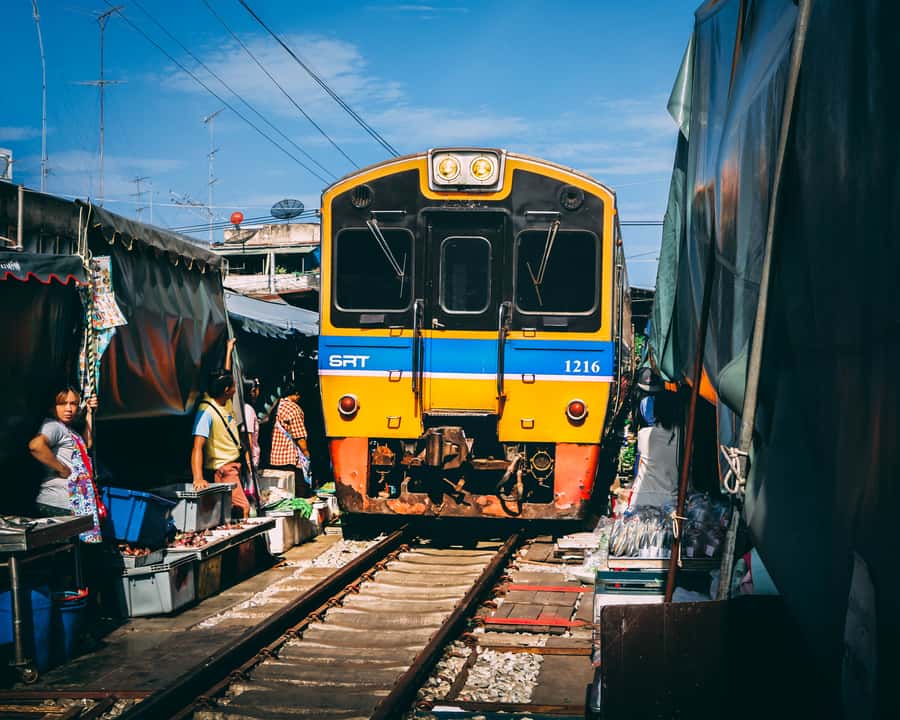
- Old train, real seats: You’ll ride an older third-class style train with wooden seating, not a shiny tourist carriage.
- The market clears on cue: A sharp siren signals shoppers to move back and stallholders to pull everything away.
- A short trip that feels like two worlds: Fishing village life in Mahachai plus the seafood market spectacle at Maeklong.
- Longtail boat time is part of the story: You’ll spend meaningful time on the water between stops.
- Time is tight in Mahachai: Expect a quicker stop there compared to the Maeklong experience.
- Ben-level guiding can make a difference: Local knowledge turns photos into context.
Old Third-Class Train Through Rice Fields: The Start That Sets the Tone
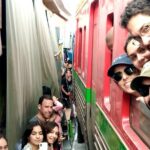
This tour’s magic starts before the first market. You leave Bangkok with a guide, then get to Wong Wiang Yai Train Station and board a third-class train. Think wooden seats, an older feel, and that slightly bumpy rhythm that makes you pay attention. The goal isn’t luxury; it’s atmosphere.
Once the train is rolling, you’ll see paddy fields and ordinary Thai neighborhoods sliding past. This is the part many people don’t expect to love as much as they do. The scenery isn’t staged for photos. It’s simply daily life from the window of a working train. You can watch how the countryside stretches, how homes sit close to fields, and how the pace changes once you’re out of the Bangkok bubble.
What I like about this first stretch is that it gives you a foundation for what comes later. When you reach the market rail area, you understand that this isn’t a theme park. Trains and local trade are part of the same system.
One consideration: the day is long. Even though the train ride is a highlight, you’ll still be transitioning by van and boat afterward, so plan for a full-day effort.
You can also read our reviews of more shopping tours in Bangkok
Arriving in Mahachai: Fishing Community Energy Without the Lecture
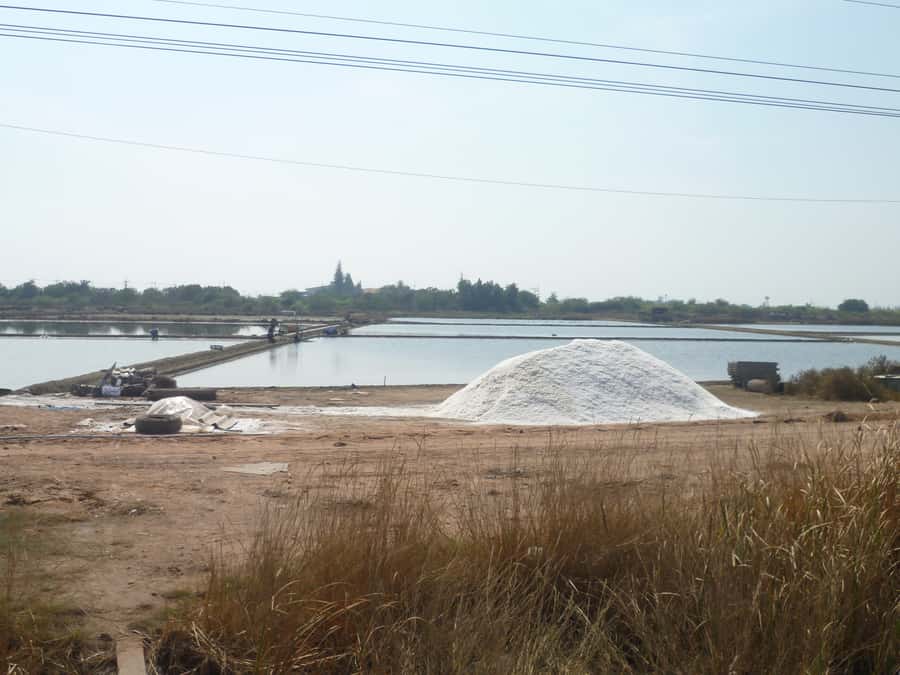
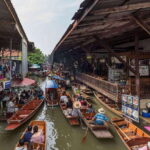
Mahachai is where the day turns from “countryside ride” into “people and livelihood.” After arriving, you take a boat trip to a fishing community. This is an excellent swap in perspective. Instead of land-based views, you get canals and waterways that feel like they’re built for fishing work.
After the boat segment, you’ll hop onto local transport like a tuk-tuk or rickshaw for getting around the community area. The point isn’t sightseeing in the usual sense. It’s to experience how people actually move through the area day-to-day.
Lunch often lands here or shortly after, depending on timing, but the sequence you should expect is clear: boat first, then local transport, then food, then another water-and-train chain toward Maeklong.
A balanced note: Mahachai’s time can feel short. On this kind of structured day, you might get just enough to get a feel for the community and see key spots, but not enough to wander deeply. If you’re the type who wants slow travel, you’ll probably prefer to spend a separate day in the area.
Food Stop Reality Check: Local Lunch Is Part of the Value
Lunch on this tour is included, which matters because it’s one less cost and one less decision during a busy day. Also, this is one of the parts where good guiding really shows. I’ve heard that guides like Ben choose places where the food is genuinely strong, not just convenient.
So what can you expect? A local restaurant meal in the Samut Songkhram area, served as a proper break between transport legs. You’ll likely be hungry after train and boat time, and the lunch stop is timed to reset you before Maeklong takes over your attention.
If you’re picky about food, this isn’t described as a specialized menu tour. It’s more about eating where locals eat in the region. Bring your usual travel strategies: choose familiar items if you need to, and drink plenty of water. The tour provides bottled water, which helps on a hot day.
Second Longtail Boat Segment: The Water Transfer That Builds Anticipation
Between Mahachai and Maeklong, you’ll board another boat, bringing you to Baan Leam. Then you transition again to train for the Maeklong Railway Market experience.
This water segment does two things. First, it’s a scenic break from land and roads. Second, it acts like a countdown to the big moment: the railway market.
One thing to know honestly: people have said the time on the river could be shorter. That doesn’t mean it’s bad, but it does mean your patience gets tested on a day that already has multiple modes of transport. If you like boats and canal scenery, you’ll probably settle in. If you prefer moving fast, keep your own rhythm with music/podcasts, water, and small snack breaks if allowed.
In practical terms, bring a light layer if you get cooler on the ride. Heat can swing after wind hits you.
Entering the Mae Klong Railway Market: The Siren Moment
This is the main event, and it’s unlike most markets. The Maeklong Railway Market is built directly along the train line, so when a train approaches, the market responds like it’s trained for it.
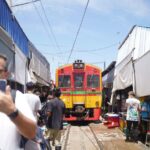
When you reach the market, you’ll see locals buying and selling fresh seafood and other goods. Then the siren hits. That piercing signal means shoppers disappear quickly, and stallholders whip their produce away and clear the aisle. Watching vendors hold onto poles that support their awnings while everything makes room for the train is where your brain finally clicks.
Here’s the most “only-happens-here” detail: the train travels at about 15 mph and passes so closely that it feels like it almost touches the fruits and everything else on the stalls. It’s not a photo trick. It’s a real, physical rearranging of a functioning market around a train line.
If you’re planning your viewing style:
- Stand where you can watch both the stalls and the train approach.
- Don’t rush forward at the last second. Let the rhythm of the market cue you.
- Keep your phone ready during the siren moment, but don’t block people’s view.
Also, watch the timing. The siren and the clearing action happen in seconds, so you’ll want to be mentally present when it sounds rather than trying to finish a conversation or pick out the perfect shot.
A few more Bangkok tours and experiences worth a look

The Pace and Timing: Why This Feels Like a Full Day, Not a Half Trip
This is an 8-hour experience, and it’s built like a chain: Bangkok pick-up, van ride, train rides, boat rides, tuk-tuk/rickshaw local movement, lunch, then the second train and market spectacle, and back to Bangkok around 5:00 PM.
That timing matters because you’re stacking three major modes of transport:
- third-class train
- longtail boat rides
- local ground transport (tuk-tuk/rickshaw) in the community area
You’ll also be outdoors for parts of the day, including at least one open-market rail segment. It’s a lot of time in the sun, and a lot of time looking at food and goods where you’ll naturally want to move around.
Practical advice that helps: wear comfortable shoes with grip, and bring something to protect your skin from sun. A hat works. Water helps even if you’re not thirsty, because you’ll be walking and watching constantly.
Price and Value: Why $189 Can Make Sense for What You Get
At $189 per person, this isn’t a budget outing. But it’s also not just a market ticket with a guide slapped on. You’re buying a day’s worth of included parts that add up quickly if you price them separately:
- an English-speaking guide
- transport by private air-conditioned car or public transport tickets
- train tickets
- boat rides
- lunch
- bottled water
- local transport back to Bangkok
So the value question becomes: are you comfortable paying to have the whole day stitched together for you? If you want to go, see, and return without figuring out train schedules, boat connections, and market timing, that $189 becomes more reasonable.
Where the price can feel less worth it is if you’re hoping for lots of free roaming time. Mahachai can be quick, and the river segment is long enough that some people wish it were shorter. If you want “slow and linger,” you might prefer splitting your interests across two separate outings.
Who This Tour Fits Best
This is a great fit if you:
- like trains and want the older, practical feel of third-class travel
- want a hands-on look at how markets function around a real rail line
- enjoy seeing how fishing communities work, not just how big a market is
- want an English guide to translate what you’re seeing (and good local context matters)
It’s less ideal if you:
- hate busy schedules and moving between modes of transport
- need a lot of unstructured time at each stop
- dislike boat time and prefer land-based travel only
If you’re traveling with family, you’ll want to judge your kids’ patience for schedule and heat. Adults who enjoy street scenes and working life will usually have the strongest day.
Should You Book the Mahachai & Maeklong Railway Market Tour?
If you want one iconic day trip that shows you how transport and local life overlap, I think this is a smart booking. The Maeklong Railway Market moment is the main reason, and the earlier parts help you understand the bigger picture: trains aren’t a side attraction here. They’re part of commerce.
I’d book it if you’re okay with a full day and you’re excited to watch that siren-and-clear routine up close. I’d skip it or adjust expectations if you’re hoping for deep time in Mahachai or a shorter river segment.
Bottom line: for $189, you’re paying for a guided, multi-transport day where the most memorable scene happens because the market and train truly share the same space.
FAQ
How long is the Mahachai & Maeklong tour from Bangkok?
The tour duration is 8 hours.
What time do I return to Bangkok?
You should arrive back to Bangkok at around 5:00 PM.
Is hotel pickup included?
Yes, pickup from your hotel in Bangkok is included.
What transport do we use during the day?
You ride a third-class train with wooden seats, take longtail boat rides, and use local transport such as a tuk-tuk or rickshaw in the fishing community area.
Do we visit both Mahachai and the Mae Klong Railway Market?
Yes. You go to Mahachai first, then continue to Maeklong to visit the railway seafood market.
Is lunch included?
Yes, lunch is included.
Is the guide English-speaking?
Yes, the tour includes an English-speaking guide.
What happens at Mae Klong Railway Market when the train arrives?
A piercing siren signals shoppers to clear the area and stallholders to move their goods and make space for the train as it passes very close to the stalls.