REVIEW · CHIANG MAI
From Chiang Mai: Chiang Mai Elephant Care Morning Program
Book on GetYourGuide →Operated by CHIANGMAI ELEPHANT CARE_ · Bookable on GetYourGuide
Elephants, medicine balls, and river baths in five hours. I love the hands-on elephant care and the chance to make an herbal medicine ball up close, not from behind a fence. One thing to plan for: a towel isn’t included, so you’ll want to bring something if you don’t want to deal with wet-outfit discomfort later.
Pickup is from your Chiang Mai hotel lobby, then you ride out to the Maeteang area for about 75 minutes. Once you arrive, you change into provided uniforms, get an intro briefing on safe, humane interaction, and then the morning becomes very practical and very hands-on.
After a guided time with the elephants—feeding, observing, making the medicine ball, and doing activities in their space—you’ll finish with a river bath, then shower, change clothes, and eat a homemade lunch with drinks and fruit. At $54 for a half-day, it feels like good value because the basics are covered: guide, elephant food, uniform, insurance, and the meal.
In This Review
- Quick hits you’ll feel the moment you arrive
- The 5-hour morning schedule: what to plan around in Chiang Mai
- Maeteang camp arrival: uniforms and a safety-first intro
- Feeding and petting: up close, with real structure
- The herbal medicine ball: a hands-on care moment
- Walking, watching, and learning what elephants do when nobody’s rushing
- River bathing and brushing: the wet finale that’s actually about care
- Lunch after the elephants: homemade, included, and easy to enjoy
- Price and value: why $54 can feel fair here
- Who this is best for (and who should think twice)
- Final call: should you book this Chiang Mai elephant care morning?
- FAQ
- How long is the Chiang Mai Elephant Care morning program?
- Where do you get picked up and dropped off?
- How far is the drive to the elephant camp area?
- What activities are included with the elephants?
- Is lunch included?
- Do you provide uniforms?
- Is an English-speaking guide provided?
- What should I bring with me?
- Is a towel included?
- What are the cancellation and payment options?
Quick hits you’ll feel the moment you arrive
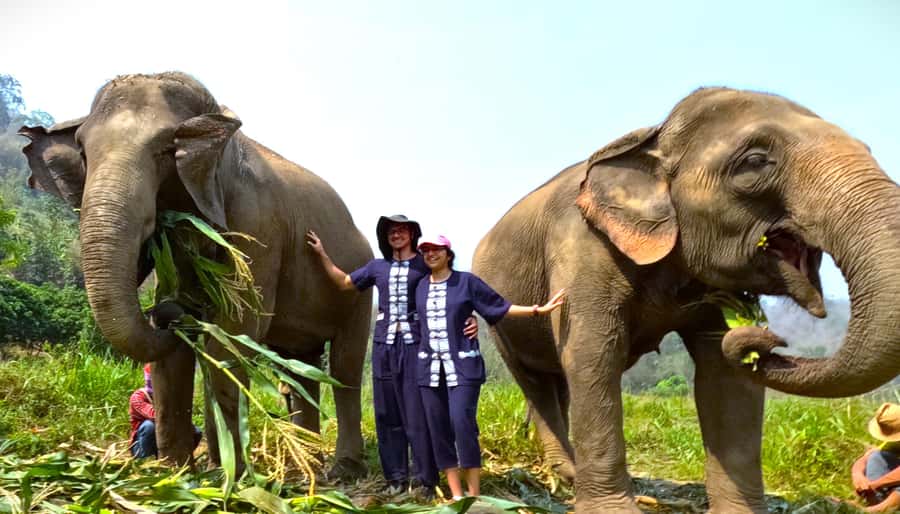
- You get guided, safe interaction before you touch anything—this is not a free-for-all.
- Herbal medicine balls are a standout activity that’s more than just feeding time.
- A real river bath and brushing happens as part of the routine, with you involved.
- Small-group energy makes it easier to ask questions and slow down.
- English-speaking guides like Ford, Tang, and Thong have a knack for explaining elephant behavior and Thai culture.
- Homemade lunch is included after the wet, muddy part of the day.
The 5-hour morning schedule: what to plan around in Chiang Mai
This is a morning program with hotel pickup and drop-off, and the whole thing runs about five hours. Expect a drive out to the Maeteang area of roughly 75 minutes (about 1.5 hours), plus the time in the camp. That means you’ll want to start early and keep your afternoon open—you’ll be back in Chiang Mai after lunch.
Because you’re outdoors most of the day, pack for comfort and heat. The tour asks you to bring a hat, insect repellent, and outdoor clothing. I’d treat this like a day of walking and getting splashed: light layers you can rinse off, shoes that handle uneven ground, and nothing you’ll be devastated to ruin.
One practical note before you go: a towel is not included. Your clothes will likely get damp during the river bath and brushing. Even if you’re provided a shower afterward, bringing a small towel or quick-dry towel can make the final stretch much more pleasant.
A few more Chiang Mai tours and experiences worth a look



Maeteang camp arrival: uniforms and a safety-first intro
When you arrive at the elephant camp area, you’ll change into the provided uniforms before doing anything with the elephants. That’s a small thing, but it helps you feel like the program is organized, not improvised.
Next comes an introductory briefing. The whole point is clear: you’re being taught how to safely and humanely interact with the elephants. The guide leads this, and you should treat it as essential info—not just a formality—because your hands-on time depends on doing things the right way.
In past groups, guides such as Ford, Tang, and Thong have been praised for their calm, caring approach and for answering questions in good English. Some guides also add cultural context, including Thai culture and even the Karen people, which makes the morning feel more grounded than just an animal encounter.
Feeding and petting: up close, with real structure
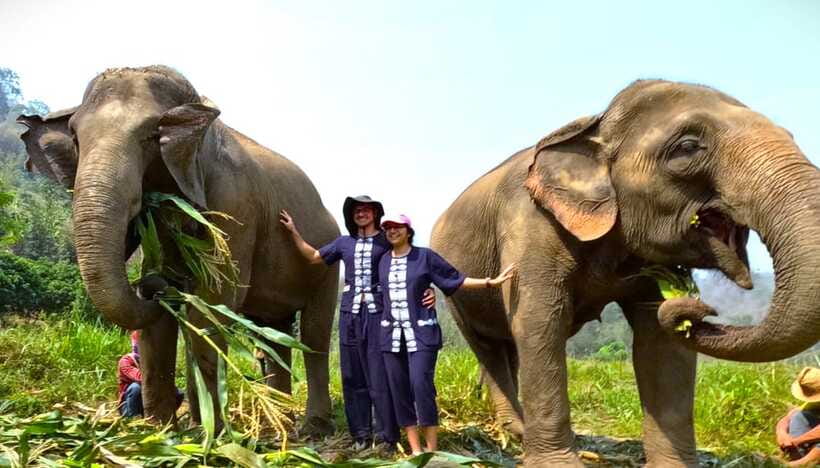
The heart of this experience is time spent directly with the elephants: feeding, petting, and learning how they behave. You’re not hovering for a quick selfie; you’re in the routine of care.
You’ll get food for the elephants, and you’ll be guided on how to offer it. Several participants noted that the elephants seemed relaxed and genuinely cared for, including small behavior details like ears and tails moving naturally during the interaction. That matters because a calm elephant usually means the day is going the way it should: slower, more respectful, and less stressful for the animals.
Also, the guide is there for the “what am I seeing?” part. You’ll get fascinating facts about elephant behavior—how they move, how they respond, and what to pay attention to while you’re close. If you’re an animal person, this guided layer can turn the visit from a moment into an education.
The herbal medicine ball: a hands-on care moment
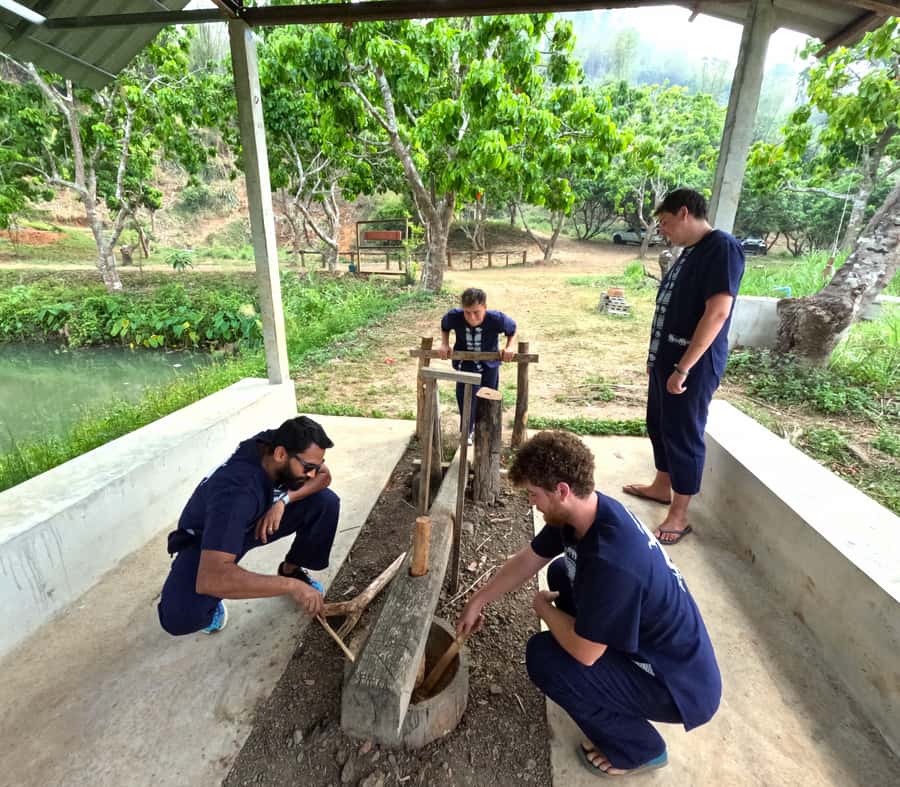
Making the medicine ball is one of the most memorable parts. You’re creating a supplemental herbal treat designed to help keep elephants healthy, and you do it as part of the care routine rather than as a standalone craft.
In practice, it gives you something to do with purpose, not just watch. You get to be part of preparing food, which makes the encounter feel more like assisting with well-being than just feeding.
It’s also a great activity if you’re worried that elephant days are mostly waiting. Here, you’re active: working with the guide, learning what you’re making, and then seeing it through as the elephants interact with the treat.
Walking, watching, and learning what elephants do when nobody’s rushing
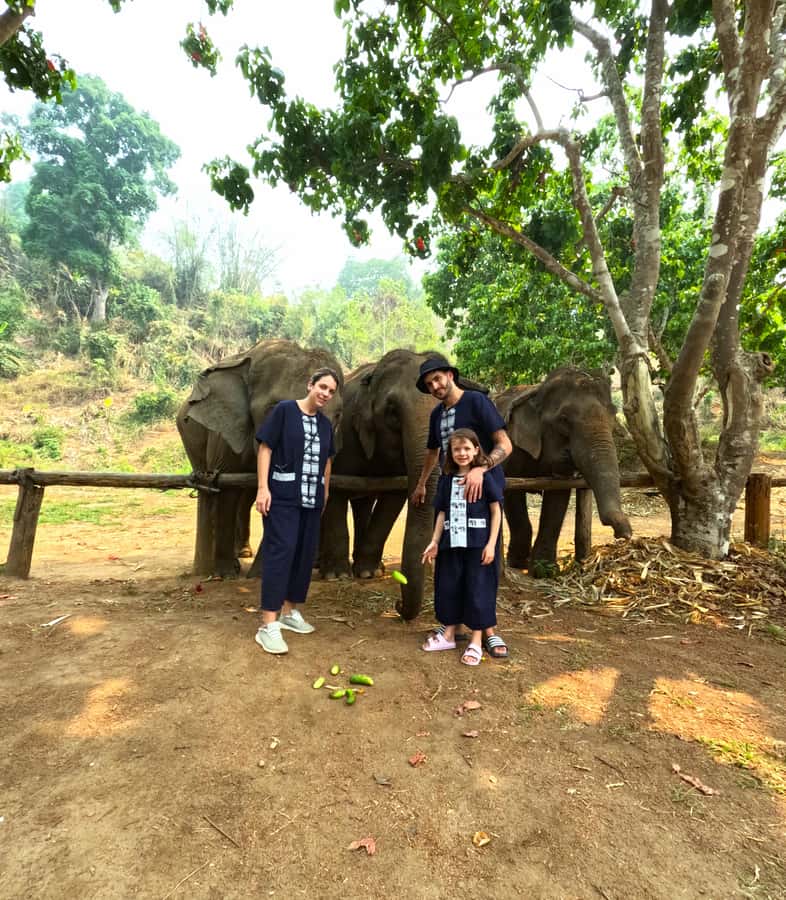
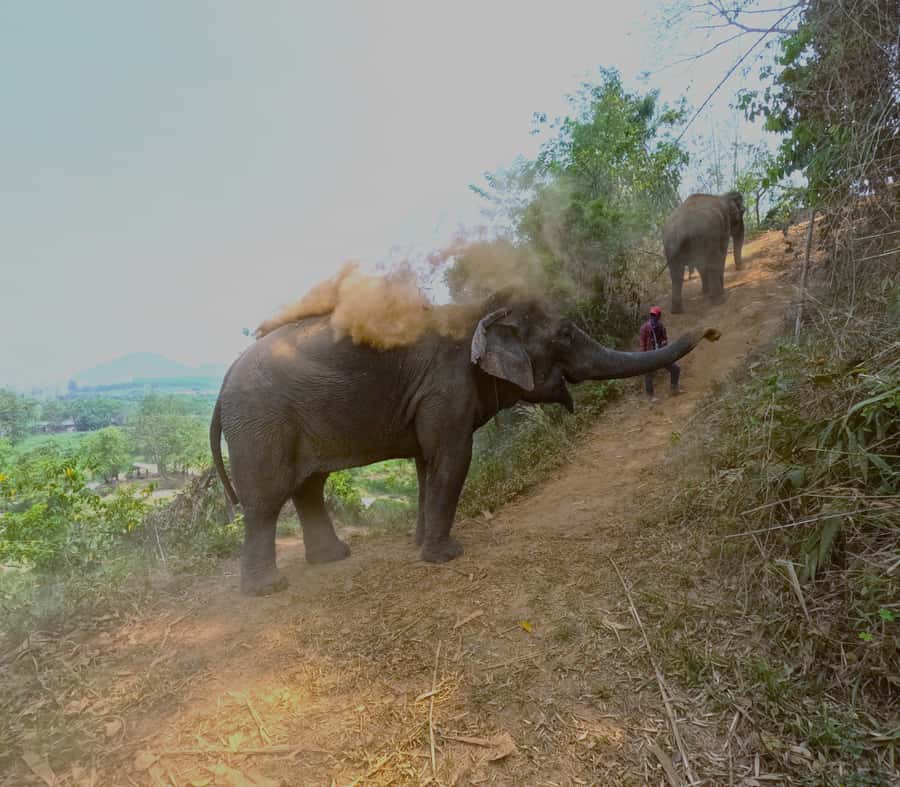
After briefing and feeding, the program continues with more time together. You can expect guided observation and activities such as walks with the elephants. The guides focus on reading behavior and understanding what’s normal for them.
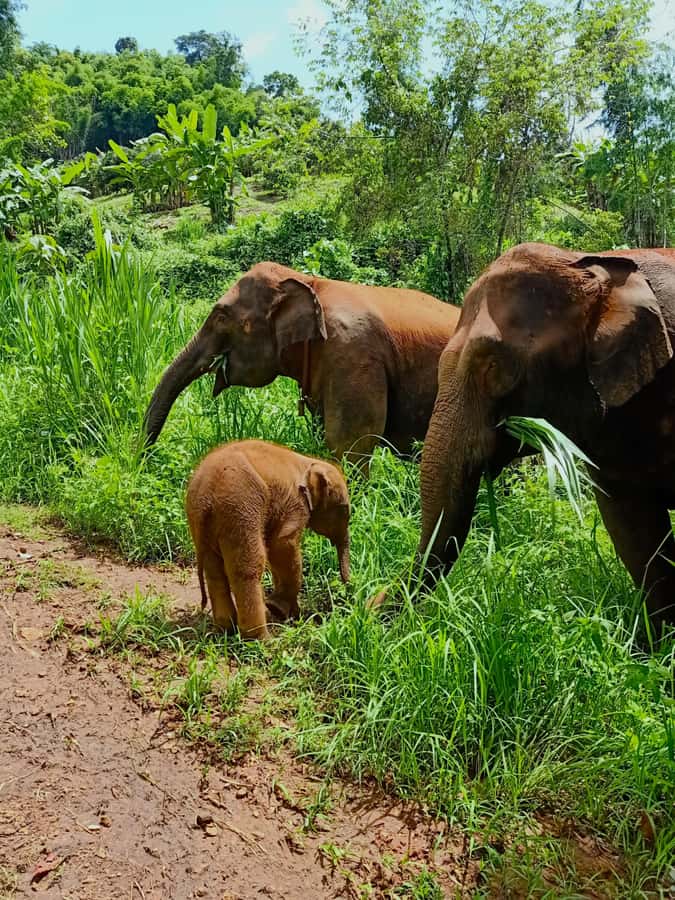
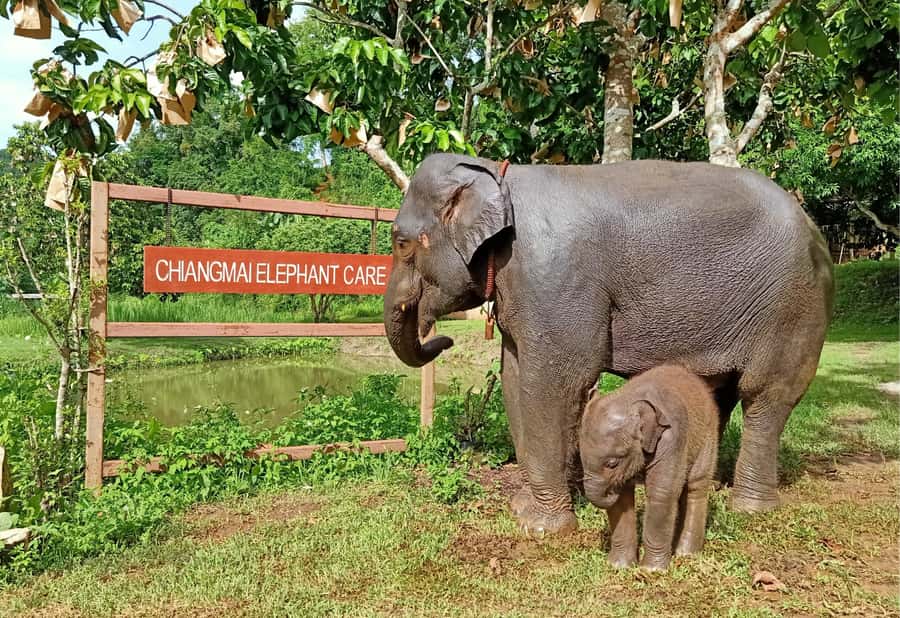
One nice detail: some groups have even encountered a very playful young elephant named Lucky, which turned “the educational part” into something unexpectedly fun. Even if you don’t get a baby in your group, the structure still works because the guide keeps the experience moving without turning it into a forced show.
This is also where the time with the elephants feels most valuable. The schedule includes a guided period on site that totals a few hours, which means you’re not only learning one thing. You’ll see multiple sides of the day: calm feeding moments, playful behavior, and how the elephants respond to routine.




River bathing and brushing: the wet finale that’s actually about care
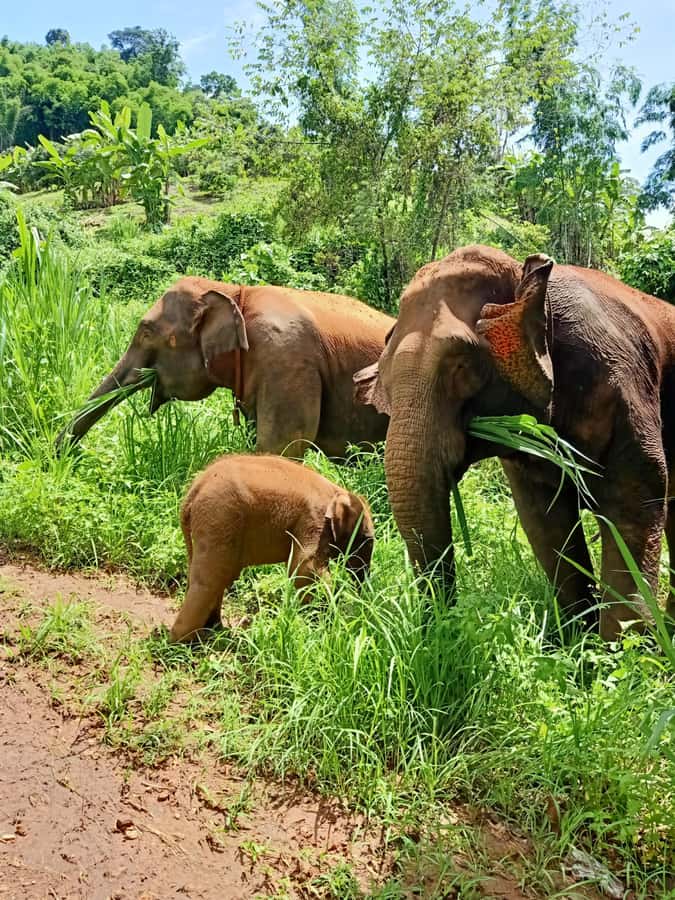
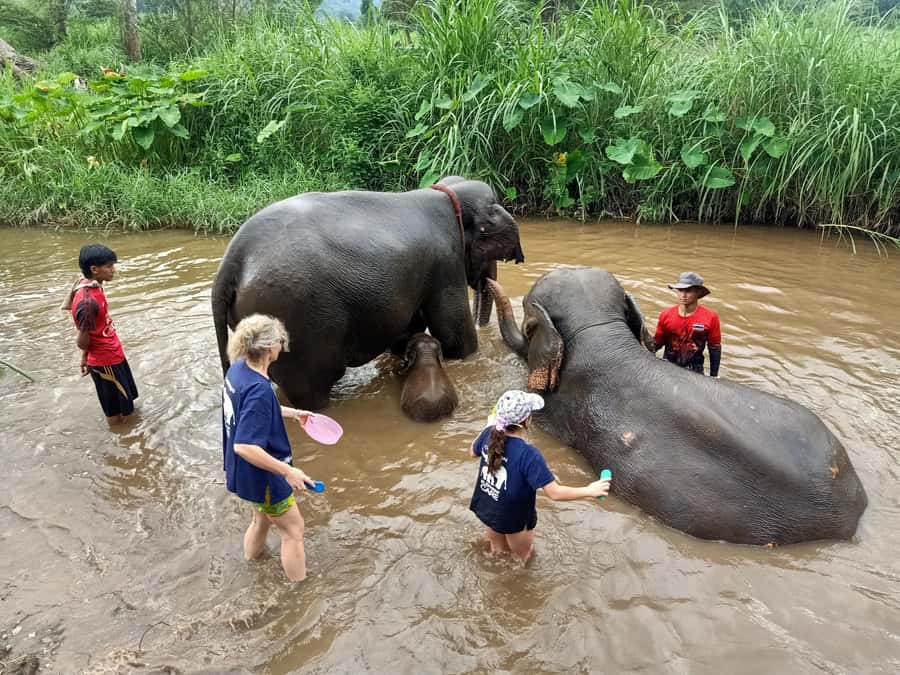
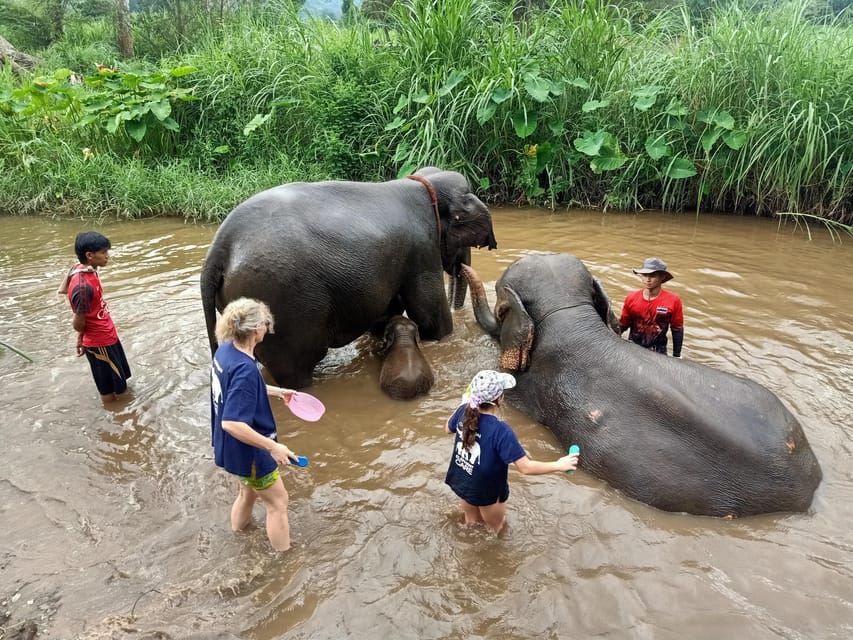
The morning ends with a river bath. You’ll bathe and brush the elephants in the water, and the program includes time afterward for you to shower and change your clothes.
This is where you’ll feel the program’s tone—because the big ethical concern people have about elephant encounters is whether elephants are pressured into interactions. In descriptions from past participants, one emphasized that the sanctuary approach does not force tourists into bathing or put pressure on the elephants. That aligns with what you want to look for in any ethical program: consent and calm for the animals, with humans acting as helpers rather than handlers.
Still, prepare realistically. You’re going to get wet. Bring clothes you’re okay with after river water contact, and make sure your insect repellent and comfort setup don’t disappear the moment you step into the splash zone.
And remember: no towel is included. If you’re the type who likes to be comfortable at the end of a wet activity, pack a small one.
Lunch after the elephants: homemade, included, and easy to enjoy
Once the bathing is done, you’ll have a home-cooked lunch. Drinks and fruit are included too. It’s a welcome reset after being outdoors and getting involved in a messy, real-life care activity.
Several participants have mentioned vegetarian pad Thai specifically as part of the meal, followed by fruit. Even if the exact menu varies slightly, the promise here is consistent: a real meal, not a snack box, and you’ll eat as part of the flow of the camp day.
If you like taking it slow after an active morning, this part is perfect. You can take a breather, hydrate, and then head back to Chiang Mai.
Price and value: why $54 can feel fair here
At $54 per person for about five hours total, this isn’t a budget-only option, but it also isn’t a “pay extra for nothing” setup. Here’s what’s folded into the price:
- hotel pickup and drop-off
- the elephant care entry ticket
- an English-speaking tour guide
- food for the elephants
- a uniform for activities
- day tour insurance
- homemade lunch, drinks, and fruit
What you don’t get is small but important: no towel. If you bring one, it’s a non-issue.
For me, the value comes from the balance: you spend real time with the elephants doing multiple types of care activities, and you’re not paying just to watch from far away. You’re also covered with insurance and an English guide, which makes the whole thing easier to enjoy without missing context.
Who this is best for (and who should think twice)
This program is a strong fit if you want a hands-on morning focused on care: feeding, learning, making the herbal medicine ball, and bathing the elephants in the river. It’s also a good choice if you care about how the elephants are treated and you value guides who explain the humane approach in plain language.
It’s less ideal if you strongly dislike getting wet or you hate the idea of changing out of damp clothes and dealing with outdoor conditions. Also, if you forget basic supplies, this is not the kind of tour where you can improvise easily—bring the requested items and consider packing that towel.
If you’re a solo traveler, a couple, or you’re traveling with friends, you’ll likely appreciate the structured flow and the time to ask questions, especially with guides who have shown up in past groups with names like Ford, Tang, and Thong.
Final call: should you book this Chiang Mai elephant care morning?
I’d book it if you want an elephant day that feels like care work and education, not a rushed photo stop. The day is built around a few meaningful activities—feeding, medicine ball making, and a river bath—and it ends with included lunch, so you’re not left scrambling for food after getting wet and muddy.
I wouldn’t book it if you’re looking for dry, low-contact sightseeing, because the program includes real participation in the river bathing segment. Also, treat the towel situation as your responsibility, since it isn’t provided.
If you want, tell me your travel dates and whether you’re coming from a hotel in the city center. I can suggest what to wear for comfort and how to plan the rest of your Chiang Mai day after the five-hour morning.
FAQ
How long is the Chiang Mai Elephant Care morning program?
The duration is 5 hours.
Where do you get picked up and dropped off?
You’ll be picked up from your hotel lobby in Chiang Mai and returned there after the program.
How far is the drive to the elephant camp area?
It takes about 75 minutes to reach the camp area, and about 75 minutes back to Chiang Mai.
What activities are included with the elephants?
You’ll spend time feeding and interacting with the elephants, make a supplemental herbal medicine ball, observe their behavior, and bathe and brush them in the river.
Is lunch included?
Yes. The program includes a homemade lunch, drinks, and fruit.
Do you provide uniforms?
Yes, a uniform for the activities is included.
Is an English-speaking guide provided?
Yes, the guide is English-speaking.
What should I bring with me?
You should bring a hat, insect repellent, and outdoor clothing.
Is a towel included?
No, a towel is not included.
What are the cancellation and payment options?
You can cancel up to 24 hours in advance for a full refund, and you can reserve now and pay later.