REVIEW · CHIANG RAI
Day Trip to Chiang Rai & White Temple from Chiangrai
Book on Viator →Operated by Bravo Indochina Tours · Bookable on Viator
Four temples. One tight schedule.
If you like Buddhist art that takes chances, this Chiang Rai day trip packs the must-sees into about 4 hours with a guide and private car. I like that the route jumps through different artistic moods, from the calm memorial feel at Wat Phra Kaew to the eerie, sculptural mood of the Black House. You also get an easy setup: pickup is offered, and admissions plus bottled water are included.
My other favorite part is the way you’re not just looking at buildings—you’re learning what each one is trying to say. At Wat Rong Seur Ten (Blue Temple), the design is credited to the local Chiang Rai artist, and the style links to the earlier White Temple team. At Wat Rong Khun (White Temple), you’ll spot reflective glass fragments that make the place feel almost unreal from a distance.
One thing to think about: this is a weather-dependent route and there’s no lunch included, so plan on snacks and keep your expectations tuned to a short, structured day.
In This Review
- Quick hits before you go
- Why this Chiang Rai temple run makes sense in 4 hours
- Wat Phra Kaew and its jade Buddha memorial
- Wat Rong Seur Ten (Blue Temple): Buddhist art with a cool attitude
- Baan Dam Museum Black House: horns, bones, skins, and black-wood pavilions
- Wat Rong Khun (White Temple): reflective glass and a bright exterior
- Price and value: what $111.80 covers (and what it doesn’t)
- Timing, weather, and how to plan your day in Chiang Rai
- Who should book this day trip (and who might skip it)
- Should you book this Chiang Rai art-temple day trip?
- FAQ
- How long is the Chiang Rai day trip?
- What does the tour price include?
- Is lunch included?
- What stops are visited?
- Is pickup available?
- Is this a private tour?
- What if the weather is bad?
- Can I cancel for a full refund?
Quick hits before you go
- Emerald Buddha Temple history: Wat Phra Kaew’s story is tied to the Emerald Buddha, replaced by a jade Buddha made for the Princess Mother’s 90th birthday.
- Blue Temple’s authoring link: Wat Rong Seur Ten is designed by the Chiang Rai artist who previously worked with the White Temple team.
- Baan Dam Museum scale: Black House is part of a museum spread across 32 buildings made in mostly Lanna-style pavilions of black wood.
- Black House materials: Expect eerie sculptures linked to horns and bones, reptile skins, old boats, and other unusual materials.
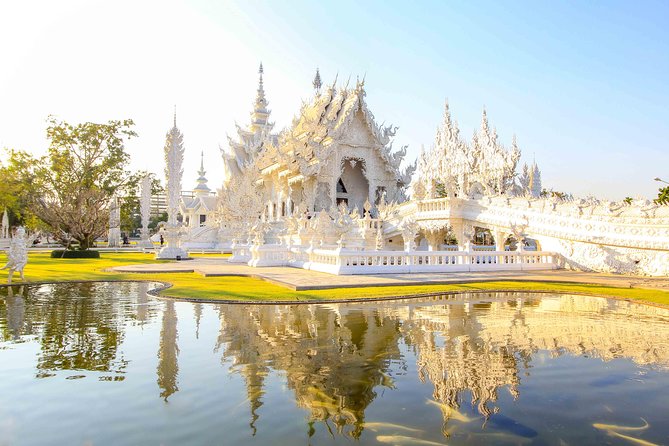
- White Temple’s sparkle: Wat Rong Khun is famous for a white exterior decorated with reflective glass fragments you can see from afar.
Why this Chiang Rai temple run makes sense in 4 hours
This trip is built for efficiency. You’re moving between four major stops without having to plan transport on your own. It’s also private in the practical sense: it’s only your group, which usually means less waiting around than a bus tour.
At $111.80 per person, the value is really about what’s included. You get private transportation, a professional guide, all admission fees, and bottled water. That matters because Chiang Rai’s big sights can add up once you start paying for entry one by one, plus you’re paying for the time your guide spends keeping everything flowing.
The route also tells a story. You start with a temple tied to a royal Buddha memorial, then you shift into two very different art temples (blue and white), and end with the Black House’s darker, more experimental museum world. If you’re the type who likes seeing how one region can produce wildly different styles, you’ll probably enjoy the progression.
One note: since the schedule is tight, you won’t be lingering for long. You’ll get a solid look and enough context to appreciate what you’re seeing, but it’s still a “see and learn” day, not a slow wander.
A few more Chiang Rai tours and experiences worth a look
Wat Phra Kaew and its jade Buddha memorial
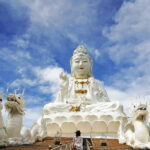
Your first stop is Wat Phra Kaew, often remembered for its connection to the Emerald Buddha image. The important twist here is that the Emerald Buddha image was once enshrined there, but it’s now replaced with a jade Buddha.
The jade Buddha is not random. It was made to commemorate the 90th birthday of the late Princess Mother. That makes this stop more than a photo stop. You’re seeing how Thai Buddhist temple space can shift from one major sacred focus to another—while still carrying forward a strong national and royal meaning.
What I’d pay attention to during your hour:
- The way the temple’s identity is framed by this replacement story, not just its architecture.
- The sense of memorial purpose behind the jade Buddha, which helps you understand why the site feels both devotional and formal.
A practical consideration: this is a sacred site, so keep your photos respectful and your time focused. One hour is plenty to get oriented if you go in with the right mindset—look first, then photograph.
Wat Rong Seur Ten (Blue Temple): Buddhist art with a cool attitude
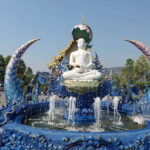
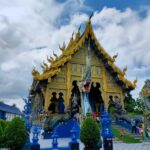
Next up is Wat Rong Seur Ten, also called the Blue Temple. The main temple building is a distinctive blue, and it’s tied to a design philosophy behind Buddhist art, not just color for color’s sake.
The art credit is also part of the interest. It’s designed by the local Chiang Rai artist, and the info here matters: this artist is described as having worked with the White Temple team before. So you’re not just seeing two random attractions—you’re seeing a creative thread connecting them.
During your hour here, it helps to slow your eyes down a bit. Blue Temple tends to reward looking closely at how the structure and design carry meaning. Even if you don’t read every label, you’ll get the main idea quickly: Buddhist art can be expressive and modern, and still rooted in tradition.
Possible drawback? Blue Temple can be visually striking, which sometimes pulls people toward pictures before they absorb context. If you want the most out of this stop, spend the first part of the hour looking at the building as a whole, then circle back for details after you’ve understood the big picture.
Baan Dam Museum Black House: horns, bones, skins, and black-wood pavilions
If there’s one stop that people remember most, it’s the Black House at Baan Dam Museum. This is where the tour’s tone shifts—less temple calm, more eerie, sculptural museum energy.
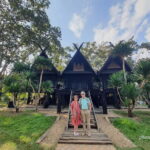
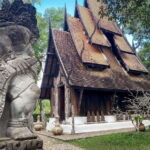
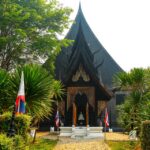
The Black House belongs to the national artist Thawan Dachanee. The museum is known for eerie sculptures made from materials like horns and bones, reptile skins, and other striking items. It also includes traditional African sculptures, old boats, and Lanna-style woodcrafts and art installations.
One reason this stop feels so different: it’s not just one building. The information given is that the art is housed across 32 buildings, most of which are Lanna-style pavilions made from black wood. That means the atmosphere comes from repetition as much as from shock value. You’re moving through a whole world, not just one exhibit.
How I’d approach your hour:
- Look for the logic of the collection. The materials feel strange at first, but you’ll start to see how the artist builds a consistent mood.
- Don’t rush the black-wood pavilions. The environment is part of the effect.
- If you’re into art made from unconventional materials, this is the stop that will click fastest.
The strongest appeal here is exactly the blend people get excited about: something that feels both beautiful and unnerving at the same time. If you like art that challenges your expectations, you’ll probably consider this the highlight.
Wat Rong Khun (White Temple): reflective glass and a bright exterior
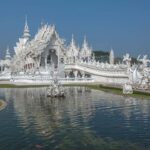
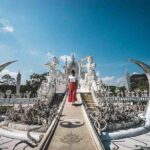
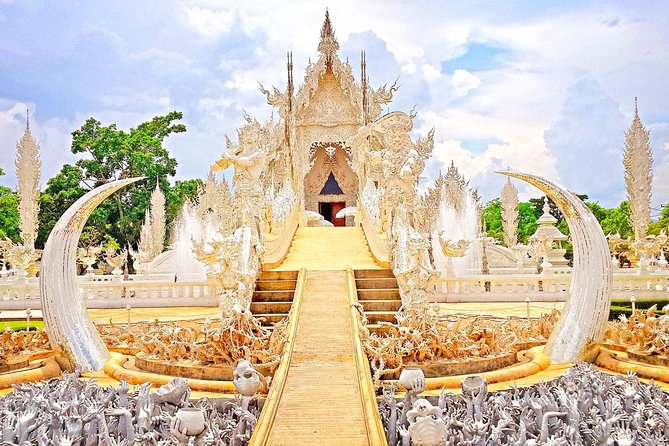
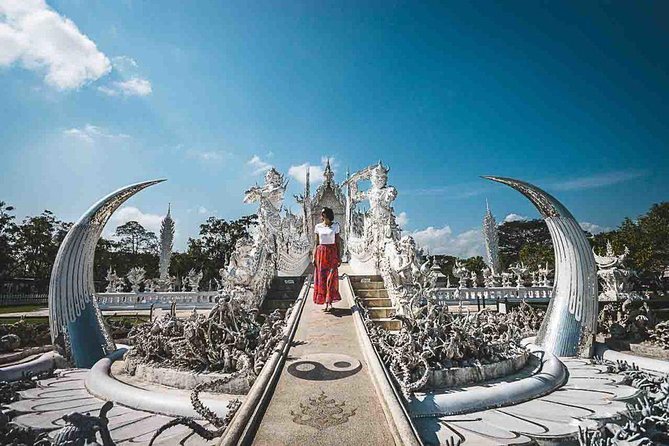
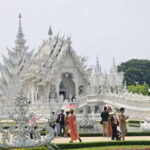
Then the tour finishes at Wat Rong Khun, the White Temple. It’s famous for its distinctive white color, decorated with fragments of reflective glass that can be seen from afar. Even before you get close, you’ll likely spot it because the temple’s surface catches light in a way that feels almost unreal.
If Blue Temple leans cool and dramatic, White Temple leans bright and otherworldly. The experience here is about contrast—how a simple color palette can still create complexity when you add reflective materials and careful design.
In your hour, you’ll get:
- A full view of the main temple building and its white exterior effect.
- Time to notice how the reflective glass changes the look depending on where you stand and how the light hits.
A quick practical tip: bring a phone camera strap or keep a steady grip. Reflective surfaces can tempt you to zoom, but the better results often come from stepping back and letting the whole facade show. This is also one of those places where you’ll want to be mindful of your timing if the group needs to keep moving.


Price and value: what $111.80 covers (and what it doesn’t)
The price is $111.80 per person for a day trip that lasts about 4 hours. It’s not a bargain tour style, but the inclusions matter.
What’s included:
- Private transportation
- Professional guide
- All admission fees
- Bottled water
What’s not included:
- Lunch
So the value equation is simple: you’re paying for convenience plus entry fees plus expert guidance. If you were to try this on your own, you’d likely spend time figuring out routes and ordering tickets while also spending your travel energy on logistics. Here, the guide handles the flow, and you’re paying for that time-saving piece.
Also, there’s pickup offered and mobile ticket delivery, which helps you keep your planning low-stress. Group discounts are mentioned too, which can make it more appealing if you’re traveling with others.
My only caution about value is the “short duration” part. At 4 hours, you’ll cover a lot of ground, but you won’t do deep museum-style wandering. This trip is best if you want highlights with context, not if you’re planning to spend half a day in one building.
Timing, weather, and how to plan your day in Chiang Rai
This experience requires good weather. That’s a big deal because temple days can feel totally different when it’s raining or too hot. The tour notes that if it’s canceled due to poor weather, you’ll be offered a different date or a full refund.
Because there’s no lunch included, I’d plan your day around that gap. You’ll likely appreciate a light meal before you go, plus a small snack you can eat between stops if hunger hits. Bottled water is provided, but you’ll want to keep your own comfort in mind.
For clothing, the data doesn’t spell out dress rules. Still, since you’re visiting Buddhist sites and a museum environment, it’s smart to wear something that’s comfortable for walking and respectful enough for indoor spaces. In Thailand, you’ll typically find expectations for temple decorum, even when specifics aren’t stated for a tour.
Who should book this day trip (and who might skip it)
This tour is private and designed so that only your group participates. That makes it a good fit if you want an organized route without stepping into a large crowd situation.
It also says most travelers can participate. So it works for a broad range of visitors, especially if you’re short on time in Chiang Rai.
Book this trip if:
- You want a fast hits version of Chiang Rai art temples.
- You’re curious about how different artists and philosophies show up in temple design.
- You like the Black House idea: art made from unusual materials and a whole museum atmosphere across many buildings.
You might skip or adjust your expectations if:
- You want long, slow time in one place (this is about coverage in about 4 hours).
- You hate weather-dependent schedules and need very flexible planning.
The overall vibe is arts-first. The temples are the main event, but the guide’s role is what turns them from scenery into something you understand.
Should you book this Chiang Rai art-temple day trip?
If you’re visiting Chiang Rai and you want the headline art and temples without spending your day on planning, I think this is an easy yes. The biggest reason is the combo: private transport + professional guide + admission fees included. For a short 4-hour schedule, that’s the kind of setup that saves time and reduces stress.
My recommendation hinges on your appetite for variety. If you’re excited by contrast—emerald-to-jade memorial context, blue art temple design ideas, the Black House’s horn-and-bone type eerie sculpture world, and the reflective-glass White Temple—then you’ll get a lot out of the route.
If you prefer slow museum time or you’re very sensitive to weather changes, you might want to keep your schedule flexible anyway. But if you’re ready for a tightly run, art-focused day, this tour is a solid way to see the best-known Chiang Rai visual culture in one go.
FAQ
How long is the Chiang Rai day trip?
It’s about 4 hours.
What does the tour price include?
Admission tickets, professional guide, private transportation, and bottled water are included.
Is lunch included?
No, lunch isn’t included.
What stops are visited?
You’ll visit Wat Phra Kaew, Wat Rong Seur Ten (Blue Temple), Baan Dam Museum (Black House), and Wat Rong Khun (White Temple).
Is pickup available?
Yes, pickup is offered.
Is this a private tour?
Yes, it’s private, so only your group participates.
What if the weather is bad?
The experience requires good weather. If it’s canceled due to poor weather, you’ll be offered a different date or a full refund.
Can I cancel for a full refund?
Yes. You can cancel up to 24 hours in advance for a full refund.