REVIEW · CHIANG RAI
Chiang Rai: Jungle Adventure-Group Trekking & Bamboo Cooking
Book on GetYourGuide →Operated by Scorpions Tours Chiang Rai · Bookable on GetYourGuide
Jungle time in Chiang Rai moves fast. This one-day trek strings together hill-tribe village visits, a real bamboo cooking lunch, then a waterfall dip and end-of-day hot-spring soak. I love the way the day mixes active hiking with hands-on food making, and I also like how guides (often Wat and James) keep the mood light while pointing out plants and local life. The main drawback is that the walking is no stroll—think 10–12 km and some slippery, uneven ground.
You start with hotel pickup in downtown Chiang Rai (within 3 km) and an English-speaking licensed crew, then you’re out in northern Thailand’s countryside for about 5 hours of walking. If you can handle moderate hikes and the idea of getting muddy (sometimes literally), you’re going to have a memorable, different day that isn’t centered on temples.
In This Review
- Key Things That Make This Trip Worth Your Day
- From Pa Soert Hot Spring to the Tea Fields: How the Day Flows
- The Hike Itself: 10–12 Km, Real Terrain, Smart Breaks
- Hill-Tribe Villages on the Route: What You’ll Actually See
- Bamboo Cooking Lunch: Tools, Food, and the Hands-On Part
- The Waterfall Dip: When Cold Water Meets Good Views
- Hot Springs at the End: The Best Way to Stop Soreness From Settling
- Price and Value: Is $80 a Fair Deal for All This?
- What to Bring (So You Don’t Spend the Day Miserable)
- Who Should Book This, and Who Should Skip It
- Final Call: Should You Book Chiang Rai Jungle Adventure With Bamboo Cooking?
- FAQ
- What’s the duration of the Chiang Rai jungle trekking and bamboo cooking tour?
- How far will I walk?
- What time is pickup in downtown Chiang Rai?
- What language is the tour guide?
- Is the waterfall swimming part included?
- What’s included in the price?
- What should I bring?
- Can the guide help with dietary preferences?
- Who is this tour not suitable for?
Key Things That Make This Trip Worth Your Day
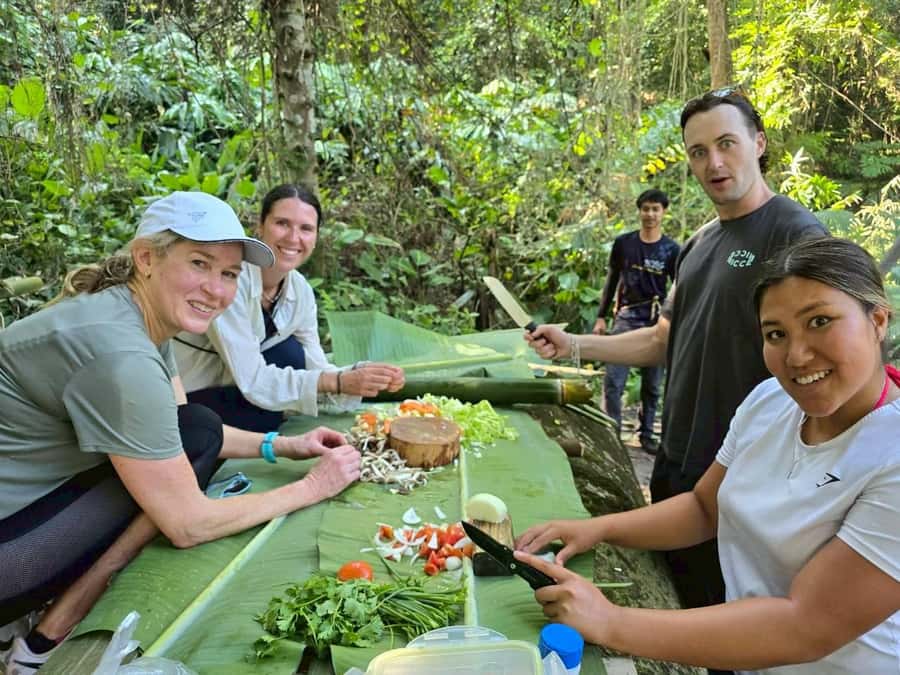
- Bamboo cooking you actually do, not just watch
- Village stops where the guides explain everyday life and local plants
- Waterfall swim built into the route (bring swimwear and a towel)
- Hot-spring soak afterward to reset your legs
- Guides with humor who keep the group moving and laughing
From Pa Soert Hot Spring to the Tea Fields: How the Day Flows
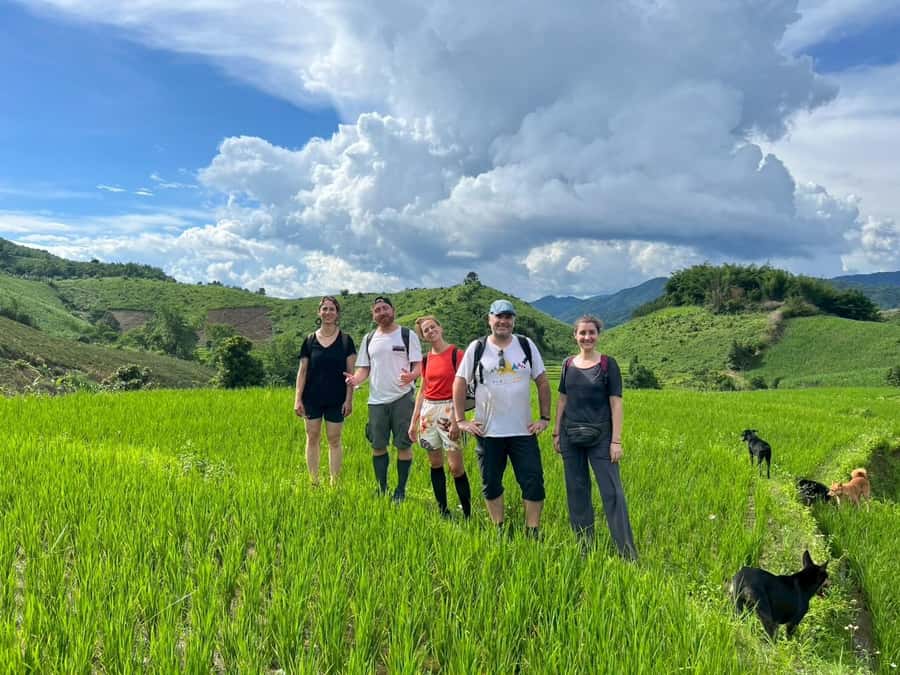
This is a one-day jungle trek built around rhythm: hike, pause, learn, eat, swim, then recover. You’ll cover about 10–12 km in total, and the walking time is roughly 5 hours, with breaks along the way. That break structure matters. It’s what turns a “long” hike into something you can finish without needing a rescue plan every ten minutes.
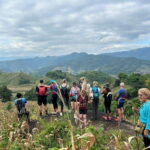
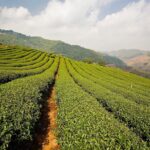
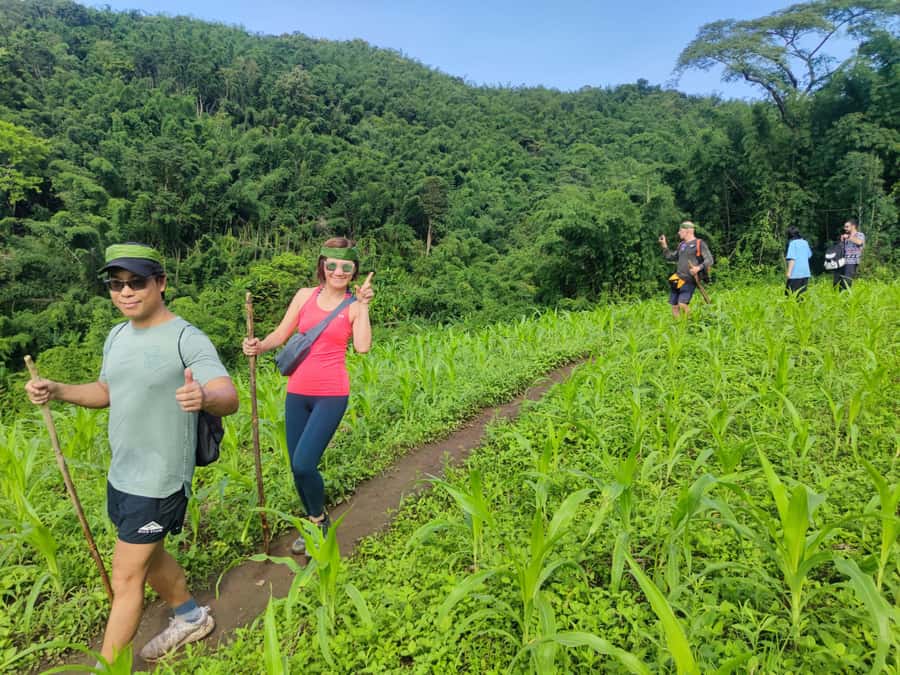
The route typically starts from the Pa Soert Hot Spring area and heads toward tea plantations before moving deeper into bamboo and farming country. Expect a mix of paths: sections that feel manageable, then stretches that get steeper or messier underfoot—especially after rain. The guides pace you, and the group stays together, which is a big plus if you’re not the type who wants to navigate trails solo.
One thing I appreciate is that this isn’t just “walk until lunch.” The food event happens in the middle of the scenery, and the waterfall and hot springs are treated like part of the experience—not random add-ons you have to squeeze in on your own.
You can also read our reviews of more cooking classes in Chiang Rai

The Hike Itself: 10–12 Km, Real Terrain, Smart Breaks
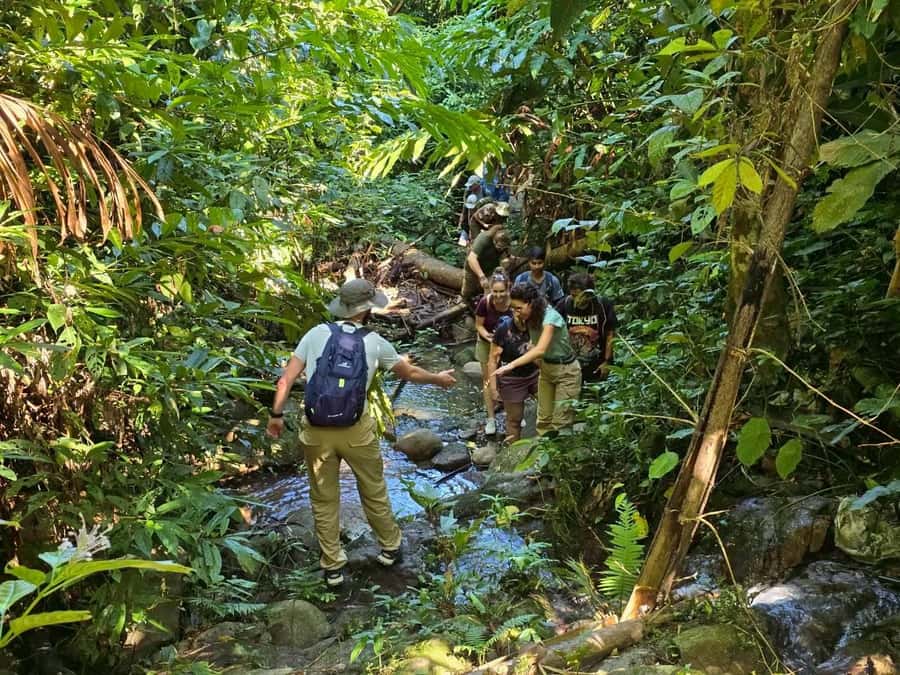
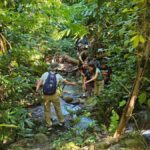
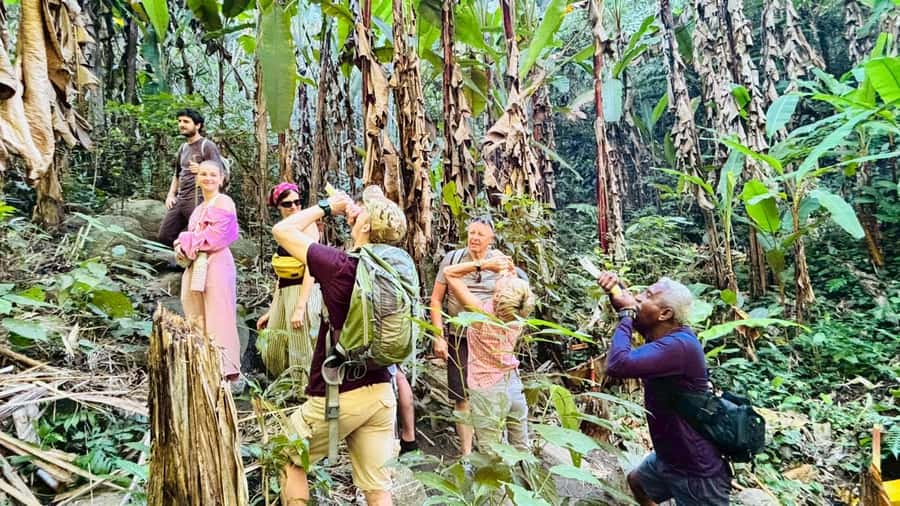
Plan on moderate effort. You’re walking through jungle-adjacent countryside with uneven ground, small river crossings in places, and hills that can feel sharper than you expect when you’re wearing normal sneakers instead of hiking shoes. Several people highlight that parts can be slippery, and that rainy-season traction makes a difference. So if you’re traveling during monsoon months, don’t show up in slick footwear and hope for the best.
A practical way to think about it:
- Bring hiking shoes/sports shoes with grip.
- Wear hiking pants or long protective clothing to reduce scratches and insect bites.
- Expect to slow down a bit for photos, explanations, and the occasional “hold the railing” moment on rough sections.
Hydration is also a real factor. One traveler specifically notes carrying about 2 litres of water. You may not need exactly that much, but you should plan to bring enough to stay ahead of thirst—especially in humidity and sun.
Hill-Tribe Villages on the Route: What You’ll Actually See
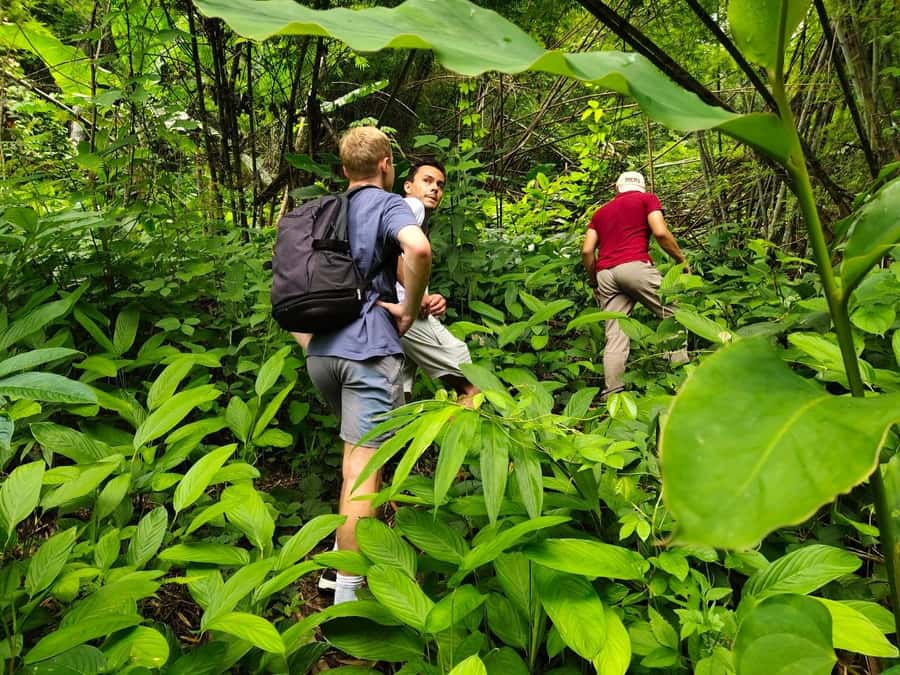
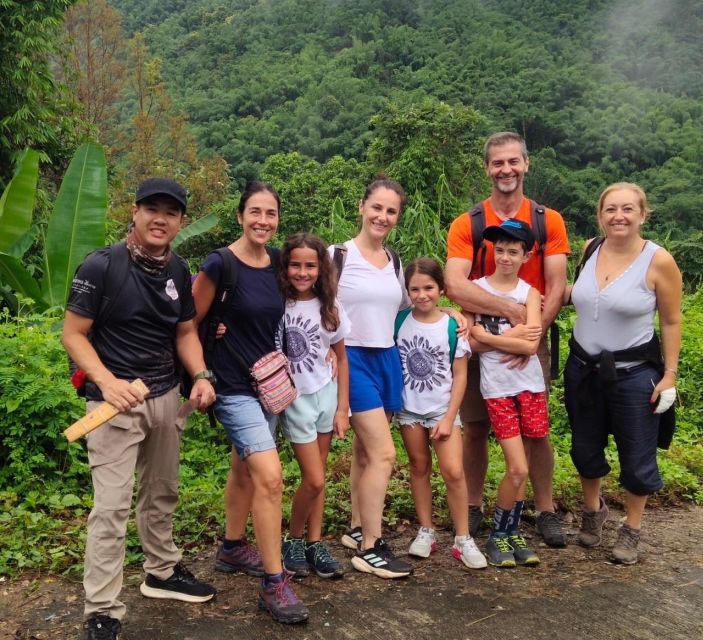
This trek weaves in visits to Lahu and Akha villages, plus a China Village stop. The big value here is context. Instead of treating the countryside like a photo backdrop, the guide explains what you’re seeing—plants used locally, how people live, and how the communities fit into the region.
In the best moments, you’re not just standing at a viewpoint. You’re walking from house to house or path to path, and the guides keep connecting the scenery to real life. Guides like Wat, James, and others associated with the team have a reputation for sharing info in a way that feels casual, funny, and easy to follow, rather than like a lecture.
There’s also a “human” vibe that shows up in the day’s details: pauses for interaction, the feeling that you’ve been welcomed briefly into someone’s world, and small roadside scenes—kids, farm activity, and everyday cooking smells—that make the day feel lived-in.
Bamboo Cooking Lunch: Tools, Food, and the Hands-On Part
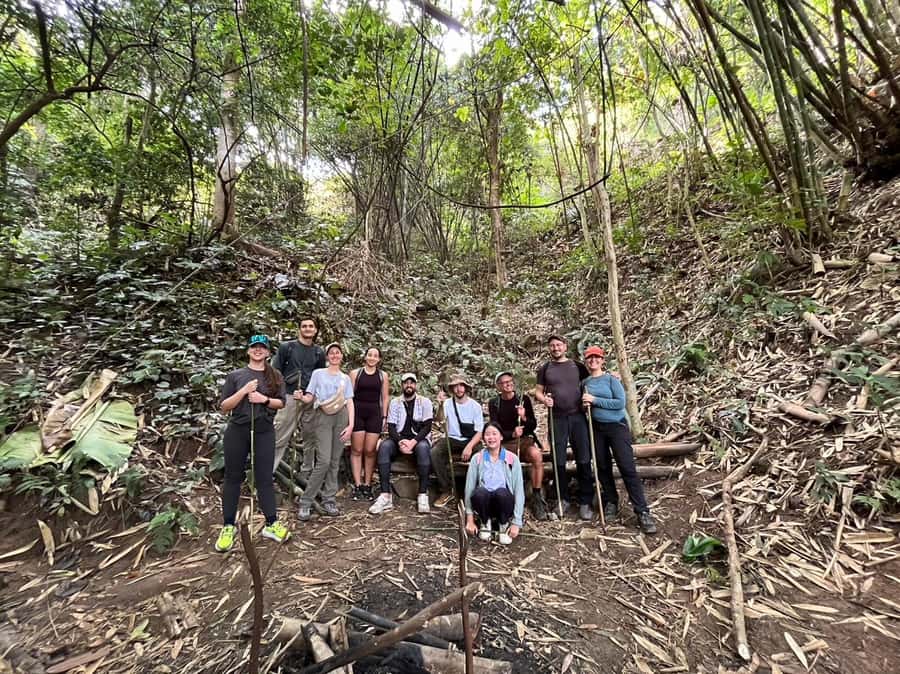
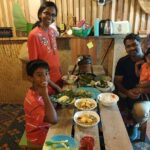
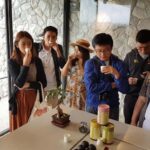
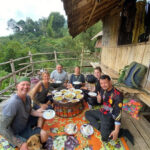
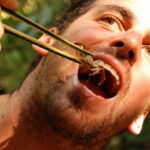
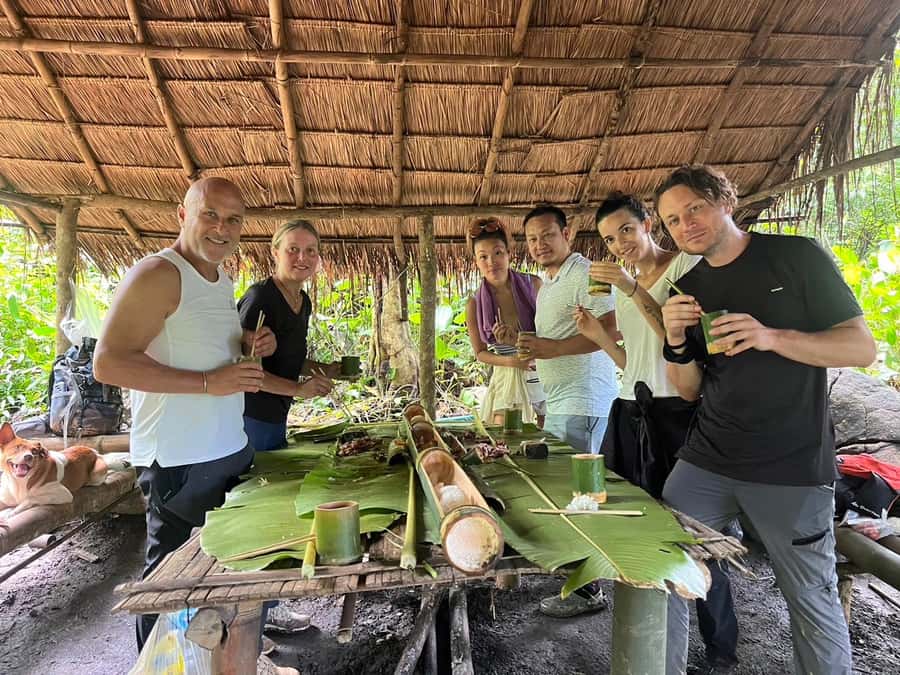
The bamboo cooking segment is one of the standout reasons people pick this tour. It’s not only bamboo-flavored food. You often get to use bamboo tools and watch how different items are prepared right there. More than one person points out that the day includes handmade dining pieces—like chopsticks and utensils—and sometimes items like banana-leaf plates or bamboo spoons.
What I like about this format is that it turns lunch into a mini workshop. You’re moving from the hike into a different kind of activity, and it gives your body a break while your brain stays engaged. Even if you’re not the one doing the hardest cooking tasks, you’ll likely be asked to help with small steps, or at least participate in the process enough to feel part of the meal.
Food quality is also mentioned positively. Expect a bamboo lunch that’s hearty and satisfying, often described as tasty and made from simple ingredients but prepared with care and skill. There’s even a “souvenir factor” in the way some guides make small bamboo items (like cups, chopsticks, or walking-stick crafts) during the day—slow enough to be memorable, fast enough to keep the schedule moving.
Dietary needs are handled by contacting the guide in advance. If you have restrictions or need assistance, reach out to Gift at +66864293880.
The Waterfall Dip: When Cold Water Meets Good Views
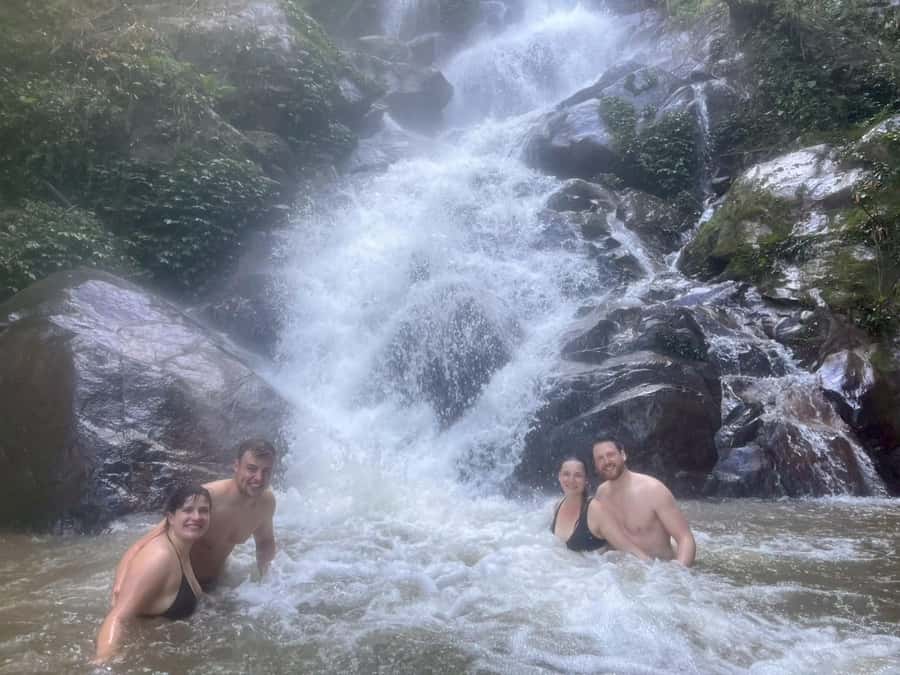
Yes, you swim. The route includes a visit to a major waterfall described as the second largest in Chiang Rai. People consistently say the water is fairly cold—so treat it like a dip, not a warm swim session. The payoff is that it’s refreshing after the hike, and it resets your energy fast.
Bring your swimwear and a towel. Also consider that getting in and out can be a bit slick depending on conditions, so you’ll feel safer with footwear that has grip even if you plan to go barefoot in the water.
The timing also matters. You typically reach the waterfall after a stretch of walking, which makes the temperature and exertion feel perfectly matched: you’re not swimming just because it’s on the checklist, you’re swimming because your body is ready for it.
You can also read our reviews of more hiking tours in Chiang Rai
Hot Springs at the End: The Best Way to Stop Soreness From Settling
After the waterfall, the day usually ends with a hot-spring mineral water soak. This is more than a luxury stop. After hiking 10–12 km, your legs want warmth and circulation, and a mineral soak helps you feel human again rather than just tired.
If you’re the type who usually spends the evening recovering with snacks and a couch, this portion changes that. You get a planned decompression window, and it makes the earlier effort feel worth it. It’s also a nice contrast to the jungle, because the hot water slows the pace down and gives your day a clean ending.
Price and Value: Is $80 a Fair Deal for All This?
At $80 per person for a 1-day outing, the value depends on what you hate doing on holiday. If you dislike juggling transport, finding a guide, paying for separate activities, and figuring out meal logistics, this package tackles the hard parts for you.
What’s included:
- Pickup and return within downtown Chiang Rai (within 3 km)
- One bottle of water
- Bamboo cooking lunch
- Travel insurance
- English live guide
- A licensed company operation through Scorpions Tours Chiang Rai
Not included:
- The swimming pool admission ticket fee (the info lists 100 THB for adults and 40 THB for children)
For many people, the biggest “value driver” isn’t just the jungle. It’s the combination of guided trekking + hands-on lunch + waterfall time + hot-spring recovery. You’re paying for an experience that holds together as one coherent day, instead of piecing it together yourself.
What to Bring (So You Don’t Spend the Day Miserable)
This tour gives you a great experience when you show up prepared. Here’s the practical packing list that actually matters here:
- Swimwear and towel for the waterfall dip
- Hiking shoes (grippy soles help on slick parts)
- Sportswear / hiking pants to protect from scratches and insects
- Snacks if you like extra fuel between stops
- Sports cap or sun protection (the day can get hot)
- A plan for hydration (you may want to carry close to what you personally need; one traveler suggests about 2 litres)
Also, consider bringing bug spray and sunscreen. One traveler specifically advises suncream and reapplying, plus wearing protective clothing.
Who Should Book This, and Who Should Skip It
This trek fits best if you:
- Enjoy hiking and can handle moderate physical activity
- Want more than temples and city markets
- Like guided explanations that make villages and plants make sense
- Are okay with cold water and the chance of mud after rain
It is not suitable for:
- Pregnant women
- People with back problems
- Wheelchair users
That “not suitable” list matters. This day involves uneven terrain and walking for hours, so if your body needs low-impact movement, this isn’t the right choice.
Final Call: Should You Book Chiang Rai Jungle Adventure With Bamboo Cooking?
If you have an extra day in Chiang Rai and you’re tired of only doing temples, I think this is a smart booking. The day has a good mix: real walking, village context, a hands-on bamboo lunch, a waterfall swim, then hot-spring recovery. That combo is hard to beat for one paid day.
I’d only pause if you’re unsure about moderate hiking or slippery ground. If you’re reasonably fit, pack grippy shoes and your swim kit, and show up ready for a rustic, outdoorsy day, you’ll likely love how quickly this experience feels like a story you can tell later—without needing complicated planning.
FAQ
What’s the duration of the Chiang Rai jungle trekking and bamboo cooking tour?
It runs for 1 day.
How far will I walk?
The total walking distance is approximately 10–12 kilometers, taking about 5 hours.
What time is pickup in downtown Chiang Rai?
Pickup begins promptly at 9:00 a.m., and you should be ready in your hotel lobby at that time.
What language is the tour guide?
The tour includes a live English-speaking guide.
Is the waterfall swimming part included?
You should bring swimwear for a waterfall dip, but the swimming pool admission ticket is not included in the package (100 THB for adults, 40 THB for children).
What’s included in the price?
Included are transportation to/from downtown (within 3 km), a complimentary bottle of water, bamboo cooking lunch, travel insurance, and an English live tour guide.
What should I bring?
Bring swimwear, a towel, snacks, hiking shoes/sports shoes, sportswear, and hiking pants.
Can the guide help with dietary preferences?
Yes. For dietary preferences or assistance, contact the guide Gift at +66864293880.
Who is this tour not suitable for?
It’s not suitable for pregnant women, people with back problems, or wheelchair users.