REVIEW · CHIANG RAI
Chiang Rai: Night Walking Tour – Local Market & Food Tasting
Book on GetYourGuide →Operated by Black Dragon Tours · Bookable on GetYourGuide
Glow first, then noodles. This Chiang Rai night tour is a smart way to see Wat Rong Suea Ten lit up after dark and then switch gears to the markets where people actually eat and shop at night. I like that the temples come with real explanations, not just photo stops, and I also like the local food tasting angle that makes the walk feel like part of daily life.
One heads-up: it is still a nighttime walking plan. You’ll want comfortable walking shoes and temple-appropriate clothing, and it may not suit everyone with mobility or health limits.
In This Review
- Key things that make this tour worth your time
- How Chiang Rai looks when the streets turn on at night
- Wat Huay Pla Kang: the Guanyin statue and a peaceful evening feel
- Wat Rong Suea Ten (Blue Temple): why the lighting matters more at night
- From fresh market to night bazaar: watching Chiang Rai eat for real
- Snack-and-street-food tasting: what to expect and how to order
- Private English guidance: the real value you pay for
- Price and timing: is $64 a fair deal for this night plan?
- Who this tour fits (and who should skip the nighttime walking)
- Should you book this Chiang Rai night market and Blue Temple tour?
- FAQ
- How long is the Chiang Rai night walking tour?
- Is this tour private or small-group?
- What temples do you visit?
- Does the tour include food tasting?
- Is hotel pickup included?
- What language is the guide?
- Can I bring a camera and take photos?
- What should I wear or bring for temples and markets?
Key things that make this tour worth your time
- Blue Temple at night: vivid interior lighting and a calm pace for photos
- Wat Huay Pla Kang: that towering white Guanyin is made for nighttime views
- Market-to-night-bazaar flow: you go from everyday fresh buying to ready-to-eat snacks
- Food tasting with local context: you learn what you’re eating and why it matters
- A private, English-speaking guide: guides like Bank and Poppy-style (from prior guests’ experiences) focus on meaning, not just logistics
- Small group (up to 9): enough social energy to chat, not so crowded you lose the thread
How Chiang Rai looks when the streets turn on at night
Chiang Rai at night has a different rhythm than daytime sightseeing. Daytime is all about landmarks and angles. Nighttime is about mood: temple lights soften the edges of the city, and the markets shift from shopping mode to dinner mode.
This tour works because it builds momentum. You start with temples that are already lit for evening visitors, so you’re not stuck waiting for things to happen. Then you transition into food and shopping areas where you can watch regular life unfold—families grabbing snacks, food carts getting orders rolling, and people moving through stalls with purpose.
And the best part is that you don’t just wander. With your guide, you get the story behind what you’re seeing, especially for Buddhism-themed art and temple symbolism. That turns the Blue Temple and the Guanyin statue from pretty sights into something you can actually read.
You can also read our reviews of more walking tours in Chiang Rai

Wat Huay Pla Kang: the Guanyin statue and a peaceful evening feel
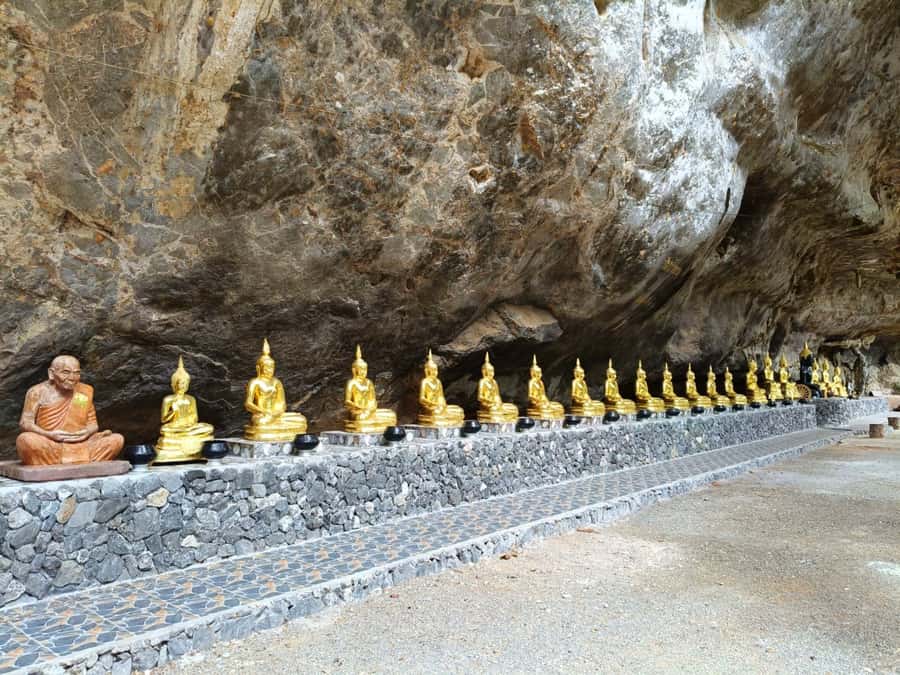
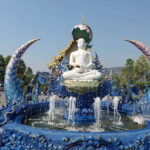
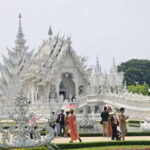
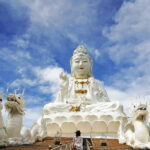
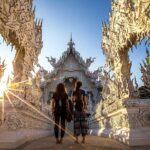
Wat Huay Pla Kang is a great opening stop because it gives you a sense of place right away. The highlight here is the towering white statue of the Goddess of Mercy, Guanyin, which is designed to be seen from a distance. At night, the lighting and the elevated viewpoint make it feel more serene than it might in daylight.
Expect a guided visit of about an hour. That time is usually enough for you to:
- get your bearings on the grounds
- understand what the statue represents (your guide’s explanations are a big part of why this stop lands)
- take photos respectfully without feeling rushed
Practical tip: temples at night still require temple basics. Bring long pants or a long skirt so you’re not scrambling for a workaround once you’re there. Also, treat the area with the same quiet focus you would in any sacred space—respectful photos are encouraged, but temple areas aren’t the time for loud behavior or intrusive angles.
The one possible drawback of starting here: if you’re tired from travel or you planned a very slow evening, this first stop can feel like a fast warm-up. But it sets you up well for the next temple, which is where the visuals really punch.
Wat Rong Suea Ten (Blue Temple): why the lighting matters more at night
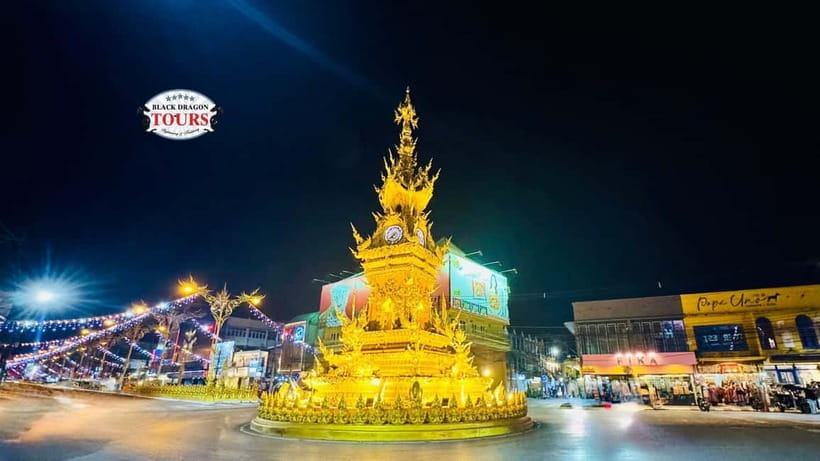
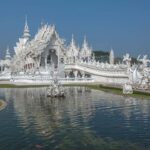
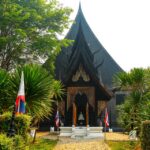
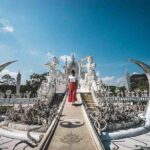
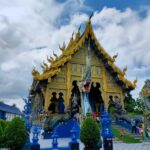
The Blue Temple, officially Wat Rong Suea Ten, is where the tour’s wow-factor really shows. The reason people remember it is the color and the interior feel—bright, sapphire-toned details that look almost theatrical once the evening lighting hits.
You’ll spend around 105 minutes here with your guide. That’s a useful amount of time. It gives you room to:
- see the main interior areas calmly
- understand what you’re looking at (your guide will explain meanings tied to the site and Buddhist context)
- take photos without the chaos you can run into during busier hours
Also, this is one of those places where good guidance changes the experience. Instead of just admiring shapes and colors, you learn how the symbolism is meant to be read. In the experiences shared with me by previous participants, guides like Bank and Poppy were singled out for clear, fluent English and for connecting what you see to the bigger picture of Buddhism and temple purpose.
Photography is allowed, but be respectful. In practical terms: keep the flash etiquette in mind, avoid blocking walkways, and follow any guidance from your guide on where it’s better to step aside.
If you love architecture and religious art, this stop is the anchor of the night. If you’re mostly hungry and want shorter temple time, know that this is the longest temple moment—and it’s also the one that’s easiest to justify once you’re there.
From fresh market to night bazaar: watching Chiang Rai eat for real
After temples, the tour does a clever shift: you move from sacred space to the practical, everyday world of food shopping and street eating. This is where Chiang Rai feels most local.
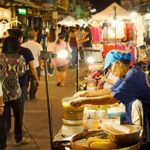
You’ll visit a fresh market area where locals come for ingredients and items for night meals. Think of it as the “getting dinner ready” stage—where the city’s food engine is on display. Then you roll into night market territory, including the Chiang Rai Night Bazaar vibe, where snacks are ready to buy and eat right away.
This is also where the tour gives you a social advantage. Markets can feel overwhelming if you’re just guessing what to order. With a guide, you’re less likely to miss the stuff that’s common locally but easy for visitors to overlook. You also get a chance to observe everyday patterns—families browsing, people grabbing what they need, monks collecting offerings—without trying to translate everything by yourself.
One key practical thing: bring some cash for personal purchases. The tour includes snack and food tasting, but night markets are where you might want seconds, drinks, or extra bites that aren’t part of the tasting plan.
Snack-and-street-food tasting: what to expect and how to order
The food part of this tour is not just a sampling platter. It’s designed to help you taste Northern Thai flavors in a setting where you can see how food culture works.
You can expect:
- traditional Northern Thai snacks
- freshly prepared street food
- seasonal tropical fruits
- a guided tasting experience where your guide explains what you’re eating
In prior experiences shared with me, people highlighted trying foods that don’t show up on every tourist menu—one notable example is silkworm. If you’re curious but cautious, you can treat tastings like a buffet of tiny decisions: try one item you think you’ll like, then choose one more that feels adventurous. Your guide will help you make those calls.
Also, you’ll likely notice that ordering in markets is less about big meals and more about variety. That’s perfect for a 4-hour tour. You’re not committing to a sit-down dinner. You’re building a night of small flavors—then feeling pleasantly full rather than stuffed.
A small logistics note: alcohol isn’t part of the vehicle plan. If you want a drink, think of it as a marketplace decision, not something you’ll be handed on the tour.
You can also read our reviews of more food & drink experiences in Chiang Rai
Private English guidance: the real value you pay for
At first glance, this tour looks like a simple temple-and-market walk. The reason it often feels better than that is the guide.
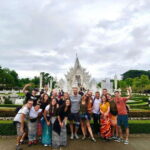
You get a private local guide, and the group stays small—limited to 9 participants. That combination matters. You don’t feel lost, and you don’t feel like you’re part of a conveyor belt.
Good guides do three things well:
- They explain what you’re seeing (temple meaning, symbols, and context).
- They help you move efficiently so you spend more time enjoying and less time guessing.
- They support you with practical needs, like where to stand for photos and how to handle temple etiquette.
In experiences previously shared, guides such as Bank were praised for cheerful, kind energy, fluent English, and even taking photos for the group. Poppy was also highlighted for giving a proper introduction to Buddhism tied to the sites. That’s not fluff—it changes the way you remember the night.
If you’re the kind of traveler who likes learning as you go, this tour fits you. If you only want the shortest route from A to B, a guide might feel like extra cost. But in practice, for Chiang Rai’s mix of art, religion, and food, a good guide is the difference between seeing and understanding.
Price and timing: is $64 a fair deal for this night plan?
At $64 per person for a 4-hour experience, the value comes from what’s bundled together.
You’re paying for:
- hotel pickup in the Mueang Chiang Rai area
- a private guide (English)
- two major temple visits (including the Blue Temple)
- structured time in the market areas
- traditional snacks and street food tasting
Here’s the practical way to judge it: if you tried to do this on your own, you’d still need transport between temple locations, you’d spend time figuring out where to eat and what to order, and you’d likely miss the meaning behind the temple art. The tour compresses all that into one evening with a guide handling the “what matters” layer.
Is it cheap? No. But it’s not a money-spider either. For the time you get—temples plus food plus market wandering—this price often feels reasonable, especially if you’re staying near the pickup point and you want a plan that doesn’t require research mid-trip.
Who this tour fits (and who should skip the nighttime walking)
This is a night circuit with walking, temple rules, and crowded market areas. It’s best for people who like a guided mix of culture and food.
You’ll likely enjoy it if you:
- want to see Chiang Rai’s major temples with less guesswork
- like street food but prefer tasting with guidance
- enjoy photos and want a calm window at the Blue Temple
- are comfortable walking for several hours, even at night
You might want to skip or choose something easier if you have heart problems or mobility limitations. The activity isn’t listed as suitable for wheelchair users, and there are also age limits (not for babies under 1, not for people over 95) and body-weight limits (over 309 lbs / 140 kg). If any of those apply to you, it’s worth picking a different format.
Finally, remember the dress code. Bring long pants or a long skirt. Temple areas won’t care that it’s hot or that you’re traveling light. This is one of those practical details that makes or breaks comfort.
Should you book this Chiang Rai night market and Blue Temple tour?
Book it if you want an evening that feels like Chiang Rai, not just a checklist. The strongest reasons are the temple lighting at Wat Rong Suea Ten, the guided explanation that makes temples easier to understand, and the market-and-food tasting flow that turns dinner into an experience.
Skip it if you hate walking at night, you can’t handle temple clothing rules, or you need a very accessible route. Also skip if you’re only interested in one temple—this tour spreads time across multiple sites and markets.
If you’re a first-timer in Chiang Rai, or you want your night to feel purposeful, this is one of the better ways to spend a few hours after dark.
FAQ
How long is the Chiang Rai night walking tour?
It runs for 4 hours.
Is this tour private or small-group?
It uses a private local guide, and it’s limited to a small group of up to 9 participants.
What temples do you visit?
You visit Wat Huay Pla Kang and Wat Rong Suea Ten (the Blue Temple).
Does the tour include food tasting?
Yes. The tour includes traditional snacks and street food tasting during the market part of the evening.
Is hotel pickup included?
Yes. Pickup is included at your hotel lobby in Mueang Chiang Rai.
What language is the guide?
The live tour guide speaks English.
Can I bring a camera and take photos?
Photography is allowed, but you should be respectful in temple areas.
What should I wear or bring for temples and markets?
Wear comfortable walking shoes, and bring long pants or a long skirt for temple visits. It’s also a good idea to bring a small amount of cash for personal expenses at the night market.
—
If you tell me where you’re staying in Chiang Rai (neighborhood or hotel area), I can suggest a good night-start timing so you’re not rushing from dinner or check-in.