REVIEW · BANGKOK
Bangkok: Street Art e-Scooter Tour of Chinatown
Book on GetYourGuide →Operated by Bangkok Funride · Bookable on GetYourGuide
Bangkok can be overwhelming fast. This electric scooter street-art tour keeps you moving while you spot old-city landmarks and murals. I like how it mixes famous sights with the locals-only alleys that make Chinatown feel real. I also love the photo rhythm: short stops, quick context, then time to wander and shoot at your own pace.
The big consideration is simple: you need to be ready to ride. Wear sports shoes, arrive on time (they’ll wait just 10 minutes), and be comfortable navigating busy streets on wheels.
You’ll spend about 3.5 hours rolling through classic Bangkok—from monuments and temple viewpoints to Sino-Thai street art and canal life—without turning it into an all-day walking test.
In This Review
- Key Things That Make This Tour Worth Your Time
- Electric Scooters Are the Right Tool for Bangkok’s Back Streets
- Meeting at Bangkok FunRide and Getting Comfortable to Ride
- Democracy Monument: A Fast Start With Big-City Context
- Wat Ratchanatdaram (Loha Prasat): Temple Views That Earn the Ride
- Wat Suthat and the Giant Swing: When Old Bangkok Gets Loud
- Sampeng Market and Chinatown Lanes: Street Art Meets Real Trade
- Wat Chakrawat and the Safety Rhythm Before More Crowds
- Talat Noi: Sino-Thai Details That Reward Slower Looking
- Holy Rosary Church by the Chao Phraya: A Cooling-Off Break
- Flower Market, Grand Palace Views, and the Return Toward Khao San
- Guides Make It Feel Easy: John, Nicolas, and AJ & Tai
- Price and Value: Why $51 Works for 210 Minutes
- Practical Tips So You Don’t Miss the Best Moments
- Who Should Book This Tour, and Who Should Skip It
- Should You Book Bangkok Street Art on an Electric Scooter?
- FAQ
- How long is the Bangkok Street Art e-Scooter Tour of Chinatown?
- Where is the meeting point?
- Is the tour guided?
- Can I move at my own pace during the tour?
- What should I wear or bring?
- Is street food included in the price?
- Are alcohol and drugs allowed?
- What is the weight limit for the tour?
- How late can I arrive after departure time?
- Is free cancellation available?
Key Things That Make This Tour Worth Your Time
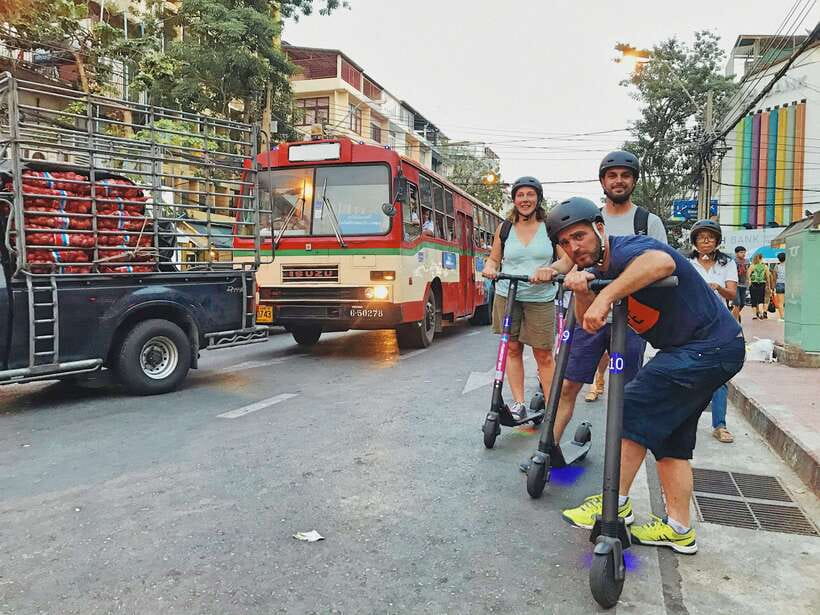
- Photo-friendly planning: repeated photo stops plus breaks so you don’t have to rush your shots
- Old Bangkok, not just highlights: alley time where the city looks lived-in, not staged
- Friendly, patient guiding: support for operating the scooter if you need it
- Chinatown + Talat Noi focus: murals, traditional storefronts, and Sino-Thai details in one loop
- Serene ending by the khlongs: a calmer ride back along the canals after the busy parts
- Small-group vibe: it helps you get attention when you need it
Electric Scooters Are the Right Tool for Bangkok’s Back Streets
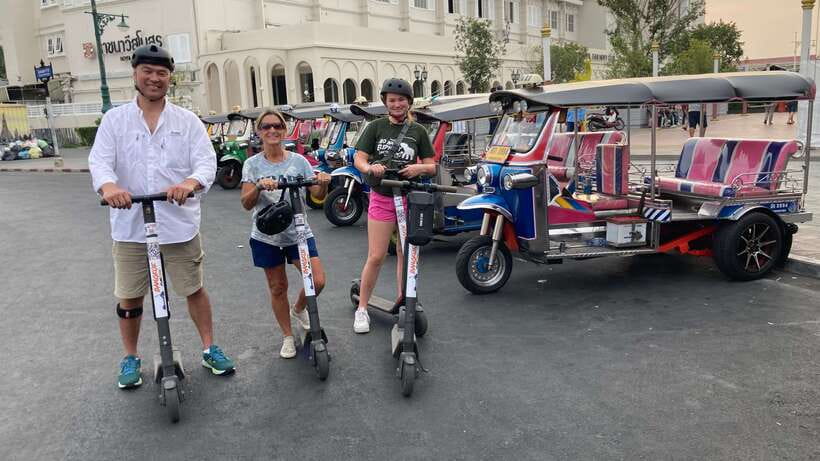
Bangkok rewards momentum. With an electric scooter, you get the feeling of exploring without paying for it in sore feet by hour two. It’s also easier to hop between the viewpoints and mural areas you’d otherwise link with rides or tiring walks.
What makes this setup work is the pacing: you’re not locked into a strict lecture format. The tour uses short stops for photos and sightseeing, then you can move at your own tempo. That matters in Bangkok, where crowds and traffic can change the mood in minutes.
And yes, it’s photogenic. You’re passing big landmarks like Democracy Monument, then switching gears to smaller lanes where murals, red lanterns, and temple details frame your shots.
A few more Bangkok tours and experiences worth a look


Meeting at Bangkok FunRide and Getting Comfortable to Ride
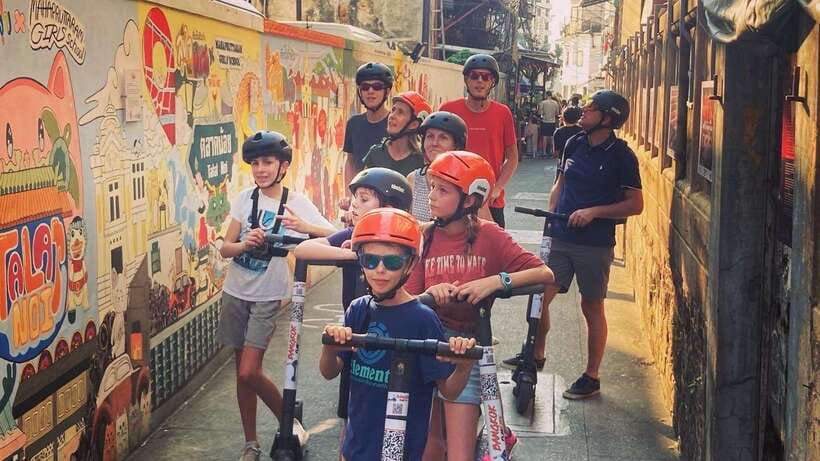
You meet at Bangkok FunRide – Electric-Scooters & Bike. After you book, you can contact the team by WhatsApp and/or email if you need help finding the shop. That’s useful if you’re already in the Khao San area and trying to match a meeting point with real-world streets.
The essentials are straightforward. Bring comfortable shoes and comfy clothes. They say everything is provided, and in practice that means you show up, get geared up, and focus on riding and the route rather than hunting for equipment.
One practical note: if you’re anxious about operating the scooter, go in with a calm plan. One verified experience described a guide offering a two-seater when a child struggled to handle the scooter. So help is available, especially if someone needs a more supported setup.
Democracy Monument: A Fast Start With Big-City Context
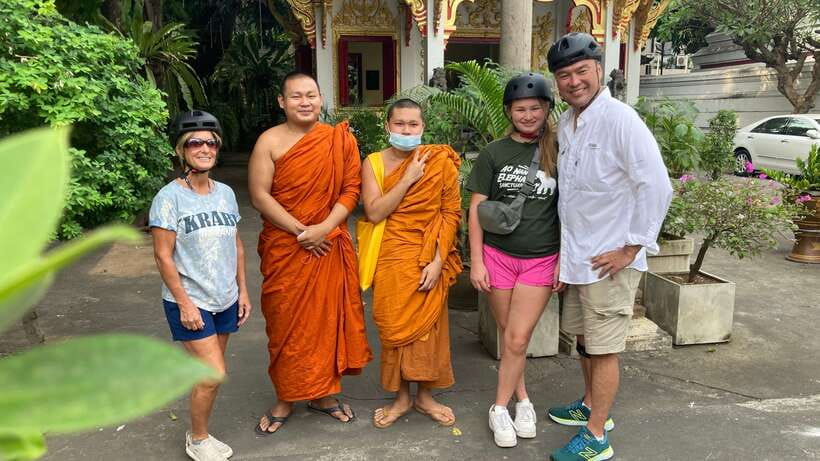
Your first real anchor point is Democracy Monument. It’s a classic Bangkok landmark and a clean place to orient yourself—visually and mentally—before you go into tighter streets.
This stop isn’t just about a quick picture. You’ll get a break and time to visit and explore at your own pace, including walking around and soaking in the scenery. If you want context for the city, this is the kind of stop where a short explanation pays off because it gives meaning to what you’ll see later in smaller neighborhoods.
Photo-wise, it works because it’s open and clear. When you later hit narrow alleyways, you’ll appreciate having that early “wide view” baseline.
Wat Ratchanatdaram (Loha Prasat): Temple Views That Earn the Ride

Next comes Wat Ratchanatdaram, known for the Loha Prasat viewpoint situation. This is one of those moments where the tour shifts from street energy to visual payoff. You stop for photos, then you’re set up to walk and take in what’s around the complex.
What I like here is the contrast. You’re heading from a public monument into a temple setting with different textures: architecture lines, layered details, and elevated views. Even if you’re not the type to read every sign, this kind of location gives you that Bangkok “how is this all so close?” feeling.
The other advantage is timing and pacing. You’re not trapped waiting in one place forever. You get breaks, then you move on when the tour is ready—so you keep momentum without feeling rushed.
Wat Suthat and the Giant Swing: When Old Bangkok Gets Loud
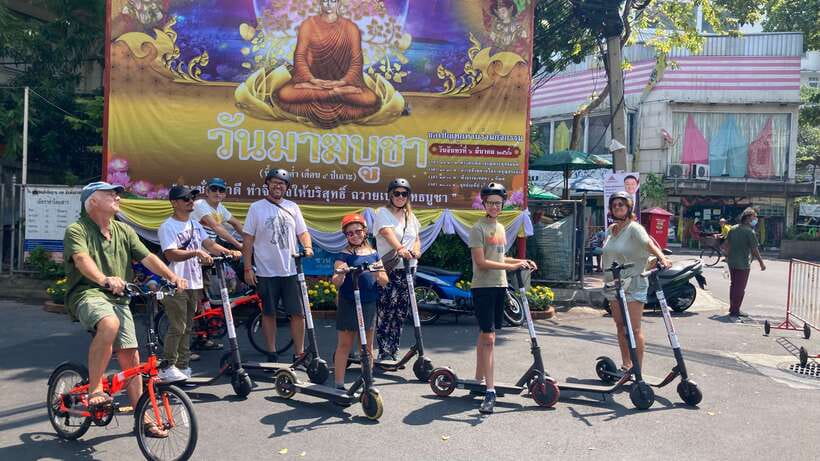
Then it’s Wat Suthat and the famous Giant Swing. This is the kind of landmark that makes you stop, look up, and remember you’re in a real city—not a museum.
Expect another cycle: break time, photo stop, time to visit, and room to move around. The tour also includes scenic riding segments between stops, which helps you avoid the friction of trying to weave through the area on foot.
The only drawback you should plan for here is crowd energy. When you’re near major icons like the Giant Swing, other visitors show up too. You’ll still get your shots, but if you want the quietest photos, use your free time for short walks that look away from the main viewpoint.
A few more Bangkok tours and experiences worth a look


Sampeng Market and Chinatown Lanes: Street Art Meets Real Trade
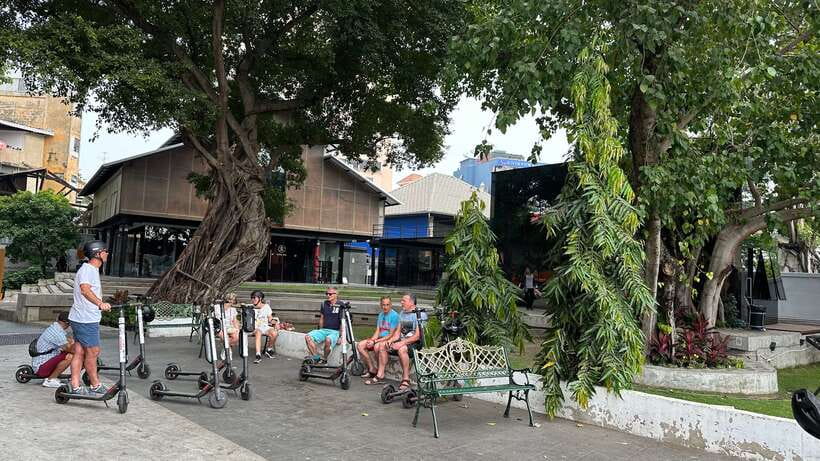
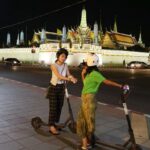
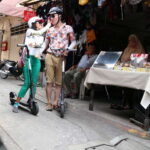
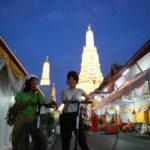
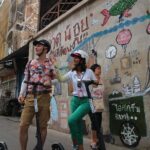
The route continues into Sampeng market and then deeper into Chinatown. This is where the tour’s street-art angle becomes more than a marketing phrase. You’re watching how people actually move through the neighborhood—shop fronts, temple-adjacent corners, and those red lantern cues that set the mood immediately.
You’ll cross the buzz of major streets and then slip into locals-only alleys. That alley time is what makes the experience feel personal. It’s easy to walk past these lanes on your own and miss what makes them interesting. On this tour, the route funnels you to the corners most visitors don’t naturally stumble into.
Photo-wise, Chinatown is a cheat code. The colors, signs, temple details, and wall art give you layered compositions. And because you’re on an electric scooter, you can reposition quickly when the perfect angle appears.
One more helpful point: a guide’s support can make a difference here. A guide team named AJ and Tai was described as extremely hospitable—assisting after the tour with ideas for where to go next and even helping arrange a tuk-tuk ride. That kind of follow-through matters when you’re tired or simply not sure how to get your bearings.
Wat Chakrawat and the Safety Rhythm Before More Crowds
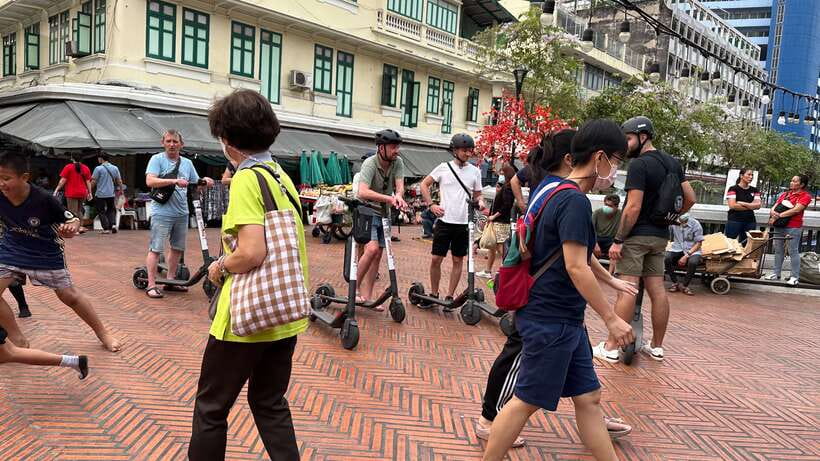
As you work your way through the city, you’ll hit Wat Chakrawat. This includes breaks and photo time, plus a visit and sightseeing time. Importantly, there’s a safety briefing here.
That’s not just paperwork. In busy zones, reminders and coaching reduce stress. If you’re a first-time rider, these check-ins help you feel in control instead of guessing what the traffic flow is asking from you.
You also get another scenic ride segment afterward. The point is to keep you moving without squeezing every stop into a rushed sprint.
Talat Noi: Sino-Thai Details That Reward Slower Looking
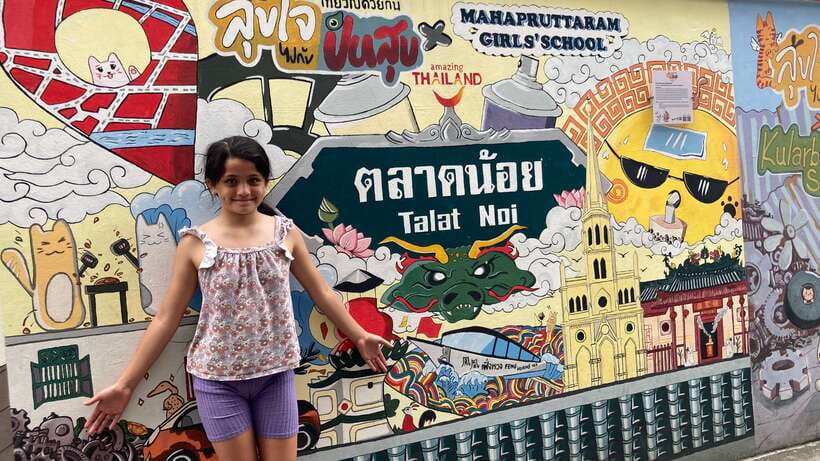
Next is Talat Noi, another area where you can slow down without losing time. This is where the tour leans into Sino-Thai influences and the visual details that show up on building facades and street-level life.
It’s one of those neighborhoods where you’ll get more out of it if you pay attention to small things: old-style signage shapes, temple-adjacent ornamentation, and the way murals sit next to everyday shop activity. Because you can visit at your own pace, you can spend extra minutes where your eyes catch something interesting.
Then there’s a practical breath—photo stop, walk, and time before heading onward. In a city like Bangkok, these short mental resets are what keep the experience fun rather than exhausting.
Holy Rosary Church by the Chao Phraya: A Cooling-Off Break
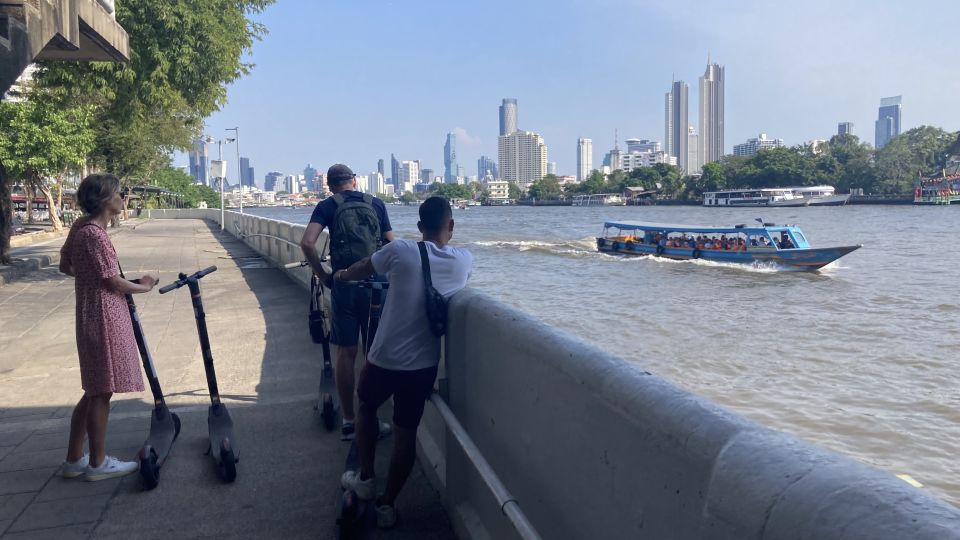
A standout moment comes when you pause by the Chao Phraya River, opposite the Church of the Holy Rosary. This is the kind of stop that feels like a reset after lanes and temples.
You’re given time to refresh—break time plus photos and sightseeing. Even if you don’t go far from the riverside area, just being near open sky and water changes the pace of your day.
If street noise and traffic are wearing on you, this kind of pause is a smart design choice. You get to re-center before you roll back through the city toward the next landmark.
Flower Market, Grand Palace Views, and the Return Toward Khao San
On the way back, you pass the Flower Market and enjoy views of the Grand Palace area. This is a good segment for photos, especially if you like capturing Bangkok from the right angles rather than only from street level.
Then you ride back along the city’s khlongs (canals). This is where the tour turns quieter. The canal ride is a calmer finale after the denser Chinatown moments, and it gives you that Bangkok variety—temple intensity, market life, then watery lanes that feel almost different from the streets.
Finally, you loop back toward Khao San Road, where you started your morning vibe. It’s a satisfying ending because you return to a familiar area, not a random transit spot.
Guides Make It Feel Easy: John, Nicolas, and AJ & Tai
A tour can have the right route and still feel stressful if the guide isn’t on their game. Here, the guidance seems consistent and genuinely friendly.
One verified experience highlighted John as patient and helpful, with a “really, really enjoyed” feeling. That same review noted the tour being very photogenic and great for seeing Bangkok’s smaller streets rather than just the obvious stops.
Another account credited Nicolas for making the visit incredible through stories and humor, including a Toulouse accent. That kind of storytelling helps the visuals connect, so you’re not just taking pictures—you’re understanding why the scene matters.
And again, AJ and Tai stood out for hospitality after the tour: helping with next steps, arranging transport, and even making and sending a video. If you care about practical support when your plan for the evening is still forming, those details are worth something.
Price and Value: Why $51 Works for 210 Minutes
At $51 per person for about 210 minutes, you’re paying for three things: guided route planning, transport on an electric scooter, and a sequence of stops designed for photos and quick walking.
If you tried to replicate this on your own, you’d likely spend time figuring out route logic and then pay for additional transport between dispersed sights. The scooter component compresses your day. The guide component saves mental energy—deciding where to turn, when to stop, and which corners are worth your effort.
Also, the tour’s format is built around breaks and free time. You’re not constantly moving at a sprint pace. That matters when you’re traveling and you want to enjoy yourself rather than “collect sights” like a chore.
So the value is strongest if you want:
- a photo-rich route without navigating it yourself
- less walking fatigue thanks to electric transport
- a guide who can help you with what to do next
Practical Tips So You Don’t Miss the Best Moments
A few things will make this tour smoother:
- Wear sports shoes. You’ll be walking at photo stops, and you’ll want grip when you’re stepping around curbs and crowded sidewalks.
- Keep your arrival tight. They only wait 10 minutes after departure time. Bangkok delays happen, so don’t bet your day on being fashionably late.
- Plan for street food only if you want it. Street food time depends on the hours and if you want to taste, you’ll pay at your expense. The tour can take time for a break, but it’s not included.
- Skip alcohol. Alcohol and drugs aren’t allowed.
- Know the weight limit. It’s not suitable for people over 264 lbs / 120 kg.
If you follow those basics, the rest is mostly about enjoying the ride: photo stops, short walks, then electric scooter legs between the next set of sights.
Who Should Book This Tour, and Who Should Skip It
This tour fits best if you want Bangkok’s older neighborhoods and street-art style visuals without spending your day walking. It’s also a good choice if you like structure but still want freedom—because you’ll have free time at stops and you can move at your own pace.
If you’re uncomfortable riding through busy areas, you might find it stressful. If you need maximum quiet or you prefer totally car-free travel, you might prefer a walking-and-transit plan instead.
If you’re traveling as a family or with someone who needs extra support operating a scooter, the experience descriptions show that staff can offer solutions like a two-seater setup. That said, you’ll still want to communicate needs clearly before you go.
Should You Book Bangkok Street Art on an Electric Scooter?
I’d book it if you’re the type who wants Bangkok to feel like a living place, not a checklist. The mix of major icons, temple viewpoints, Chinatown lanes, Talat Noi details, and that canal ride back makes it one of those tours that gives you variety in a short window.
I’d think twice if you don’t like riding in traffic-adjacent conditions, if you’re likely to arrive late, or if you need a fully relaxed pace with minimal motion.
If you want a photo-friendly, low-effort way to see old Bangkok and Chinatown’s street-art vibe while still having time to breathe at the riverside, this is a strong bet.
FAQ
How long is the Bangkok Street Art e-Scooter Tour of Chinatown?
The tour lasts 210 minutes (about 3.5 hours).
Where is the meeting point?
You meet at Bangkok FunRide – Electric-Scooters & Bike. After booking, you can contact them by WhatsApp and/or email if you need help finding the store.
Is the tour guided?
Yes. A live tour guide is included, and languages offered are English, French, Hindi, Thai, and Japanese.
Can I move at my own pace during the tour?
Yes. The tour is designed so you can visit at your own pace, with breaks and time for sightseeing.
What should I wear or bring?
Wear comfortable shoes and comfortable clothes.
Is street food included in the price?
Street food is not included. If you want to taste, the guide can take time for a break, but it would be at your expense.
Are alcohol and drugs allowed?
No. Alcohol and drugs are not allowed.
What is the weight limit for the tour?
It is not suitable for people over 264 lbs (120 kg).
How late can I arrive after departure time?
They can only wait for you for 10 minutes after departure time, so it’s best to arrive early.
Is free cancellation available?
Yes. You can cancel up to 24 hours in advance for a full refund.